


 Скачать презентацию THE MAIN TYPES OF STORES The retail
MAIN TYPES OF STORES.pptx
- Количество слайдов: 15
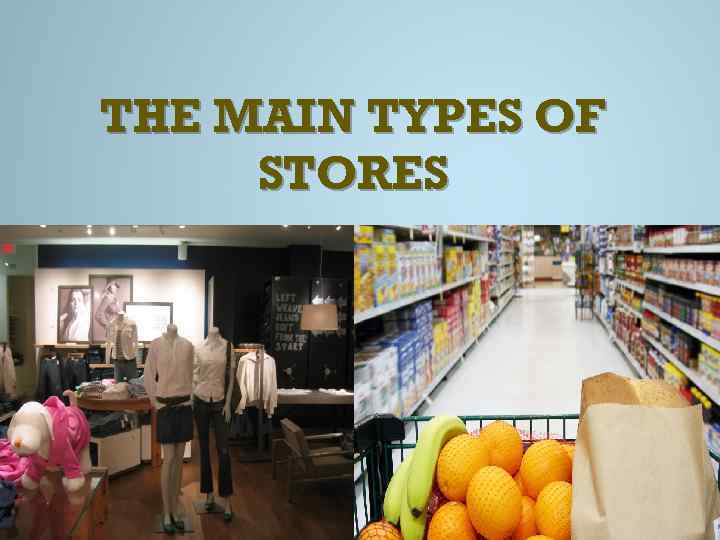 THE MAIN TYPES OF STORES
 The retail sales establishments are classified: BY MERCHANDISE TYPE; BY THE TYPE OF TRADE; BY OWNERSHIP.
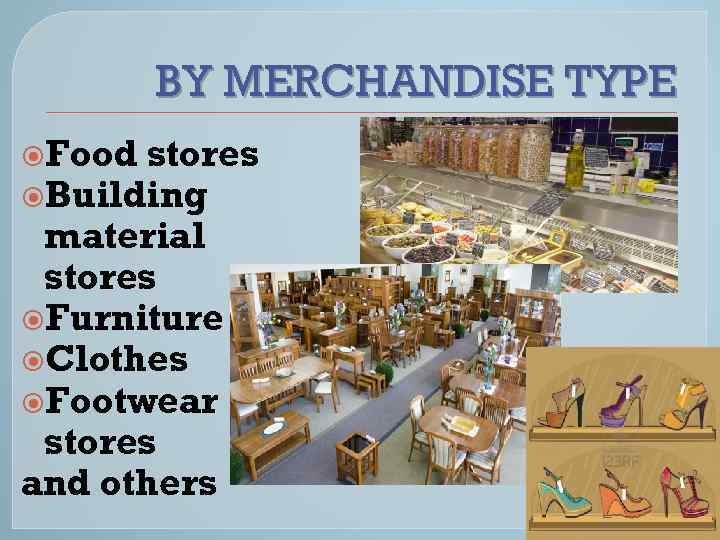 BY MERCHANDISE TYPE Food stores Building material stores Furniture Clothes Footwear stores and others
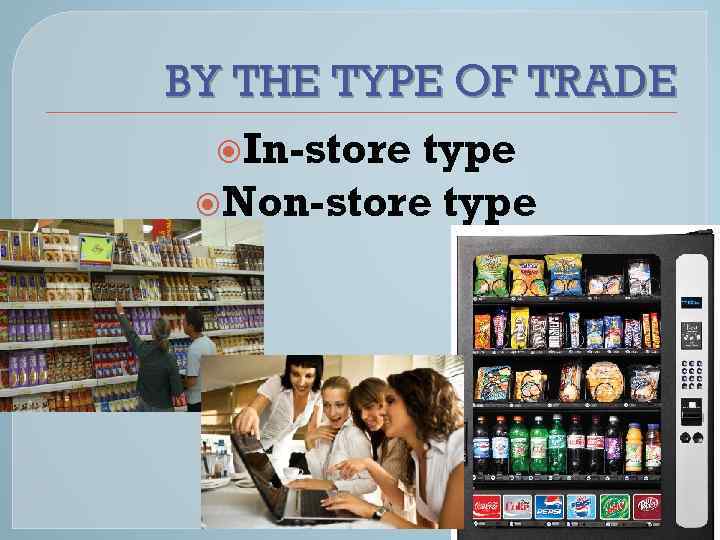 BY THE TYPE OF TRADE In-store type Non-store type
 IN-STORE RETAILERS INCLUDE Department stores Discount stores Catalog discount showrooms Supermarkets Convenience stores Warehouse stores
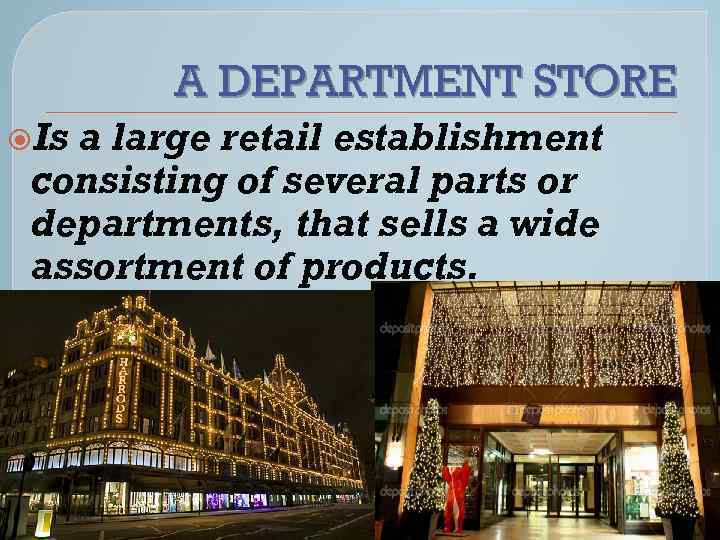 A DEPARTMENT STORE Is a large retail establishment consisting of several parts or departments, that sells a wide assortment of products.
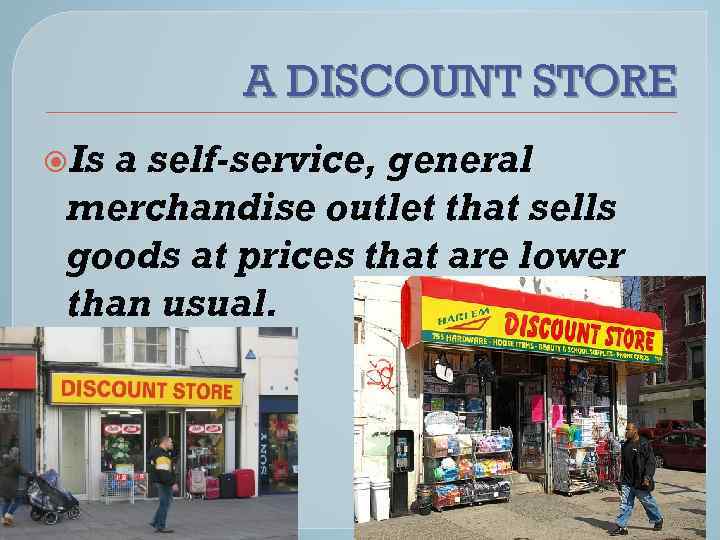 A DISCOUNT STORE Is a self-service, general merchandise outlet that sells goods at prices that are lower than usual.
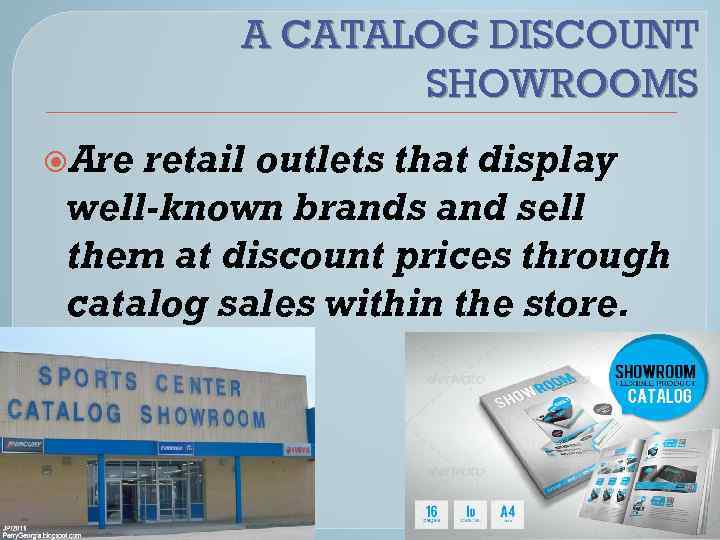 A CATALOG DISCOUNT SHOWROOMS Are retail outlets that display well-known brands and sell them at discount prices through catalog sales within the store.
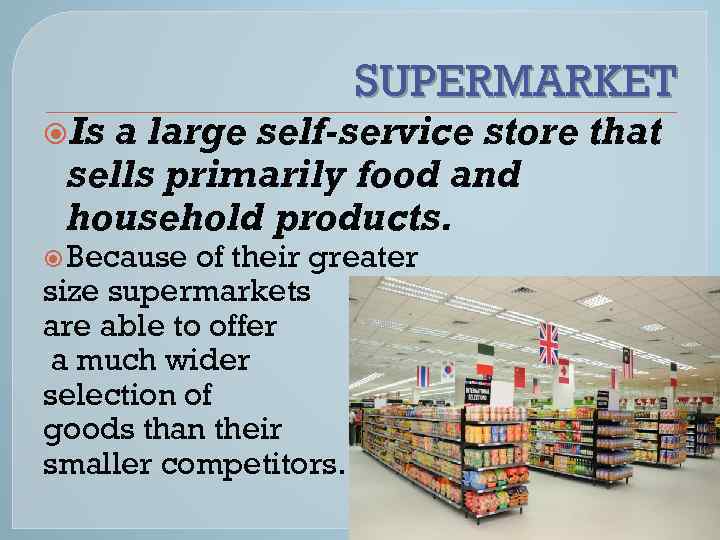 Is SUPERMARKET a large self-service store that sells primarily food and household products. Because of their greater size supermarkets are able to offer a much wider selection of goods than their smaller competitors.
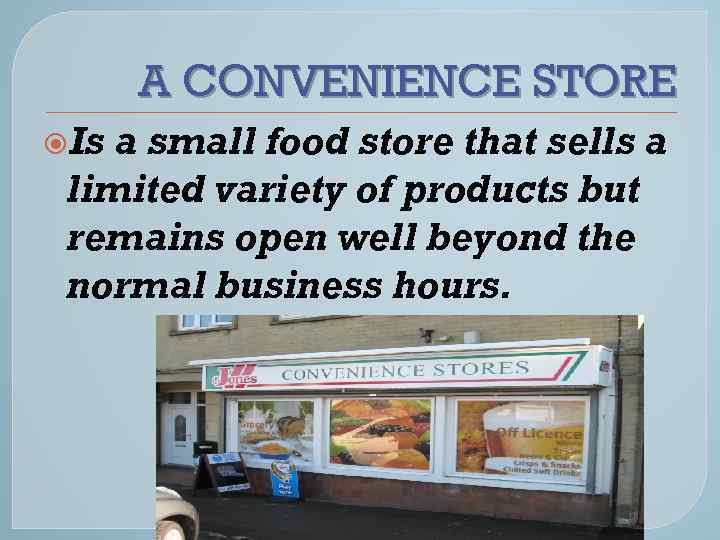 A CONVENIENCE STORE Is a small food store that sells a limited variety of products but remains open well beyond the normal business hours.
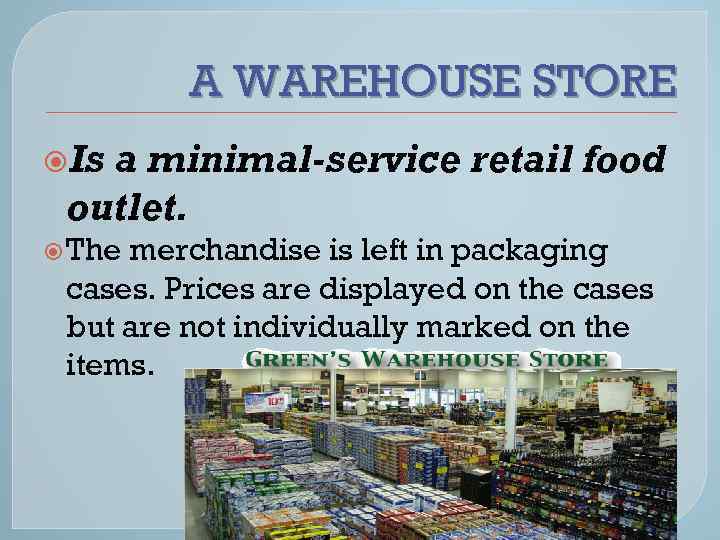 A WAREHOUSE STORE Is a minimal-service retail food outlet. The merchandise is left in packaging cases. Prices are displayed on the cases but are not individually marked on the items.
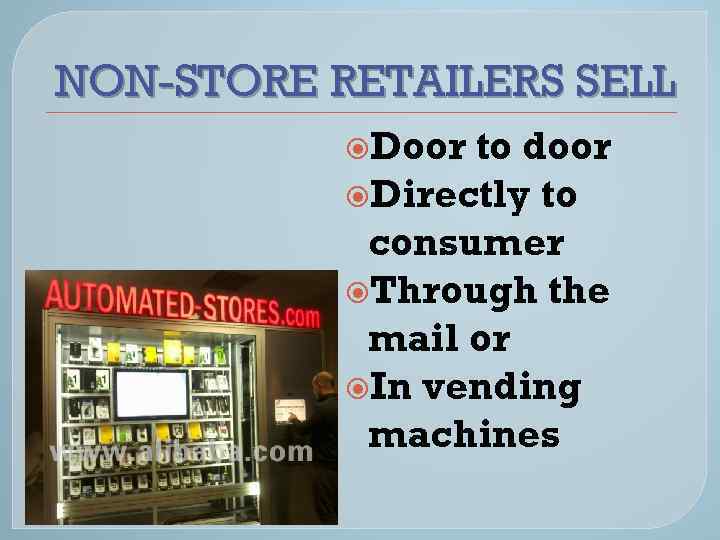 NON-STORE RETAILERS SELL Door to door Directly to consumer Through the mail or In vending machines
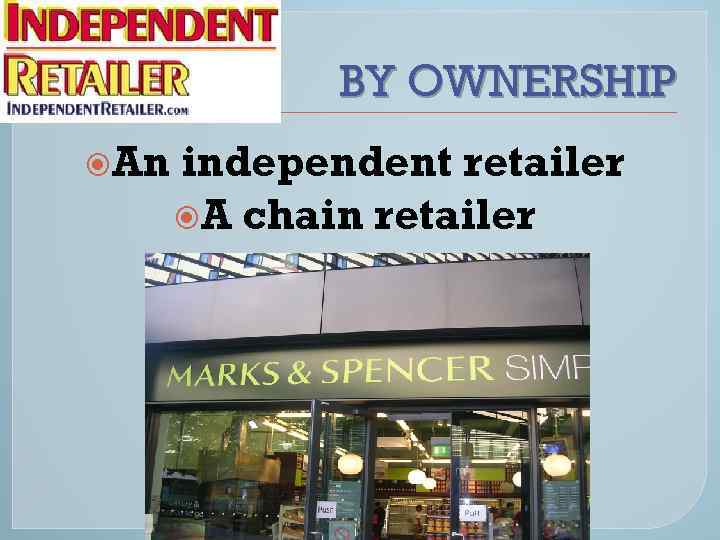 BY OWNERSHIP An independent retailer A chain retailer
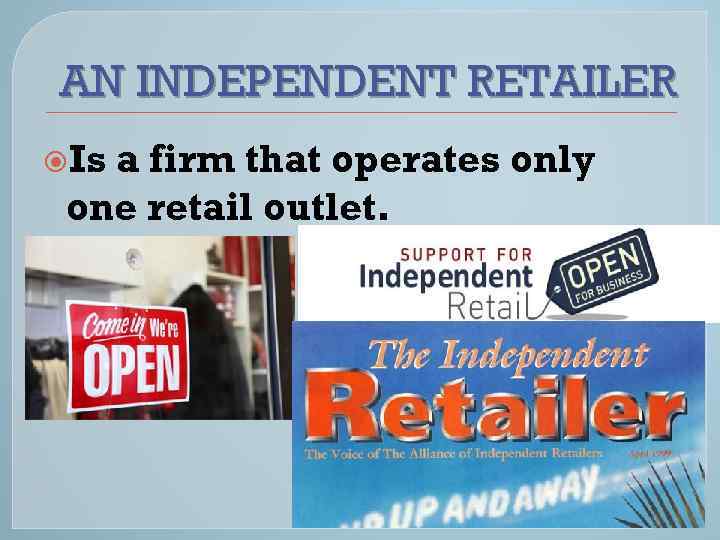 AN INDEPENDENT RETAILER Is a firm that operates only one retail outlet.
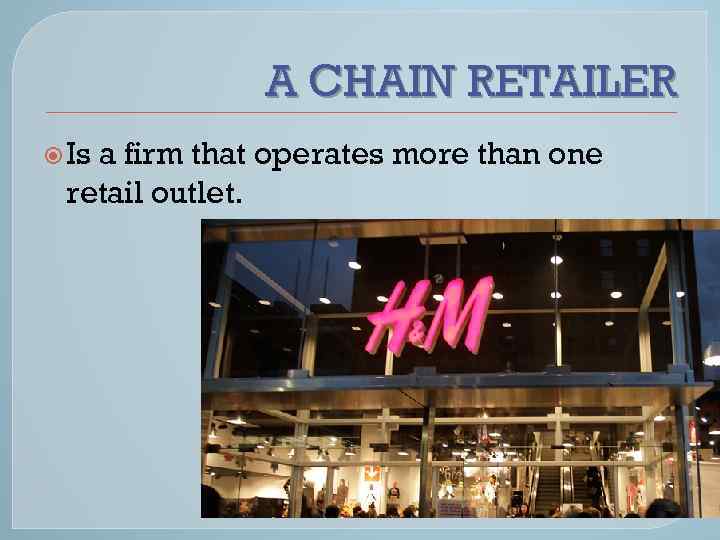 A CHAIN RETAILER Is a firm that operates more than one retail outlet.