Скачать презентацию The Lure of America 492 -493
2cb38ec6652d7602952abd385a80581f.ppt
- Количество слайдов: 18
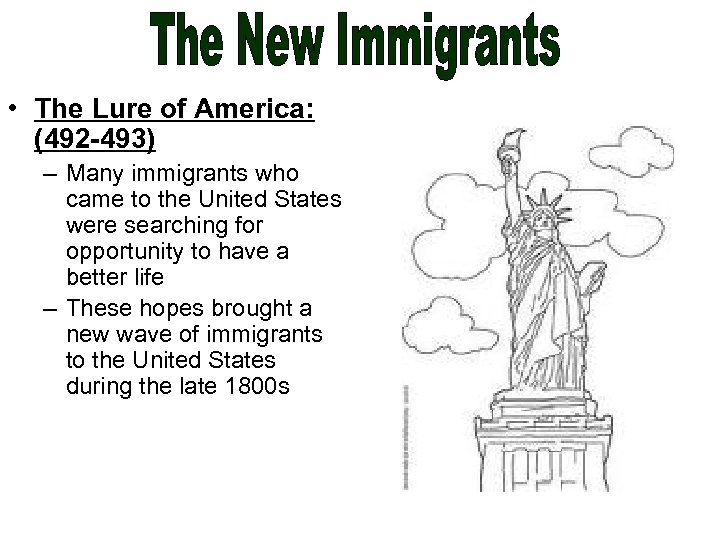 • The Lure of America: (492 -493) – Many immigrants who came to the United States were searching for opportunity to have a better life – These hopes brought a new wave of immigrants to the United States during the late 1800 s
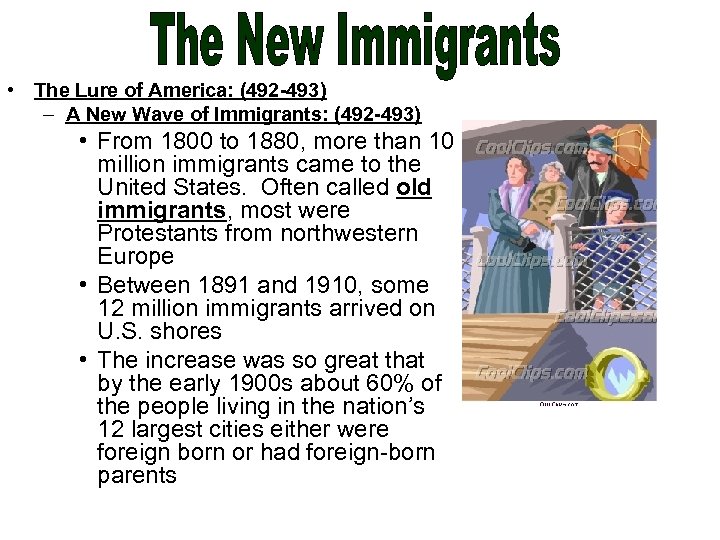 • The Lure of America: (492 -493) – A New Wave of Immigrants: (492 -493) • From 1800 to 1880, more than 10 million immigrants came to the United States. Often called old immigrants, most were Protestants from northwestern Europe • Between 1891 and 1910, some 12 million immigrants arrived on U. S. shores • The increase was so great that by the early 1900 s about 60% of the people living in the nation’s 12 largest cities either were foreign born or had foreign-born parents
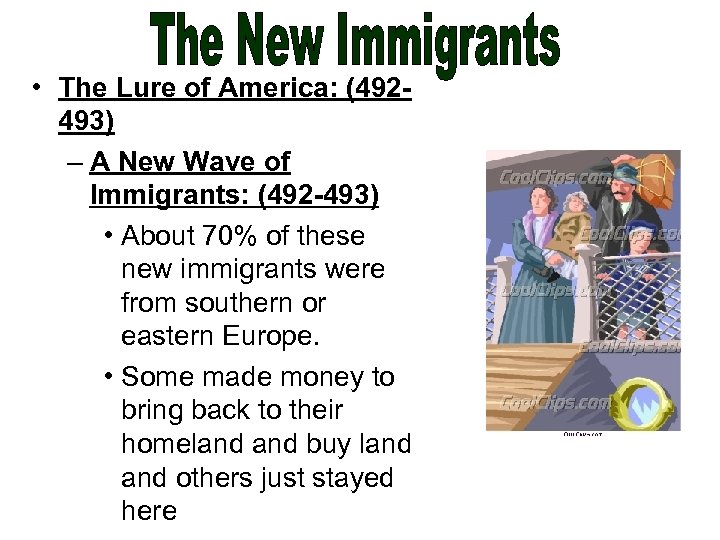 • The Lure of America: (492493) – A New Wave of Immigrants: (492 -493) • About 70% of these new immigrants were from southern or eastern Europe. • Some made money to bring back to their homeland buy land others just stayed here
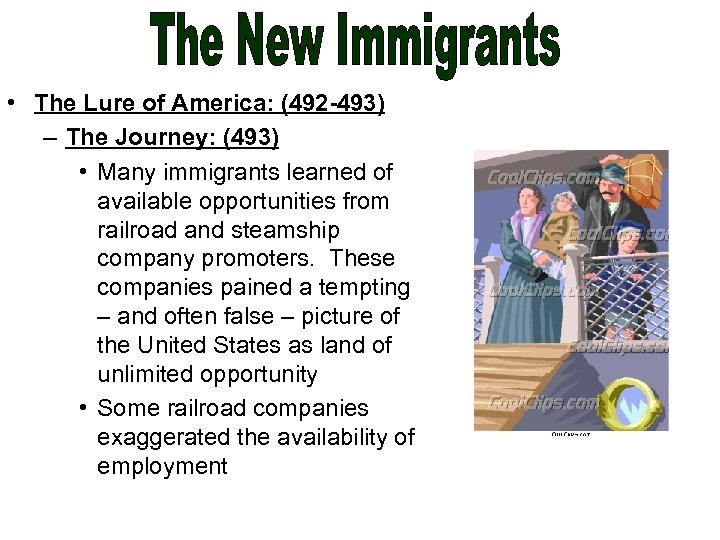 • The Lure of America: (492 -493) – The Journey: (493) • Many immigrants learned of available opportunities from railroad and steamship company promoters. These companies pained a tempting – and often false – picture of the United States as land of unlimited opportunity • Some railroad companies exaggerated the availability of employment
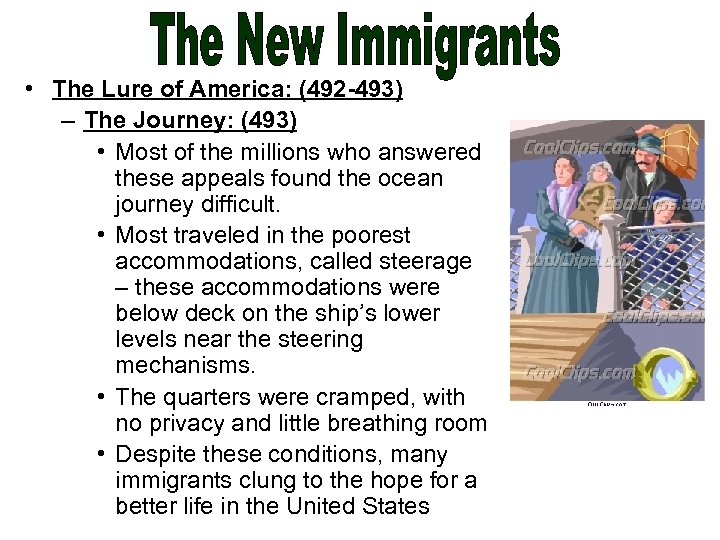 • The Lure of America: (492 -493) – The Journey: (493) • Most of the millions who answered these appeals found the ocean journey difficult. • Most traveled in the poorest accommodations, called steerage – these accommodations were below deck on the ship’s lower levels near the steering mechanisms. • The quarters were cramped, with no privacy and little breathing room • Despite these conditions, many immigrants clung to the hope for a better life in the United States
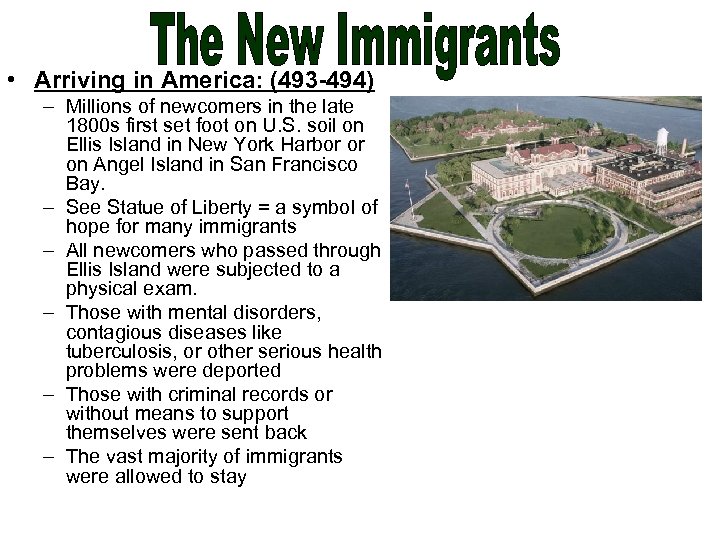 • Arriving in America: (493 -494) – Millions of newcomers in the late 1800 s first set foot on U. S. soil on Ellis Island in New York Harbor or on Angel Island in San Francisco Bay. – See Statue of Liberty = a symbol of hope for many immigrants – All newcomers who passed through Ellis Island were subjected to a physical exam. – Those with mental disorders, contagious diseases like tuberculosis, or other serious health problems were deported – Those with criminal records or without means to support themselves were sent back – The vast majority of immigrants were allowed to stay
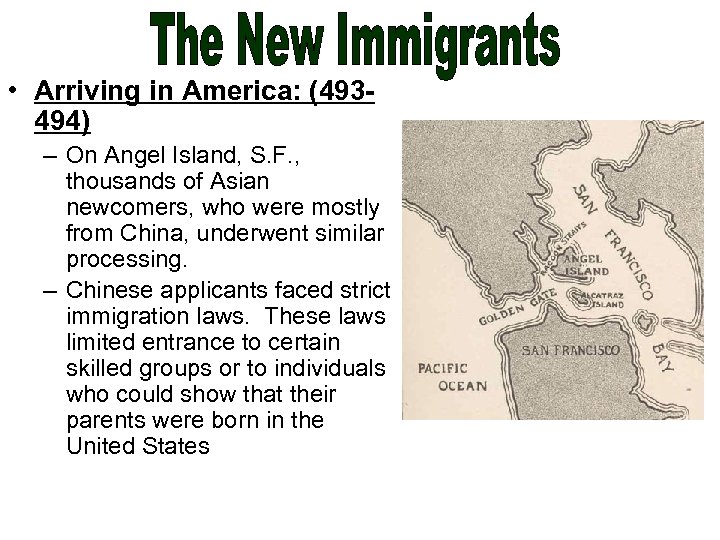 • Arriving in America: (493494) – On Angel Island, S. F. , thousands of Asian newcomers, who were mostly from China, underwent similar processing. – Chinese applicants faced strict immigration laws. These laws limited entrance to certain skilled groups or to individuals who could show that their parents were born in the United States
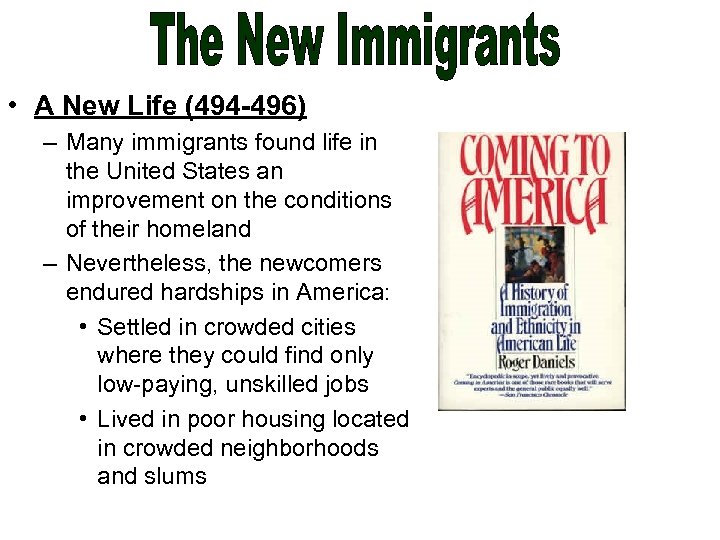 • A New Life (494 -496) – Many immigrants found life in the United States an improvement on the conditions of their homeland – Nevertheless, the newcomers endured hardships in America: • Settled in crowded cities where they could find only low-paying, unskilled jobs • Lived in poor housing located in crowded neighborhoods and slums
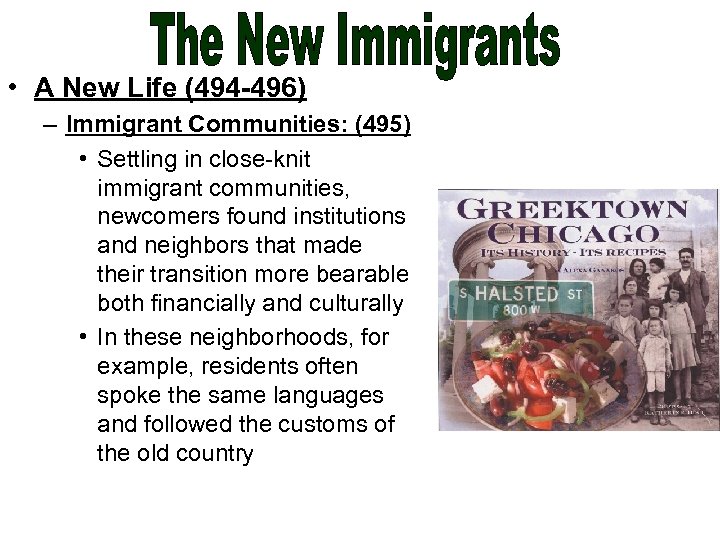 • A New Life (494 -496) – Immigrant Communities: (495) • Settling in close-knit immigrant communities, newcomers found institutions and neighbors that made their transition more bearable both financially and culturally • In these neighborhoods, for example, residents often spoke the same languages and followed the customs of the old country
 • A New Life (494 -496) • Religious institutions: – Neighborhood churches, synagogues, and temples provided community centers that helped immigrants maintain a sense of identity and belonging – Residents in many cities formed religious and nonreligious aid organizations, known as benevolent societies, to help immigrants in cases of sickness, unemployment and death – Benevolent societies attempted to provide an important function by helping immigrants obtain education, health care and jobs
 • A New Life (494 -496) • Cultural Practices: (495 -496) – Immigrants were often urged by employers, public institutions, and sometimes even family members to join the American mainstream – Many older immigrants cherished ties to the old country – By contrast, children often adopted American cultural practices and tended to view their parents’ old-world language and customs as oldfashioned
 • A New Life (494 -496) • The immigrant Worker: (496) – Whether they adopted American habits or remained tied to the traditions of their homeland, most new immigrants shared a common work experience. Many did the country’s “dirty work. ” • Work was difficult and physically exhausting. • Hours were long, and wages were low
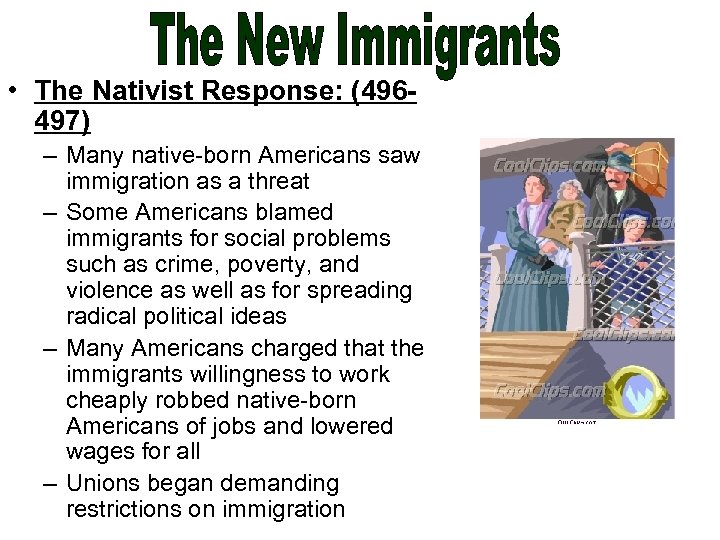 • The Nativist Response: (496497) – Many native-born Americans saw immigration as a threat – Some Americans blamed immigrants for social problems such as crime, poverty, and violence as well as for spreading radical political ideas – Many Americans charged that the immigrants willingness to work cheaply robbed native-born Americans of jobs and lowered wages for all – Unions began demanding restrictions on immigration
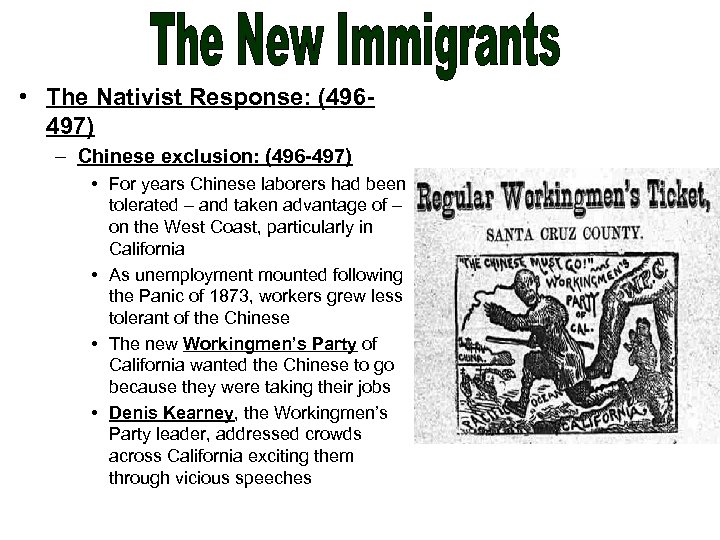 • The Nativist Response: (496497) – Chinese exclusion: (496 -497) • For years Chinese laborers had been tolerated – and taken advantage of – on the West Coast, particularly in California • As unemployment mounted following the Panic of 1873, workers grew less tolerant of the Chinese • The new Workingmen’s Party of California wanted the Chinese to go because they were taking their jobs • Denis Kearney, the Workingmen’s Party leader, addressed crowds across California exciting them through vicious speeches
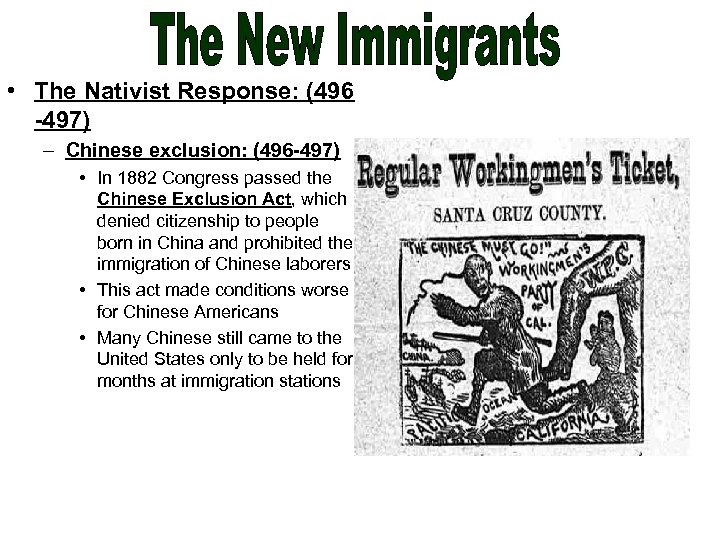 • The Nativist Response: (496 -497) – Chinese exclusion: (496 -497) • In 1882 Congress passed the Chinese Exclusion Act, which denied citizenship to people born in China and prohibited the immigration of Chinese laborers • This act made conditions worse for Chinese Americans • Many Chinese still came to the United States only to be held for months at immigration stations
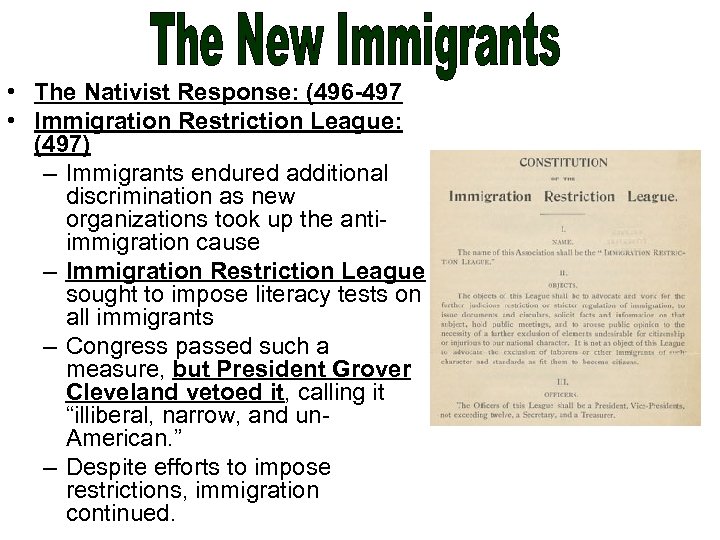 • The Nativist Response: (496 -497 • Immigration Restriction League: (497) – Immigrants endured additional discrimination as new organizations took up the antiimmigration cause – Immigration Restriction League sought to impose literacy tests on all immigrants – Congress passed such a measure, but President Grover Cleveland vetoed it, calling it “illiberal, narrow, and un. American. ” – Despite efforts to impose restrictions, immigration continued.