


 Скачать презентацию The Luck of the Irish The Immigrants Road
e0c5b421d6912fd31d8b2fbf413f65e7.ppt
- Количество слайдов: 86
 The Luck of the Irish: The Immigrants' Road to a New Life in America
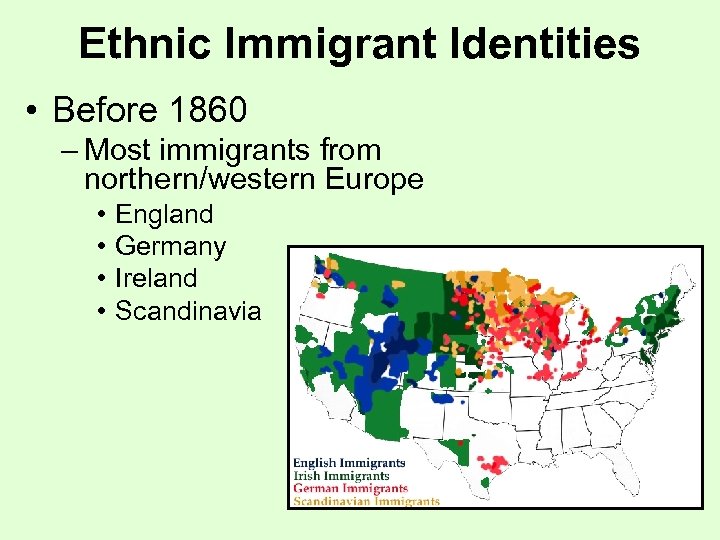 Ethnic Immigrant Identities • Before 1860 – Most immigrants from northern/western Europe • • England Germany Ireland Scandinavia
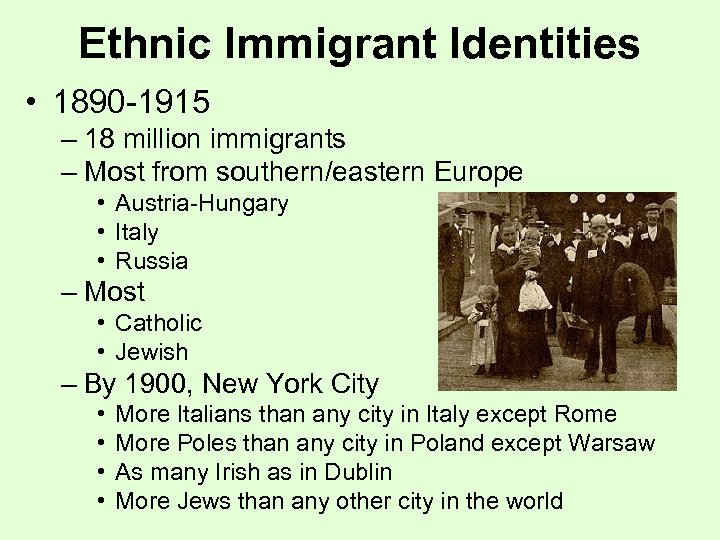 Ethnic Immigrant Identities • 1890 -1915 – 18 million immigrants – Most from southern/eastern Europe • Austria-Hungary • Italy • Russia – Most • Catholic • Jewish – By 1900, New York City • • More Italians than any city in Italy except Rome More Poles than any city in Poland except Warsaw As many Irish as in Dublin More Jews than any other city in the world
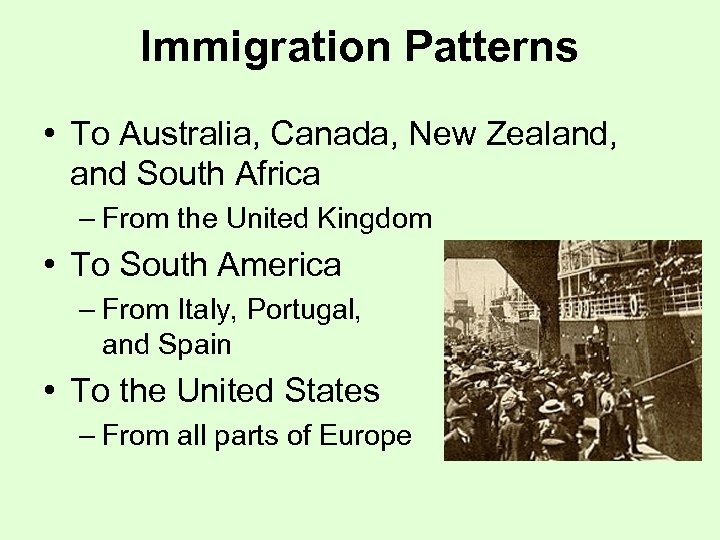 Immigration Patterns • To Australia, Canada, New Zealand, and South Africa – From the United Kingdom • To South America – From Italy, Portugal, and Spain • To the United States – From all parts of Europe
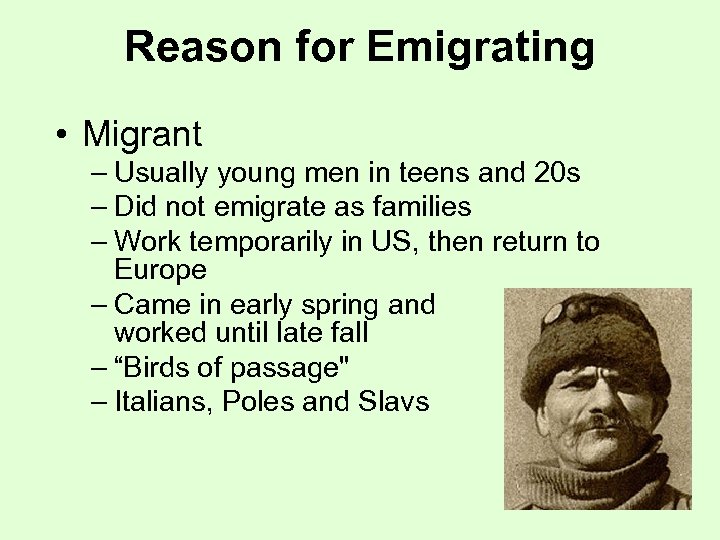 Reason for Emigrating • Migrant – Usually young men in teens and 20 s – Did not emigrate as families – Work temporarily in US, then return to Europe – Came in early spring and worked until late fall – “Birds of passage" – Italians, Poles and Slavs
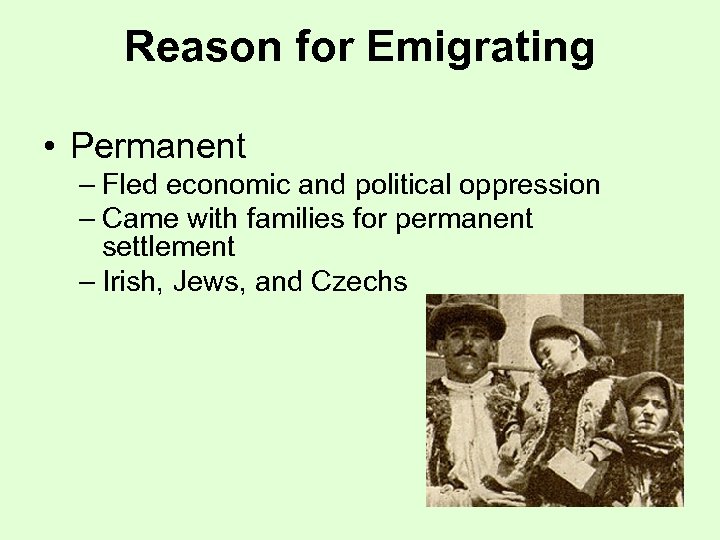 Reason for Emigrating • Permanent – Fled economic and political oppression – Came with families for permanent settlement – Irish, Jews, and Czechs
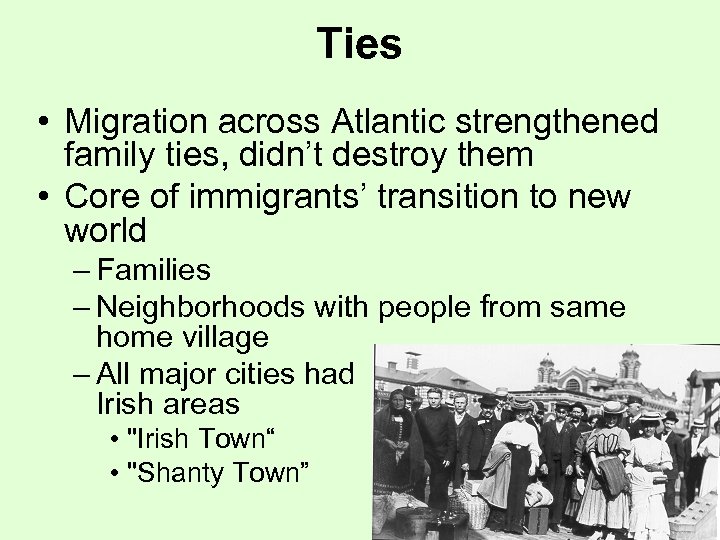 Ties • Migration across Atlantic strengthened family ties, didn’t destroy them • Core of immigrants’ transition to new world – Families – Neighborhoods with people from same home village – All major cities had Irish areas • "Irish Town“ • "Shanty Town”
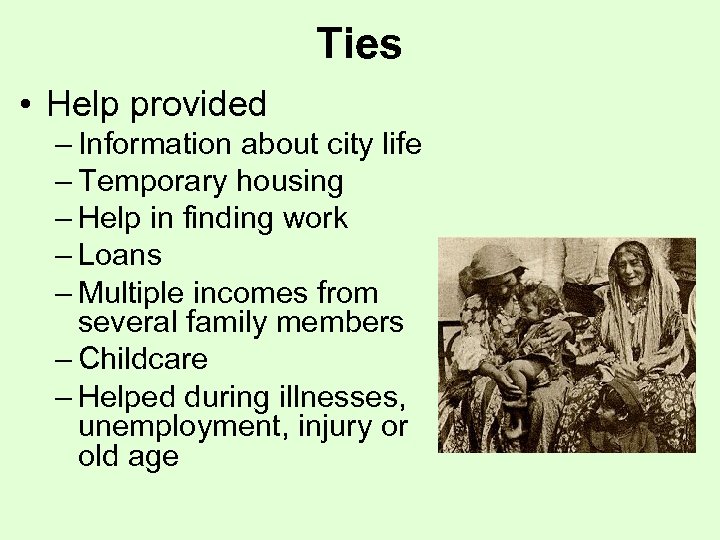 Ties • Help provided – Information about city life – Temporary housing – Help in finding work – Loans – Multiple incomes from several family members – Childcare – Helped during illnesses, unemployment, injury or old age
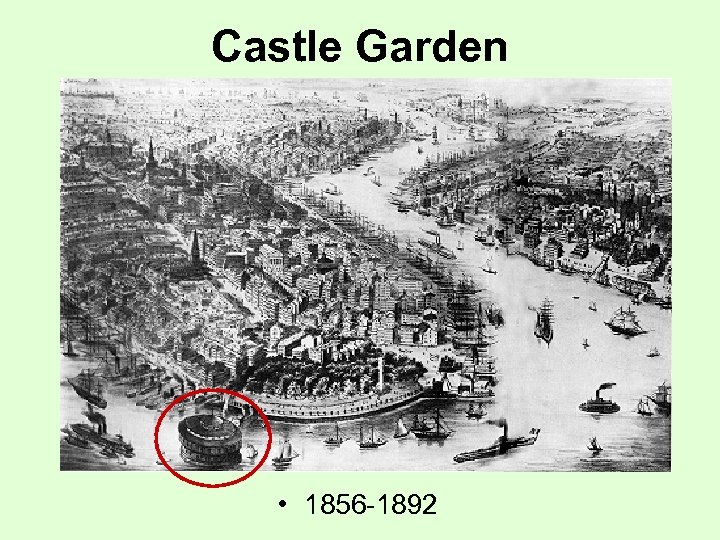 Castle Garden • 1856 -1892
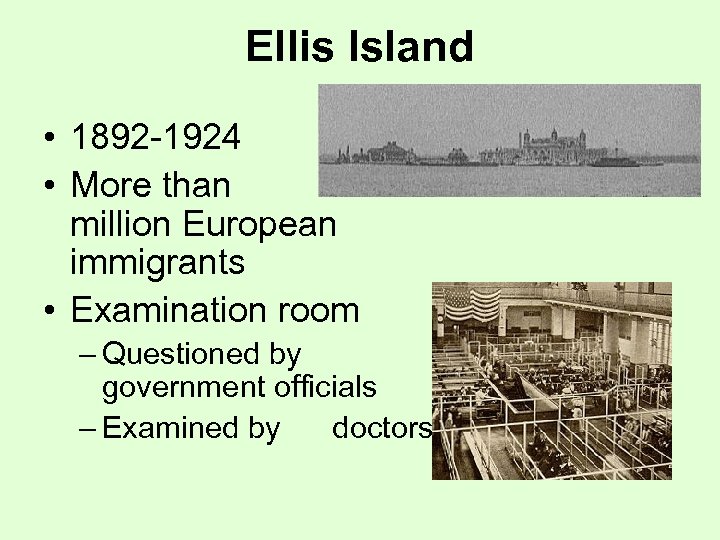 Ellis Island • 1892 -1924 • More than 12 million European immigrants • Examination room – Questioned by government officials – Examined by doctors
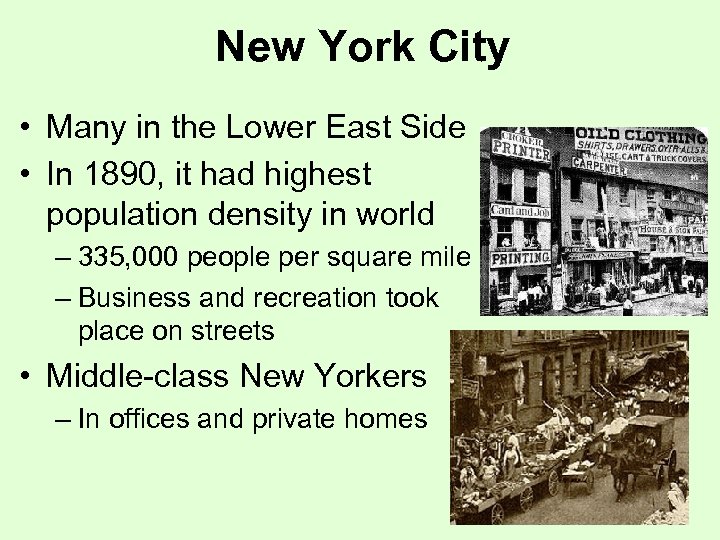 New York City • Many in the Lower East Side • In 1890, it had highest population density in world – 335, 000 people per square mile – Business and recreation took place on streets • Middle-class New Yorkers – In offices and private homes
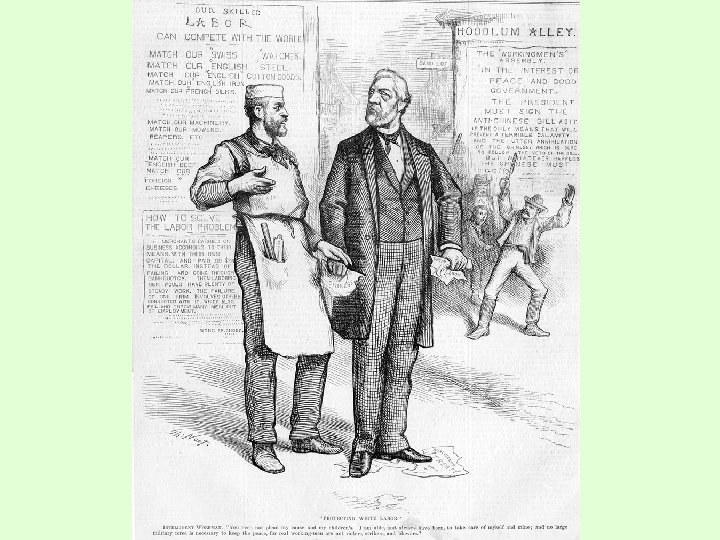
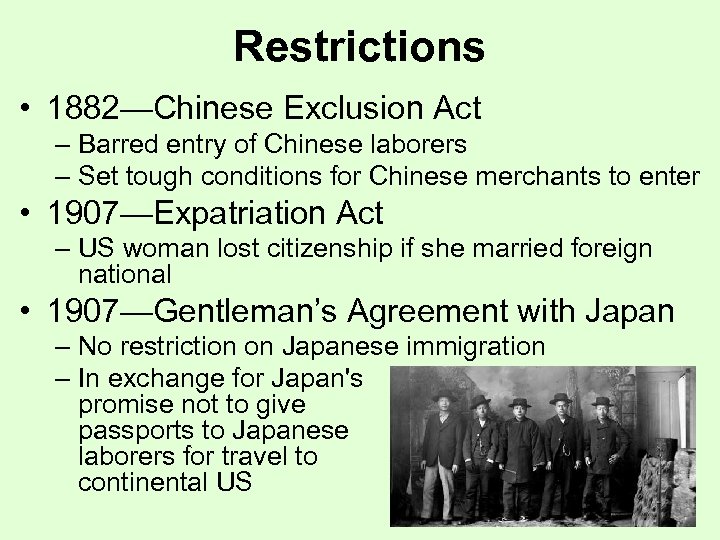 Restrictions • 1882—Chinese Exclusion Act – Barred entry of Chinese laborers – Set tough conditions for Chinese merchants to enter • 1907—Expatriation Act – US woman lost citizenship if she married foreign national • 1907—Gentleman’s Agreement with Japan – No restriction on Japanese immigration – In exchange for Japan's promise not to give passports to Japanese laborers for travel to continental US
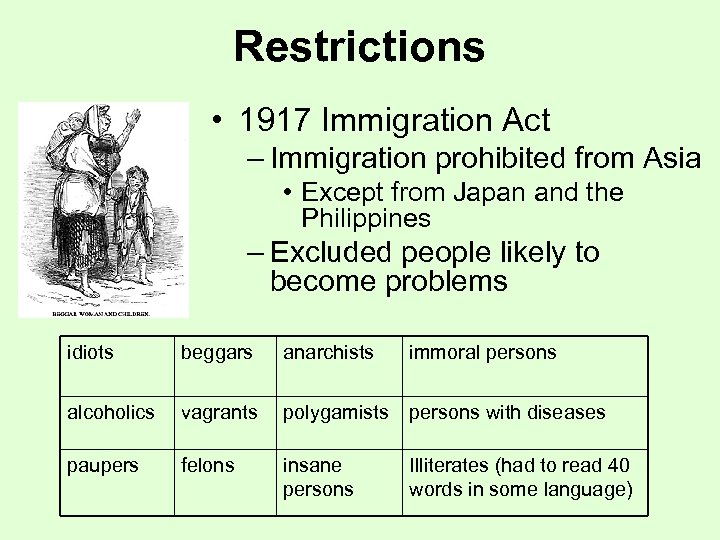 Restrictions • 1917 Immigration Act – Immigration prohibited from Asia • Except from Japan and the Philippines – Excluded people likely to become problems idiots beggars anarchists immoral persons alcoholics vagrants polygamists persons with diseases paupers felons insane persons Illiterates (had to read 40 words in some language)
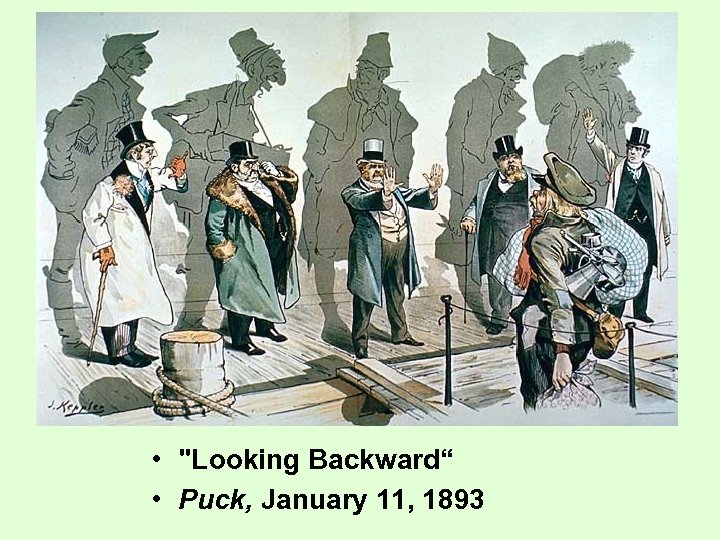 • "Looking Backward“ • Puck, January 11, 1893
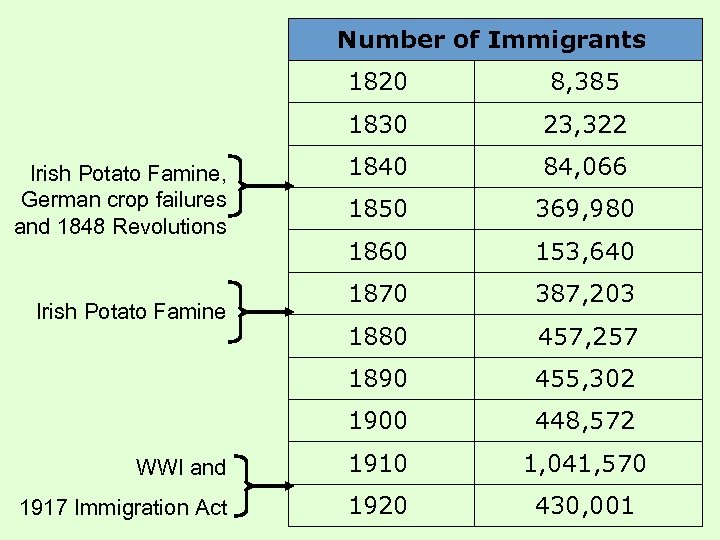 Number of Immigrants 1820 8, 385 1830 23, 322 1840 84, 066 1850 369, 980 1860 153, 640 1870 387, 203 1880 457, 257 1890 455, 302 1900 448, 572 WWI and 1910 1, 041, 570 1917 Immigration Act 1920 430, 001 Irish Potato Famine, German crop failures and 1848 Revolutions Irish Potato Famine
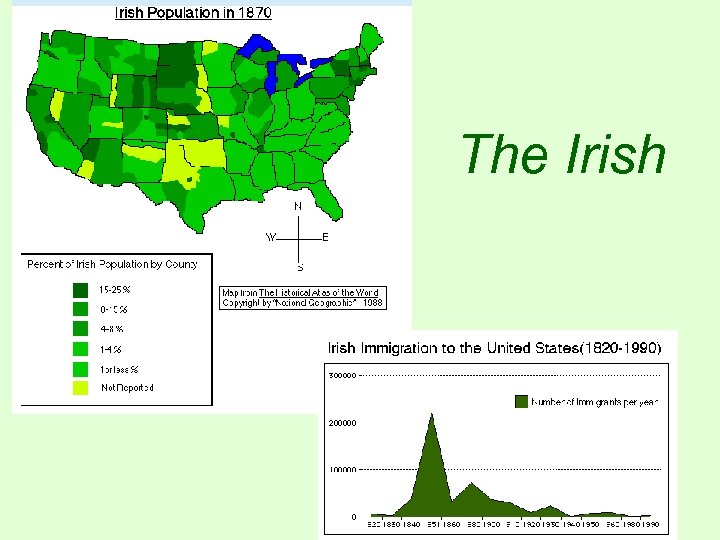 The Irish
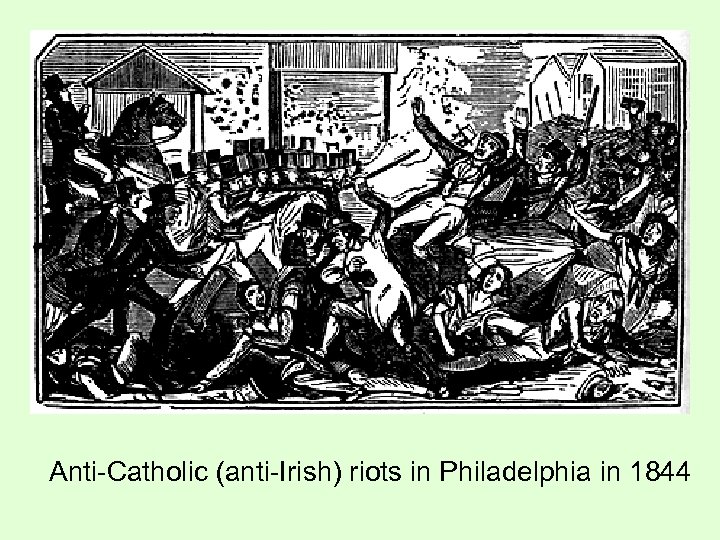 Anti-Catholic (anti-Irish) riots in Philadelphia in 1844
 Irish Potato Famines • Early 1800 s—Irish population was 8 million – Because potato became staple crop • 1845 -1852 – Potato blight (fungus brought from US) – 1 million deaths – 2 million to US, Canada, and British Empire • Became 1/10 th of America by 1850 • 1879 -1880 – Cheap prices on American corn hurt market for potatoes – Evictions of tenant farmers
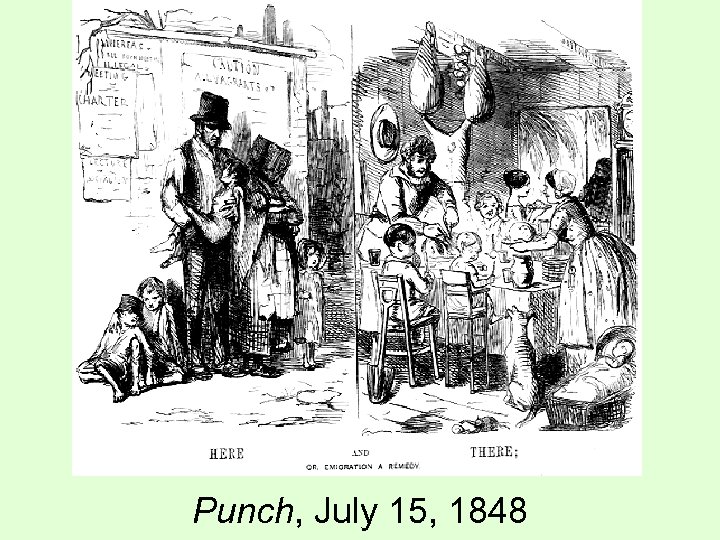 Punch, July 15, 1848
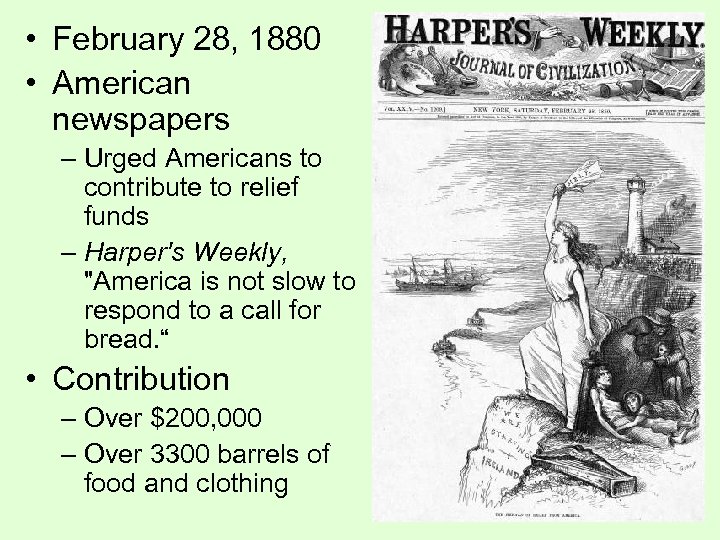 • February 28, 1880 • American newspapers – Urged Americans to contribute to relief funds – Harper's Weekly, "America is not slow to respond to a call for bread. “ • Contribution – Over $200, 000 – Over 3300 barrels of food and clothing
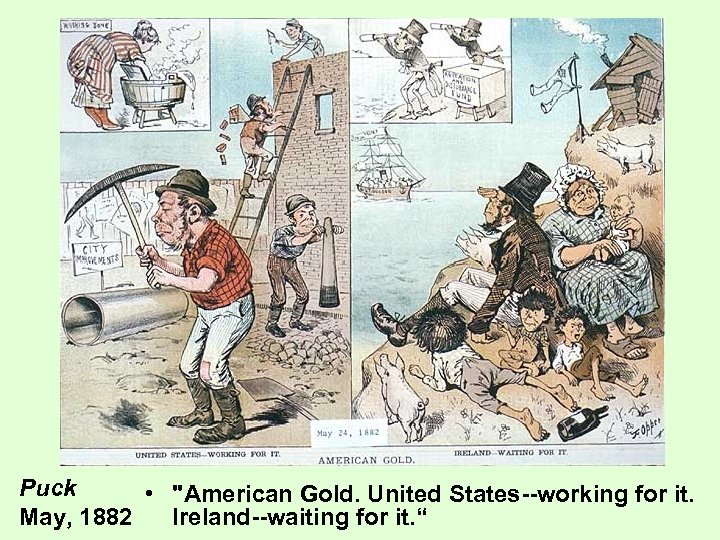 Puck • "American Gold. United States--working for it. May, 1882 Ireland--waiting for it. “
 Irish Migration • “American Wake” – Would never see Ireland again – But Irish future was more poverty, disease, and English oppression • America became their dream – Letters spoke of abundant land – Urged others to follow them – Read at social events to get young to join them – Free land did not lure them – Rejected land because land had rejected them • Left in droves on “Coffin Ships”
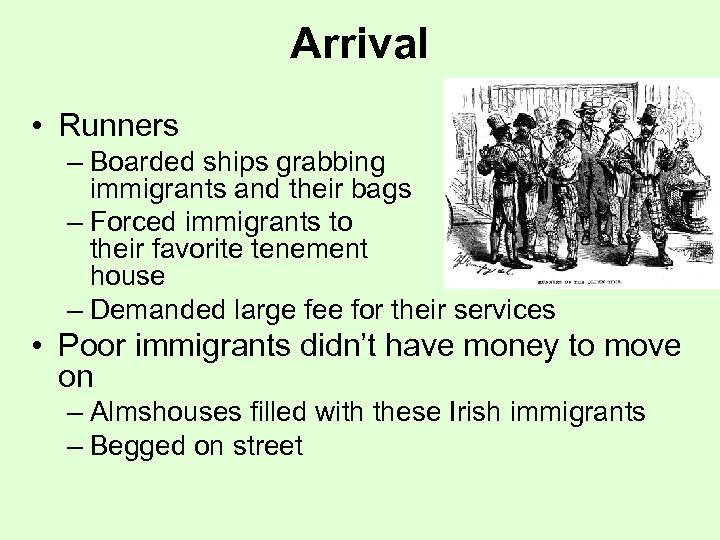 Arrival • Runners – Boarded ships grabbing immigrants and their bags – Forced immigrants to their favorite tenement house – Demanded large fee for their services • Poor immigrants didn’t have money to move on – Almshouses filled with these Irish immigrants – Begged on street
 New Home • One immigrant wrote to family in Ireland, – "My master is a great tyrant, he treats me as badly as if I was a common Irishman… Our position in America is one of shame and poverty. " • No group was considered lower in 1850 s US than Irish
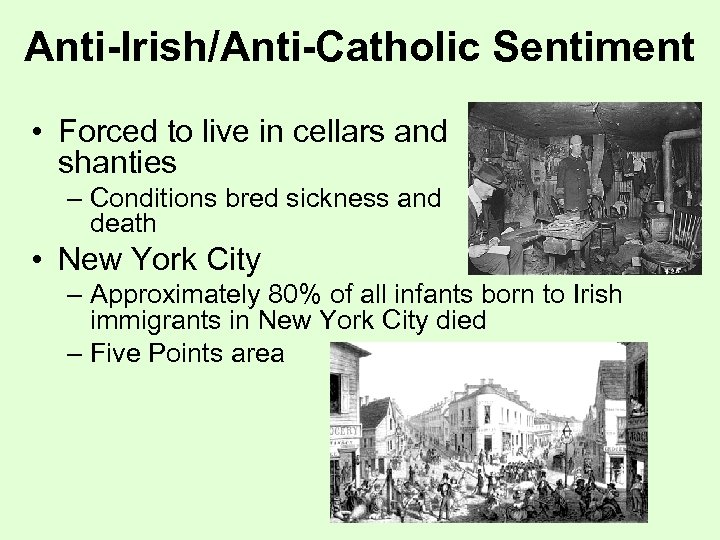 Anti-Irish/Anti-Catholic Sentiment • Forced to live in cellars and shanties – Conditions bred sickness and death • New York City – Approximately 80% of all infants born to Irish immigrants in New York City died – Five Points area
 Anti-Irish/Anti-Catholic Sentiment • Brogue and dress provoked ridicule • Poverty and illiteracy provoked scorn • Popular children's game—”Break the Pope's Neck“ • “No Irish Need Apply”
 Anti-Irish/Anti-Catholic Sentiment • Know-Nothing Party – Because of great Irish migration in mid-late 1840 s – Supported by many native-born white workingmen • Republicans – Irish were constituency of Democrats – Associated Irish with corrupt urban political machines, like New York's Tammany Hall
 Anti-Irish/Anti-Catholic Sentiment • Harper's Weekly – Anti-Catholic fervor intense during 1870 s – Irish Catholics more loyal to Pope than other Catholic immigrants • Vatican viewed as foreign power • Declaration of doctrine of Papal infallibility • Papal pronouncements against liberalism/modernism • Chicago Post – The Irish fill our prisons, our poor houses. . . Scratch a convict or a pauper, and the chances are that you tickle the skin of an Irish Catholic. Putting them on a boat and sending them home would end crime in this country. "
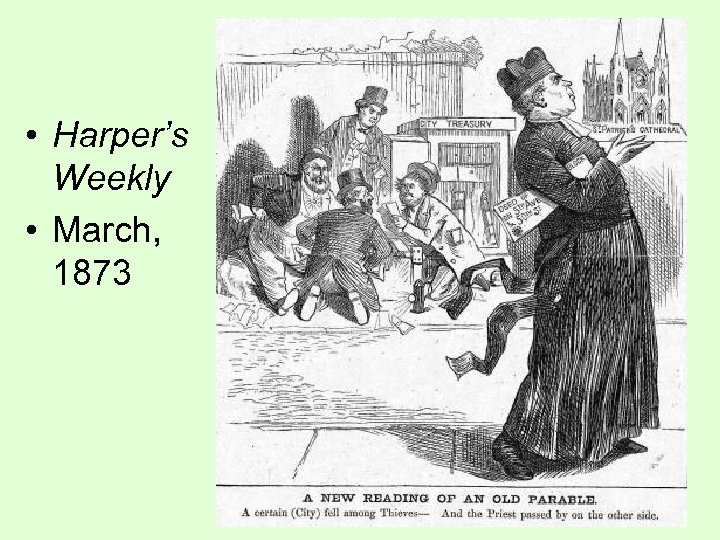 • Harper’s Weekly • March, 1873
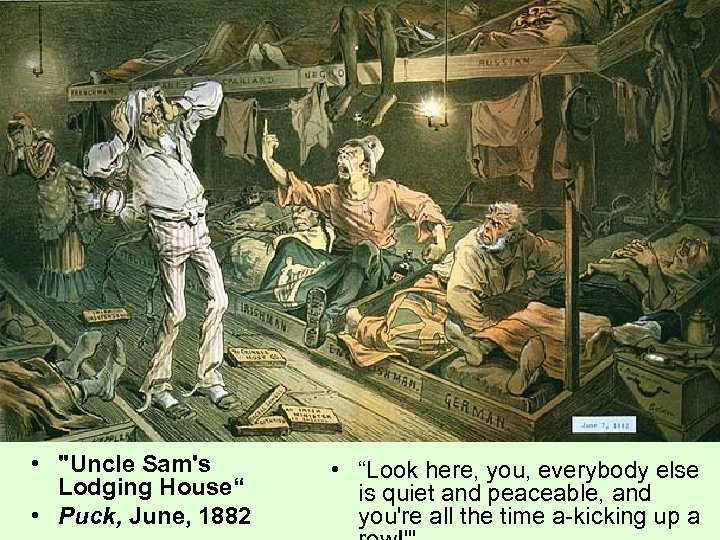 • "Uncle Sam's Lodging House“ • Puck, June, 1882 • “Look here, you, everybody else is quiet and peaceable, and you're all the time a-kicking up a
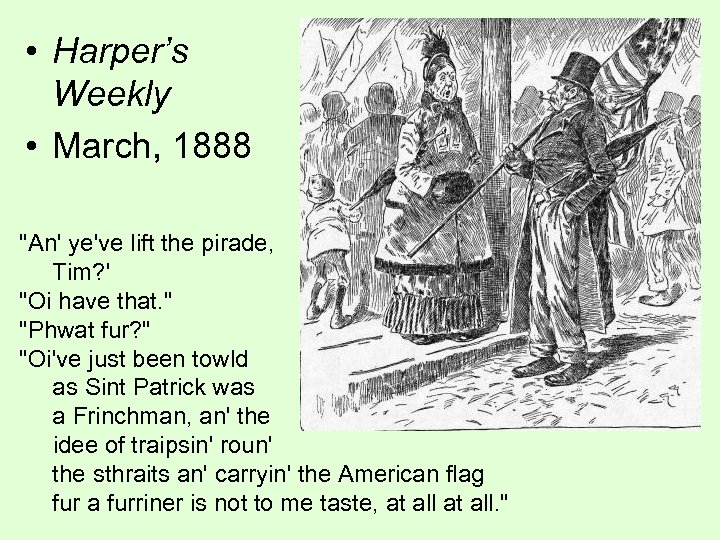 • Harper’s Weekly • March, 1888 "An' ye've lift the pirade, Tim? ' "Oi have that. " "Phwat fur? " "Oi've just been towld as Sint Patrick was a Frinchman, an' the idee of traipsin' roun' the sthraits an' carryin' the American flag fur a furriner is not to me taste, at all. "
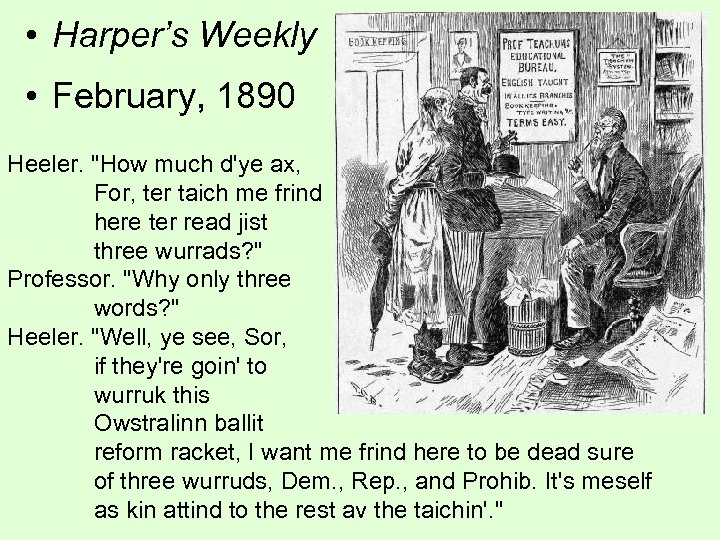 • Harper’s Weekly • February, 1890 Heeler. "How much d'ye ax, For, ter taich me frind here ter read jist three wurrads? " Professor. "Why only three words? " Heeler. "Well, ye see, Sor, if they're goin' to wurruk this Owstralinn ballit reform racket, I want me frind here to be dead sure of three wurruds, Dem. , Rep. , and Prohib. It's meself as kin attind to the rest av the taichin'. "
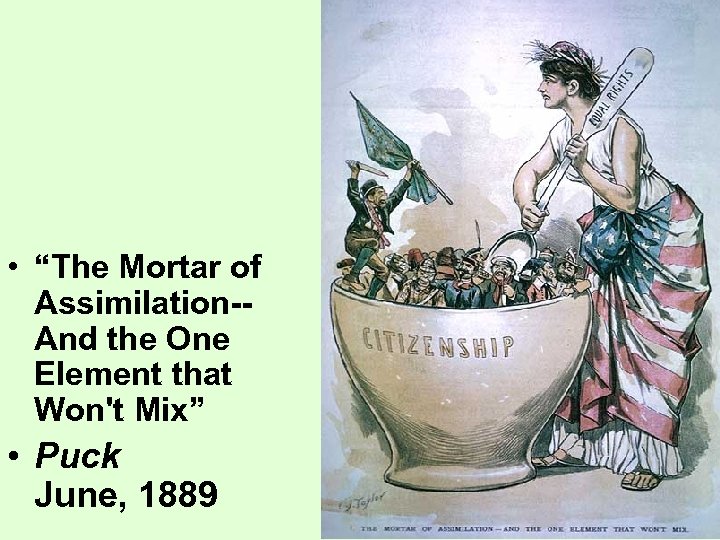 • “The Mortar of Assimilation-And the One Element that Won't Mix” • Puck June, 1889
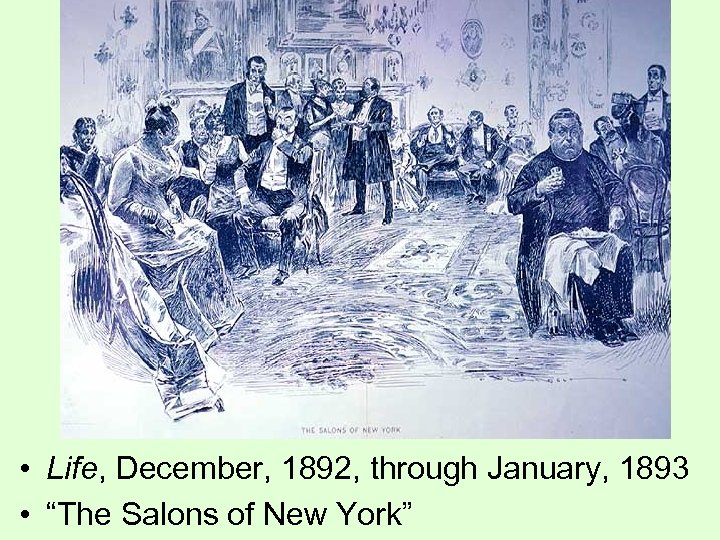 • Life, December, 1892, through January, 1893 • “The Salons of New York”
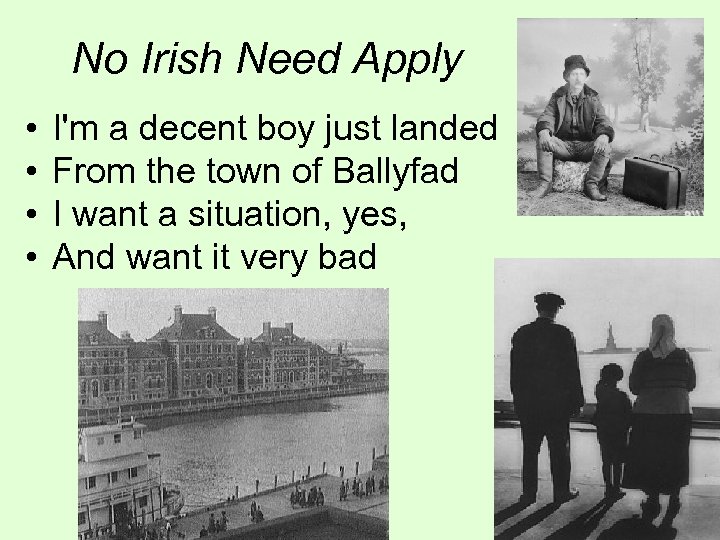 No Irish Need Apply • • I'm a decent boy just landed From the town of Ballyfad I want a situation, yes, And want it very bad
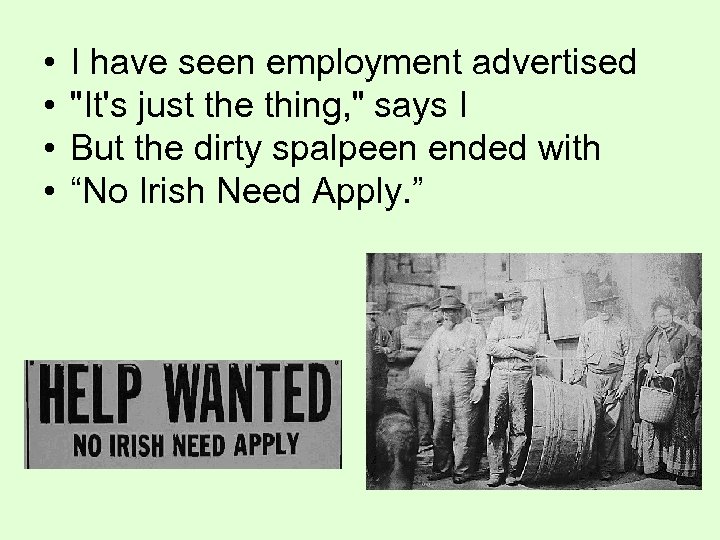 • • I have seen employment advertised "It's just the thing, " says I But the dirty spalpeen ended with “No Irish Need Apply. ”
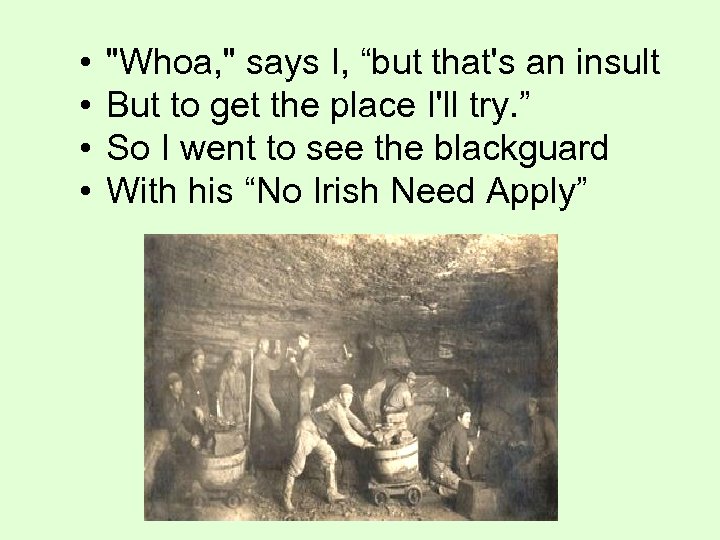 • • "Whoa, " says I, “but that's an insult But to get the place I'll try. ” So I went to see the blackguard With his “No Irish Need Apply”
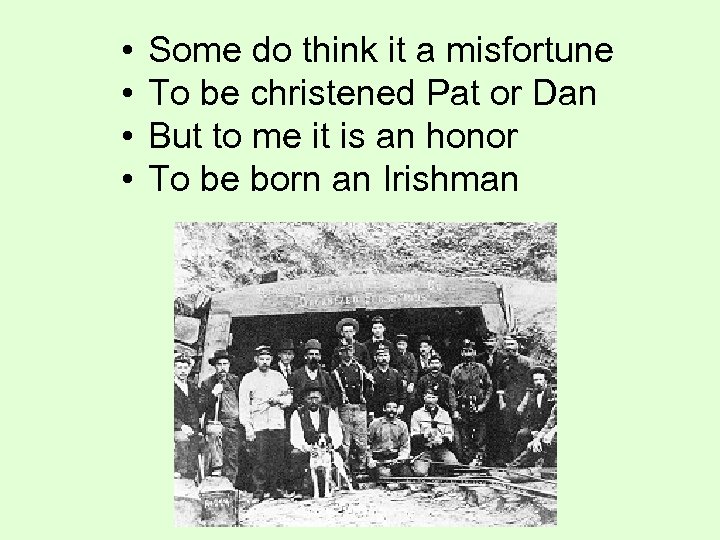 • • Some do think it a misfortune To be christened Pat or Dan But to me it is an honor To be born an Irishman
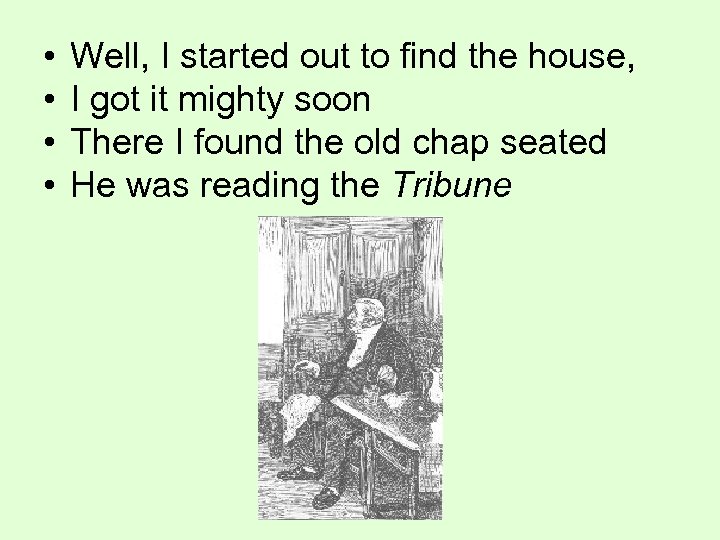 • • Well, I started out to find the house, I got it mighty soon There I found the old chap seated He was reading the Tribune
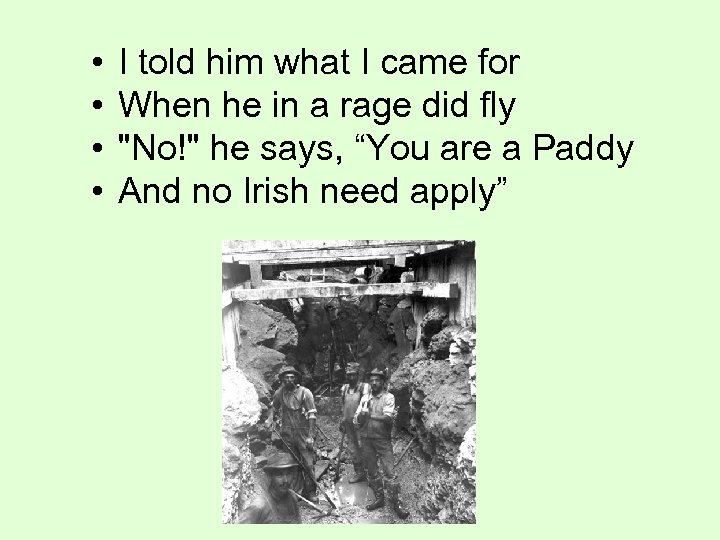 • • I told him what I came for When he in a rage did fly "No!" he says, “You are a Paddy And no Irish need apply”
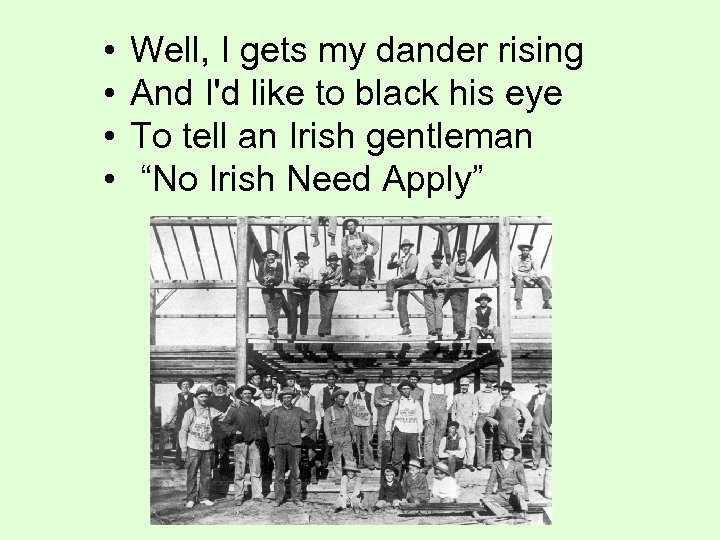 • • Well, I gets my dander rising And I'd like to black his eye To tell an Irish gentleman “No Irish Need Apply”
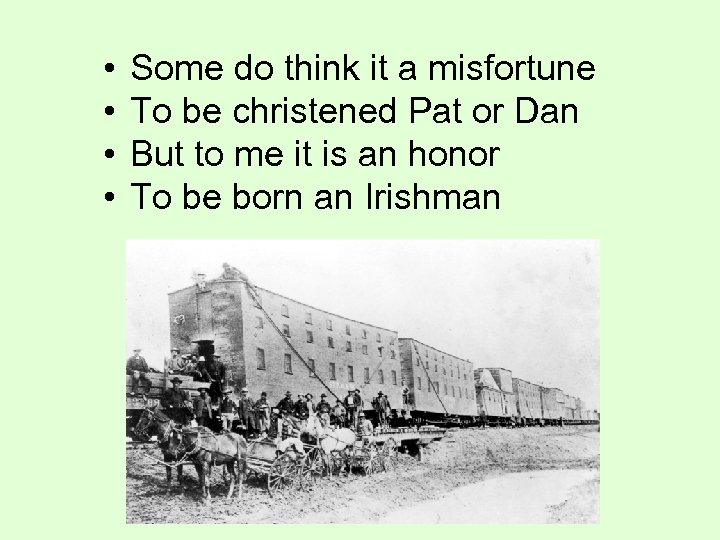 • • Some do think it a misfortune To be christened Pat or Dan But to me it is an honor To be born an Irishman
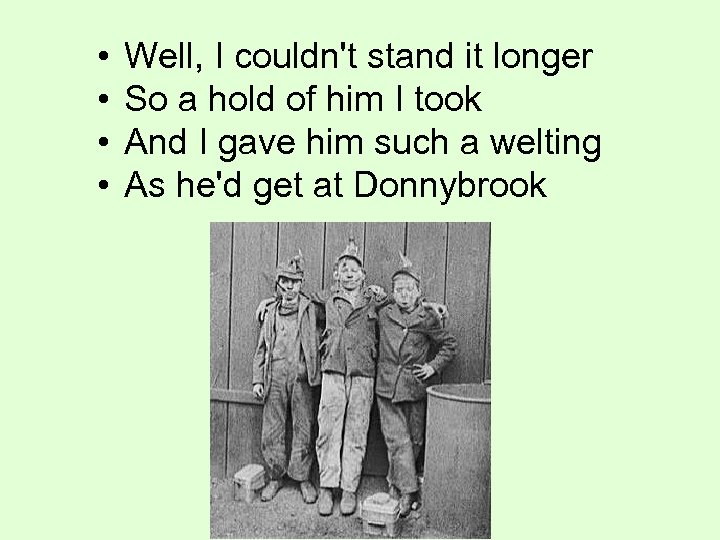 • • Well, I couldn't stand it longer So a hold of him I took And I gave him such a welting As he'd get at Donnybrook
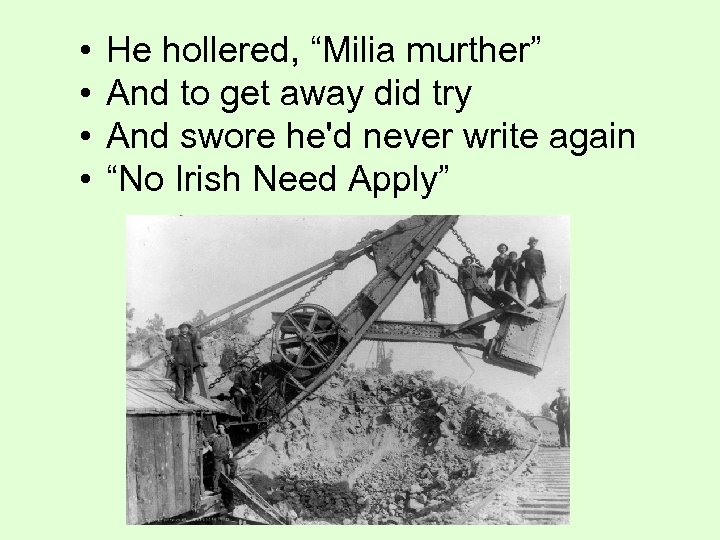 • • He hollered, “Milia murther” And to get away did try And swore he'd never write again “No Irish Need Apply”
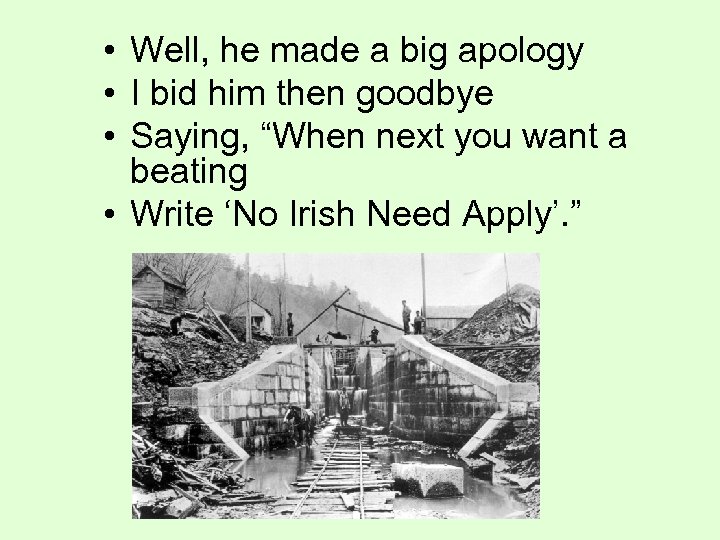 • Well, he made a big apology • I bid him then goodbye • Saying, “When next you want a beating • Write ‘No Irish Need Apply’. ”
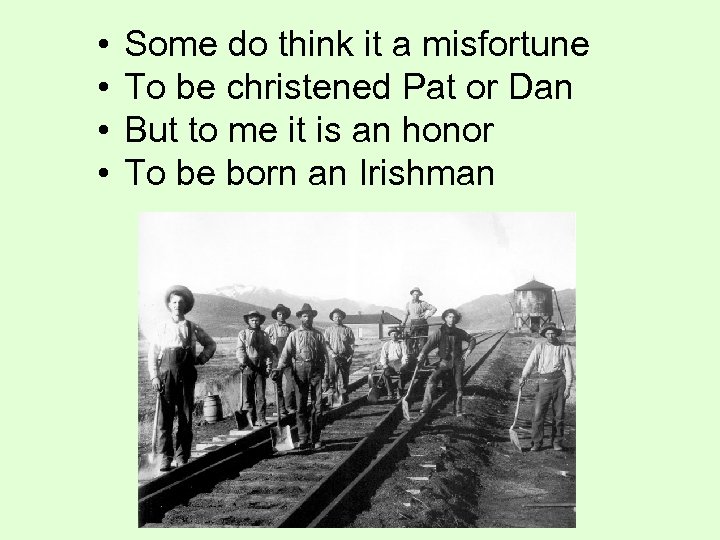 • • Some do think it a misfortune To be christened Pat or Dan But to me it is an honor To be born an Irishman
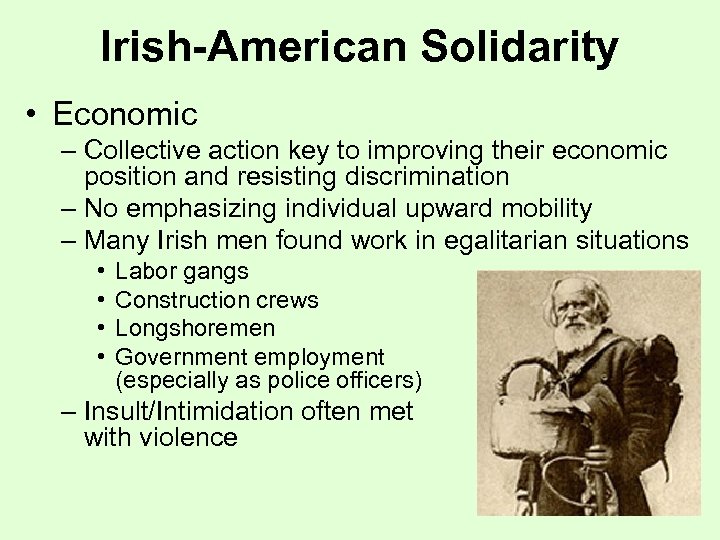 Irish-American Solidarity • Economic – Collective action key to improving their economic position and resisting discrimination – No emphasizing individual upward mobility – Many Irish men found work in egalitarian situations • • Labor gangs Construction crews Longshoremen Government employment (especially as police officers) – Insult/Intimidation often met with violence
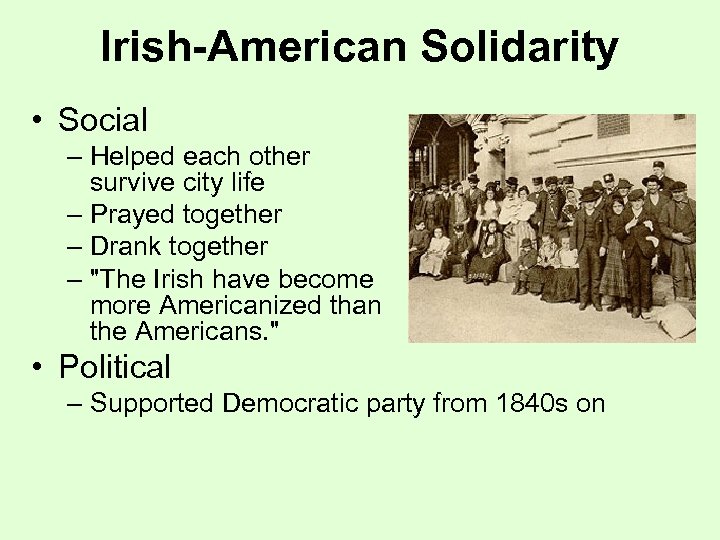 Irish-American Solidarity • Social – Helped each other survive city life – Prayed together – Drank together – "The Irish have become more Americanized than the Americans. " • Political – Supported Democratic party from 1840 s on
 Employment Options • Irish arrived at time of need for America – Country was growing – Family income which hovered around $600/year – Prejudice against blacks high • Blacks hated Irish • Irish hated Blacks • Needed men to build bridges, canals and railroads – Hard, dangerous work – Common expression among railroad workers was “an Irishman is buried under every tie”
 Employment Options • Women were maids, cooks and caretakers of children – Americans thought these jobs only for servants – “Let Negroes be servants, and if not Negroes, let Irishmen fill their place” – Prominent hotel keeper asked why all women servants in his hotel were Irish • "The thing is very simple: the Irish girls are industrious, willing, cheerful, and honest—they work hard, and they are very strictly moral. I should say that is quite reason enough. "
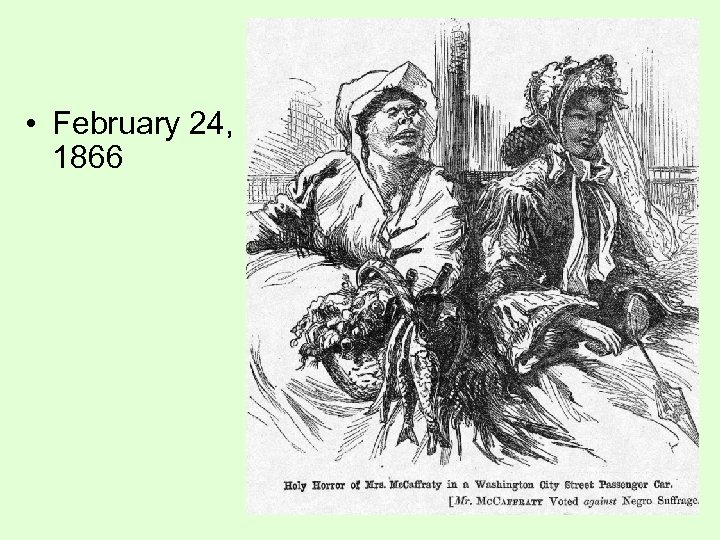 • February 24, 1866
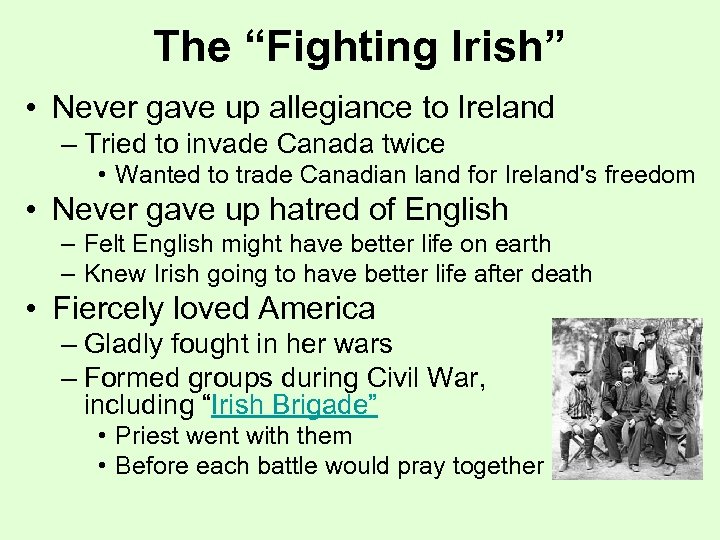 The “Fighting Irish” • Never gave up allegiance to Ireland – Tried to invade Canada twice • Wanted to trade Canadian land for Ireland's freedom • Never gave up hatred of English – Felt English might have better life on earth – Knew Irish going to have better life after death • Fiercely loved America – Gladly fought in her wars – Formed groups during Civil War, including “Irish Brigade” • Priest went with them • Before each battle would pray together
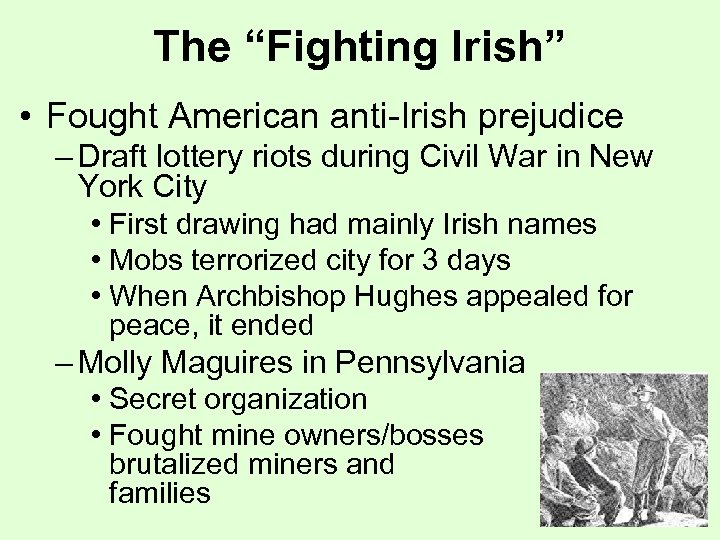 The “Fighting Irish” • Fought American anti-Irish prejudice – Draft lottery riots during Civil War in New York City • First drawing had mainly Irish names • Mobs terrorized city for 3 days • When Archbishop Hughes appealed for peace, it ended – Molly Maguires in Pennsylvania • Secret organization • Fought mine owners/bosses who brutalized miners and their families
 Impact of Catholic Church • Integral part of their lives • Militant Church – Fought not only for their souls but also for their human rights • By late 1840 s, 1, 000 s of Irish-Catholics immigrated to New York City – Many were only nominally Catholic – Only 8 Catholic churches in the city – Dire shortage of priests • By 1860 s, there were 31 Catholic churches
 Respect • St. Patrick’s Day parades replaced violent confrontations – Won acceptance for their day – Persuaded others to be “Irish” for St. Patrick's Day • Jews, Slavs, and Italian immigrants led many Americans to consider the Irish an asset – Irish Americanization was recognized – Hostility shifted from Irish to new nationalities • 1850—convert to Catholicism said about Irish, – "Out of these narrow lanes, dirty streets, damp cellars, and suffocating garrets, will come forth some of the noblest sons of our country, whom she will delight to own and honor. "
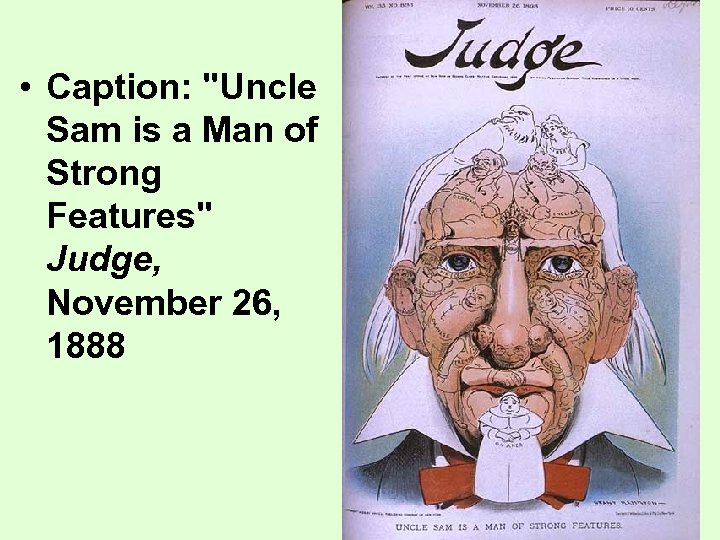 • Caption: "Uncle Sam is a Man of Strong Features" Judge, November 26, 1888
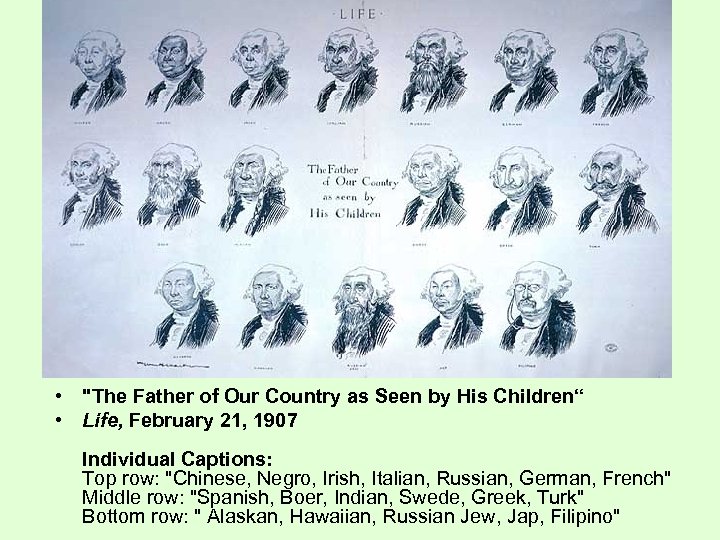 • "The Father of Our Country as Seen by His Children“ • Life, February 21, 1907 Individual Captions: Top row: "Chinese, Negro, Irish, Italian, Russian, German, French" Middle row: "Spanish, Boer, Indian, Swede, Greek, Turk" Bottom row: " Alaskan, Hawaiian, Russian Jew, Jap, Filipino"
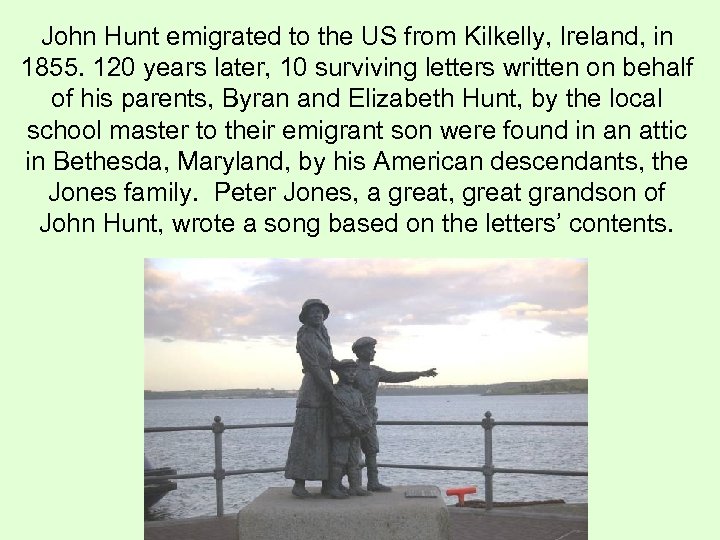 John Hunt emigrated to the US from Kilkelly, Ireland, in 1855. 120 years later, 10 surviving letters written on behalf of his parents, Byran and Elizabeth Hunt, by the local school master to their emigrant son were found in an attic in Bethesda, Maryland, by his American descendants, the Jones family. Peter Jones, a great, great grandson of John Hunt, wrote a song based on the letters’ contents.
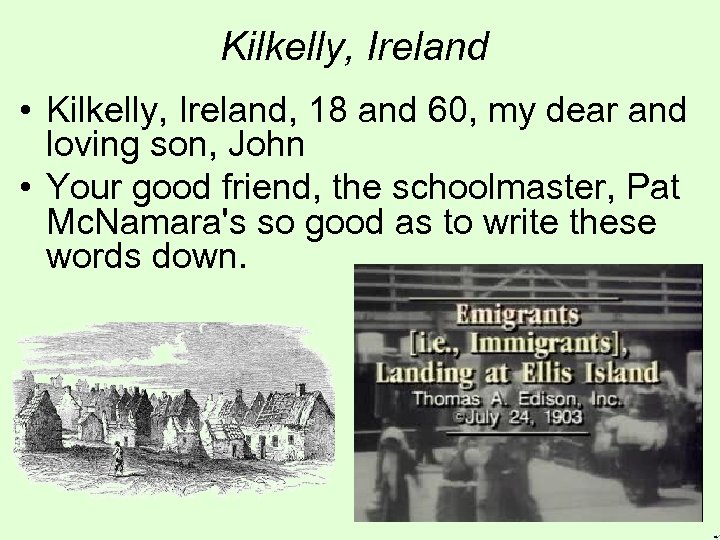 Kilkelly, Ireland • Kilkelly, Ireland, 18 and 60, my dear and loving son, John • Your good friend, the schoolmaster, Pat Mc. Namara's so good as to write these words down.
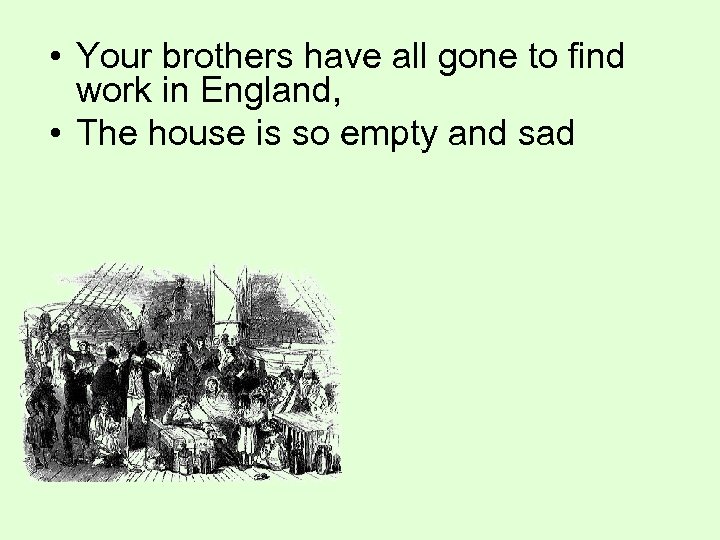 • Your brothers have all gone to find work in England, • The house is so empty and sad
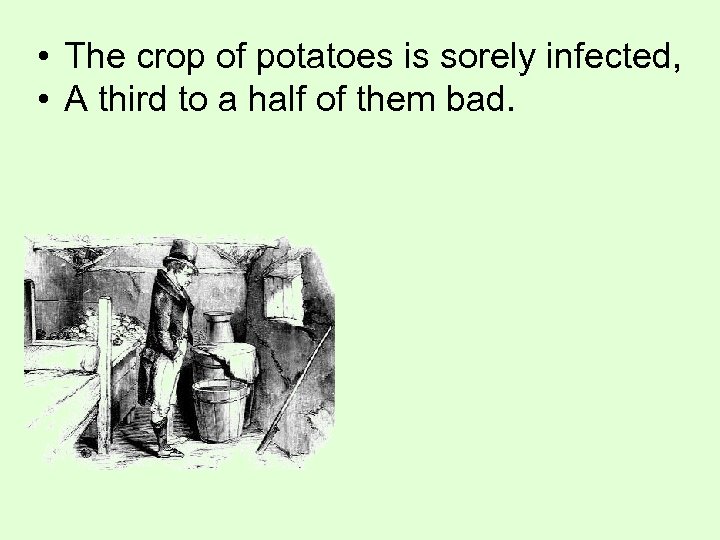 • The crop of potatoes is sorely infected, • A third to a half of them bad.
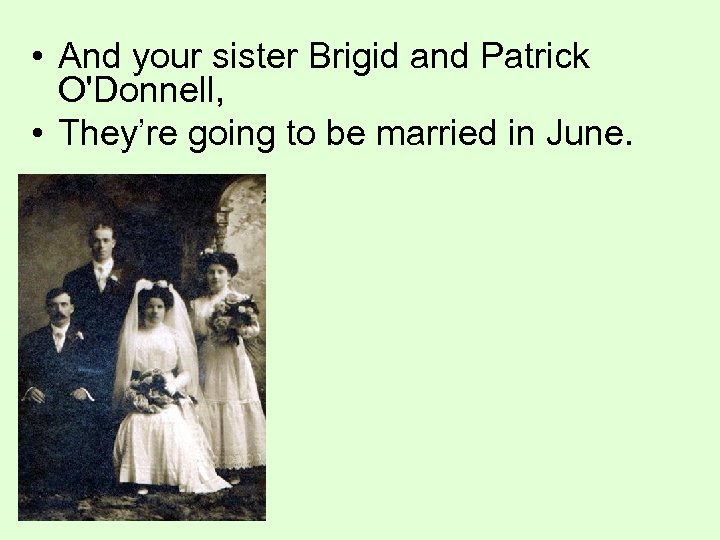 • And your sister Brigid and Patrick O'Donnell, • They’re going to be married in June.
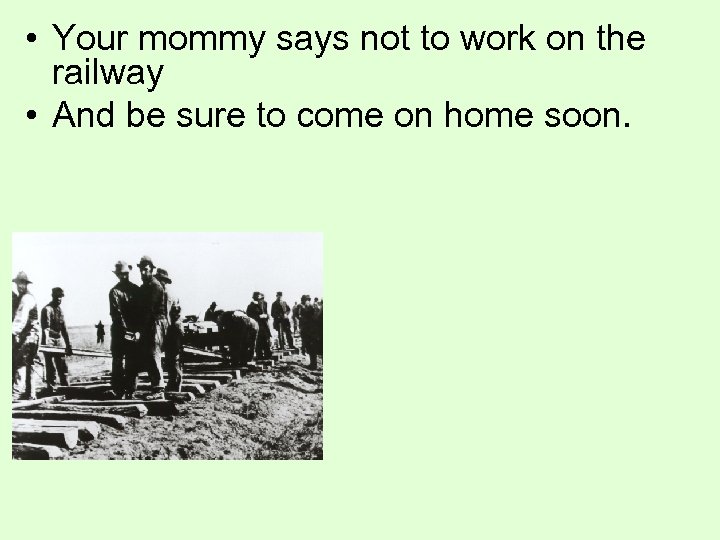 • Your mommy says not to work on the railway • And be sure to come on home soon.
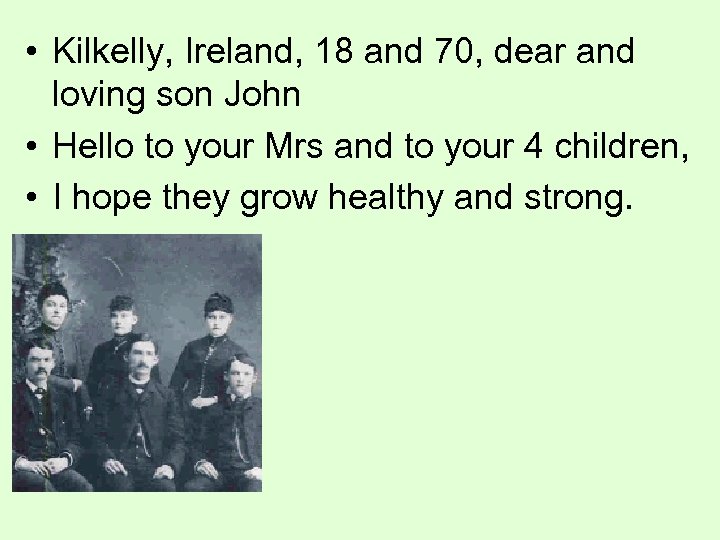 • Kilkelly, Ireland, 18 and 70, dear and loving son John • Hello to your Mrs and to your 4 children, • I hope they grow healthy and strong.
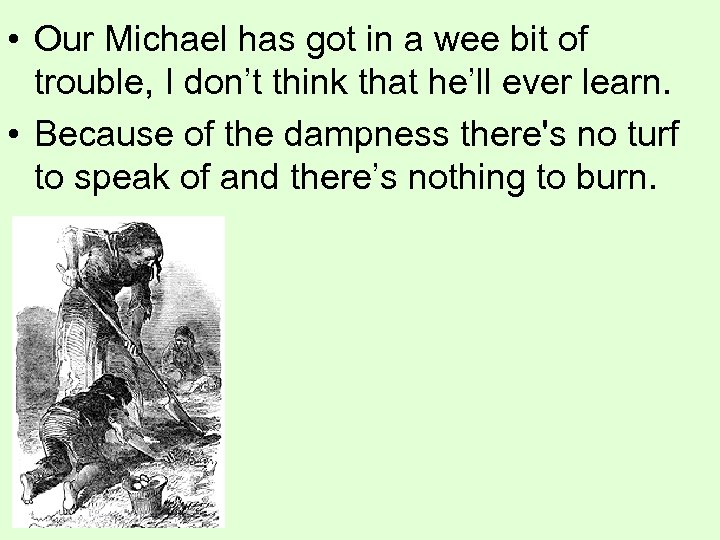 • Our Michael has got in a wee bit of trouble, I don’t think that he’ll ever learn. • Because of the dampness there's no turf to speak of and there’s nothing to burn.
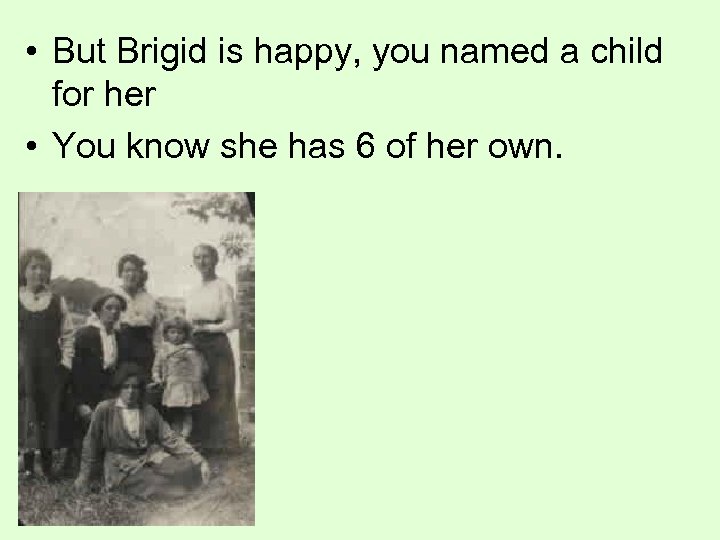 • But Brigid is happy, you named a child for her • You know she has 6 of her own.
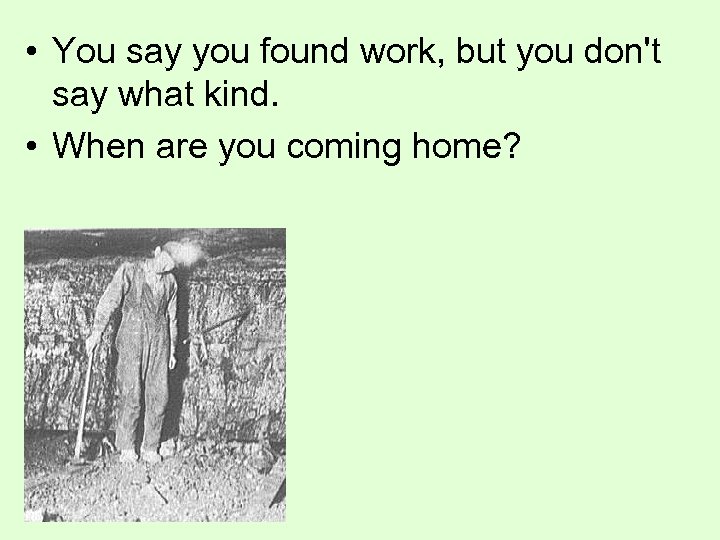 • You say you found work, but you don't say what kind. • When are you coming home?
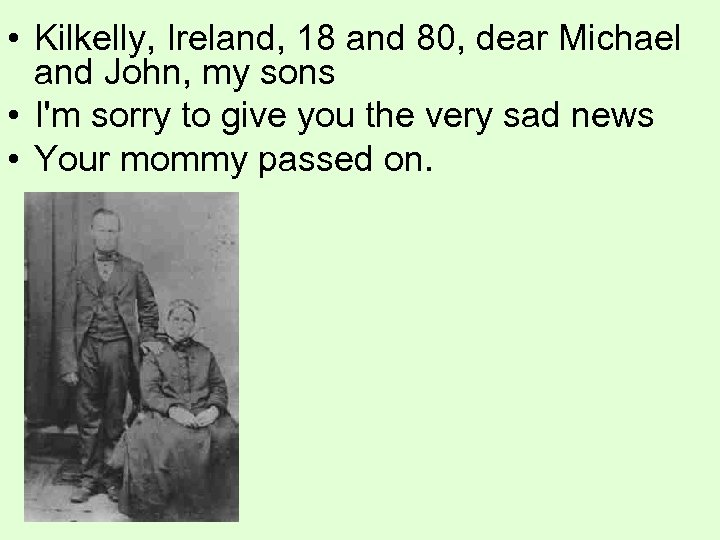 • Kilkelly, Ireland, 18 and 80, dear Michael and John, my sons • I'm sorry to give you the very sad news • Your mommy passed on.
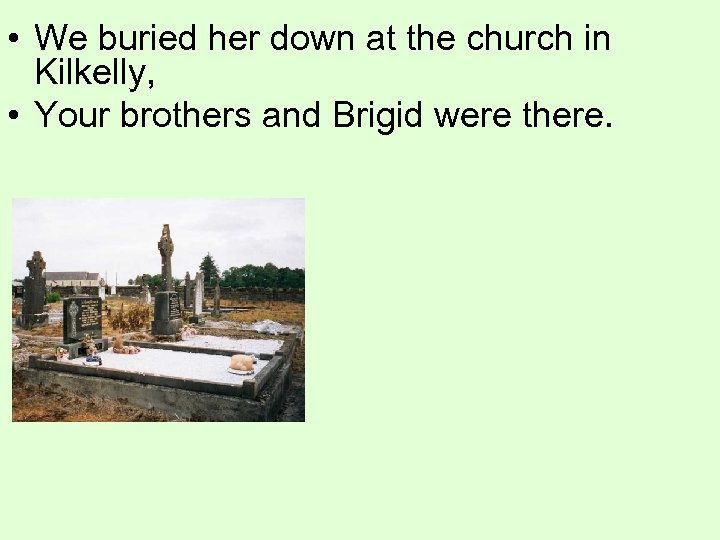 • We buried her down at the church in Kilkelly, • Your brothers and Brigid were there.
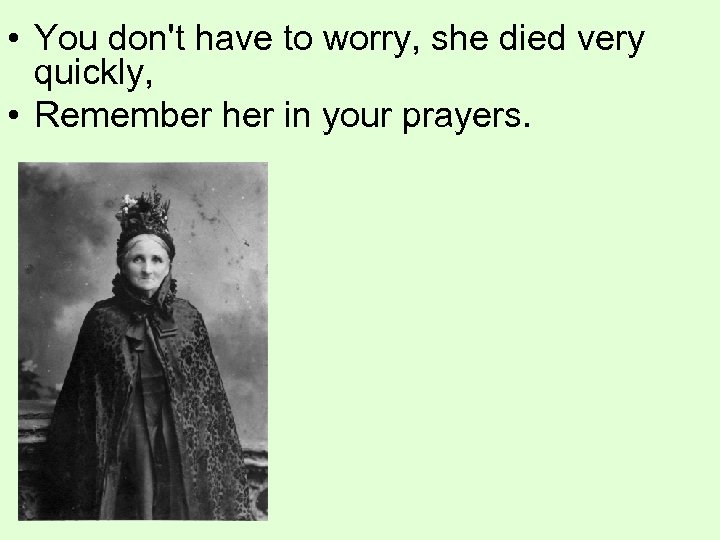 • You don't have to worry, she died very quickly, • Remember her in your prayers.
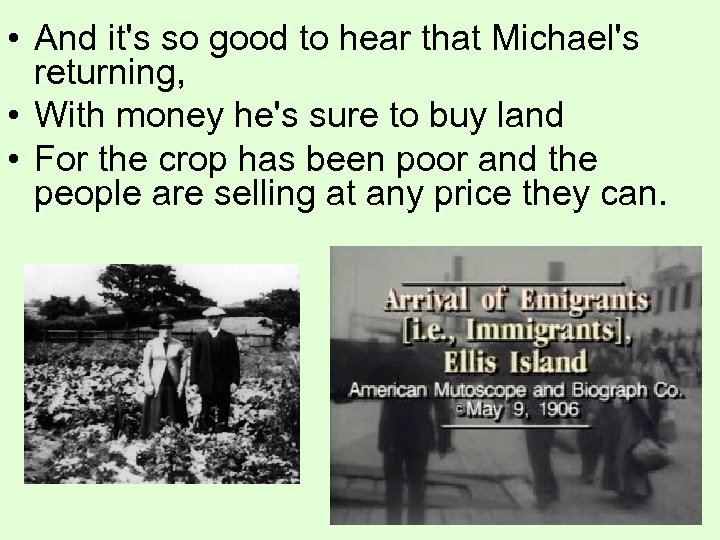 • And it's so good to hear that Michael's returning, • With money he's sure to buy land • For the crop has been poor and the people are selling at any price they can.
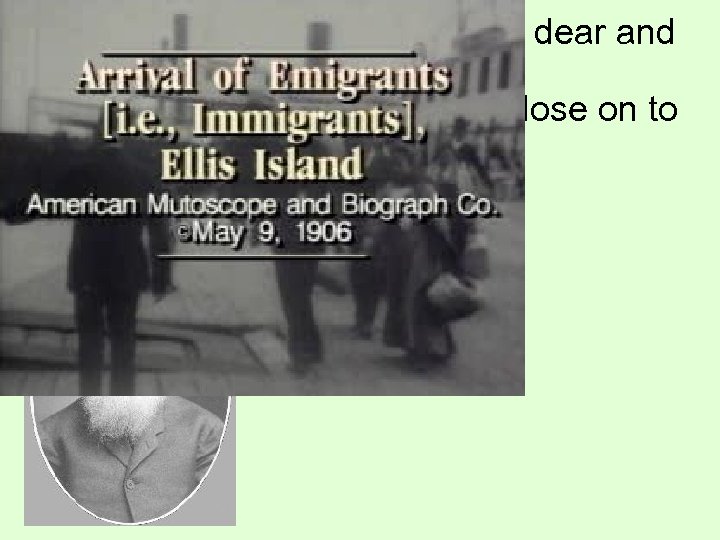 • Kilkelly, Ireland, 18 and 90, my dear and loving son John • I suppose that I must now be close on to eighty, • Thirty years you‘ve been gone.
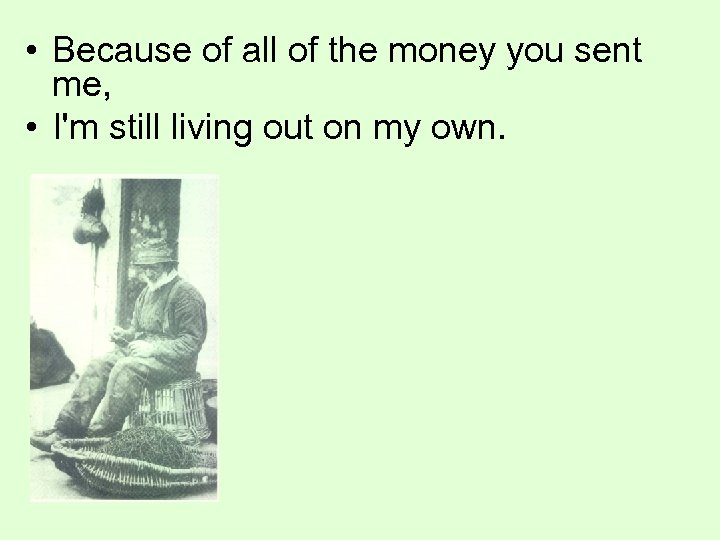 • Because of all of the money you sent me, • I'm still living out on my own.
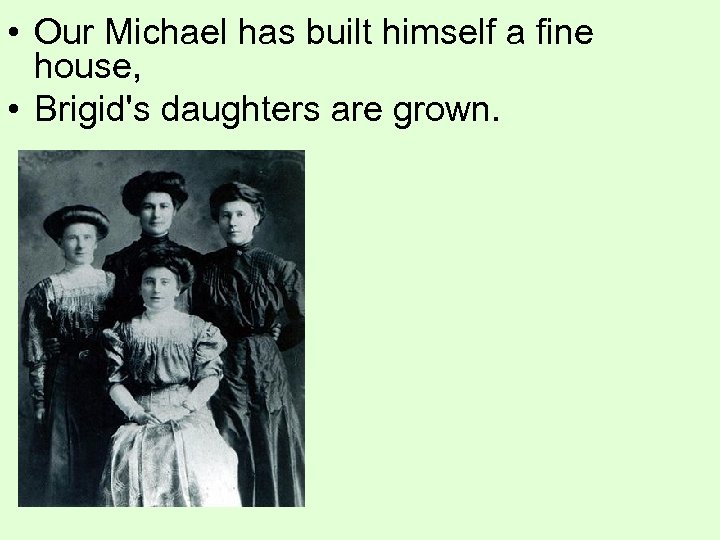 • Our Michael has built himself a fine house, • Brigid's daughters are grown.
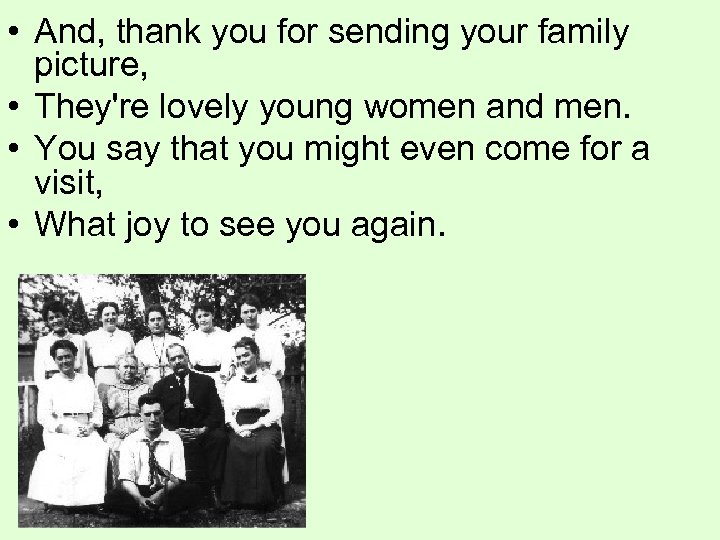 • And, thank you for sending your family picture, • They're lovely young women and men. • You say that you might even come for a visit, • What joy to see you again.
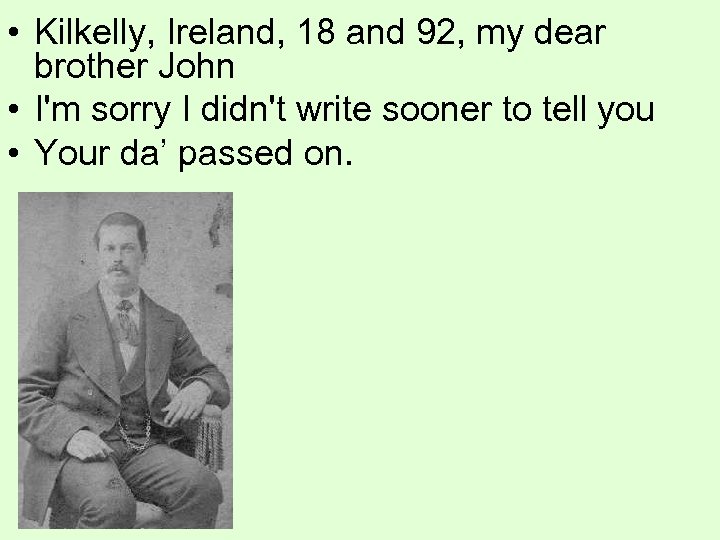 • Kilkelly, Ireland, 18 and 92, my dear brother John • I'm sorry I didn't write sooner to tell you • Your da’ passed on.
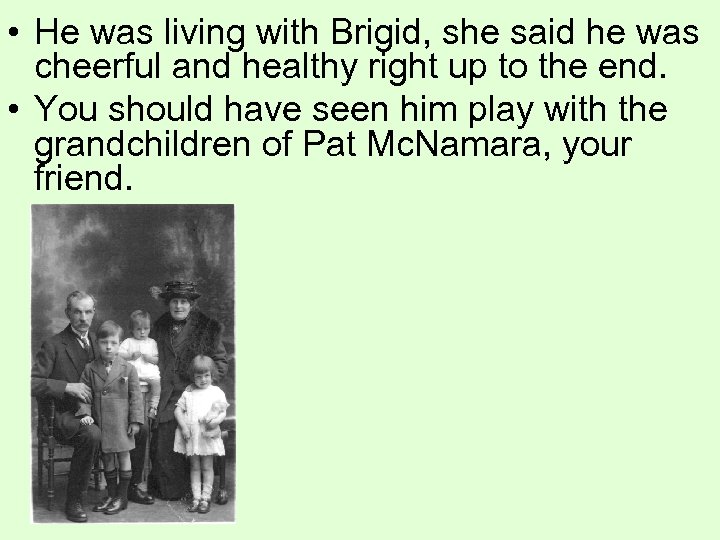 • He was living with Brigid, she said he was cheerful and healthy right up to the end. • You should have seen him play with the grandchildren of Pat Mc. Namara, your friend.
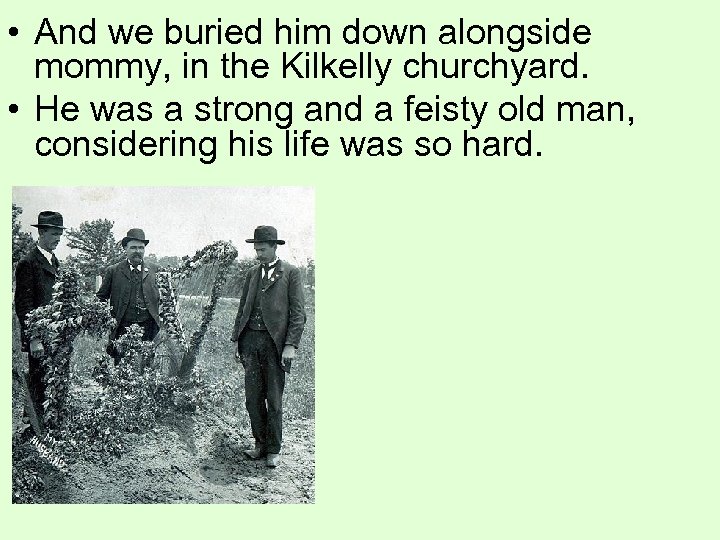 • And we buried him down alongside mommy, in the Kilkelly churchyard. • He was a strong and a feisty old man, considering his life was so hard.
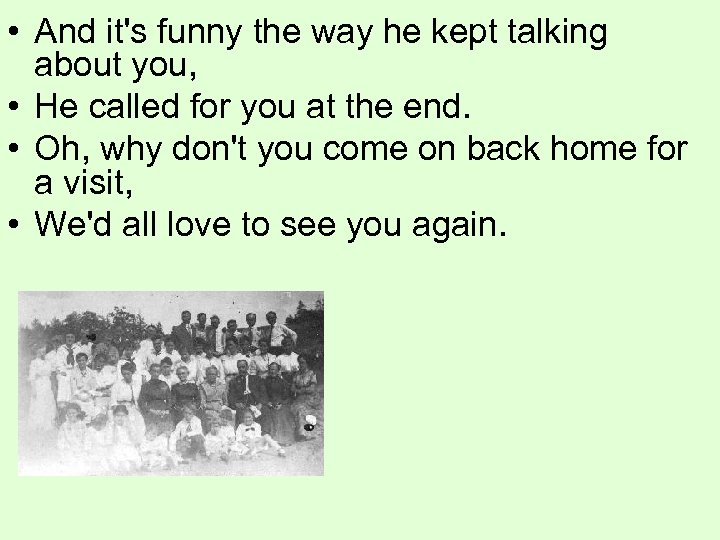 • And it's funny the way he kept talking about you, • He called for you at the end. • Oh, why don't you come on back home for a visit, • We'd all love to see you again.
 The Luck of the Irish: The Immigrants' Road to a New Life in America
 The Irish in America: from the emerald isle to the promise land • A&E Network, c 1997. • Description: 2 videocassettes (VHS)(100 min. ): col. /b&w • Narrator: Aidan Quinn. • Summary: Follows the nation's first immigrant group on their journey to the American dream. From war hero and President Andrew Jackson to union organizer Mother Jones, meet the colorful Irish-Americans who fought and worked their way past oppression and into history.
 The Irish in America: long journey home • Walt Disney Studios, WGBH Boston. PBS Video, 1998 • Narrator: Michael Murphy. • Volume 1: The great hunger – 1 videocassette (VHS)(90 min. ): col. /b&w – Chronicles the immigration of 1. 5 million Irish to the United States following the potato famine of the mid-1800 s. • Volume 2: All across America – 1 videocassette (VHS)(120 min. ): col. /b&w – Chronicles the poverty, disease and religious bigotry experienced by Irish immigrants to America, and their determination to make their way in a new country.
 The Irish in America: long journey home • Volume 3: Up from city streets – 1 videocassette (VHS)(90 min. ): col. /b&w – Summary: Chronicles the golden age for the Irish in America, when many rose to run its great cities, or made their mark in theater, sports, music, crime, labor, Wall Street and Hollywood. • Volume 4: Success – 1 videocassette (VHS)(60 min. ): col. /b&w – Summary: Chronicles the history of two different Irish. American families: the Joseph P. Kennedy Sr. family, and the Eugene O'Neill family. One basked in the glory of assimilation while the other eschewed it.
 Bibliography • The Catholic University Of America • Five Points Archaeological Project, U. S. General Services Administration Public Buildings Service, New York • Harp. Week • The History Place • home. att. net/~lewis_ nolan/ANDREW 2. JPG • info. lu. farmingdale. edu/ • Library of Congress, Motion Picture, Broadcasting, and Recorded Sound Division • Library of Congress Prints and Photographs Division • math. uww. edu/ • Mercado, Steven, Chaffey High School, Ontario, CA • Michigan State University and Michigan State University Museum • Mintz, Professor Steven, University of Houston, (2003). Digital History • nhs. needham. k 12. ma. us/cur/kane 98/kane_p 3_immig/Irish/irish. html • Omaha North High School, Omaha, Nebraska • Poblacht na hÉireann • sc. groups. msn. com • vassun. vassar. edu/~sttaylor/FAMINE/PT/PT. html
 Bibliography • • • • www. ailf. org/. . . /Irish 1_files/immigrant. jpg www. cft. org/special/cal_hist/roney. jpg www. eehealy. com/images www. endex. com/gf/buildings/liberty. html www. foxearth 2. freeserve. co. uk www. greenbahl. com/images/immigrantstne. jpg www. irishroots. net/ www. kinsella. org/history/histira. htm www. latinamericanstudies. org/19 -century/ www. lineages. co. uk/images www. loc. gov/. . . /images/statue-immigrant. jpg www. lochassyntmills. com/weavers. jpg www. metrokc. gov/exec/irish/redsm. gif www. msha. gov/CENTURY/IRISH/IMAGES www. sacred-texts. com/ www. users. bigpond. com/. . . /Johnand%20 Bridgett. jpg