 Скачать презентацию The Legislative Branch Congress The House of Representatives
aeaa20a7e7c21d7bc16c4e9cb90363cf.ppt
- Количество слайдов: 27



The Legislative Branch Congress: The House of Representatives The Senate
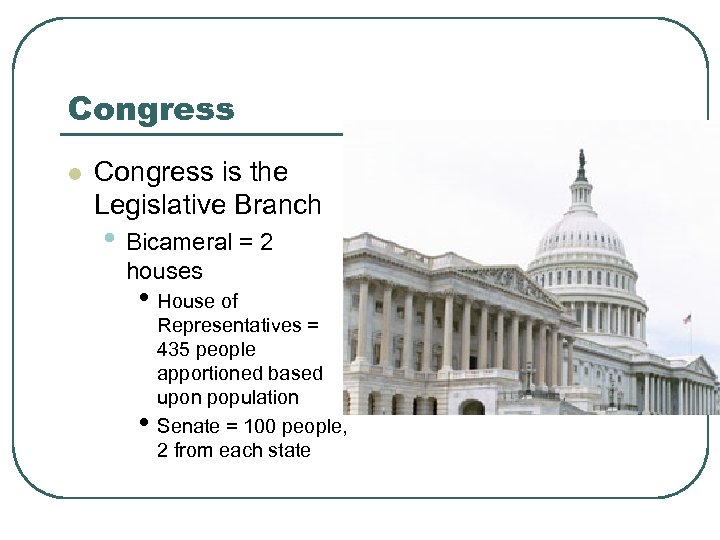
Congress l Congress is the Legislative Branch • Bicameral = 2 houses • House of • Representatives = 435 people apportioned based upon population Senate = 100 people, 2 from each state
Congress: General Information l -House of Rep. ’s: directly elected l -Senate: first chosen by state legislatures l -Qualifications: • Based on population (census) • Capped at 435 • 17 th Amendment: chosen by voters • House: 25 yrs. , 7 yr. citizen, resident/ 2 yr. term • Senate: 30 yrs. , 9 yr. citizen, resident/ 6 yr.
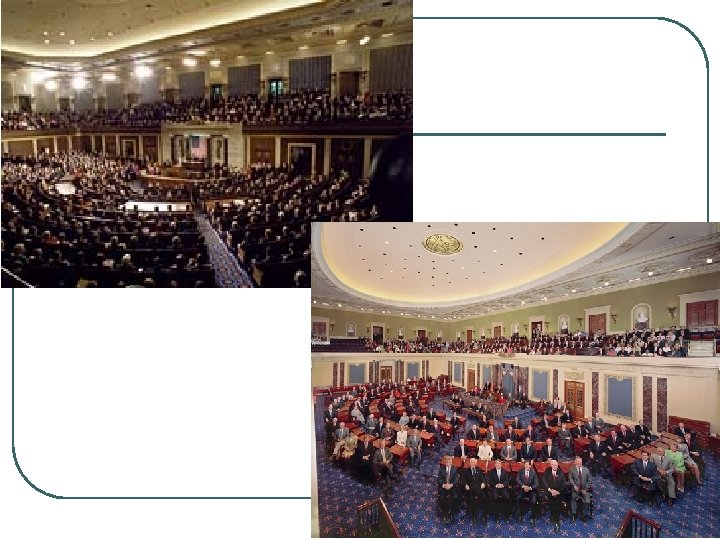
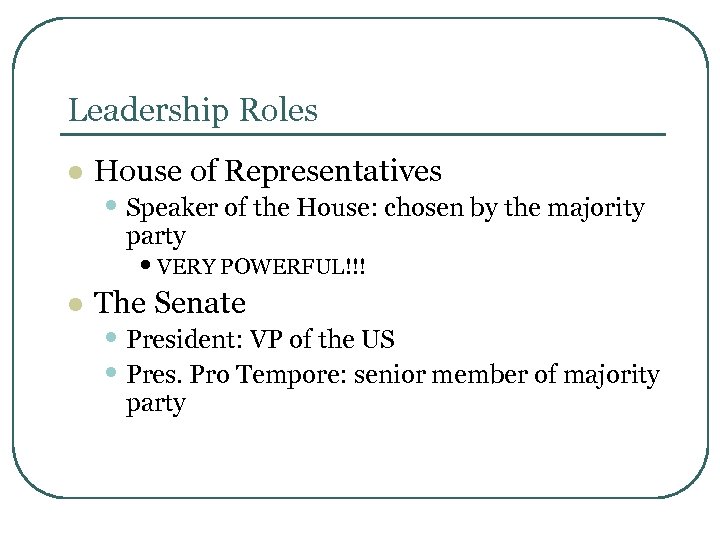
Leadership Roles l House of Representatives • Speaker of the House: chosen by the majority party • VERY POWERFUL!!! l The Senate • President: VP of the US • Pres. Pro Tempore: senior member of majority party
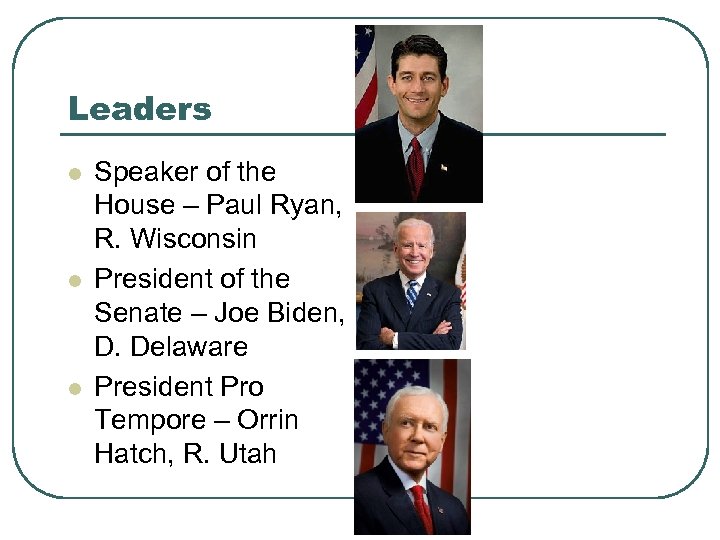
Leaders l l l Speaker of the House – Paul Ryan, R. Wisconsin President of the Senate – Joe Biden, D. Delaware President Pro Tempore – Orrin Hatch, R. Utah

Sean Patrick Maloney

NY Senators
What is the role of the Legislative Branch? ? ? l l The #1 job of the House of Reps and the Senate is to MAKE LAWS!!! I'm Just a Bill
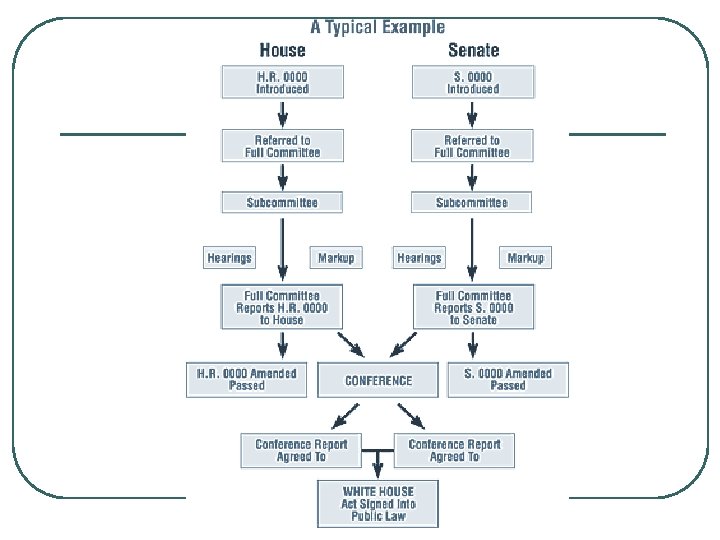

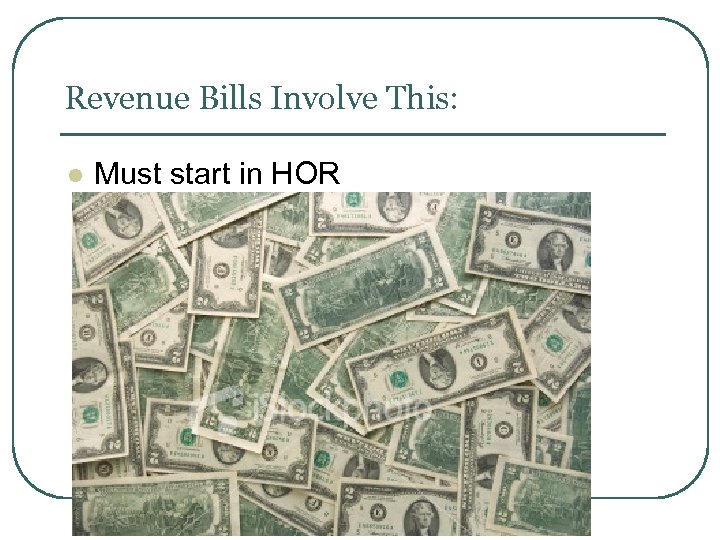
Revenue Bills Involve This: l Must start in HOR
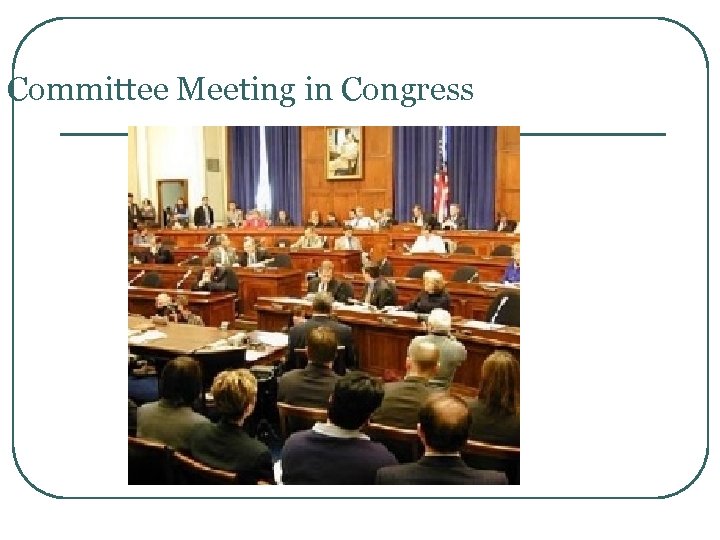
Committee Meeting in Congress
Process (cont. ) l Sent to House floor for a vote • House: limited time for debate • Senate: unlimited • “filibuster”:
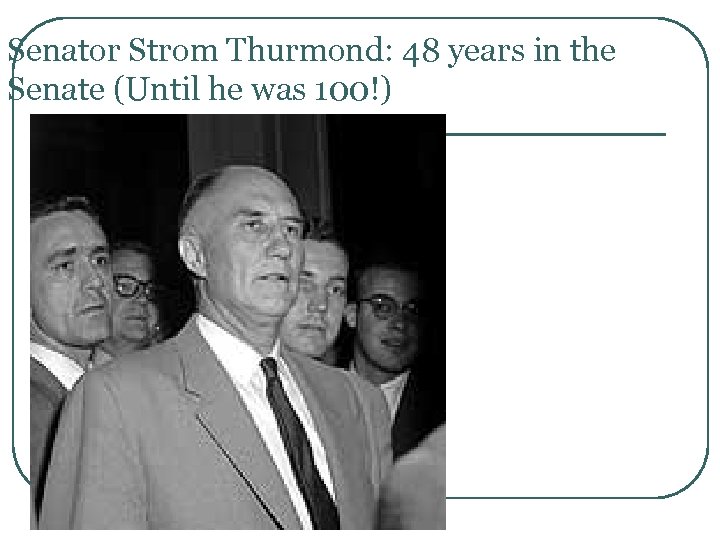
Senator Strom Thurmond: 48 years in the Senate (Until he was 100!)
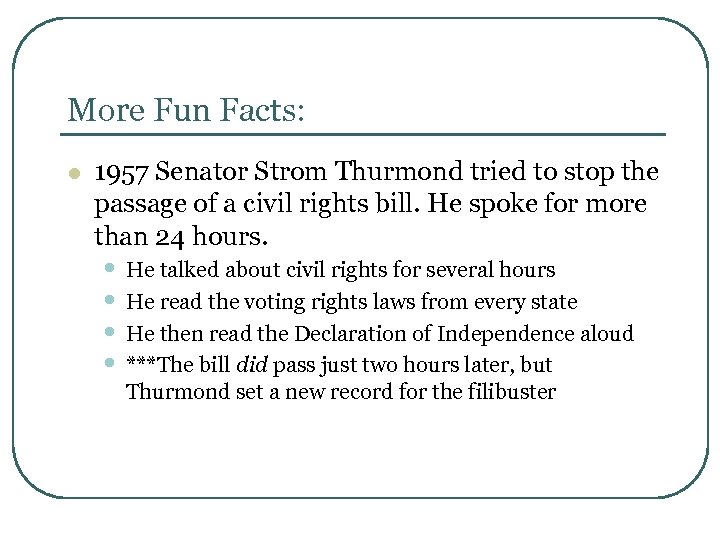
More Fun Facts: l 1957 Senator Strom Thurmond tried to stop the passage of a civil rights bill. He spoke for more than 24 hours. • He talked about civil rights for several hours • He read the voting rights laws from every state • He then read the Declaration of Independence aloud • ***The bill did pass just two hours later, but Thurmond set a new record for the filibuster
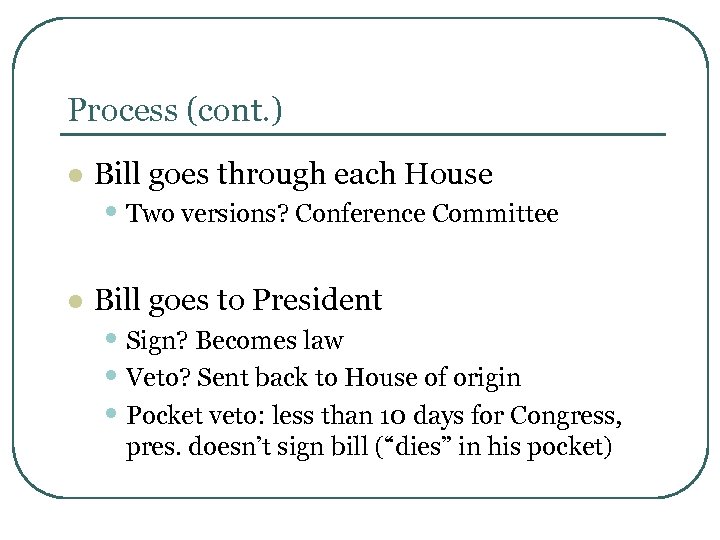
Process (cont. ) l Bill goes through each House l Bill goes to President • Two versions? Conference Committee • Sign? Becomes law • Veto? Sent back to House of origin • Pocket veto: less than 10 days for Congress, pres. doesn’t sign bill (“dies” in his pocket)
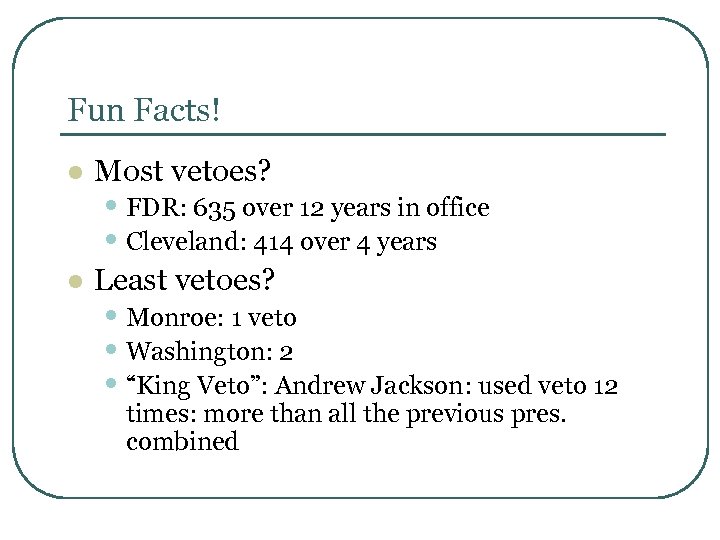
Fun Facts! l Most vetoes? l Least vetoes? • FDR: 635 over 12 years in office • Cleveland: 414 over 4 years • Monroe: 1 veto • Washington: 2 • “King Veto”: Andrew Jackson: used veto 12 times: more than all the previous pres. combined
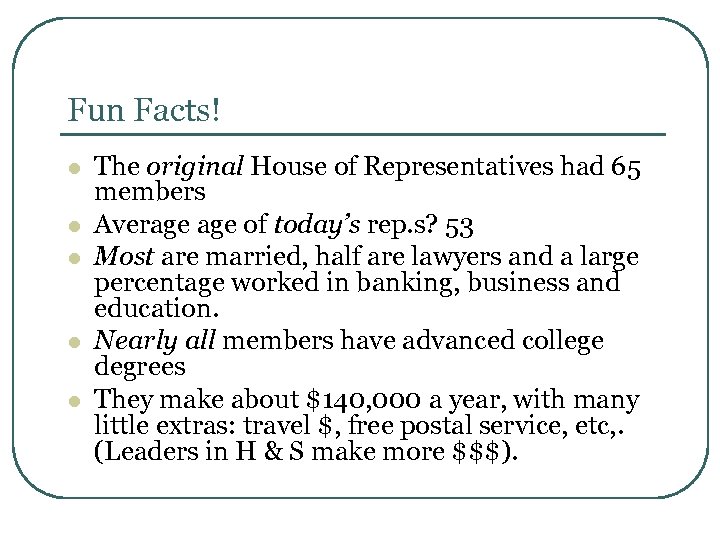
Fun Facts! l l l The original House of Representatives had 65 members Average of today’s rep. s? 53 Most are married, half are lawyers and a large percentage worked in banking, business and education. Nearly all members have advanced college degrees They make about $140, 000 a year, with many little extras: travel $, free postal service, etc, . (Leaders in H & S make more $$$).
Non-Lawmaking Powers and Responsibilities
Powers of Legislative Branch l Delegated or enumerated: Specifically granted: • Declare war • coin $ • regulate trade – between states and U. S. and foreign • raise taxes
Powers of Legislative Branch l Implied powers: Not specifically granted • to make all laws necessary & proper to carry out their delegated powers • Elastic Clause or necessary & proper clause
Powers (cont. ) l Non-Legislative Powers: non-law-making powers: • Senate: • approve pres. Appointments (Judges and Cabinet) • admit new states • approve treaties • propose Constitutional amendments • House: • Admit new states • Propose amendments to Constitution
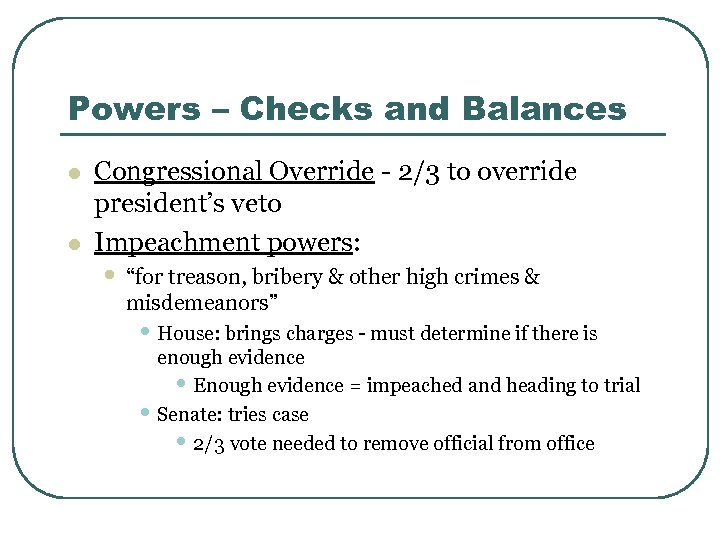
Powers – Checks and Balances l l Congressional Override - 2/3 to override president’s veto Impeachment powers: • “for treason, bribery & other high crimes & misdemeanors” • House: brings charges - must determine if there is • enough evidence • Enough evidence = impeached and heading to trial Senate: tries case • 2/3 vote needed to remove official from office
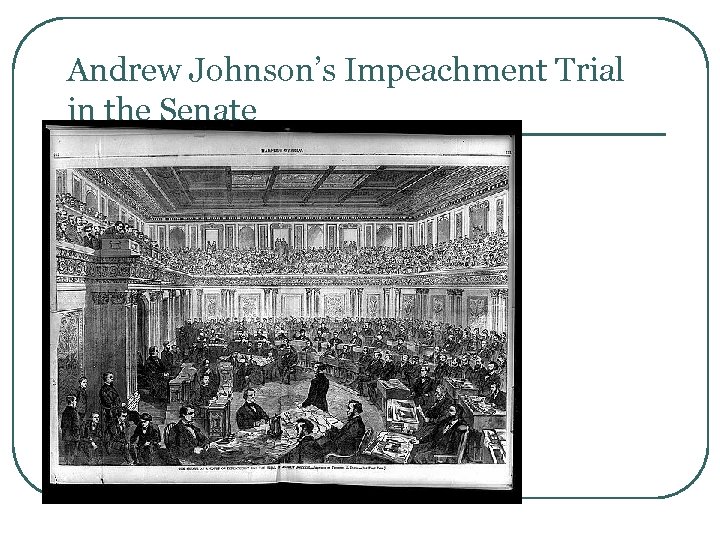
Andrew Johnson’s Impeachment Trial in the Senate

President Bill Clinton
The Intentions of the Founding Fathers and the Constitution l l The Legislative Branch was supposed to be the strongest/most powerful branch of the government As time has passed and our government has evolved the Executive Branch, or president, has become more powerful
Скачать презентацию The Legislative Branch Congress The House of Representatives
aeaa20a7e7c21d7bc16c4e9cb90363cf.ppt