Скачать презентацию The Legal professions Lawyer is the generic
Legal Proffesion.pptx
- Количество слайдов: 18
 The Legal professions
 Lawyer is the generic name given to members of our legal profession.
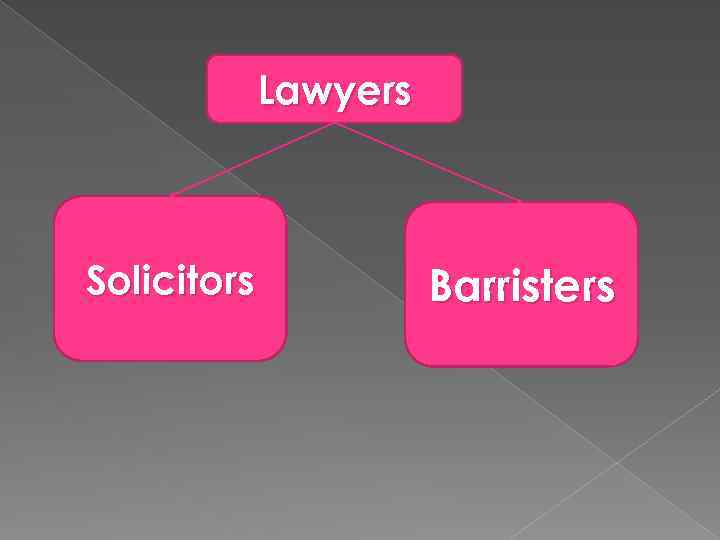 Lawyers Solicitors Barristers
 Solicitor advocate of lower rank, not having the right to practice before the highest courts. they are engaged in preparing a written case, that is, preparation of legal papers and preliminary part of the process. Privileges to consist in the liberation of the lessons of urban and provincial positions, from election to the jurors, etc.
 Solicitors have full right of audience in the magistrates’ and county courts.
 Solicitors are in direct contact with their clients.
 Duties of solicitor Most solicitors are employed in private practice, either alone or in a partnership firm. Others are employed in the public service, industry, and commerce.
 Duties of solicitor Solicitors’ rights of audience in the Magistrates’ Courts, County Courts and limited rights of audience in the Crown Courts and the Supreme Court have now been extended by the Courts and Legal Services Act of 1990.
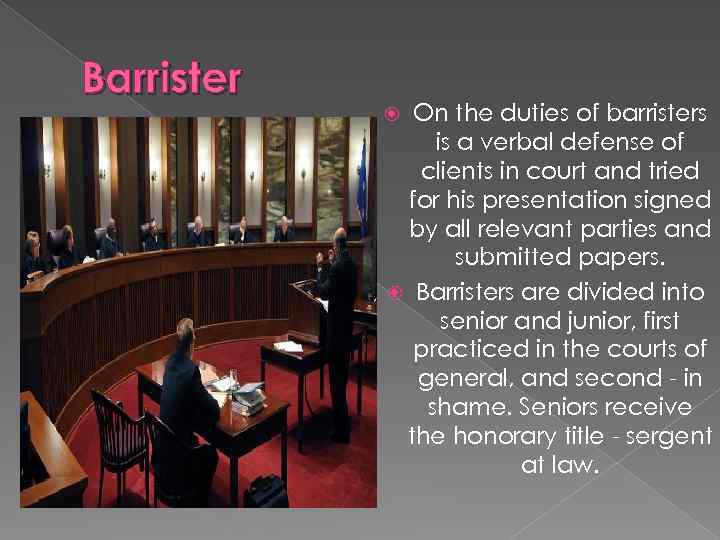 Barrister On the duties of barristers is a verbal defense of clients in court and tried for his presentation signed by all relevant parties and submitted papers. Barristers are divided into senior and junior, first practiced in the courts of general, and second - in shame. Seniors receive the honorary title - sergent at law.
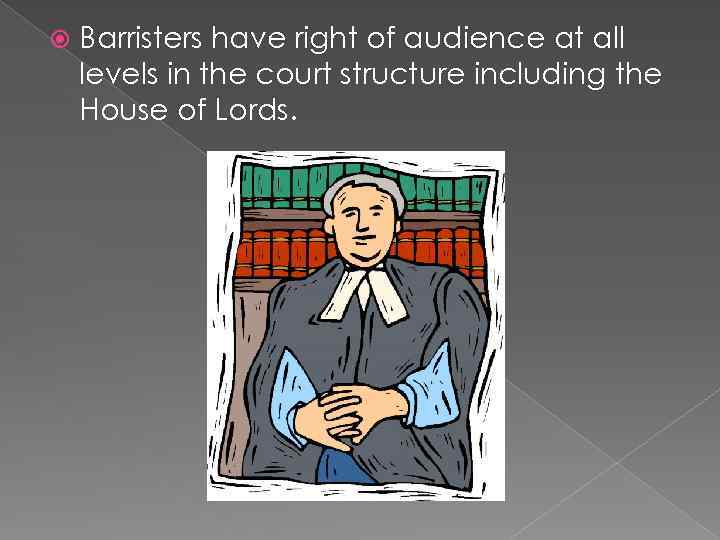 Barristers have right of audience at all levels in the court structure including the House of Lords.
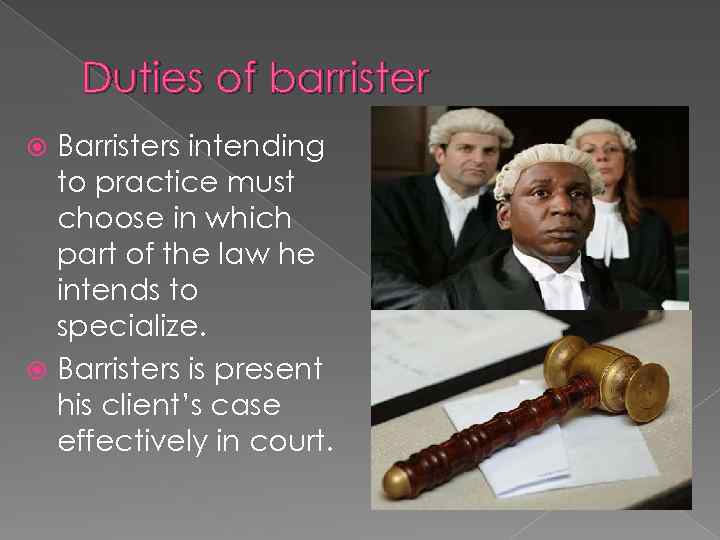 Duties of barrister Barristers intending to practice must choose in which part of the law he intends to specialize. Barristers is present his client’s case effectively in court.
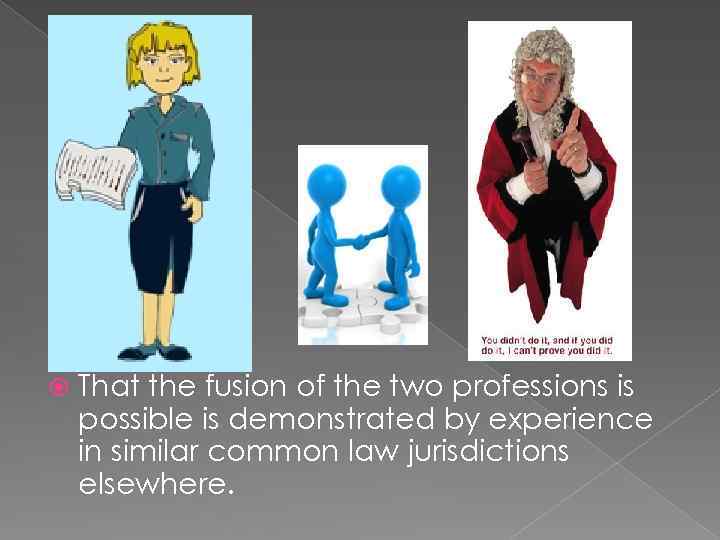 That the fusion of the two professions is possible is demonstrated by experience in similar common law jurisdictions elsewhere.
 LEGAL RROFESSIONALISM Lawyers have agreed upon six basic elements of professionalism: Ethics Competence combined with independence Professional wisdom Continuing learning Civility Obligations to the justice system
 Ethics is enlargement of individual autonomy, good faith in dealings, truth seeking, full disclosure, reasonable limits on adversarial conduct and adherence to public interest.
 Competence combined with independence This is element of professionalism is professional competence, which must include independence in judgment and advice
 Professional wisdom That is practical wisdom. The role of law and of the values society cherishes, an understanding of human beings, and a mature perspective.
 Civility covers not only surface politeness or courteous treatment of opponents.