


 Скачать презентацию The Learning Coach Using Electronic Portfolios to Promote
fcd05ba010078d5f8a8bd6df36a52471.ppt
- Количество слайдов: 17
 The Learning Coach: Using Electronic Portfolios to Promote Self-Directed Learning in Residency Melissa Nothnagle, MD, Marcia Smith, Ph. D, Paul George, MD Department of Family Medicine Alpert Medical School of Brown University
 Learning Objectives • • • Identify strategies for teaching self-directed learning to residents Address the challenges of self-directed learning in residency programs Describe methods to evaluate self-directed learning in residency
 Self Directed Learning • What is self-directed learning? • Also known as self-regulated learning • Active, goal-directed, self-control of behavior, motivation, and cognition for academic tasks (Pintrich)
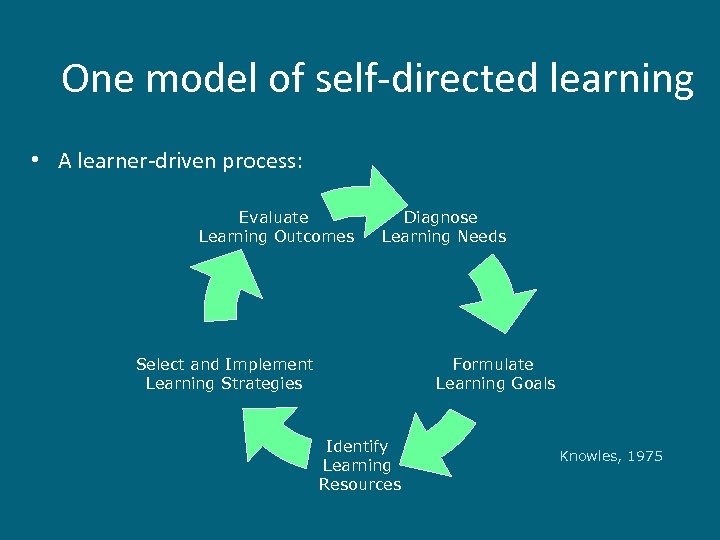 One model of self-directed learning • A learner-driven process: Evaluate Learning Outcomes Diagnose Learning Needs Select and Implement Learning Strategies Formulate Learning Goals Identify Learning Resources Knowles, 1975
 Need for SDL in residency • Learning environment in residency – Lack of learner control over process – Focus on doing, not reflecting • Heterogeneity of learners – Preparation, study skills, motivation, culture • Foundation for lifelong learning skills
 (How) do your residents engage in selfdirected learning?
 Learning Coach Model • Guidance needed to develop skills in selfassessment, goal setting and reflection • Dedicated time • Trusting and collaborative environment – No evaluation, confidential • One-on-one, to address individual needs of heterogeneous learners Westberg, Jane and Jason, Hillard. Fostering learner’s Reflection and Self Assessment. Family Medicine: 1994; 278 -282.
 Meetings with coach • Monthly one-hour meeting • Goal-setting – Monthly goals, long-term goals • Reflections • EBM tutorial – Complementary skill for lifelong learning
 Electronic Portfolio Purpose: tool for reflection “My. Folio” program (within E*Value) Imports all evaluation data Procedure logs Residents may upload presentations & projects • Spaces to record goals and reflections during coaching meetings • • •
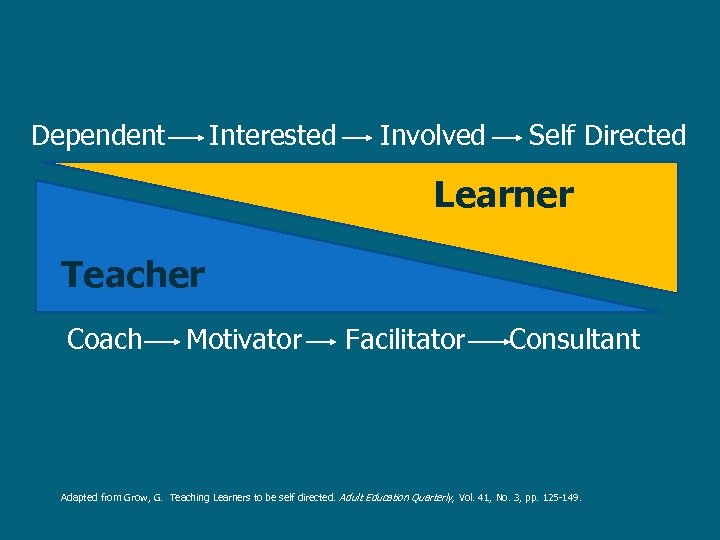 Dependent Interested Involved Self Directed Learner Teacher Coach Motivator Facilitator Consultant Adapted from Grow, G. Teaching Learners to be self directed. Adult Education Quarterly, Vol. 41, No. 3, pp. 125 -149.
 Strategies for success • Funding: HRSA grant • Gradual implementation – First year: program design and getting buy-in – Second year: implementing coaching with one class, electronic portfolios – Third year: expanding to 2 nd and 3 rd year residents • Time carved out of rotations – no outside work required of residents
 Our program evaluation • Quantitative – Self-ratings: goal-setting, reflection, ability to manage own learning – Coach ratings after each meeting • Qualitative – Interviews with residents and faculty about learning culture, self-directed learning skills – Portfolio analysis
 Coach’s rating form • After each session, coach rates resident’s: – Ability to set or modify goals – Ability to reflect on own practice • Additional notes recorded: – Quality/quantity of resident reflections – Achievement of short term goals from prior months – Attitude/motivation
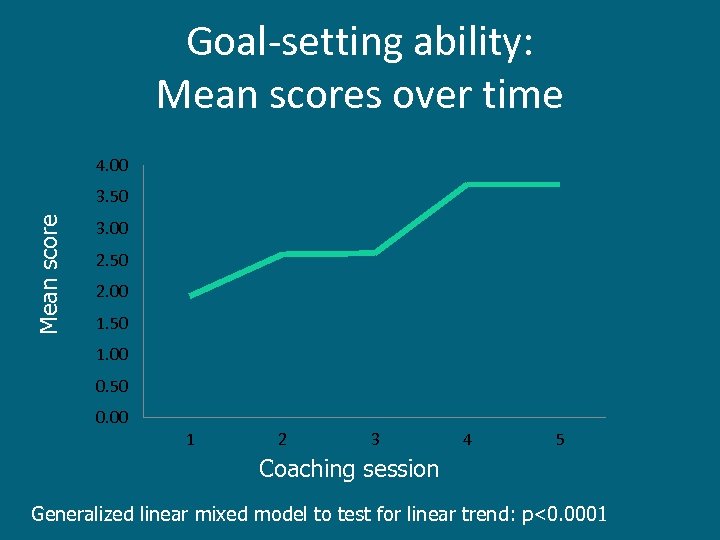 Goal-setting ability: Mean scores over time 4. 00 Mean score 3. 50 3. 00 2. 50 2. 00 1. 50 1. 00 0. 50 0. 00 1 2 3 4 5 Coaching session Generalized linear mixed model to test for linear trend: p<0. 0001
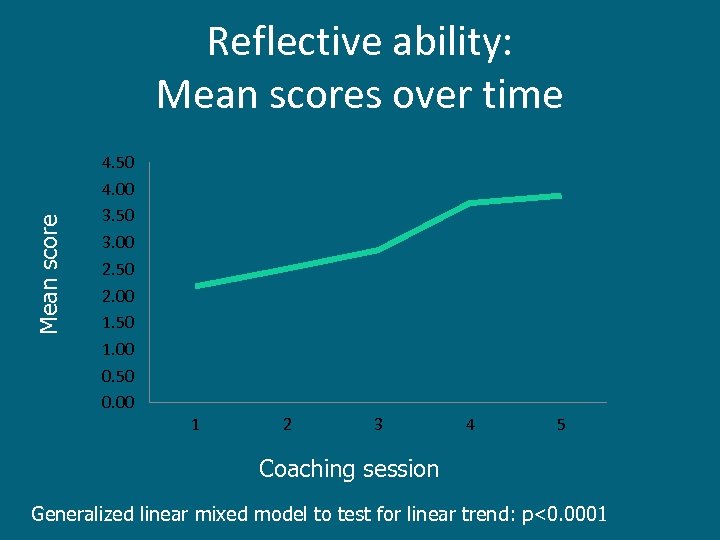 Mean score Reflective ability: Mean scores over time 4. 50 4. 00 3. 50 3. 00 2. 50 2. 00 1. 50 1. 00 0. 50 0. 00 1 2 3 4 5 Coaching session Generalized linear mixed model to test for linear trend: p<0. 0001
 Small Group Discussion • How could you promote self-directed learning among your residents? – Goal setting – Reflection on learning
 Next steps • Transfer coaching role to advisors in 3 rd year – Residents comfortable with portfolio, help faculty gain comfort • Qualitative analyses