


 Скачать презентацию The Last Review Independence Movements and the Contemporary
83917b9569ef48cb48b2ede841f165c9.ppt
- Количество слайдов: 44
 The Last Review! Independence Movements and the Contemporary World
 Independence Movements: India, the Middle East, and Africa
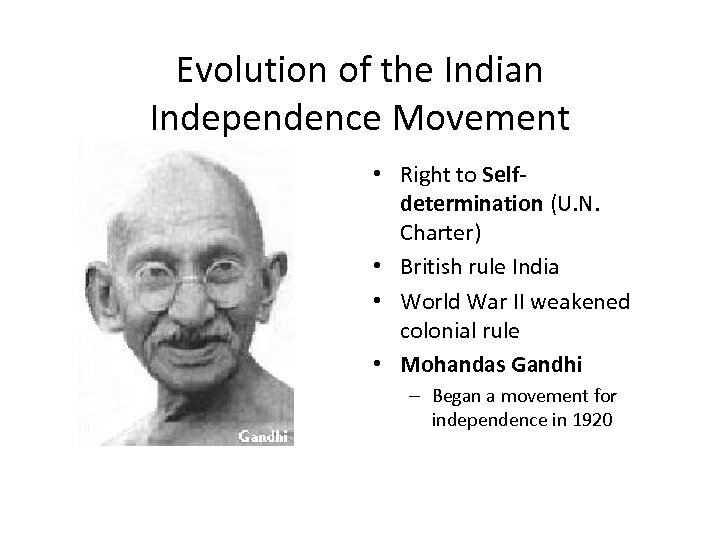 Evolution of the Indian Independence Movement • Right to Selfdetermination (U. N. Charter) • British rule India • World War II weakened colonial rule • Mohandas Gandhi – Began a movement for independence in 1920
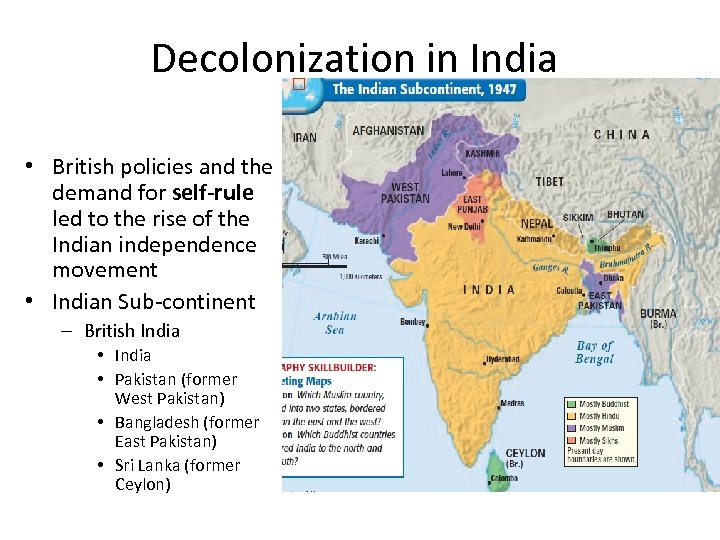 Decolonization in India • British policies and the demand for self-rule led to the rise of the Indian independence movement • Indian Sub-continent – British India • Pakistan (former West Pakistan) • Bangladesh (former East Pakistan) • Sri Lanka (former Ceylon)
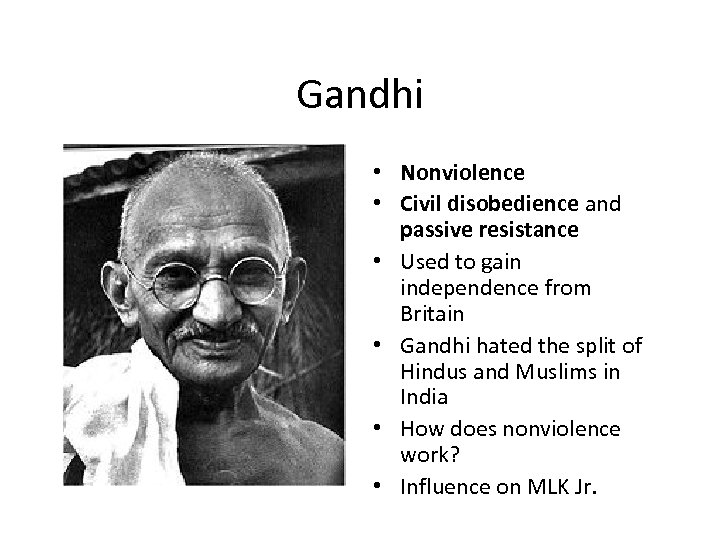 Gandhi • Nonviolence • Civil disobedience and passive resistance • Used to gain independence from Britain • Gandhi hated the split of Hindus and Muslims in India • How does nonviolence work? • Influence on MLK Jr.
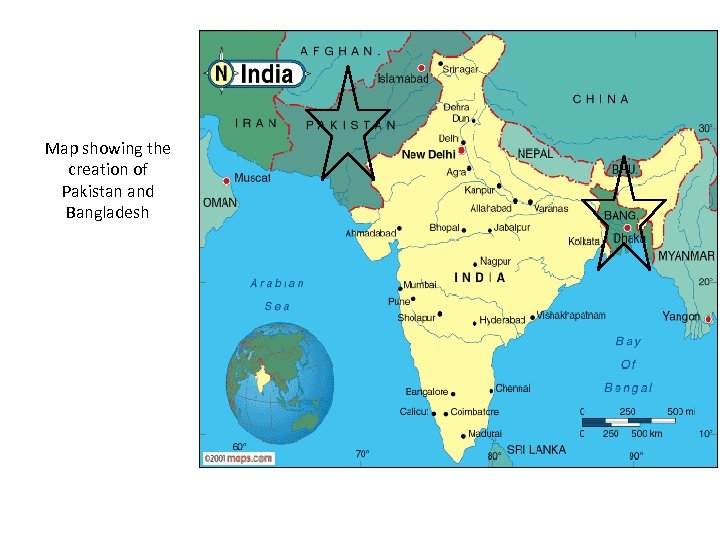 Map showing the creation of Pakistan and Bangladesh
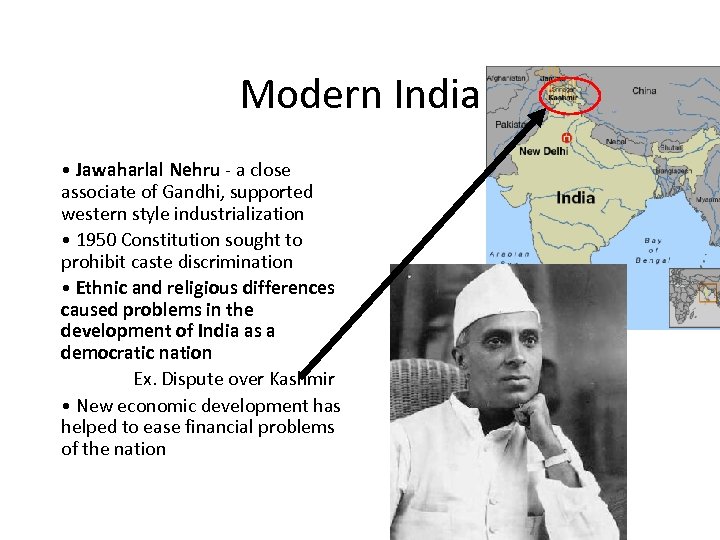 Modern India • Jawaharlal Nehru - a close associate of Gandhi, supported western style industrialization • 1950 Constitution sought to prohibit caste discrimination • Ethnic and religious differences caused problems in the development of India as a democratic nation Ex. Dispute over Kashmir • New economic development has helped to ease financial problems of the nation
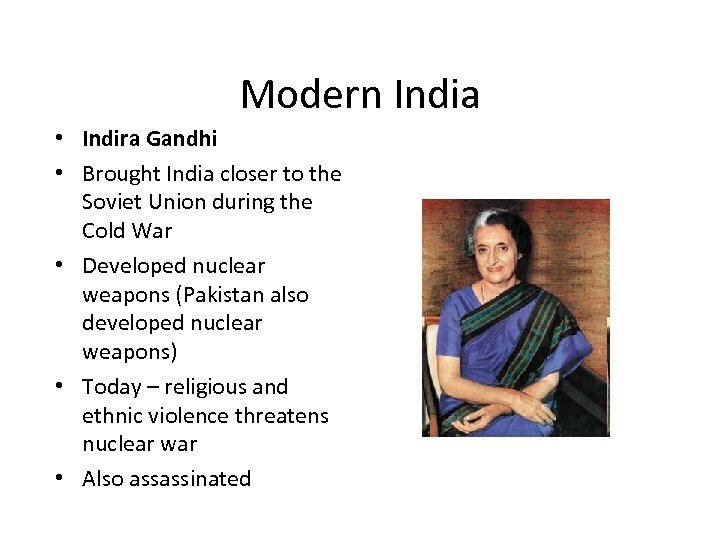 Modern India • Indira Gandhi • Brought India closer to the Soviet Union during the Cold War • Developed nuclear weapons (Pakistan also developed nuclear weapons) • Today – religious and ethnic violence threatens nuclear war • Also assassinated
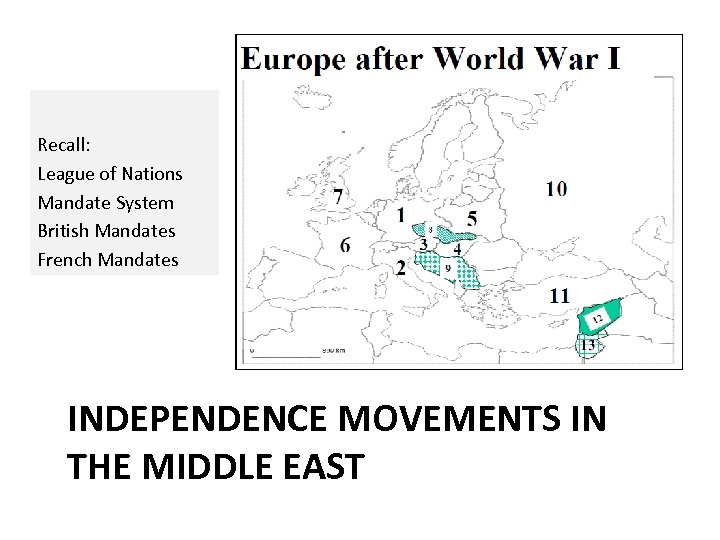 Recall: League of Nations Mandate System British Mandates French Mandates INDEPENDENCE MOVEMENTS IN THE MIDDLE EAST
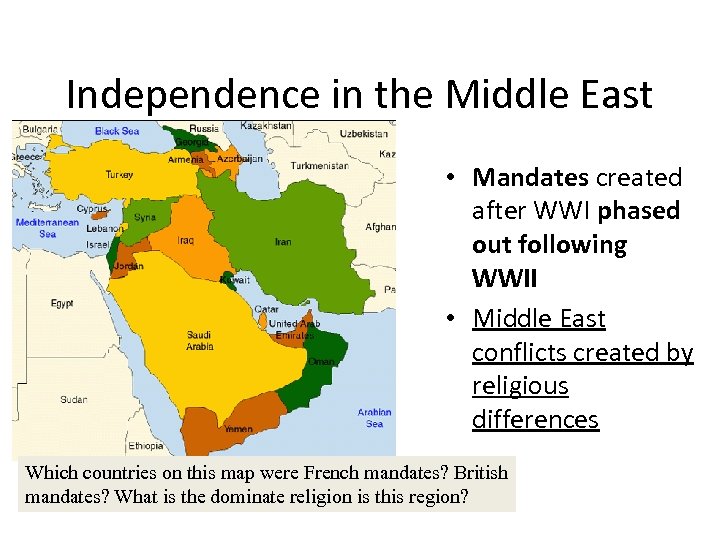 Independence in the Middle East • Mandates created after WWI phased out following WWII • Middle East conflicts created by religious differences Which countries on this map were French mandates? British mandates? What is the dominate religion is this region?
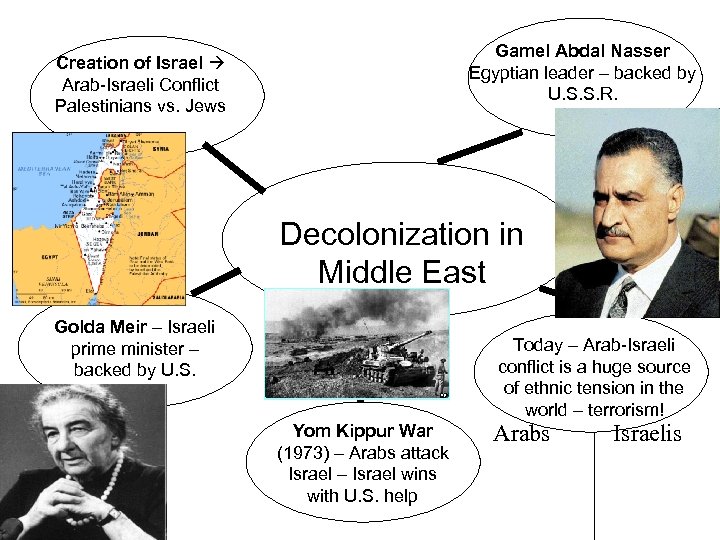 Gamel Abdal Nasser Egyptian leader – backed by U. S. S. R. Creation of Israel Arab-Israeli Conflict Palestinians vs. Jews Decolonization in Middle East Golda Meir – Israeli prime minister – backed by U. S. Today – Arab-Israeli conflict is a huge source of ethnic tension in the world – terrorism! Yom Kippur War (1973) – Arabs attack Israel – Israel wins with U. S. help Arabs Israelis
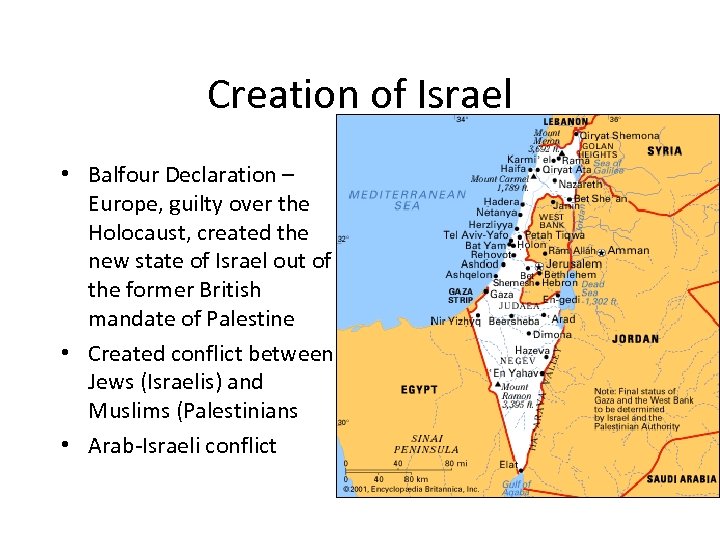 Creation of Israel • Balfour Declaration – Europe, guilty over the Holocaust, created the new state of Israel out of the former British mandate of Palestine • Created conflict between Jews (Israelis) and Muslims (Palestinians • Arab-Israeli conflict
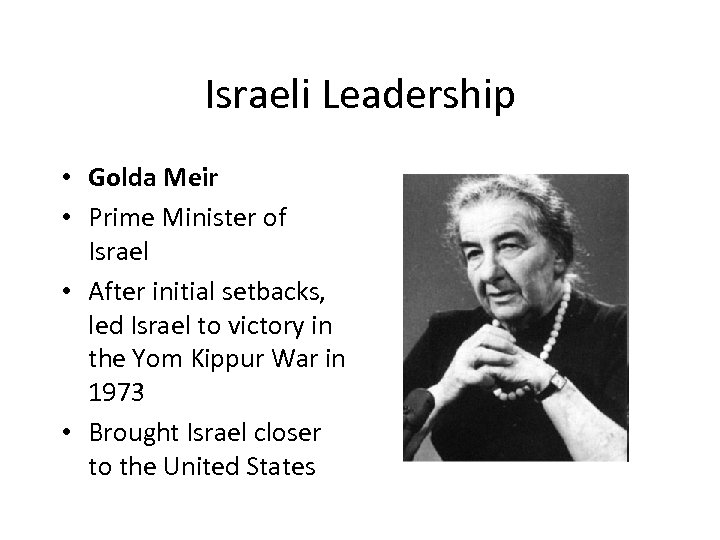 Israeli Leadership • Golda Meir • Prime Minister of Israel • After initial setbacks, led Israel to victory in the Yom Kippur War in 1973 • Brought Israel closer to the United States
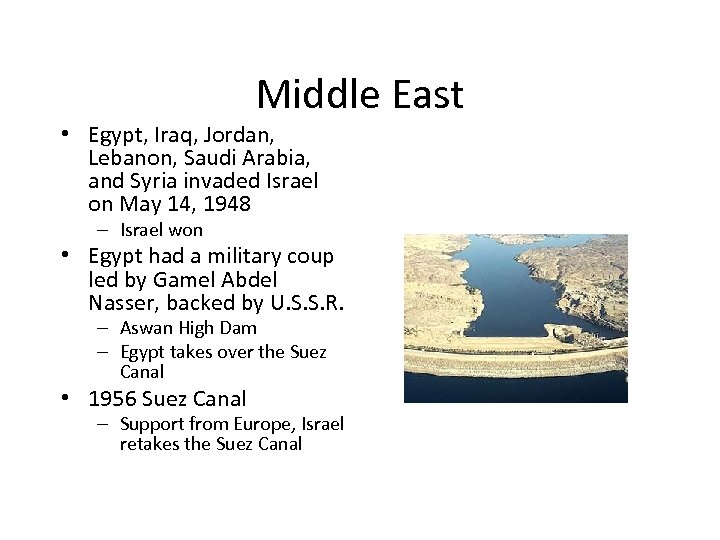 Middle East • Egypt, Iraq, Jordan, Lebanon, Saudi Arabia, and Syria invaded Israel on May 14, 1948 – Israel won • Egypt had a military coup led by Gamel Abdel Nasser, backed by U. S. S. R. – Aswan High Dam – Egypt takes over the Suez Canal • 1956 Suez Canal – Support from Europe, Israel retakes the Suez Canal
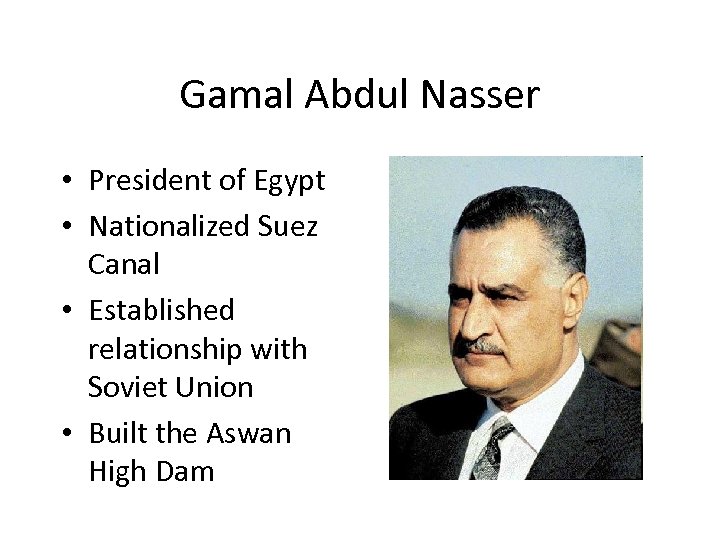 Gamal Abdul Nasser • President of Egypt • Nationalized Suez Canal • Established relationship with Soviet Union • Built the Aswan High Dam
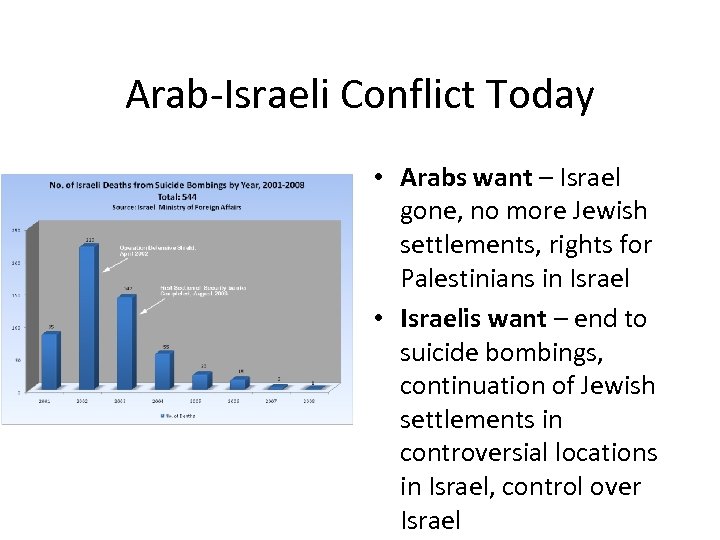 Arab-Israeli Conflict Today • Arabs want – Israel gone, no more Jewish settlements, rights for Palestinians in Israel • Israelis want – end to suicide bombings, continuation of Jewish settlements in controversial locations in Israel, control over Israel
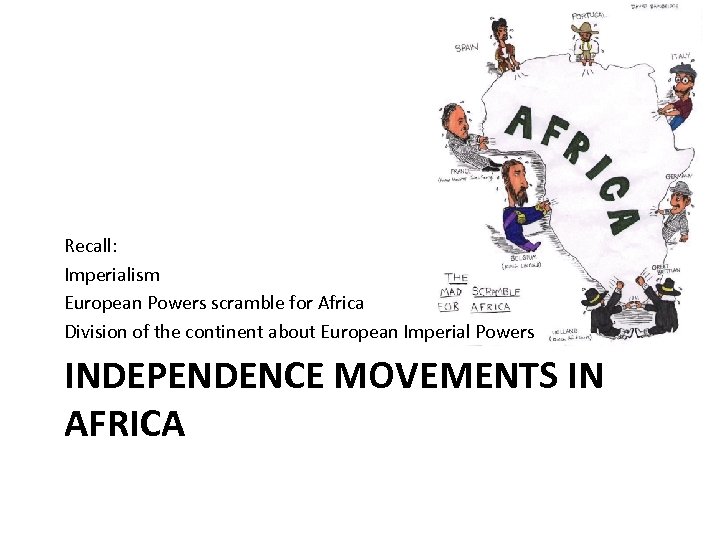 Recall: Imperialism European Powers scramble for Africa Division of the continent about European Imperial Powers INDEPENDENCE MOVEMENTS IN AFRICA
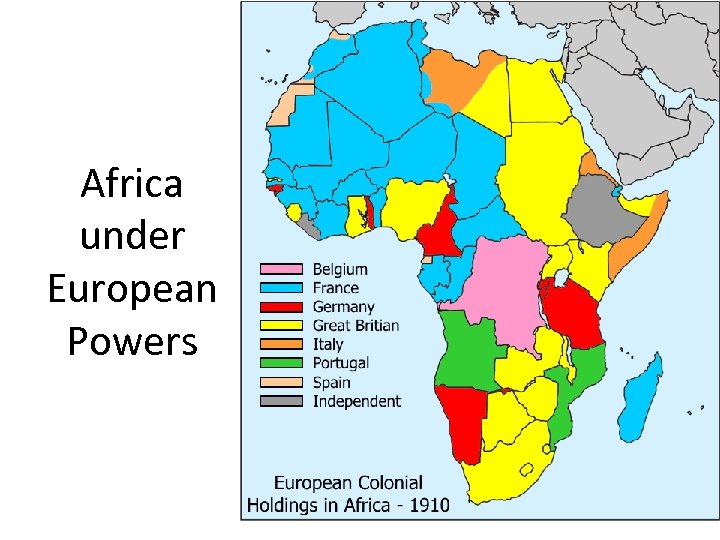 Africa under European Powers
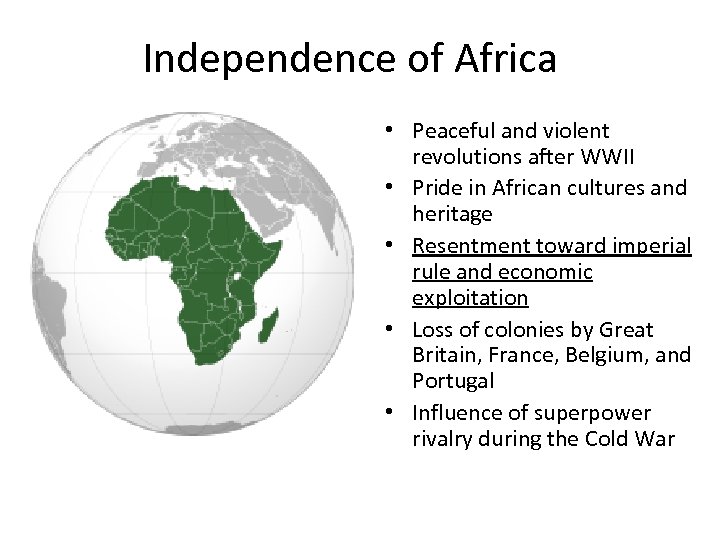 Independence of Africa • Peaceful and violent revolutions after WWII • Pride in African cultures and heritage • Resentment toward imperial rule and economic exploitation • Loss of colonies by Great Britain, France, Belgium, and Portugal • Influence of superpower rivalry during the Cold War
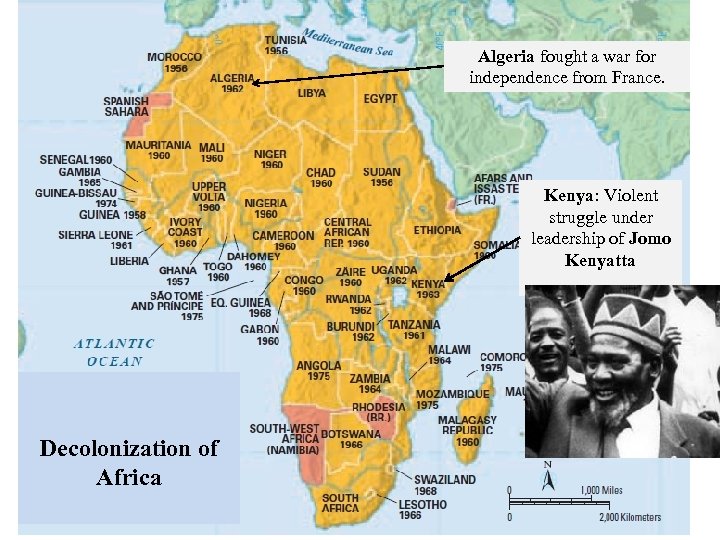 Algeria fought a war for independence from France. Kenya: Violent struggle under leadership of Jomo Kenyatta. Decolonization of Africa
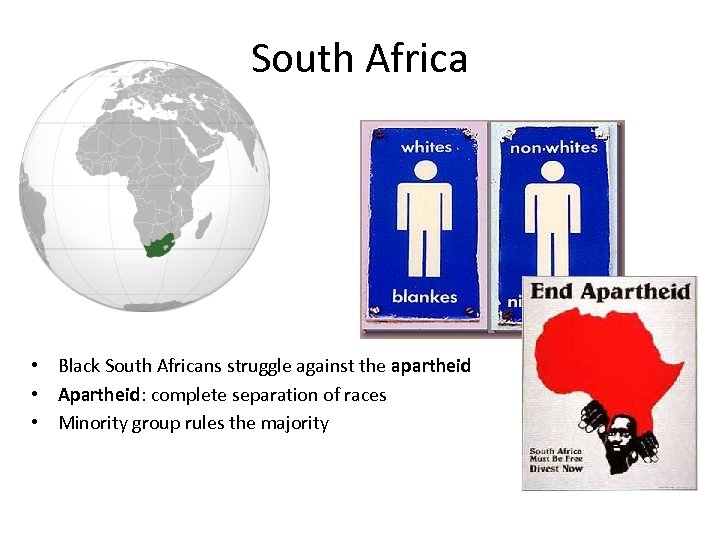 South Africa • Black South Africans struggle against the apartheid • Apartheid: complete separation of races • Minority group rules the majority
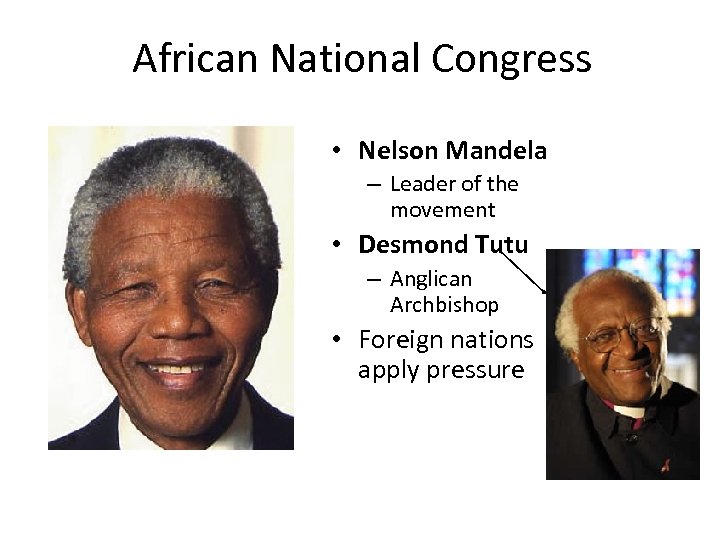 African National Congress • Nelson Mandela – Leader of the movement • Desmond Tutu – Anglican Archbishop • Foreign nations apply pressure
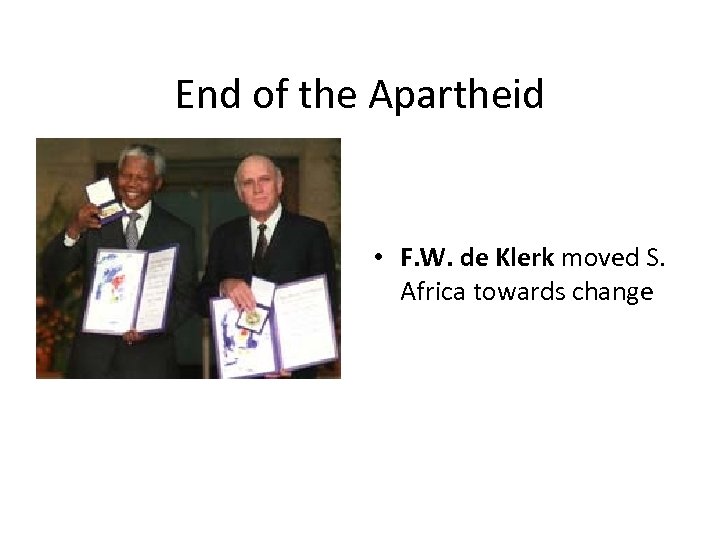 End of the Apartheid • F. W. de Klerk moved S. Africa towards change
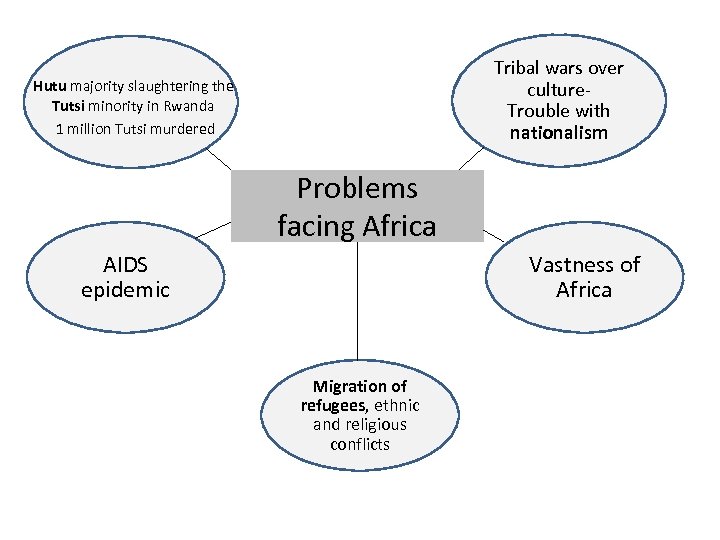 Tribal wars over culture. Trouble with nationalism Hutu majority slaughtering the Tutsi minority in Rwanda 1 million Tutsi murdered Problems facing Africa AIDS epidemic Vastness of Africa Migration of refugees, ethnic and religious conflicts
 Contemporary Issues for Developed and Developing Nations
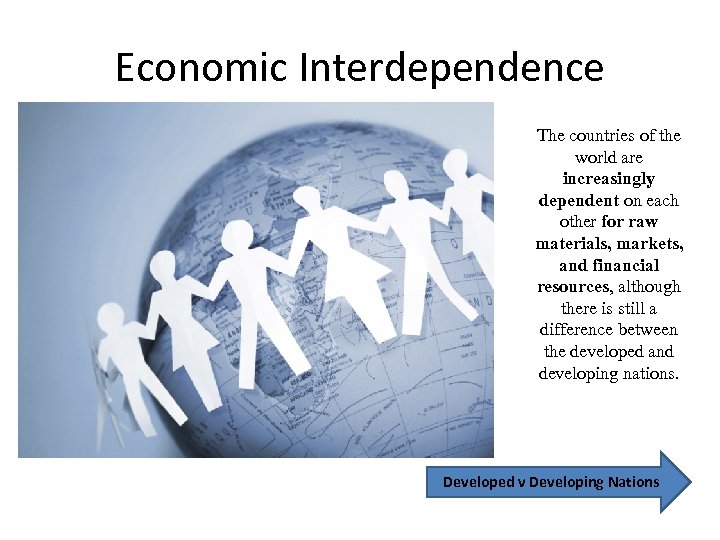 Economic Interdependence The countries of the world are increasingly dependent on each other for raw materials, markets, and financial resources, although there is still a difference between the developed and developing nations. Developed v Developing Nations
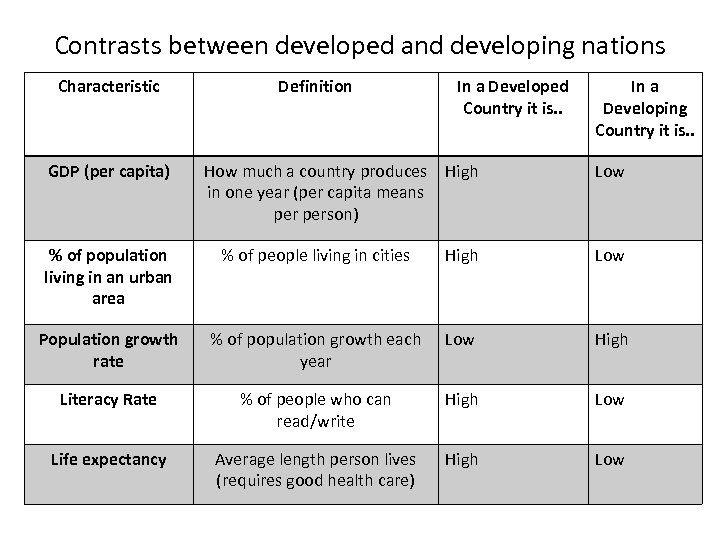 Contrasts between developed and developing nations Characteristic GDP (per capita) Definition In a Developed Country it is. . How much a country produces High in one year (per capita means person) In a Developing Country it is. . Low % of population living in an urban area % of people living in cities High Low Population growth rate % of population growth each year Low High Literacy Rate % of people who can read/write High Low Life expectancy Average length person lives (requires good health care) High Low
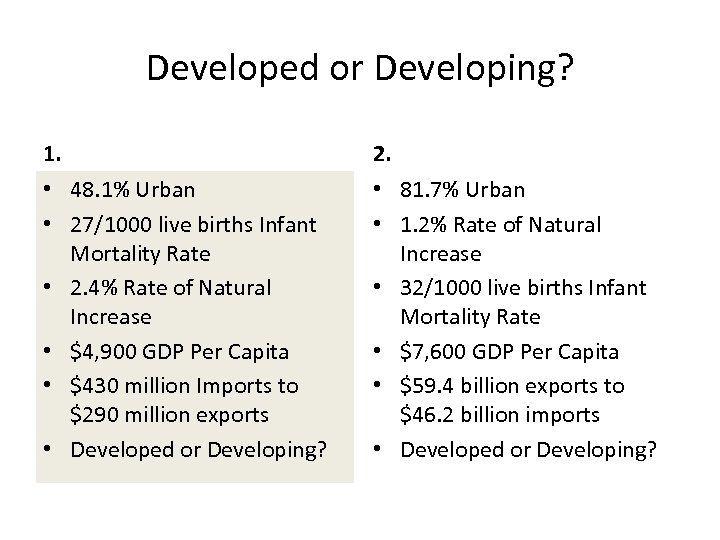 Developed or Developing? 1. 2. • 48. 1% Urban • 27/1000 live births Infant Mortality Rate • 2. 4% Rate of Natural Increase • $4, 900 GDP Per Capita • $430 million Imports to $290 million exports • Developed or Developing? • 81. 7% Urban • 1. 2% Rate of Natural Increase • 32/1000 live births Infant Mortality Rate • $7, 600 GDP Per Capita • $59. 4 billion exports to $46. 2 billion imports • Developed or Developing?
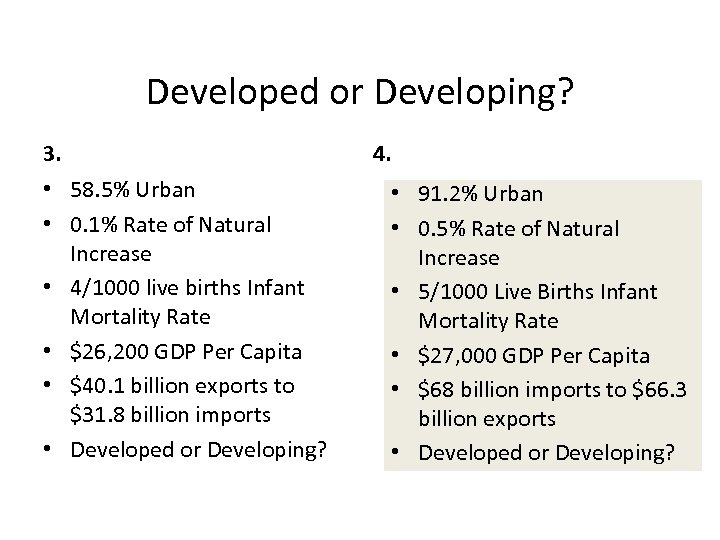 Developed or Developing? 3. • 58. 5% Urban • 0. 1% Rate of Natural Increase • 4/1000 live births Infant Mortality Rate • $26, 200 GDP Per Capita • $40. 1 billion exports to $31. 8 billion imports • Developed or Developing? 4. • 91. 2% Urban • 0. 5% Rate of Natural Increase • 5/1000 Live Births Infant Mortality Rate • $27, 000 GDP Per Capita • $68 billion imports to $66. 3 billion exports • Developed or Developing?
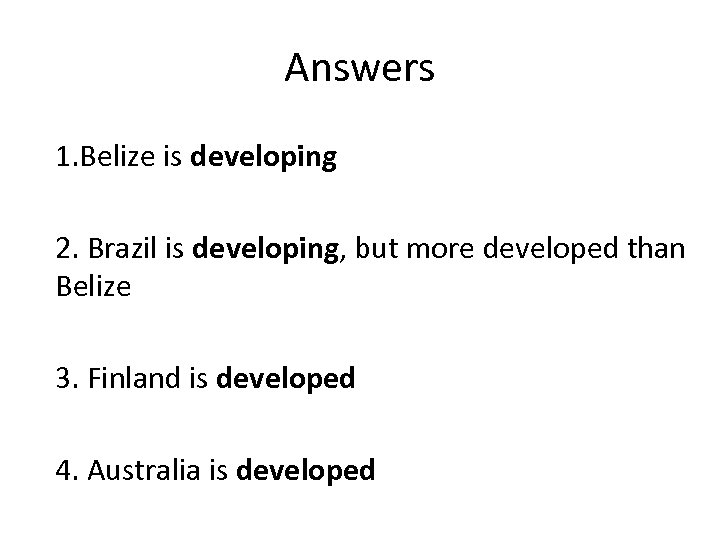 Answers 1. Belize is developing 2. Brazil is developing, but more developed than Belize 3. Finland is developed 4. Australia is developed
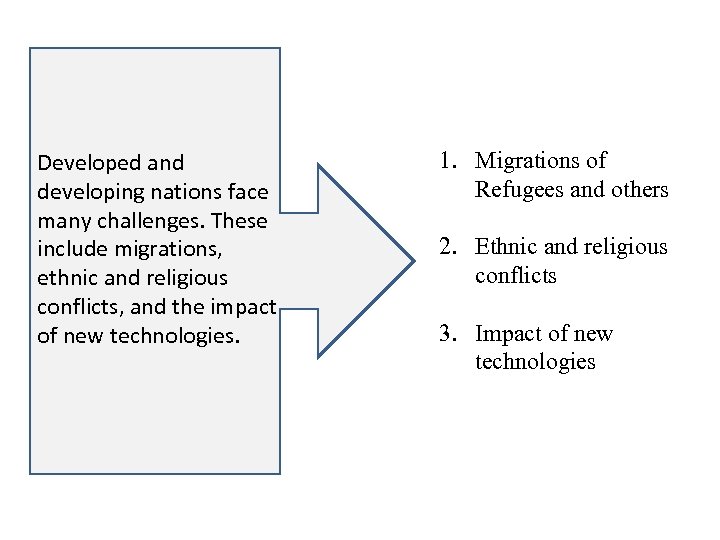 Developed and developing nations face many challenges. These include migrations, ethnic and religious conflicts, and the impact of new technologies. 1. Migrations of Refugees and others 2. Ethnic and religious conflicts 3. Impact of new technologies
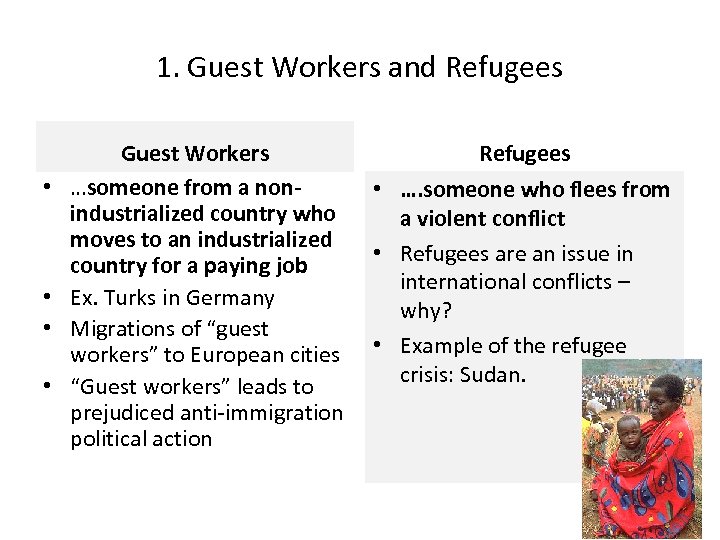 1. Guest Workers and Refugees • • Guest Workers …someone from a nonindustrialized country who moves to an industrialized country for a paying job Ex. Turks in Germany Migrations of “guest workers” to European cities “Guest workers” leads to prejudiced anti-immigration political action Refugees • …. someone who flees from a violent conflict • Refugees are an issue in international conflicts – why? • Example of the refugee crisis: Sudan.
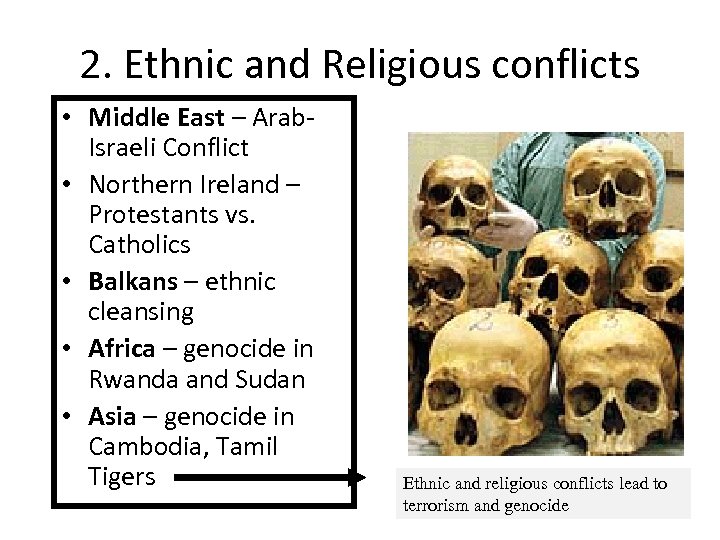 2. Ethnic and Religious conflicts • Middle East – Arab. Israeli Conflict • Northern Ireland – Protestants vs. Catholics • Balkans – ethnic cleansing • Africa – genocide in Rwanda and Sudan • Asia – genocide in Cambodia, Tamil Tigers Ethnic and religious conflicts lead to terrorism and genocide
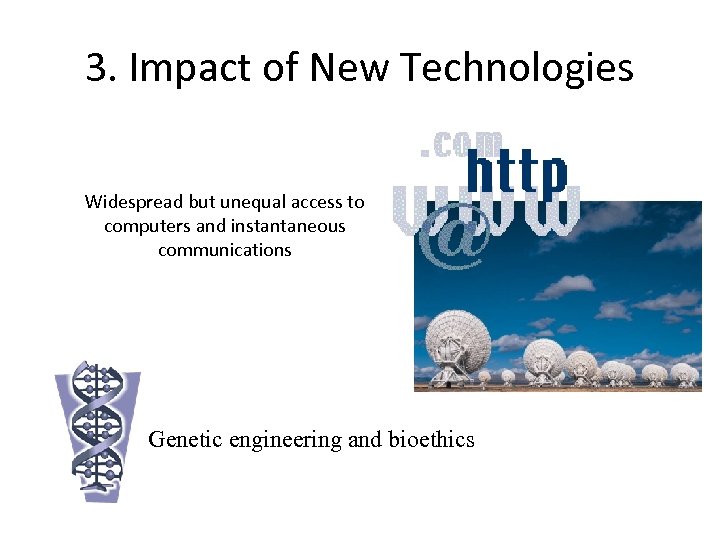 3. Impact of New Technologies Widespread but unequal access to computers and instantaneous communications Genetic engineering and bioethics
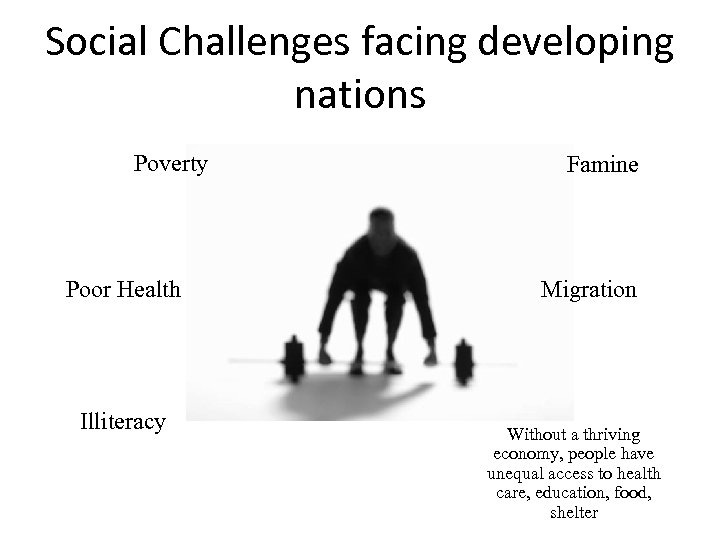 Social Challenges facing developing nations Poverty Poor Health Illiteracy Famine Migration Without a thriving economy, people have unequal access to health care, education, food, shelter
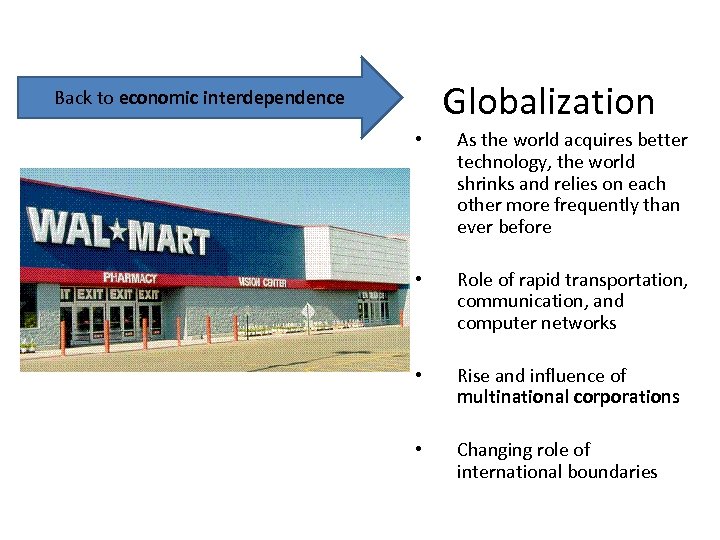 Globalization Back to economic interdependence • As the world acquires better technology, the world shrinks and relies on each other more frequently than ever before • Role of rapid transportation, communication, and computer networks • Rise and influence of multinational corporations • Changing role of international boundaries
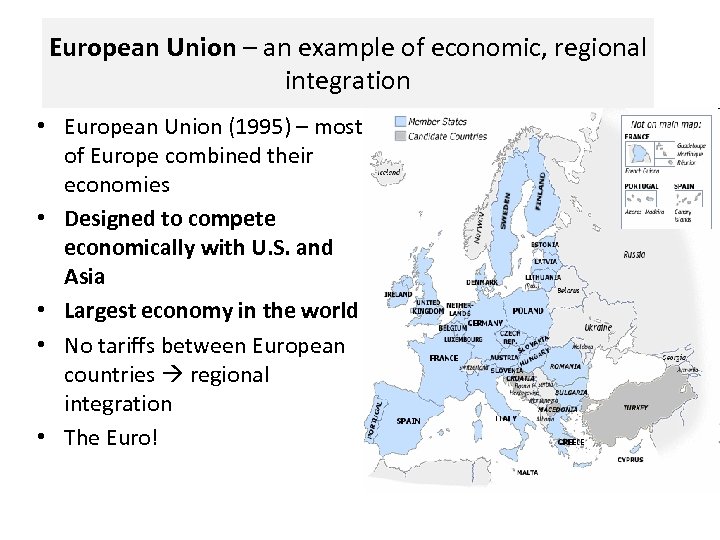 European Union – an example of economic, regional integration • European Union (1995) – most of Europe combined their economies • Designed to compete economically with U. S. and Asia • Largest economy in the world • No tariffs between European countries regional integration • The Euro!
 Free Trade = Economic Interdependence • Trade Agreements – North American Free Trade Agreement (NAFTA) – U. S. , Mexico, and Canada agree to free trade (NO TARIFFS) – World Trade Organization (WTO) – governs international trade, keeps it free • International organizations – International Monetary Fund (IMF) – loans money to developing countries
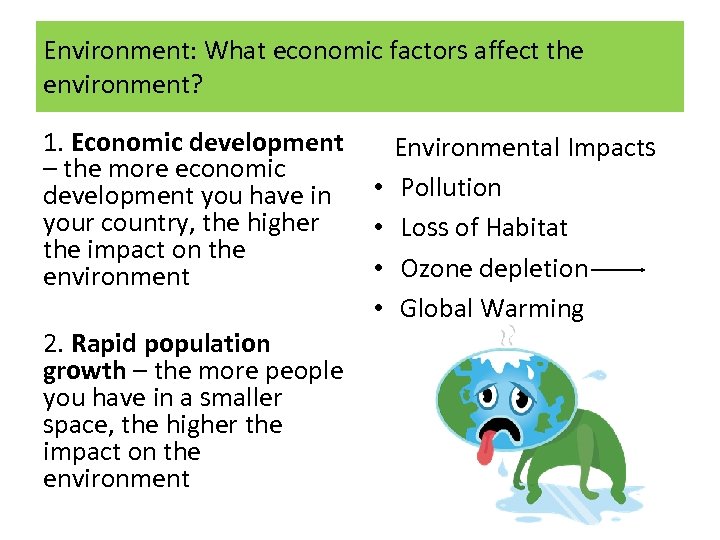 Environment: What economic factors affect the environment? 1. Economic development – the more economic development you have in your country, the higher the impact on the environment 2. Rapid population growth – the more people you have in a smaller space, the higher the impact on the environment • • Environmental Impacts Pollution Loss of Habitat Ozone depletion Global Warming
 Terrorism Both developed and developing nations of the world have problems that are brought about by inequities in their social, cultural, and economic systems. Some individuals choose to deal with these unequal conditions through the use of terrorist activities. Terrorism is the use of violence and threats to intimidate and coerce for political reasons. A major cause of terrorism is religious extremism. Examples of international terrorism • Munich Olympics • Terrorist attacks in the United States (e. g. , 9/11/2001) motivated by extremism (Osama bin Laden). • Car bombings • Suicide bombers • Airline hijackers
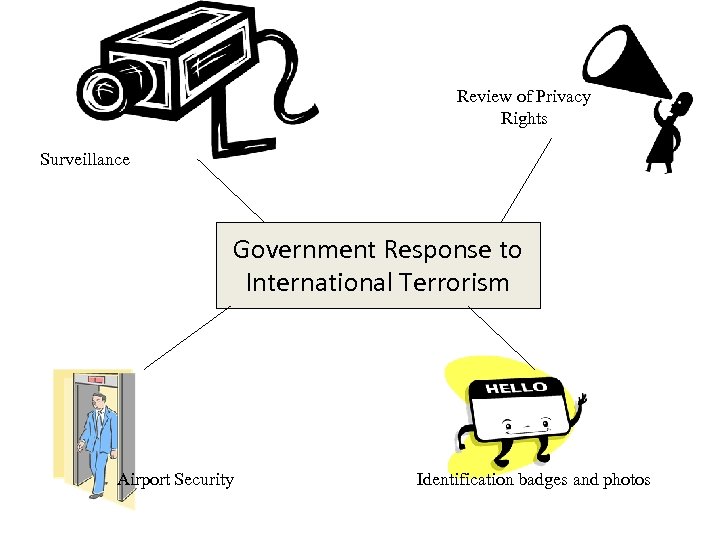 Review of Privacy Rights Surveillance Government Response to International Terrorism Airport Security Identification badges and photos
 World Organizations, Associations, and Unions…oh my! Let’s Review
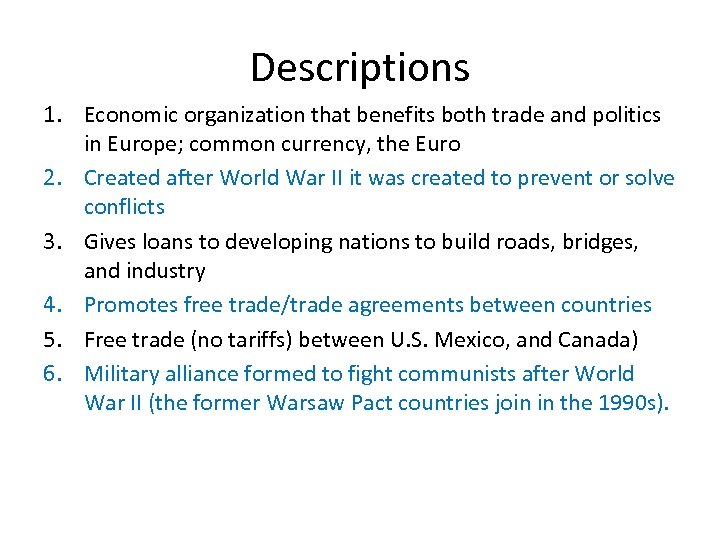 Descriptions 1. Economic organization that benefits both trade and politics in Europe; common currency, the Euro 2. Created after World War II it was created to prevent or solve conflicts 3. Gives loans to developing nations to build roads, bridges, and industry 4. Promotes free trade/trade agreements between countries 5. Free trade (no tariffs) between U. S. Mexico, and Canada) 6. Military alliance formed to fight communists after World War II (the former Warsaw Pact countries join in the 1990 s).
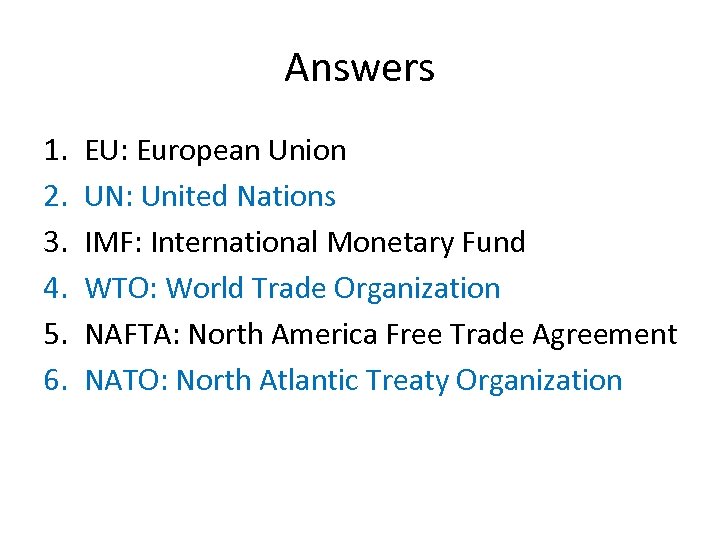 Answers 1. 2. 3. 4. 5. 6. EU: European Union UN: United Nations IMF: International Monetary Fund WTO: World Trade Organization NAFTA: North America Free Trade Agreement NATO: North Atlantic Treaty Organization