 Скачать презентацию The Korea Transport Institute KOTI Seoul October 7
f2a1bd71c3283a32460c285d1f03d5b1.ppt
- Количество слайдов: 41



The Korea Transport Institute (KOTI), Seoul, October 7, 2008 Terminals and Logistics: The Terminalization Thesis Jean-Paul Rodrigue Associate Professor Dept. of Global Studies & Geography Hofstra University New York, USA
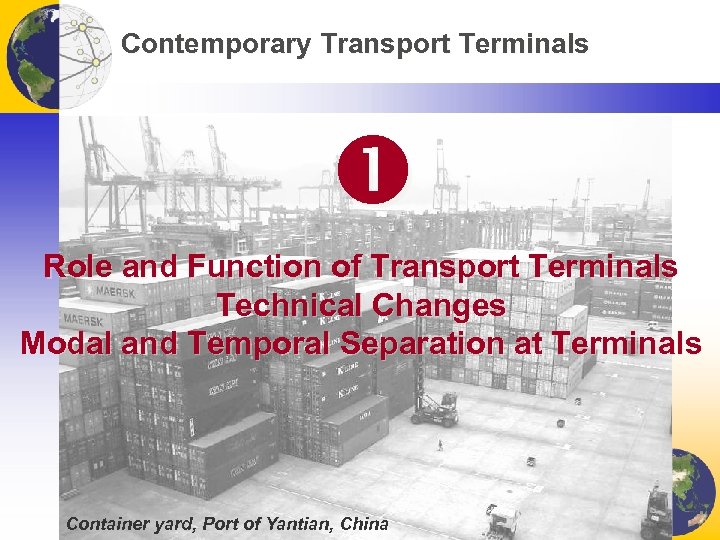
Contemporary Transport Terminals Role and Function of Transport Terminals Technical Changes Modal and Temporal Separation at Terminals Container yard, Port of Yantian, China
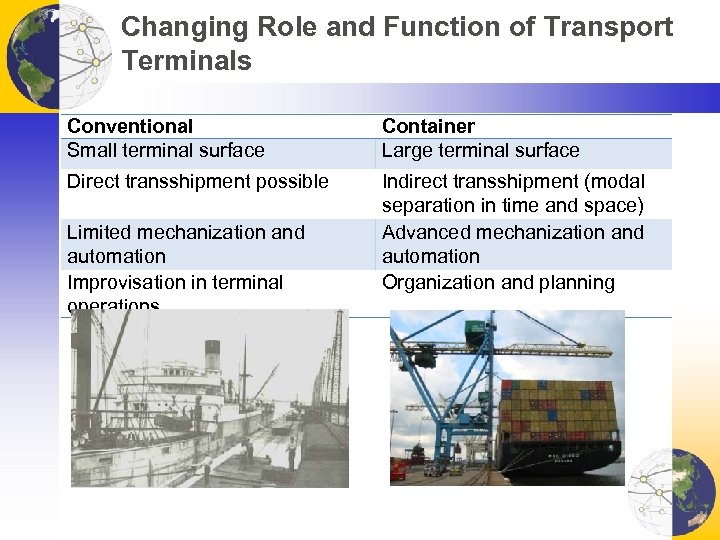
Changing Role and Function of Transport Terminals Conventional Small terminal surface Container Large terminal surface Direct transshipment possible Indirect transshipment (modal separation in time and space) Advanced mechanization and automation Organization and planning Limited mechanization and automation Improvisation in terminal operations
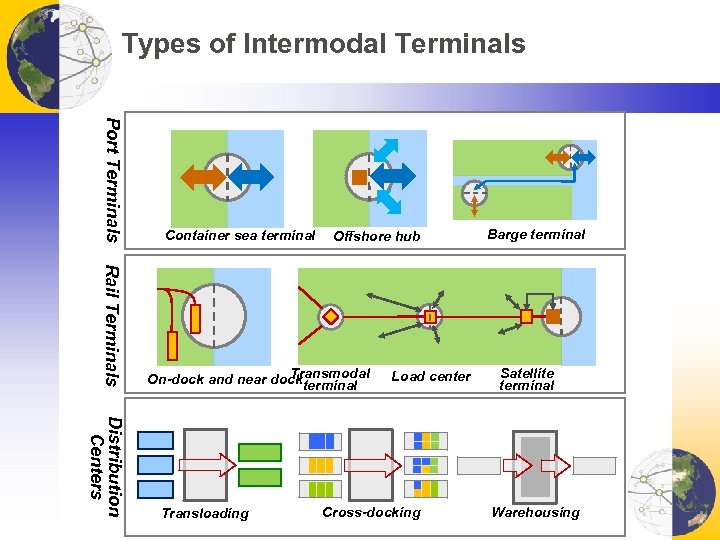
Types of Intermodal Terminals Port Terminals Container sea terminal Offshore hub Rail Terminals Transmodal On-dock and near dockterminal Distribution Centers Transloading Load center Cross-docking Barge terminal Satellite terminal Warehousing
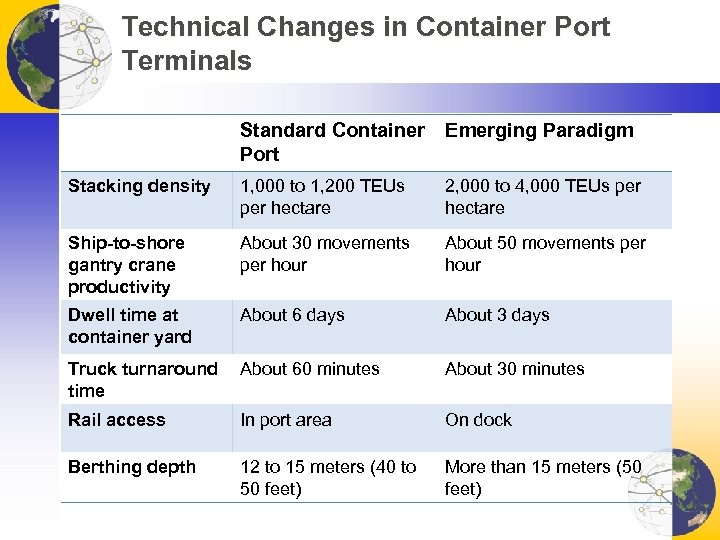
Technical Changes in Container Port Terminals Standard Container Port Emerging Paradigm Stacking density 1, 000 to 1, 200 TEUs per hectare 2, 000 to 4, 000 TEUs per hectare Ship-to-shore gantry crane productivity About 30 movements per hour About 50 movements per hour Dwell time at container yard About 6 days About 3 days Truck turnaround time About 60 minutes About 30 minutes Rail access In port area On dock Berthing depth 12 to 15 meters (40 to 50 feet) More than 15 meters (50 feet)
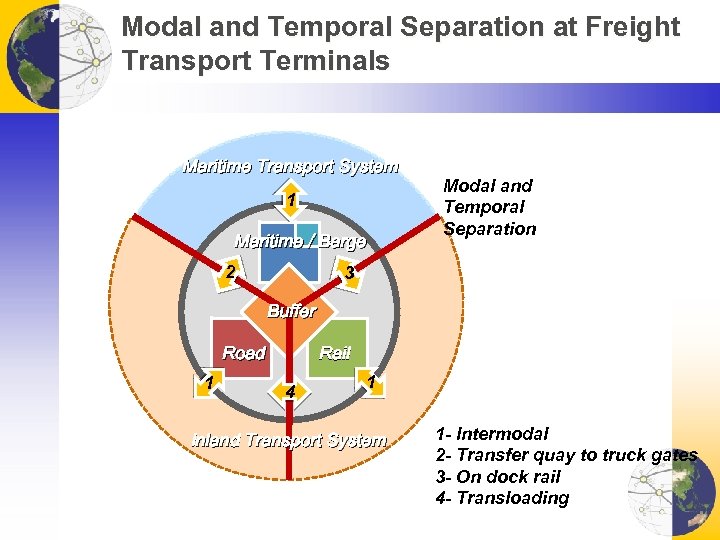
Modal and Temporal Separation at Freight Transport Terminals Maritime Transport System 1 Maritime / Barge 2 Modal and Temporal Separation 3 Buffer Road 1 Rail 4 1 Inland Transport System 1 - Intermodal 2 - Transfer quay to truck gates 3 - On dock rail 4 - Transloading
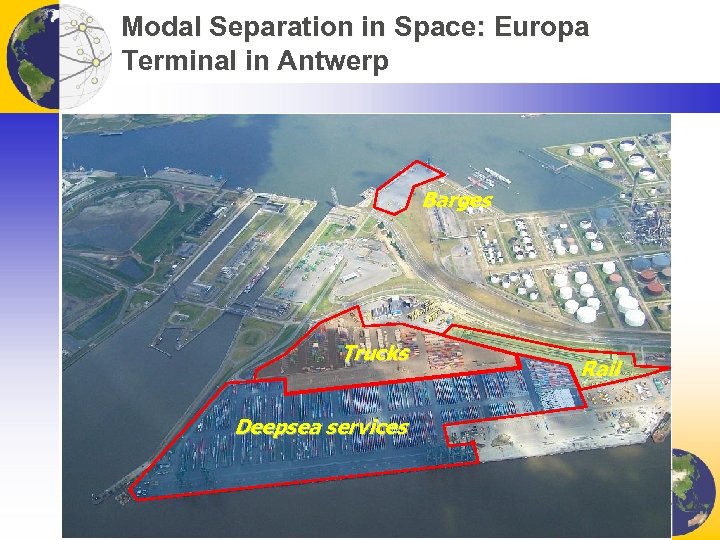
Modal Separation in Space: Europa Terminal in Antwerp Barges Trucks Deepsea services Rail
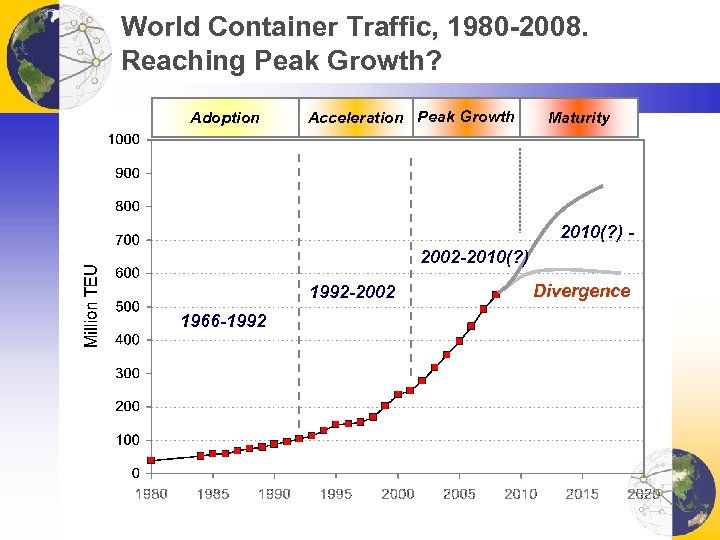
World Container Traffic, 1980 -2008. Reaching Peak Growth? Adoption Acceleration Peak Growth Maturity 2010(? ) 2002 -2010(? ) 1992 -2002 1966 -1992 Divergence
Terminals and Added Value Terminal Operations and Added Value Supply Chains and Added Value 9 Trimodal Container Terminal, Willebroek, Belgium
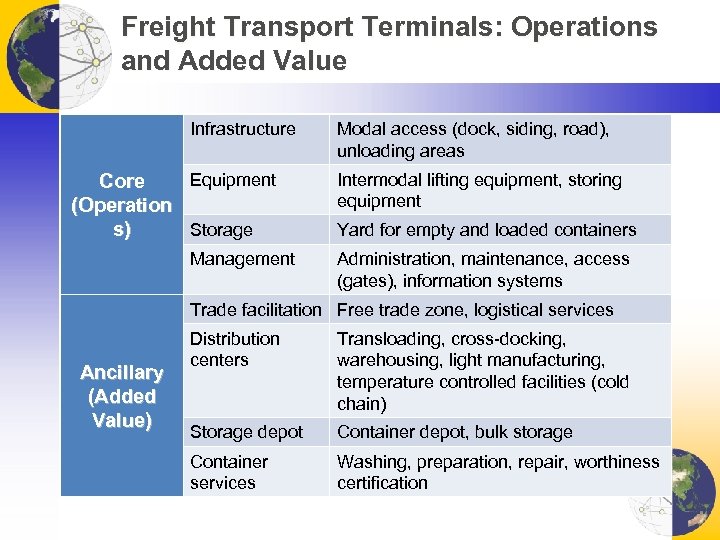
Freight Transport Terminals: Operations and Added Value Infrastructure Equipment Core (Operation s) Storage Management Modal access (dock, siding, road), unloading areas Intermodal lifting equipment, storing equipment Yard for empty and loaded containers Administration, maintenance, access (gates), information systems Trade facilitation Free trade zone, logistical services Ancillary (Added Value) Distribution centers Transloading, cross-docking, warehousing, light manufacturing, temperature controlled facilities (cold chain) Storage depot Container depot, bulk storage Container services Washing, preparation, repair, worthiness certification
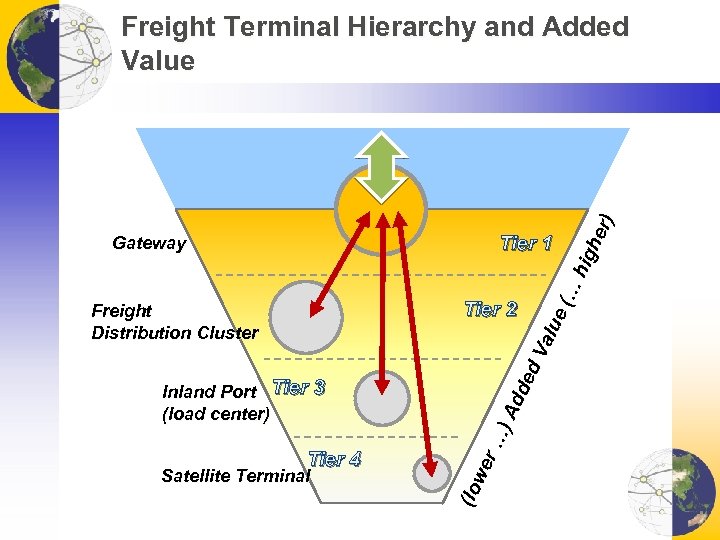
(lo we r… )A dd ed Va lue (… Tier 1 Gateway Tier 2 Freight Distribution Cluster Inland Port Tier 3 (load center) Tier 4 Satellite Terminal hig he r) Freight Terminal Hierarchy and Added Value
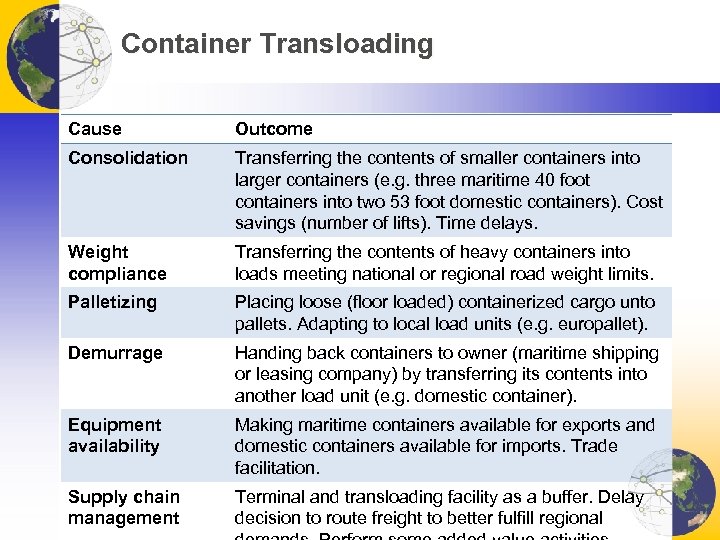
Container Transloading Cause Outcome Consolidation Transferring the contents of smaller containers into larger containers (e. g. three maritime 40 foot containers into two 53 foot domestic containers). Cost savings (number of lifts). Time delays. Weight compliance Transferring the contents of heavy containers into loads meeting national or regional road weight limits. Palletizing Placing loose (floor loaded) containerized cargo unto pallets. Adapting to local load units (e. g. europallet). Demurrage Handing back containers to owner (maritime shipping or leasing company) by transferring its contents into another load unit (e. g. domestic container). Equipment availability Making maritime containers available for exports and domestic containers available for imports. Trade facilitation. Supply chain management Terminal and transloading facility as a buffer. Delay decision to route freight to better fulfill regional
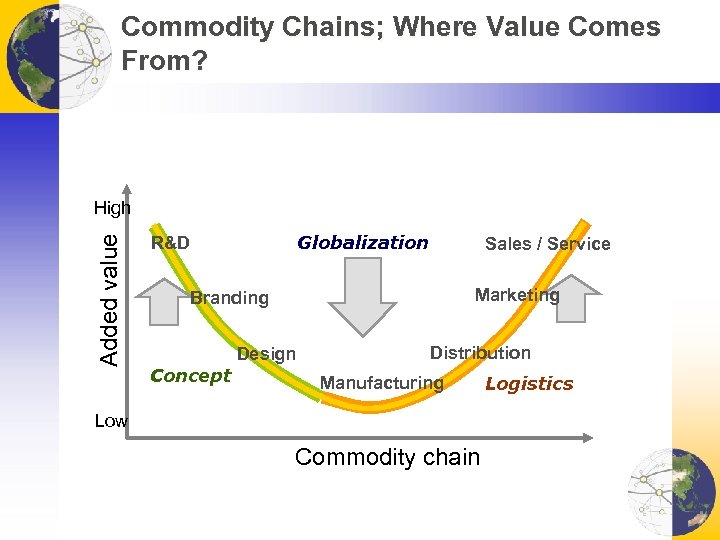
Commodity Chains; Where Value Comes From? Added value High Globalization R&D Sales / Service Marketing Branding Design Concept Distribution Manufacturing Low Commodity chain Logistics
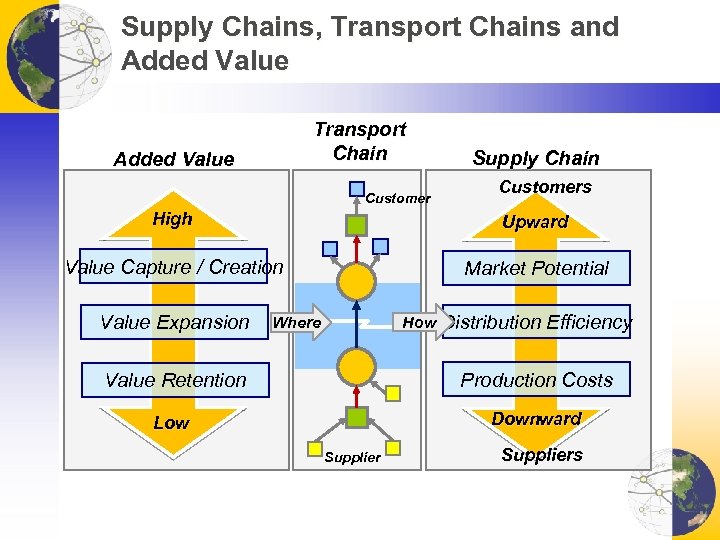
Supply Chains, Transport Chains and Added Value Transport Chain Added Value Customer Supply Chain Customers High Upward Value Capture / Creation Market Potential Value Expansion How Where Distribution Efficiency Value Retention Production Costs Low Downward Suppliers
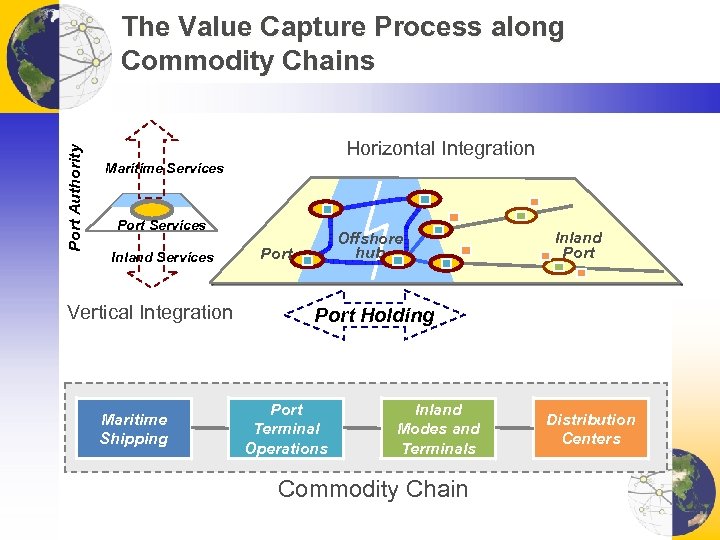
Port Authority The Value Capture Process along Commodity Chains Horizontal Integration Maritime Services Port Services Inland Services Vertical Integration Maritime Shipping Offshore hub Port Inland Port Holding Port Terminal Operations Inland Modes and Terminals Commodity Chain Distribution Centers
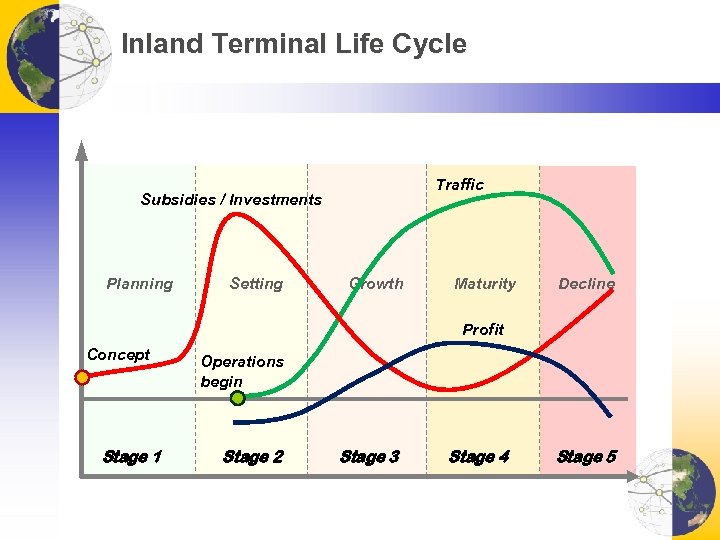
Inland Terminal Life Cycle Traffic Subsidies / Investments Planning Setting Growth Maturity Decline Profit Concept Stage 1 Operations begin Stage 2 Stage 3 Stage 4 Stage 5
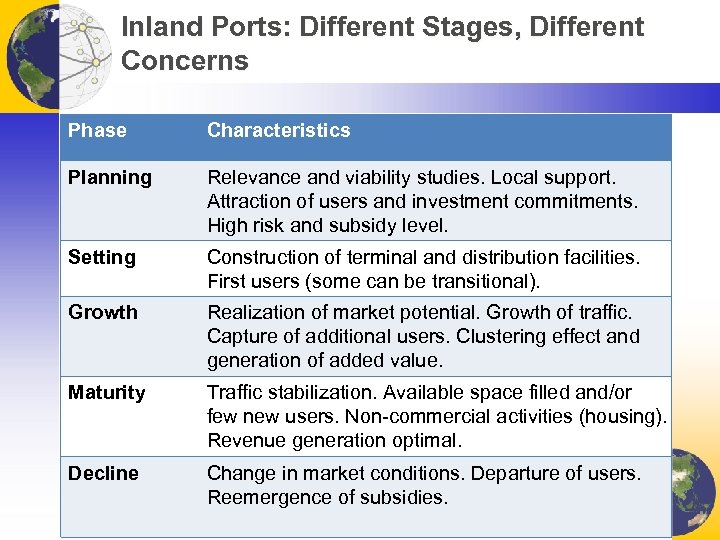
Inland Ports: Different Stages, Different Concerns Phase Characteristics Planning Relevance and viability studies. Local support. Attraction of users and investment commitments. High risk and subsidy level. Setting Construction of terminal and distribution facilities. First users (some can be transitional). Growth Realization of market potential. Growth of traffic. Capture of additional users. Clustering effect and generation of added value. Maturity Traffic stabilization. Available space filled and/or few new users. Non-commercial activities (housing). Revenue generation optimal. Decline Change in market conditions. Departure of users. Reemergence of subsidies.
Supply Chains and their Terminalization The Concept of Terminalization Export Flows to the Gateways The Maritime Segment Import Flows to the Hinterland Translisft crane, NS Rutherford yard, PA
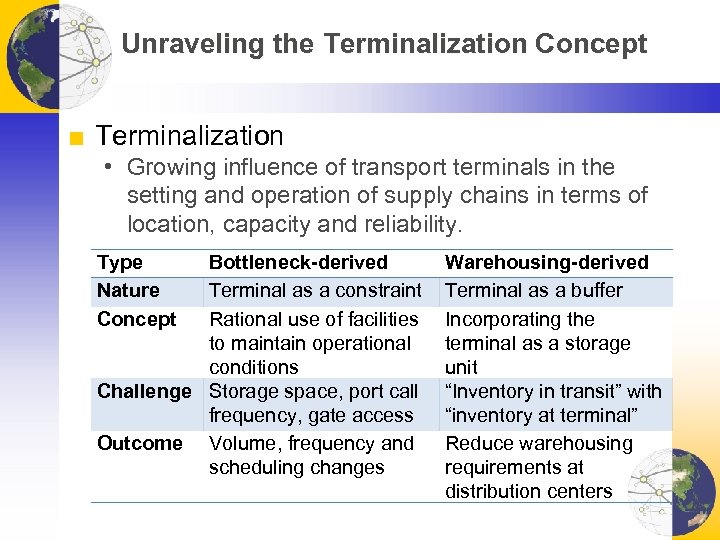
Unraveling the Terminalization Concept ■ Terminalization • Growing influence of transport terminals in the setting and operation of supply chains in terms of location, capacity and reliability. Type Nature Concept Bottleneck-derived Terminal as a constraint Rational use of facilities to maintain operational conditions Challenge Storage space, port call frequency, gate access Outcome Volume, frequency and scheduling changes Warehousing-derived Terminal as a buffer Incorporating the terminal as a storage unit “Inventory in transit” with “inventory at terminal” Reduce warehousing requirements at distribution centers
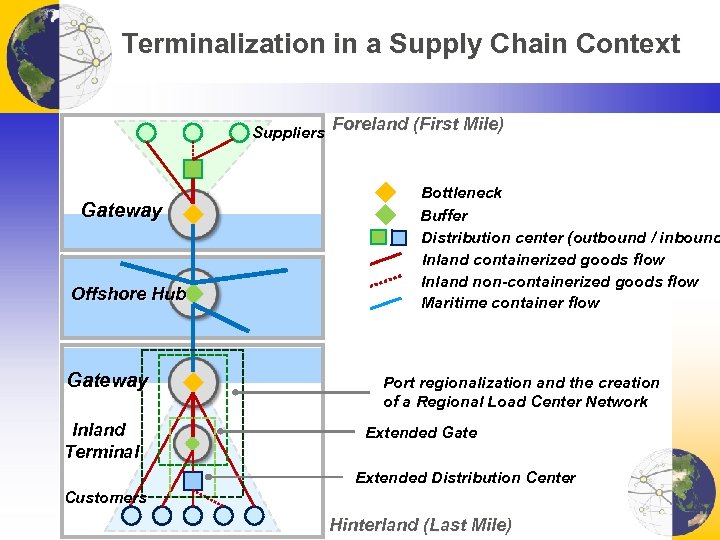
Terminalization in a Supply Chain Context Suppliers Foreland (First Mile) Gateway Offshore Hub Gateway Inland Terminal Bottleneck Buffer Distribution center (outbound / inbound Inland containerized goods flow Inland non-containerized goods flow Maritime container flow Port regionalization and the creation of a Regional Load Center Network Extended Gate Extended Distribution Center Customers Hinterland (Last Mile)
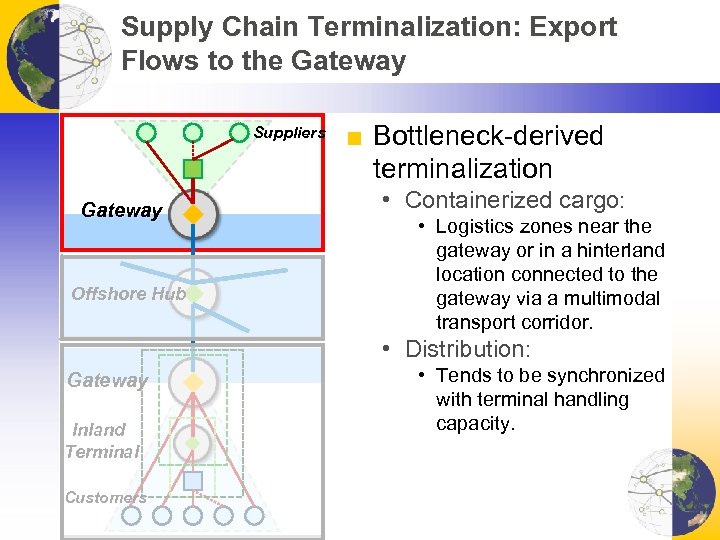
Supply Chain Terminalization: Export Flows to the Gateway Suppliers Gateway Offshore Hub ■ Bottleneck-derived terminalization • Containerized cargo: • Logistics zones near the gateway or in a hinterland location connected to the gateway via a multimodal transport corridor. • Distribution: Gateway Inland Terminal Customers • Tends to be synchronized with terminal handling capacity.
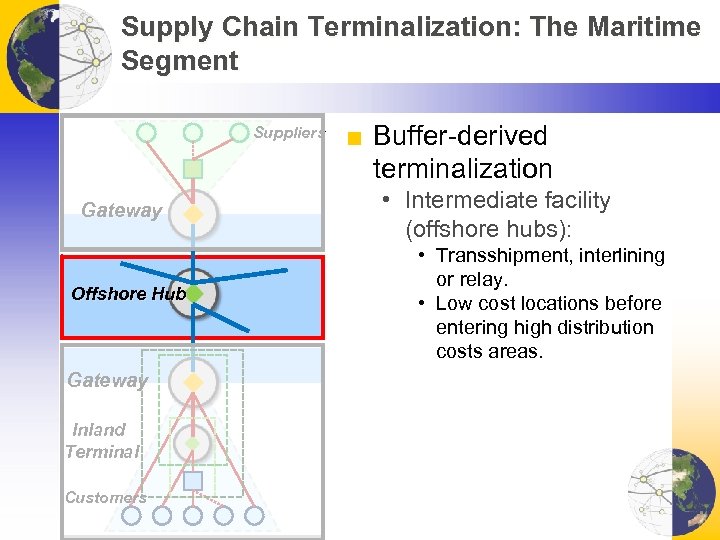
Supply Chain Terminalization: The Maritime Segment Suppliers Gateway Offshore Hub Gateway Inland Terminal Customers ■ Buffer-derived terminalization • Intermediate facility (offshore hubs): • Transshipment, interlining or relay. • Low cost locations before entering high distribution costs areas.
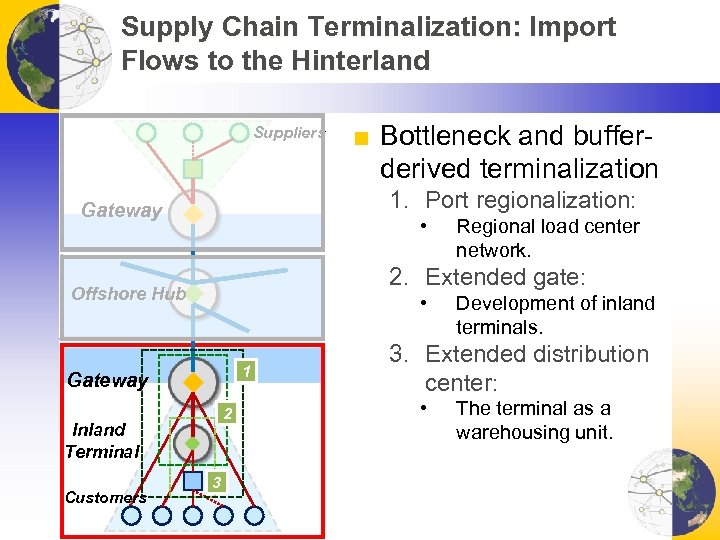
Supply Chain Terminalization: Import Flows to the Hinterland Suppliers 1. Port regionalization: Gateway • Regional load center network. 2. Extended gate: Offshore Hub • 1 Gateway 2 Inland Terminal Customers ■ Bottleneck and bufferderived terminalization 3 Development of inland terminals. 3. Extended distribution center: • The terminal as a warehousing unit.
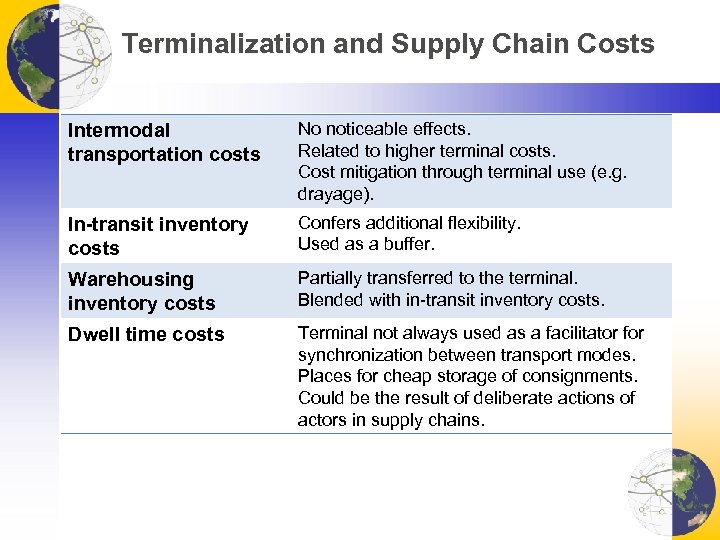
Terminalization and Supply Chain Costs Intermodal transportation costs No noticeable effects. Related to higher terminal costs. Cost mitigation through terminal use (e. g. drayage). In-transit inventory costs Confers additional flexibility. Used as a buffer. Warehousing inventory costs Partially transferred to the terminal. Blended with in-transit inventory costs. Dwell time costs Terminal not always used as a facilitator for synchronization between transport modes. Places for cheap storage of consignments. Could be the result of deliberate actions of actors in supply chains.
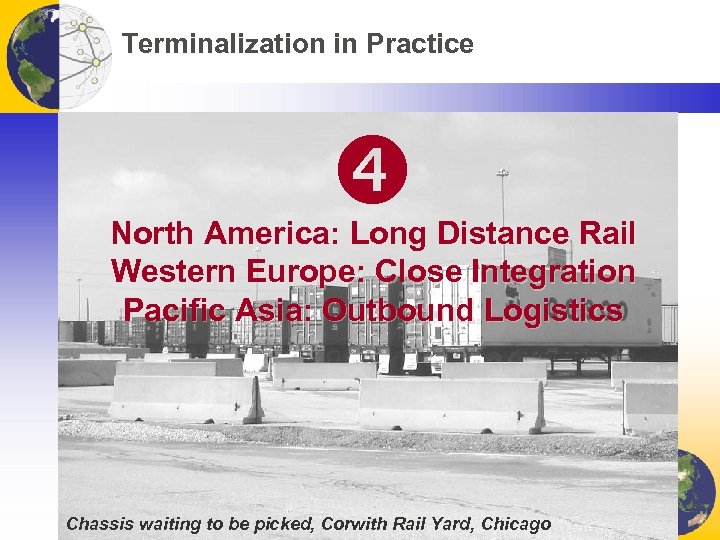
Terminalization in Practice North America: Long Distance Rail Western Europe: Close Integration Pacific Asia: Outbound Logistics Chassis waiting to be picked, Corwith Rail Yard, Chicago
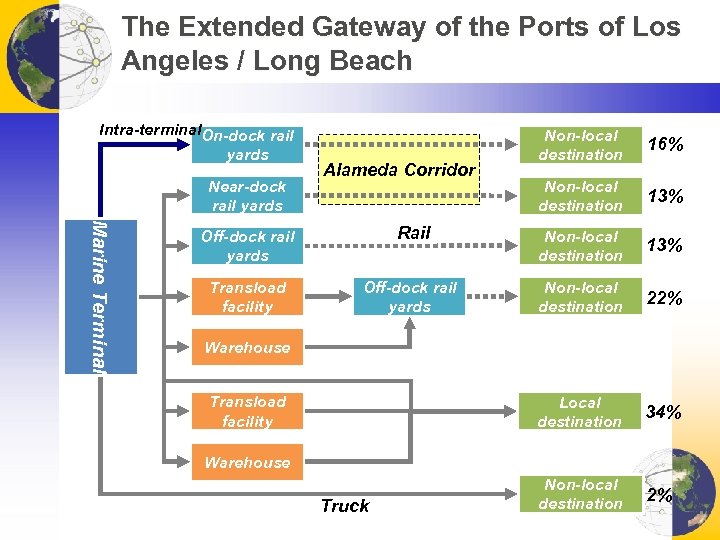
The Extended Gateway of the Ports of Los Angeles / Long Beach Intra-terminal. On-dock rail yards Near-dock rail yards Alameda Corridor Non-local destination 16% Non-local destination 13% Marine Terminal Off-dock rail yards Rail Non-local destination 13% Transload facility Off-dock rail yards Non-local destination 22% Local destination 34% Non-local destination 2% Warehouse Transload facility Warehouse Truck
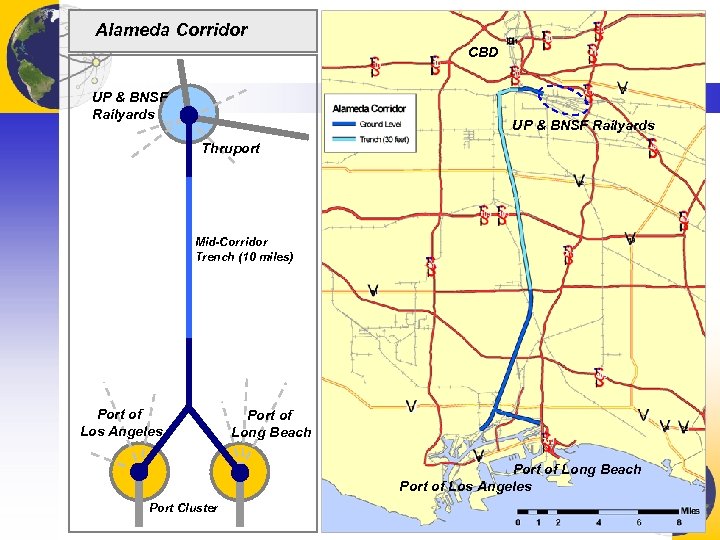
Alameda Corridor CBD UP & BNSF Railyards Thruport Mid-Corridor Trench (10 miles) Port of Los Angeles Port of Long Beach Port of Los Angeles Port Cluster
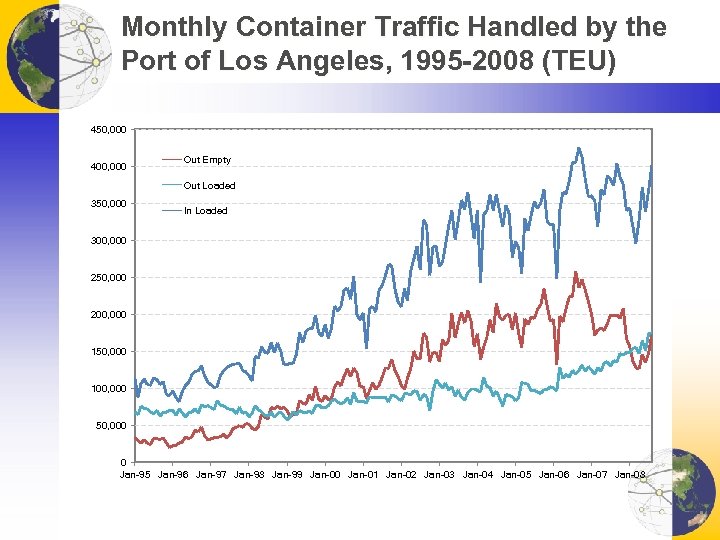
Monthly Container Traffic Handled by the Port of Los Angeles, 1995 -2008 (TEU) 450, 000 400, 000 Out Empty Out Loaded 350, 000 In Loaded 300, 000 250, 000 200, 000 150, 000 100, 000 50, 000 0 Jan-95 Jan-96 Jan-97 Jan-98 Jan-99 Jan-00 Jan-01 Jan-02 Jan-03 Jan-04 Jan-05 Jan-06 Jan-07 Jan-08
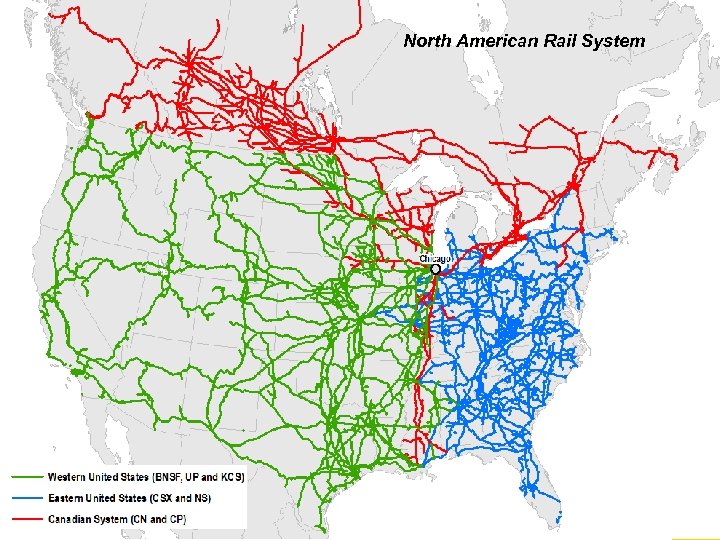
North American Rail System
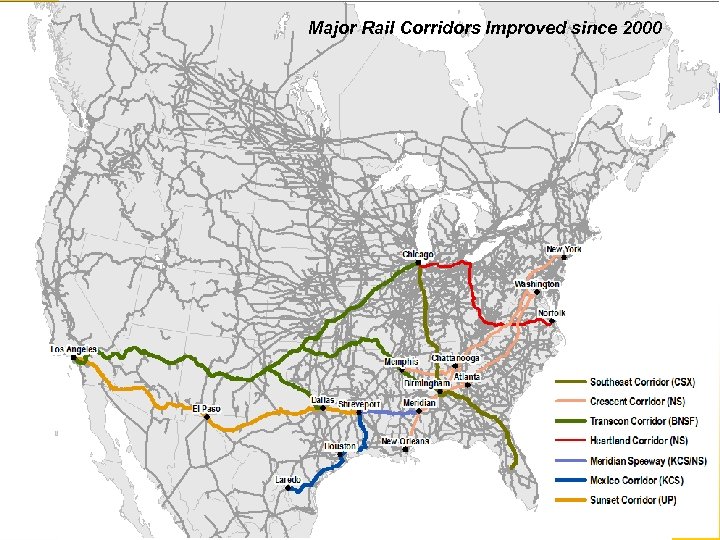
Major Rail Corridors Improved since 2000
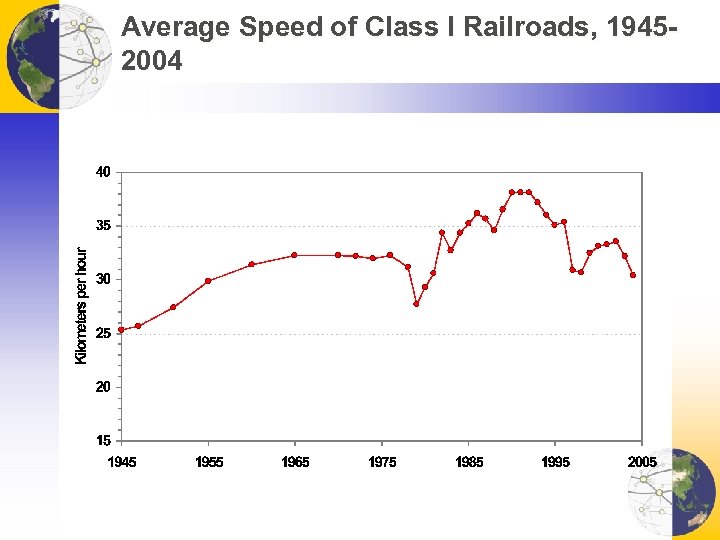
Average Speed of Class I Railroads, 19452004
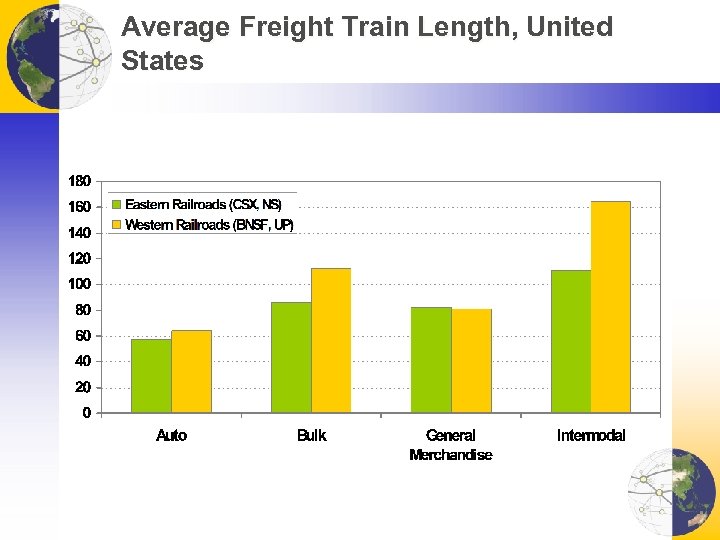
Average Freight Train Length, United States
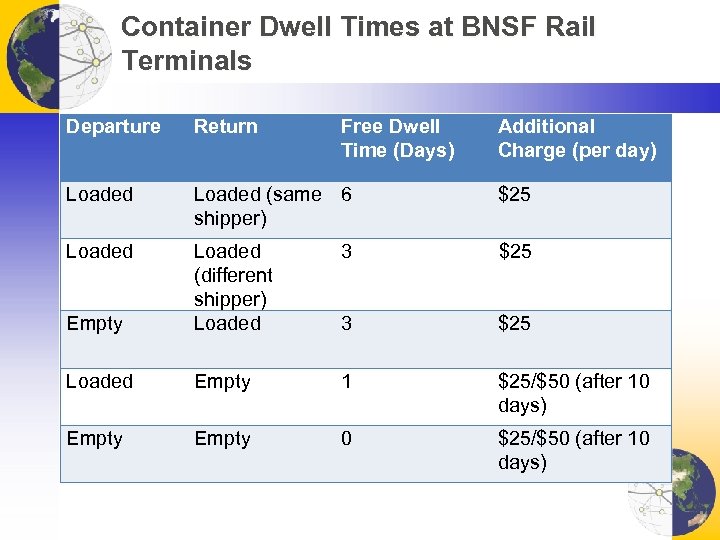
Container Dwell Times at BNSF Rail Terminals Departure Return Free Dwell Time (Days) Additional Charge (per day) Loaded (same 6 shipper) $25 Loaded 3 $25 Empty Loaded (different shipper) Loaded 3 $25 Loaded Empty 1 $25/$50 (after 10 days) Empty 0 $25/$50 (after 10 days)
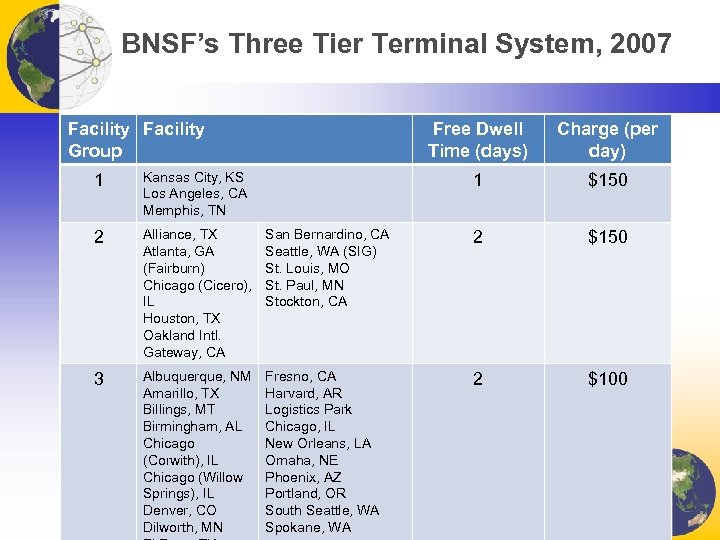
BNSF’s Three Tier Terminal System, 2007 Facility Group Free Dwell Time (days) Charge (per day) 1 $150 1 Kansas City, KS Los Angeles, CA Memphis, TN 2 Alliance, TX Atlanta, GA (Fairburn) Chicago (Cicero), IL Houston, TX Oakland Intl. Gateway, CA San Bernardino, CA Seattle, WA (SIG) St. Louis, MO St. Paul, MN Stockton, CA 2 $150 3 Albuquerque, NM Amarillo, TX Billings, MT Birmingham, AL Chicago (Corwith), IL Chicago (Willow Springs), IL Denver, CO Dilworth, MN Fresno, CA Harvard, AR Logistics Park Chicago, IL New Orleans, LA Omaha, NE Phoenix, AZ Portland, OR South Seattle, WA Spokane, WA 2 $100
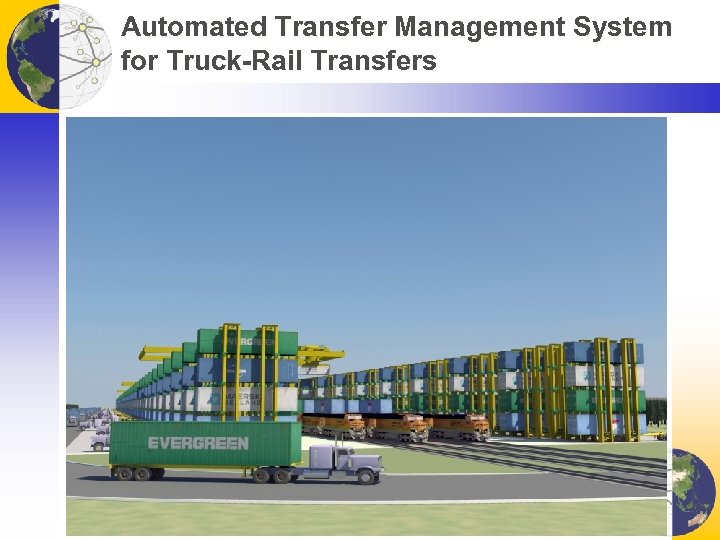
Automated Transfer Management System for Truck-Rail Transfers
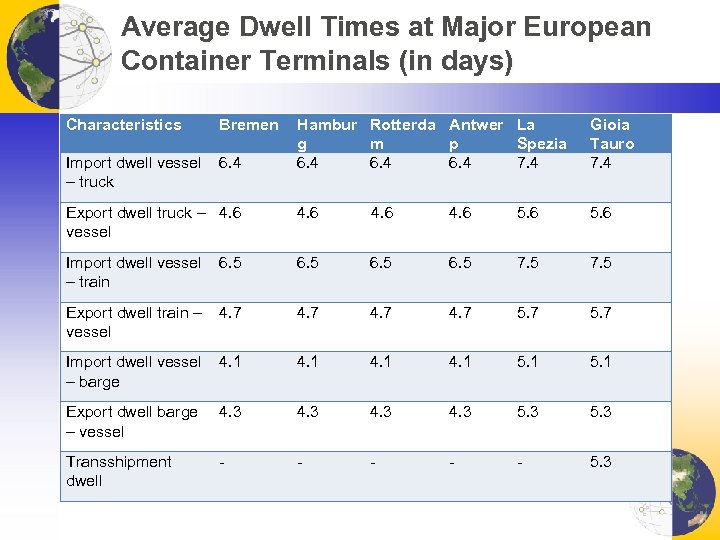
Average Dwell Times at Major European Container Terminals (in days) Characteristics Bremen Hambur Rotterda Antwer La g m p Spezia 6. 4 7. 4 Gioia Tauro 7. 4 Import dwell vessel – truck 6. 4 Export dwell truck – 4. 6 vessel 4. 6 5. 6 Import dwell vessel – train 6. 5 7. 5 Export dwell train – vessel 4. 7 5. 7 Import dwell vessel – barge 4. 1 5. 1 Export dwell barge – vessel 4. 3 5. 3 Transshipment dwell - - - 5. 3
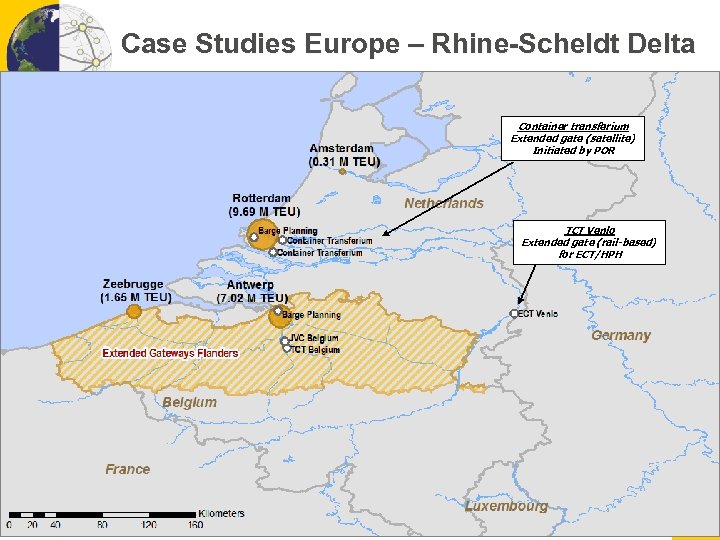
Case Studies Europe – Rhine-Scheldt Delta Container transferium Extended gate (satellite) Initiated by POR TCT Venlo Extended gate (rail-based) for ECT/HPH
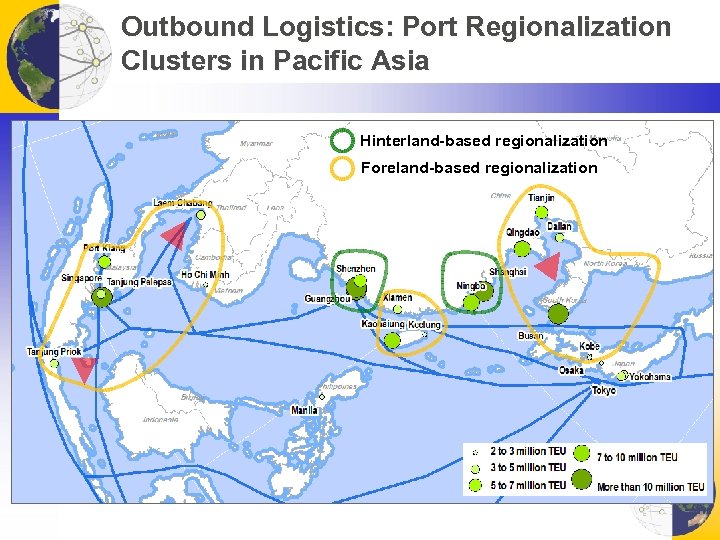
Outbound Logistics: Port Regionalization Clusters in Pacific Asia Hinterland-based regionalization Foreland-based regionalization
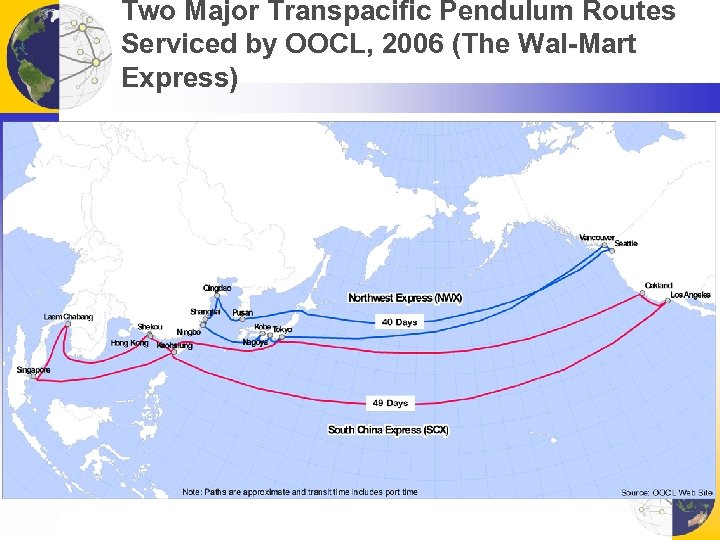
Two Major Transpacific Pendulum Routes Serviced by OOCL, 2006 (The Wal-Mart Express)
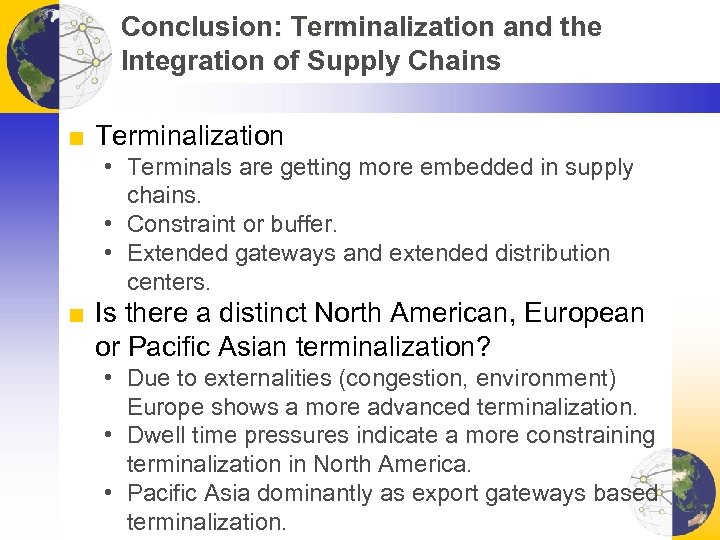
Conclusion: Terminalization and the Integration of Supply Chains ■ Terminalization • Terminals are getting more embedded in supply chains. • Constraint or buffer. • Extended gateways and extended distribution centers. ■ Is there a distinct North American, European or Pacific Asian terminalization? • Due to externalities (congestion, environment) Europe shows a more advanced terminalization. • Dwell time pressures indicate a more constraining terminalization in North America. • Pacific Asia dominantly as export gateways based terminalization.
Скачать презентацию The Korea Transport Institute KOTI Seoul October 7
f2a1bd71c3283a32460c285d1f03d5b1.ppt