


 Скачать презентацию The Kazakh National Medical University Named After S
Даутова Разиям 48-1.ppt
- Количество слайдов: 18
 The Kazakh National Medical University Named After S. D. Asfendiyarov Department of Foreign languages Presentation Theme: “Peritonitis” Done By : Madina Askarbay GM – 049 -2
 Plan Peritonitis Signs and Symptoms - Abdominal pain and tenderness - Collateral manifestations - Complications Causes Risk Factors Diagnosis Preventive Care Treatment: - Medications - Surgery and Other Procedures - Nutrition and Dietary Supplements - Herbs - Homeopathy - Other Considerations:
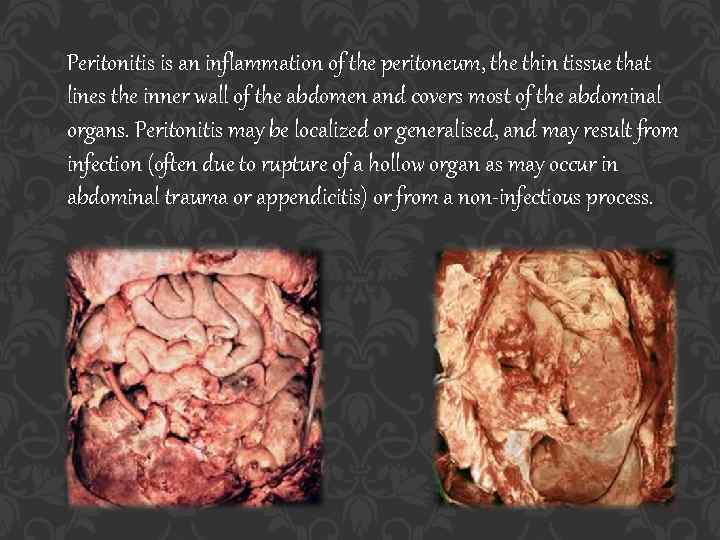 Peritonitis is an inflammation of the peritoneum, the thin tissue that lines the inner wall of the abdomen and covers most of the abdominal organs. Peritonitis may be localized or generalised, and may result from infection (often due to rupture of a hollow organ as may occur in abdominal trauma or appendicitis) or from a non-infectious process.
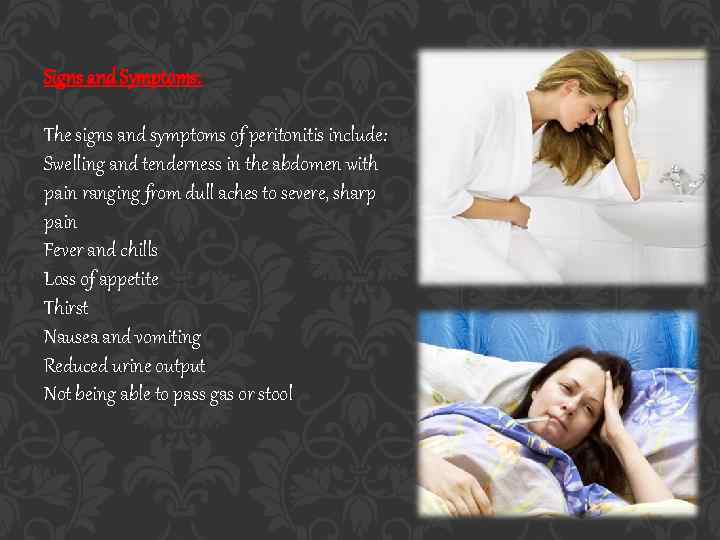 Signs and Symptoms: The signs and symptoms of peritonitis include: Swelling and tenderness in the abdomen with pain ranging from dull aches to severe, sharp pain Fever and chills Loss of appetite Thirst Nausea and vomiting Reduced urine output Not being able to pass gas or stool
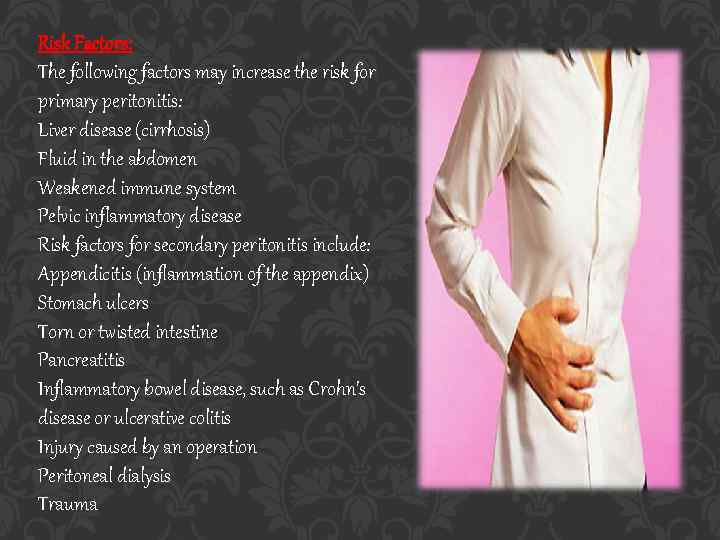
 Abdominal pain and tenderness The main manifestations of peritonitis are acute abdominal pain, abdominal tenderness, and abdominal guarding, which are exacerbated by moving the peritoneum, e. g. , coughing (forced cough may be used as a test), flexing one's hips, or eliciting the Blumberg sign (a. k. a. rebound tenderness, meaning that pressing a hand on the abdomen elicits less pain than releasing the hand abruptly, which will aggravate the pain, as the peritoneum snaps back into place). The presence of these signs in a patient is sometimes referred to as peritonism. The localization of these manifestations depends on whether peritonitis is localized (e. g. , appendicitis or diverticulitis before perforation), or generalized to the whole abdomen. In either case, pain typically starts as a generalized abdominal pain (with involvement of poorly localizing innervation of the visceral peritoneal layer), and may become localized later (with the involvement of the somatically innervated parietal peritoneal layer). Peritonitis is an example of an acute abdomen.
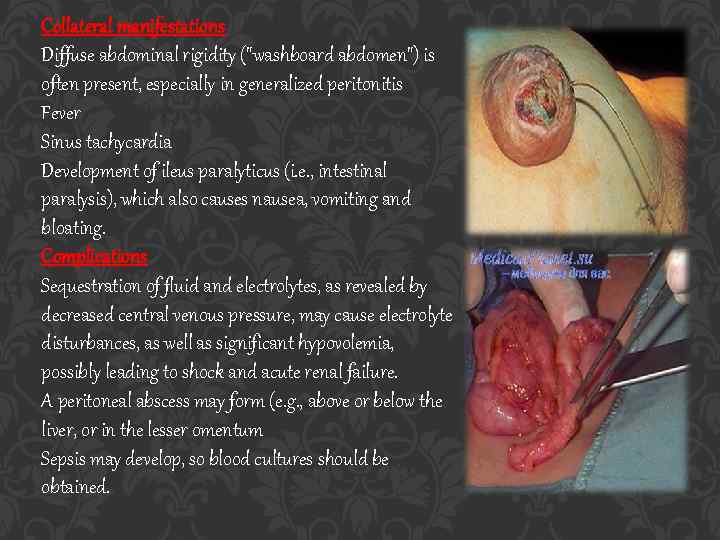 Collateral manifestations Diffuse abdominal rigidity ("washboard abdomen") is often present, especially in generalized peritonitis Fever Sinus tachycardia Development of ileus paralyticus (i. e. , intestinal paralysis), which also causes nausea, vomiting and bloating. Complications Sequestration of fluid and electrolytes, as revealed by decreased central venous pressure, may cause electrolyte disturbances, as well as significant hypovolemia, possibly leading to shock and acute renal failure. A peritoneal abscess may form (e. g. , above or below the liver, or in the lesser omentum Sepsis may develop, so blood cultures should be obtained.
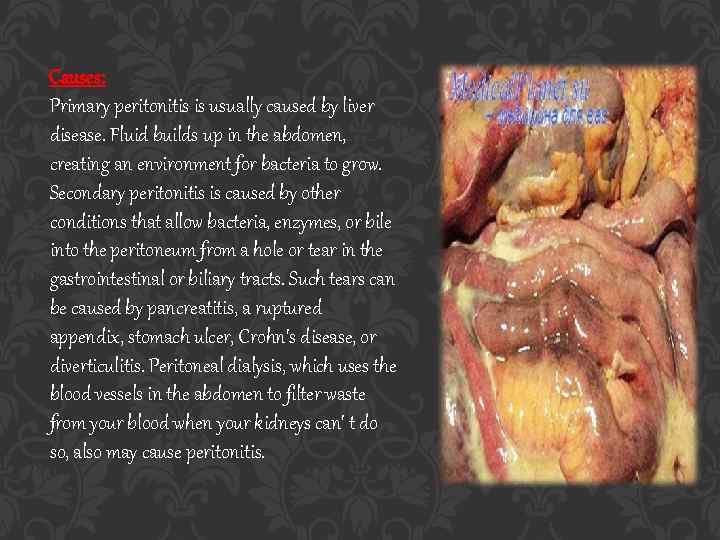 Causes: Primary peritonitis is usually caused by liver disease. Fluid builds up in the abdomen, creating an environment for bacteria to grow. Secondary peritonitis is caused by other conditions that allow bacteria, enzymes, or bile into the peritoneum from a hole or tear in the gastrointestinal or biliary tracts. Such tears can be caused by pancreatitis, a ruptured appendix, stomach ulcer, Crohn's disease, or diverticulitis. Peritoneal dialysis, which uses the blood vessels in the abdomen to filter waste from your blood when your kidneys can' t do so, also may cause peritonitis.
 Risk Factors: The following factors may increase the risk for primary peritonitis: Liver disease (cirrhosis) Fluid in the abdomen Weakened immune system Pelvic inflammatory disease Risk factors for secondary peritonitis include: Appendicitis (inflammation of the appendix) Stomach ulcers Torn or twisted intestine Pancreatitis Inflammatory bowel disease, such as Crohn's disease or ulcerative colitis Injury caused by an operation Peritoneal dialysis Trauma
 Diagnosis: Peritonitis can be life threatening, so the doctor will first do a physical examination to see whether you need surgery to fix the underlying problem. The doctor will feel and press your abdomen to find any swelling and tenderness as well as signs that fluid has collected in the area. The doctor may also listen to bowel sounds and check for difficulty breathing, low blood pressure, and signs of dehydration. The following procedures also may be performed: Blood tests -- to see if there is bacteria in your blood Samples of fluid from the abdomen -- identifies the bacteria causing the infection CT scan -- identifies fluid in the abdomen, or an infected organ X-rays -- detect air in the abdomen, which indicates that an organ may be torn or perforated
 Preventive Care: The best way to prevent serious complications from peritonitis is to get medical help as soon as symptoms appear. If you are receiving peritoneal dialysis, you can help avoid peritonitis by cleaning the area around the catheter with antiseptic and washing your hands before touching the catheter.
 Treatment: Peritonitis you have symptoms of peritonitis, you should get immediate emergency medical help. You will likely need to be hospitalized for treatment. You may need surgery to get rid of the source of infection, such as an inflamed appendix, or to repair a tear in the walls of the gastrointestinal or biliary tract. Antibiotics are used to control infection. Complementary therapies may be used along with conventional medicine when recovering from peritonitis.
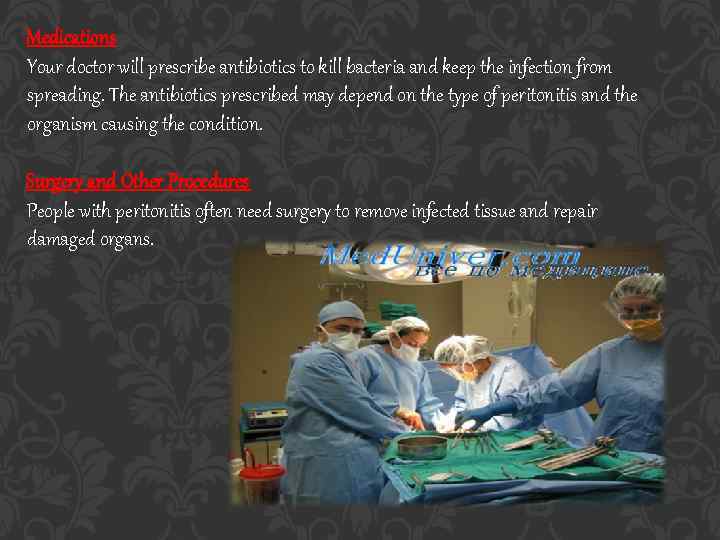 Medications Your doctor will prescribe antibiotics to kill bacteria and keep the infection from spreading. The antibiotics prescribed may depend on the type of peritonitis and the organism causing the condition. Surgery and Other Procedures People with peritonitis often need surgery to remove infected tissue and repair damaged organs.
 Nutrition and Dietary Supplements Peritonitis is a medical emergency and should be treated by a medical doctor. Do not try to treat peritonitis with herbs or supplements. However, a comprehensive treatment plan for recovering from peritonitis may include a range of complementary and alternative therapies. Ask your team of health care providers about the best ways to incorporate these therapies into your overall treatment plan. Always tell your health care provider about the herbs and supplements you are using or considering using.
 These good nutrition habits may help you recover from any serious illness: Eat antioxidant foods, including fruits (such as blueberries, cherries, and tomatoes) and vegetables (such as squash and bell peppers). Eat foods high in B-vitamins and calcium, such as almonds, beans, whole grains (if no allergy), dark leafy greens (such as spinach and kale), and sea vegetables. Avoid refined foods, such as white breads, pastas, and especially sugar. Eat fewer red meats and more lean meats, cold-water fish, tofu, or beans for protein. Use healthy oils in foods, such as olive oil or vegetable oil. Avoid caffeine, alcohol, and tobacco. Drink 6 - 8 glasses of filtered water daily. Ask your doctor about taking a multivitamin daily, containing the antioxidant vitamins A, C, E, the B-complex vitamins, and trace minerals such as magnesium, calcium, zinc, and selenium. Probiotic supplement (containing Lactobacillus acidophilus among other species), 5 - 10 billion CFUs (colony forming units) a day, for gastrointestinal and immune health. Probiotics can be especially helpful when taking antibiotics, because probiotics can help restore the balance of "good" bacteria in the intestines.
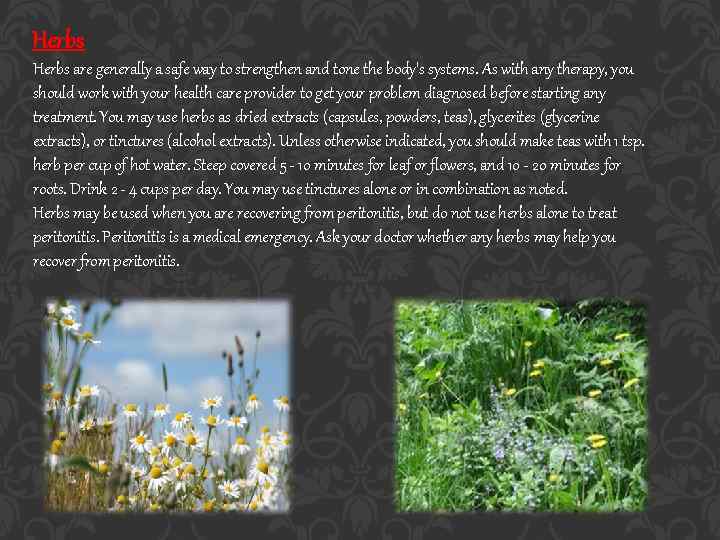 Herbs are generally a safe way to strengthen and tone the body's systems. As with any therapy, you should work with your health care provider to get your problem diagnosed before starting any treatment. You may use herbs as dried extracts (capsules, powders, teas), glycerites (glycerine extracts), or tinctures (alcohol extracts). Unless otherwise indicated, you should make teas with 1 tsp. herb per cup of hot water. Steep covered 5 - 10 minutes for leaf or flowers, and 10 - 20 minutes for roots. Drink 2 - 4 cups per day. You may use tinctures alone or in combination as noted. Herbs may be used when you are recovering from peritonitis, but do not use herbs alone to treat peritonitis. Peritonitis is a medical emergency. Ask your doctor whether any herbs may help you recover from peritonitis.
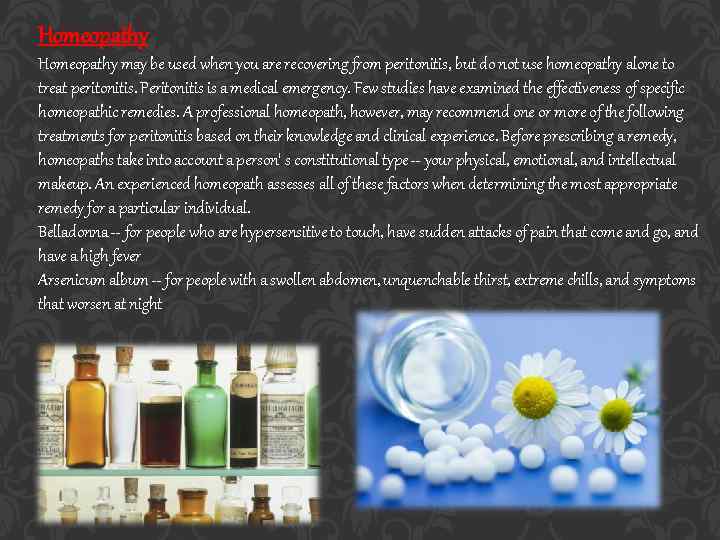 Homeopathy may be used when you are recovering from peritonitis, but do not use homeopathy alone to treat peritonitis. Peritonitis is a medical emergency. Few studies have examined the effectiveness of specific homeopathic remedies. A professional homeopath, however, may recommend one or more of the following treatments for peritonitis based on their knowledge and clinical experience. Before prescribing a remedy, homeopaths take into account a person' s constitutional type -- your physical, emotional, and intellectual makeup. An experienced homeopath assesses all of these factors when determining the most appropriate remedy for a particular individual. Belladonna -- for people who are hypersensitive to touch, have sudden attacks of pain that come and go, and have a high fever Arsenicum album -- for people with a swollen abdomen, unquenchable thirst, extreme chills, and symptoms that worsen at night
 Other Considerations: Prognosis and Complications from peritonitis can include: Sepsis -- an infection throughout the blood and body that can cause shock and multiple organ failure Abnormal clotting of the blood, often due to significant spread of infection Formation of fibrous tissue in the peritoneum Adult respiratory distress syndrome -- a severe infection of the lungs The prognosis for peritonitis depends on the type of the condition. For example, the outlook for people with secondary peritonitis tends to be poor, especially among the elderly, people with weakened immune systems, and those who have had symptoms for longer than 48 hours before treatment. The long-term outlook for people with primary peritonitis due to liver disease also tends to be poor. However, the prognosis for primary peritonitis among children is generally very good after treatment with antibiotics.
 Literature: Piraino B. Insights on peritoneal dialysis-related infections. Rotsein OD. Oxidants and antioxidant therapy. http: //www. webmd. com/digestive-disorders/peritonitis-symptoms-causes-treatments http: //www. umm. edu/altmed/articles/peritonitis-000127. htm