


 Скачать презентацию The Jewish Cemetery of Lodz At first
ed5b301597c7d22259e98bd9971b2513.ppt
- Количество слайдов: 9
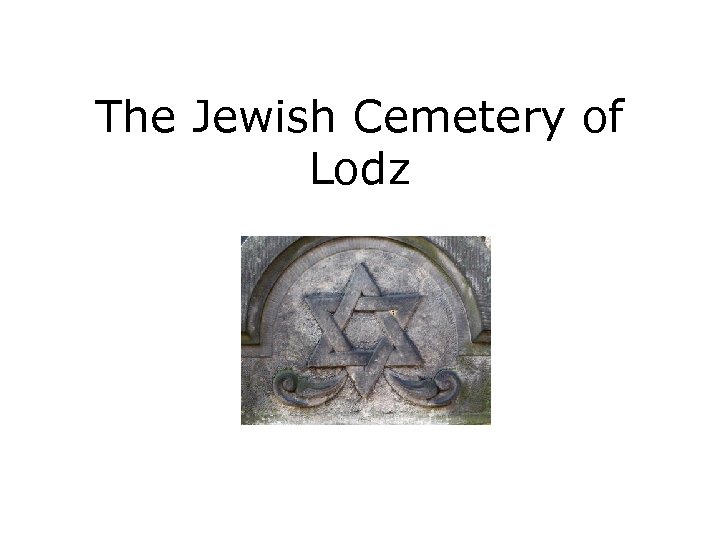 The Jewish Cemetery of Lodz
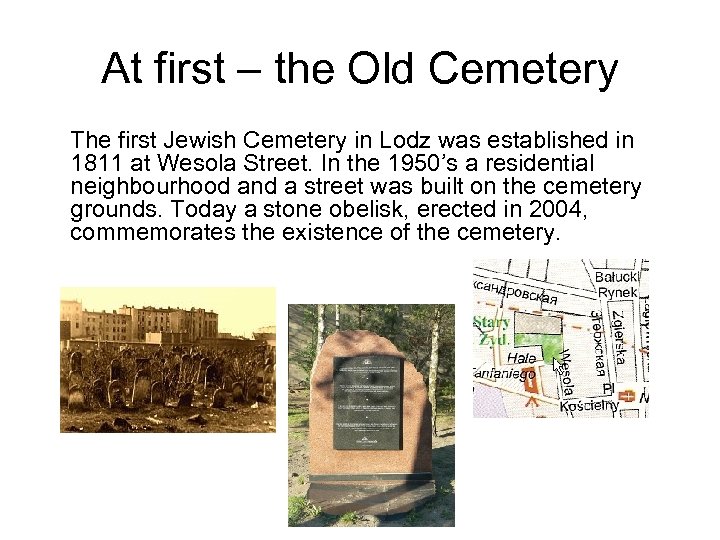 At first – the Old Cemetery The first Jewish Cemetery in Lodz was established in 1811 at Wesola Street. In the 1950’s a residential neighbourhood and a street was built on the cemetery grounds. Today a stone obelisk, erected in 2004, commemorates the existence of the cemetery.
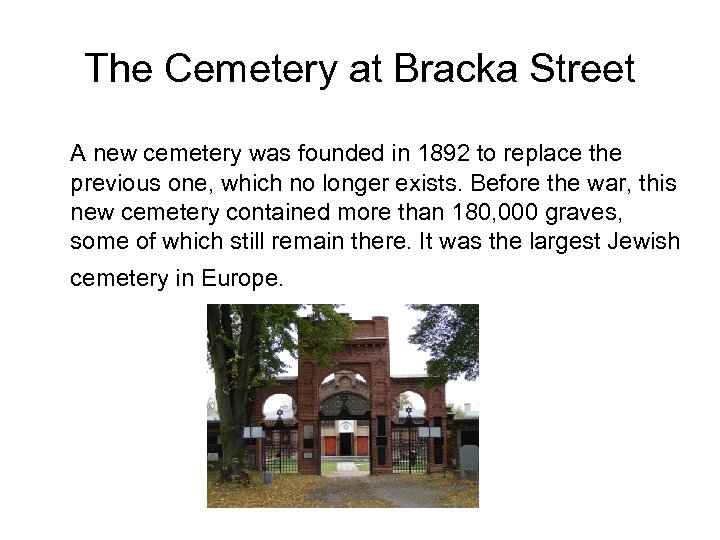 The Cemetery at Bracka Street A new cemetery was founded in 1892 to replace the previous one, which no longer exists. Before the war, this new cemetery contained more than 180, 000 graves, some of which still remain there. It was the largest Jewish cemetery in Europe.
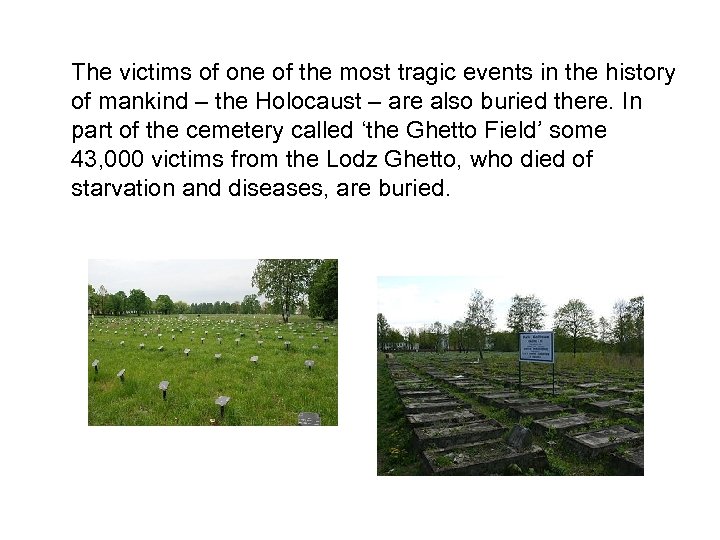 The victims of one of the most tragic events in the history of mankind – the Holocaust – are also buried there. In part of the cemetery called ‘the Ghetto Field’ some 43, 000 victims from the Lodz Ghetto, who died of starvation and diseases, are buried.
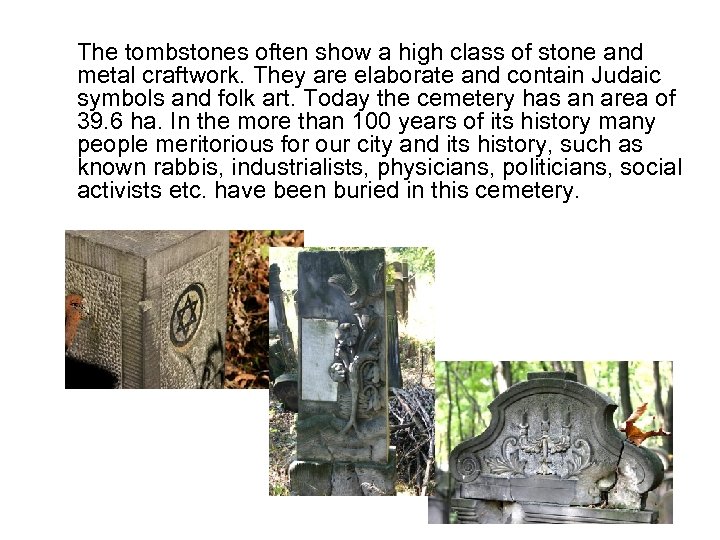 The tombstones often show a high class of stone and metal craftwork. They are elaborate and contain Judaic symbols and folk art. Today the cemetery has an area of 39. 6 ha. In the more than 100 years of its history many people meritorious for our city and its history, such as known rabbis, industrialists, physicians, politicians, social activists etc. have been buried in this cemetery.
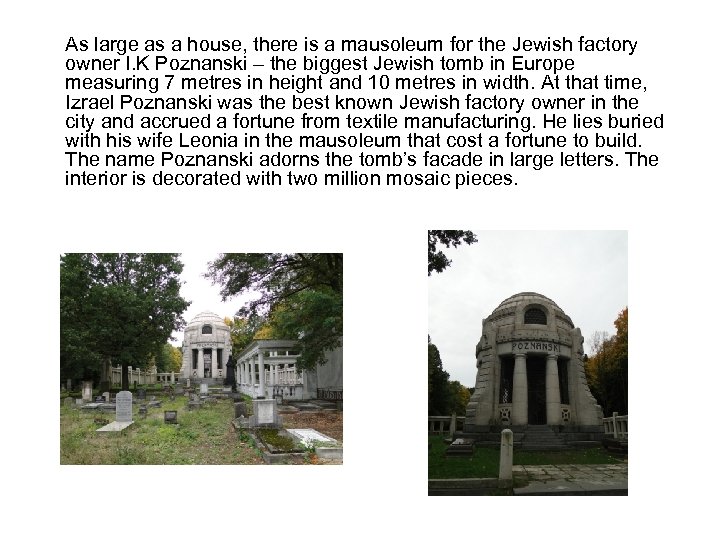 As large as a house, there is a mausoleum for the Jewish factory owner I. K Poznanski – the biggest Jewish tomb in Europe measuring 7 metres in height and 10 metres in width. At that time, Izrael Poznanski was the best known Jewish factory owner in the city and accrued a fortune from textile manufacturing. He lies buried with his wife Leonia in the mausoleum that cost a fortune to build. The name Poznanski adorns the tomb’s facade in large letters. The interior is decorated with two million mosaic pieces.
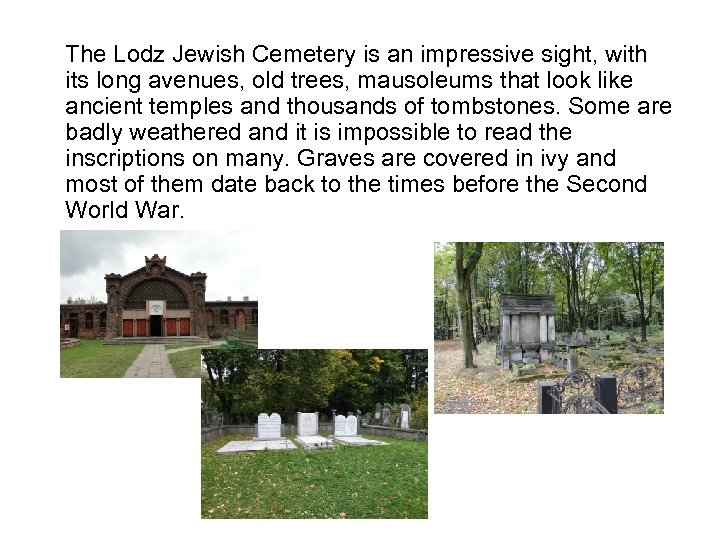 The Lodz Jewish Cemetery is an impressive sight, with its long avenues, old trees, mausoleums that look like ancient temples and thousands of tombstones. Some are badly weathered and it is impossible to read the inscriptions on many. Graves are covered in ivy and most of them date back to the times before the Second World War.
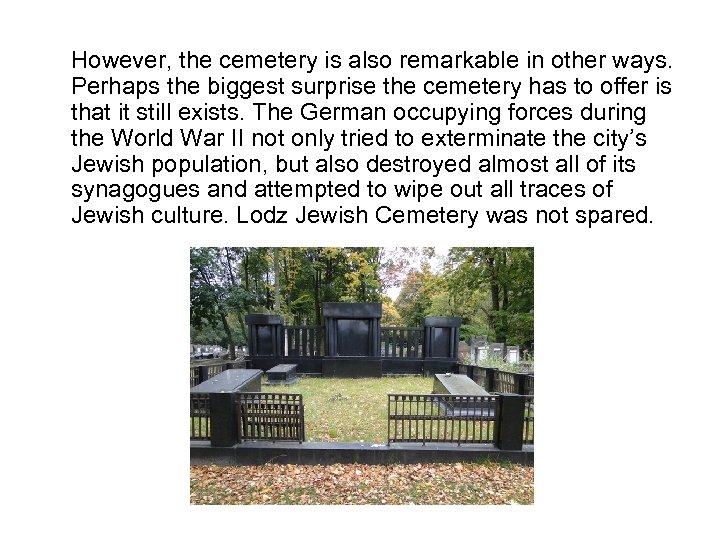 However, the cemetery is also remarkable in other ways. Perhaps the biggest surprise the cemetery has to offer is that it still exists. The German occupying forces during the World War II not only tried to exterminate the city’s Jewish population, but also destroyed almost all of its synagogues and attempted to wipe out all traces of Jewish culture. Lodz Jewish Cemetery was not spared.
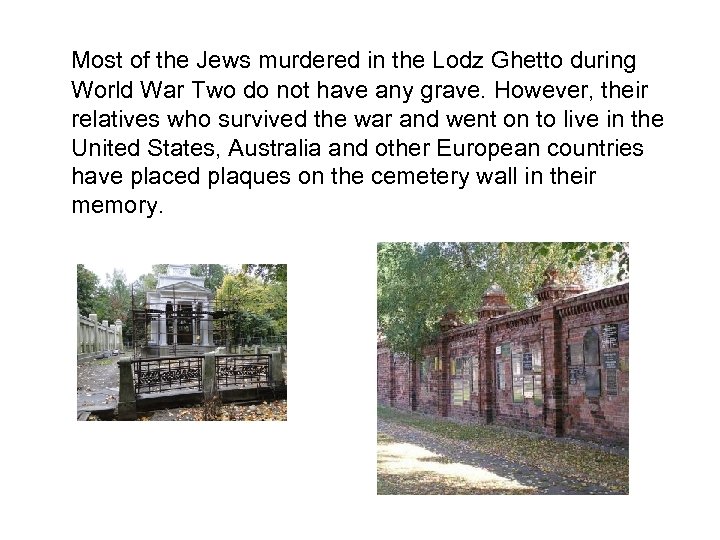 Most of the Jews murdered in the Lodz Ghetto during World War Two do not have any grave. However, their relatives who survived the war and went on to live in the United States, Australia and other European countries have placed plaques on the cemetery wall in their memory.