 Скачать презентацию The Jeffersonian Era m illia ry W bu
aa86e106edfc47928f9e4c1e1da34539.ppt
- Количество слайдов: 26



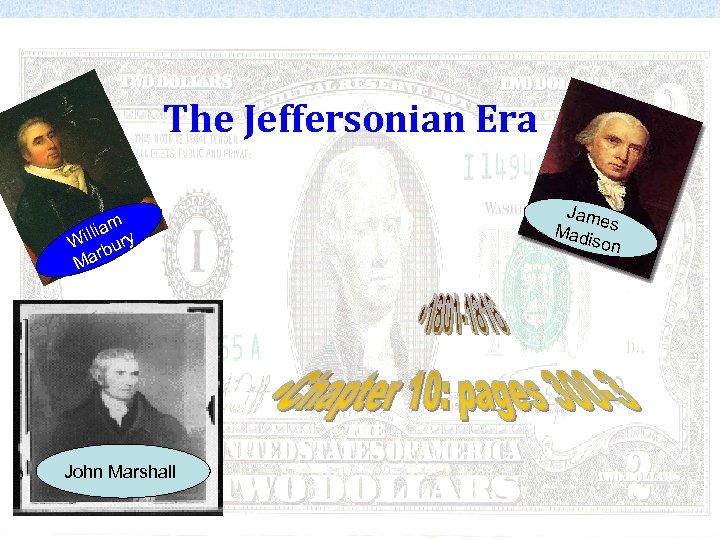
The Jeffersonian Era m illia ry W bu r Ma John Marshall Jame Mad s ison
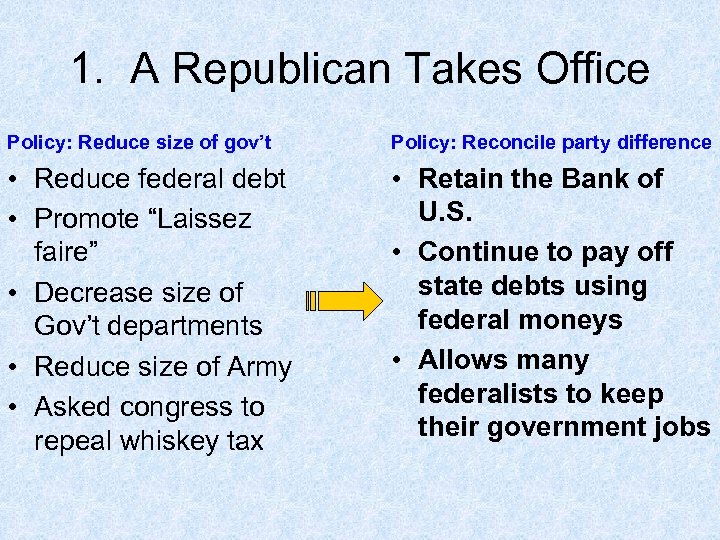
1. A Republican Takes Office Policy: Reduce size of gov’t Policy: Reconcile party difference • Reduce federal debt • Promote “Laissez faire” • Decrease size of Gov’t departments • Reduce size of Army • Asked congress to repeal whiskey tax • Retain the Bank of U. S. • Continue to pay off state debts using federal moneys • Allows many federalists to keep their government jobs
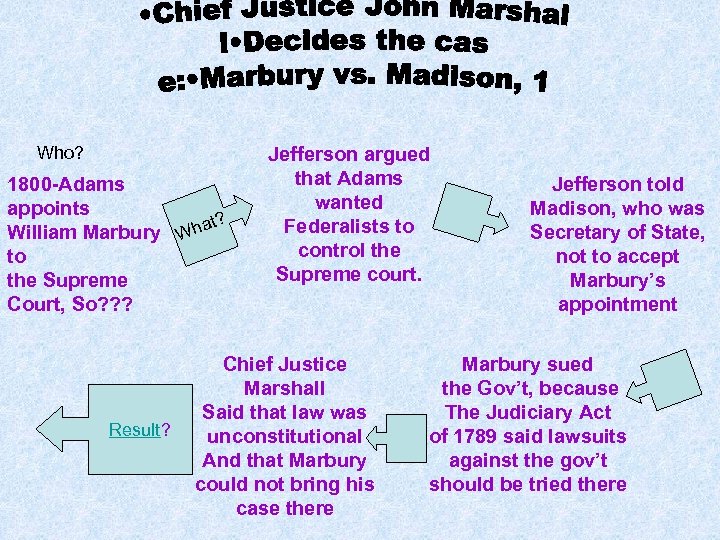
Who? 1800 -Adams appoints t? William Marbury Wha to the Supreme Court, So? ? ? Result? Jefferson argued that Adams wanted Federalists to control the Supreme court. Chief Justice Marshall Said that law was unconstitutional And that Marbury could not bring his case there Jefferson told Madison, who was Secretary of State, not to accept Marbury’s appointment Marbury sued the Gov’t, because The Judiciary Act of 1789 said lawsuits against the gov’t should be tried there
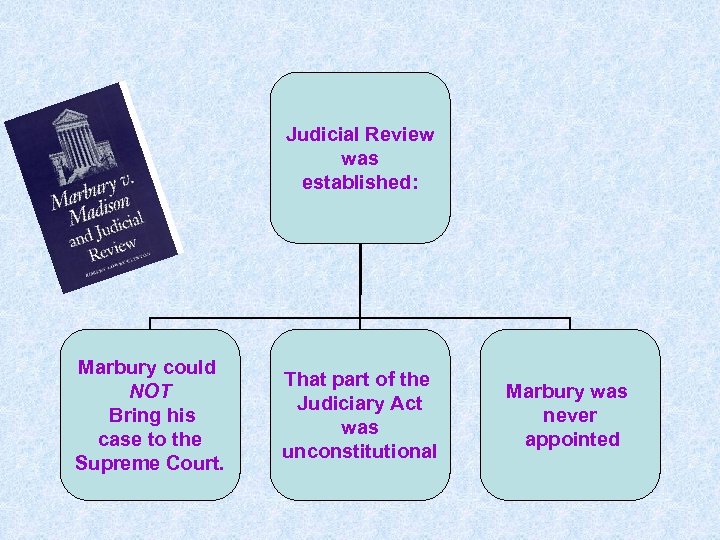
Judicial Review was established: Marbury could NOT Bring his case to the Supreme Court. That part of the Judiciary Act was unconstitutional Marbury was never appointed
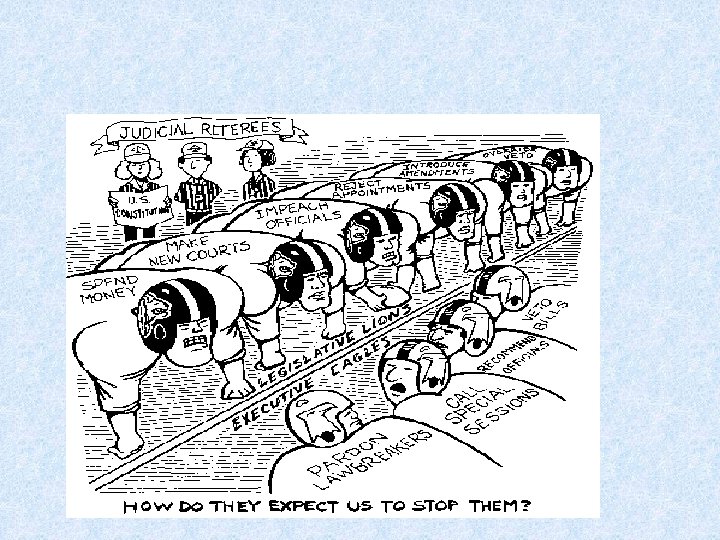
What branch of government did this action strengthen?
2. Control of the Missisippi • One million Americans lived between the Appalachian mountains and the Mississippi River • Western Farmers relied on the river to ship wheat and corn • From the Mississippi River, ocean ships carried produce to other ports along the Atlantic.
Problem: Spain wanted to control New Orleans • In 1795, President Washington sent Thomas Pinckney to sign a treaty that allowed American ships to ship their goods down the Mississippi River and store items in New Orleans. =
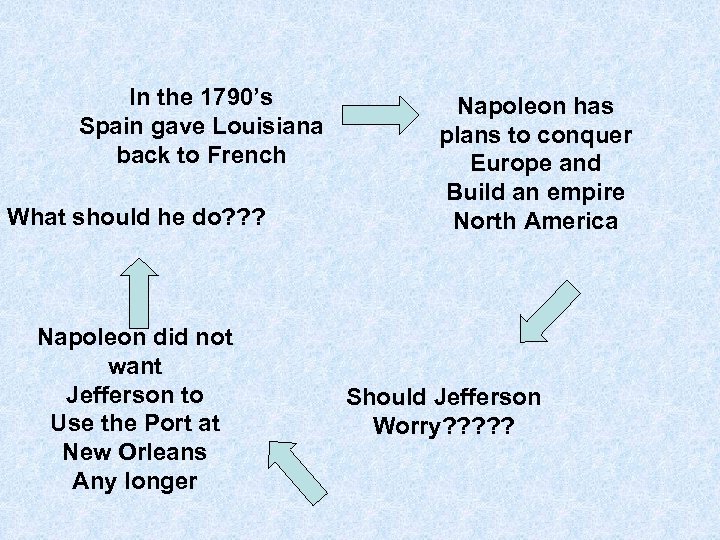
In the 1790’s Spain gave Louisiana back to French What should he do? ? ? Napoleon did not want Jefferson to Use the Port at New Orleans Any longer Napoleon has plans to conquer Europe and Build an empire North America Should Jefferson Worry? ? ?
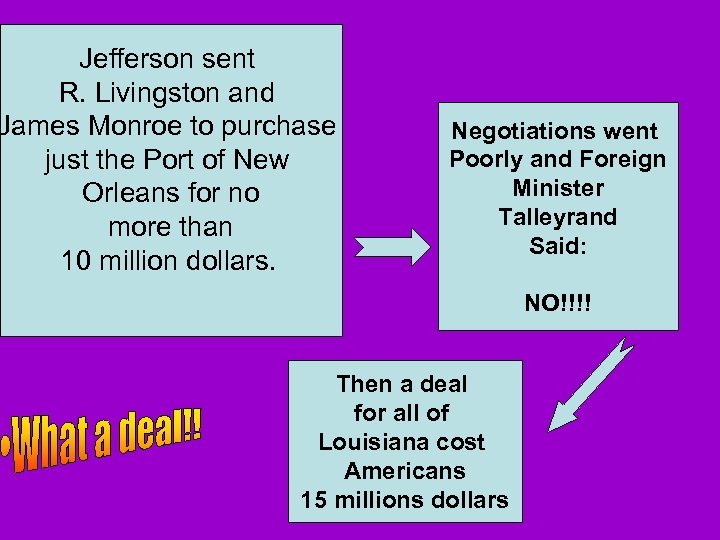
Jefferson sent R. Livingston and James Monroe to purchase just the Port of New Orleans for no more than 10 million dollars. Negotiations went Poorly and Foreign Minister Talleyrand Said: NO!!!! Then a deal for all of Louisiana cost Americans 15 millions dollars
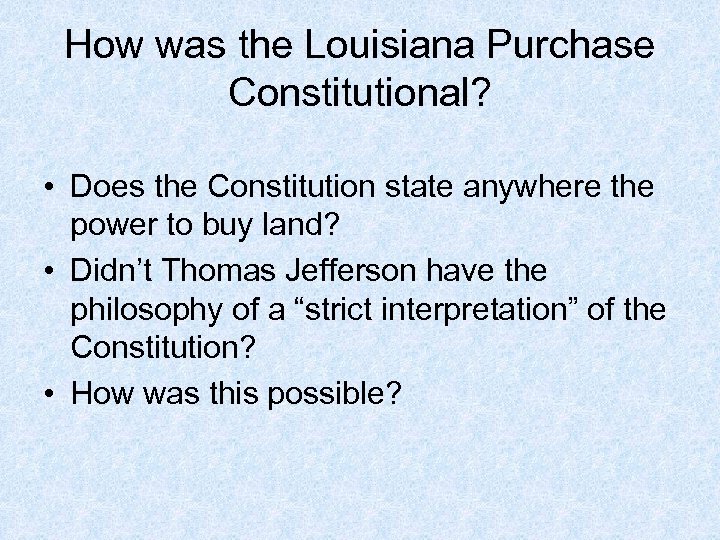
How was the Louisiana Purchase Constitutional? • Does the Constitution state anywhere the power to buy land? • Didn’t Thomas Jefferson have the philosophy of a “strict interpretation” of the Constitution? • How was this possible?
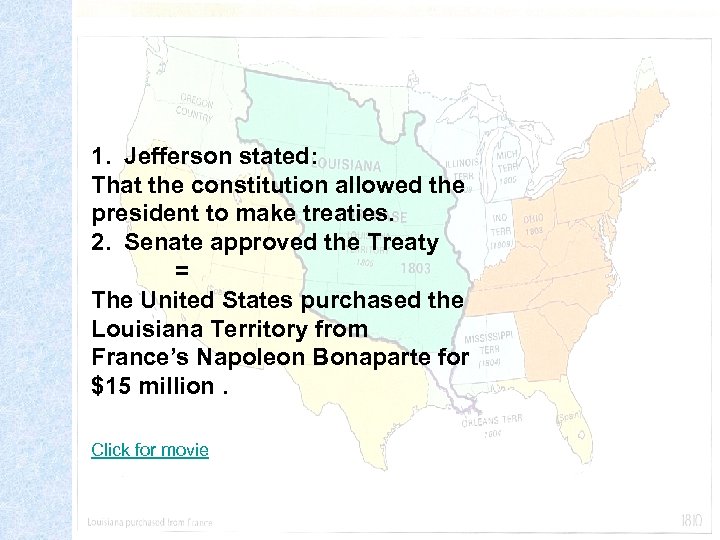
1. Jefferson stated: That the constitution allowed the president to make treaties. 2. Senate approved the Treaty = The United States purchased the Louisiana Territory from France’s Napoleon Bonaparte for $15 million. Click for movie
Lewis and Clark Expedition

http: //www. unitedstreaming. com/vid eos/26783/pgr 26783_256 K. asf
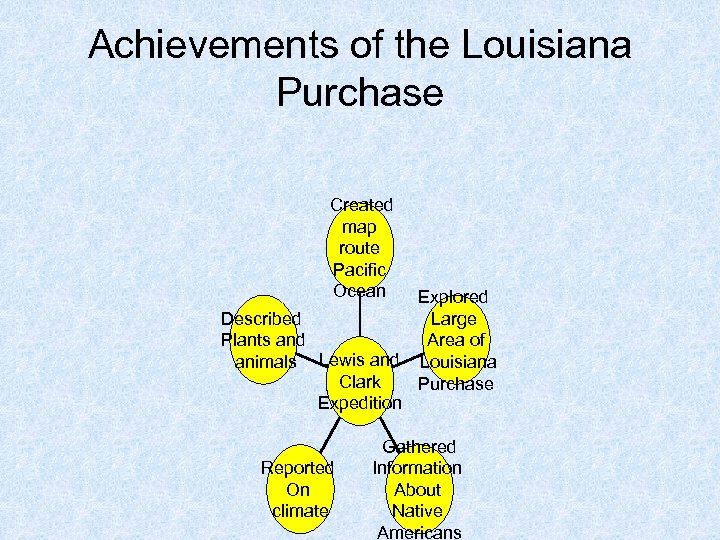
Achievements of the Louisiana Purchase Created map route Pacific Ocean Explored Large Described Area of Plants and animals Lewis and Louisiana Clark Purchase Expedition Reported On climate Gathered Information About Native Americans
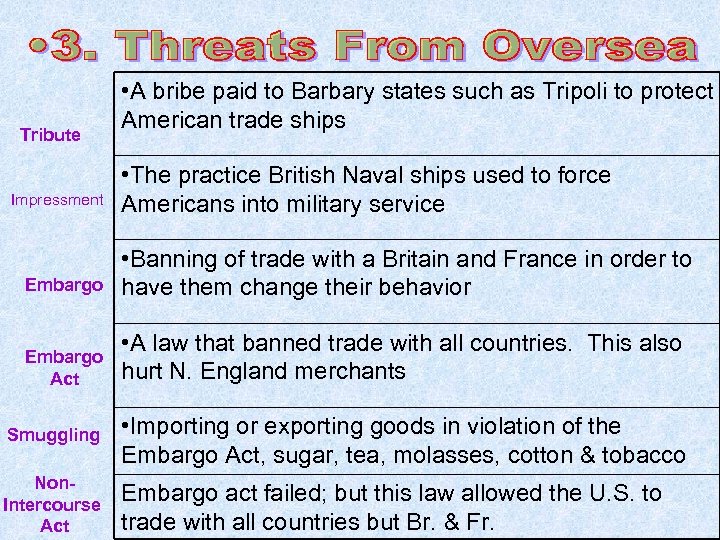
Tribute Impressment • A bribe paid to Barbary states such as Tripoli to protect American trade ships • The practice British Naval ships used to force Americans into military service Embargo • Banning of trade with a Britain and France in order to have them change their behavior Embargo Act • A law that banned trade with all countries. This also hurt N. England merchants Smuggling • Importing or exporting goods in violation of the Embargo Act, sugar, tea, molasses, cotton & tobacco Non. Intercourse Act Embargo act failed; but this law allowed the U. S. to trade with all countries but Br. & Fr.
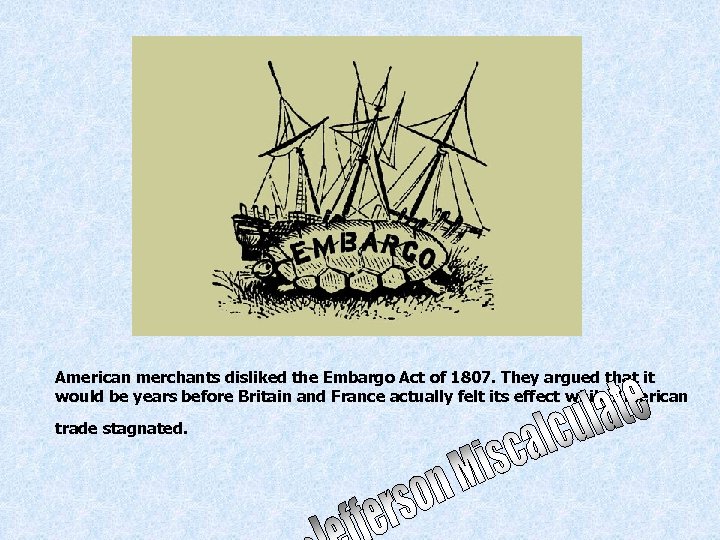
American merchants disliked the Embargo Act of 1807. They argued that it would be years before Britain and France actually felt its effect while American trade stagnated.
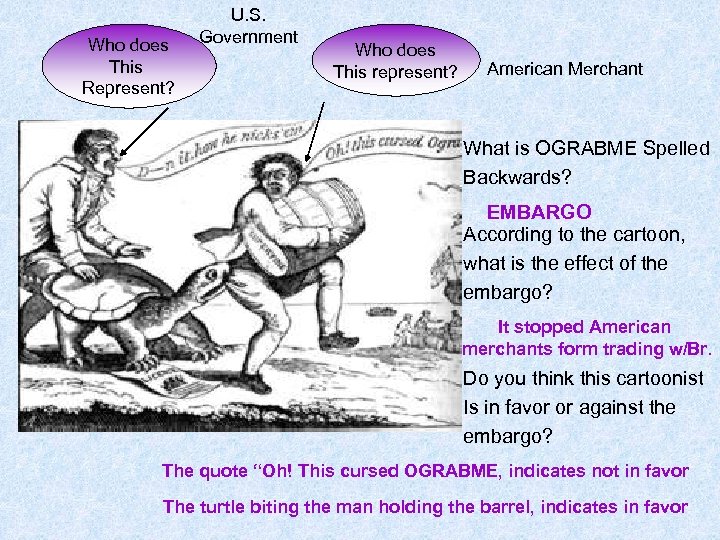
Who does This Represent? U. S. Government Who does This represent? American Merchant What is OGRABME Spelled Backwards? EMBARGO According to the cartoon, what is the effect of the embargo? It stopped American merchants form trading w/Br. Do you think this cartoonist Is in favor or against the embargo? The quote “Oh! This cursed OGRABME, indicates not in favor The turtle biting the man holding the barrel, indicates in favor
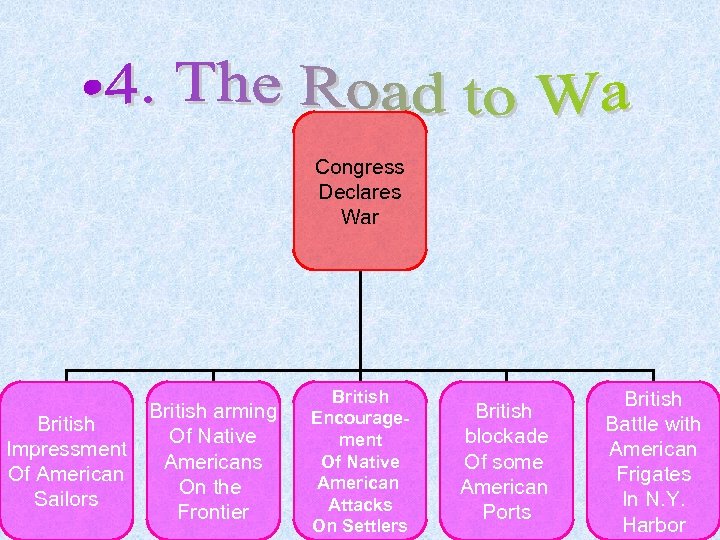
Congress Declares War British Impressment Of American Sailors British arming Of Native Americans On the Frontier British Encouragement Of Native American Attacks On Settlers British blockade Of some American Ports British Battle with American Frigates In N. Y. Harbor
5. The War of 1812 “Madison’s War”- although Madison did not want war The Nation Divided: South & West support the war New Englanders are against • Resulted in fighting with British and Native Americans
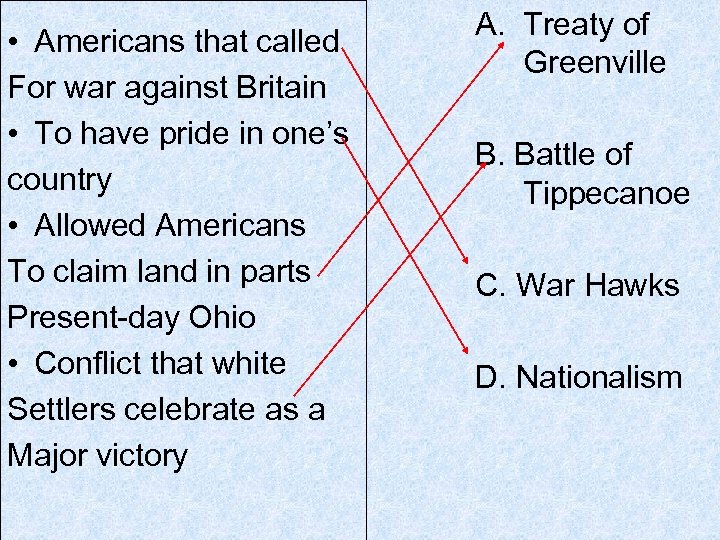
• Americans that called For war against Britain • To have pride in one’s country • Allowed Americans To claim land in parts Present-day Ohio • Conflict that white Settlers celebrate as a Major victory A. Treaty of Greenville B. Battle of Tippecanoe C. War Hawks D. Nationalism
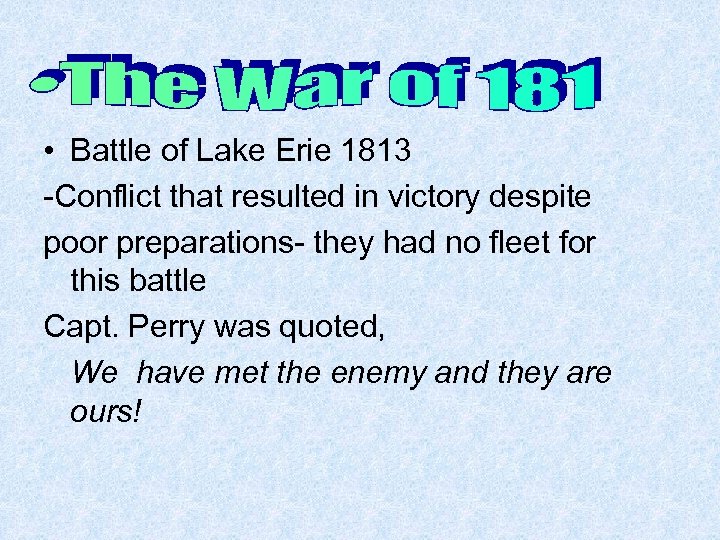
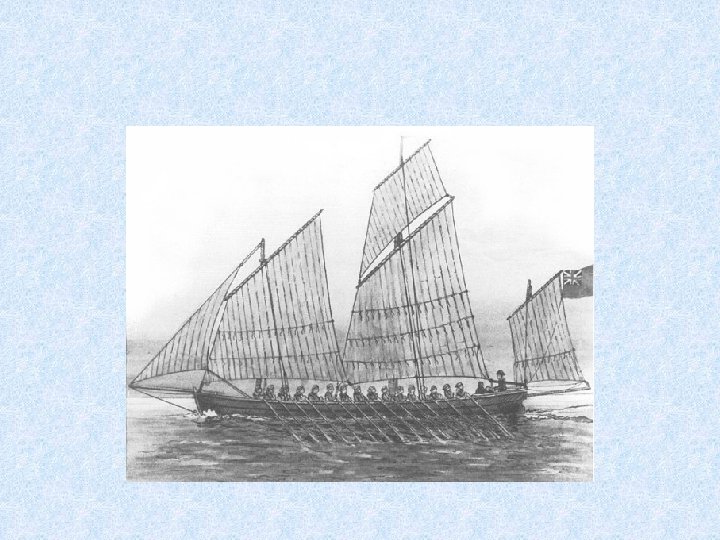
• Battle of Lake Erie 1813 -Conflict that resulted in victory despite poor preparations- they had no fleet for this battle Capt. Perry was quoted, We have met the enemy and they are ours!
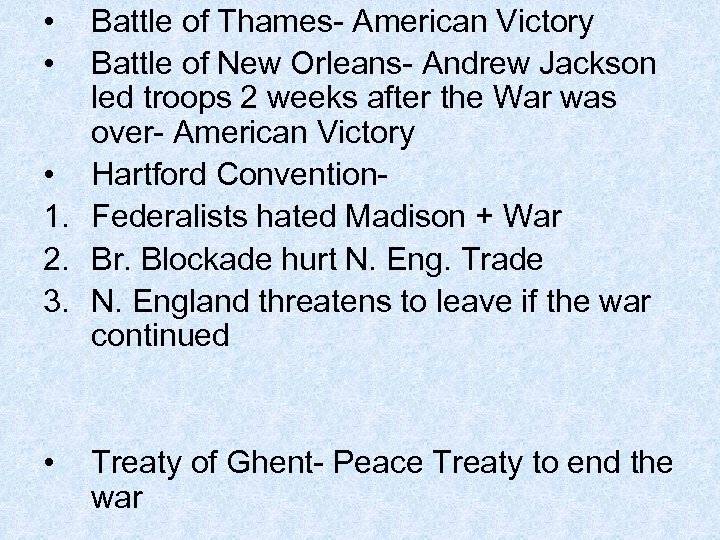
• • Battle of Thames- American Victory Battle of New Orleans- Andrew Jackson led troops 2 weeks after the War was over- American Victory • Hartford Convention 1. Federalists hated Madison + War 2. Br. Blockade hurt N. Eng. Trade 3. N. England threatens to leave if the war continued • Treaty of Ghent- Peace Treaty to end the war
 Скачать презентацию The Jeffersonian Era m illia ry W bu
aa86e106edfc47928f9e4c1e1da34539.ppt