


 Скачать презентацию The International Psycho-Oncology Society IPOS Jimmie C Holland
a3900122c03964c336eb8ca72ac0ee49.ppt
- Количество слайдов: 31
 The International Psycho-Oncology Society (IPOS) Jimmie C. Holland, M. D. Wayne E. Chapman Chair in Psychiatric Oncology Memorial Sloan-Kettering Cancer Center New York, New York
 IPOS: Founded 1984 • To improve the “human” side of cancer care on a global basis
 IPOS: 1984 • Foster international communication • Educate professionals in psychosocial care across countries • Advocate for making psychosocial an integral part of total cancer care • Examine social, cultural factors that impact quality of life and care
 An International Survey of Physician Attitudes and Practice in Regard to Revealing the Diagnosis of Cancer Jimmie C. Holland, M. D. , Natalie Geary, B. A. , Anthony Marchini, B. A. , and Susan Tross, Ph. D. Psychiatry Service Memorial Sloan-Kettering Cancer Center New York, 10021 Cancer Investigation, 5(2), 151 -154 (1987)
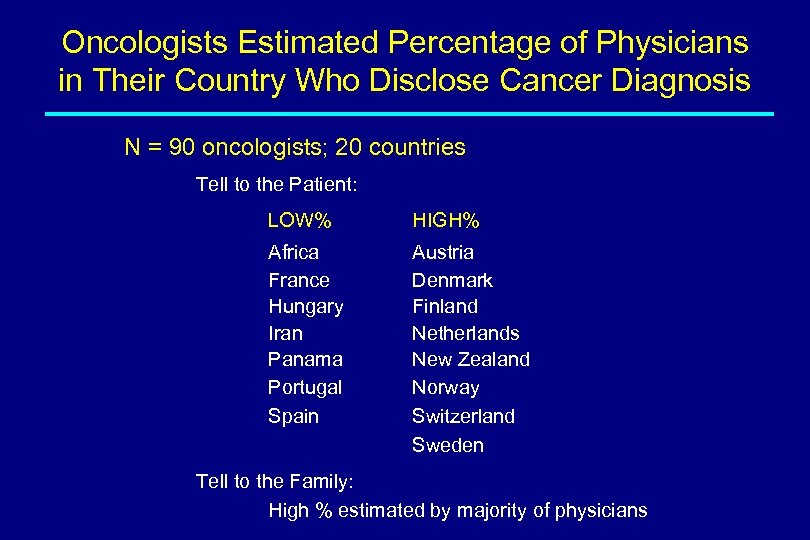 Oncologists Estimated Percentage of Physicians in Their Country Who Disclose Cancer Diagnosis N = 90 oncologists; 20 countries Tell to the Patient: LOW% HIGH% Africa France Hungary Iran Panama Portugal Spain Austria Denmark Finland Netherlands New Zealand Norway Switzerland Sweden Tell to the Family: High % estimated by majority of physicians
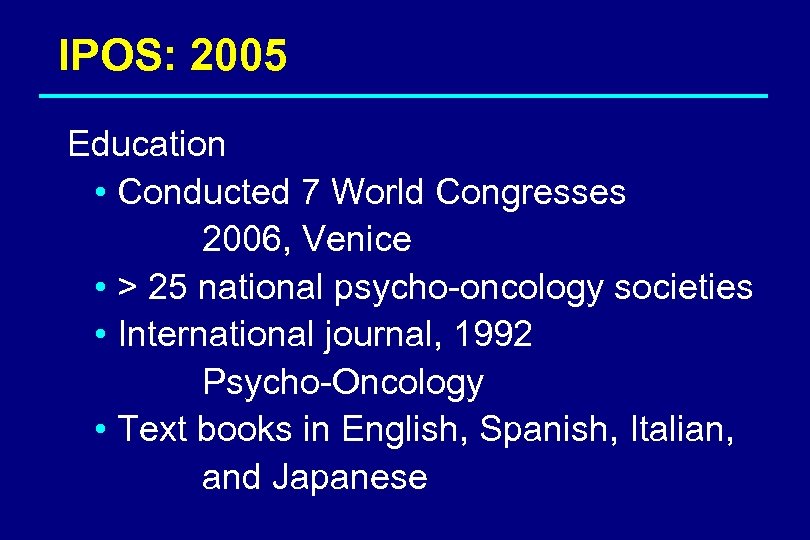 IPOS: 2005 Education • Conducted 7 World Congresses 2006, Venice • > 25 national psycho-oncology societies • International journal, 1992 Psycho-Oncology • Text books in English, Spanish, Italian, and Japanese
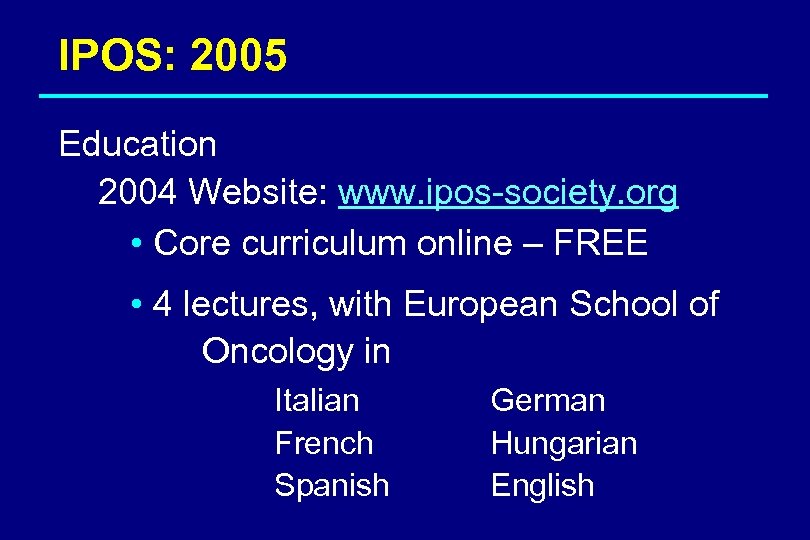 IPOS: 2005 Education 2004 Website: www. ipos-society. org • Core curriculum online – FREE • 4 lectures, with European School of Oncology in Italian French Spanish German Hungarian English
 IPOS: 2005 • Requested to become an NGO of World Health Organization • Rationale: to add a psychological, social and behavorial dimension to WHO national cancer control programs
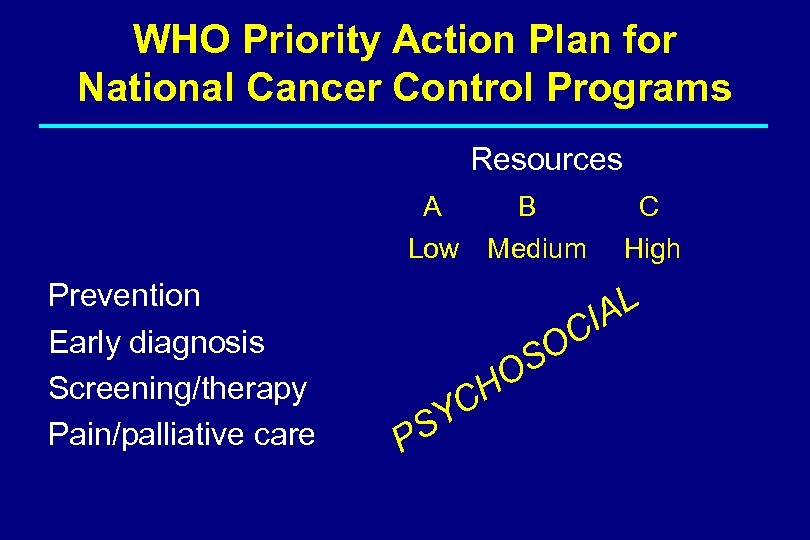 WHO Priority Action Plan for National Cancer Control Programs Resources A Low Prevention Early diagnosis Screening/therapy Pain/palliative care B Medium C High AL I PS C Y C SO HO
 WHO Cancer Prevention Program • Depends on changes in life style and exposures: must alter BEHAVIOR • Psychological and social factors are critical considerations in prevention education which must be culture and language-sensitive • Behavioral scientists needed (Tobacco Cessation)
 WHO Cancer Control Program Early Diagnosis • Fatalistic attitudes, fear of stigma of cancer, and ignorance are problems, especially in developing countries • Public education requires attention to psychological, social, cultural, and behavioral factors
 WHO Cancer Control Screening • Participation in screening require attention to local social attitudes, beliefs, trust in procedures/staff, and awareness of cultural factors • Requires knowledge of community, beliefs, and fears
 WHO Priorities for National Cancer Control Programs • Pain/Palliative Care
 In Palliative Care • Pain is often the primary focus • Psychological issues are often not identified and treated as an equally important aspect of end-of-life care • Need for more participation of psychooncologists in end-of-life for clinical and research collaboration
 IPOS Goals in Palliative Care • Encourage recognition, diagnosis and treatment of psychosocial and psychiatric problems • Develop standards and clinical practice guidelines for psychological care
 National Programs Standards and Guidelines Australia United Kingdom Canada United States
 US Example: 1999 A Multidisciplinary Panel (NCCN) • Chose “DISTRESS” as an encompassing word to cover psychosocial/ psychiatric and spiritual • A rapid one-item screening question • Standards care and Clinical Practice Guidelines for mental health, social work, clergy
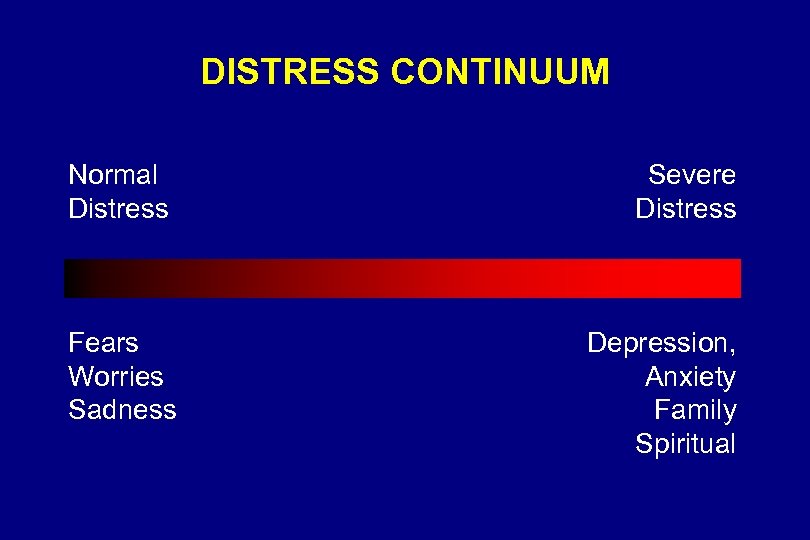 DISTRESS CONTINUUM Normal Distress Severe Distress Fears Worries Sadness Depression, Anxiety Family Spiritual
 STANDARDS OF CARE FOR MANAGEMENT OF DISTRESS - 1 • Distress should be recognized, monitored, documented and treated promptly at all stages of disease • All patients should be screened for distress at their initial visit and as clinically indicated • Screening should identify the level and nature of the distress • Distress should be assessed and managed by evidence or consensus-based clinical practice guidelines Adapted, NCCN
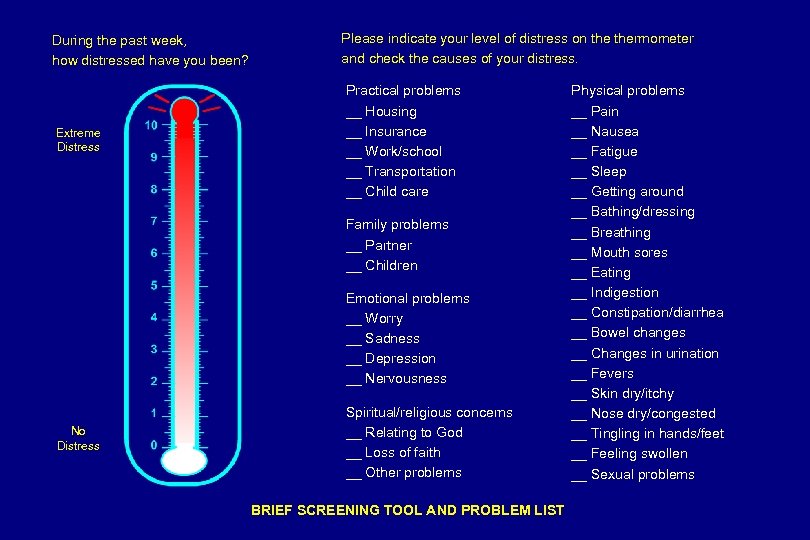 During the past week, how distressed have you been? Extreme Distress Please indicate your level of distress on thermometer and check the causes of your distress. Practical problems __ Housing __ Insurance __ Work/school __ Transportation __ Child care Family problems __ Partner __ Children Emotional problems __ Worry __ Sadness __ Depression __ Nervousness No Distress Spiritual/religious concerns __ Relating to God __ Loss of faith __ Other problems BRIEF SCREENING TOOL AND PROBLEM LIST Physical problems __ Pain __ Nausea __ Fatigue __ Sleep __ Getting around __ Bathing/dressing __ Breathing __ Mouth sores __ Eating __ Indigestion __ Constipation/diarrhea __ Bowel changes __ Changes in urination __ Fevers __ Skin dry/itchy __ Nose dry/congested __ Tingling in hands/feet __ Feeling swollen __ Sexual problems
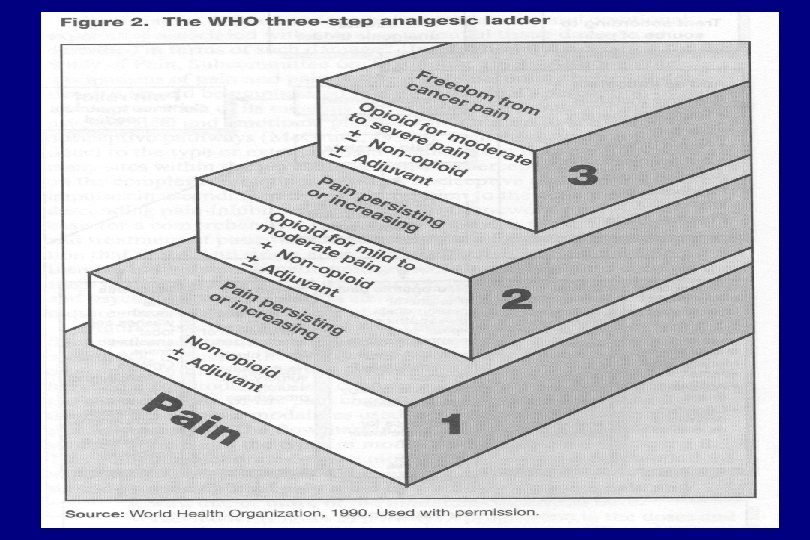
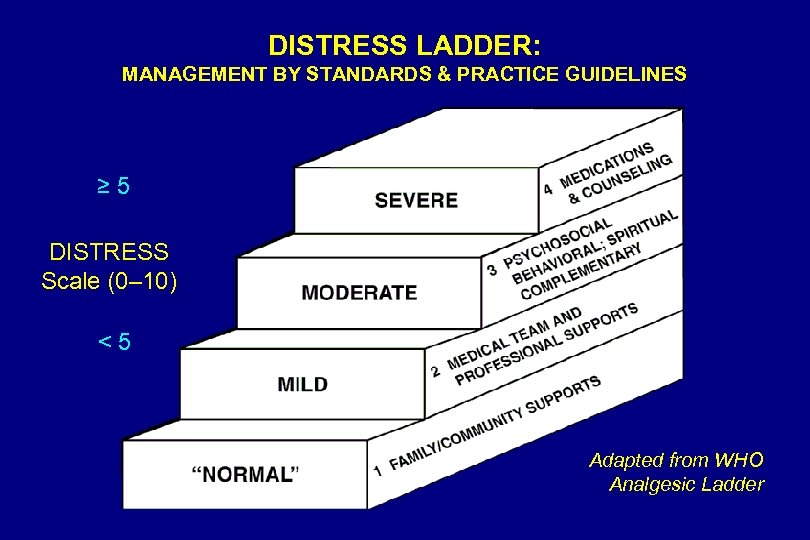 DISTRESS LADDER: MANAGEMENT BY STANDARDS & PRACTICE GUIDELINES ≥ 5 DISTRESS Scale (0– 10) <5 Adapted from WHO Analgesic Ladder
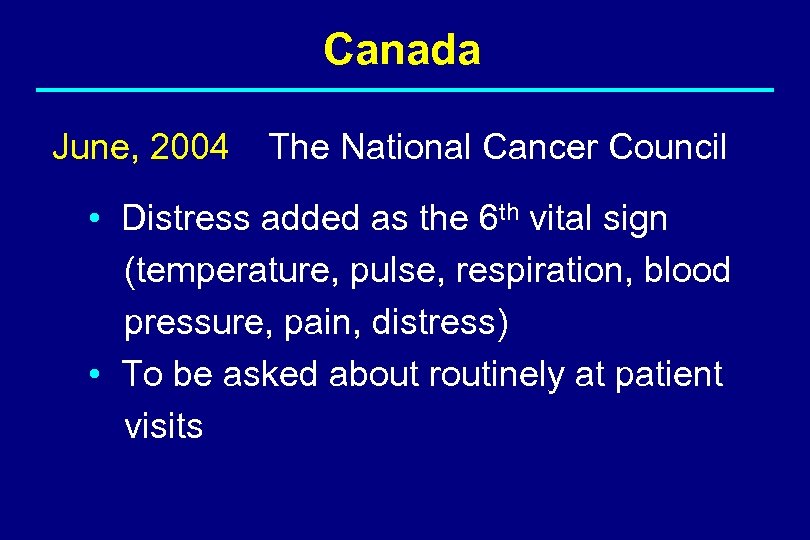 Canada June, 2004 The National Cancer Council • Distress added as the 6 th vital sign (temperature, pulse, respiration, blood pressure, pain, distress) • To be asked about routinely at patient visits
 Major Barriers in Every Country • Poor to absent funding • Absence of oversight and accountability (changing in Australia, Canada, UK) • Awareness of the importance to patients and families (especially in palliative care) Mehnert and Koch, 2003
 Action Item - 1 • IPOS, with WHO, seeks to bring the psychosocial domain into global cancer control programs • IPOS advocates for national standards and clinical practice guidelines
 Action Item - 2 • IPOS provides oversight of global efforts • Collate international data for crosscultural studies • Promotes multidisciplinary multi-national research
 Action Item - 3 Establish WHO-supported international standards and guidelines • For use by national societies to impact policies on service delivery • To provide professional training standards • To influence national funding priorities • To impact governmental agencies via WHO, UICC, IARC • To foster research for evidence-based care
 “What we value can be seen in what we measure. ” Dr. Robert Mc. Murtry “Public Policy, Human Consequences: The Gap Between Biomedicine and Psychosocial Reality” Canada Oncology Exchange, 2003
 PAIN DISTRESS
 8 th WORLD CONGRESS PSYCHO-ONCOLOGY "Multidisciplinary Psychosocial Oncology: Dialogue and Interaction" 18 - 21 October 2006 Palazzo del Cinema Venice, Italy Details will continue to be posted on the conference website at www. ipos 2006. it