


 Скачать презентацию The INSEAD Israel Research Center New Alignments
487112d25ae6f732f899c13a49d43afa.ppt
- Количество слайдов: 20
 The INSEAD – Israel Research Center New Alignments in the Global Economic Balance of Power Ilian Mihov Professor of Economics Novartis Chaired Professor of Management and the Environment Tel Aviv December 2009
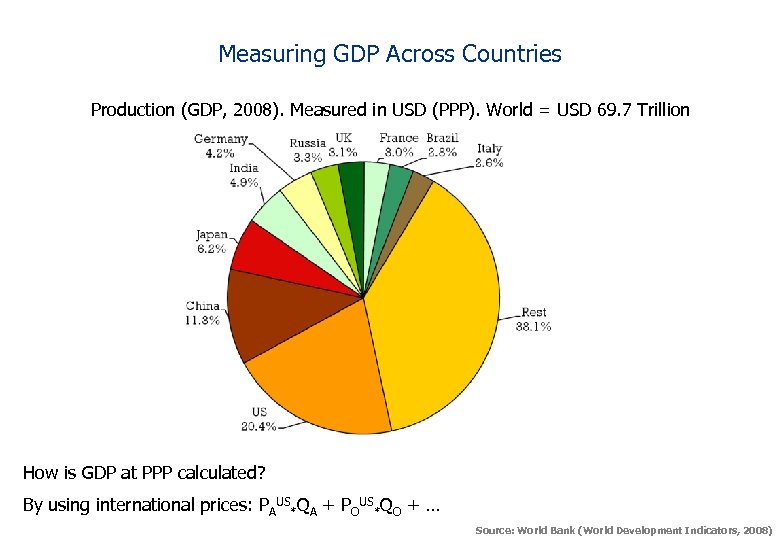 Measuring GDP Across Countries Production (GDP, 2008). Measured in USD (PPP). World = USD 69. 7 Trillion How is GDP at PPP calculated? By using international prices: PAUS*QA + POUS*QO + … Source: World Bank (World Development Indicators, 2008)
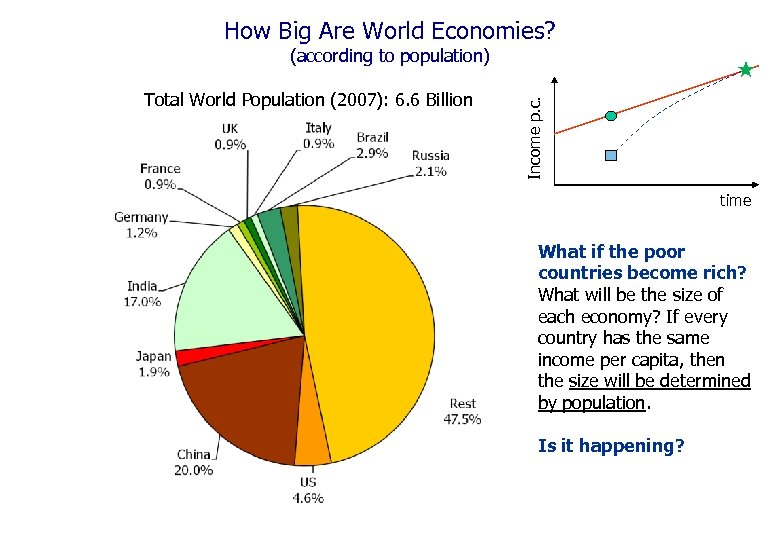 How Big Are World Economies? Total World Population (2007): 6. 6 Billion Income p. c. (according to population) time What if the poor countries become rich? What will be the size of each economy? If every country has the same income per capita, then the size will be determined by population. Is it happening?
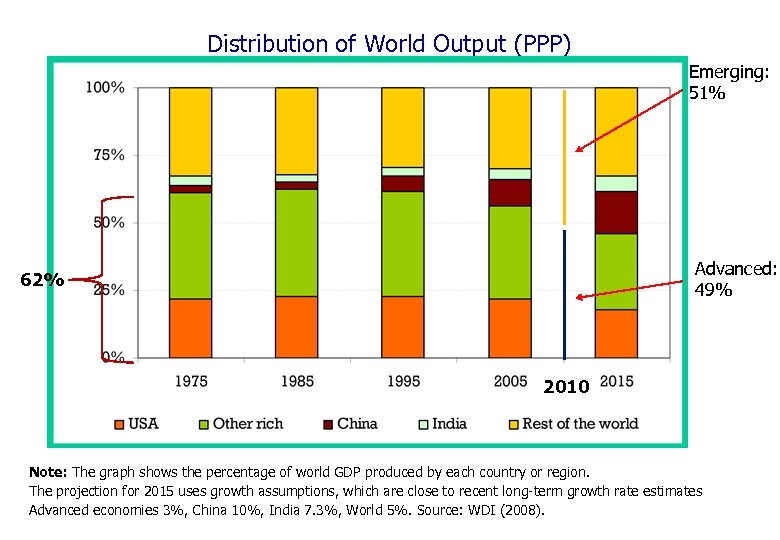 Distribution of World Output (PPP) Emerging: 51% Advanced: 49% 62% 2010 Note: The graph shows the percentage of world GDP produced by each country or region. The projection for 2015 uses growth assumptions, which are close to recent long-term growth rate estimates Advanced economies 3%, China 10%, India 7. 3%, World 5%. Source: WDI (2008).
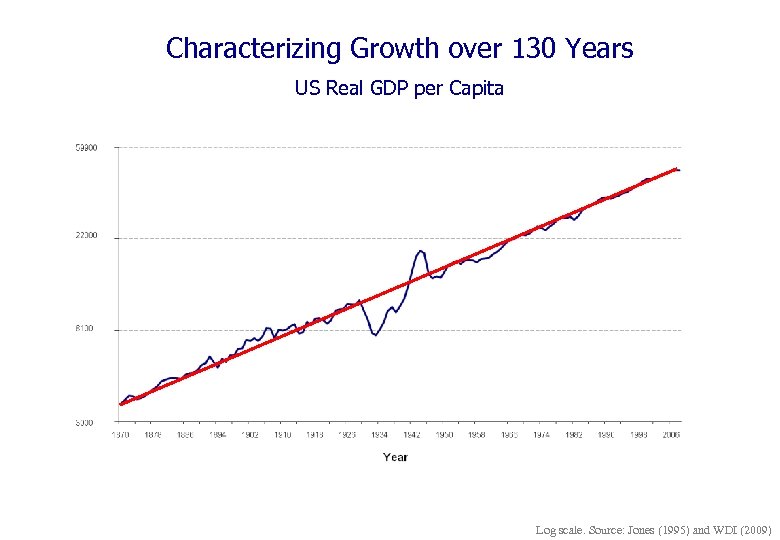 Characterizing Growth over 130 Years US Real GDP per Capita Log scale. Source: Jones (1995) and WDI (2009)
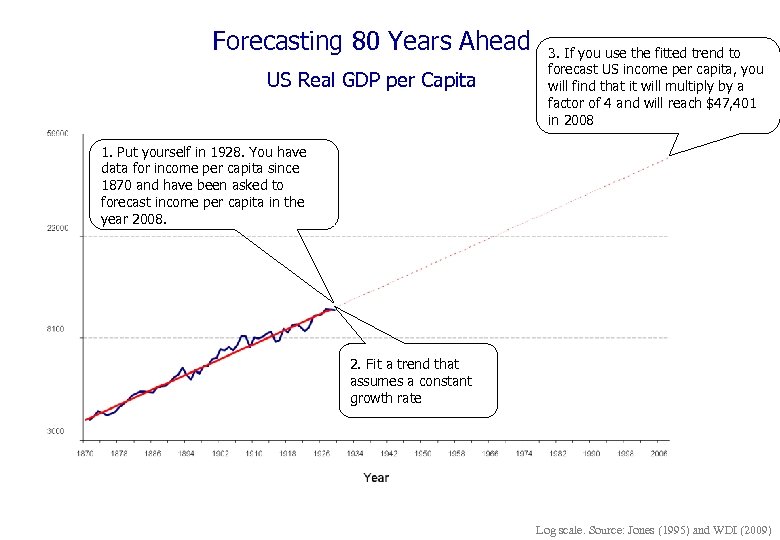 Forecasting 80 Years Ahead US Real GDP per Capita 3. If you use the fitted trend to forecast US income per capita, you will find that it will multiply by a factor of 4 and will reach $47, 401 in 2008 1. Put yourself in 1928. You have data for income per capita since 1870 and have been asked to forecast income per capita in the year 2008. 2. Fit a trend that assumes a constant growth rate Log scale. Source: Jones (1995) and WDI (2009)
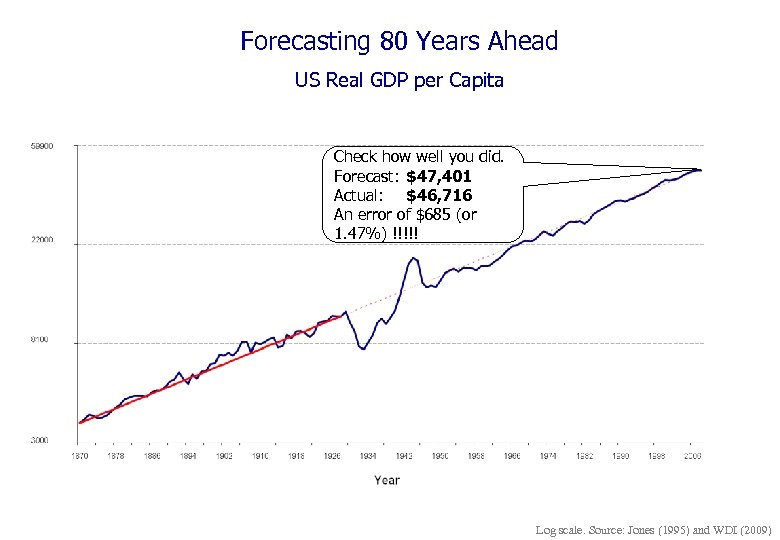 Forecasting 80 Years Ahead US Real GDP per Capita Check how well you did. Forecast: $47, 401 Actual: $46, 716 An error of $685 (or 1. 47%) !!!!! Log scale. Source: Jones (1995) and WDI (2009)
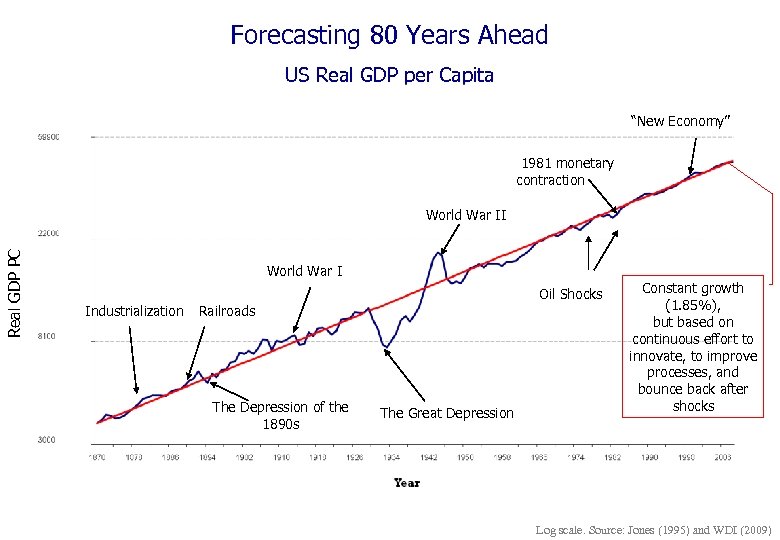 Forecasting 80 Years Ahead US Real GDP per Capita “New Economy” 1981 monetary contraction Real GDP PC World War II World War I Oil Shocks Industrialization Railroads The Depression of the 1890 s The Great Depression Constant growth (1. 85%), but based on continuous effort to innovate, to improve processes, and bounce back after shocks Log scale. Source: Jones (1995) and WDI (2009)
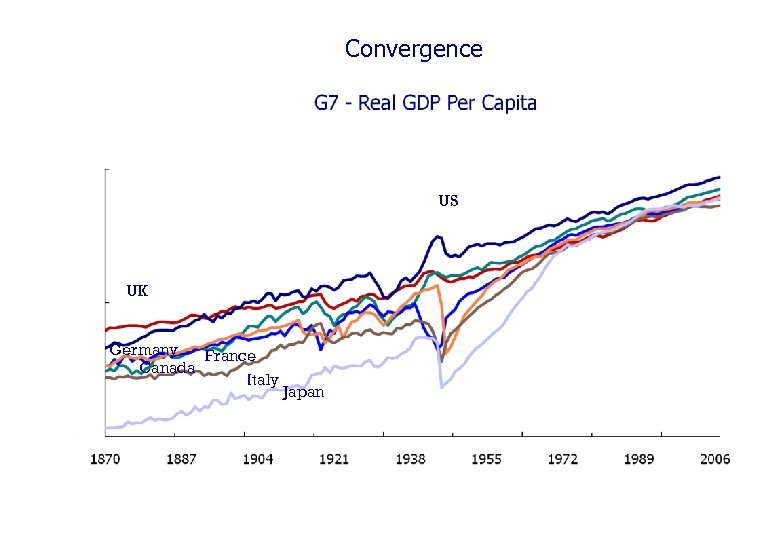 Convergence US UK Germany France Canada Italy Japan
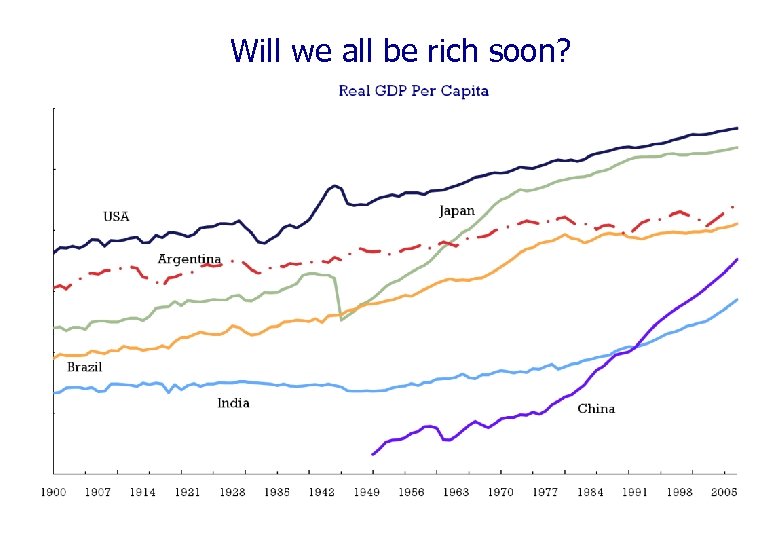 Will we all be rich soon?
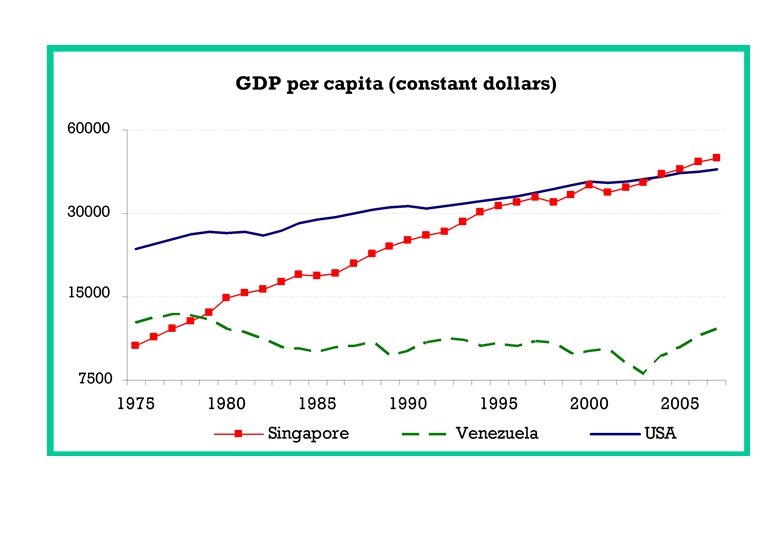
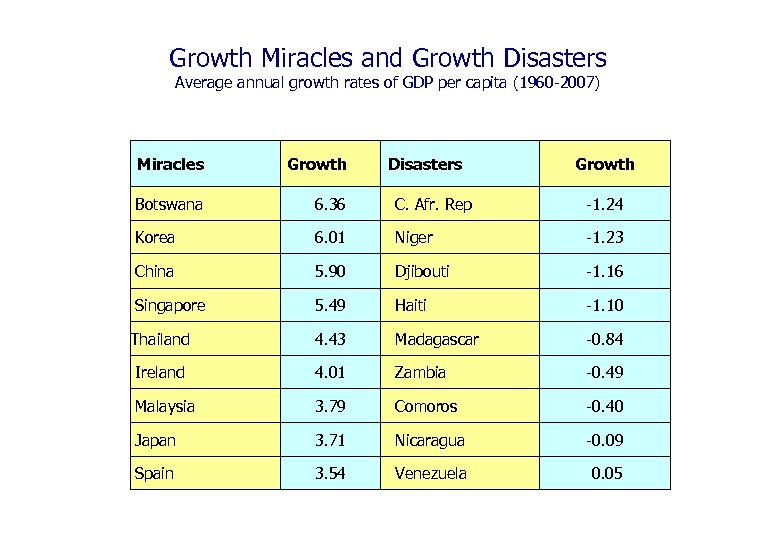 Growth Miracles and Growth Disasters Average annual growth rates of GDP per capita (1960 -2007) Miracles Growth Disasters Growth Botswana 6. 36 C. Afr. Rep -1. 24 Korea 6. 01 Niger -1. 23 China 5. 90 Djibouti -1. 16 Singapore 5. 49 Haiti -1. 10 Thailand 4. 43 Madagascar -0. 84 Ireland 4. 01 Zambia -0. 49 Malaysia 3. 79 Comoros -0. 40 Japan 3. 71 Nicaragua -0. 09 Spain 3. 54 Venezuela 0. 05
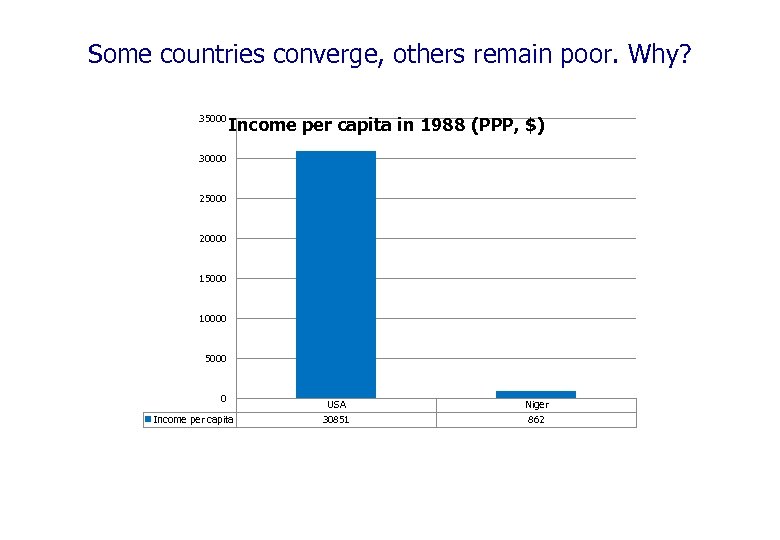 Some countries converge, others remain poor. Why? 35000 Income per capita in 1988 (PPP, $) 30000 25000 20000 15000 10000 5000 0 Income per capita USA 30851 Niger 862
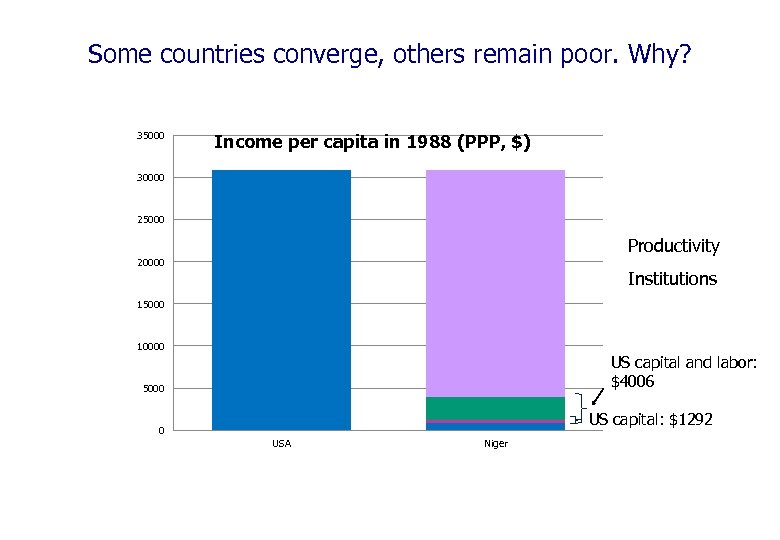 Some countries converge, others remain poor. Why? 35000 Income per capita in 1988 (PPP, $) 30000 25000 Productivity 20000 Institutions 15000 10000 US capital and labor: $4006 5000 US capital: $1292 0 USA Niger
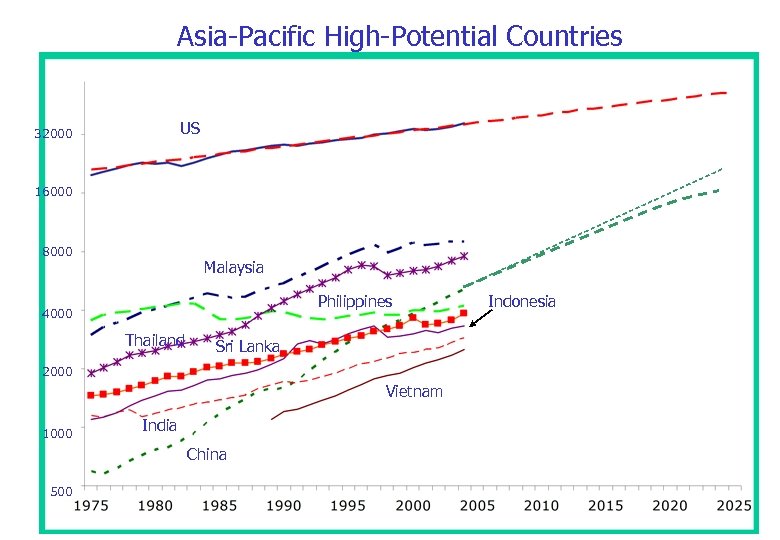 Asia-Pacific High-Potential Countries US 32000 16000 8000 Malaysia Philippines 4000 Thailand Sri Lanka 2000 Vietnam 1000 India China 500 Indonesia
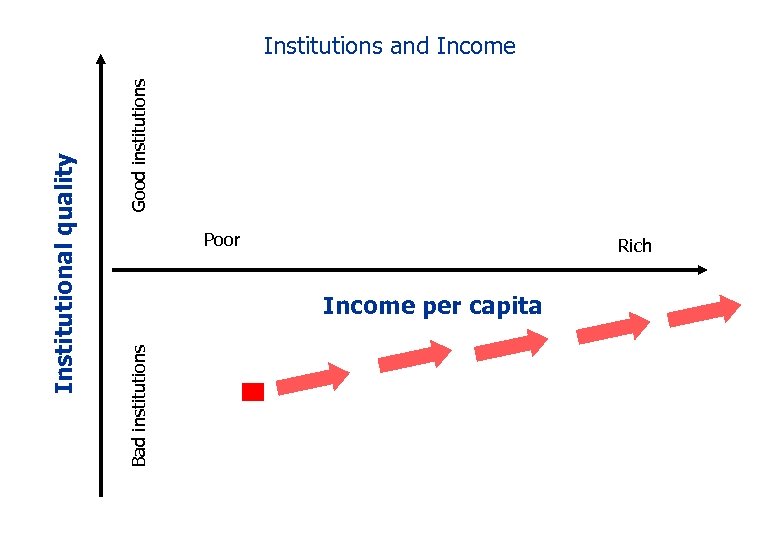 Bad institutions Good institutions Institutional quality Institutions and Income Poor Rich Income per capita
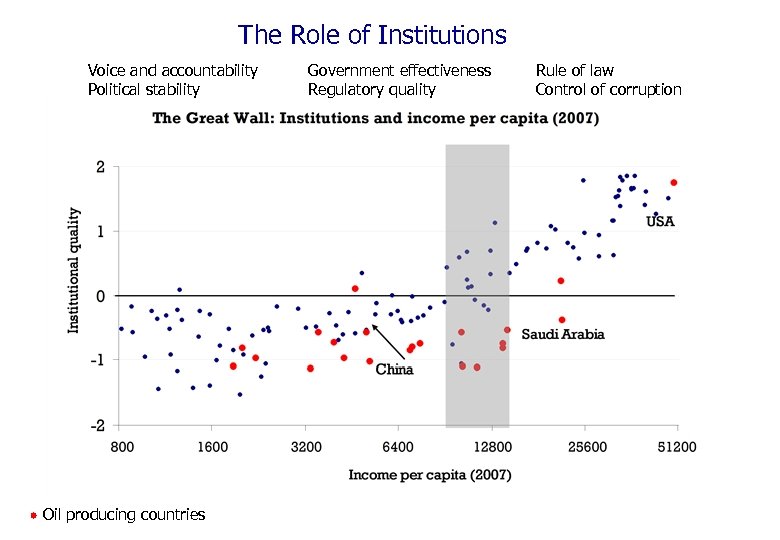 The Role of Institutions Voice and accountability Political stability Oil producing countries Government effectiveness Regulatory quality Rule of law Control of corruption
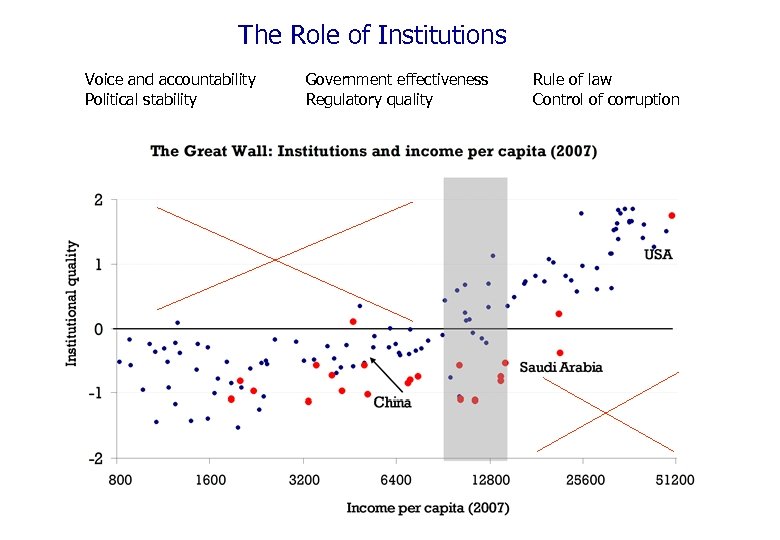 The Role of Institutions Voice and accountability Political stability Government effectiveness Regulatory quality Rule of law Control of corruption
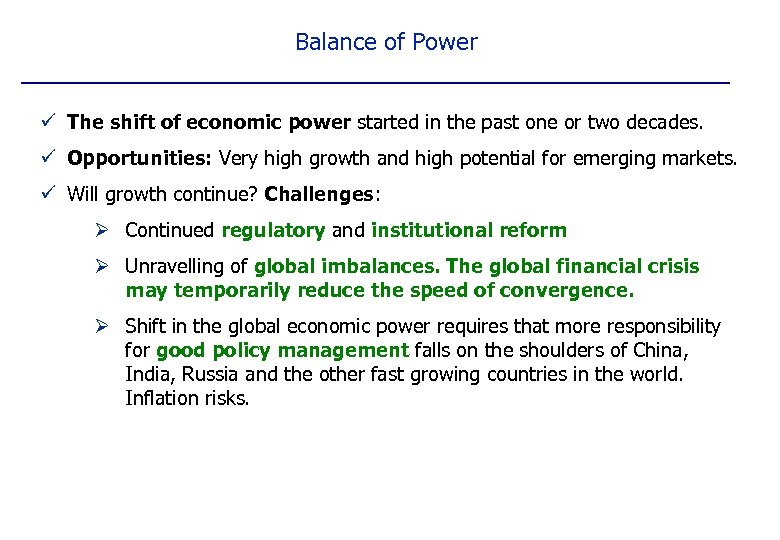 Balance of Power ü The shift of economic power started in the past one or two decades. ü Opportunities: Very high growth and high potential for emerging markets. ü Will growth continue? Challenges: Ø Continued regulatory and institutional reform Ø Unravelling of global imbalances. The global financial crisis may temporarily reduce the speed of convergence. Ø Shift in the global economic power requires that more responsibility for good policy management falls on the shoulders of China, India, Russia and the other fast growing countries in the world. Inflation risks.
 Thanks “The INSEAD Israel Research Center” &