


 Скачать презентацию The Industrial Revolution Spreads New Industrial Powers
43047354cb5085944b8bc0c14c1361f5.ppt
- Количество слайдов: 10
 The Industrial Revolution Spreads
 New Industrial Powers u Britain stood alone as the world’s industrial giant until. . u Belgium opened factories in 1807 u Other countries caught up quickly due to abundant supplies of coal & iron (& had advantage of following Britain’s lead) u Other countries: France, Germany, United States
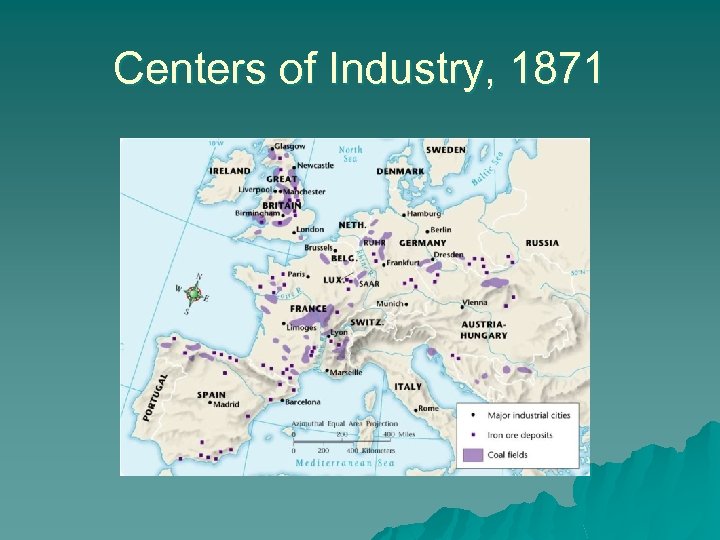 Centers of Industry, 1871
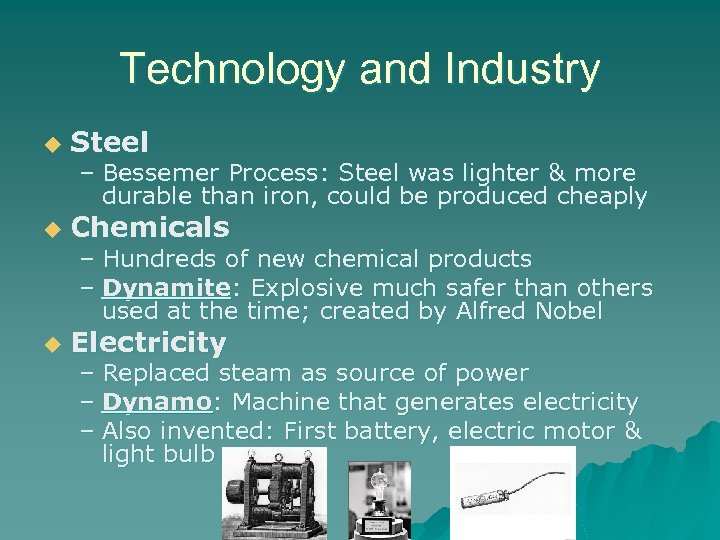 Technology and Industry u Steel u Chemicals u Electricity – Bessemer Process: Steel was lighter & more durable than iron, could be produced cheaply – Hundreds of new chemical products – Dynamite: Explosive much safer than others used at the time; created by Alfred Nobel – Replaced steam as source of power – Dynamo: Machine that generates electricity – Also invented: First battery, electric motor & light bulb
 New Methods of Production Interchangeable Parts- Identical components that could be used in place of one another. Simplified assembly & repair u Assembly Line- Workers along line add parts to a product that moves along a belt from one work station to the next. Made production faster & cheaper u https: //www. gaggle. net/main. do#Gaggle. T ube u
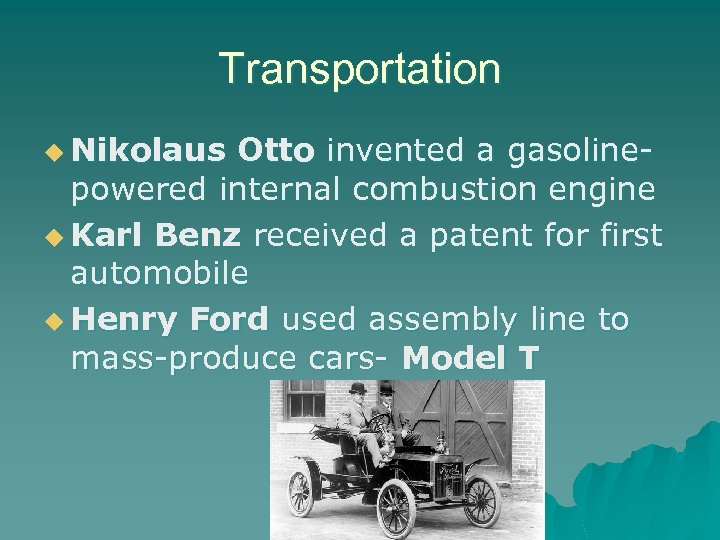 Transportation u Nikolaus Otto invented a gasolinepowered internal combustion engine u Karl Benz received a patent for first automobile u Henry Ford used assembly line to mass-produce cars- Model T
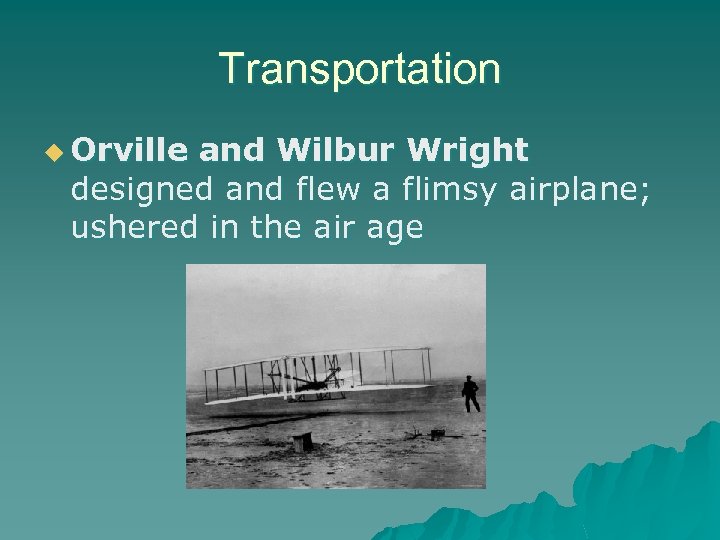 Transportation u Orville and Wilbur Wright designed and flew a flimsy airplane; ushered in the air age
 Rapid Communication u Samuel F. B. Morse- developed the telegraph, which could send coded messages over wires by means of electricity u Alexander Graham Bell- patented the telephone u Guglielmo Marconi- Invented the radio
 Rise of Big Business u Owners began to sell stock, shares in their companies, to investors. u Corporations- Businesses that are owned by many investors who buy shares of stock u Monopolies rose, controlling entire industries – What would some problems with monopolies be?
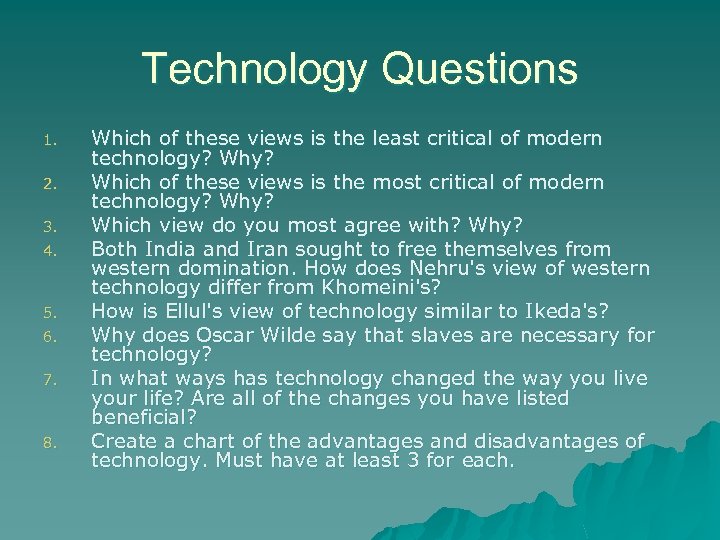 Technology Questions 1. 2. 3. 4. 5. 6. 7. 8. Which of these views is the least critical of modern technology? Which of these views is the most critical of modern technology? Which view do you most agree with? Why? Both India and Iran sought to free themselves from western domination. How does Nehru's view of western technology differ from Khomeini's? How is Ellul's view of technology similar to Ikeda's? Why does Oscar Wilde say that slaves are necessary for technology? In what ways has technology changed the way you live your life? Are all of the changes you have listed beneficial? Create a chart of the advantages and disadvantages of technology. Must have at least 3 for each.