


 Скачать презентацию The Indian Ocean Tsunami Warning System A Progress
68e9ada954fc84591d517c2a1773d289.ppt
- Количество слайдов: 22
 The Indian Ocean Tsunami Warning System: A Progress Report Patricio A. Bernal, Executive Secretary IOC 1
 UN role Define the proper scale of the problem and solution. The system must be: – – – Fully owned by the Indian Ocean Rim countries Based on international multilateral cooperation Based on the open and free exchange of data Protect all countries in the Indian Ocean Basin Transparent and accountable to all members 2
 How does it function? Is based on the joint operation of international networks of detection connected with national tsunami warning centres UN governance provided under the IOC Each nation is responsible for issuing warnings in their territory and protect its own population. National centres must have strong links with emergency preparedness authorities (national, provincial and local) 3
 Where are we now? A single system being planned All countries of the Indian Ocean participate Tsunami advisory information provided from centres in Hawaii and Tokyo. National focal points designated in 14 nations Governance of UN/IOC accepted in Paris Full scope of the task recognized: multi-nation (27), multi-year (>3) Beyond the emergency: transition to reconstruction and development phase. Joint UN implementation: IOC, WMO, ISDR, UNDP 4
 Timeline 2005 Ja F M A M J Jul A S O N D Ja F e Implementation Interim System IOC-WMO-ISDR Implementation full system 2005 -2006 • Jan 25 -26: China-ASEAN Beijing Workshop • Jan 28 -29: Ministerial Meeting, Phuket, Thailand • Feb 16: EOS III/GEOSS, Brussels • Feb 22 -24 Tokyo Seminar senior Officers Affected countries. • Feb 28 -March 2: Workshop NHK and Asian Broadcasting Union • March 3 -8: IOC 1 st Regional Technical Coordination Meeting, Paris • March 6 -19: JICA/ADRC training course, Tokyo • March 14 -16: WMO GTS workshop, Jakarta, Indonesia • April 14 -16: IOC 2 nd Regional Coordination Meeting, Mauritius • June 21 IOC General Assembly, Paris: Formal establishment IOTWS 5
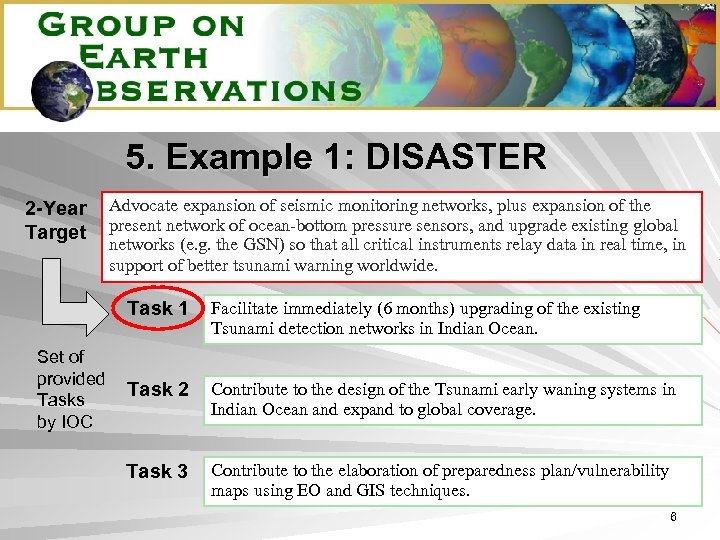 5. Example 1: DISASTER 2 -Year Target Advocate expansion of seismic monitoring networks, plus expansion of the present network of ocean-bottom pressure sensors, and upgrade existing global networks (e. g. the GSN) so that all critical instruments relay data in real time, in support of better tsunami warning worldwide. Task 1 Set of provided Tasks by IOC Facilitate immediately (6 months) upgrading of the existing Tsunami detection networks in Indian Ocean. Task 2 Contribute to the design of the Tsunami early waning systems in Indian Ocean and expand to global coverage. Task 3 Contribute to the elaboration of preparedness plan/vulnerability maps using EO and GIS techniques. 6
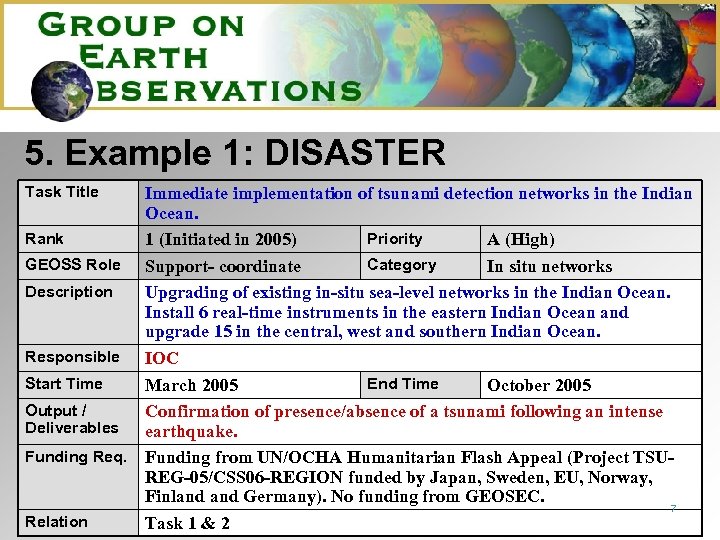 5. Example 1: DISASTER Task Title Immediate implementation of tsunami detection networks in the Indian Ocean. Rank Priority 1 (Initiated in 2005) A (High) GEOSS Role Category Support- coordinate In situ networks Description Upgrading of existing in-situ sea-level networks in the Indian Ocean. Install 6 real-time instruments in the eastern Indian Ocean and upgrade 15 in the central, west and southern Indian Ocean. Responsible IOC Start Time End Time March 2005 October 2005 Output / Confirmation of presence/absence of a tsunami following an intense Deliverables earthquake. Funding Req. Funding from UN/OCHA Humanitarian Flash Appeal (Project TSUREG-05/CSS 06 -REGION funded by Japan, Sweden, EU, Norway, Finland Germany). No funding from GEOSEC. 7 Relation Task 1 & 2
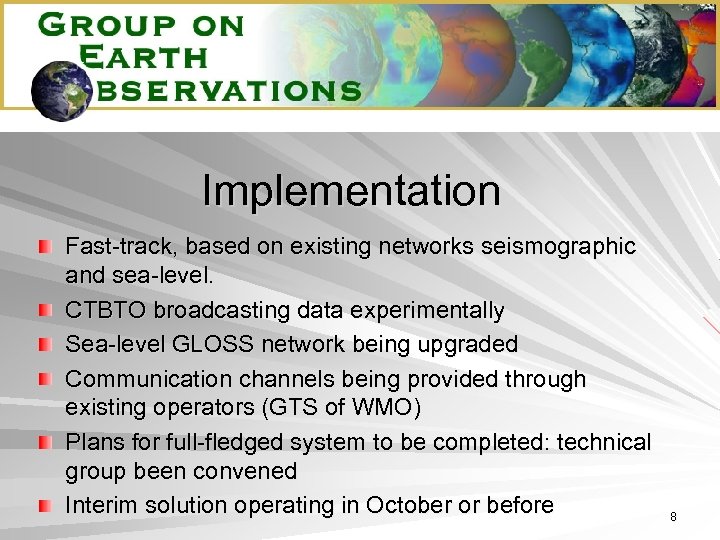 Implementation Fast-track, based on existing networks seismographic and sea-level. CTBTO broadcasting data experimentally Sea-level GLOSS network being upgraded Communication channels being provided through existing operators (GTS of WMO) Plans for full-fledged system to be completed: technical group been convened Interim solution operating in October or before 8
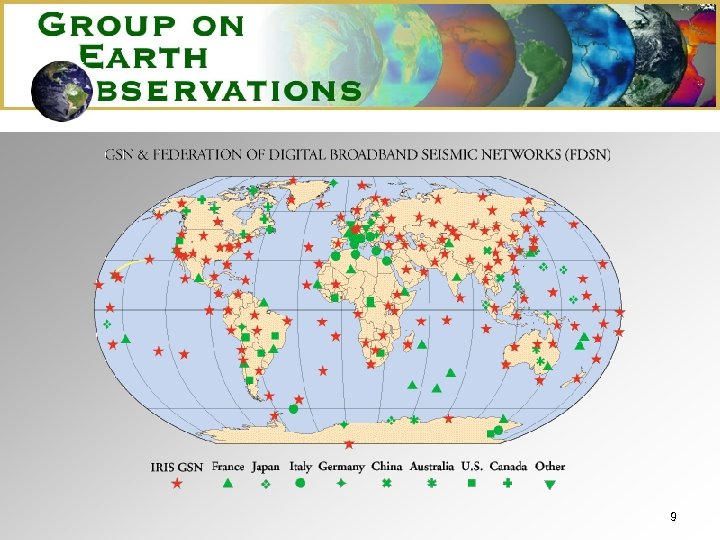 SEISMOGRAPHIC NETWORK 9
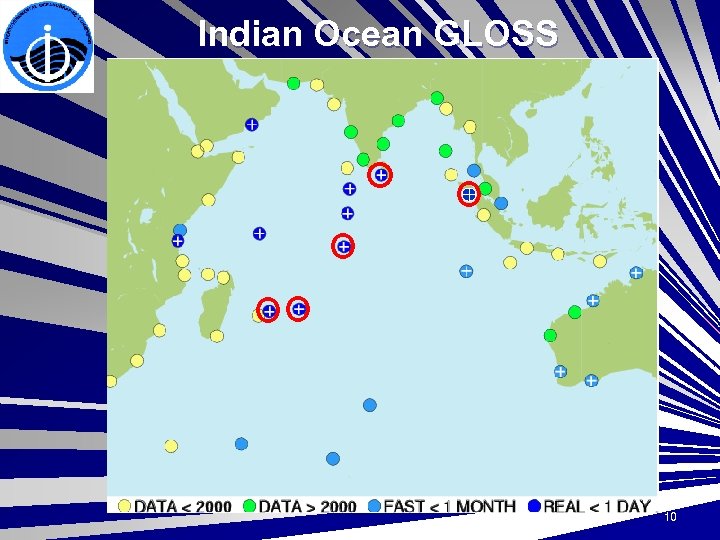 Indian Ocean GLOSS WHITE CROSS retransmission to PTWC via GTS Select station from map for data display. There are 9 GLOSS sites with hourly real-time data, 11 additional sites with hourly fast delivery data, 10 sites with hourly data later than 1999, 2 sites with hourly data before 1999, 15 sites with monthly data later than 1999, and 8 sites with monthly data before 1999. 10
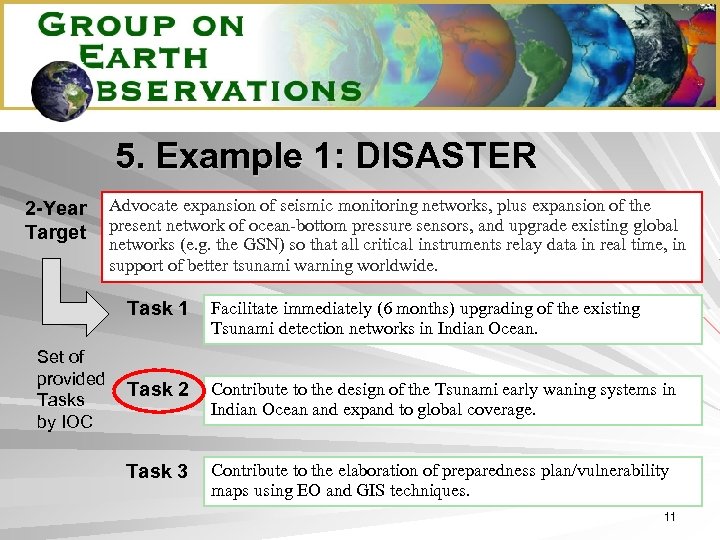 5. Example 1: DISASTER 2 -Year Target Advocate expansion of seismic monitoring networks, plus expansion of the present network of ocean-bottom pressure sensors, and upgrade existing global networks (e. g. the GSN) so that all critical instruments relay data in real time, in support of better tsunami warning worldwide. Task 1 Set of provided Tasks by IOC Facilitate immediately (6 months) upgrading of the existing Tsunami detection networks in Indian Ocean. Task 2 Contribute to the design of the Tsunami early waning systems in Indian Ocean and expand to global coverage. Task 3 Contribute to the elaboration of preparedness plan/vulnerability maps using EO and GIS techniques. 11
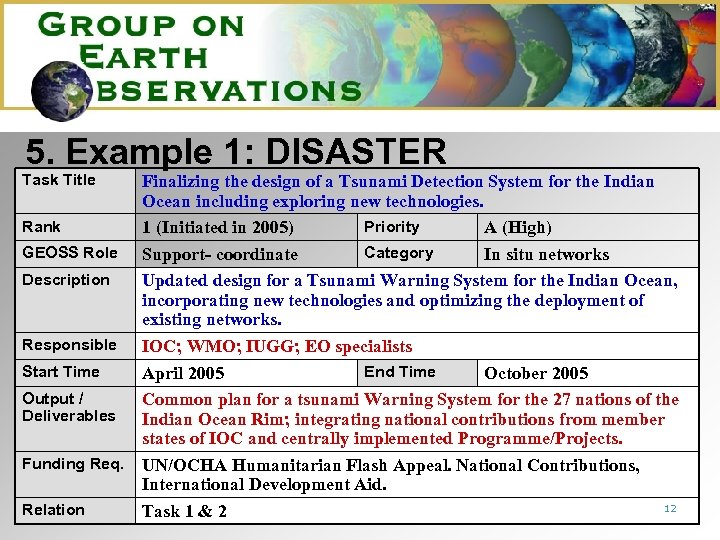 5. Example 1: DISASTER Task Title Finalizing the design of a Tsunami Detection System for the Indian Ocean including exploring new technologies. Rank Priority 1 (Initiated in 2005) A (High) GEOSS Role Category Support- coordinate In situ networks Description Updated design for a Tsunami Warning System for the Indian Ocean, incorporating new technologies and optimizing the deployment of existing networks. Responsible IOC; WMO; IUGG; EO specialists Start Time End Time April 2005 October 2005 Output / Common plan for a tsunami Warning System for the 27 nations of the Deliverables Indian Ocean Rim; integrating national contributions from member states of IOC and centrally implemented Programme/Projects. Funding Req. UN/OCHA Humanitarian Flash Appeal. National Contributions, International Development Aid. 12 Relation Task 1 & 2
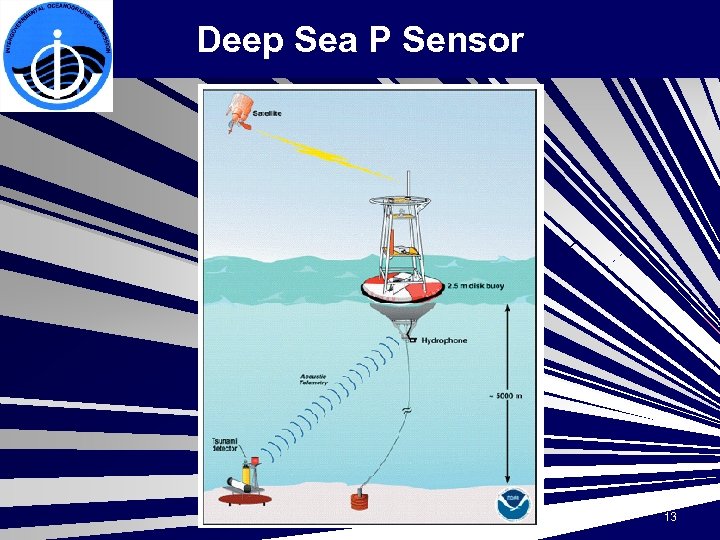 Deep Sea P Sensor 13
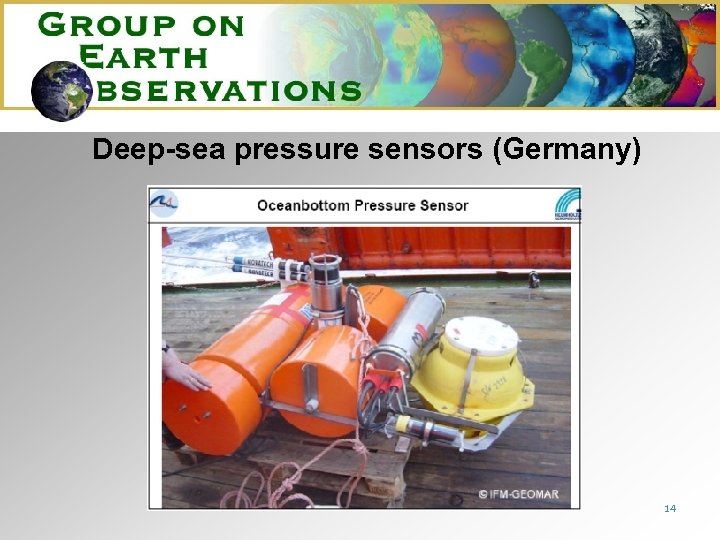 Deep-sea pressure sensors (Germany) 14
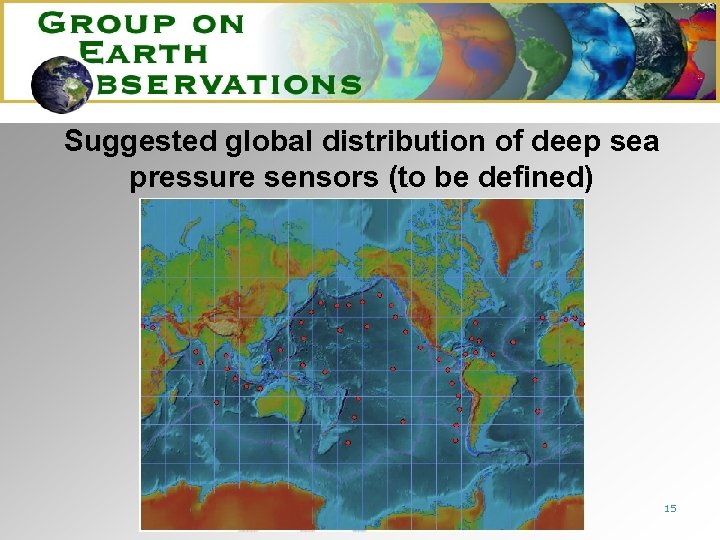 Suggested global distribution of deep sea pressure sensors (to be defined) 15
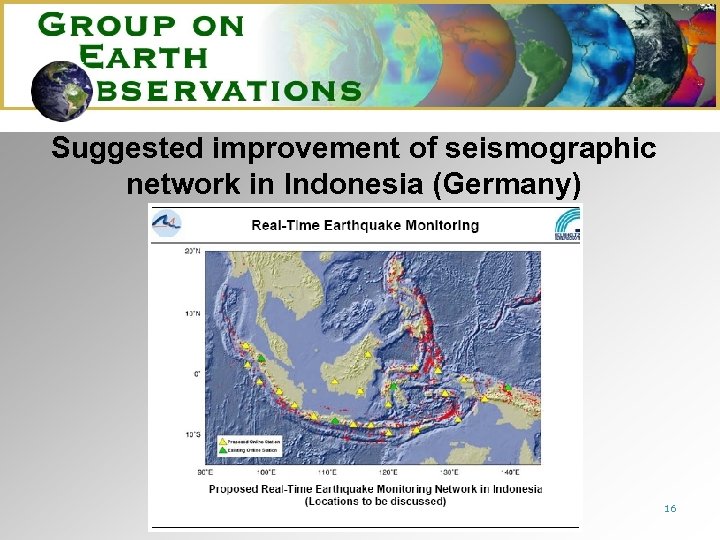 Suggested improvement of seismographic network in Indonesia (Germany) 16
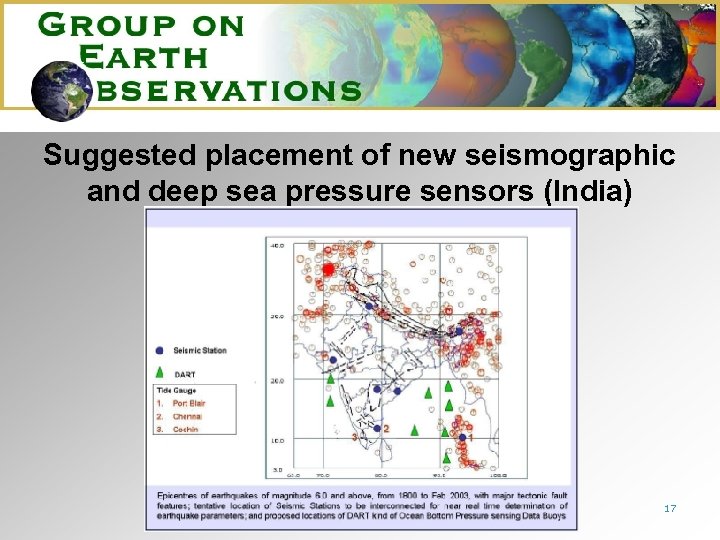 Suggested placement of new seismographic and deep sea pressure sensors (India) 17
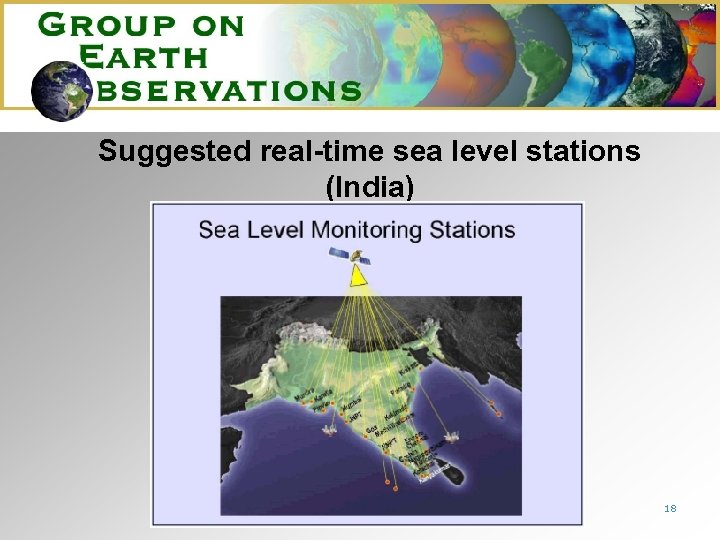 Suggested real-time sea level stations (India) 18
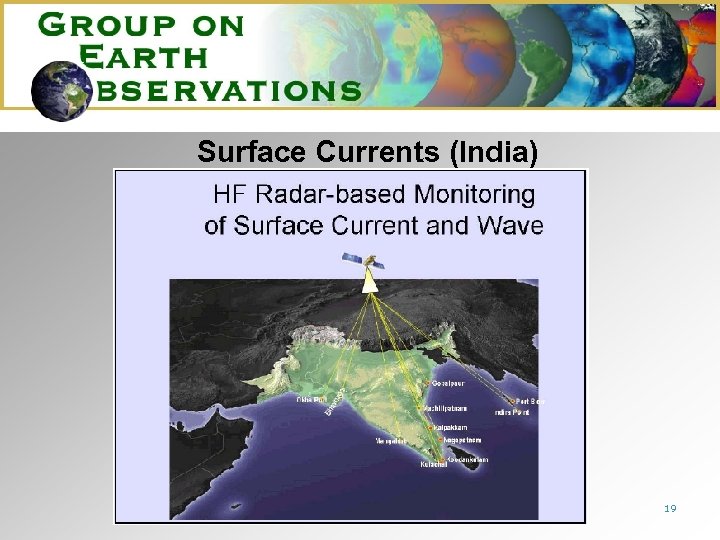 Surface Currents (India) 19
 Beyond the immediate response: Planning the extension to Global Coverage: • • • Caribbean Region (IOCARIBE) South West Pacific (Australia) South-China Sea (WESTPAC/ASEAN) Mediterranean: France, Spain Portugal Algeria Strengthening of the Pacific System (USA, Senate Bill 50) • ITSU October 2005 20
 Beyond the immediate response: Multi-hazard platform • Storm – surges (IOC, WMO, JCOMM-) • Tropical storms (WMO, JCOMM) • Improving Storm and cyclones track forecasts (IOC, WMO, JCOMM) • Ice Hazard (IOC, WMO, JCOMM) • Donor Coordination: Financial pledges to project extending Tsunami coverage to the 27 nations of Indian Ocean Rim beyond 2005 and to a multihazard platform (TSU-REG-05/CSS 10 – Region) 21
 GEO Members Support • Deep-sea pressure sensors technology (DART’s availability). • Facilitating free exchange of national data for the protection of life and property. • Communication channels for increased number of instrumental platforms (Geo-stationary Meteo Sats. ) • Support for the establishment of an IOC Operational Centre for disaster management • Participation in planning exercise, new technologies: GPS; Scatter of Multi GPS, Crust deformation, new communication technologies. 22