 Скачать презентацию The implementation of the National Tuberculosis Control Program
3e90a3a0a40f11ef66f24eb3b5aad6ff.ppt
- Количество слайдов: 20



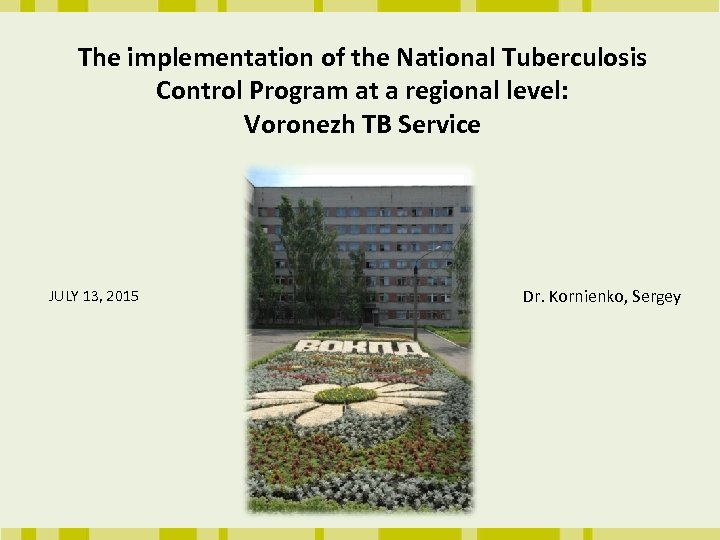
The implementation of the National Tuberculosis Control Program at a regional level: Voronezh TB Service JULY 13, 2015 Dr. Kornienko, Sergey
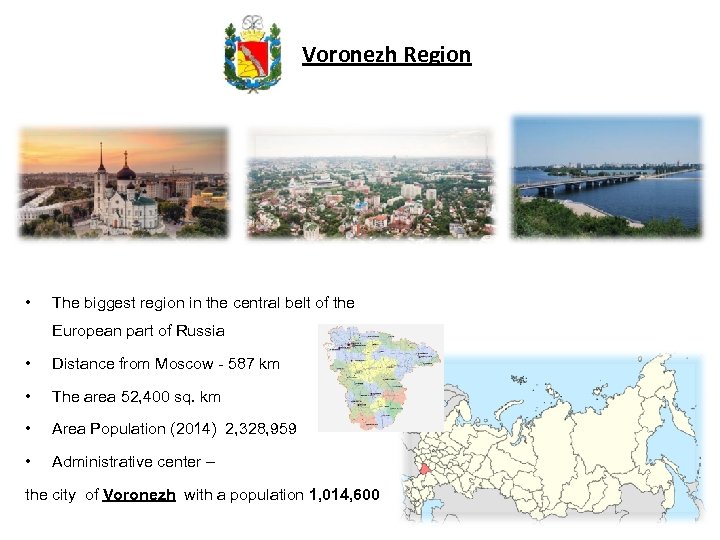
Voronezh Region • The biggest region in the central belt of the European part of Russia • Distance from Moscow - 587 km • The area 52, 400 sq. km • Area Population (2014) 2, 328, 959 • Administrative center – the city of Voronezh with a population 1, 014, 600
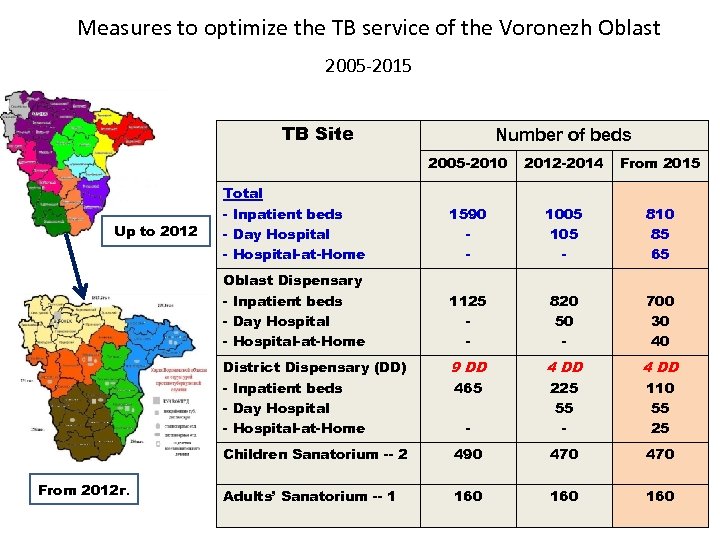
Measures to optimize the TB service of the Voronezh Oblast 2005 -2015 TB Site Number of beds 2005 -2010 Total - Inpatient beds - Day Hospital - Hospital-at-Home 1590 - 1005 105 - 810 85 65 1125 - 820 50 - 700 30 40 District Dispensary (DD) - Inpatient beds - Day Hospital - Hospital-at-Home 9 DD 465 - 225 55 - 110 55 25 Children Sanatorium -- 2 From 2012 г. From 2015 Oblast Dispensary - Inpatient beds - Day Hospital - Hospital-at-Home Up to 2012 -2014 490 470 Adults’ Sanatorium -- 1 160 160
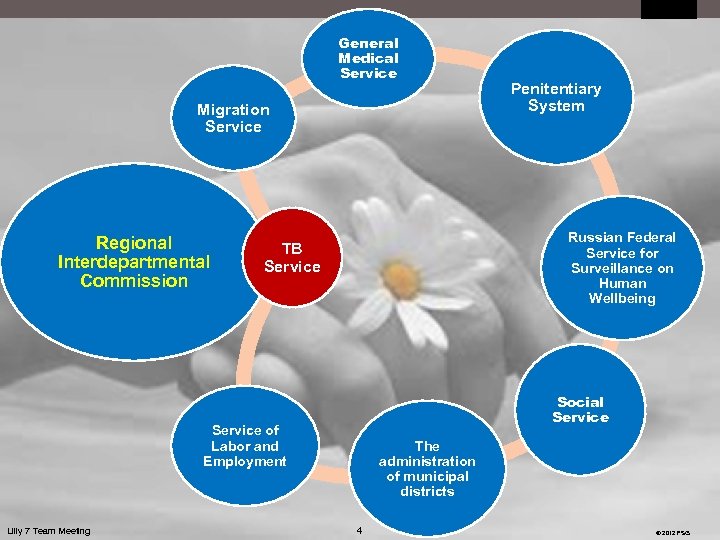
FSG. ORG General Medical Service Migration Service Regional Interdepartmental Commission Russian Federal Service for Surveillance on Human Wellbeing TB Service Social Service of Labor and Employment Lilly 7 Team Meeting Penitentiary System The administration of municipal districts 4 © 2012 FSG
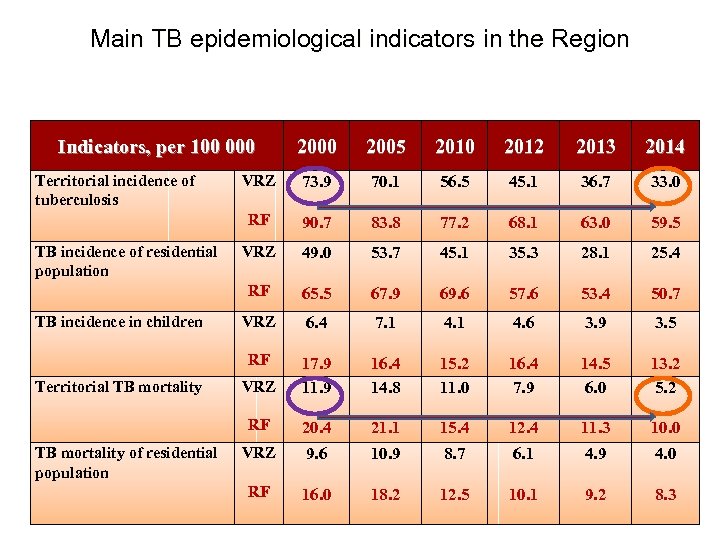
Main TB epidemiological indicators in the Region Indicators, per 100 000 Territorial TB mortality 2012 2013 2014 VRZ 73. 9 70. 1 56. 5 45. 1 36. 7 33. 0 90. 7 83. 8 77. 2 68. 1 63. 0 59. 5 VRZ 49. 0 53. 7 45. 1 35. 3 28. 1 25. 4 65. 5 67. 9 69. 6 57. 6 53. 4 50. 7 VRZ 6. 4 7. 1 4. 6 3. 9 3. 5 RF TB incidence in children 2010 RF TB incidence of residential population 2005 RF Territorial incidence of tuberculosis 2000 17. 9 11. 9 16. 4 14. 8 15. 2 11. 0 16. 4 7. 9 14. 5 6. 0 13. 2 5. 2 VRZ 20. 4 9. 6 21. 1 10. 9 15. 4 8. 7 12. 4 6. 1 11. 3 4. 9 10. 0 4. 0 RF 16. 0 18. 2 12. 5 10. 1 9. 2 8. 3 VRZ RF TB mortality of residential population
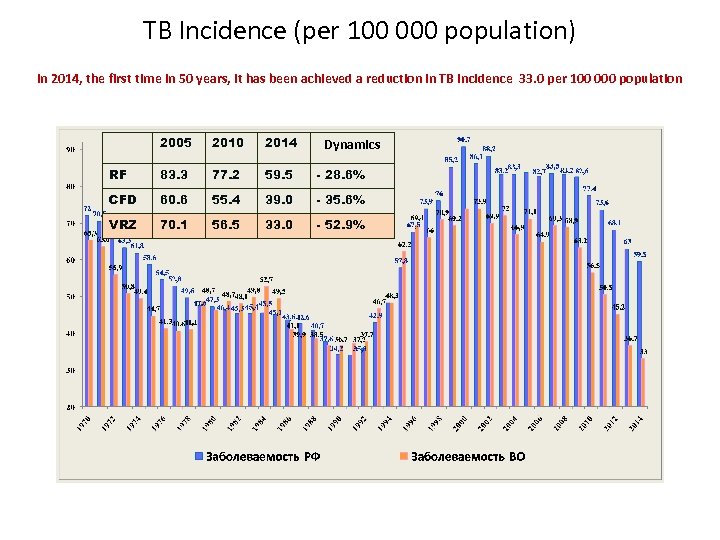
TB Incidence (per 100 000 population) In 2014, the first time in 50 years, it has been achieved a reduction in TB Incidence 33. 0 per 100 000 population 2005 2010 2014 RF 83. 3 77. 2 59. 5 - 28. 6% CFD 60. 6 55. 4 39. 0 - 35. 6% VRZ 70. 1 56. 5 33. 0 - 52. 9% Dynamics
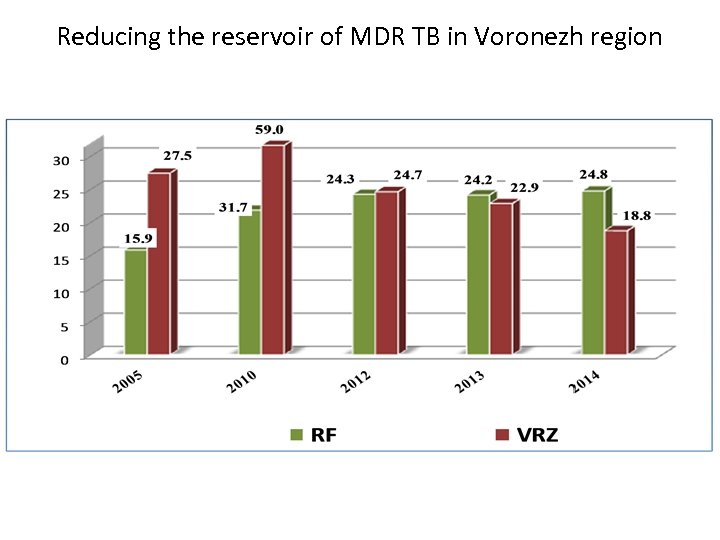
Reducing the reservoir of MDR TB in Voronezh region
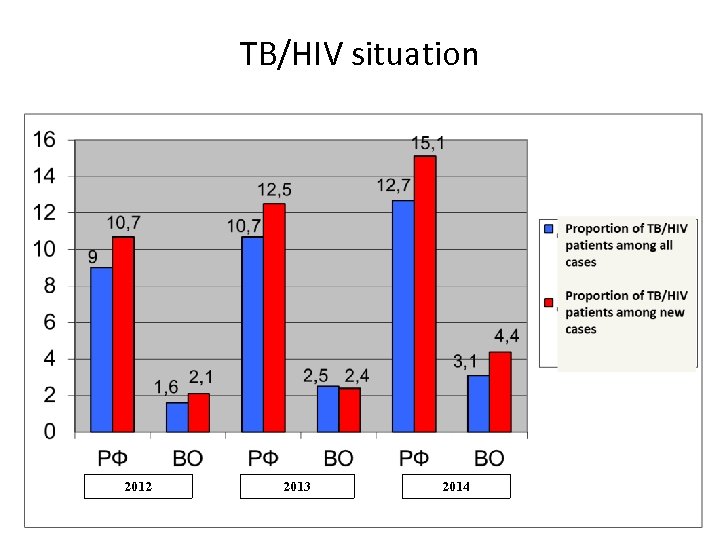
TB/HIV situation 2012 2013 2014
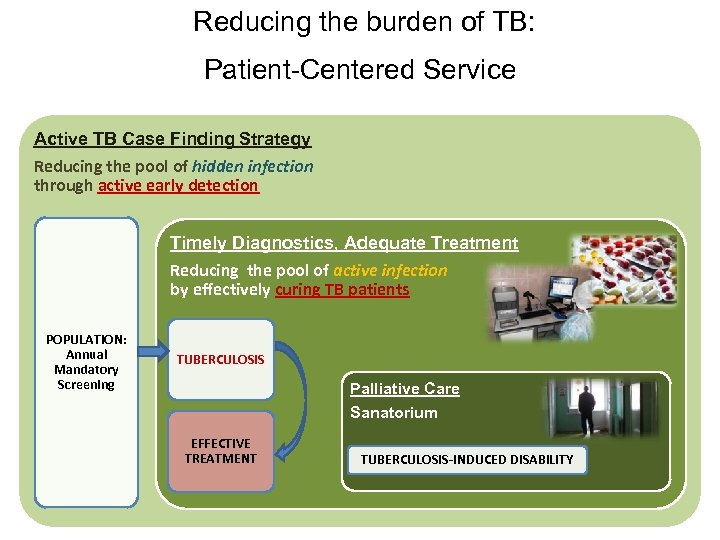
Reducing the burden of TB: Patient-Centered Service Active TB Case Finding Strategy Reducing the pool of hidden infection through active early detection Timely Diagnostics, Adequate Treatment Reducing the pool of active infection by effectively curing TB patients POPULATION: Annual Mandatory Screening TUBERCULOSIS Palliative Care Sanatorium EFFECTIVE TREATMENT TUBERCULOSIS-INDUCED DISABILITY
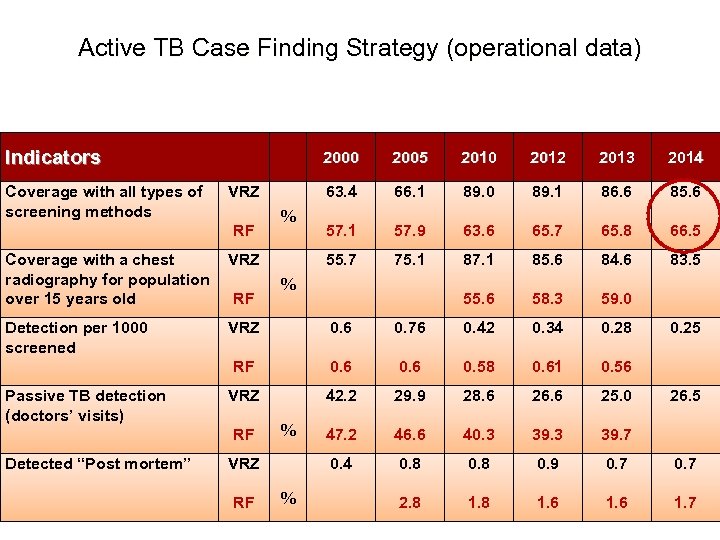
Active TB Case Finding Strategy (operational data) Indicators Coverage with all types of screening methods 2000 RF 2012 2013 2014 66. 1 89. 0 89. 1 86. 6 85. 6 57. 1 57. 9 63. 6 65. 7 65. 8 66. 5 55. 7 % 2010 63. 4 VRZ 2005 75. 1 87. 1 85. 6 84. 6 83. 5 55. 6 58. 3 59. 0 Coverage with a chest radiography for population over 15 years old VRZ Detection per 1000 screened VRZ 0. 6 0. 76 0. 42 0. 34 0. 28 RF 0. 6 0. 58 0. 61 0. 56 VRZ 42. 2 29. 9 28. 6 26. 6 25. 0 47. 2 46. 6 40. 3 39. 7 0. 4 0. 8 0. 9 0. 7 2. 8 1. 6 1. 7 Passive TB detection (doctors’ visits) RF RF Detected “Post mortem” % % VRZ RF % 0. 25 26. 5
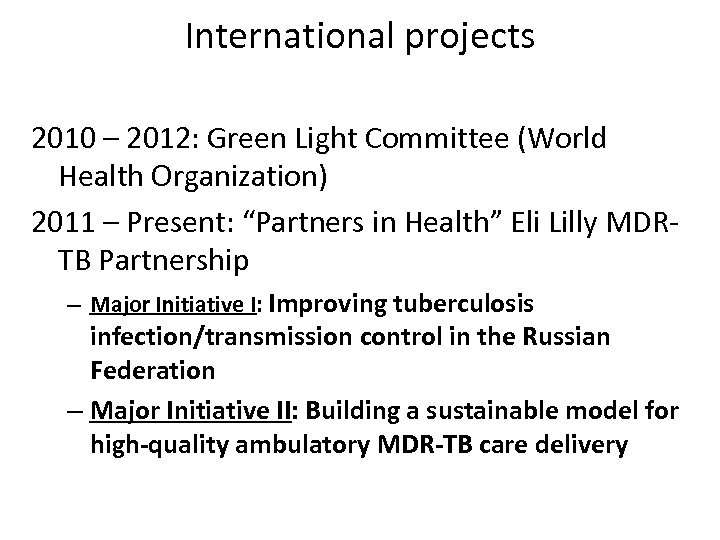
International projects 2010 – 2012: Green Light Committee (World Health Organization) 2011 – Present: “Partners in Health” Eli Lilly MDRTB Partnership – Major Initiative I: Improving tuberculosis infection/transmission control in the Russian Federation – Major Initiative II: Building a sustainable model for high-quality ambulatory MDR-TB care delivery
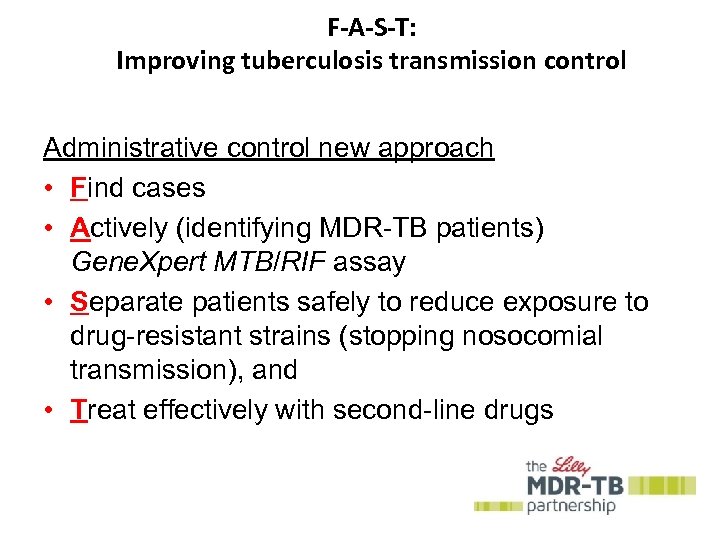
F-A-S-T: Improving tuberculosis transmission control Administrative control new approach • Find cases • Actively (identifying MDR-TB patients) Gene. Xpert MTB/RIF assay • Separate patients safely to reduce exposure to drug-resistant strains (stopping nosocomial transmission), and • Treat effectively with second-line drugs
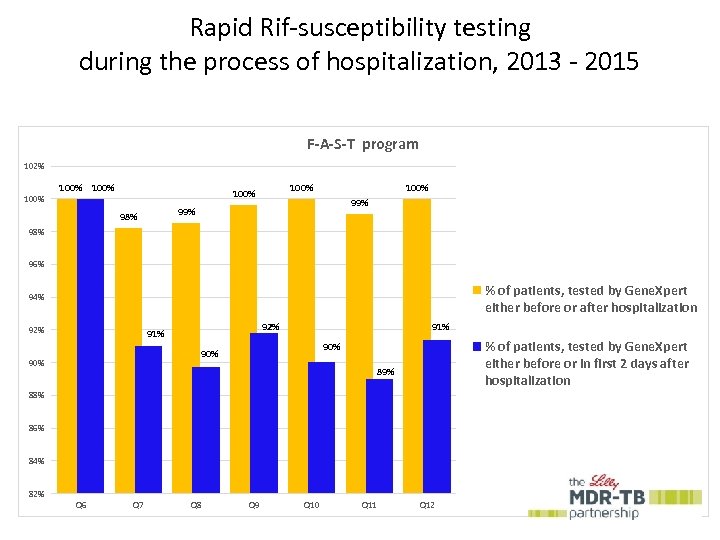
Rapid Rif-susceptibility testing during the process of hospitalization, 2013 - 2015 F-A-S-T program 102% 100% 100% 99% 98% 96% % of patients, tested by Gene. Xpert either before or after hospitalization 94% 92% 91% 90% % of patients, tested by Gene. Xpert either before or in first 2 days after hospitalization 90% 89% 88% 86% 84% 82% Q 6 Q 7 Q 8 Q 9 Q 10 Q 11 Q 12
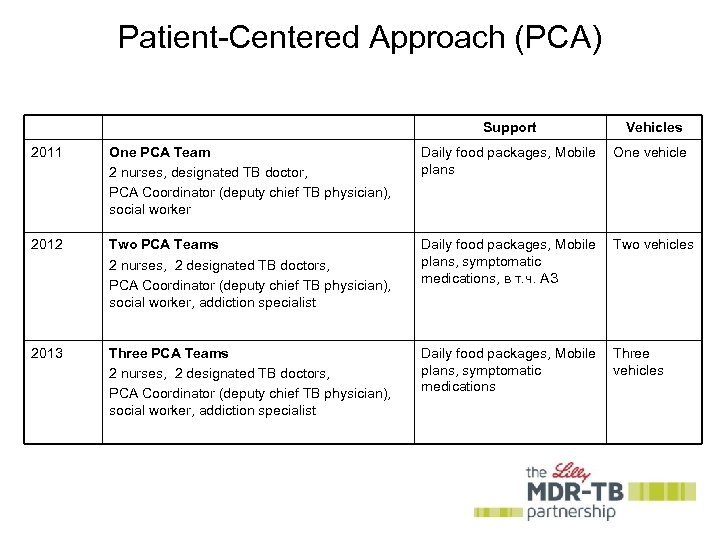
Patient-Centered Approach (PCA) Support Vehicles 2011 One PCA Team 2 nurses, designated TB doctor, PCA Coordinator (deputy chief TB physician), social worker Daily food packages, Mobile plans One vehicle 2012 Two PCA Teams 2 nurses, 2 designated TB doctors, PCA Coordinator (deputy chief TB physician), social worker, addiction specialist Daily food packages, Mobile plans, symptomatic medications, в т. ч. АЗ Two vehicles 2013 Three PCA Teams 2 nurses, 2 designated TB doctors, PCA Coordinator (deputy chief TB physician), social worker, addiction specialist Daily food packages, Mobile plans, symptomatic medications Three vehicles
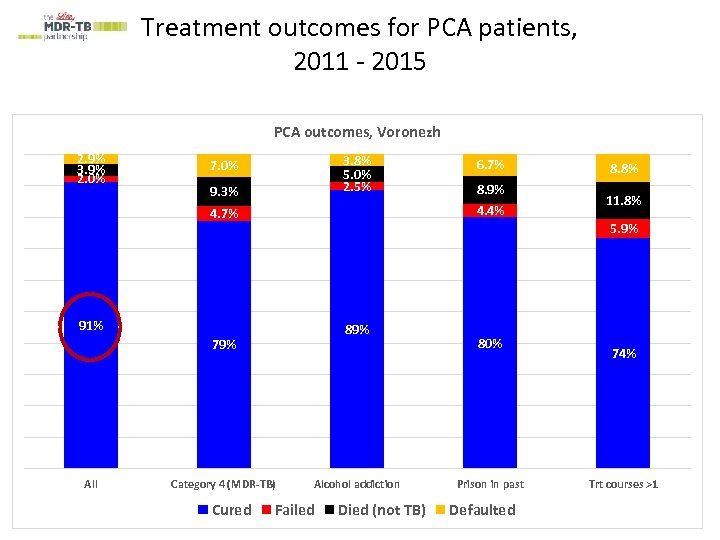
Treatment outcomes for PCA patients, 2011 - 2015 PCA outcomes, Voronezh 2. 9% 3. 9% 2. 0% 3. 8% 5. 0% 2. 5% 7. 0% 9. 3% 4. 7% 89% 79% Category 4 (MDR-TB) Cured 8. 8% 8. 9% 4. 4% 11. 8% 5. 9% 91% All 6. 7% Alcohol addiction Failed Died (not TB) 80% Prison in past Defaulted 74% Trt courses >1
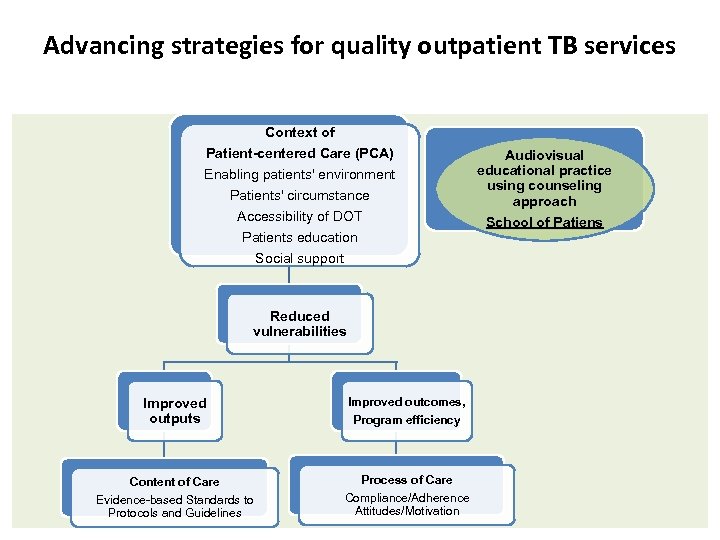
Advancing strategies for quality outpatient TB services Context of Patient-centered Care (PCA) Enabling patients' environment Patients' circumstance Accessibility of DOT Patients education Social support Reduced vulnerabilities Improved outputs Improved outcomes, Content of Care Process of Care Evidence-based Standards to Protocols and Guidelines Compliance/Adherence Attitudes/Motivation Program efficiency Audiovisual educational practice using counseling approach School of Patiens
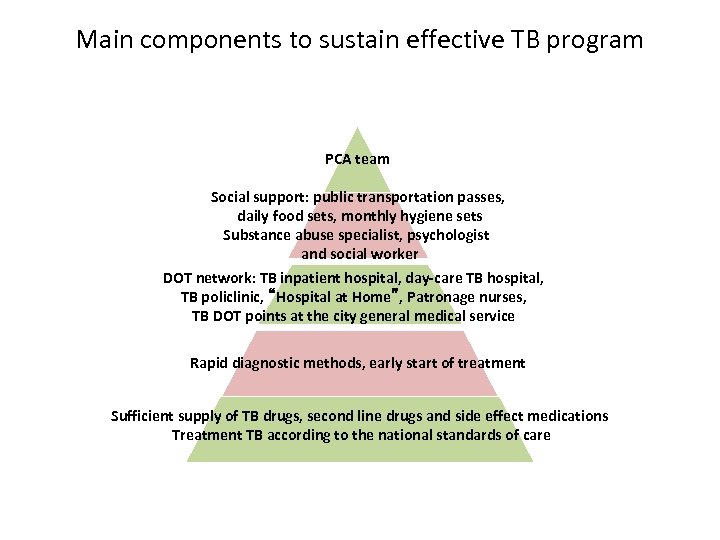
Main components to sustain effective TB program PCA team Social support: public transportation passes, daily food sets, monthly hygiene sets Substance abuse specialist, psychologist and social worker DOT network: TB inpatient hospital, day-care TB hospital, TB policlinic, “Hospital at Home”, Patronage nurses, TB DOT points at the city general medical service Rapid diagnostic methods, early start of treatment Sufficient supply of TB drugs, second line drugs and side effect medications Treatment TB according to the national standards of care
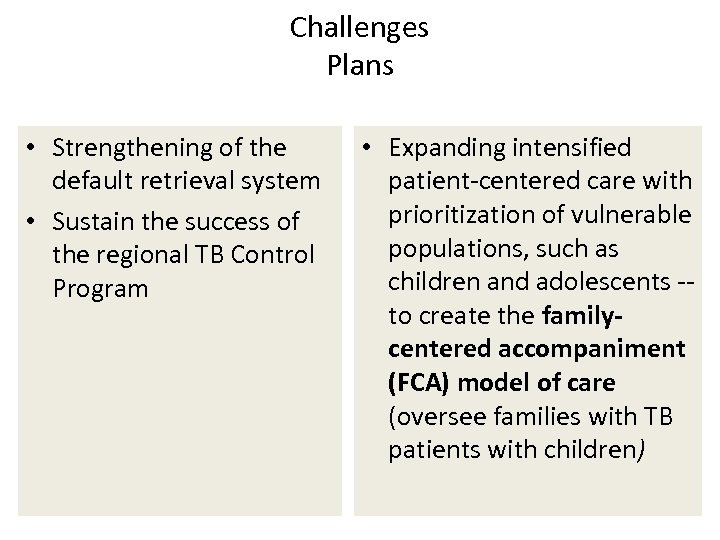
Challenges Plans • Strengthening of the default retrieval system • Sustain the success of the regional TB Control Program • Expanding intensified patient-centered care with prioritization of vulnerable populations, such as children and adolescents -to create the familycentered accompaniment (FCA) model of care (oversee families with TB patients with children)

For the sake of children's health we still have so much to do !!!
THANKS Contact details: vokpd@vmail. ru The Lilly MDR-TB Partnership is funded by the Lilly Foundation
Скачать презентацию The implementation of the National Tuberculosis Control Program
3e90a3a0a40f11ef66f24eb3b5aad6ff.ppt