


 Скачать презентацию The imperative mood P 5 Different moods
e74899730d330a59d2d804597ad0fd04.ppt
- Количество слайдов: 19
 The imperative mood P. 5
 Different moods in Spanish mood- expresses how a speaker feels about an action Indicative mood- indicates what’s true or happening imperative mood- indicates what speaker wants someone else to do. It is not a tense. It is a form of uncertainty.
 Los mandatos formales (affirmative commands) Ud. and Uds.
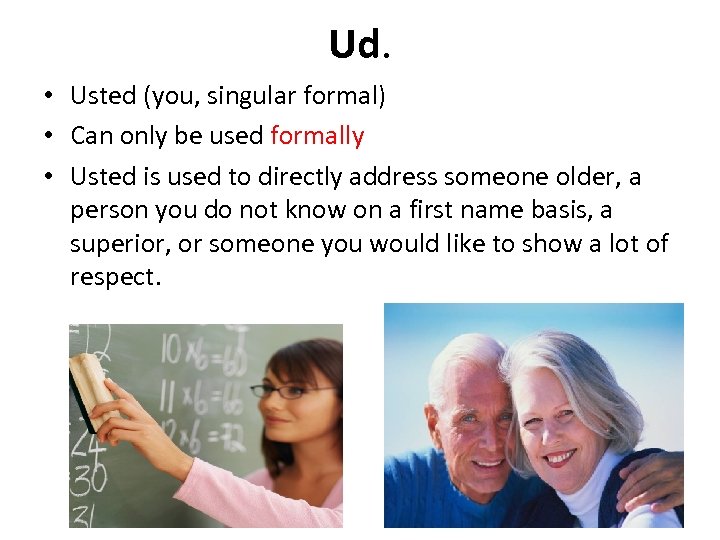 Ud. • Usted (you, singular formal) • Can only be used formally • Usted is used to directly address someone older, a person you do not know on a first name basis, a superior, or someone you would like to show a lot of respect.
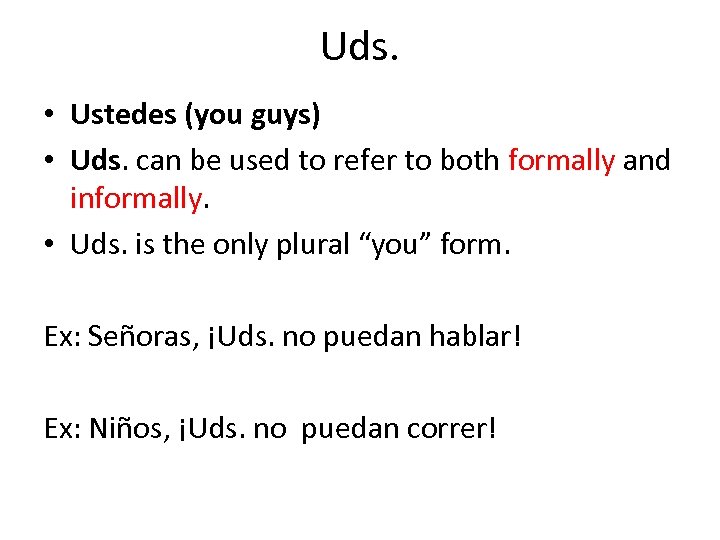 Uds. • Ustedes (you guys) • Uds. can be used to refer to both formally and informally. • Uds. is the only plural “you” form. Ex: Señoras, ¡Uds. no puedan hablar! Ex: Niños, ¡Uds. no puedan correr!
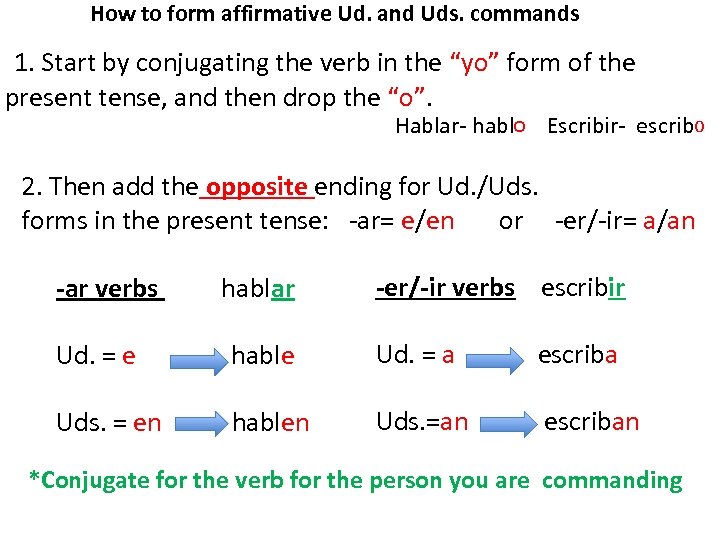 How to form affirmative Ud. and Uds. commands 1. Start by conjugating the verb in the “yo” form of the present tense, and then drop the “o”. o Hablar- habl Escribir- escribo 2. Then add the opposite ending for Ud. /Uds. forms in the present tense: -ar= e/en or -er/-ir= a/an -ar verbs hablar -er/-ir verbs escribir Ud. = e hable Ud. = a escriba Uds. = en hablen Uds. =an escriban *Conjugate for the verb for the person you are commanding
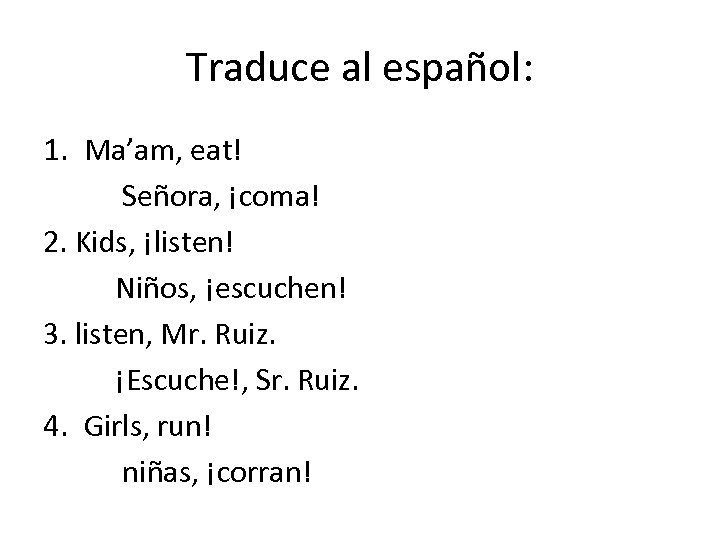 Traduce al español: 1. Ma’am, eat! Señora, ¡coma! 2. Kids, ¡listen! Niños, ¡escuchen! 3. listen, Mr. Ruiz. ¡Escuche!, Sr. Ruiz. 4. Girls, run! niñas, ¡corran!
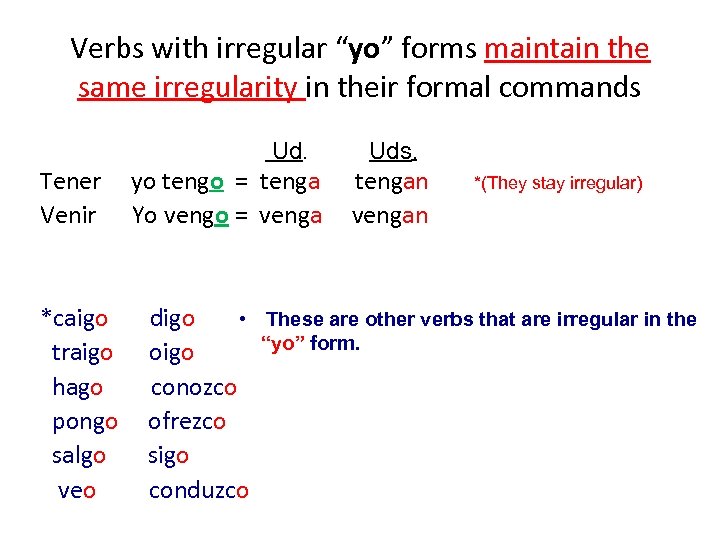 Verbs with irregular “yo” forms maintain the same irregularity in their formal commands Ud. Uds. Tener yo tengo = tengan stay irregular) *(They Venir Yo vengo = vengan *caigo digo • traigo oigo hago conozco pongo ofrezco salgo sigo veo conduzco These are other verbs that are irregular in the “yo” form.
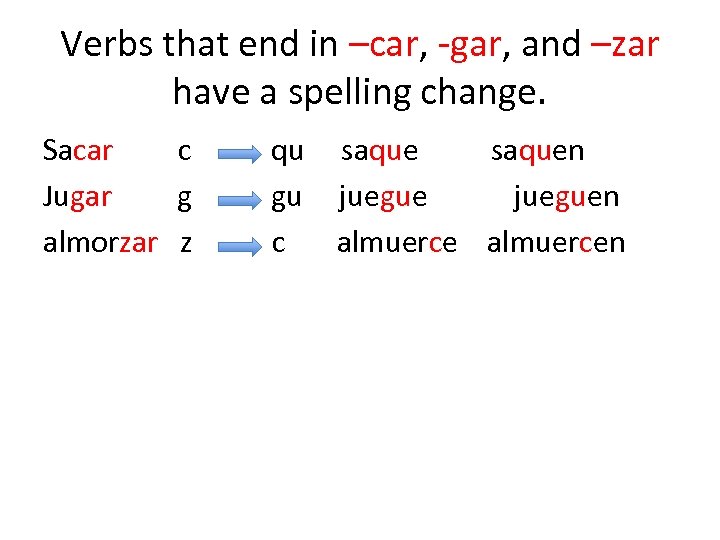 Verbs that end in –car, -gar, and –zar have a spelling change. Sacar c qu saque saquen Jugar g gu jueguen almorzar z c almuercen
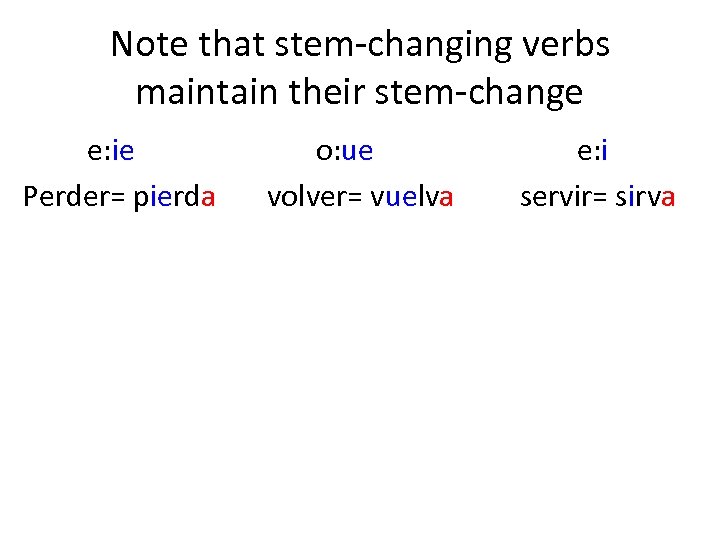 Note that stem-changing verbs maintain their stem-change e: ie o: ue e: i Perder= pierda volver= vuelva servir= sirva
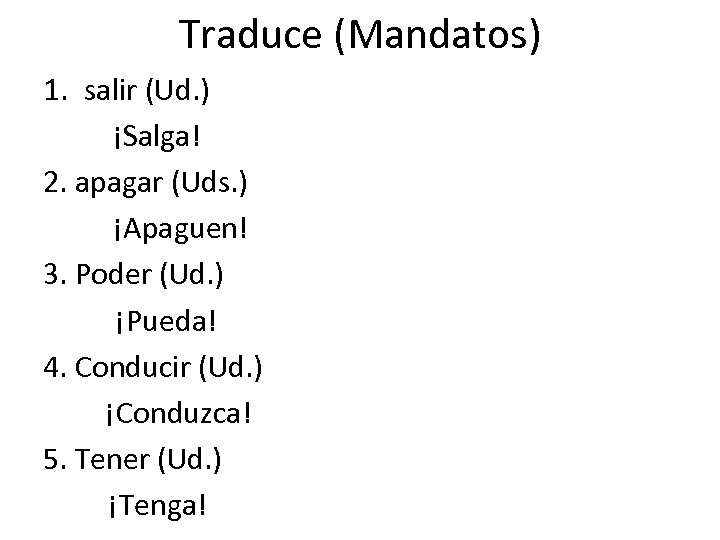 Traduce (Mandatos) 1. salir (Ud. ) ¡Salga! 2. apagar (Uds. ) ¡Apaguen! 3. Poder (Ud. ) ¡Pueda! 4. Conducir (Ud. ) ¡Conduzca! 5. Tener (Ud. ) ¡Tenga!
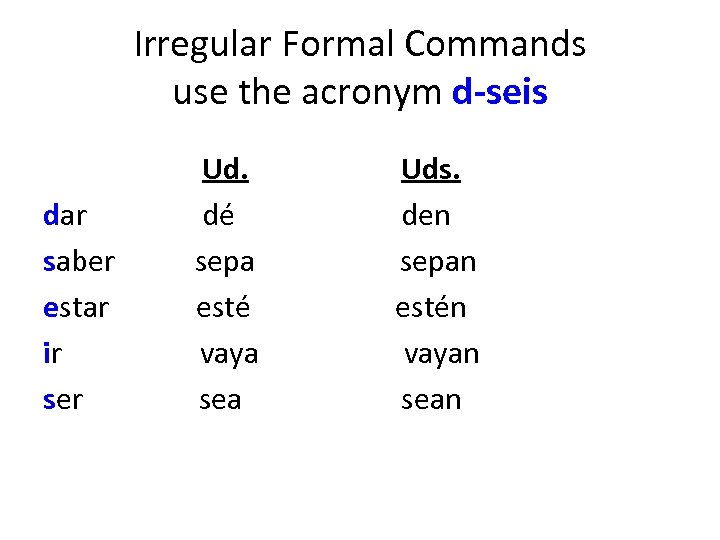 Irregular Formal Commands use the acronym d-seis Ud. Uds. dar dé den saber sepa sepan estar esté estén ir vayan ser sean
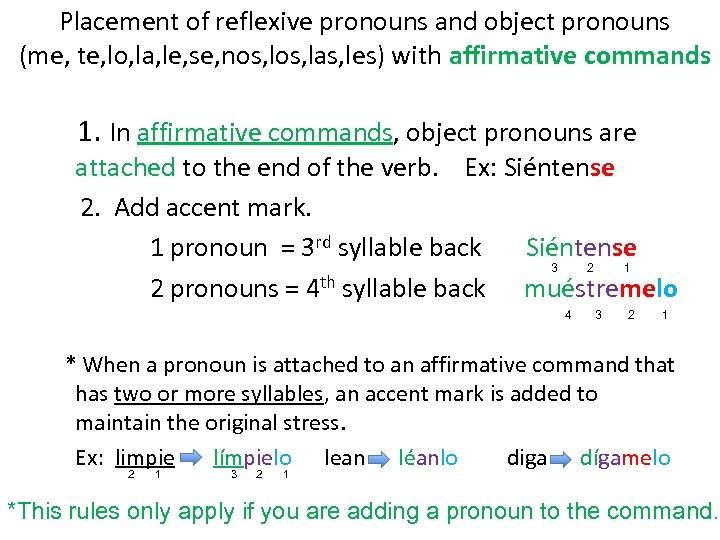 Placement of reflexive pronouns and object pronouns (me, te, lo, la, le, se, nos, las, les) with affirmative commands 1. In affirmative commands, object pronouns are attached to the end of the verb. Ex: Siéntense 2. Add accent mark. 1 pronoun = 3 rd syllable back Siéntense 3 2 1 2 pronouns = 4 th syllable back muéstremelo 4 3 2 1 * When a pronoun is attached to an affirmative command that has two or more syllables, an accent mark is added to maintain the original stress. Ex: limpie límpielo lean léanlo diga dígamelo 2 1 3 2 1 *This rules only apply if you are adding a pronoun to the command.
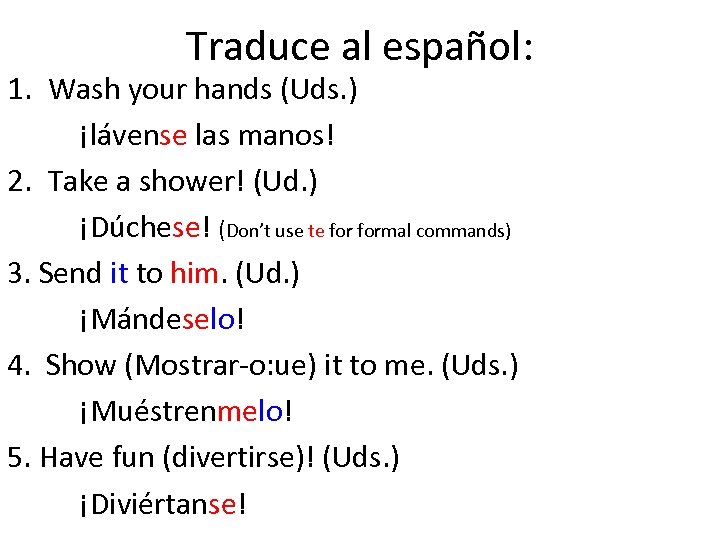 Traduce al español: 1. Wash your hands (Uds. ) ¡lávense las manos! 2. Take a shower! (Ud. ) ¡Dúchese! (Don’t use te formal commands) 3. Send it to him. (Ud. ) ¡Mándeselo! 4. Show (Mostrar-o: ue) it to me. (Uds. ) ¡Muéstrenmelo! 5. Have fun (divertirse)! (Uds. ) ¡Diviértanse!
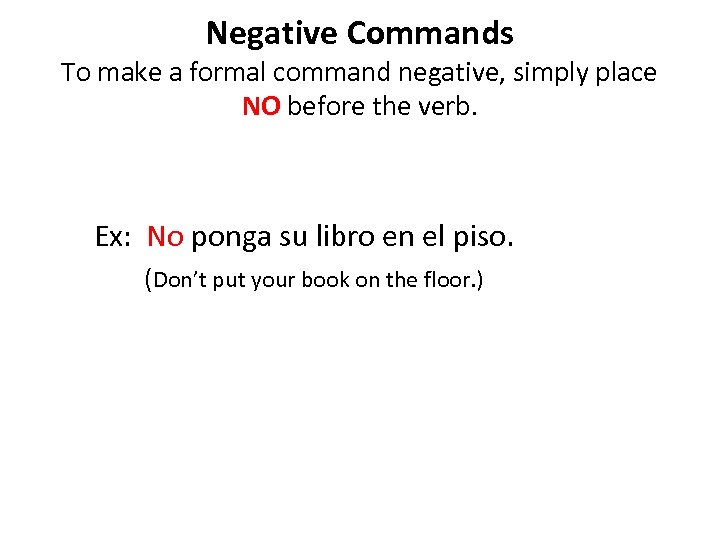 Negative Commands To make a formal command negative, simply place NO before the verb. Ex: No ponga su libro en el piso. (Don’t put your book on the floor. )
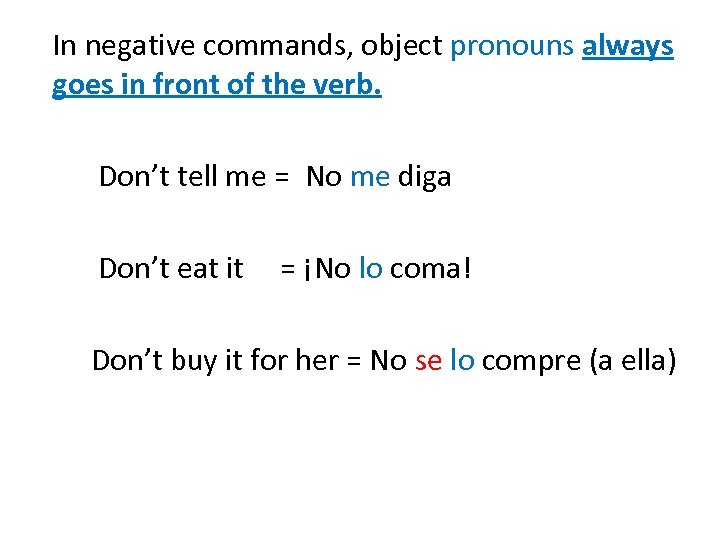 In negative commands, object pronouns always goes in front of the verb. Don’t tell me = No me diga Don’t eat it = ¡No lo coma! Don’t buy it for her = No se lo compre (a ella)
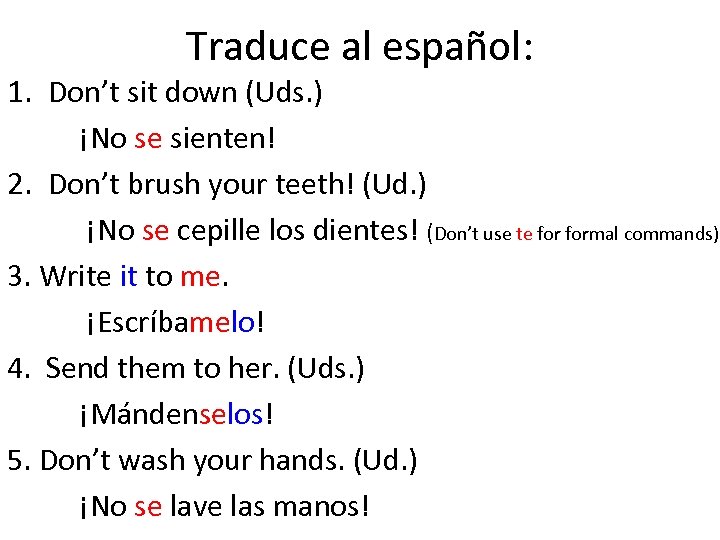 Traduce al español: 1. Don’t sit down (Uds. ) ¡No se sienten! 2. Don’t brush your teeth! (Ud. ) ¡No se cepille los dientes! (Don’t use te formal commands) 3. Write it to me. ¡Escríbamelo! 4. Send them to her. (Uds. ) ¡Mándenselos! 5. Don’t wash your hands. (Ud. ) ¡No se lave las manos!
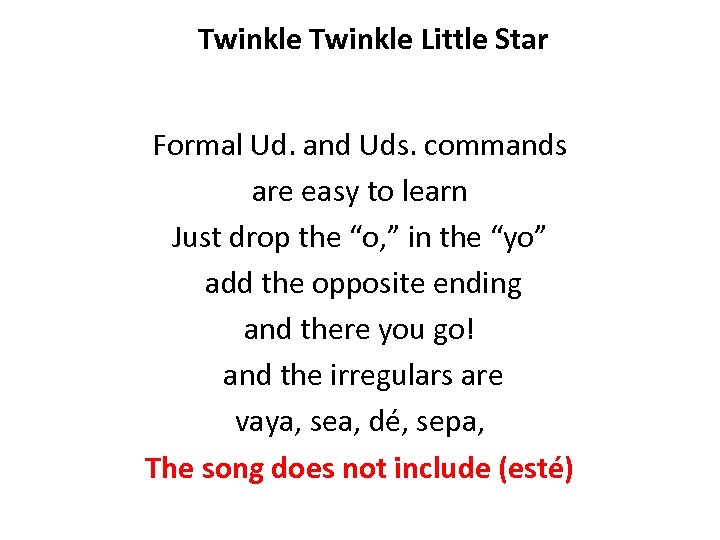 Twinkle Little Star Formal Ud. and Uds. commands are easy to learn Just drop the “o, ” in the “yo” add the opposite ending and there you go! and the irregulars are vaya, sea, dé, sepa, The song does not include (esté)
 Songs for The Commands http: //www. youtube. com/watch? v=7 k. YPG 12 IQe. I regulars http: //www. youtube. com/watch? v=mgpjsj. UZwfc irregulars