


 Скачать презентацию The impact of media access on democracy Matt
b1adccc7ebfc86f3e9ad077acd66fd76.ppt
- Количество слайдов: 22
 The impact of media access on democracy Matt Bodnar & Flemming Schneider Rhode
 Hypothesis H 0: There is no relationship between media access and levels of democracy l H 1: There is a relationship between media access and democracy l We predict a moderate positive relationship between media access and democracy.
 Hypothesis II H 0: There is no relationship between media access and democracy in China l H 1: There is a relationship between media access and democracy in China l We predict a moderate negative relationship between media access and democracy in China
 Importance to Policy Analysis Democracy promotion key part of U. S. Foreign Policy l Conclusive findings could suggest alternative foreign policy strategies l
 Literature Review l l l Best & Wade - The Internet and Democracy: Global Catalyst or Democratic Dud? Mc. Chesney – Rich Media, Poor Democracy Kalathil, Shanthi – Dot. Com for Dictators Chase, Mulvenon - You’ve Got Dissent! Franda, Marcus – Launching into Cyberspace Lynch, David – After the Propaganda State
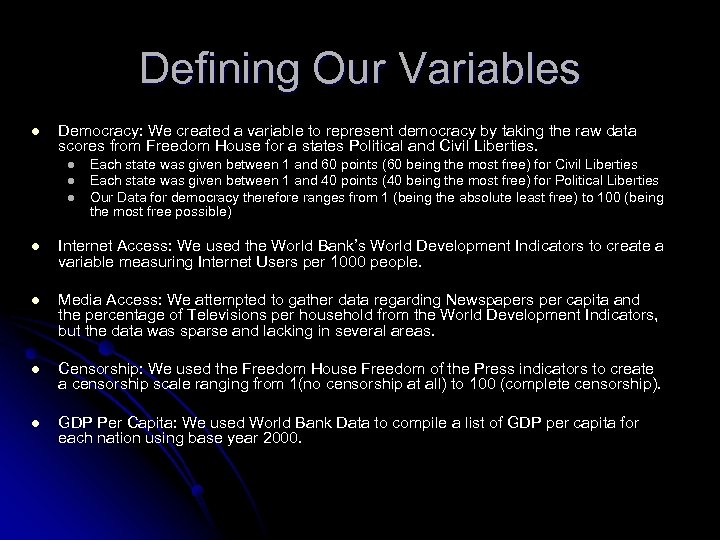 Defining Our Variables l Democracy: We created a variable to represent democracy by taking the raw data scores from Freedom House for a states Political and Civil Liberties. l l l Each state was given between 1 and 60 points (60 being the most free) for Civil Liberties Each state was given between 1 and 40 points (40 being the most free) for Political Liberties Our Data for democracy therefore ranges from 1 (being the absolute least free) to 100 (being the most free possible) l Internet Access: We used the World Bank’s World Development Indicators to create a variable measuring Internet Users per 1000 people. l Media Access: We attempted to gather data regarding Newspapers per capita and the percentage of Televisions per household from the World Development Indicators, but the data was sparse and lacking in several areas. l Censorship: We used the Freedom House Freedom of the Press indicators to create a censorship scale ranging from 1(no censorship at all) to 100 (complete censorship). l GDP Per Capita: We used World Bank Data to compile a list of GDP per capita for each nation using base year 2000.
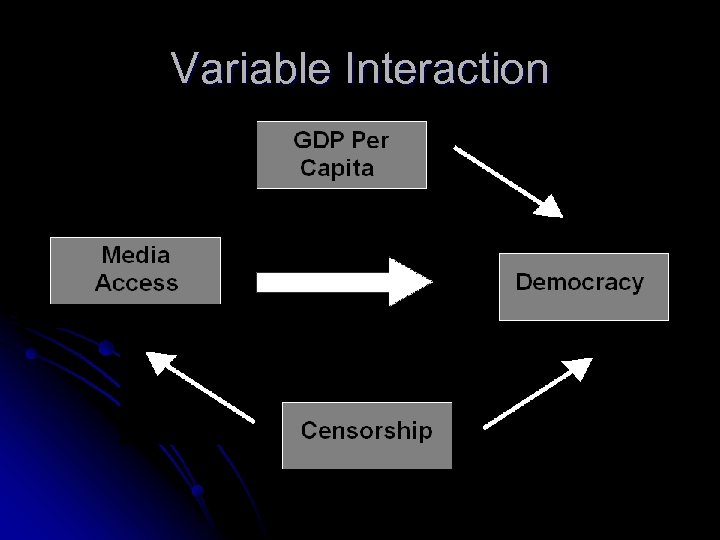 Variable Interaction
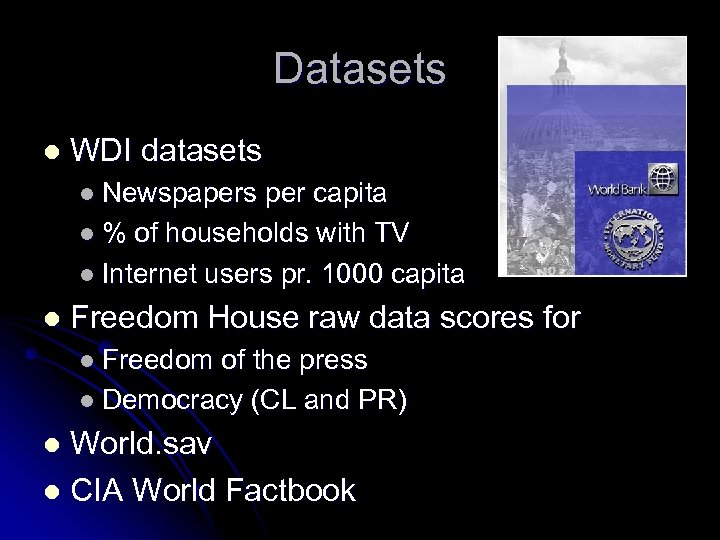 Datasets l WDI datasets l Newspapers per capita l % of households with TV l Internet users pr. 1000 capita l Freedom House raw data scores for l Freedom of the press l Democracy (CL and PR) World. sav l CIA World Factbook l
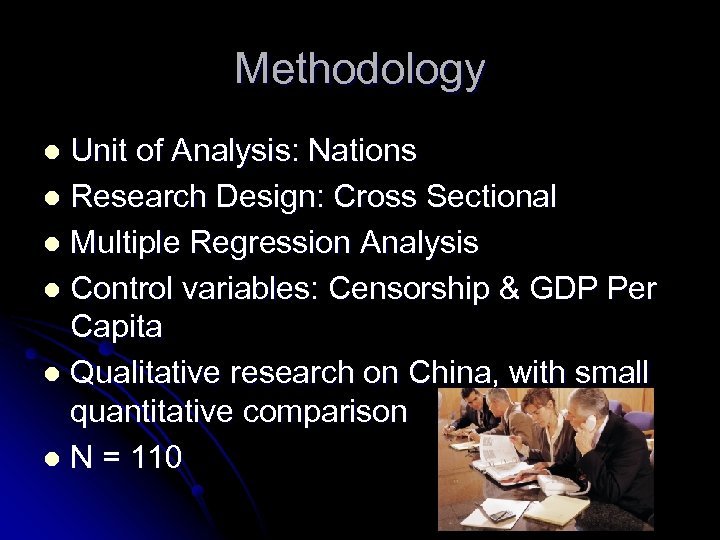 Methodology Unit of Analysis: Nations l Research Design: Cross Sectional l Multiple Regression Analysis l Control variables: Censorship & GDP Per Capita l Qualitative research on China, with small quantitative comparison l N = 110 l
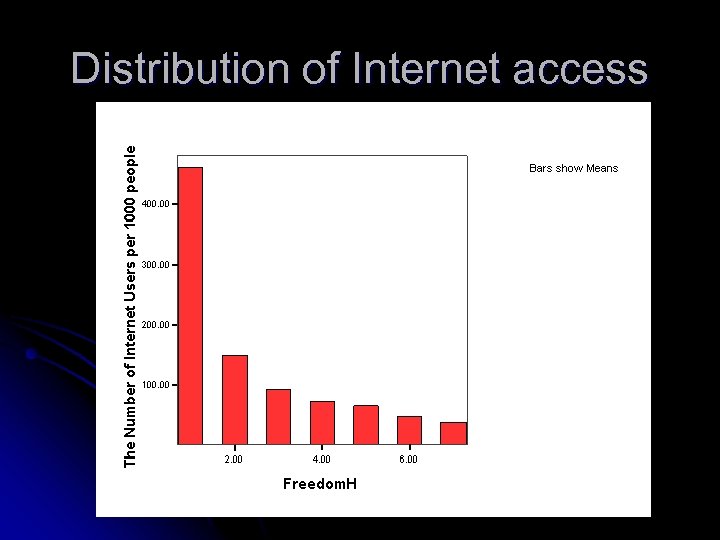 Distribution of Internet access
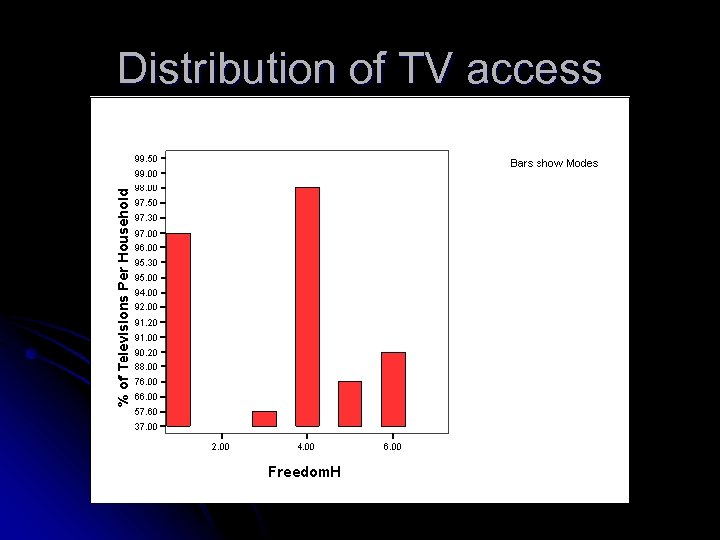 Distribution of TV access
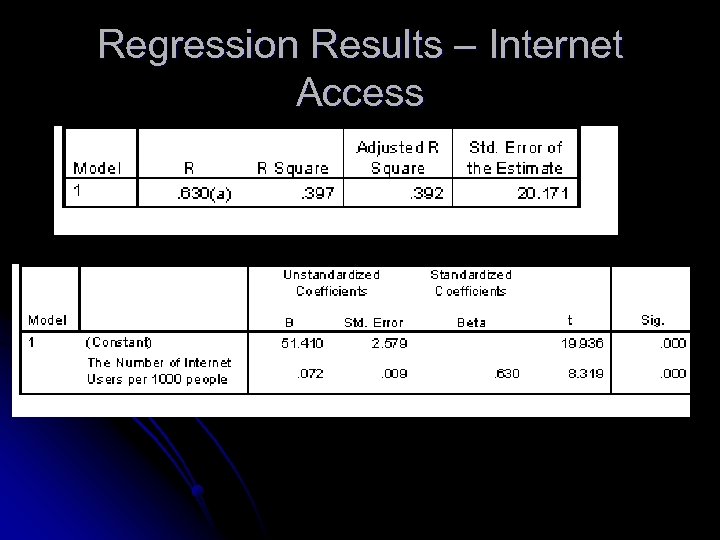 Regression Results – Internet Access
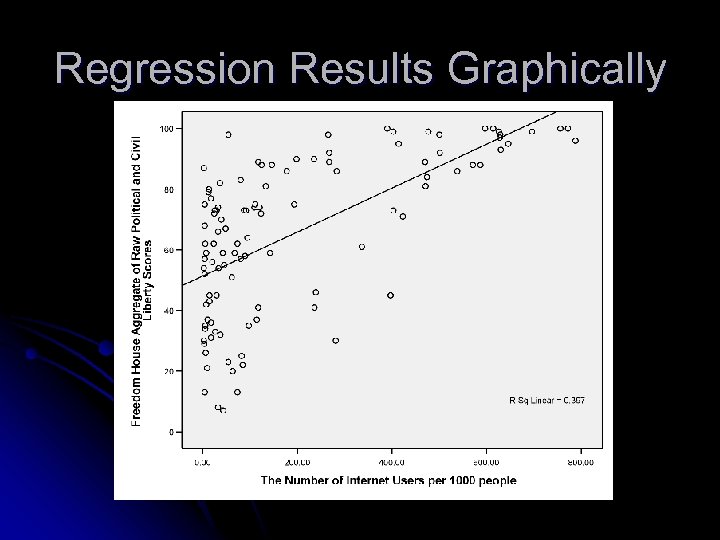 Regression Results Graphically
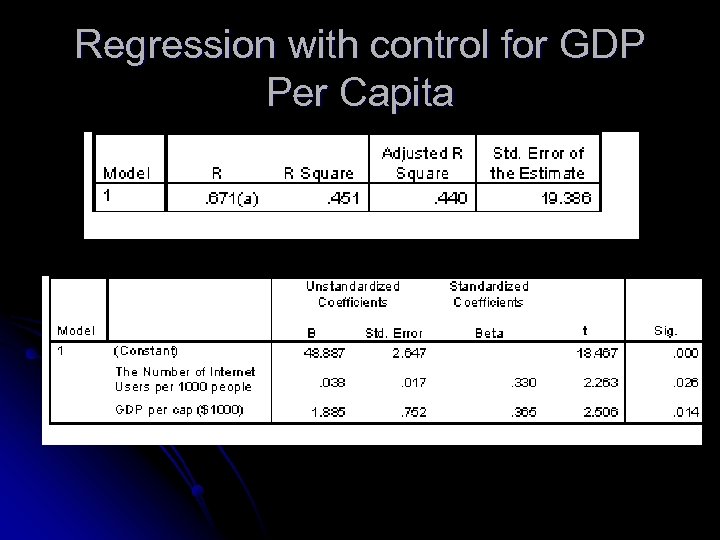 Regression with control for GDP Per Capita
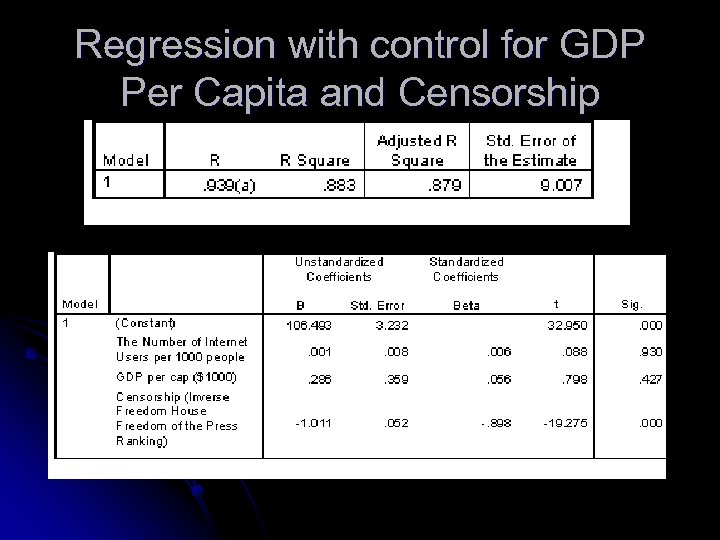 Regression with control for GDP Per Capita and Censorship
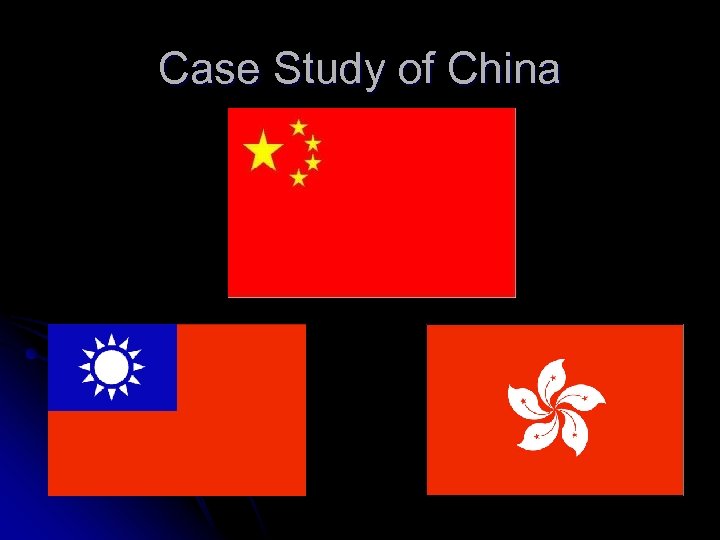 Case Study of China
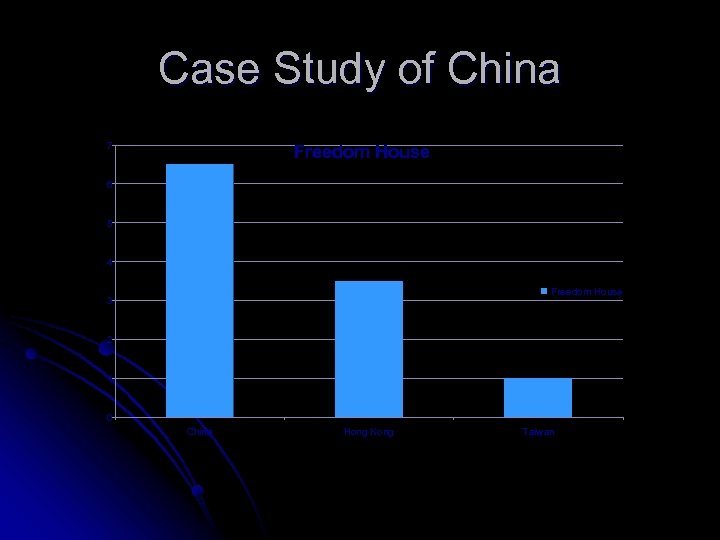 Case Study of China 7 Freedom House 6 5 4 Freedom House 3 2 1 0 China Hong Kong Taiwan
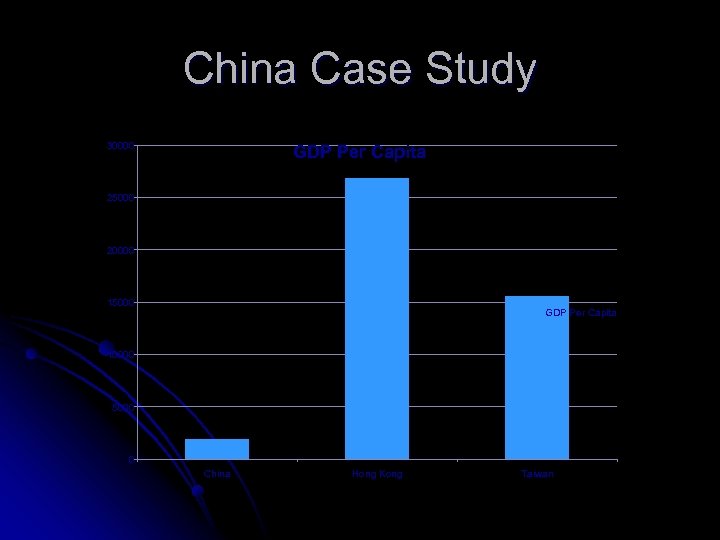 China Case Study 30000 GDP Per Capita 25000 20000 15000 GDP Per Capita 10000 5000 0 China Hong Kong Taiwan
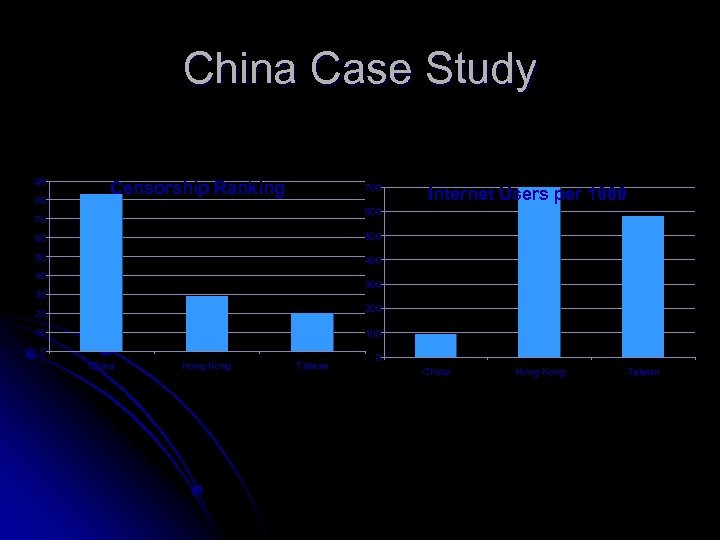 China Case Study 90 80 Censorship Ranking 700 Internet Users per 1000 600 70 60 50 400 40 30 20 200 10 100 0 China Hong Kong Taiwan
 Case Study – Qualitative Analysis Has the Internet fostered Democracy in China? l Chinese Government Tactics l Censorship – Great Firewall of China l Corporate Help – Google, Yahoo, Wikipedia l Dissidents l Short timeframe l Ambiguous Results l
 Problems with data Countries with 100 can’t improve democratically within FH rankings l Internet Disproportionately weighted l l No data for newspapers or cell phones l Small N for TV access l Censorship a very ambiguous and biased concept. No measurement for self censorship
 Conclusions l l l l Accept H 0: No relationship on a global level Previous studies disguised the type of information provided Very Complex Issue – intervening variables, simultaneity Short term vs. long term effect Accept H 0: No clear uniform relationship Taiwan and Hong Kong has and will benefit more than mainland China Government has been very efficient in blocking damaging information to the general public while dissidents use media internally