


 Скачать презентацию The Impact of Infrastructure Sector Reform on the
e36700096eae5836e355d1f755e7e2c7.ppt
- Количество слайдов: 28
 The Impact of Infrastructure Sector Reform on the Poor: Learning from Latin America’s Experience Dr Vivien Foster Finance, Private Sector, and Infrastructure Latin America and Caribbean Region World Bank
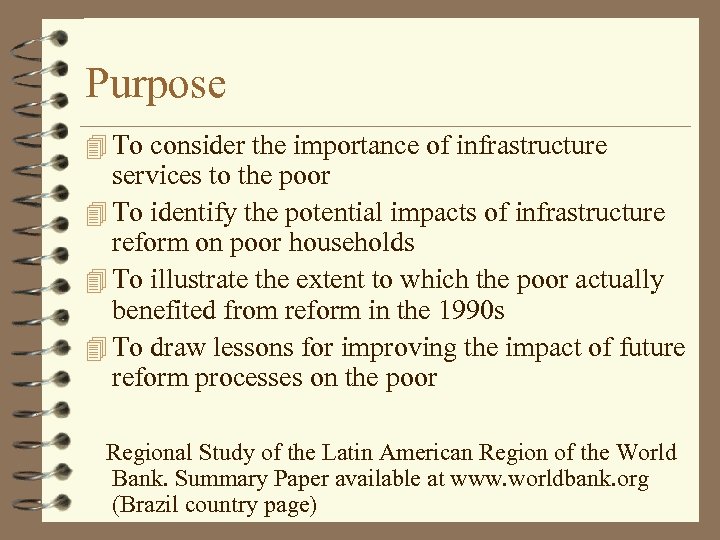 Purpose 4 To consider the importance of infrastructure services to the poor 4 To identify the potential impacts of infrastructure reform on poor households 4 To illustrate the extent to which the poor actually benefited from reform in the 1990 s 4 To draw lessons for improving the impact of future reform processes on the poor Regional Study of the Latin American Region of the World Bank. Summary Paper available at www. worldbank. org (Brazil country page)
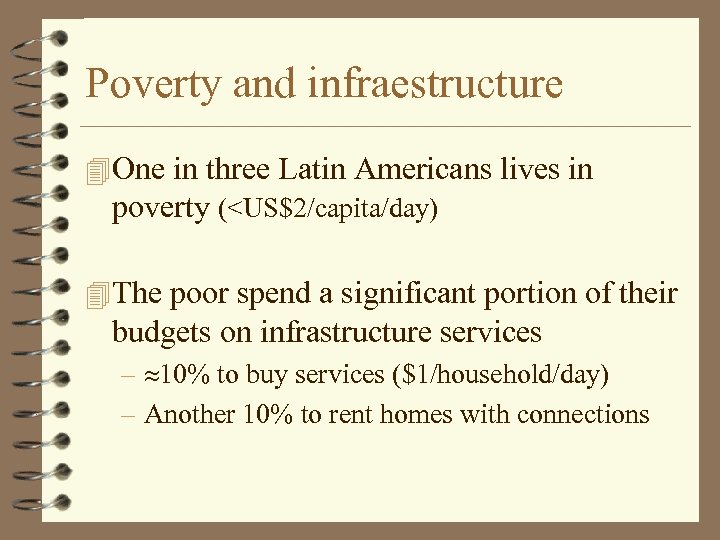 Poverty and infraestructure 4 One in three Latin Americans lives in poverty (
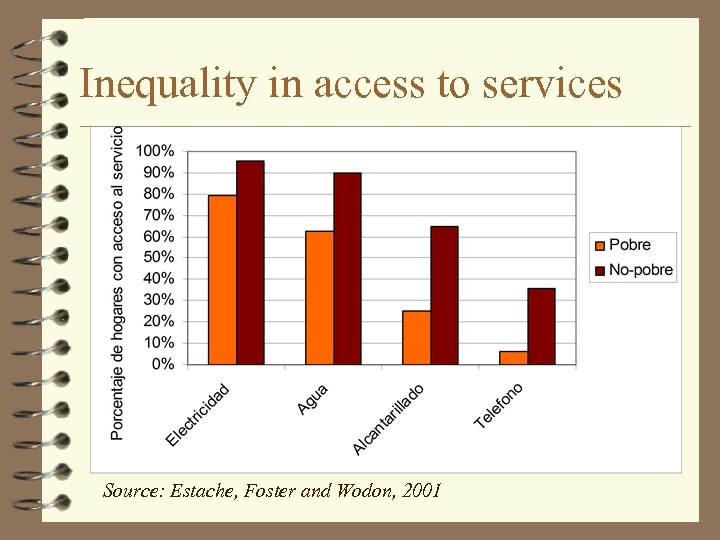 Inequality in access to services Source: Estache, Foster and Wodon, 2001
 Benefits of infrastructure 4 Reduces the cost of satisfying basic needs – Electricity: $0. 08/k. Wh vs. $5. 00/k. Wh (Guatemala) – Water: $1. 00/m 3 vs. $11. 00/m 3 (Haiti) 4 Preserves health – 20% of the burden of disease in developing countries is related to lack of access to infrastructure 4 Helps to escape from poverty – Families with access to infrastructure services experience larger increases in income over time (Perú)
 Drawbacks of the traditional model 4 Traditional model: public provision supported by state subsidies 4 Drawbacks from the perspective of the poor – inadequate finance to expand coverage – poorly targeted subsidies – inefficiencies raise cost of service provision
 What are the benefits of reform? 4 The reform process generates a sustantial ‘dividend’ – Efficiency gains: equivalen to 1% of GDP for Argentina – New sources of investment finance: US$290 billons 1990/9 for Latin America 4 The distribution of these benefits demands a political decision
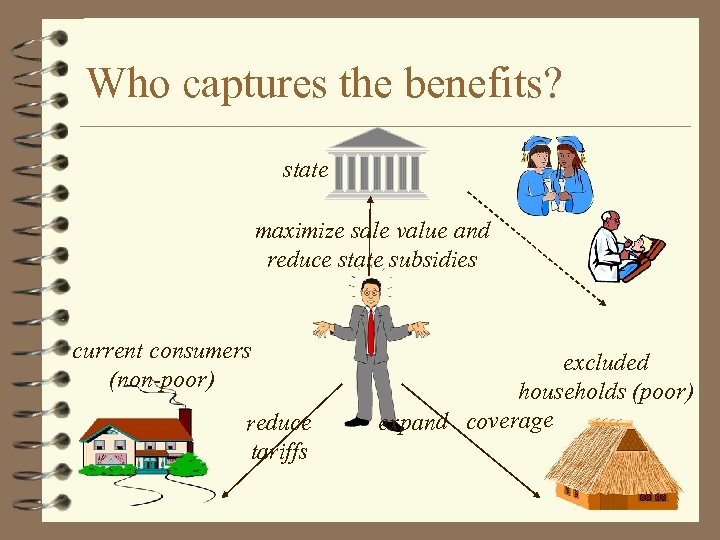 Who captures the benefits? state maximize sale value and reduce state subsidies current consumers (non-poor) reduce tariffs excluded households (poor) expand coverage
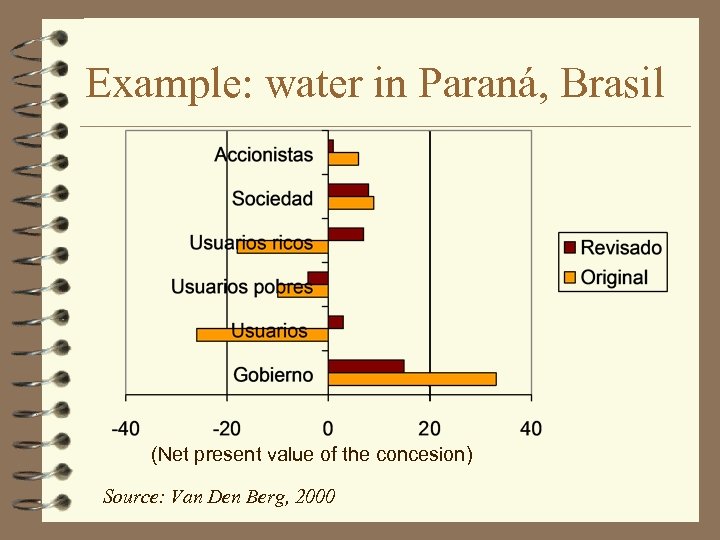 Example: water in Paraná, Brasil (Net present value of the concesion) Source: Van Den Berg, 2000
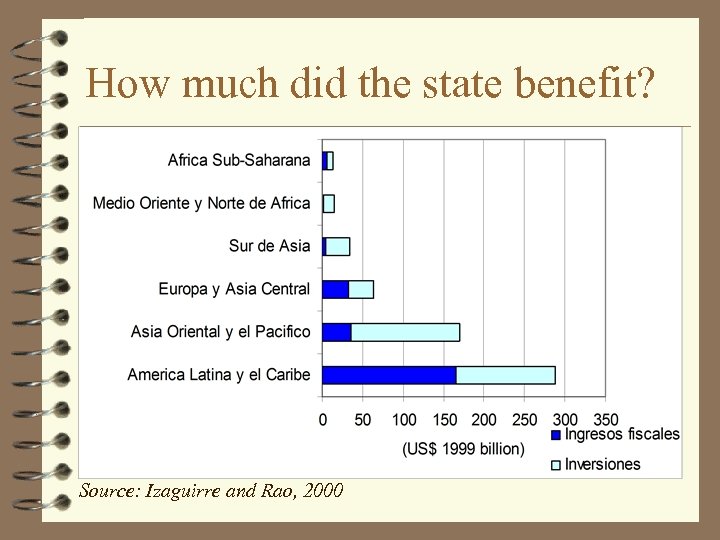 How much did the state benefit? Source: Izaguirre and Rao, 2000
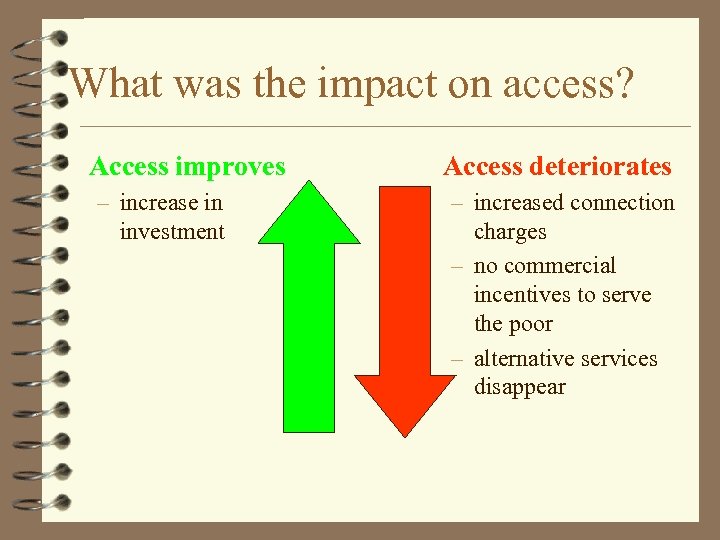 What was the impact on access? Access improves – increase in investment Access deteriorates – increased connection charges – no commercial incentives to serve the poor – alternative services disappear
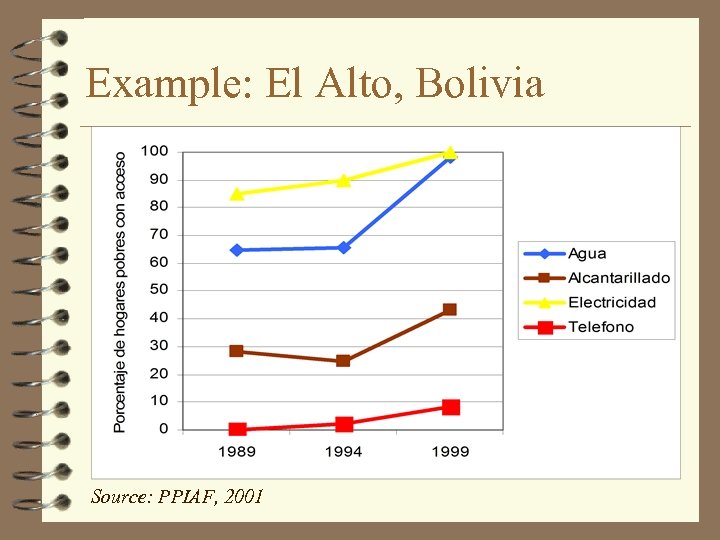 Example: El Alto, Bolivia Source: PPIAF, 2001
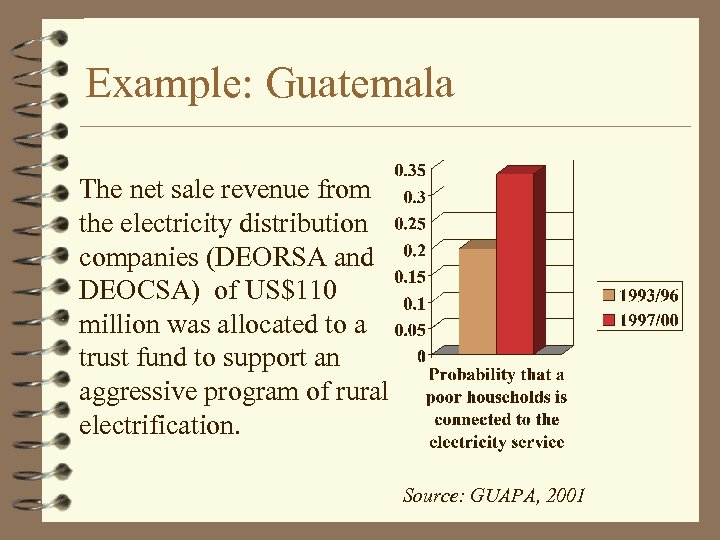 Example: Guatemala The net sale revenue from the electricity distribution companies (DEORSA and DEOCSA) of US$110 million was allocated to a trust fund to support an aggressive program of rural electrification. Source: GUAPA, 2001
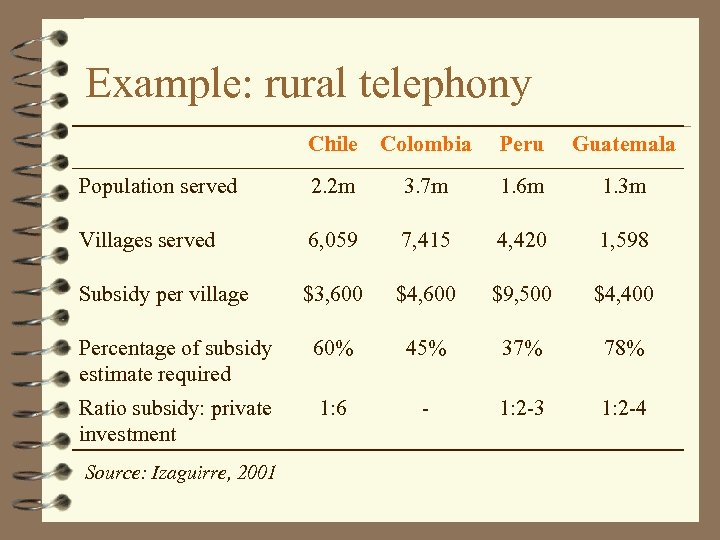 Example: rural telephony Chile Colombia Peru Guatemala Population served 2. 2 m 3. 7 m 1. 6 m 1. 3 m Villages served 6, 059 7, 415 4, 420 1, 598 Subsidy per village $3, 600 $4, 600 $9, 500 $4, 400 Percentage of subsidy estimate required 60% 45% 37% 78% Ratio subsidy: private investment 1: 6 - 1: 2 -3 1: 2 -4 Source: Izaguirre, 2001
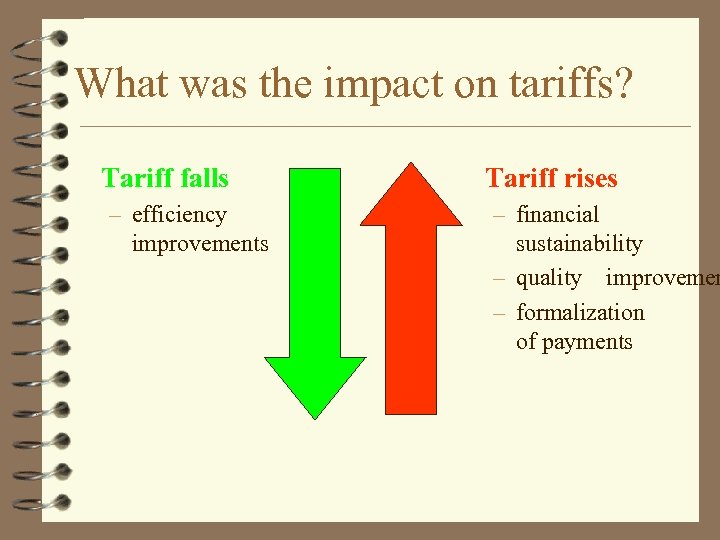 What was the impact on tariffs? Tariff falls – efficiency improvements Tariff rises – financial sustainability – quality improvemen – formalization of payments
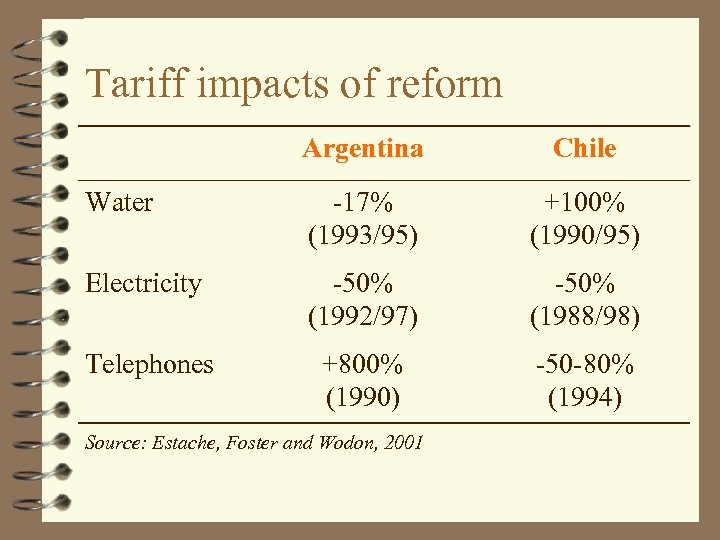 Tariff impacts of reform Argentina Chile Water -17% (1993/95) +100% (1990/95) Electricity -50% (1992/97) -50% (1988/98) Telephones +800% (1990) -50 -80% (1994) Source: Estache, Foster and Wodon, 2001
 Tariff impacts of reform 4 In some cases tariff increases were the undoing of the reform process – Tucuman (1997) – Cochabamba (2000) 4 Common factors – significant tariff increase ( 100%) – suddenly introduced – with no consultation on willingness to pay – without immediate improvements in service quality – in a difficult political context
 Strategies to improve future impact 4 Improve subsidy design 4 Reduce costs of access 4 Promote technological innovations 4 Increase scope for competition
 Improve subsidies 4 The poor often fail to benefit from subsidies because – they are not connected to the service – the targeting criteria are unrelated to poverty 4 It is often preferable to subsidize connection rather than consumption 4 The elegibility criteria for subsidies should be carefully evaluated
 Example: Colombia 4 All neighborhoods are classified into six socio- economic strata according to physical characteristics 4 Cross-subsidies are applied – Strata 5 and 6 pay a 20% surcharge – Strata 1 and 3 receive a 50% to 15% subsidy 4 However, targeting performance is poor – El 97% de los pobres pertenecen a estratos 1 -3 – El 77% de los estratos 1 -3 no son pobres
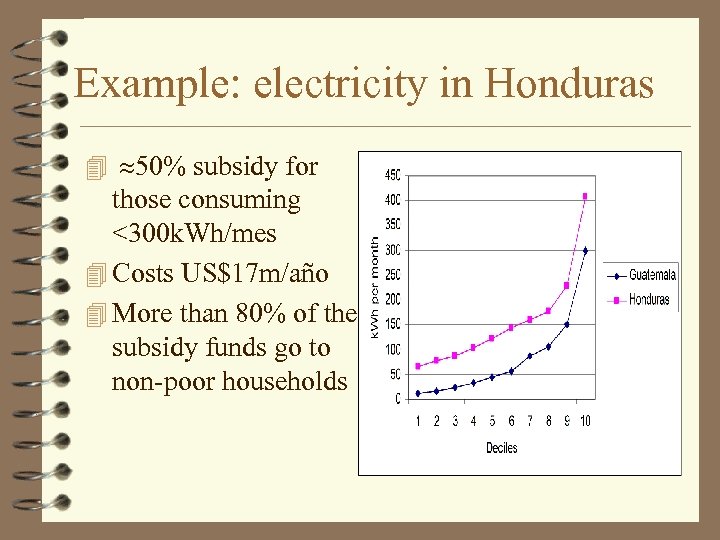 Example: electricity in Honduras 4 50% subsidy for those consuming <300 k. Wh/mes 4 Costs US$17 m/año 4 More than 80% of the subsidy funds go to non-poor households
 Reduce costs of access 4 The costs of access can be twofold – Connection charges ($200 -$400) – Intra-household investments ($500) 4 Mecanisms for reducing costs – Cross-subsidy between current (rich? ) and future (poor? ) consumers – Financing mechanisms – Connection subsidies
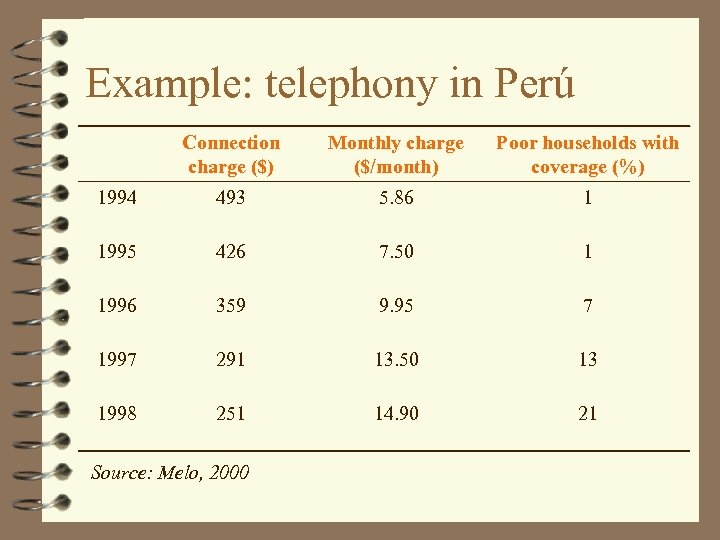 Example: telephony in Perú Connection charge ($) Monthly charge ($/month) Poor households with coverage (%) 1994 493 5. 86 1 1995 426 7. 50 1 1996 359 9. 95 7 1997 291 13. 50 13 1998 251 14. 90 21 Source: Melo, 2000
 Promote innovations 4 Technological standards tend to reflect first world conditions 4 The balance between cost and quality may be unfavorable to the poor 4 There should be greater freedom to find appropriate technologies
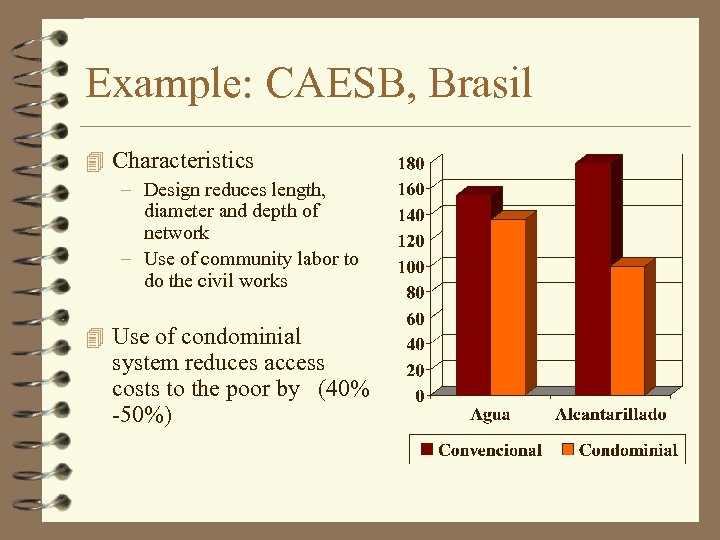 Example: CAESB, Brasil 4 Characteristics – Design reduces length, diameter and depth of network – Use of community labor to do the civil works 4 Use of condominial system reduces access costs to the poor by (40% -50%)
 Increase competition 4 There is a tendency to ignore or illegalize alternative forms of provision – negative perceptions – desire to protect private investors 4 However they can play a valuable role – generating competition – providing alternative technologies 4 They should therefore form an integral part of any reform process
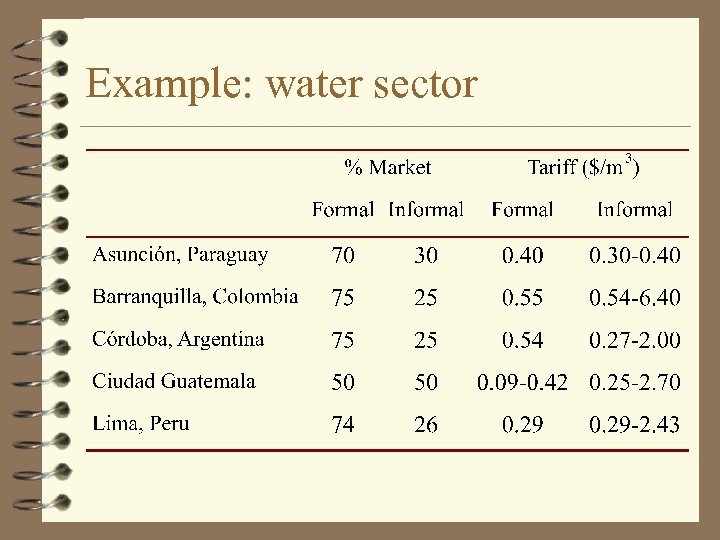 Example: water sector
 Conclusions 4 Reform generates substantial dividends, whose distribution is a political issue 4 Therefore, reform has the potential to benefit the poor 4 However, in the past this has not been a political priority 4 To improve the pro-poor impact of future reforms it will be essential to – Make a political commitment – Find more effective technical strategies