 Скачать презентацию The impact of clientrelationships on innovation a cross-boundary
8b7552b80233521b1de6c7c688c80ea6.ppt
- Количество слайдов: 18



The impact of clientrelationships on innovation: a cross-boundary perspective Professor Juani Swart School of Management University of Bath E-mail: J. A. Swart@bath. ac. uk + 44 (0) 1225 38 3108
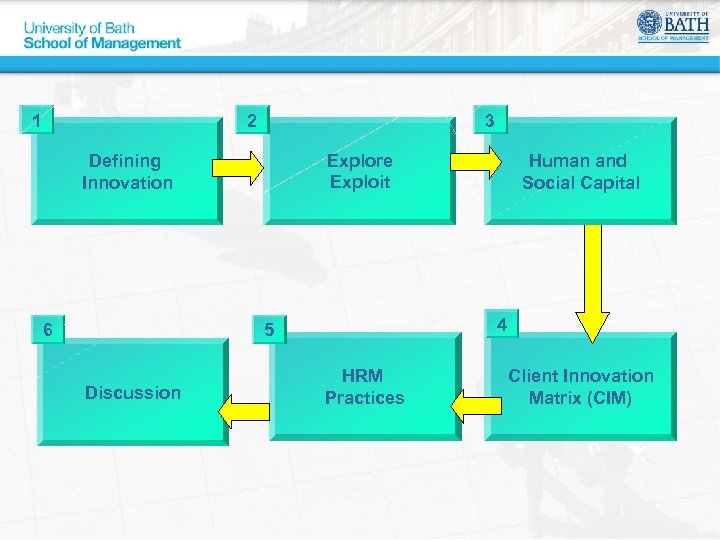
1 2 3 Explore Exploit Defining Innovation 6 4 5 Discussion Human and Social Capital HRM Practices Client Innovation Matrix (CIM)
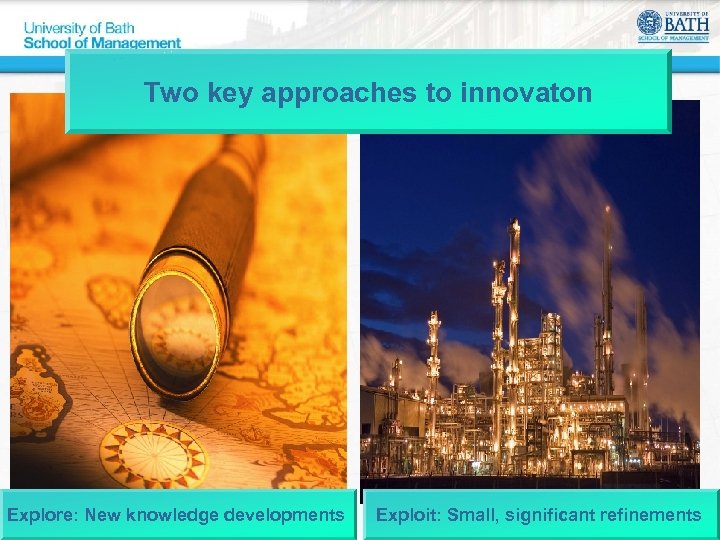
Two key approaches to innovaton Explore: New knowledge developments Exploit: Small, significant refinements
• Human capital-based advantage = innovative outputs that are linked to the process of strategic renewal (Crossan et al. , 1999) • Resources linked to tacit routines, such as knowledge, skills and relationships generate innovative outputs (Bowman & Swart, 2007) • Human (HC) – Firm-specific – Client- specific Social capital (SC) – Co-operative – Opportunistic •

Unit of analysis Context: Professional Services Firms Client interaction Co-production of innovation Methodological Implications Activity perspective toward selecting the unit of analysis Boundaries are directed by activities (Kogut and Zander, 1996) It is ‘what we do’ that defines the appropriate parameters for research. Unit of Analysis: Core client interface process
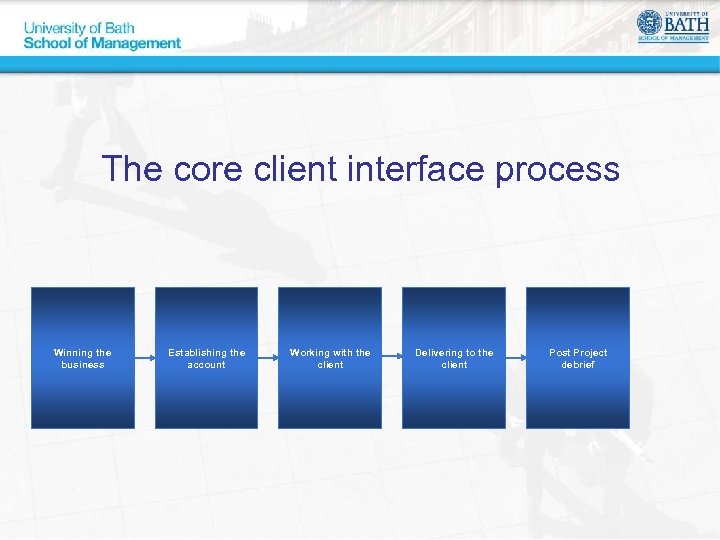
The core client interface process Winning the business Establishing the account Working with the client Delivering to the client Post Project debrief
Methodology Case studies: Professional Services Firms Consulting, law and creative organisations Methods Mapping key client interface processes Interviews (76 interviews; 60 -90 minutes) Innovative outputs; HC and SC; HRM practices; Observation (22) In-house documents Analysis: Transcripts and content analysed Parallel coding
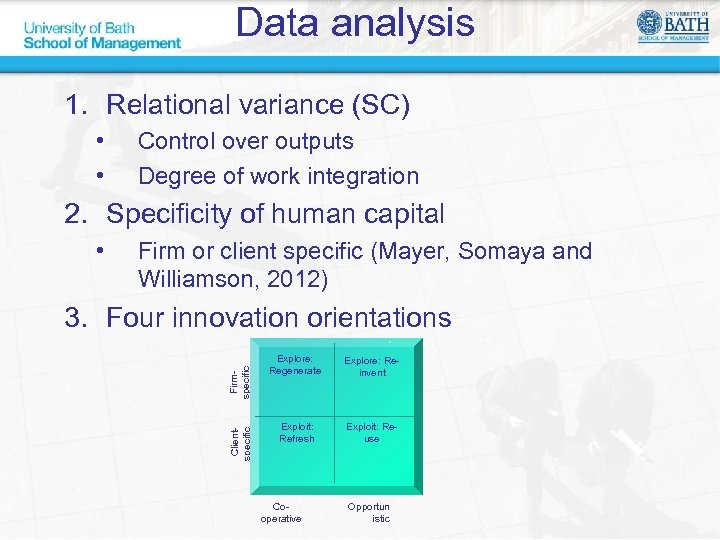
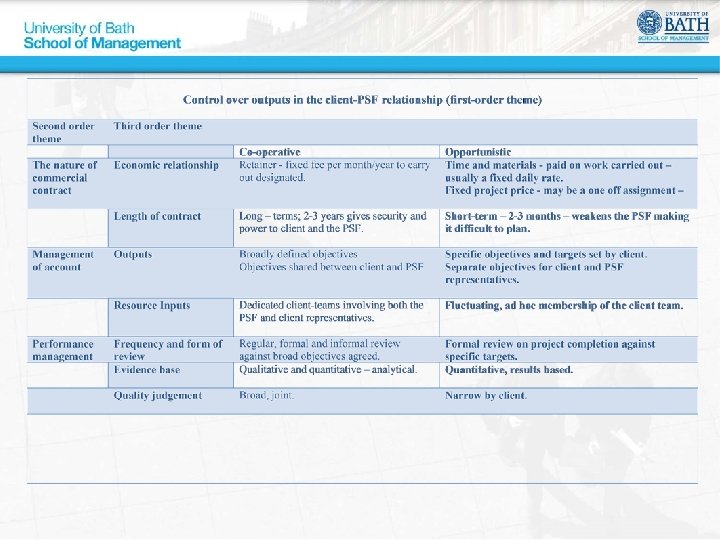
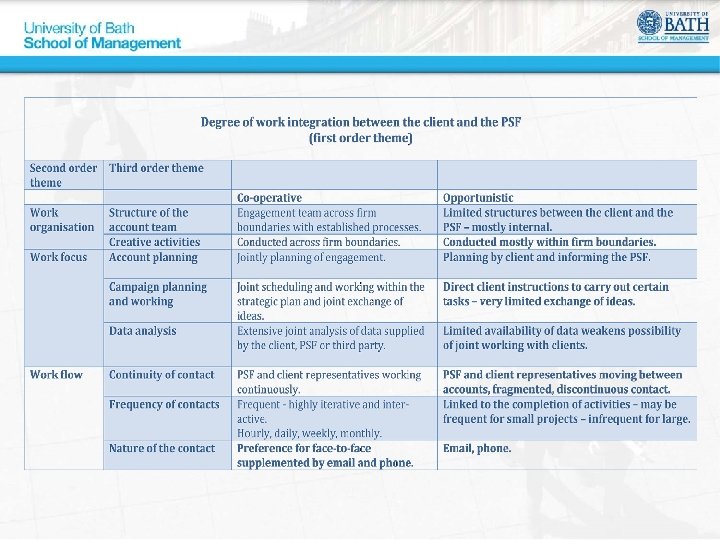
Data analysis 1. Relational variance (SC) • • Control over outputs Degree of work integration 2. Specificity of human capital • Firm or client specific (Mayer, Somaya and Williamson, 2012) Clientspecific Firmspecific 3. Four innovation orientations Explore: Regenerate Explore: Reinvent Exploit: Refresh Exploit: Re. Planne use d Time frames Cooperative Opportun istic
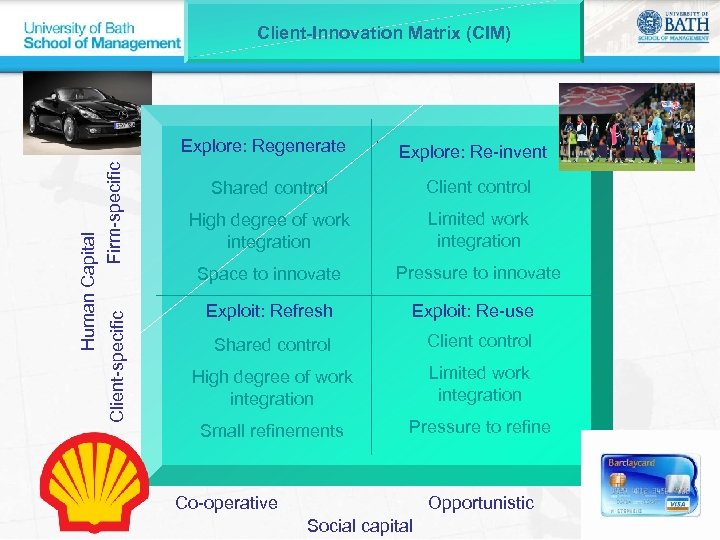
Client-Innovation Matrix (CIM) Human Capital Firm-specific Client-specific Explore: Regenerate Explore: Re-invent Shared control Client control High degree of work integration Limited work integration Space to innovate Pressure to innovate Exploit: Refresh Exploit: Re-use Shared control Planned control Client High degree of work Time frames integration Limited work integration Small refinements Pressure to refine Co-operative Opportunistic Social capital
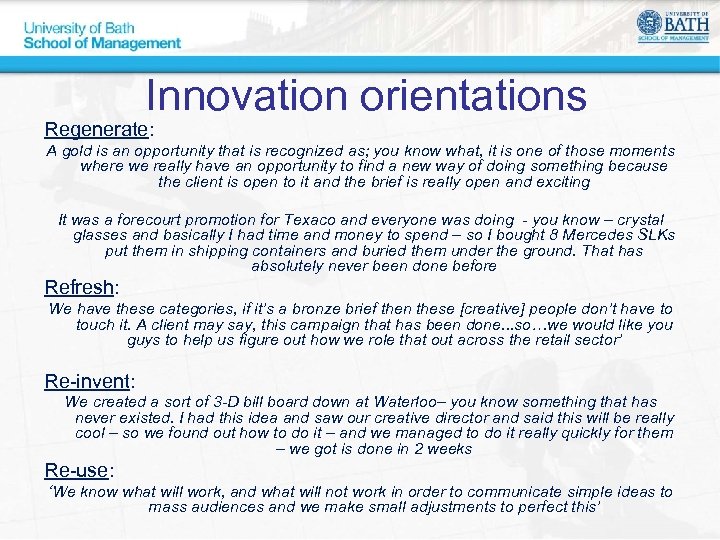
Innovation orientations Regenerate: A gold is an opportunity that is recognized as; you know what, it is one of those moments where we really have an opportunity to find a new way of doing something because the client is open to it and the brief is really open and exciting It was a forecourt promotion for Texaco and everyone was doing - you know – crystal glasses and basically I had time and money to spend – so I bought 8 Mercedes SLKs put them in shipping containers and buried them under the ground. That has absolutely never been done before Refresh: We have these categories, if it’s a bronze brief then these [creative] people don’t have to touch it. A client may say, this campaign that has been done. . . so…we would like you guys to help us figure out how we role that out across the retail sector’ Re-invent: We created a sort of 3 -D bill board down at Waterloo– you know something that has never existed. I had this idea and saw our creative director and said this will be really cool – so we found out how to do it – and we managed to do it really quickly for them – we got is done in 2 weeks Re-use: ‘We know what will work, and what will not work in order to communicate simple ideas to mass audiences and we make small adjustments to perfect this’
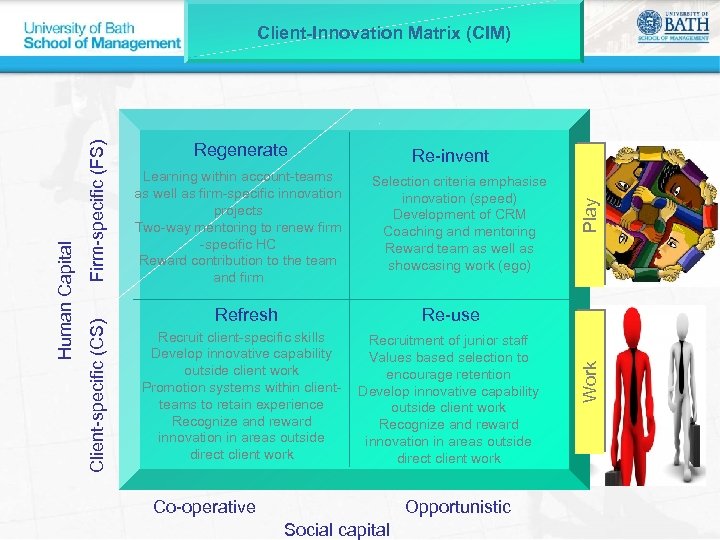
Regenerate Selection criteria emphasise innovation (speed) Development of CRM Coaching and mentoring Reward team as well as showcasing work (ego) Refresh Play Learning within account-teams as well as firm-specific innovation projects Two-way mentoring to renew firm -specific HC Reward contribution to the team and firm Re-invent Re-use Recruit client-specific skills Develop innovative capability outside client work Promotion systems within client. Time frames teams to retain experience Recognize and reward innovation in areas outside direct client work Recruitment Planned of junior staff Values based selection to encourage retention Develop innovative capability outside client work Recognize and reward innovation in areas outside direct client work Co-operative Opportunistic Social capital Work Firm-specific (FS) Client-specific (CS) Human Capital Client-Innovation Matrix (CIM)
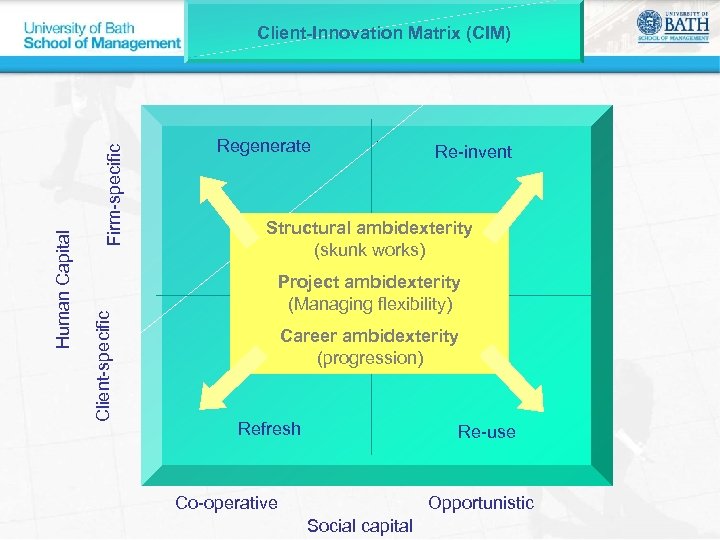
Firm-specific Client-specific Human Capital Client-Innovation Matrix (CIM) Regenerate Re-invent Structural ambidexterity (skunk works) Project ambidexterity (Managing flexibility) Career ambidexterity Planned (progression) Time frames Refresh Re-use Co-operative Opportunistic Social capital
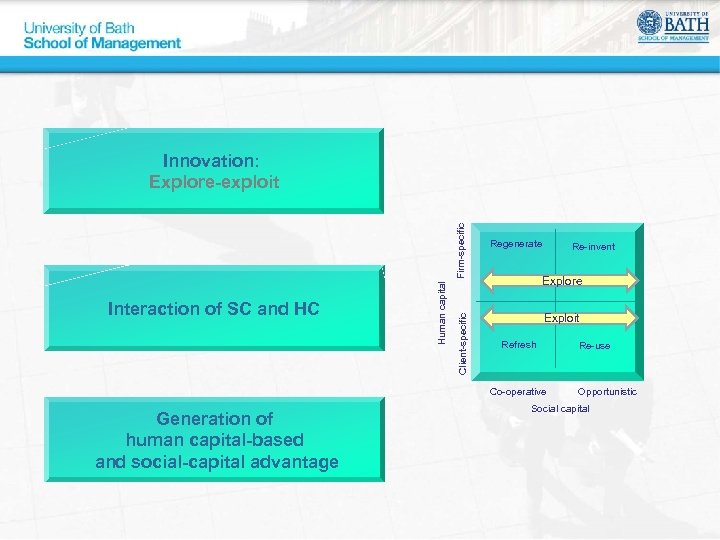
Client-specific Interaction of SC and HC Human capital Firm-specific Innovation: Explore-exploit Regenerate Re-invent Explore Exploit Planne Time frames Refresh Co-operative Generation of human capital-based and social-capital advantage d Re-use Opportunistic Social capital
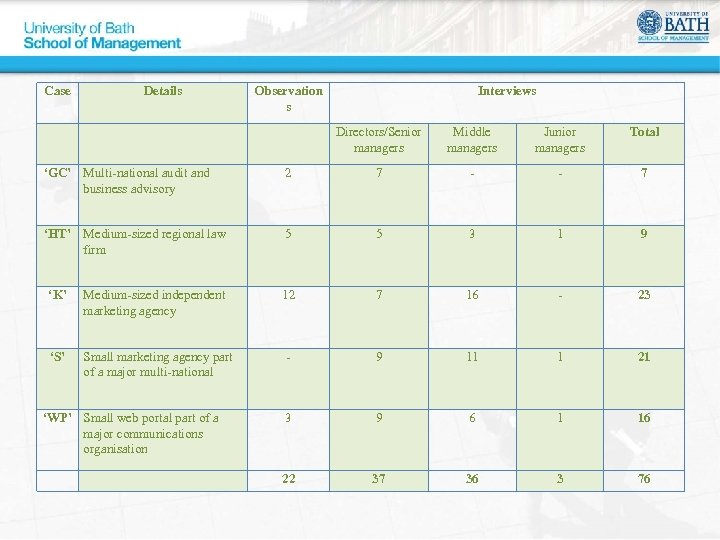
Case Details Observation s Directors/Senior managers Middle managers Junior managers Total ‘GC’ Multi-national audit and business advisory 2 7 - - 7 ‘HT’ Medium-sized regional law firm 5 5 3 1 9 12 7 16 - 23 - 9 11 1 21 3 9 6 1 16 22 37 36 3 76 ‘K’ Medium-sized independent marketing agency ‘S’ Small marketing agency part of a major multi-national ‘WP’ Small web portal part of a major communications organisation Interviews
Скачать презентацию The impact of clientrelationships on innovation a cross-boundary
8b7552b80233521b1de6c7c688c80ea6.ppt