


 Скачать презентацию The Hong Kong International Convention for the Safe
b4f8b300de54de8ea8c57bde3eb2c826.ppt
- Количество слайдов: 63
 The Hong Kong International Convention for the Safe and Environmentally Sound Recycling of Ships by Huang Tianbing Marine Environment Division International Maritime Organization EC Workshop on management of ship dismantling and related hazardous waste Bratislava, 16 April 2013 Views expressed in this presentation are those of the author and should not be construed as necessarily reflecting the views of IMO or its Secretariat
 INTRODUCTION TO SHIP RECYCLING The vocabulary Where and by what methods do ships get recycled? Volatility in recycled volumes and price The Hong Kong International Convention for the Safe and Environmentally Sound Recycling of Ships 2
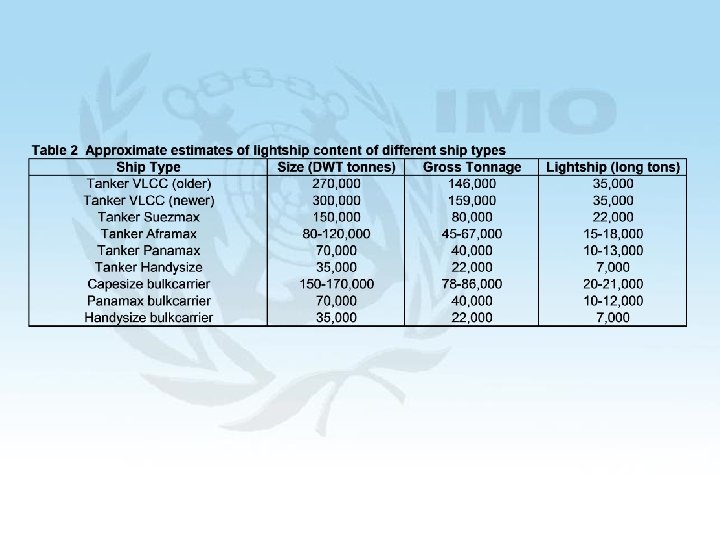
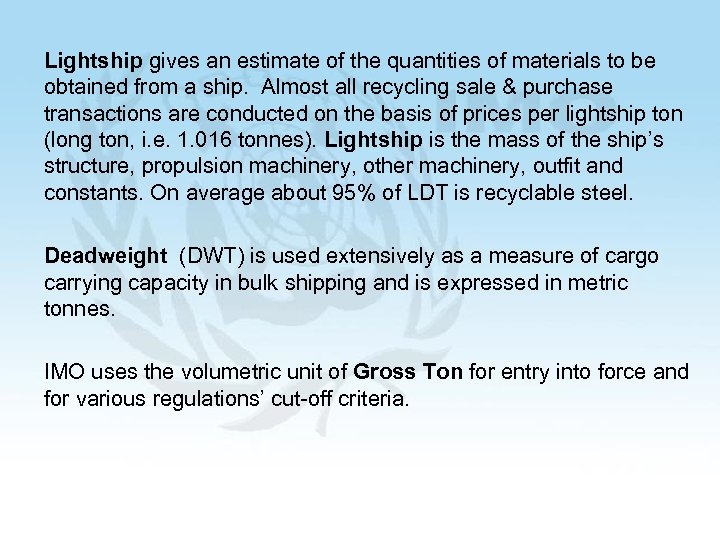 Lightship gives an estimate of the quantities of materials to be obtained from a ship. Almost all recycling sale & purchase transactions are conducted on the basis of prices per lightship ton (long ton, i. e. 1. 016 tonnes). Lightship is the mass of the ship’s structure, propulsion machinery, other machinery, outfit and constants. On average about 95% of LDT is recyclable steel. Deadweight (DWT) is used extensively as a measure of cargo carrying capacity in bulk shipping and is expressed in metric tonnes. IMO uses the volumetric unit of Gross Ton for entry into force and for various regulations’ cut-off criteria. 3
 4
4
 SHIP DISMANTLING used by Basel Convention; by Ministries of Environment; and for the time being by European Commission SHIP BREAKING used by ILO; by Environmental NGOs; and also in Bangladesh DEMOLITION or DEMO used by ship brokers DISPOSALS often used in shipping statistics SCRAPPING traditionally used by shipowners; and by ILO/IMO/BC Joint Working Group SHIP RECYCLING used by IMO and by Ministries of Transport/Shipping 5
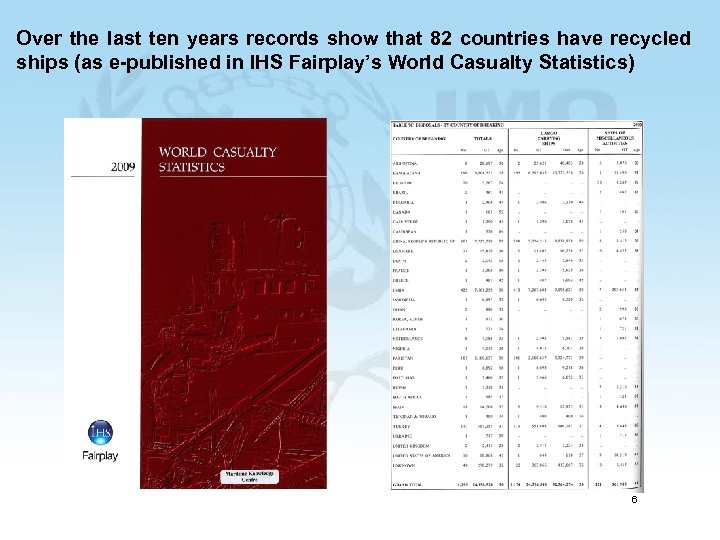 Over the last ten years records show that 82 countries have recycled ships (as e-published in IHS Fairplay’s World Casualty Statistics) 6 6
 In 2011 the world fleet of ships over 500 GT was around 56, 700 ships (while the fleet over 3, 000 GT was around 33, 300 ships). A realistic average life-span of a ship presently is 30 years and thus in future an average of around 1, 900 ships of over 500 GT (or 1, 100 ships over 3, 000 GT) will need to be recycled each year. Just five countries (Bangladesh, China, India, Pakistan and Turkey) recycle around 97% of the world’s tonnage. 7 7
 The methods employed for ship recycling are: Tidal beaching as practiced in Bangladesh, India, and Pakistan, who provide 65% or more of the world’s recycling capacity in GT terms Non-tidal beaching as practiced in Turkey, who provides about 2% of the world’s capacity Alongside as practiced in China, who provides around 31% of the world’s capacity Graving dock or drydock used in very limited cases 8
 A few facts underlying pricing The fact that there is very little ship recycling activity in Europe has often been explained in terms of the inability of Europe to compete with the low labour costs and low compliance costs of South Asia. However, the real reason lies elsewhere: whereas the Asian countries utilize scrap steel in their domestic economies, Europe is an exporter of scrap steel. Therefore, the idea of setting up a ship recycling industry in Europe to break ships – with more expensive European labour – in order to export the scrap to Bangladesh or India is simply not realistic. On the other hand, the five key recycling countries in Asia share a large appetite for scrap steel, and are also helped by lower labour and compliance costs. 9
 Background To The Development Of The Hong Kong International Convention for the Safe and Environmentally Sound Recycling of Ships 10
 Ship recycling contributes to sustainable development because virtually every part of a ship’s hull, machinery, equipment, fittings and even furniture is re-used. The industry also creates economic development for local and regional communities by the direct employment it brings, and by the additional employment and economic activity its associated industries generate, and also by the large scale of trading in second hand equipment and machineries that takes place. There also important benefits to the economies of the recycling countries from the recycling of steel, wood, machinery and equipment, that would otherwise have to be imported. Furthermore, the well being of the recycling industries in Bangladesh, China, India, Pakistan and Turkey is very important to the world’s shipping industry. However, while the principle of ship recycling is a sound one, the working practices and environmental standards in recycling yards often leave much to be desired.
 Pressure demanding a safer and a more environmentally friendly ship recycling industry has been building up over the past 15 or so years, and has found outlets amongst governments and Administrations, who have looked for ways to regulate ship recycling with international common standards. Also, these pressures have led an increasing number of shipping companies to adopt policies for the green recycling of their ships. The first attempt to address the problem was to try to implement an existing international treaty, “The Basel Convention on the Control of Transboundary Movements of Hazardous Wastes and their Disposal”, which was adopted in 1989, which entered in force in 1992, and which currently has 178 Parties. The purpose of the Basel Convention is to protect the human health and the environment against adverse effects that result from the generation and management of hazardous and other wastes. In particular, the Basel Convention focuses on regulating the international (transboundary) movement of hazardous wastes, in its effort to protect developing countries from importing hazardous wastes that they are unable to manage in an environmentally sound manner.
 In a further effort to strengthen the protection to developing countries, in 1994, Parties to the Basel Convention adopted the “ban amendment”, banning the export of hazardous waste from OECD to non-OECD countries. The ban amendment is still not in force internationally. It is however enforced unilaterally by the European Union, through the European Waste Shipment Regulation. At the end of the 1990 s Parties to the Basel Convention considered its implementation for the regulation of the dismantling of end-of-life ships. Towards this end, the Basel Convention also developed and approved in December 2002 voluntary guidelines for the ship recycling industry, entitled: Technical Guidelines for the Environmentally Sound Management of the Full and Partial Dismantling of Ships.
 The Basel Convention however had not been developed for regulating endof-life ships and therefore it does not take into account the governance structure of international shipping. Quite early it became evident that there were practical and legal difficulties in enforcing the Basel Convention to ships, especially in the European Union where the Convention is implemented along with the ban amendment forbidding the export of hazardous wastes (and arguably the export of ships) to non-OECD countries. Consequently, the Conference of the Parties to the Basel Convention, in October 2004, decided to invite IMO to establish in its regulations mandatory requirements that would ensure an equivalent level of control as that established under the Basel Convention, and also ensure the environmentally sound management of ship dismantling (decision VII/26). Thereafter, IMO’s Assembly 24 adopted on 1 December 2005 its resolution A. 981(24), instructing its Marine Environment Protection Committee to develop a “new legally binding instrument on ship recycling”. 14
 Resolution A. 981(24) stated that the new instrument will regulate: 1 the design, construction, operation and preparation of ships so as to facilitate safe and environmentally sound recycling, without compromising their safety and operational efficiency; 2 the operation of ship recycling facilities in a safe and environmentally sound manner; and 3 the establishment of an appropriate enforcement mechanism for ship recycling (certification / reporting requirements). 15
 Following the instruction of Assembly 24, MEPC 54 (20 -24 March 2006) convened a Working group on Ship Recycling which developed the draft text which had been submitted by Norway. Thereafter numerous meetings were arranged for the further development of the draft text of the convention: Correspondence group reporting to MEPC 55; MEPC 55 & Working group (October 2006); 2 nd Intersessional Working group (May 2007); Correspondence group reporting to MEPC 56; MEPC 56 & Working group (July 2007); 3 rd Intersessional Working group (January 2008); Correspondence group reporting to MEPC 57; MEPC 57 & Working group (March 2008); 4 th Intersessional Working group (September 2008); Correspondence group reporting to MEPC 58; MEPC 58 & Drafting group (October 2008); and Diplomatic Conference (May 2009) 3 years and 2 months from the first submission of draft text up to 16 the adoption of the Convention is probably a record.
 The diplomatic conference that was held in Hong Kong, was attended by representatives of 63 States, two Associate Members, the Secretariats of the Basel Convention and of ILO, and other stakeholders. Having finalized the text of the convention, the representatives of the sovereign Governments attending unanimously adopted the “Hong Kong International Convention for the Safe and Environmentally Sound Recycling of Ships, 2009”, also known as “the Hong Kong Convention” (here HKC). 17
 Note that the three UN bodies that share competences on matters relating to ship recycling, i. e. Basel Convention, ILO and IMO, have cooperated since 2005 by establishing the Joint ILO/IMO/BC Working Group on Ship Scrapping. The aim of the JWG has been to avoid duplication of work and overlapping of roles, responsibilities and competencies, and also to identify any further needs. The JWG was not a forum for a joint development of the Convention on ship recycling, but instead, the Secretariats of the Basel Convention and ILO have contributed directly at IMO to the development of the Hong Kong Convention. The Joint Working Group has undertaken a comparison of the technical guidelines of the three organizations and most importantly has encouraged collaboration in technical cooperation activities through an arrangement known as the “Global Programme for Sustainable Ship Recycling”. 18
 It needs to be recognized that the requirements of the Basel Convention for the environmentally sound management of hazardous waste are consistent with and complementary to the requirements of the HKC. One important area of application of the Basel Convention to ship recycling activities will be in the management of waste streams outside the gates of ship recycling facilities, which is an area that the HKC has only generic requirements. In a similar manner, the health and safety requirements of applicable ILO conventions will not be superseded by the requirements of the HKC but will remain complementary to the new convention. 19
 For interest, it should be noted that in May 2010, Parties to Basel Convention commenced work to determine whether the Hong Kong Convention, as adopted, provides an equivalent level of control and enforcement as that provided by Basel Convention. In October 2011 COP 10 of the Basel Convention met in Colombia decided: 1. recognized that some Parties believe that the two conventions are equivalent, while some Parties do not believe this to be the case; 2. decided to encourage Parties to ratify the Hong Kong Convention to enable its early entry into force; 3. acknowledged that the Basel Convention should continue to assist countries to apply the Basel Convention as it relates to ships. 20 20
 It is plainly wrong to say that Basel Convention and IMO are engaged in a struggle as to who will regulate ship recycling. This is plainly wrong, as the Member States of IMO (170 +3) and the Parties to the Basel Convention (179) are mostly the same countries, often represented by different ministries. Also, some States, who actively seek improvements to the way ships are recycled, are funding development projects that involve both Secretariats. Furthermore, the two Secretariats have collaborated closely on this subject for some years. It is very important to understand that through the Hong Kong Convention, IMO will regulate relevant safety and environmental issues on ships and on ship recycling facilities. The jurisdiction of the Hong Kong Convention however does not fully extent to waste disposal facilities, which usually are located away from the recycling facilities and which are managed by other entities. 21 21
 On the other hand, Basel Convention is the ideal instrument to regulate the disposal of hazardous wastes upstream from the recycling facilities. It should therefore follow, to all reasonable people, that the two Conventions will have to work in parallel, to provide a complete regulatory regime. In a similar manner, the health and safety requirements of applicable ILO conventions will not be superseded by the requirements of the HKC but will remain complementary to the new convention. 22
 The structure of the Hong Kong Convention
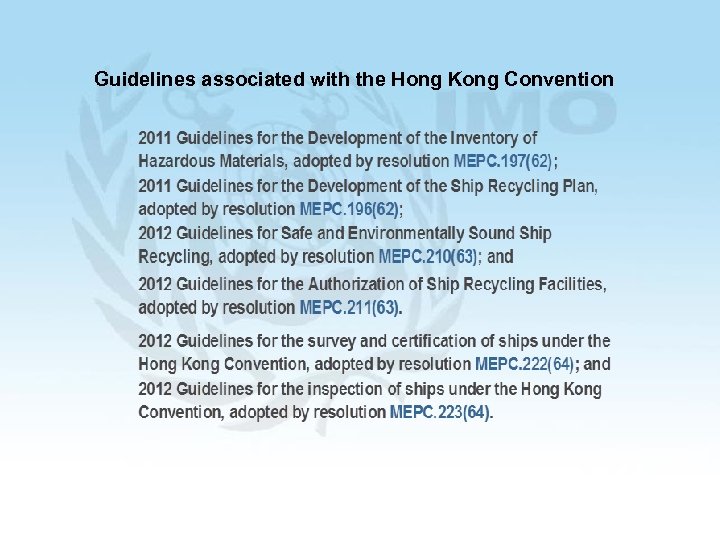
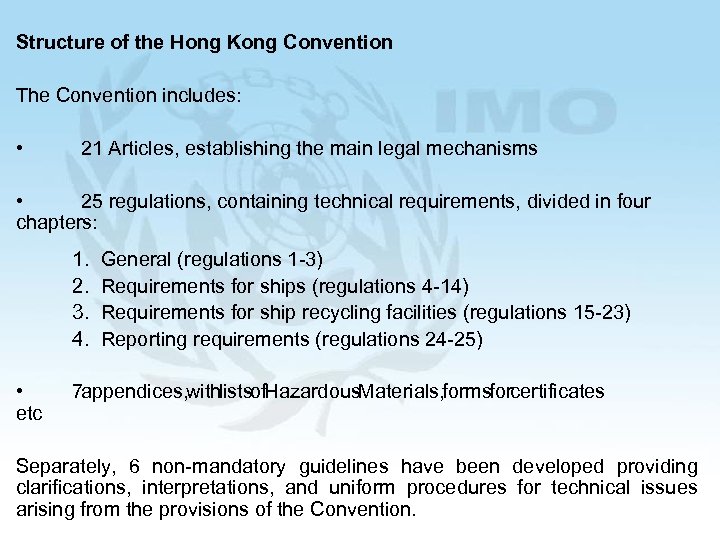 Structure of the Hong Kong Convention The Convention includes: • 21 Articles, establishing the main legal mechanisms • 25 regulations, containing technical requirements, divided in four chapters: 1. 2. 3. 4. • etc General (regulations 1 -3) Requirements for ships (regulations 4 -14) Requirements for ship recycling facilities (regulations 15 -23) Reporting requirements (regulations 24 -25) 7 appendices, lists Hazardous with of Materials, forms certificates for Separately, 6 non-mandatory guidelines have been developed providing clarifications, interpretations, and uniform procedures for technical issues arising from the provisions of the Convention. 24
 Guidelines associated with the Hong Kong Convention
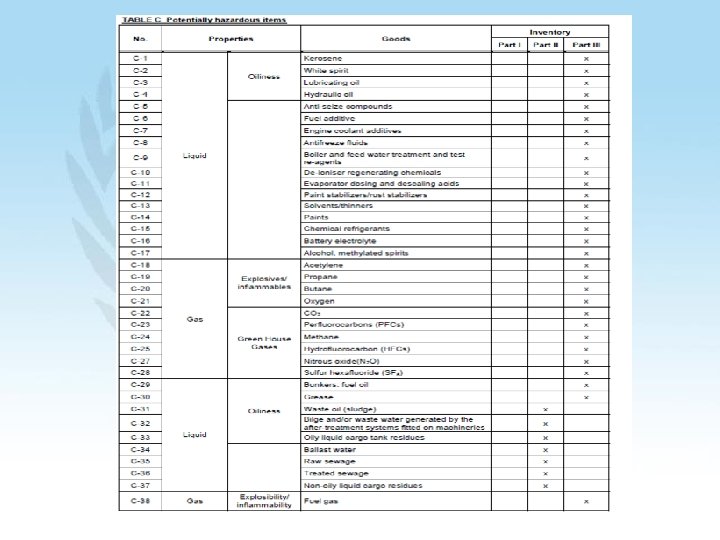
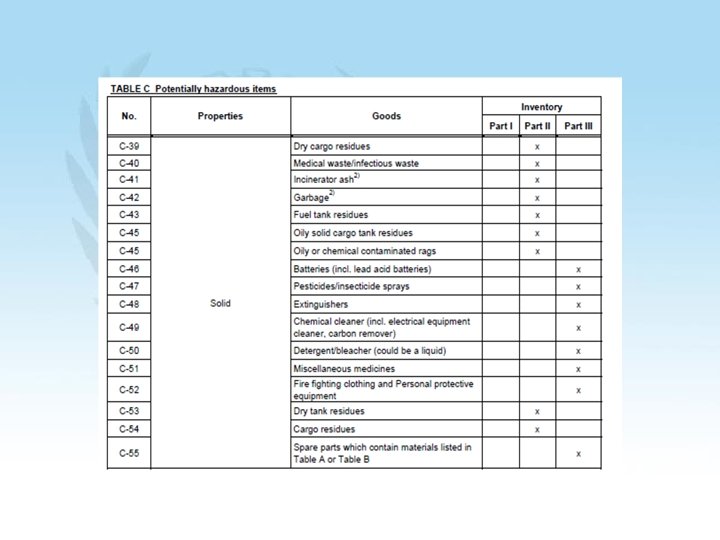
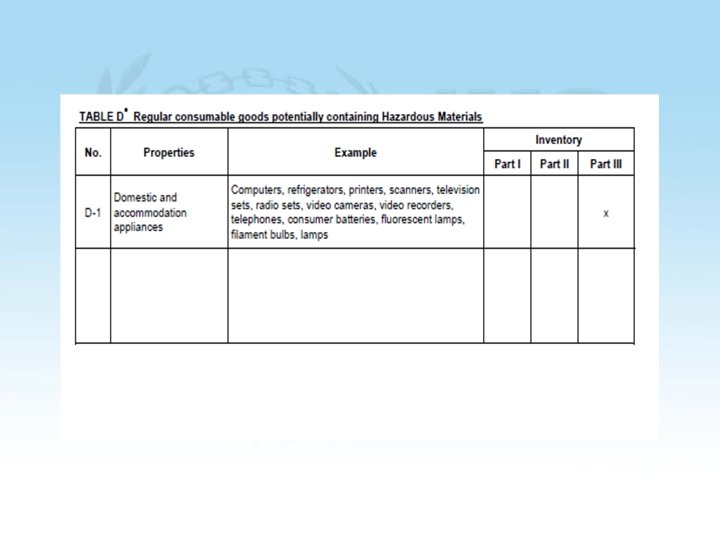
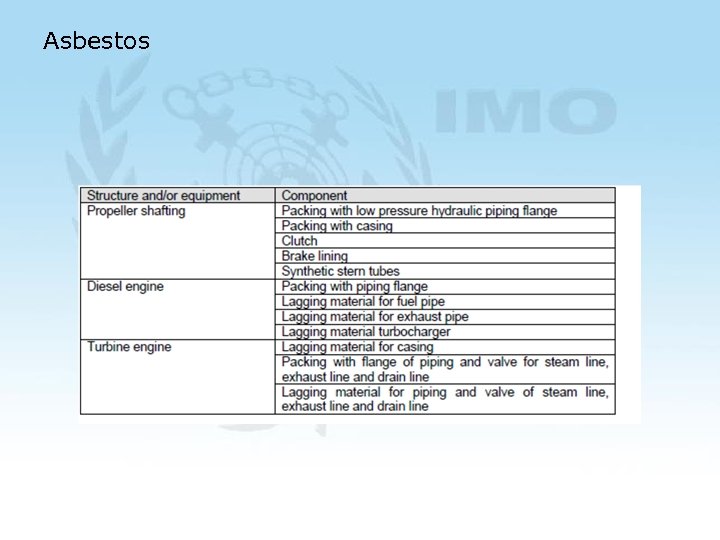
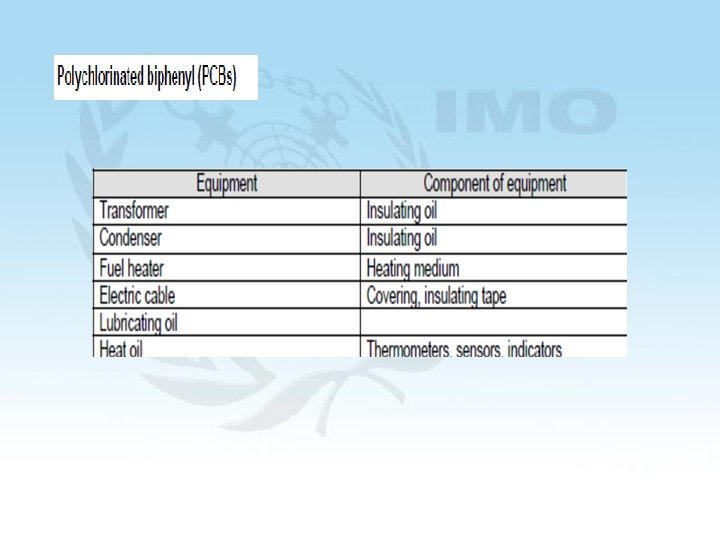
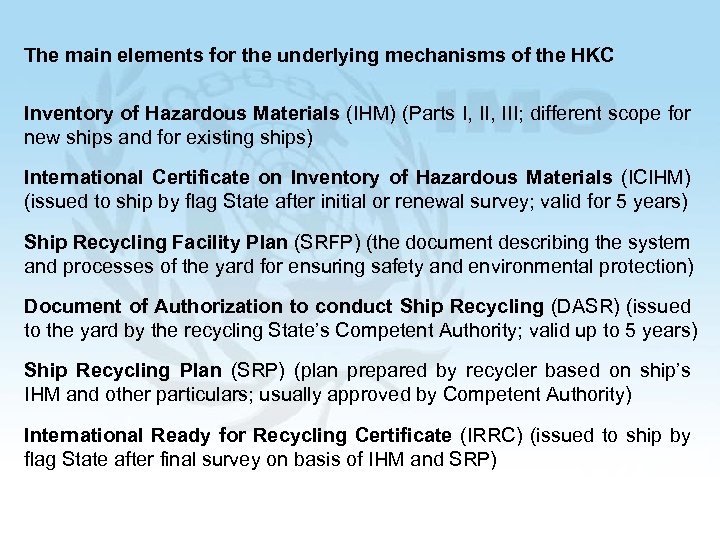 The main elements for the underlying mechanisms of the HKC Inventory of Hazardous Materials (IHM) (Parts I, III; different scope for new ships and for existing ships) International Certificate on Inventory of Hazardous Materials (ICIHM) (issued to ship by flag State after initial or renewal survey; valid for 5 years) Ship Recycling Facility Plan (SRFP) (the document describing the system and processes of the yard for ensuring safety and environmental protection) Document of Authorization to conduct Ship Recycling (DASR) (issued to the yard by the recycling State’s Competent Authority; valid up to 5 years) Ship Recycling Plan (SRP) (plan prepared by recycler based on ship’s IHM and other particulars; usually approved by Competent Authority) International Ready for Recycling Certificate (IRRC) (issued to ship by flag State after final survey on basis of IHM and SRP)
 28
28
 29
29
 30
30
 31
31
 Asbestos 32
 33
33
 34
34
 35
35
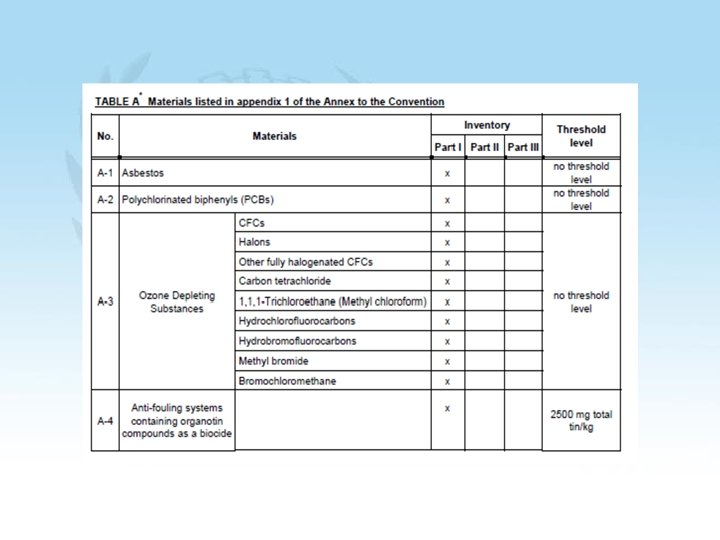
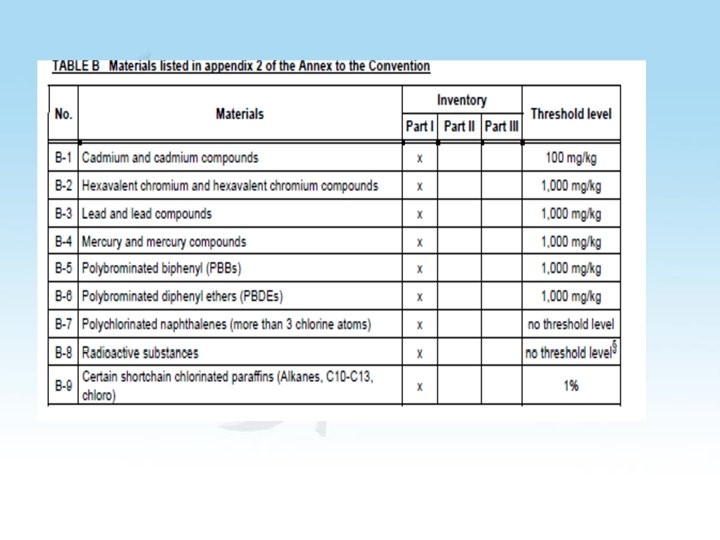
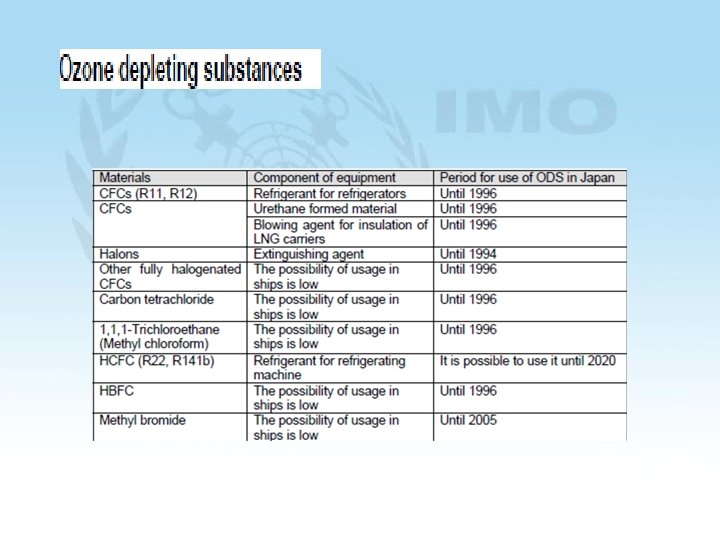
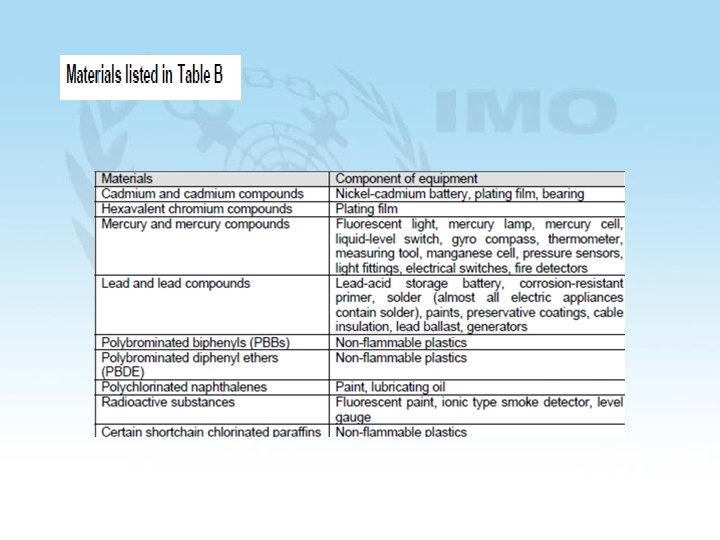
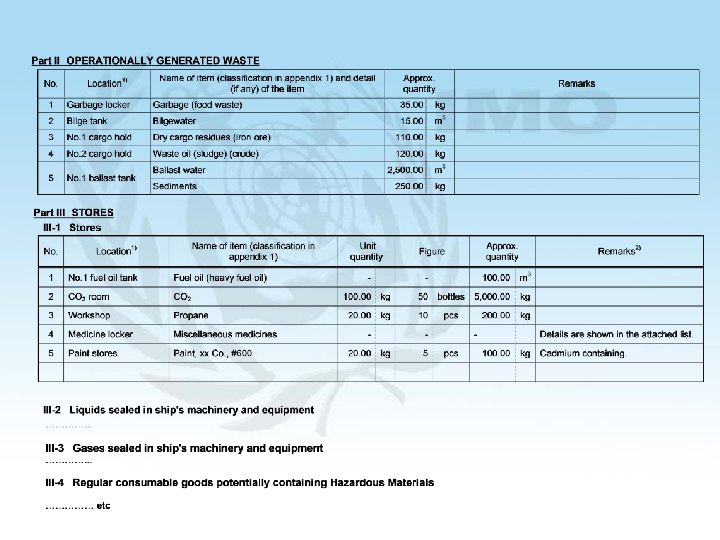
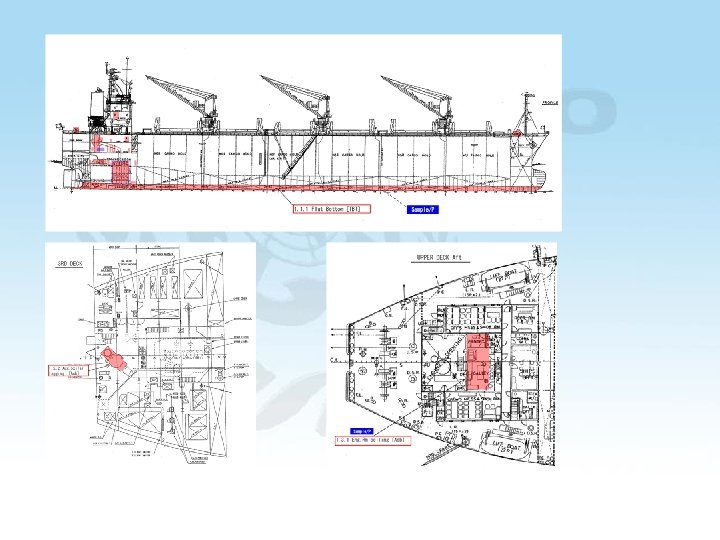
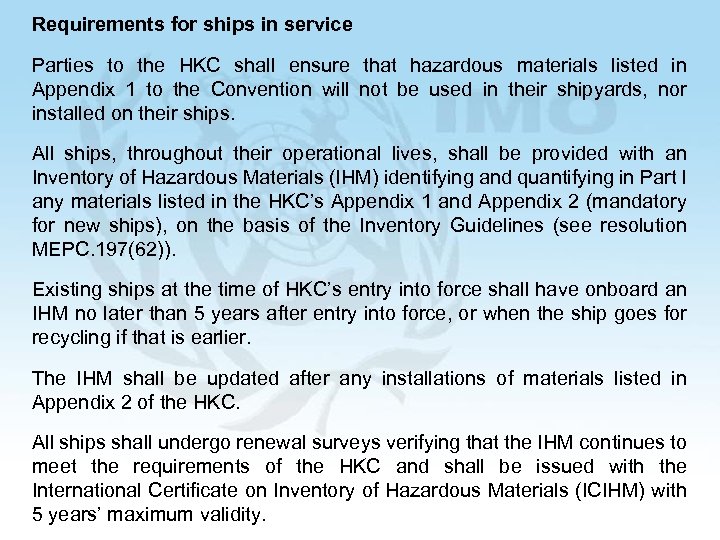 Requirements for ships in service Parties to the HKC shall ensure that hazardous materials listed in Appendix 1 to the Convention will not be used in their shipyards, nor installed on their ships. All ships, throughout their operational lives, shall be provided with an Inventory of Hazardous Materials (IHM) identifying and quantifying in Part I any materials listed in the HKC’s Appendix 1 and Appendix 2 (mandatory for new ships), on the basis of the Inventory Guidelines (see resolution MEPC. 197(62)). Existing ships at the time of HKC’s entry into force shall have onboard an IHM no later than 5 years after entry into force, or when the ship goes for recycling if that is earlier. The IHM shall be updated after any installations of materials listed in Appendix 2 of the HKC. All ships shall undergo renewal surveys verifying that the IHM continues to meet the requirements of the HKC and shall be issued with the International Certificate on Inventory of Hazardous Materials (ICIHM) with 5 years’ maximum validity.
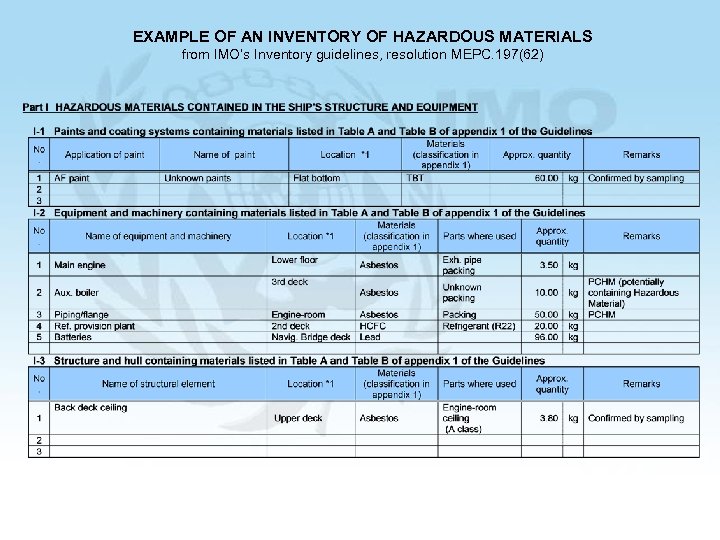 EXAMPLE OF AN INVENTORY OF HAZARDOUS MATERIALS from IMO’s Inventory guidelines, resolution MEPC. 197(62)
 38
38
 39
39
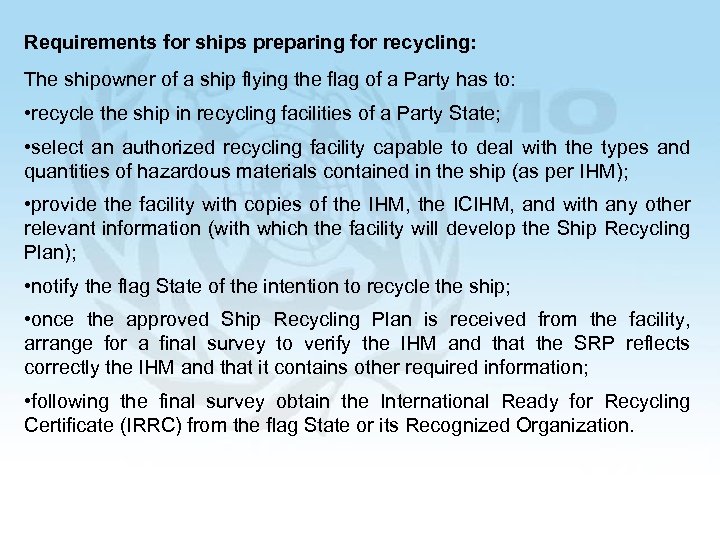 Requirements for ships preparing for recycling: The shipowner of a ship flying the flag of a Party has to: • recycle the ship in recycling facilities of a Party State; • select an authorized recycling facility capable to deal with the types and quantities of hazardous materials contained in the ship (as per IHM); • provide the facility with copies of the IHM, the ICIHM, and with any other relevant information (with which the facility will develop the Ship Recycling Plan); • notify the flag State of the intention to recycle the ship; • once the approved Ship Recycling Plan is received from the facility, arrange for a final survey to verify the IHM and that the SRP reflects correctly the IHM and that it contains other required information; • following the final survey obtain the International Ready for Recycling Certificate (IRRC) from the flag State or its Recognized Organization.
 Requirements for recycling States • establish legislation implementing the HKC; • designate one or more Competent Authorities (CA) and a single contact point to be used by interested entities; • establish a mechanism for ensuring that SRF comply with the HKC; and • establish a mechanism for authorizing SRF. (This authorization also provides information on any limitations imposed on the SRF as condition for its authorization. The SRF may be limited by way of the types or sizes of ships they recycle and by way of the categories and quantities of hazardous materials they can safely process. )
 Requirements for Ship Recycling Facilities (general) • SRF shall develop and implement a Ship Recycling Facility Plan (SRFP) that covers: worker safety and training; protection of human health and the environment; roles and responsibilities of personnel; emergency preparedness and response; and systems for monitoring, reporting and record-keeping; • SRF shall be authorized by the Competent Authority of their country. The authorization shall have 5 years’ maximum validity; and • SRF shall only accept ships that comply with the Convention, or which meet its requirements. Furthermore SRF shall only accept ships they are authorized to recycle.
 Requirements for Ship Recycling Facilities (ship specific) • a ship-specific Ship Recycling Plan (SRP) shall be developed according to the SRP Guidelines (see resolution MEPC. 196(62)) taking into the account information provided by the shipowner (i. e. IHM, ICIHM, etc); • a SRF preparing to receive a ship shall notify its CA (the notification shall include details of the ship, its owner and the IHM and the draft SRP); • the SRP shall be approved (tacitly or explicitly) by the CA and then shall be made available to the ship for its final survey; • when the ship has acquired the IRRC, the SRF shall report to its CA the planned start of recycling (the report shall include a copy of the IRRC; recycling of the ship shall not start prior to the submission of this report. )
 2012 Guidelines for safe and environmentally sound ship recycling • Environmental monitoring • Management of Hazardous Materials – Potentially containing Hazardous Materials – Additional sampling and analysis – Identification, marking and labelling and potential onboard locations – Removal, handling and remediation – Storage and labelling after removal – Treatment, transportation and disposal 44
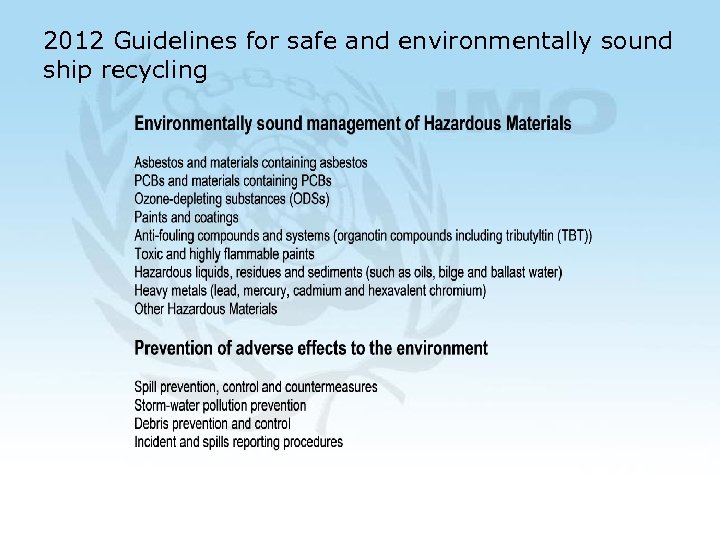 2012 Guidelines for safe and environmentally sound ship recycling 45
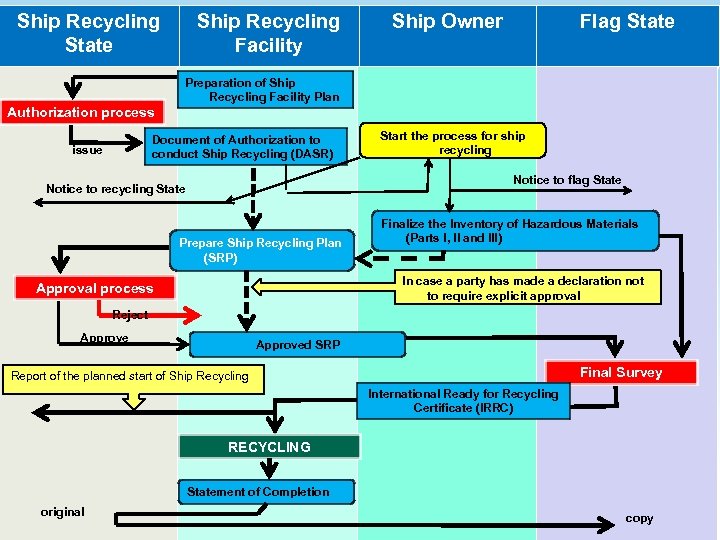 Ship Recycling State Ship Recycling Facility Ship Owner Flag State Preparation of Ship Recycling Facility Plan Authorization process Document of Authorization to conduct Ship Recycling (DASR) issue Start the process for ship recycling Notice to flag State Notice to recycling State Prepare Ship Recycling Plan (SRP) Finalize the Inventory of Hazardous Materials (Parts I, II and III) In case a party has made a declaration not to require explicit approval Approval process Reject Approved SRP Final Survey Report of the planned start of Ship Recycling International Ready for Recycling Certificate (IRRC) RECYCLING Statement of Completion 46 original copy
 How will the Hong Kong Convention enter into force 47
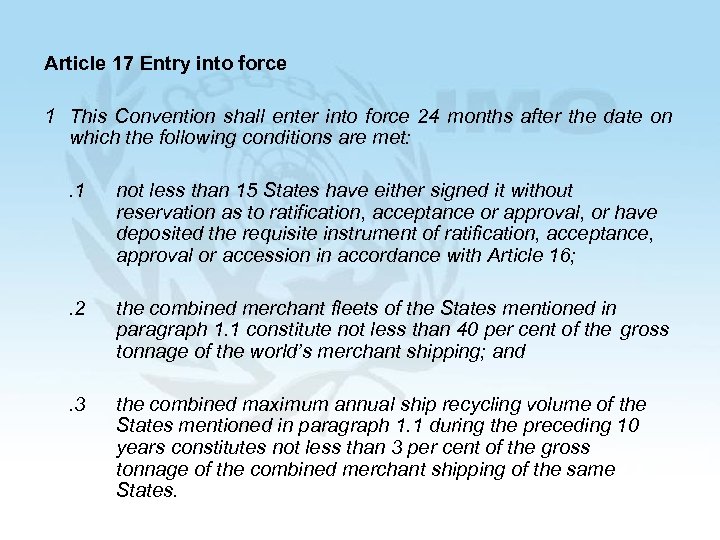 Article 17 Entry into force 1 This Convention shall enter into force 24 months after the date on which the following conditions are met: . 1 . 2 the combined merchant fleets of the States mentioned in paragraph 1. 1 constitute not less than 40 per cent of the gross tonnage of the world’s merchant shipping; and . 3 48 not less than 15 States have either signed it without reservation as to ratification, acceptance or approval, or have deposited the requisite instrument of ratification, acceptance, approval or accession in accordance with Article 16; the combined maximum annual ship recycling volume of the States mentioned in paragraph 1. 1 during the preceding 10 years constitutes not less than 3 per cent of the gross tonnage of the combined merchant shipping of the same States.
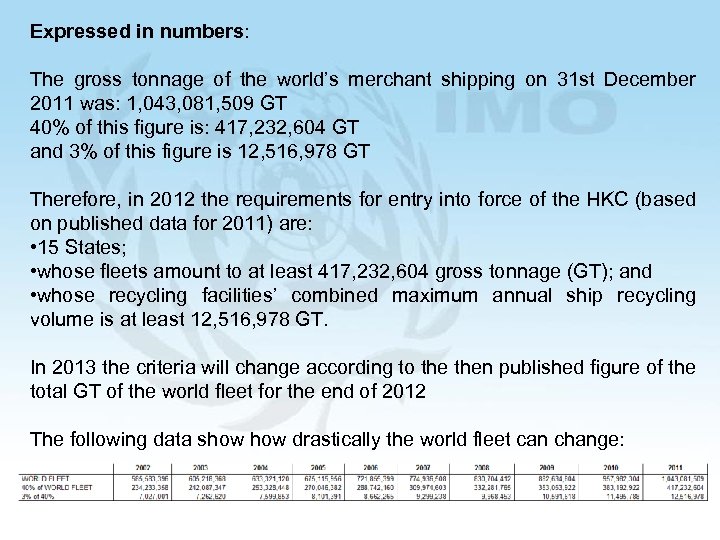 Expressed in numbers: The gross tonnage of the world’s merchant shipping on 31 st December 2011 was: 1, 043, 081, 509 GT 40% of this figure is: 417, 232, 604 GT and 3% of this figure is 12, 516, 978 GT Therefore, in 2012 the requirements for entry into force of the HKC (based on published data for 2011) are: • 15 States; • whose fleets amount to at least 417, 232, 604 gross tonnage (GT); and • whose recycling facilities’ combined maximum annual ship recycling volume is at least 12, 516, 978 GT. In 2013 the criteria will change according to then published figure of the total GT of the world fleet for the end of 2012 The following data show drastically the world fleet can change:
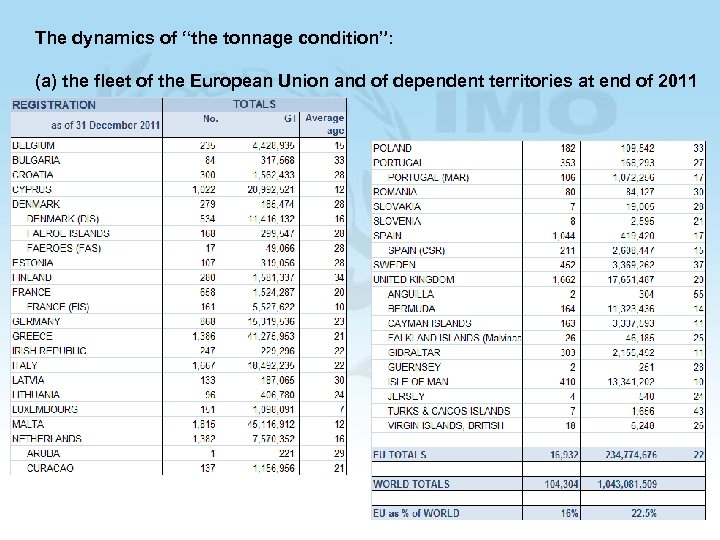 The dynamics of “the tonnage condition”: (a) the fleet of the European Union and of dependent territories at end of 2011 50
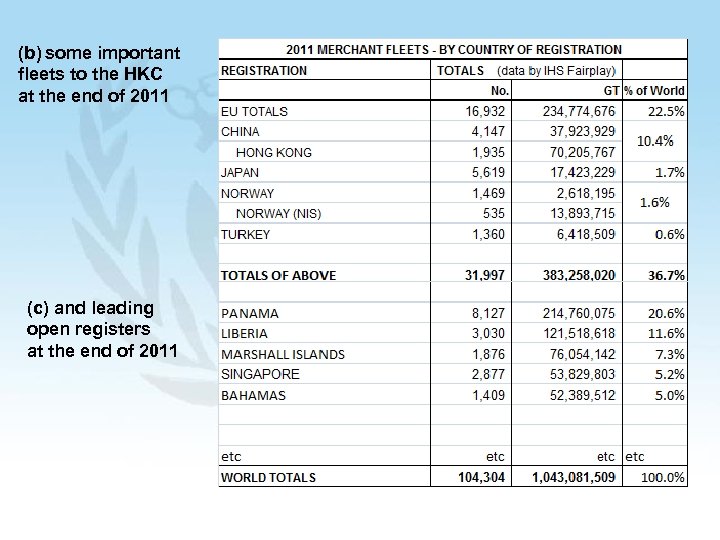 (b) some important fleets to the HKC at the end of 2011 (c) and leading open registers at the end of 2011
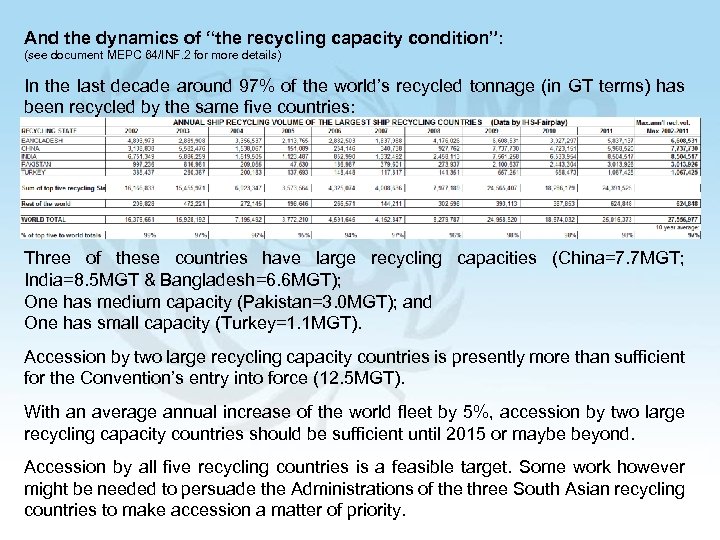 And the dynamics of “the recycling capacity condition”: (see document MEPC 64/INF. 2 for more details) In the last decade around 97% of the world’s recycled tonnage (in GT terms) has been recycled by the same five countries: Three of these countries have large recycling capacities (China=7. 7 MGT; India=8. 5 MGT & Bangladesh=6. 6 MGT); One has medium capacity (Pakistan=3. 0 MGT); and One has small capacity (Turkey=1. 1 MGT). Accession by two large recycling capacity countries is presently more than sufficient for the Convention’s entry into force (12. 5 MGT). With an average annual increase of the world fleet by 5%, accession by two large recycling capacity countries should be sufficient until 2015 or maybe beyond. Accession by all five recycling countries is a feasible target. Some work however might be needed to persuade the Administrations of the three South Asian recycling countries to make accession a matter of priority. 52
 The interim period up to the Convention’s entry into force 53
 The Hong Kong Convention was adopted in May 2009. Now, governments are either working for accession to the Convention, or are waiting to see what other governments will do. The steps for accession to an international convention in most government systems are quite complex. Typically they involve: qformal translation by the Ministry of Justice; qformulation of national regulations; qapproval by the Ministry of Justice of the proposed text of regulations; qcirculation to any Ministries who may have an interest in the subject and consideration of any comments made by them; qapproval by an appropriate parliamentary committee; qsignature by the Minister; qsignature by the Prime Minister; qgovernment decision; qformal approval by the Parliament; and qsubmission to IMO through the Ministry of Foreign Affairs. 54
 In the case of ship recycling there is usually a number of stakeholder Ministries involved and this prolongs the consultation process (typically, Shipping or Transport; Environment; Labour; Industries – as is the case in Bangladesh; Steel – as is the case in India; and possibly Commerce). Therefore it is not surprising that two and a half years after its adoption, the Convention has yet to receive the first accession or ratification. We understand however that a number of key States – in terms of their ship recycling capacity or in terms of the tonnage registered under their flag – are busy working towards accession or ratification of the Hong Kong Convention. 55
 The entry into force conditions of the Hong Kong Convention and the administrative processes for accession/ratification therefore suggest that it may take a few more years until the Convention is in full force. The period from now and until the entry into force of the Convention is known as “the interim period”. During the interim period IMO is developing a set of six guidelines whose purpose is to facilitate the global and uniform implementation of the Convention. Four of these guidelines have been finalized and adopted and the remaining two guidelines are expected to be adopted by MEPC 65 in May 2013. Furthermore, in the interim period the IMO Secretariat is active in promoting the Hong Kong Convention to recycling and to flag States, and to the recycling and the shipping industries. 56
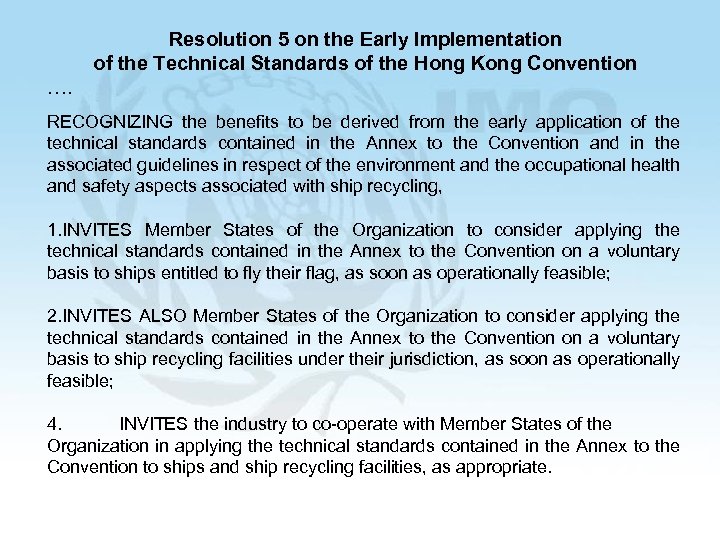 Resolution 5 on the Early Implementation of the Technical Standards of the Hong Kong Convention …. RECOGNIZING the benefits to be derived from the early application of the technical standards contained in the Annex to the Convention and in the associated guidelines in respect of the environment and the occupational health and safety aspects associated with ship recycling, 1. INVITES Member States of the Organization to consider applying the technical standards contained in the Annex to the Convention on a voluntary basis to ships entitled to fly their flag, as soon as operationally feasible; 2. INVITES ALSO Member States of the Organization to consider applying the technical standards contained in the Annex to the Convention on a voluntary basis to ship recycling facilities under their jurisdiction, as soon as operationally feasible; 4. INVITES the industry to co-operate with Member States of the Organization in applying the technical standards contained in the Annex to the Convention to ships and ship recycling facilities, as appropriate. 57
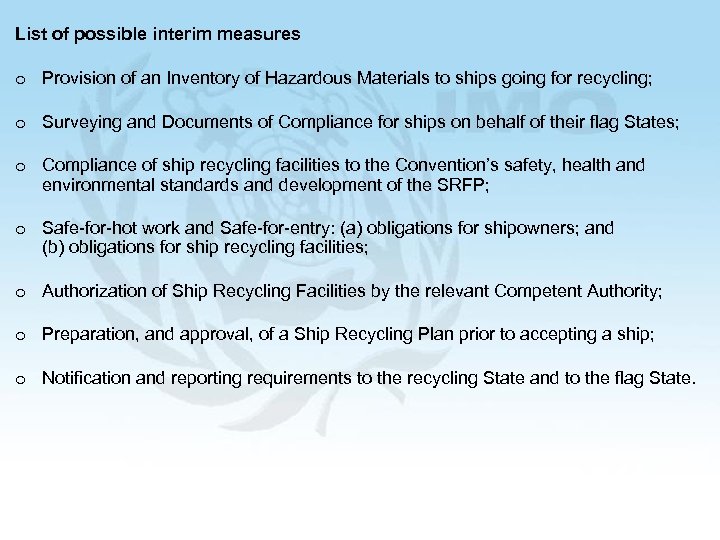 List of possible interim measures o Provision of an Inventory of Hazardous Materials to ships going for recycling; o Surveying and Documents of Compliance for ships on behalf of their flag States; o Compliance of ship recycling facilities to the Convention’s safety, health and environmental standards and development of the SRFP; o Safe-for-hot work and Safe-for-entry: (a) obligations for shipowners; and (b) obligations for ship recycling facilities; o Authorization of Ship Recycling Facilities by the relevant Competent Authority; o Preparation, and approval, of a Ship Recycling Plan prior to accepting a ship; o Notification and reporting requirements to the recycling State and to the flag State. 58
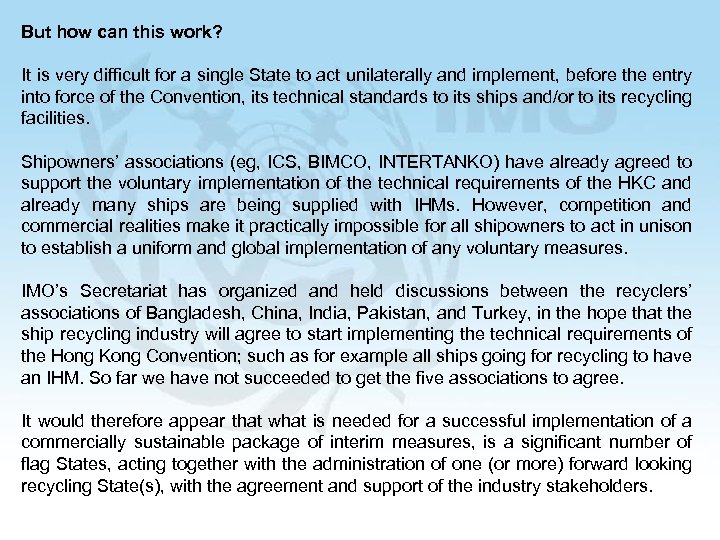 But how can this work? It is very difficult for a single State to act unilaterally and implement, before the entry into force of the Convention, its technical standards to its ships and/or to its recycling facilities. Shipowners’ associations (eg, ICS, BIMCO, INTERTANKO) have already agreed to support the voluntary implementation of the technical requirements of the HKC and already many ships are being supplied with IHMs. However, competition and commercial realities make it practically impossible for all shipowners to act in unison to establish a uniform and global implementation of any voluntary measures. IMO’s Secretariat has organized and held discussions between the recyclers’ associations of Bangladesh, China, India, Pakistan, and Turkey, in the hope that the ship recycling industry will agree to start implementing the technical requirements of the Hong Kong Convention; such as for example all ships going for recycling to have an IHM. So far we have not succeeded to get the five associations to agree. It would therefore appear that what is needed for a successful implementation of a commercially sustainable package of interim measures, is a significant number of flag States, acting together with the administration of one (or more) forward looking recycling State(s), with the agreement and support of the industry stakeholders. 59
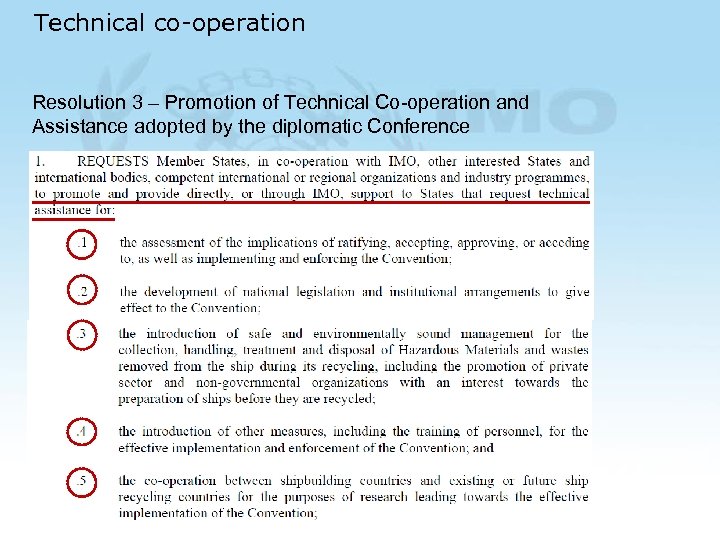 Technical co-operation Resolution 3 – Promotion of Technical Co-operation and Assistance adopted by the diplomatic Conference 60
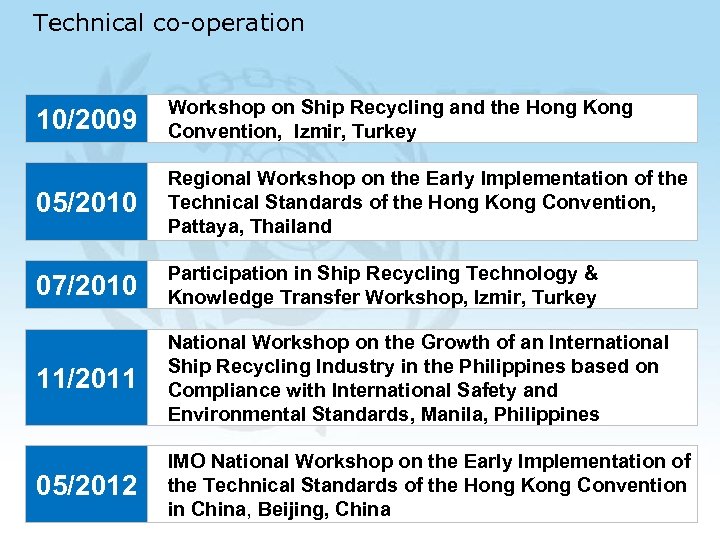 Technical co-operation 10/2009 Workshop on Ship Recycling and the Hong Kong Convention, Izmir, Turkey 05/2010 Regional Workshop on the Early Implementation of the Technical Standards of the Hong Kong Convention, Pattaya, Thailand 07/2010 Participation in Ship Recycling Technology & Knowledge Transfer Workshop, Izmir, Turkey 11/2011 National Workshop on the Growth of an International Ship Recycling Industry in the Philippines based on Compliance with International Safety and Environmental Standards, Manila, Philippines 05/2012 IMO National Workshop on the Early Implementation of the Technical Standards of the Hong Kong Convention in China, Beijing, China 61
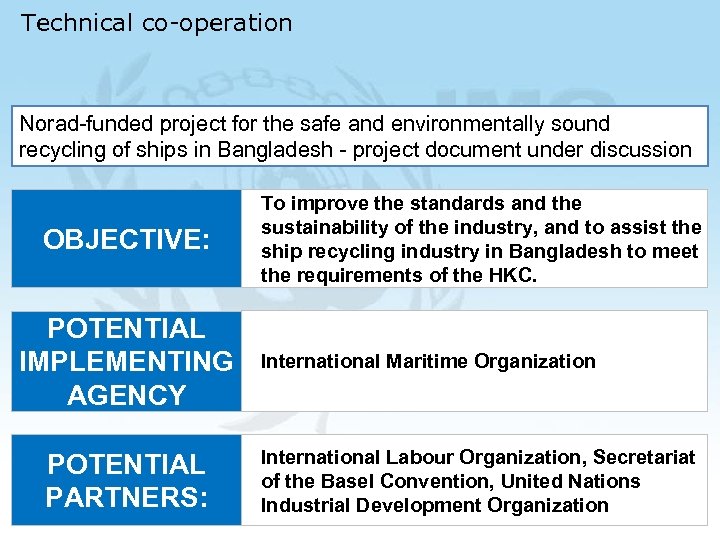 Technical co-operation Norad-funded project for the safe and environmentally sound recycling of ships in Bangladesh - project document under discussion OBJECTIVE: POTENTIAL IMPLEMENTING AGENCY 62 POTENTIAL PARTNERS: To improve the standards and the sustainability of the industry, and to assist the ship recycling industry in Bangladesh to meet the requirements of the HKC. International Maritime Organization International Labour Organization, Secretariat of the Basel Convention, United Nations Industrial Development Organization
 thank you for your attention The views expressed in this presentation are those of its author 63