 Скачать презентацию The History of Medicine In September
1c97f33df42355e55a9927c3613eee15.ppt
- Количество слайдов: 50



The History of Medicine
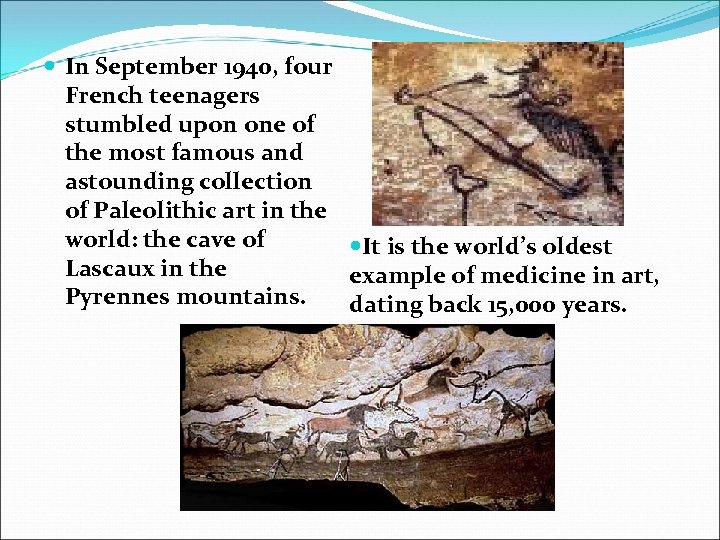
In September 1940, four French teenagers stumbled upon one of the most famous and astounding collection of Paleolithic art in the world: the cave of It is the world’s oldest Lascaux in the example of medicine in art, Pyrennes mountains. dating back 15, 000 years.
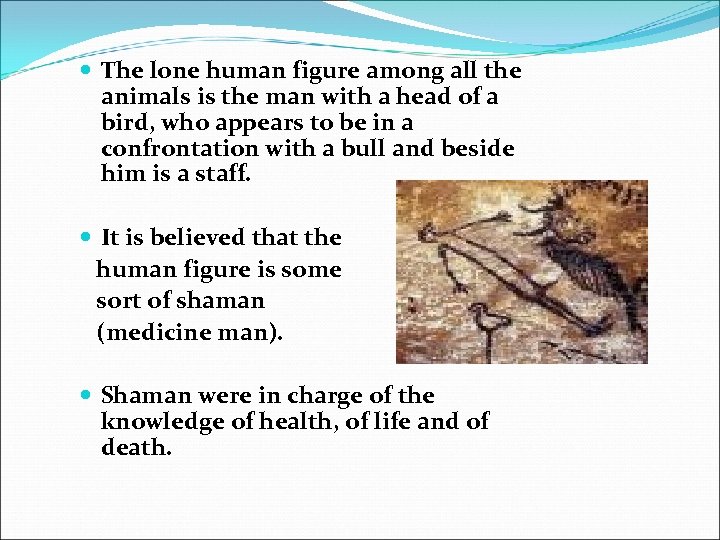
The lone human figure among all the animals is the man with a head of a bird, who appears to be in a confrontation with a bull and beside him is a staff. It is believed that the human figure is some sort of shaman (medicine man). Shaman were in charge of the knowledge of health, of life and of death.
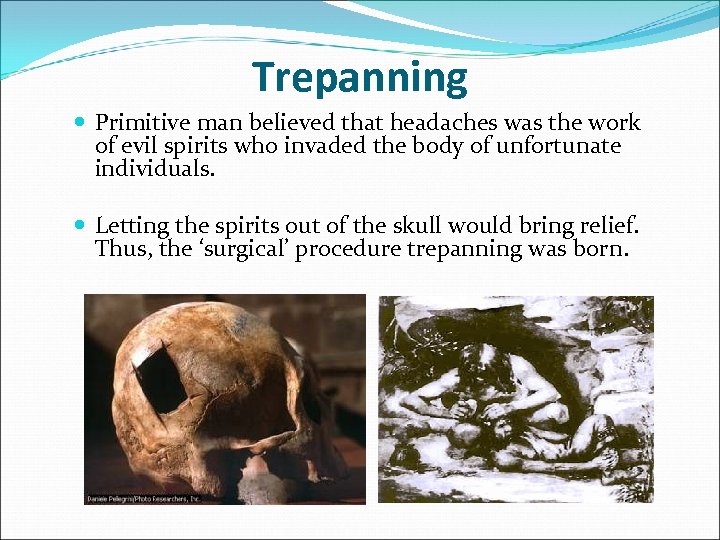
Trepanning Primitive man believed that headaches was the work of evil spirits who invaded the body of unfortunate individuals. Letting the spirits out of the skull would bring relief. Thus, the ‘surgical’ procedure trepanning was born.
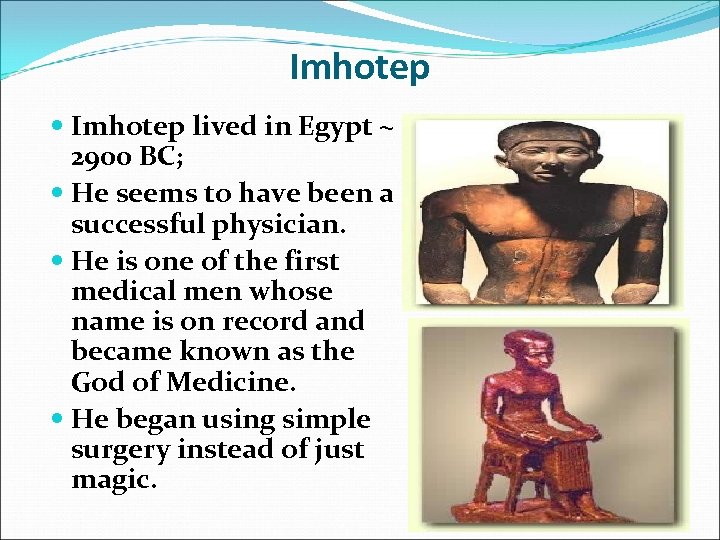
Imhotep lived in Egypt ~ 2900 BC; He seems to have been a successful physician. He is one of the first medical men whose name is on record and became known as the God of Medicine. He began using simple surgery instead of just magic.
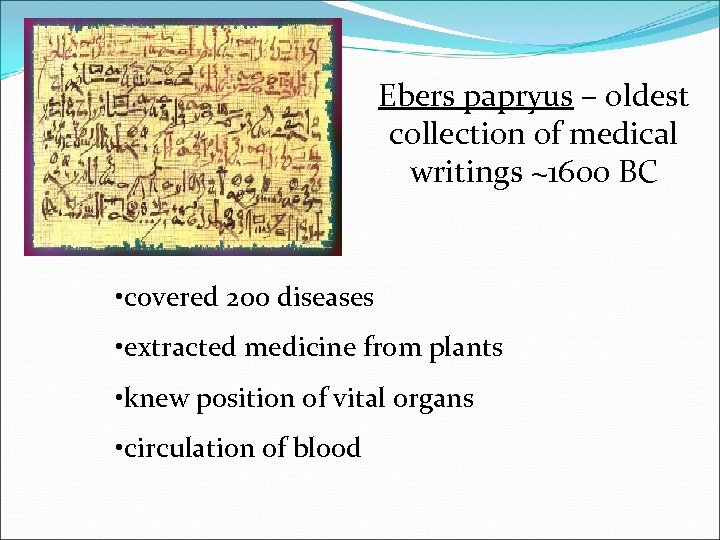
Ebers papryus – oldest collection of medical writings ~1600 BC • covered 200 diseases • extracted medicine from plants • knew position of vital organs • circulation of blood
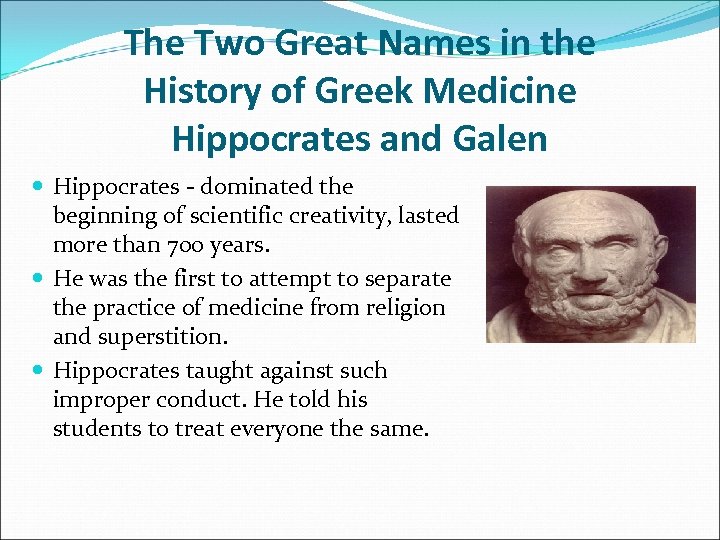
The Two Great Names in the History of Greek Medicine Hippocrates and Galen Hippocrates - dominated the beginning of scientific creativity, lasted more than 700 years. He was the first to attempt to separate the practice of medicine from religion and superstition. Hippocrates taught against such improper conduct. He told his students to treat everyone the same.
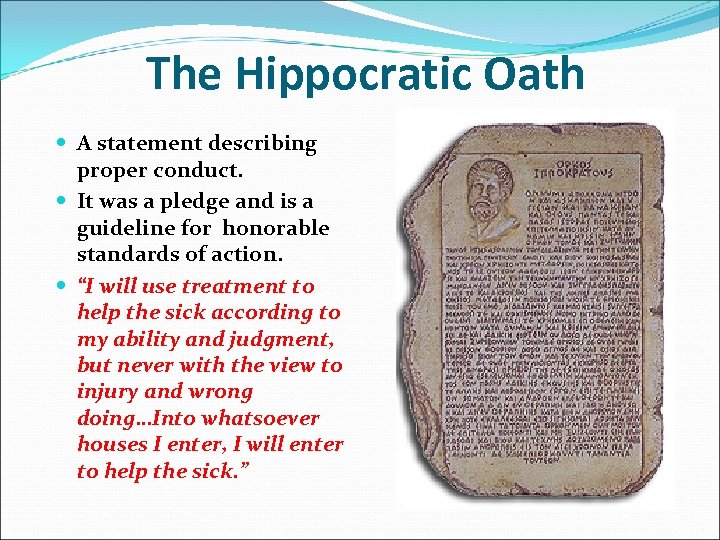
The Hippocratic Oath A statement describing proper conduct. It was a pledge and is a guideline for honorable standards of action. “I will use treatment to help the sick according to my ability and judgment, but never with the view to injury and wrong doing…Into whatsoever houses I enter, I will enter to help the sick. ”
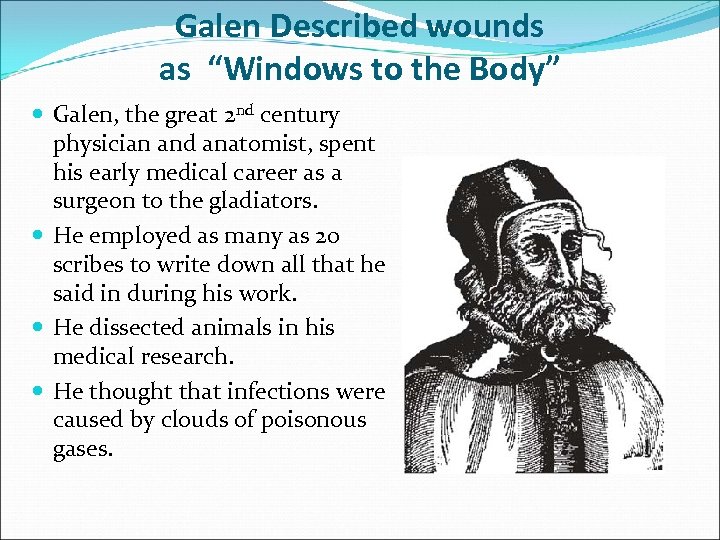
Galen Described wounds as “Windows to the Body” Galen, the great 2 nd century physician and anatomist, spent his early medical career as a surgeon to the gladiators. He employed as many as 20 scribes to write down all that he said in during his work. He dissected animals in his medical research. He thought that infections were caused by clouds of poisonous gases.
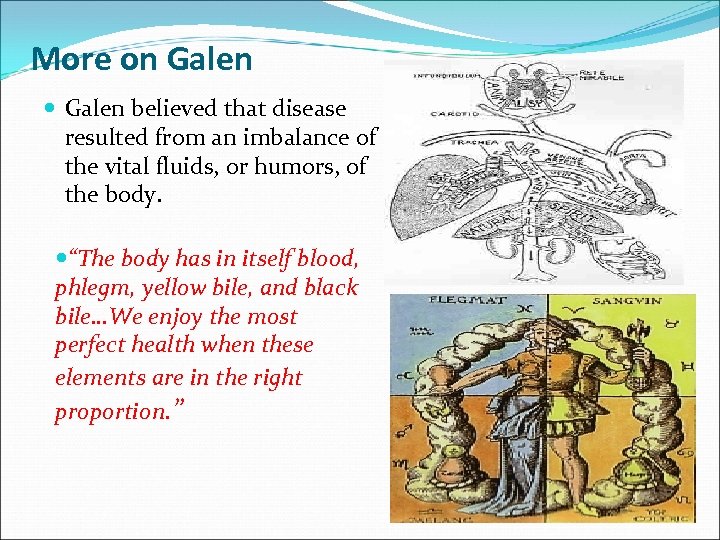
More on Galen believed that disease resulted from an imbalance of the vital fluids, or humors, of the body. “The body has in itself blood, phlegm, yellow bile, and black bile…We enjoy the most perfect health when these elements are in the right proportion. ”
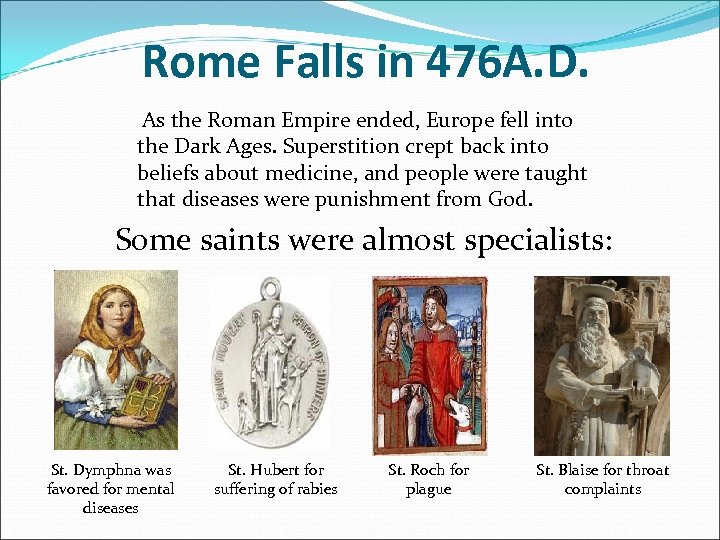
Rome Falls in 476 A. D. As the Roman Empire ended, Europe fell into the Dark Ages. Superstition crept back into beliefs about medicine, and people were taught that diseases were punishment from God. Some saints were almost specialists: St. Dymphna was favored for mental diseases St. Hubert for suffering of rabies St. Roch for plague St. Blaise for throat complaints
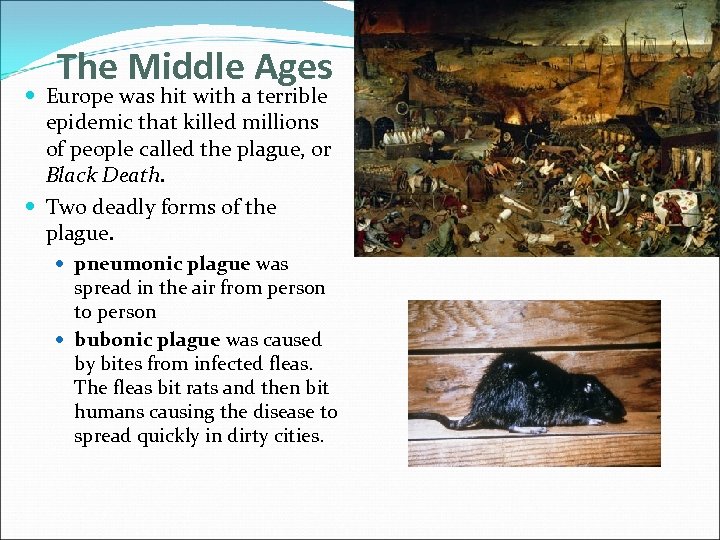
The Middle Ages Europe was hit with a terrible epidemic that killed millions of people called the plague, or Black Death. Two deadly forms of the plague. pneumonic plague was spread in the air from person to person bubonic plague was caused by bites from infected fleas. The fleas bit rats and then bit humans causing the disease to spread quickly in dirty cities.
The Arab Influence Much of what was learned from the Greeks and Romans was transferred to the new Islamic regions of Northern Africa, the Middle East and Spain. Medical schools and hospitals were built to support the work of Arabic doctors who further explored medicine as a science. Avicenna(980 -1037 A. D. ), the “prince of physicians, ” is noted for his Canon of Medicine.
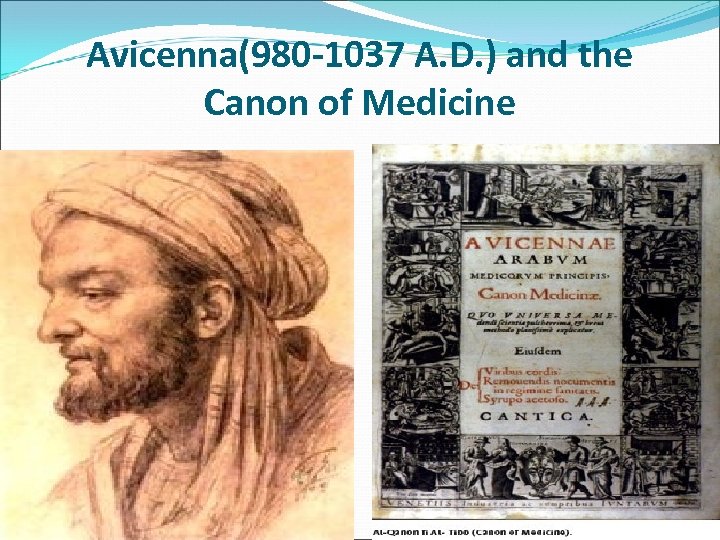
Avicenna(980 -1037 A. D. ) and the Canon of Medicine
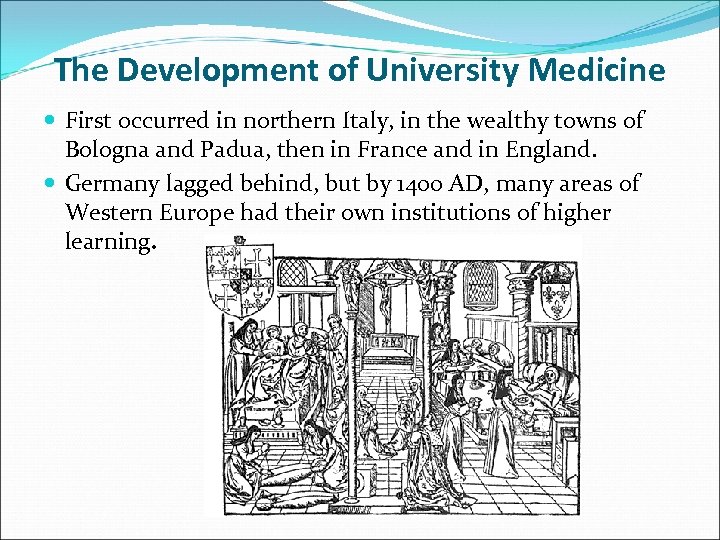
The Development of University Medicine First occurred in northern Italy, in the wealthy towns of Bologna and Padua, then in France and in England. Germany lagged behind, but by 1400 AD, many areas of Western Europe had their own institutions of higher learning.
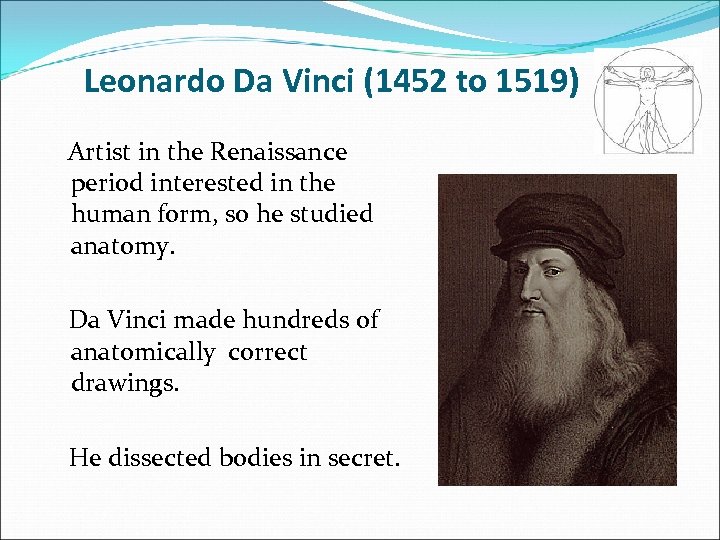
Leonardo Da Vinci (1452 to 1519) Artist in the Renaissance period interested in the human form, so he studied anatomy. Da Vinci made hundreds of anatomically correct drawings. He dissected bodies in secret.
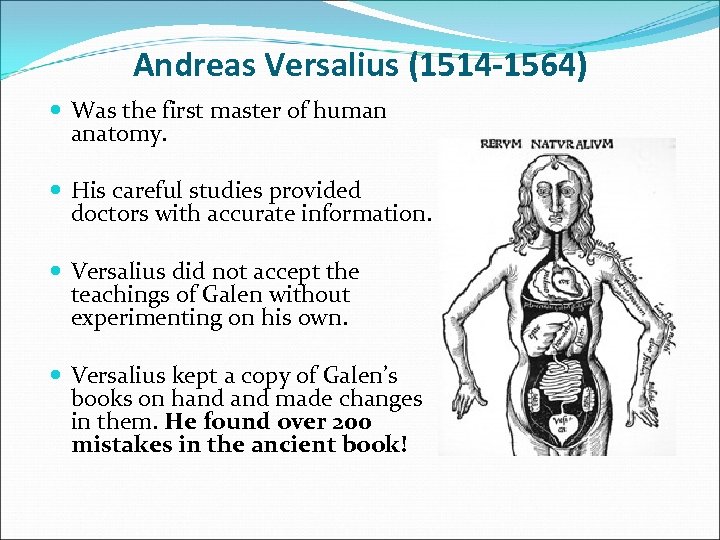
Andreas Versalius (1514 -1564) Was the first master of human anatomy. His careful studies provided doctors with accurate information. Versalius did not accept the teachings of Galen without experimenting on his own. Versalius kept a copy of Galen’s books on hand made changes in them. He found over 200 mistakes in the ancient book!
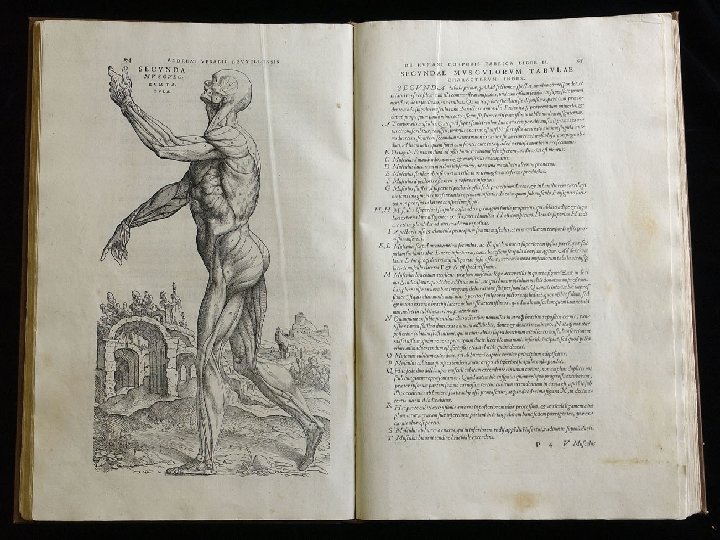
The Fabric of the Human Body Varesalius was just 28 when he published his book. It was published in 1543, contained 663 pages and 300 illustrations. Versalius spent his personal fortune and all his enthusiasm on it. The publication of Fabric marked a turning point in the history of medicine.
The Origins of Modern Surgery Professors in medical schools seldom performed surgery. They did not think that it was proper for a professional man to do such work. Surgeon is from a French word meaning “one who works with his hands. ” In the Europe of the 1500’s, barbers, not doctors, performed minor operations, pulled teeth, and treated cuts. Barbers who gained skill in closing wounds were called barber-surgeons.
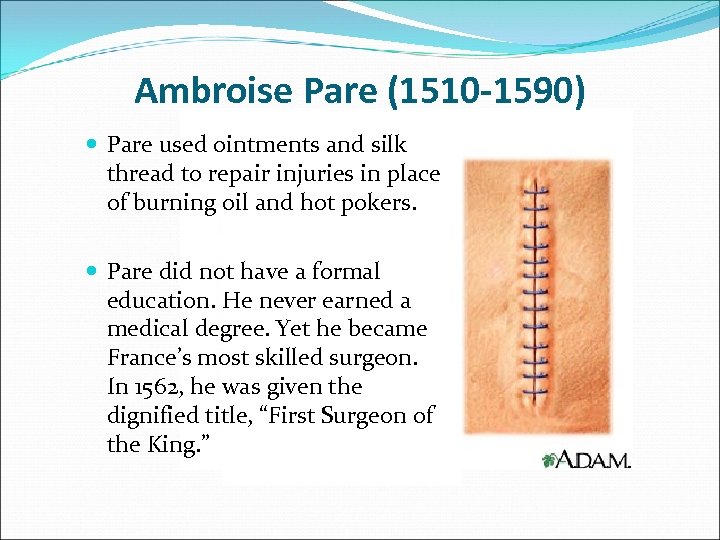
Ambroise Pare (1510 -1590) Pare used ointments and silk thread to repair injuries in place of burning oil and hot pokers. Pare did not have a formal education. He never earned a medical degree. Yet he became France’s most skilled surgeon. In 1562, he was given the dignified title, “First Surgeon of the King. ”
Shortage of Cadavers No one donated bodies to science – churchgoers believed in rising from grave, so dissection spoiled chances of resurrection. Became a tradition to rely on executed prisoners, even up to 18 th and 19 th centuries. The added punishment of being dissected after death was considered another deterrent from crime. Ex. – Steal a pig: you were hung Kill a person: you were hung and dissected Anatomists were often associated with executioners.
Grave Robbing Some medical students raided grave yards; some professors did also. In certain Scottish schools in 1700’s, you could trade a corpse for your tuition. By 1828 in London, body snatchers provided medical schools with corpses. Not a crime; a dead body could not be owned or stolen. Anatomy studies were only conducted from October to May to avoid the smell of decomposition. Wealthy people chose to be buried in iron cages, some covered in concrete. Also churches built “dead houses” which were locked and guarded.
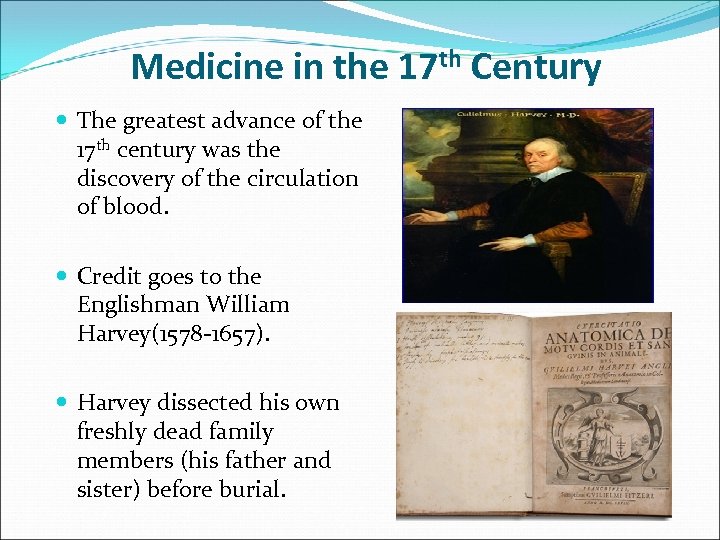
Medicine in the 17 th Century The greatest advance of the 17 th century was the discovery of the circulation of blood. Credit goes to the Englishman William Harvey(1578 -1657). Harvey dissected his own freshly dead family members (his father and sister) before burial.
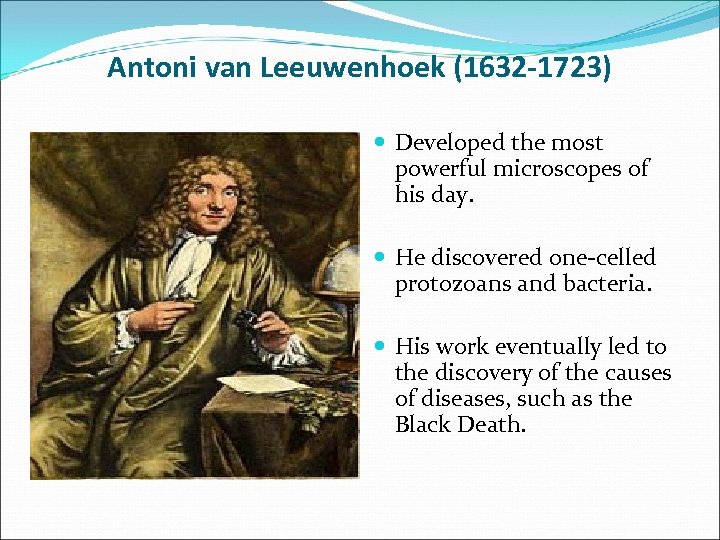
Antoni van Leeuwenhoek (1632 -1723) Developed the most powerful microscopes of his day. He discovered one-celled protozoans and bacteria. His work eventually led to the discovery of the causes of diseases, such as the Black Death.
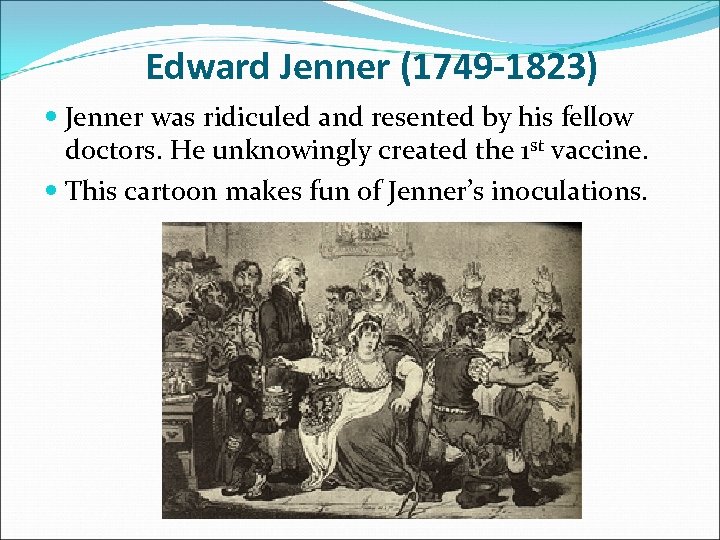
Edward Jenner (1749 -1823) Jenner was ridiculed and resented by his fellow doctors. He unknowingly created the 1 st vaccine. This cartoon makes fun of Jenner’s inoculations.
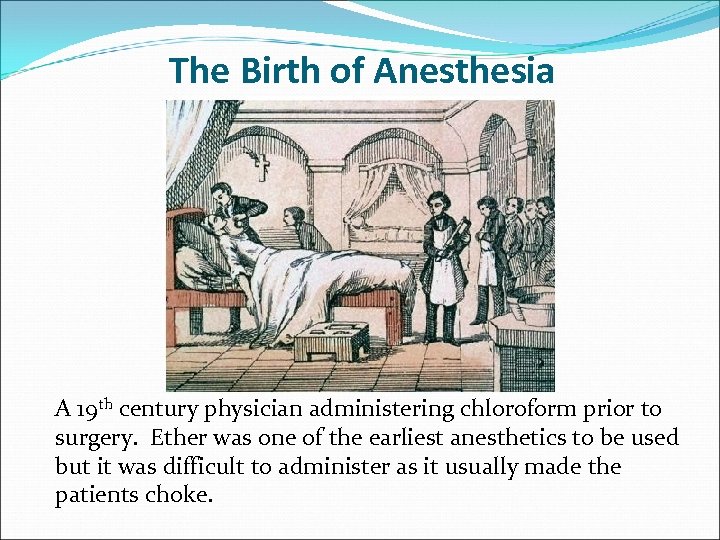
The Birth of Anesthesia A 19 th century physician administering chloroform prior to surgery. Ether was one of the earliest anesthetics to be used but it was difficult to administer as it usually made the patients choke.
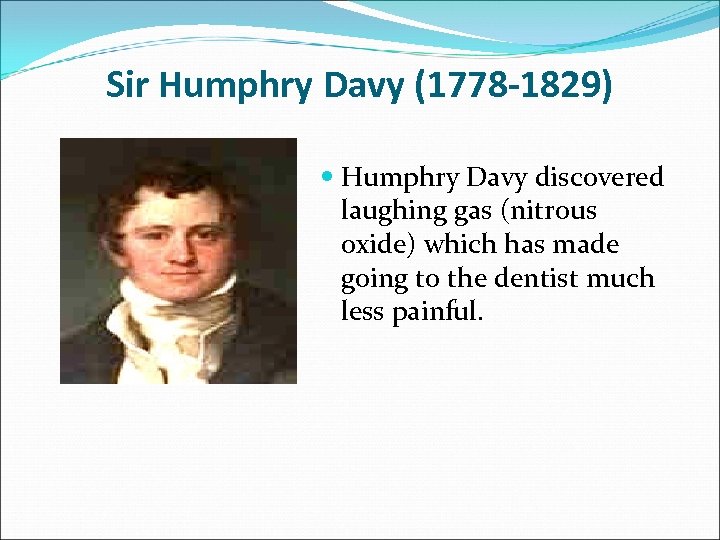
Sir Humphry Davy (1778 -1829) Humphry Davy discovered laughing gas (nitrous oxide) which has made going to the dentist much less painful.
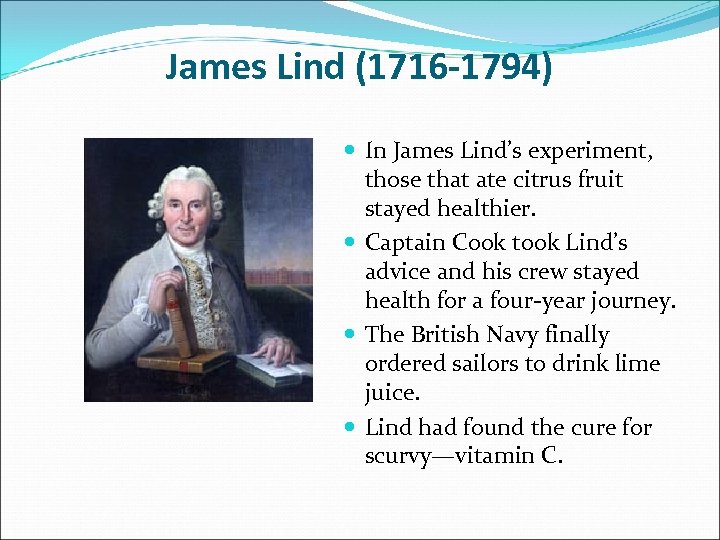
James Lind (1716 -1794) In James Lind’s experiment, those that ate citrus fruit stayed healthier. Captain Cook took Lind’s advice and his crew stayed health for a four-year journey. The British Navy finally ordered sailors to drink lime juice. Lind had found the cure for scurvy—vitamin C.
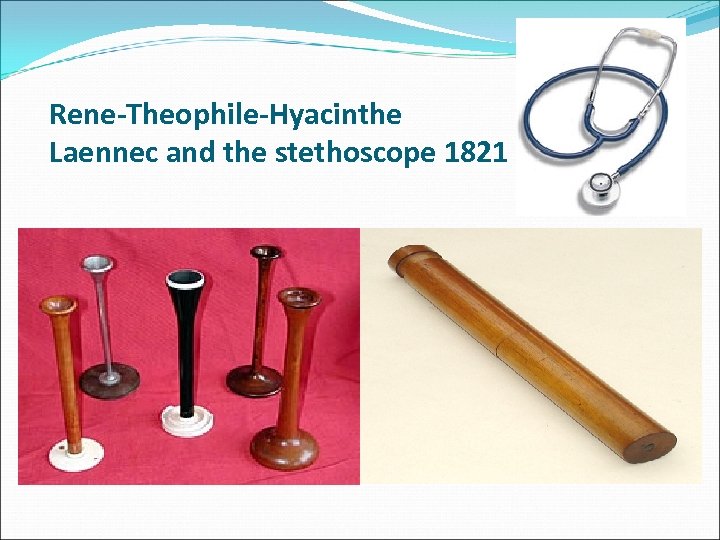
Rene-Theophile-Hyacinthe Laennec and the stethoscope 1821
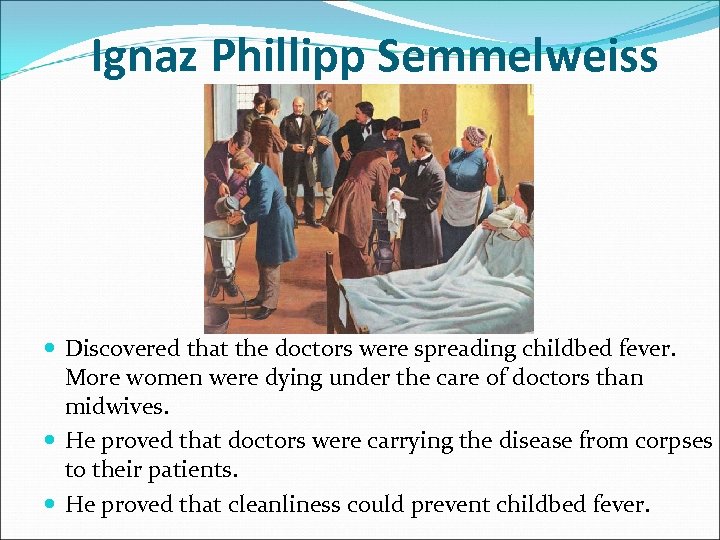
Ignaz Phillipp Semmelweiss Discovered that the doctors were spreading childbed fever. More women were dying under the care of doctors than midwives. He proved that doctors were carrying the disease from corpses to their patients. He proved that cleanliness could prevent childbed fever.
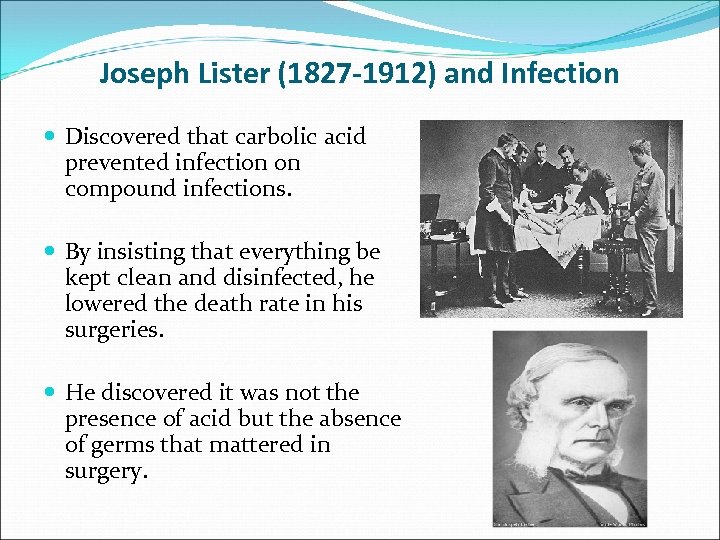
Joseph Lister (1827 -1912) and Infection Discovered that carbolic acid prevented infection on compound infections. By insisting that everything be kept clean and disinfected, he lowered the death rate in his surgeries. He discovered it was not the presence of acid but the absence of germs that mattered in surgery.
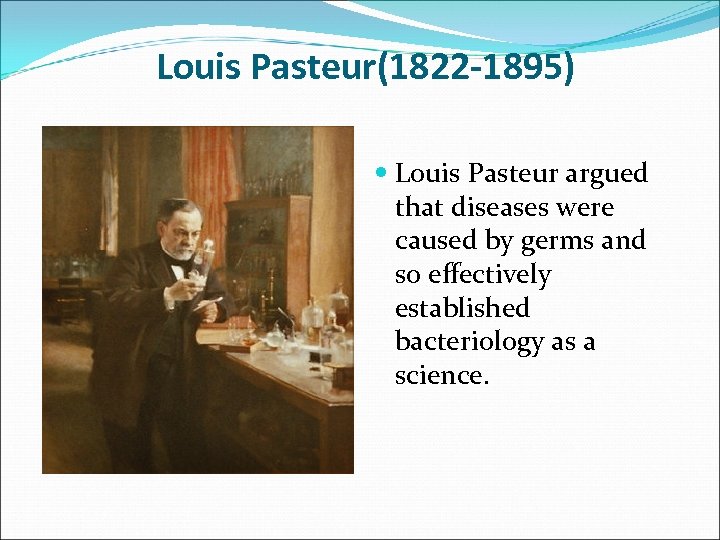
Louis Pasteur(1822 -1895) Louis Pasteur argued that diseases were caused by germs and so effectively established bacteriology as a science.
What Was It Like to be a Medical Student 140 years ago? No one worried about admissions, for entrance requirements were lower than they are for a good high school student. Instruction was superficial and brief. The terms lasted only 16 weeks, and after the second term the M. D. was automatically given, regardless of a student’s academic performance
What Was It Like to be a Medical Student 140 years ago? Teaching was by lecture alone. Thus, students were spared the “hassle” of attending labs, clinics and hospital wards. It was not uncommon for students to graduate without ever having touched a patient.
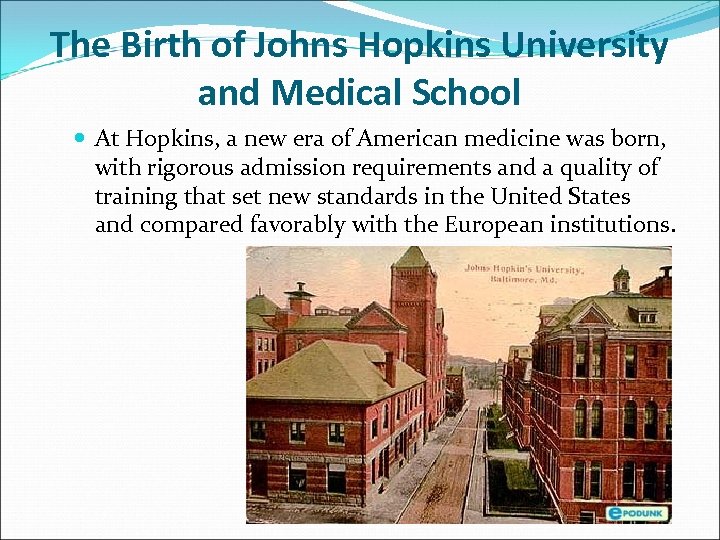
The Birth of Johns Hopkins University and Medical School At Hopkins, a new era of American medicine was born, with rigorous admission requirements and a quality of training that set new standards in the United States and compared favorably with the European institutions.
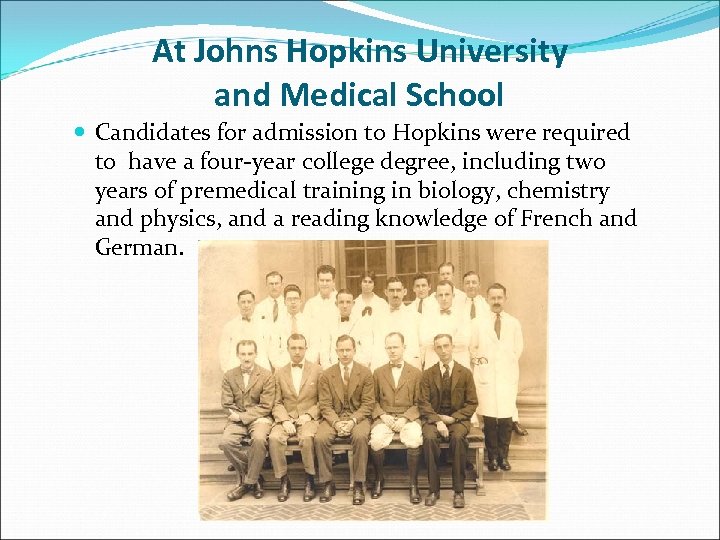
At Johns Hopkins University and Medical School Candidates for admission to Hopkins were required to have a four-year college degree, including two years of premedical training in biology, chemistry and physics, and a reading knowledge of French and German.
Evolution of Disease In the 19 th century, diarrheal diseases were the biggest killer of children, and tuberculosis was the leading cause of adult mortality. In the 20 th and 21 st centuries, diseases are now the leading cause of disease and death in adults.
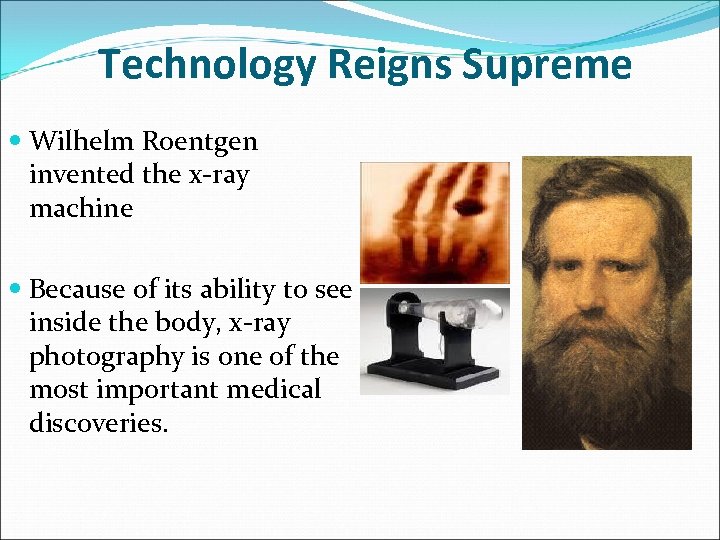
Technology Reigns Supreme Wilhelm Roentgen invented the x-ray machine Because of its ability to see inside the body, x-ray photography is one of the most important medical discoveries.
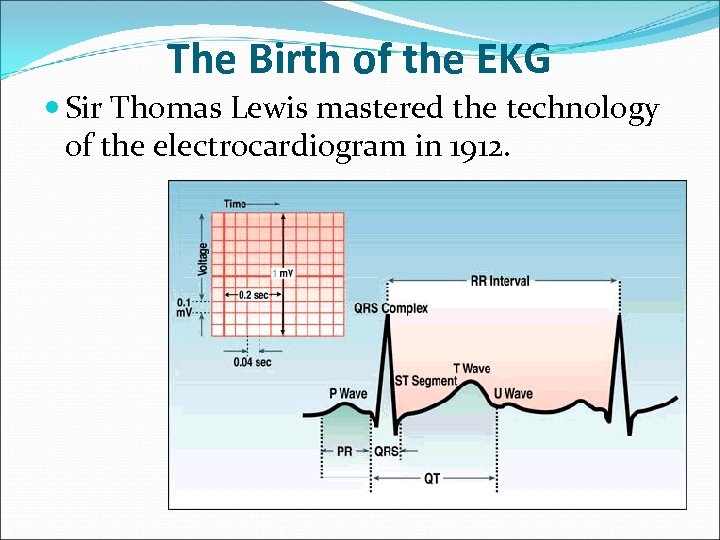
The Birth of the EKG Sir Thomas Lewis mastered the technology of the electrocardiogram in 1912.
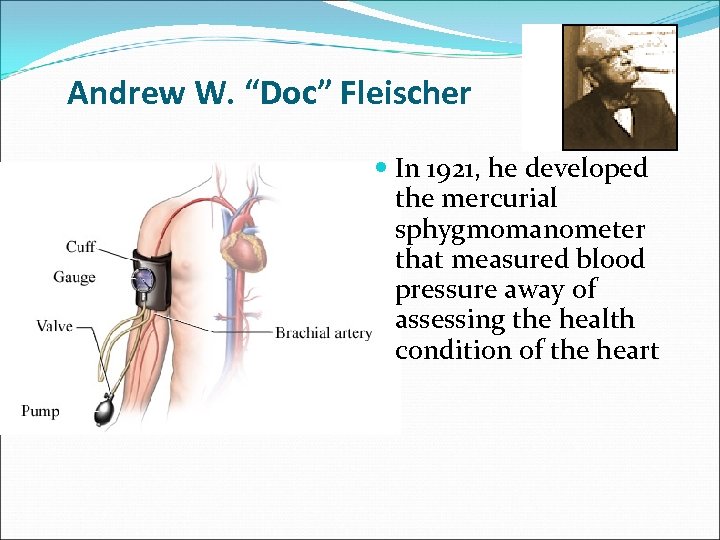
Andrew W. “Doc” Fleischer In 1921, he developed the mercurial sphygmomanometer that measured blood pressure away of assessing the health condition of the heart
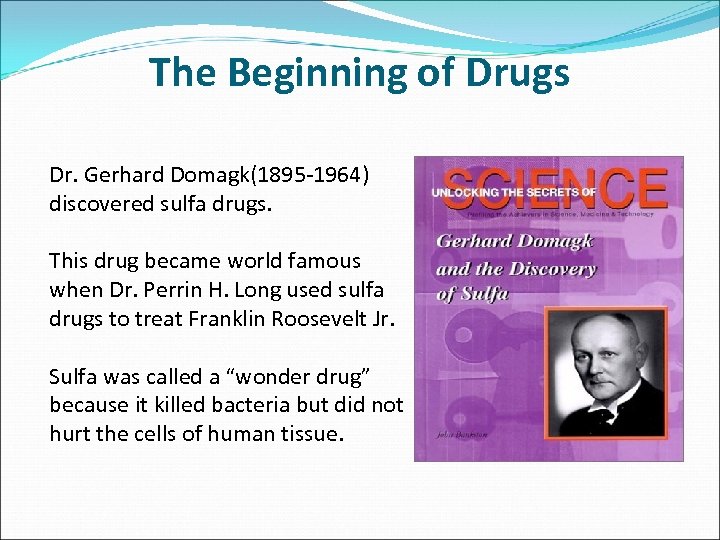
The Beginning of Drugs Dr. Gerhard Domagk(1895 -1964) discovered sulfa drugs. This drug became world famous when Dr. Perrin H. Long used sulfa drugs to treat Franklin Roosevelt Jr. Sulfa was called a “wonder drug” because it killed bacteria but did not hurt the cells of human tissue.
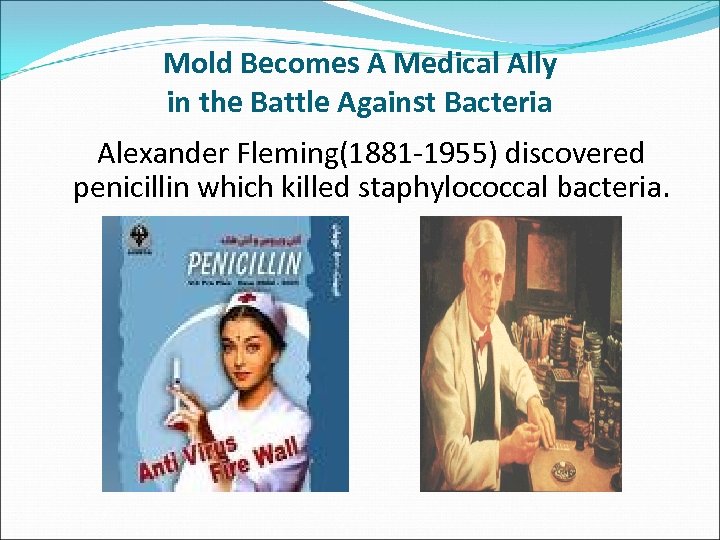
Mold Becomes A Medical Ally in the Battle Against Bacteria Alexander Fleming(1881 -1955) discovered penicillin which killed staphylococcal bacteria.
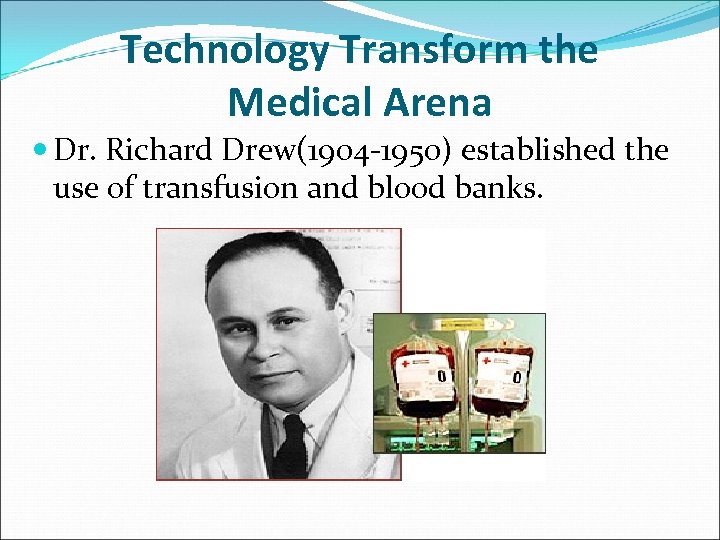
Technology Transform the Medical Arena Dr. Richard Drew(1904 -1950) established the use of transfusion and blood banks.
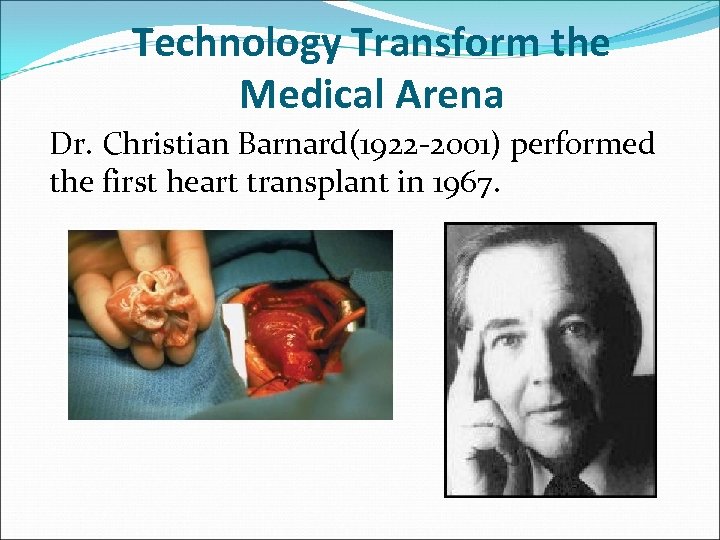
Technology Transform the Medical Arena Dr. Christian Barnard(1922 -2001) performed the first heart transplant in 1967.
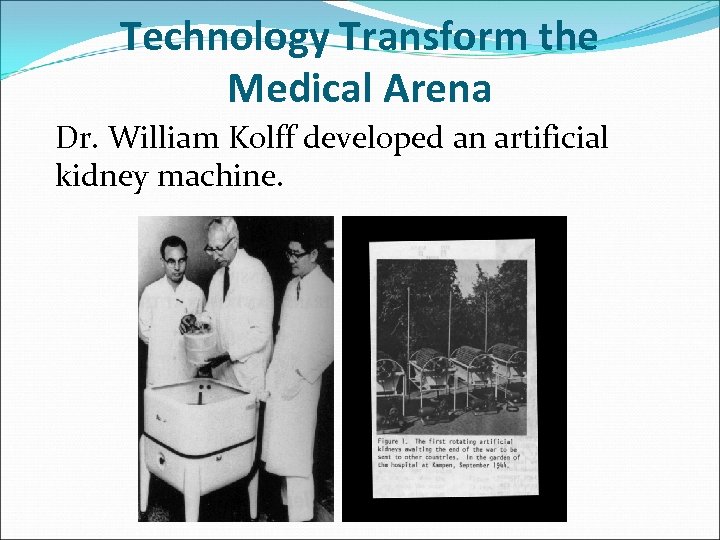
Technology Transform the Medical Arena Dr. William Kolff developed an artificial kidney machine.
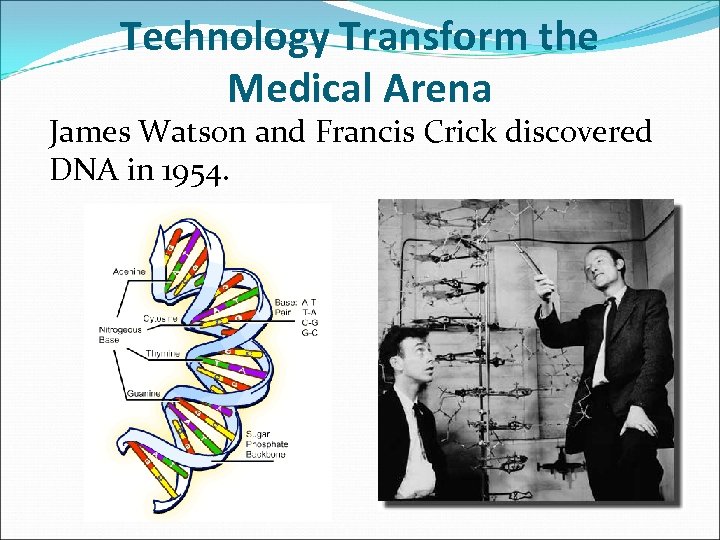
Technology Transform the Medical Arena James Watson and Francis Crick discovered DNA in 1954.
Technology and the 20 th/21 st Century Antiseptics Antibiotics Antiepileptics Antipsychotics Chemotherapies Vaccines Aspirin Blood Transfusions and Blood Banks
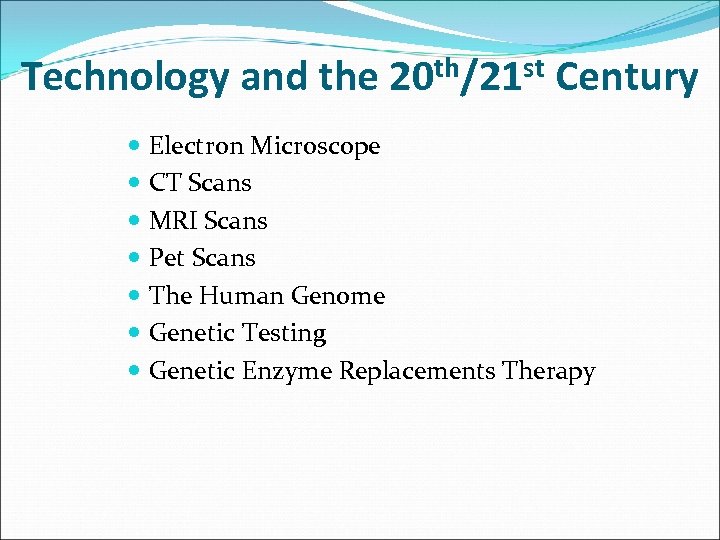
Technology and the 20 th/21 st Century Electron Microscope CT Scans MRI Scans Pet Scans The Human Genome Genetic Testing Genetic Enzyme Replacements Therapy
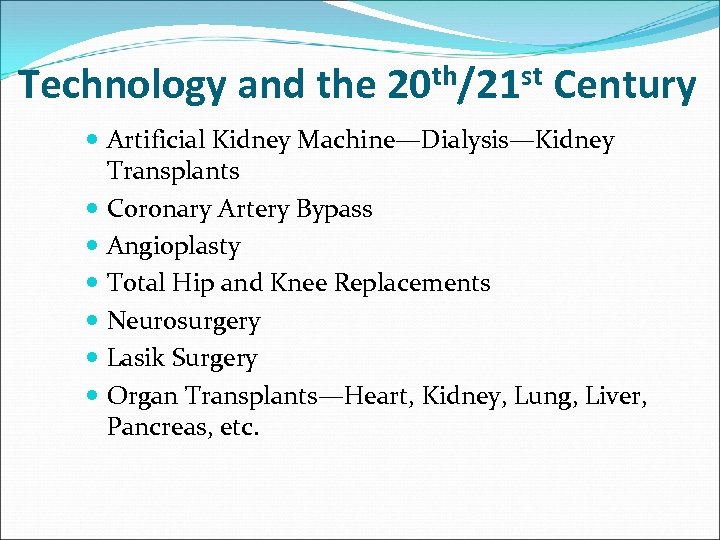
Technology and the 20 th/21 st Century Artificial Kidney Machine—Dialysis—Kidney Transplants Coronary Artery Bypass Angioplasty Total Hip and Knee Replacements Neurosurgery Lasik Surgery Organ Transplants—Heart, Kidney, Lung, Liver, Pancreas, etc.
Скачать презентацию The History of Medicine In September
1c97f33df42355e55a9927c3613eee15.ppt