


 Скачать презентацию The History of Higher Education in the United
Янченков презентация 2.pptx
- Количество слайдов: 7
 The History of Higher Education in the United States - The first college undergraduates were headed for the clergy They were modeled after Oxford and Cambridge universities. Students were drilled in Greek, Latin, geometry, ancient history, logic, ethics and rhetoric, with few discussions and no lab sessions.
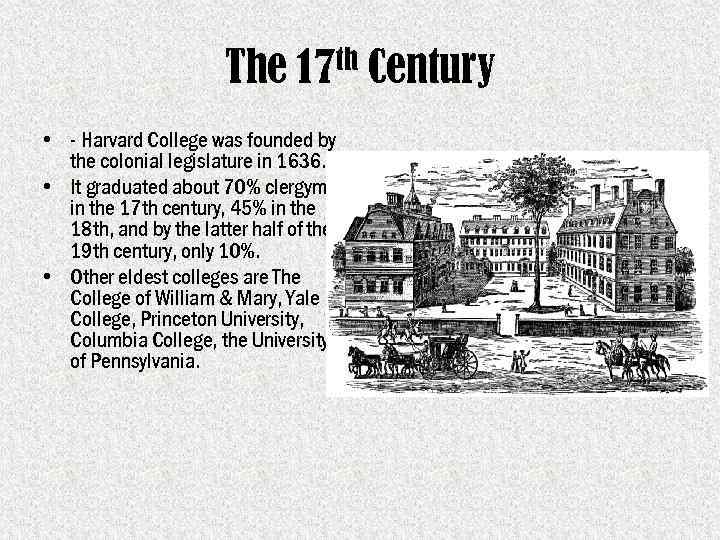 The 17 th Century • - Harvard College was founded by the colonial legislature in 1636. • It graduated about 70% clergymen in the 17 th century, 45% in the 18 th, and by the latter half of the 19 th century, only 10%. • Other eldest colleges are The College of William & Mary, Yale College, Princeton University, Columbia College, the University of Pennsylvania.
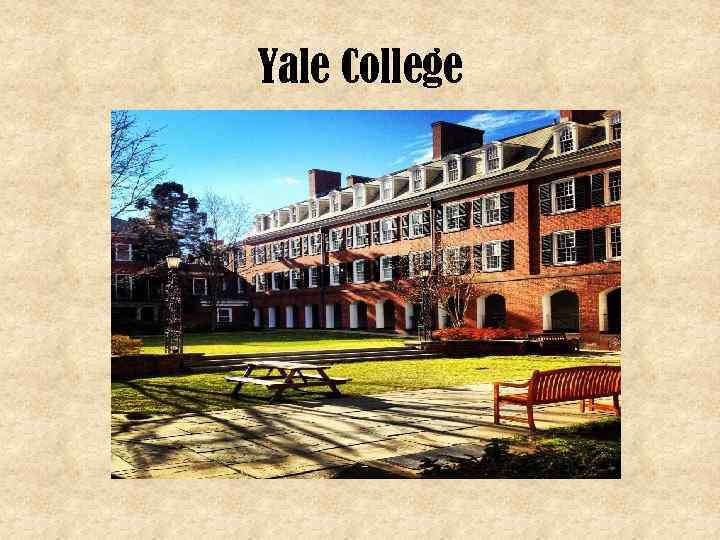 Yale College
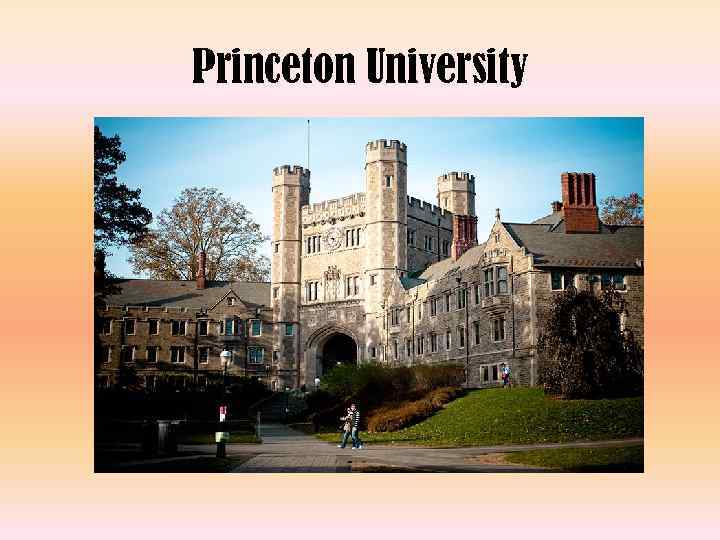 Princeton University
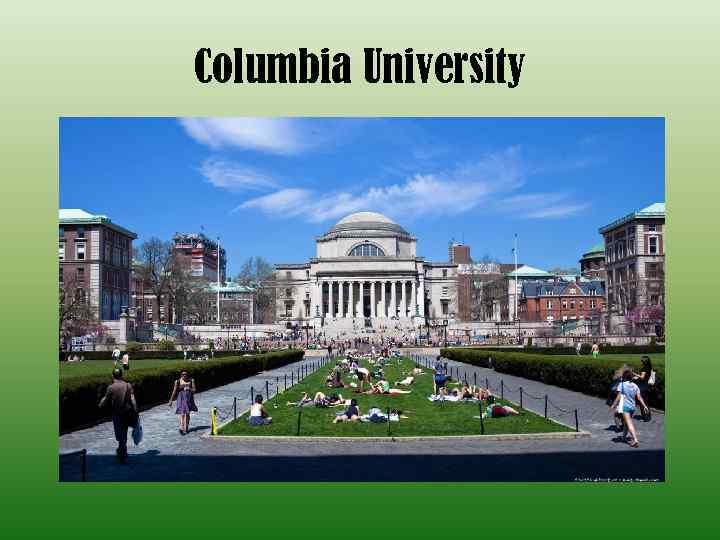 Columbia University
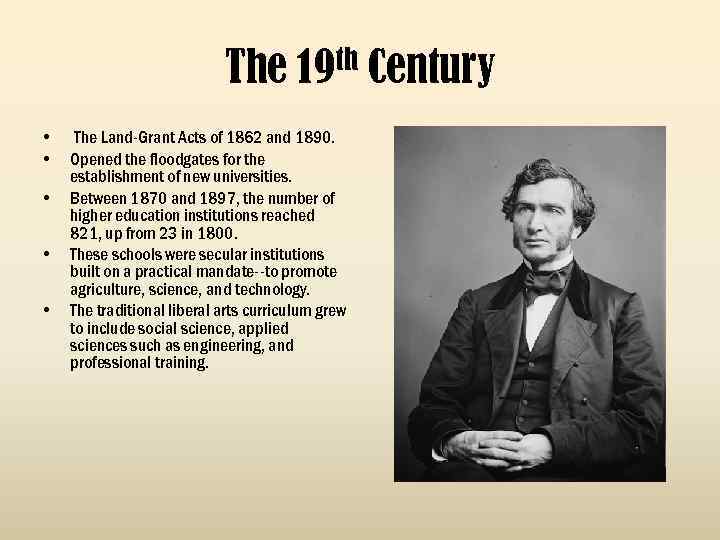 The 19 th Century • • • The Land-Grant Acts of 1862 and 1890. Opened the floodgates for the establishment of new universities. Between 1870 and 1897, the number of higher education institutions reached 821, up from 23 in 1800. These schools were secular institutions built on a practical mandate--to promote agriculture, science, and technology. The traditional liberal arts curriculum grew to include social science, applied sciences such as engineering, and professional training.
 Early Twentieth Century - The higher education landscape was heavily influenced by economic demands. - In the sciences, the focus shifted to fields which directly impacted industrial production--chemistry and physics departments - A well-rounded education became increasingly important for advancement throughout the private sector, which relied on literate, skilled employees.