


 Скачать презентацию The Hawaiian Islands Seismic Network Local Tsunami Warnings
9766b07b7c610d78160f055bd00df5e1.ppt
- Количество слайдов: 19
 The Hawaiian Islands Seismic Network Local Tsunami Warnings from Earthquake Early Warning and Mwp. Barry Hirshorn and Gerard Fryer, Richard Hagemeyer Pacific Tsunami Warning Center University of Hawaii at Manoa 18 March 2005 TTRC
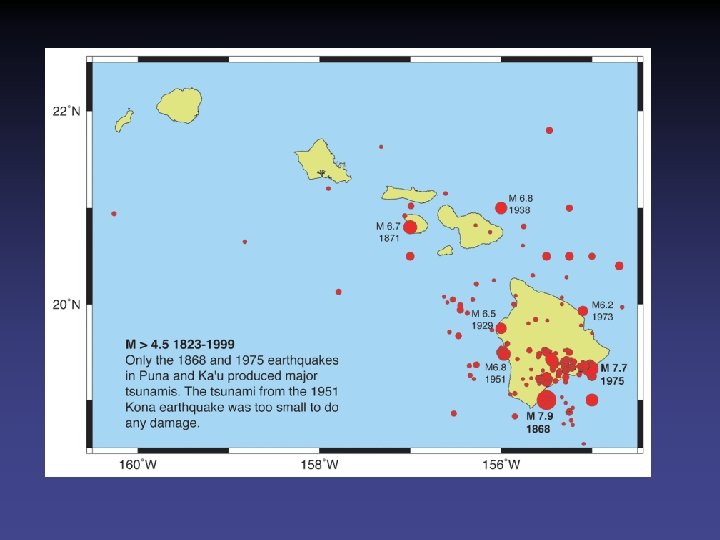
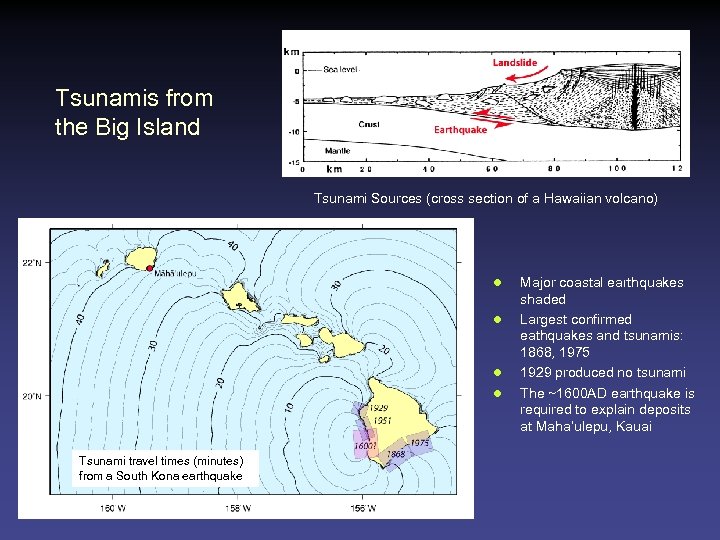 Tsunamis from the Big Island Tsunami Sources (cross section of a Hawaiian volcano) l l Tsunami travel times (minutes) from a South Kona earthquake Major coastal earthquakes shaded Largest confirmed eathquakes and tsunamis: 1868, 1975 1929 produced no tsunami The ~1600 AD earthquake is required to explain deposits at Maha’ulepu, Kauai
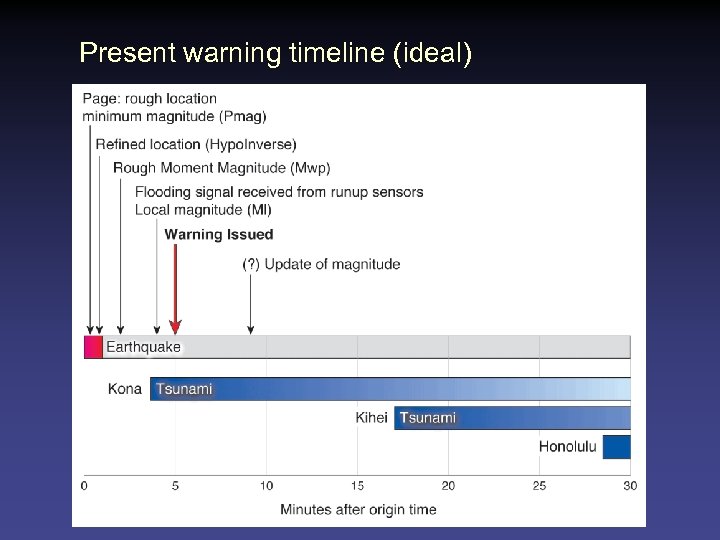 Present warning timeline (ideal)
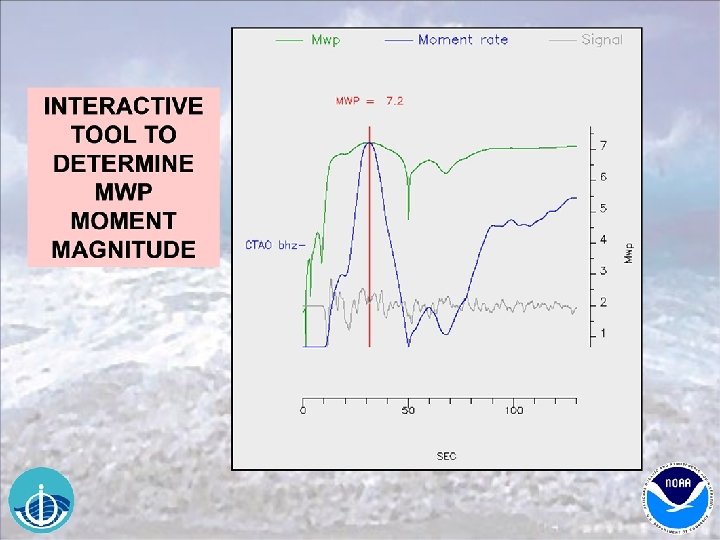
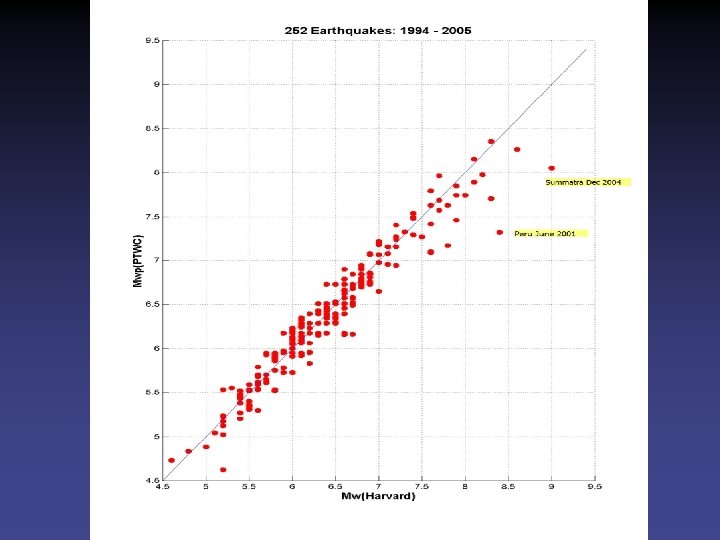
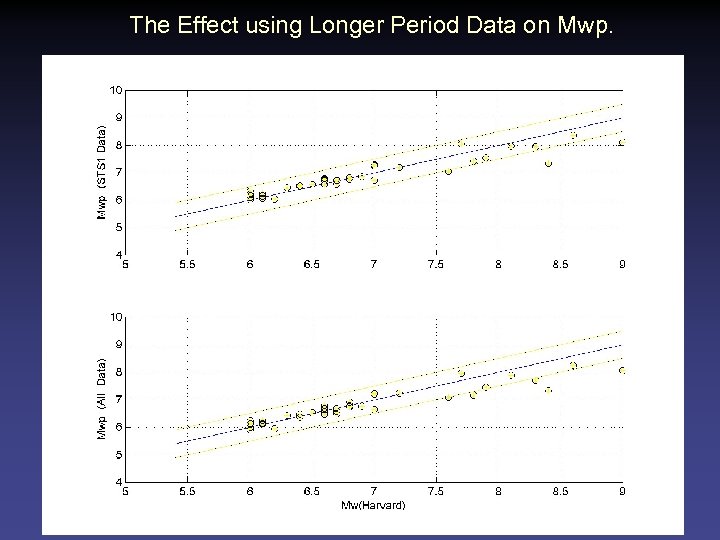 The Effect using Longer Period Data on Mwp.
 Mwp and Local Earthquakes l Mwp is limited by the trade off between the S-P travel time, and the source duration of the event. l Appears to work well at less than 5 degrees epicentral distance. Depending on the Mw and source length, Mwp provides an estimate that is low by an amount that decreases between 1 -5 degrees epicentral distance. l Will automate it for local earthquakes.
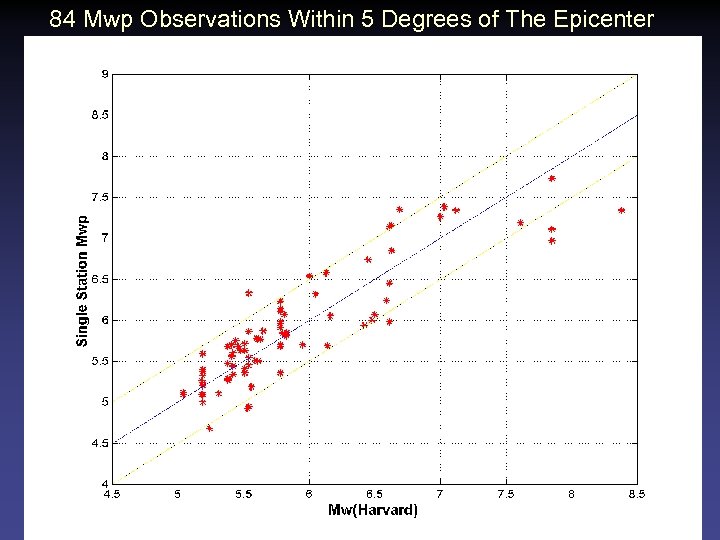 84 Mwp Observations Within 5 Degrees of The Epicenter
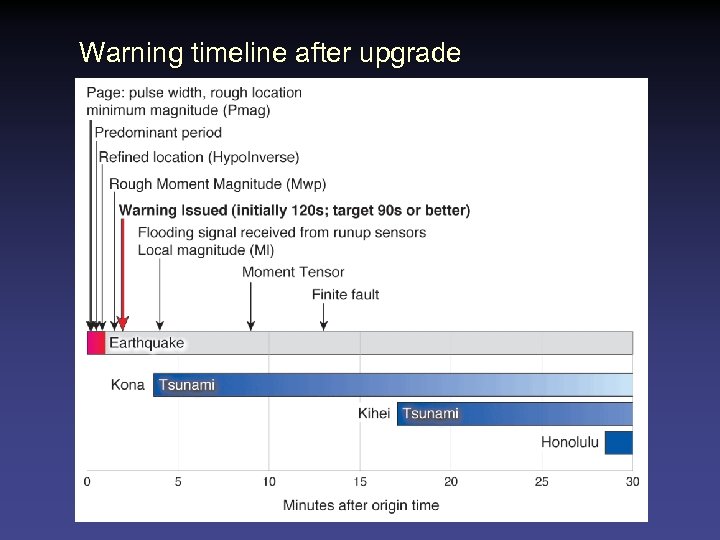 Warning timeline after upgrade
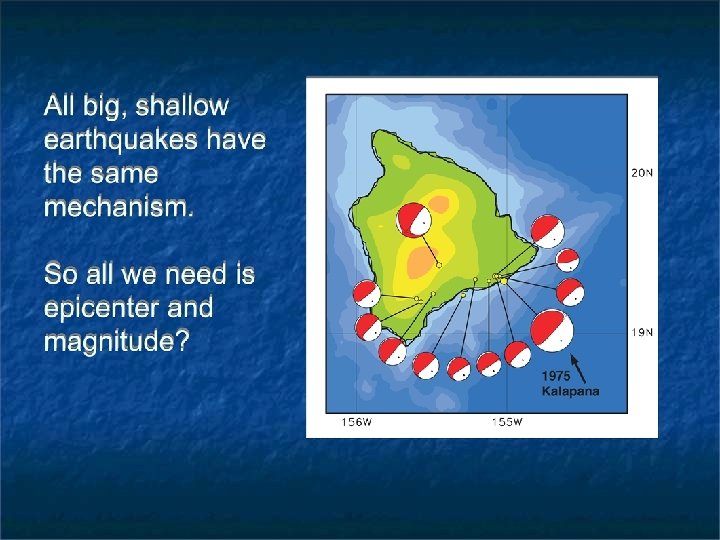
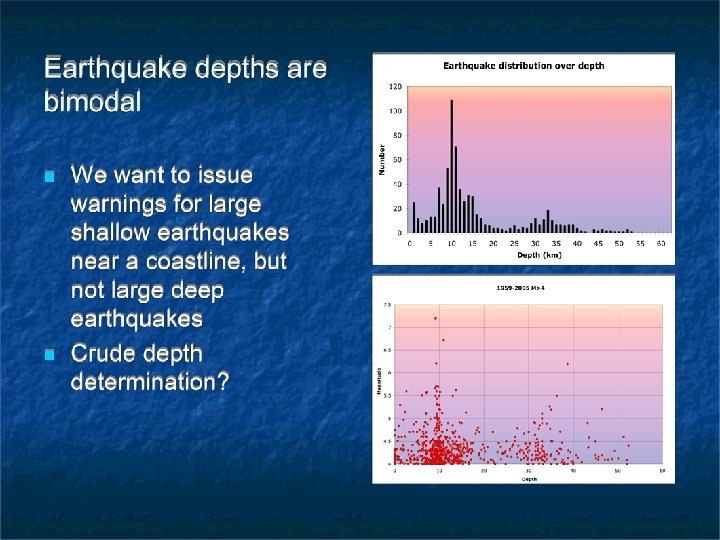
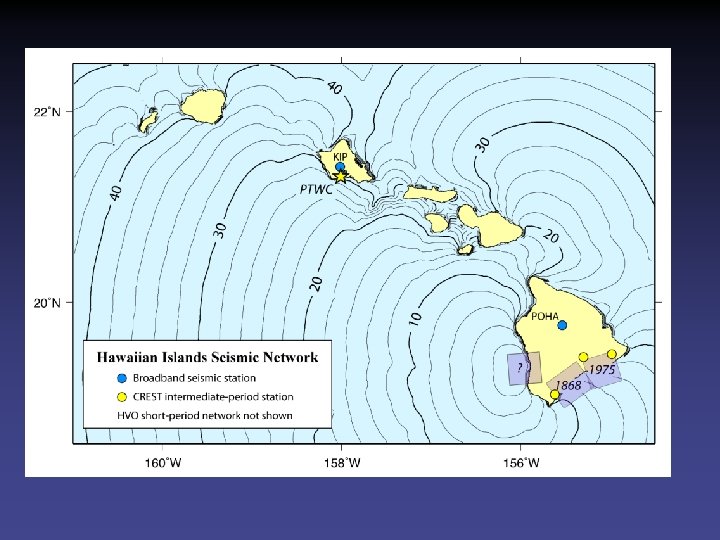
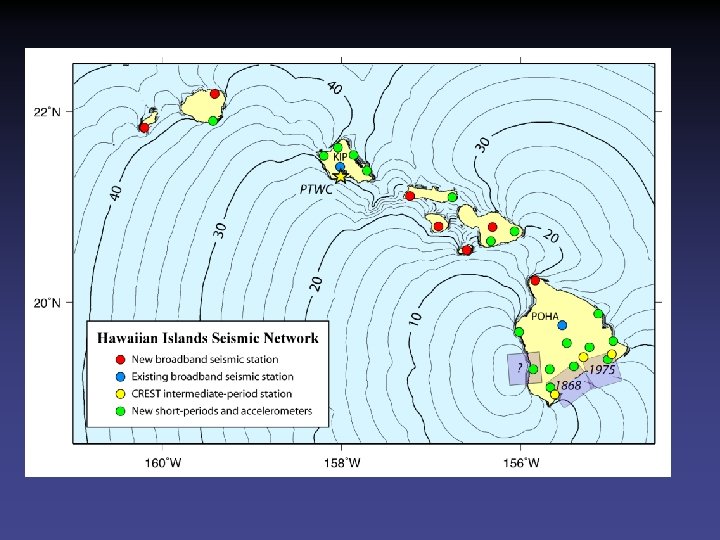
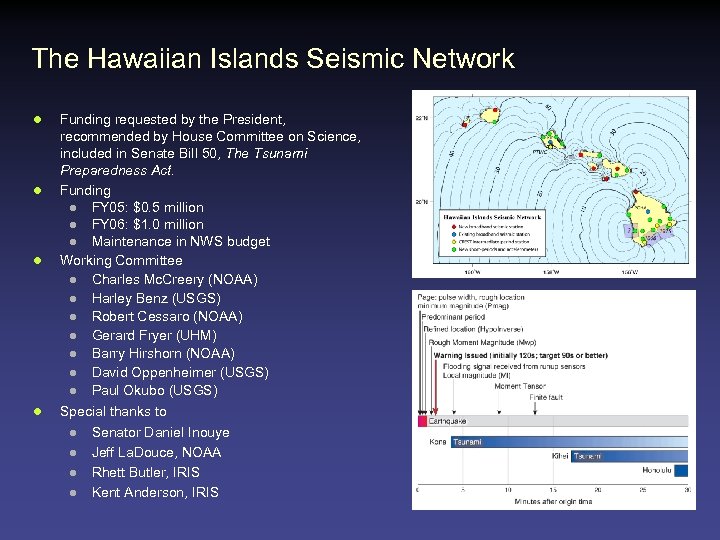 The Hawaiian Islands Seismic Network l l Funding requested by the President, recommended by House Committee on Science, included in Senate Bill 50, The Tsunami Preparedness Act. Funding l FY 05: $0. 5 million l FY 06: $1. 0 million l Maintenance in NWS budget Working Committee l Charles Mc. Creery (NOAA) l Harley Benz (USGS) l Robert Cessaro (NOAA) l Gerard Fryer (UHM) l Barry Hirshorn (NOAA) l David Oppenheimer (USGS) l Paul Okubo (USGS) Special thanks to l Senator Daniel Inouye l Jeff La. Douce, NOAA l Rhett Butler, IRIS l Kent Anderson, IRIS
 The Future? l PTWC is interested in more Interaction with the Seismological Community. l Held a Workshop in Ewa Beach, June 8 2005 with USGS and others to coordinate and plan out upgrade. l More staff to look at these problems soon. l Software: prototyping and testing EEW systems in Hawaii, in particular for the Local Earthquake/Tsunami problem.