 Скачать презентацию The Gulf of Maine Biogeographical Information System GMBIS
50d6b43eeac59e8c57c0c08992924e76.ppt
- Количество слайдов: 11



The Gulf of Maine Biogeographical Information System (GMBIS) Project A spatial data management framework in support of OBIS Vardis M. Tsontos Dale A. Kiefer University of Southern California tsontos@usc. edu Atlantic Reference Centre COD Conference Brussels, 25 -27/11/2002
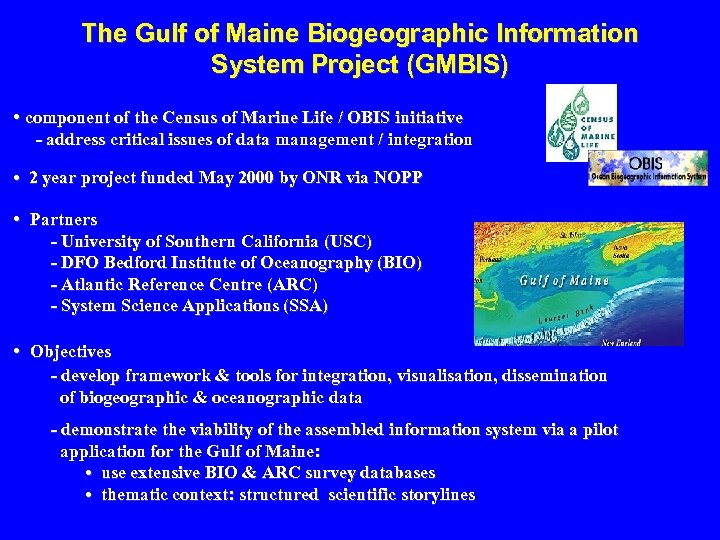
The Gulf of Maine Biogeographic Information System Project (GMBIS) • component of the Census of Marine Life / OBIS initiative - address critical issues of data management / integration • 2 year project funded May 2000 by ONR via NOPP • Partners - University of Southern California (USC) - DFO Bedford Institute of Oceanography (BIO) - Atlantic Reference Centre (ARC) - System Science Applications (SSA) • Objectives - develop framework & tools for integration, visualisation, dissemination of biogeographic & oceanographic data - demonstrate the viability of the assembled information system via a pilot application for the Gulf of Maine: • use extensive BIO & ARC survey databases • thematic context: structured scientific storylines
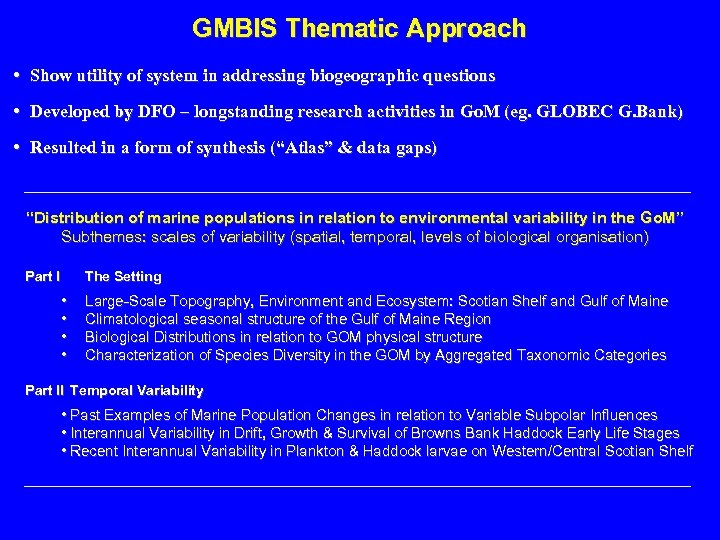
GMBIS Thematic Approach • Show utility of system in addressing biogeographic questions • Developed by DFO – longstanding research activities in Go. M (eg. GLOBEC G. Bank) • Resulted in a form of synthesis (“Atlas” & data gaps) “Distribution of marine populations in relation to environmental variability in the Go. M” Subthemes: scales of variability (spatial, temporal, levels of biological organisation) Part I The Setting • • Large-Scale Topography, Environment and Ecosystem: Scotian Shelf and Gulf of Maine Climatological seasonal structure of the Gulf of Maine Region Biological Distributions in relation to GOM physical structure Characterization of Species Diversity in the GOM by Aggregated Taxonomic Categories Part II Temporal Variability • Past Examples of Marine Population Changes in relation to Variable Subpolar Influences • Interannual Variability in Drift, Growth & Survival of Browns Bank Haddock Early Life Stages • Recent Interannual Variability in Plankton & Haddock larvae on Western/Central Scotian Shelf
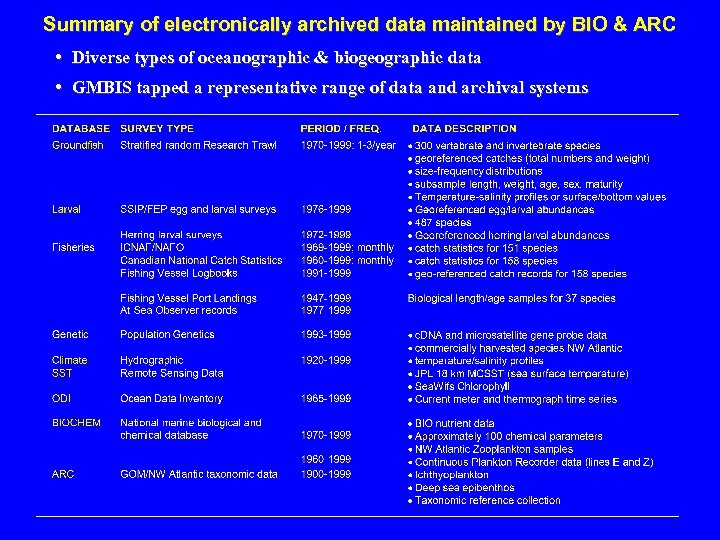
Summary of electronically archived data maintained by BIO & ARC • Diverse types of oceanographic & biogeographic data • GMBIS tapped a representative range of data and archival systems
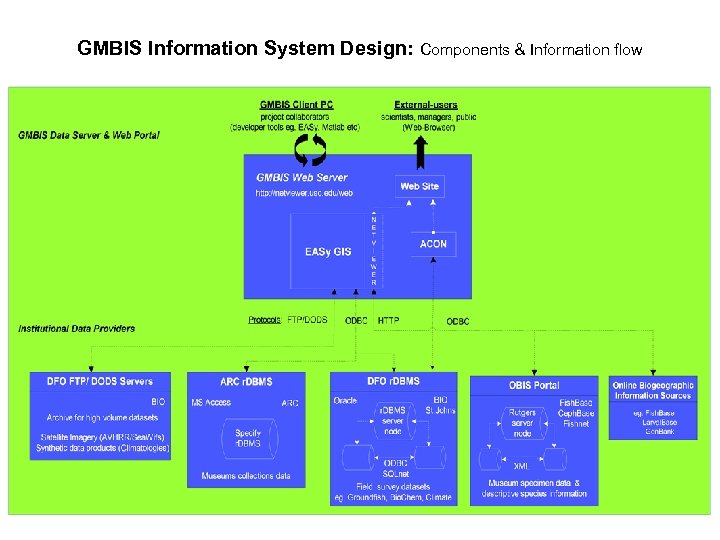
GMBIS Information System Design: Components & Information flow
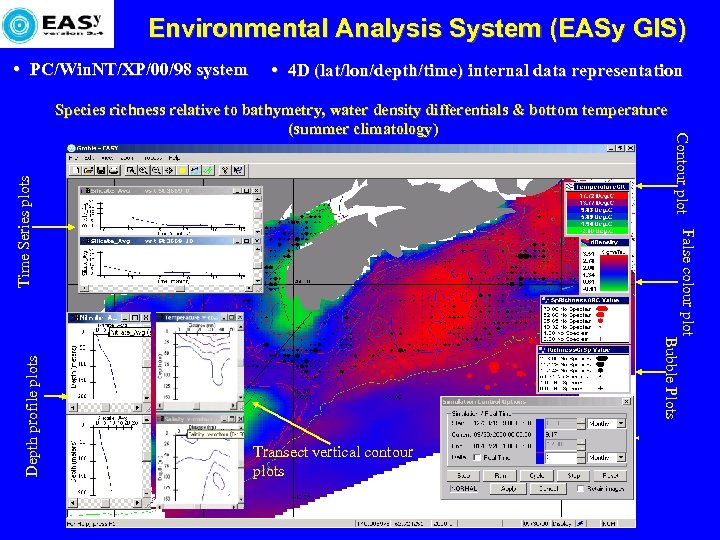
Environmental Analysis System (EASy GIS) • PC/Win. NT/XP/00/98 system • 4 D (lat/lon/depth/time) internal data representation Time Series plots Depth profile plots Simulation control panel Bubble Plots Transect vertical contour plots Image Browse Toolbar Contour plot False colour plot Species richness relative to bathymetry, water density differentials & bottom temperature AVHRR SST imagery for the Gulf(summer climatology) of Maine
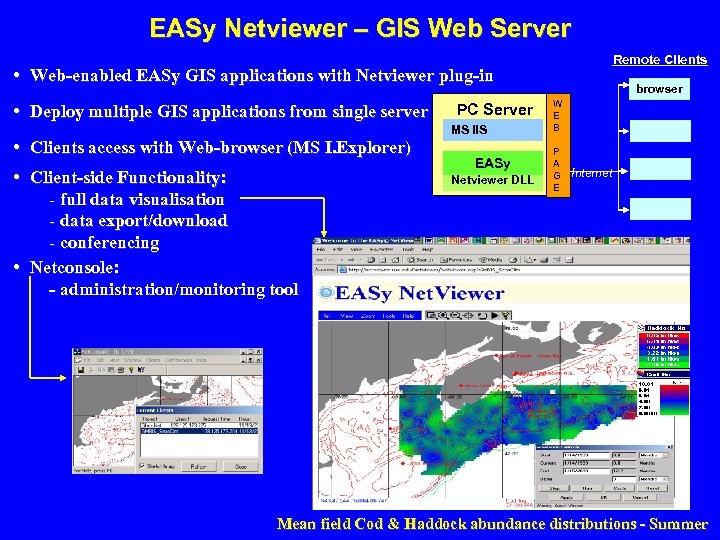
EASy Netviewer – GIS Web Server Remote Clients • Web-enabled EASy GIS applications with Netviewer plug-in • Deploy multiple GIS applications from single server • Clients access with Web-browser (MS I. Explorer) • Client-side Functionality: - full data visualisation - data export/download - conferencing • Netconsole: - administration/monitoring tool PC Server MS IIS EASy Netviewer DLL browser W E B P A G E Internet Mean field Cod & Haddock abundance distributions - Summer
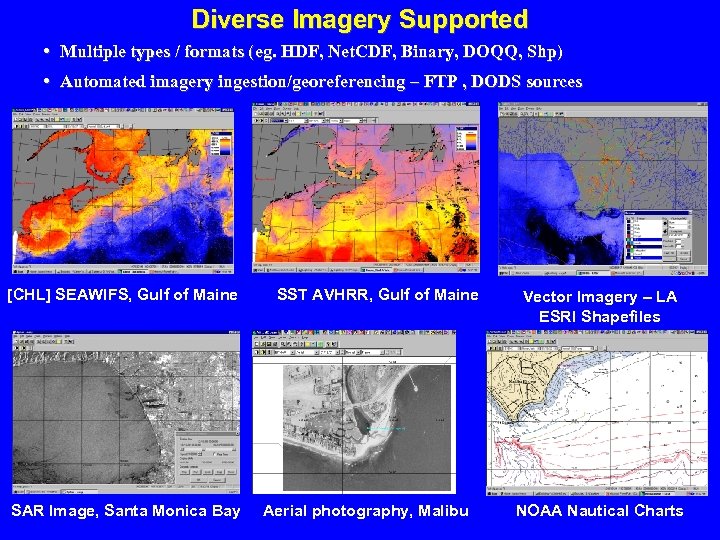
Diverse Imagery Supported • Multiple types / formats (eg. HDF, Net. CDF, Binary, DOQQ, Shp) • Automated imagery ingestion/georeferencing – FTP , DODS sources [CHL] SEAWIFS, Gulf of Maine SAR Image, Santa Monica Bay SST AVHRR, Gulf of Maine Aerial photography, Malibu Vector Imagery – LA ESRI Shapefiles NOAA Nautical Charts
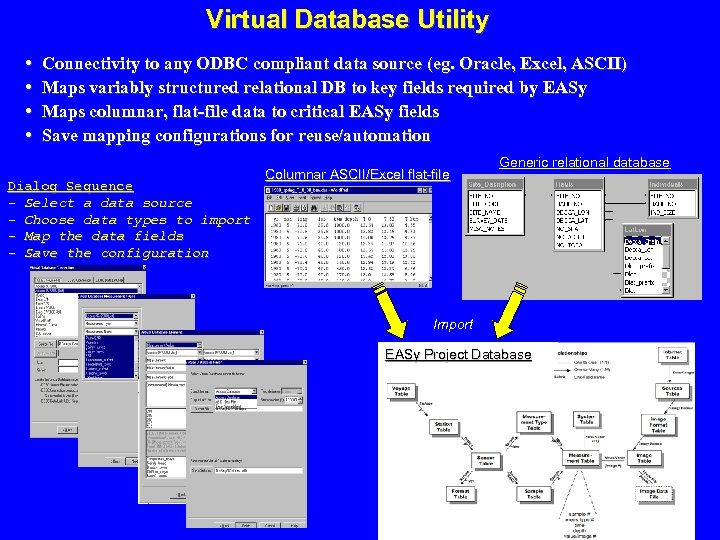
Virtual Database Utility • • Connectivity to any ODBC compliant data source (eg. Oracle, Excel, ASCII) Maps variably structured relational DB to key fields required by EASy Maps columnar, flat-file data to critical EASy fields Save mapping configurations for reuse/automation Dialog Sequence - Select a data source - Choose data types to import - Map the data fields - Save the configuration Columnar ASCII/Excel flat-file Generic relational database Import EASy Project Database
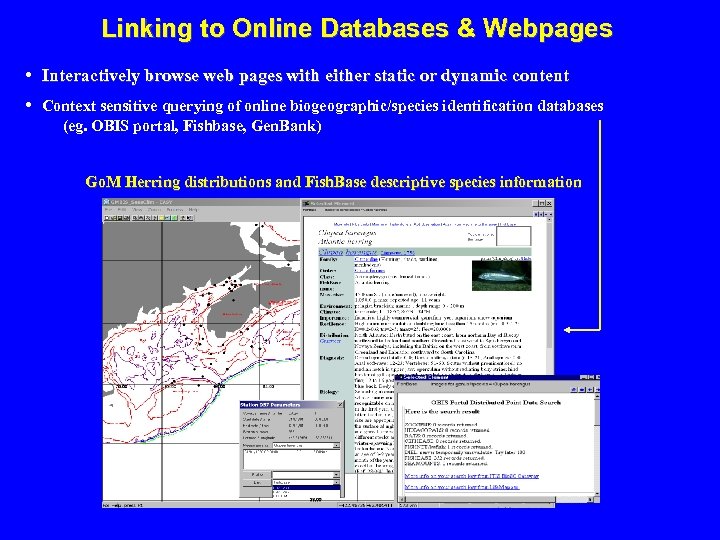
Linking to Online Databases & Webpages • Interactively browse web pages with either static or dynamic content • Context sensitive querying of online biogeographic/species identification databases (eg. OBIS portal, Fishbase, Gen. Bank) Go. M Herring distributions and Fish. Base descriptive species information
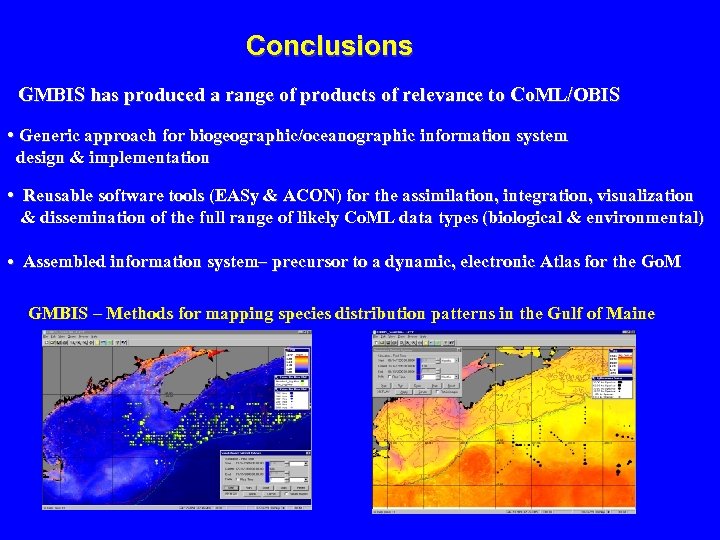
Conclusions GMBIS has produced a range of products of relevance to Co. ML/OBIS • Generic approach for biogeographic/oceanographic information system design & implementation • Reusable software tools (EASy & ACON) for the assimilation, integration, visualization & dissemination of the full range of likely Co. ML data types (biological & environmental) • Assembled information system– precursor to a dynamic, electronic Atlas for the Go. M GMBIS – Methods for mapping species distribution patterns in the Gulf of Maine
Скачать презентацию The Gulf of Maine Biogeographical Information System GMBIS
50d6b43eeac59e8c57c0c08992924e76.ppt