 Скачать презентацию The Growth of Suburbia Suburbanization ÜWhat does
b2af823a74d81450c61bdd560e4e1b55.ppt
- Количество слайдов: 13




The Growth of Suburbia
Suburbanization ÜWhat does suburbanization mean? ÜThe process of residential, commercial, and industrial growth and development beyond a central city ÜThe movement of people out of
Do Now ÜListen to the song that is playing, Little Boxes by Malvina Reynolds, and follow along with the lyrics. Ü When the song ends, record information about Reynolds’ views of suburbanization in the left hand column of Resource
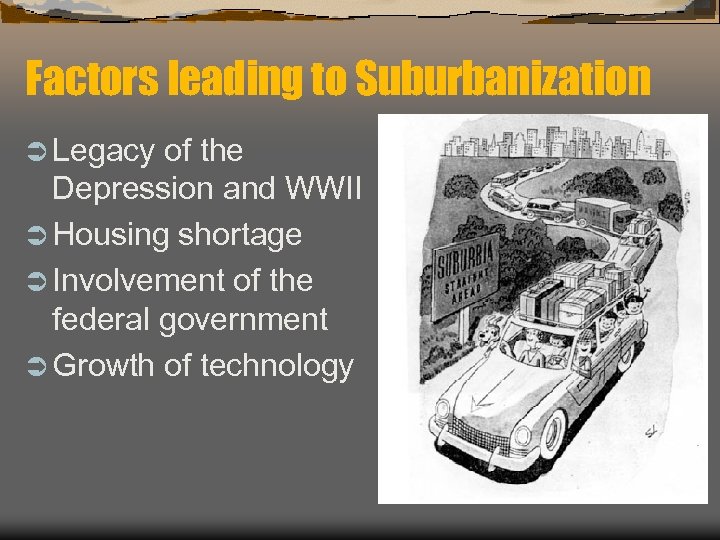
Factors leading to Suburbanization Ü Legacy of the Depression and WWII Ü Housing shortage Ü Involvement of the federal government Ü Growth of technology
Legacy of the Depression and WWII ÜEconomic hardships of the Great Depression lead Americans to cut down their spending ÜWWII brought a growth in available jobs, BUT rationing of goods limited the ability of Americans to spend the money they were earning
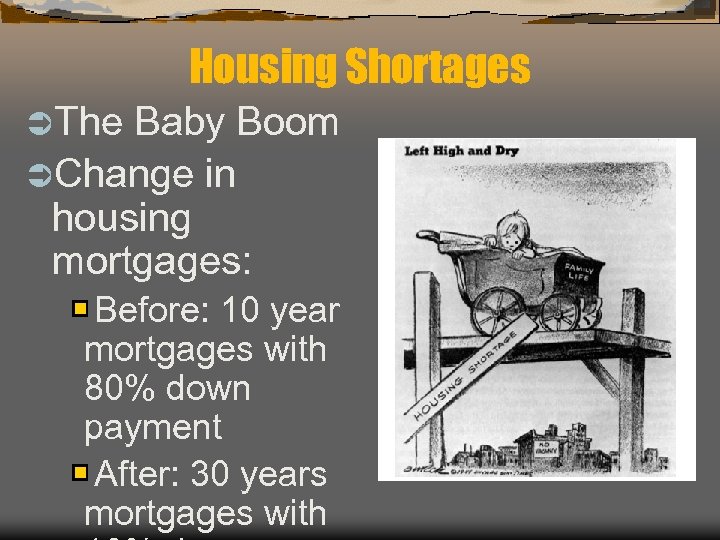
Housing Shortages ÜThe Baby Boom ÜChange in housing mortgages: Before: 10 year mortgages with 80% down payment After: 30 years mortgages with
G. I. Bill Ü Federal legislation which was intended to help veterans transition from wartime service to peacetime life Ü Subsidized: Education – tuition, fees, books, and living expenses Housing – low interest loans to veterans wanting to buy single family homes
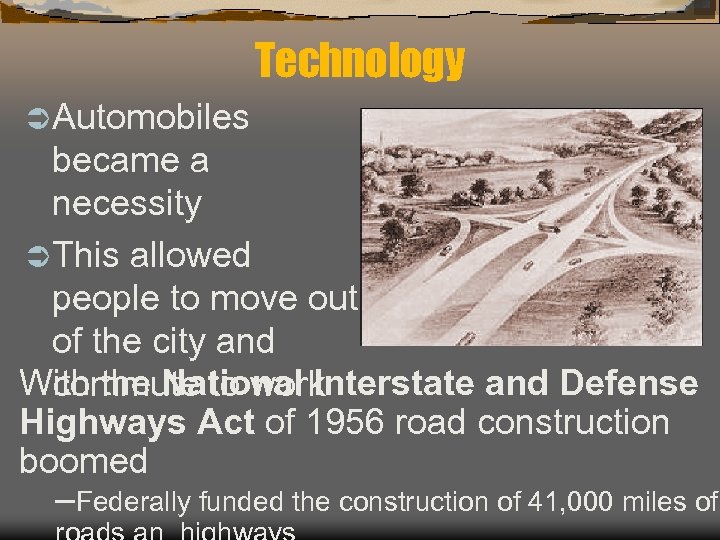
Technology Ü Automobiles became a necessity Ü This allowed people to move out of the city and With the National Interstate and Defense commute to work Highways Act of 1956 road construction boomed –Federally funded the construction of 41, 000 miles of
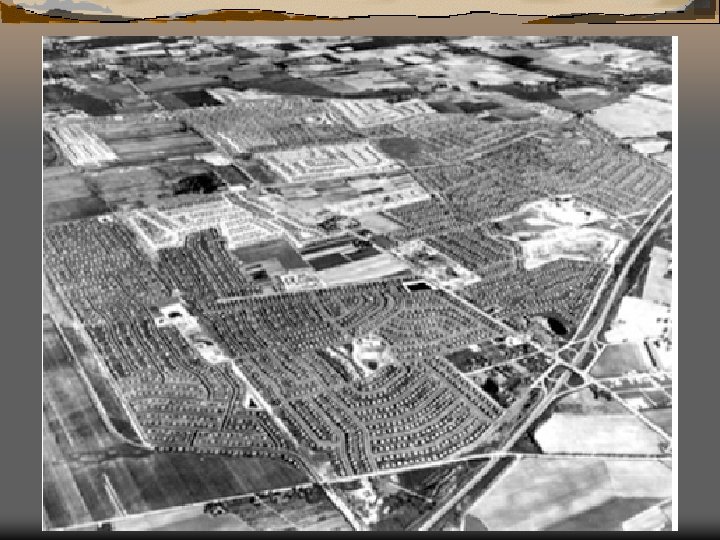

Examining Views on Suburbia

“Suburbia is becoming the most important single market in the country. It is the suburbanite who starts the mass fashions-for children, …dungarees, vodka martinis, outdoor barbecues, functional furniture…All suburbs are not alike, but they are more alike than different. ”
“Those who lambasted suburbia…tended to ignore several basic facts: the boom in building energized important sectors of the economy, providing a good deal of employment; it lessened the housing shortage that had diminished the lives of millions during the Depression and war; and it enabled people to enjoy conveniences, such as modern bathrooms and kitchens, that they had
“Levittown represented the worst vision in American future: bland people in bland houses leading bland lives. The houses were physically similar; an entire community was being made from a cookie cutter…a multitude of uniform, unidentifiable houses, lined un inflexibly, at uniform distances on uniform roads, in a treeless command waste, inhabited by people of the same class, the same incomes, the same age group, witnessing the same television performances, eating the same tasteless prefabricated foods, from the same freezers, conforming in every outward
Скачать презентацию The Growth of Suburbia Suburbanization ÜWhat does
b2af823a74d81450c61bdd560e4e1b55.ppt