



 THE GREGORIAN AGE Style & Art
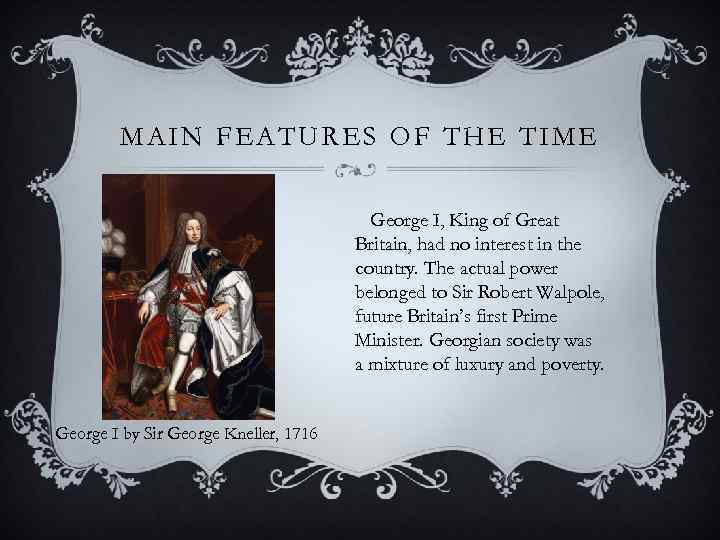 MAIN FEATURES OF THE TIME George I, King of Great Britain, had no interest in the country. The actual power belonged to Sir Robert Walpole, future Britain’s first Prime Minister. Georgian society was a mixture of luxury and poverty. George I by Sir George Kneller, 1716
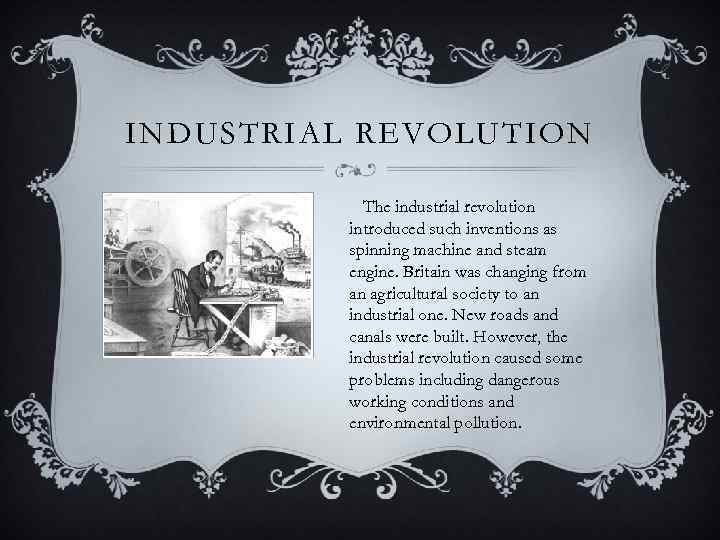 INDUSTRIAL REVOLUTION The industrial revolution introduced such inventions as spinning machine and steam engine. Britain was changing from an agricultural society to an industrial one. New roads and canals were built. However, the industrial revolution caused some problems including dangerous working conditions and environmental pollution.
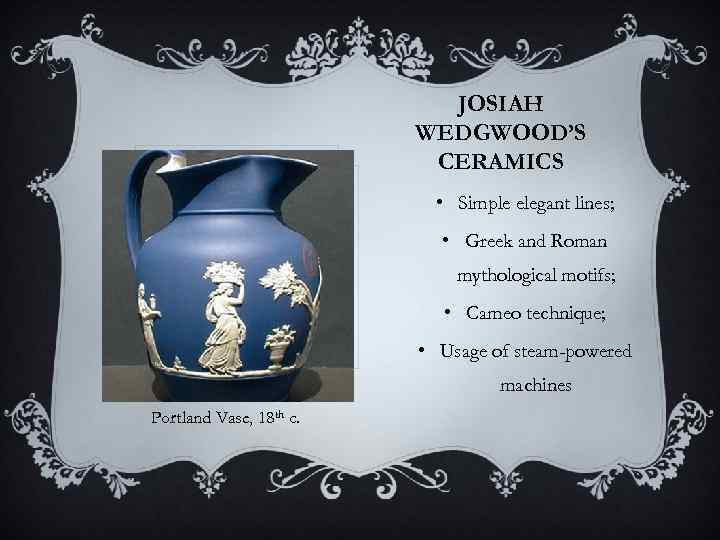 JOSIAH WEDGWOOD’S CERAMICS • Simple elegant lines; • Greek and Roman mythological motifs; • Cameo technique; • Usage of steam-powered machines Portland Vase, 18 th c.
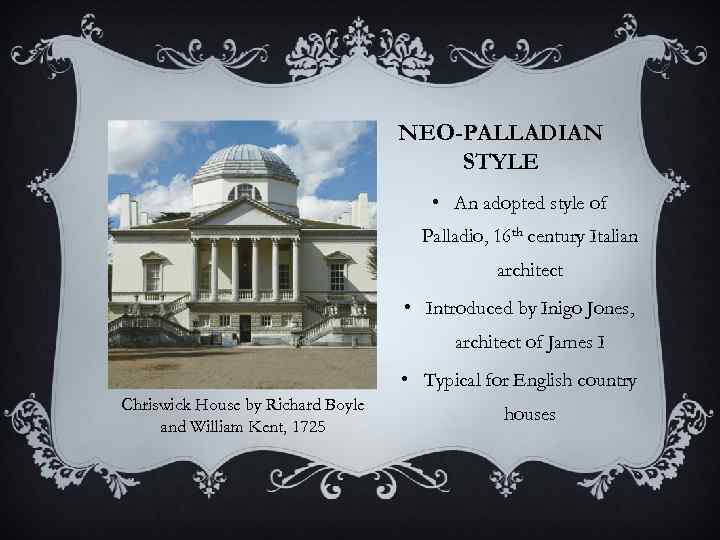 NEO-PALLADIAN STYLE • An adopted style of Palladio, 16 th century Italian architect • Introduced by Inigo Jones, architect of James I • Typical for English country Chriswick House by Richard Boyle and William Kent, 1725 houses
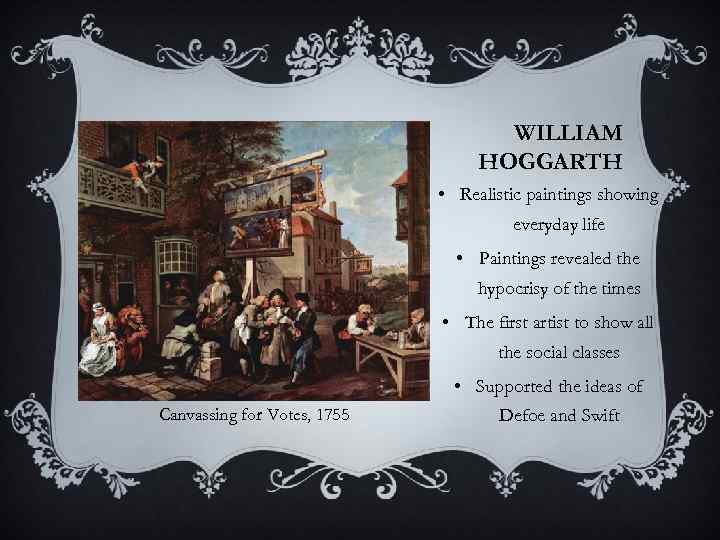 WILLIAM HOGGARTH • Realistic paintings showing everyday life • Paintings revealed the hypocrisy of the times • The first artist to show all the social classes • Supported the ideas of Canvassing for Votes, 1755 Defoe and Swift
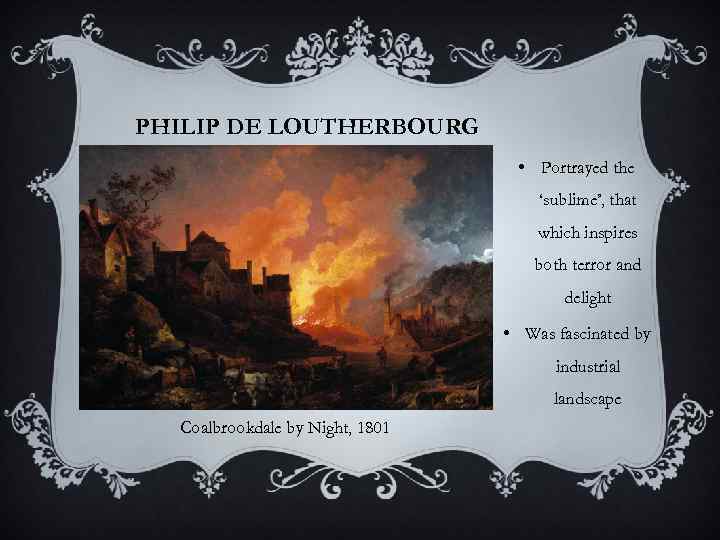 PHILIP DE LOUTHERBOURG • Portrayed the ‘sublime’, that which inspires both terror and delight • Was fascinated by industrial landscape Coalbrookdale by Night, 1801
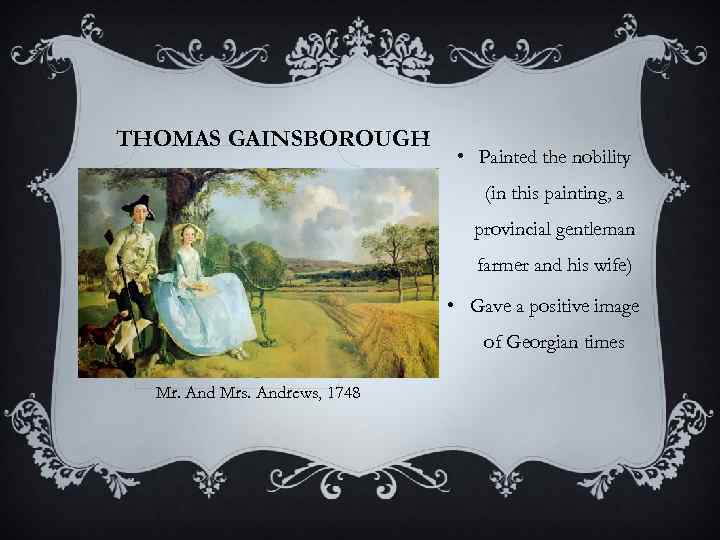 THOMAS GAINSBOROUGH • Painted the nobility (in this painting, a provincial gentleman farmer and his wife) • Gave a positive image of Georgian times Mr. And Mrs. Andrews, 1748
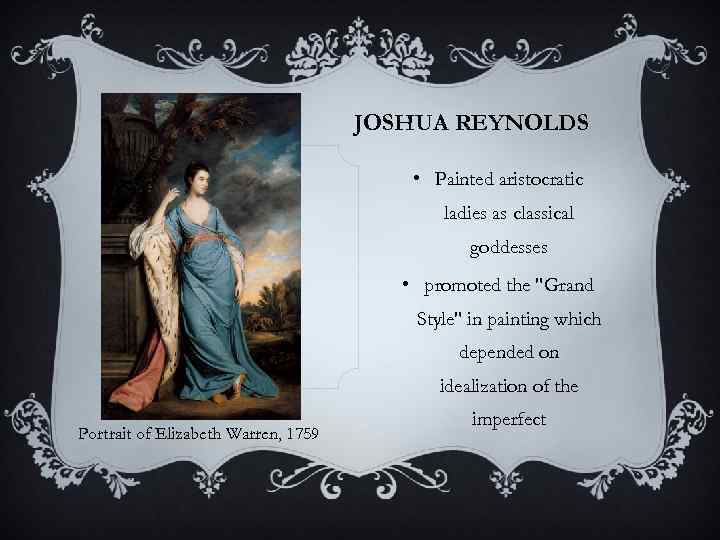 JOSHUA REYNOLDS • Painted aristocratic ladies as classical goddesses • promoted the "Grand Style" in painting which depended on idealization of the Portrait of Elizabeth Warren, 1759 imperfect
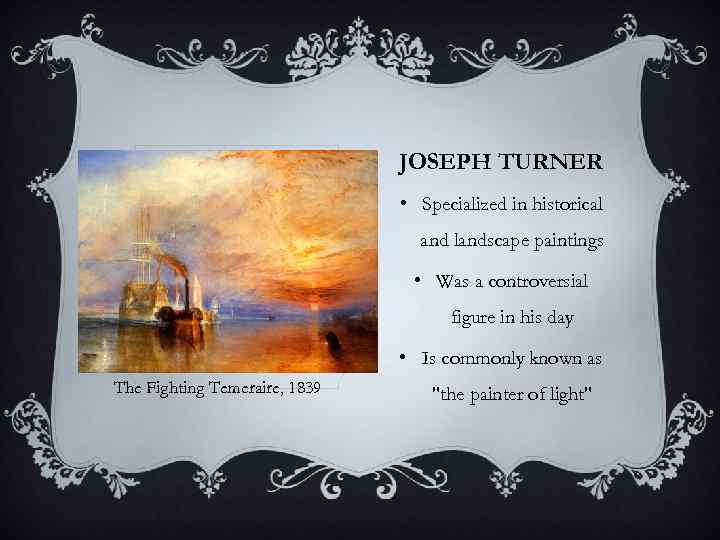 JOSEPH TURNER • Specialized in historical and landscape paintings • Was a controversial figure in his day • Is commonly known as The Fighting Temeraire, 1839 "the painter of light"
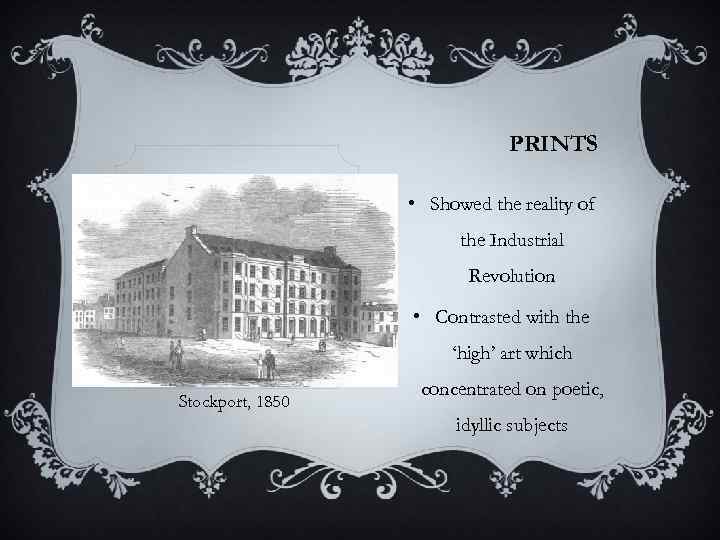 PRINTS • Showed the reality of the Industrial Revolution • Contrasted with the ‘high’ art which Stockport, 1850 concentrated on poetic, idyllic subjects
 THANKS FOR YOUR ATTENTION!