


 Скачать презентацию The Great West The Agricultural Revolution Chapter
a3fe090f19166a82fbf34909b109ea16.ppt
- Количество слайдов: 55
 The Great West & The Agricultural Revolution Chapter 26 1865 -1896
 The American West 1, 000 miles X 1, 000 miles Mountains, plateaus, deserts and plains Habitat of the Indian, the buffalo, the wild horse, the prairie dog, and the coyote Native Americans – 360, 000 by 1860
 Indian Conflict Before the white man, the Comanches had driven the Apaches of the Central Plains The Cheyenne abandoned their villages on the Upper Mississippi & Missouri Rivers and moved out onto the Plains Cheyenne and Sioux were deadly and efficient hunters and warriors mounted on horses
 White Conflict Whites brought cholera, typhoid, smallpox, and other diseases to the Native Americans Whites also steadily killed the buffalo, which were the basis of life for the Plains Indians
 Treaties The federal government tried to pacify the Indians with treaties Fort Laramie (1851) Fort Atkinson (1853) Marked the beginning of reservations on the Plains Problem: “tribes” and “chiefs” were figments of white imagination
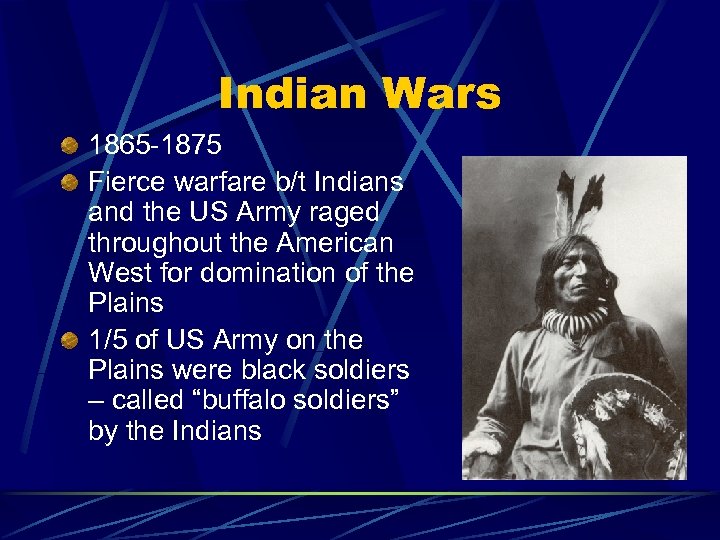 Indian Wars 1865 -1875 Fierce warfare b/t Indians and the US Army raged throughout the American West for domination of the Plains 1/5 of US Army on the Plains were black soldiers – called “buffalo soldiers” by the Indians
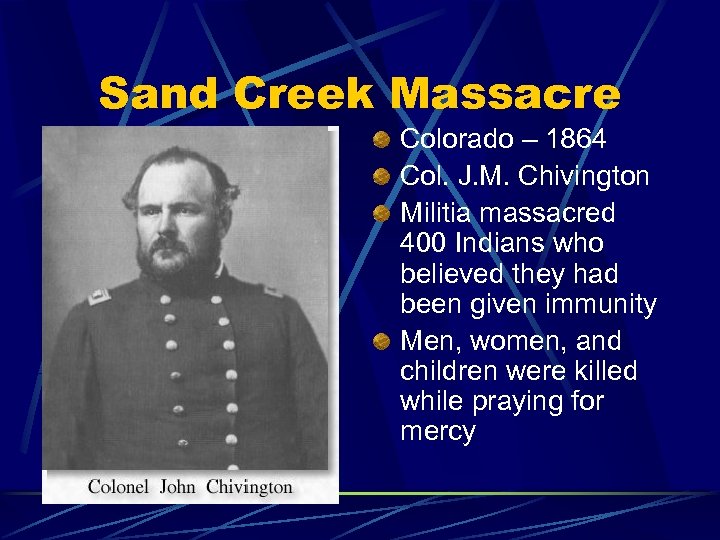 Sand Creek Massacre Colorado – 1864 Col. J. M. Chivington Militia massacred 400 Indians who believed they had been given immunity Men, women, and children were killed while praying for mercy
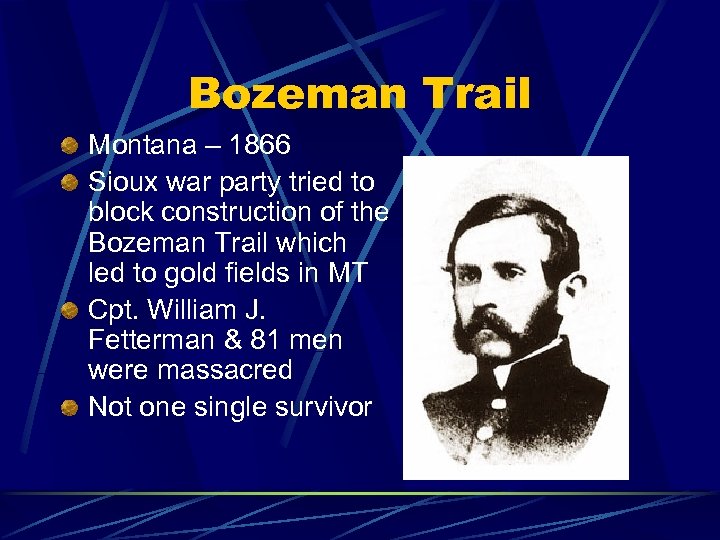 Bozeman Trail Montana – 1866 Sioux war party tried to block construction of the Bozeman Trail which led to gold fields in MT Cpt. William J. Fetterman & 81 men were massacred Not one single survivor
 Treaty of Ft. Laramie The second treaty of Ft. Laramie, WY was signed in 1868 The US government abandoned the Bozeman Trail The “Great Sioux Reservation” was given to the Sioux in the Dakota Territory
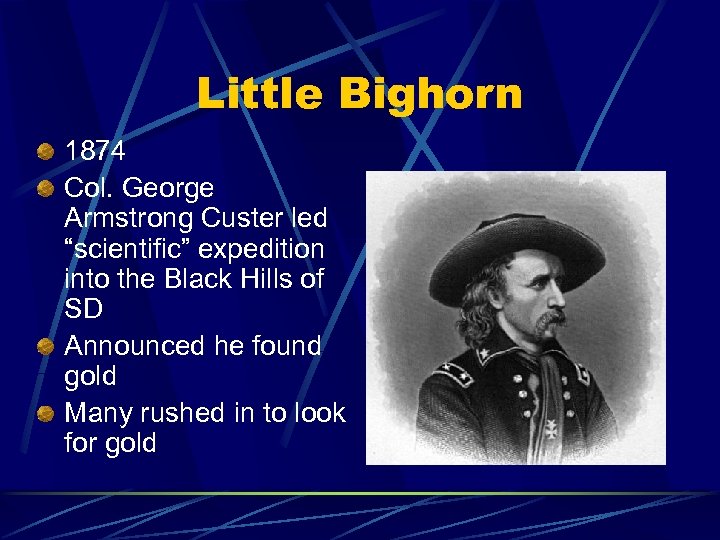 Little Bighorn 1874 Col. George Armstrong Custer led “scientific” expedition into the Black Hills of SD Announced he found gold Many rushed in to look for gold
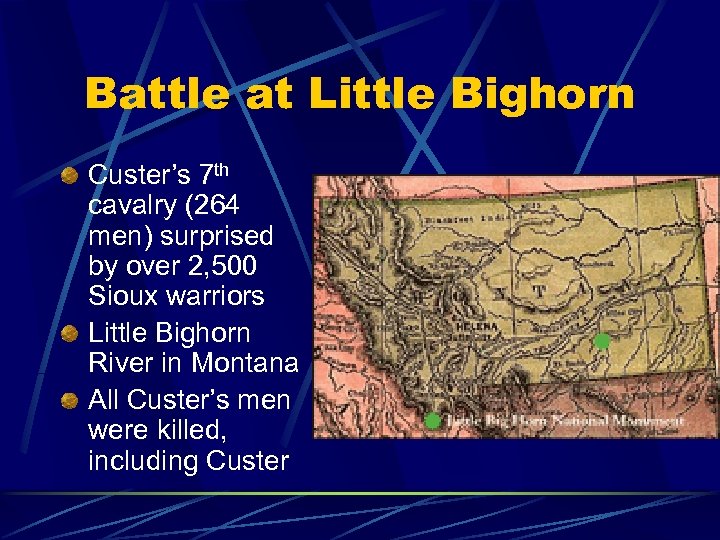 Battle at Little Bighorn Custer’s 7 th cavalry (264 men) surprised by over 2, 500 Sioux warriors Little Bighorn River in Montana All Custer’s men were killed, including Custer
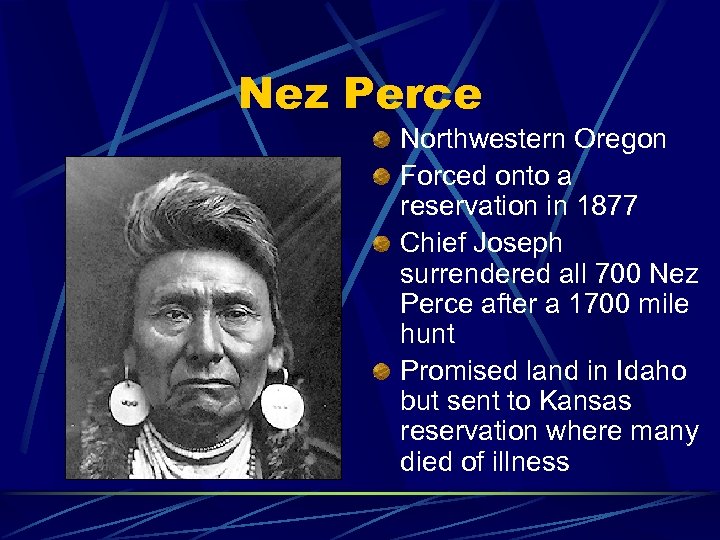 Nez Perce Northwestern Oregon Forced onto a reservation in 1877 Chief Joseph surrendered all 700 Nez Perce after a 1700 mile hunt Promised land in Idaho but sent to Kansas reservation where many died of illness
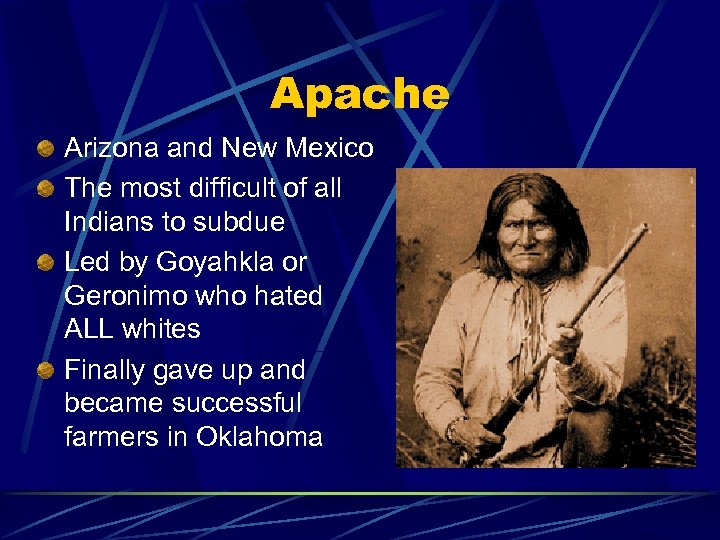 Apache Arizona and New Mexico The most difficult of all Indians to subdue Led by Goyahkla or Geronimo who hated ALL whites Finally gave up and became successful farmers in Oklahoma
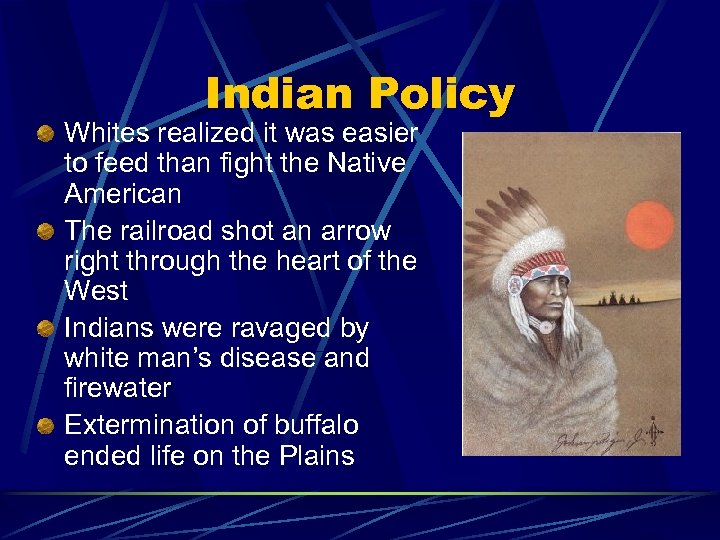 Indian Policy Whites realized it was easier to feed than fight the Native American The railroad shot an arrow right through the heart of the West Indians were ravaged by white man’s disease and firewater Extermination of buffalo ended life on the Plains
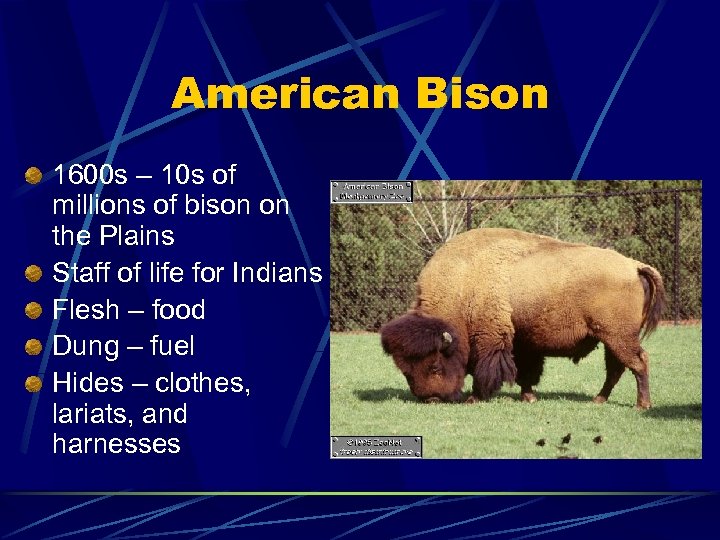 American Bison 1600 s – 10 s of millions of bison on the Plains Staff of life for Indians Flesh – food Dung – fuel Hides – clothes, lariats, and harnesses
 The Buffalo 1865 - 15, 000 bison still grazing on the Plains William “Buffalo Bill” Cody – killed 4, 000 buffalo in 18 months while employed by the Kansas Pacific RR RR = massacre of buffalo herds “sportsmen” killed buffalo from moving trains for entertainment 1885 – fewer than 1, 000 buffalo on the Plains
 Bureau of Indian Affairs 1824 – Sec of War John C. Calhoun created the BIA By 1880 s – humanitarians wanted to treat the Indian kindly and persuade them to assimilate Assimilate – to make similar; cause to resemble
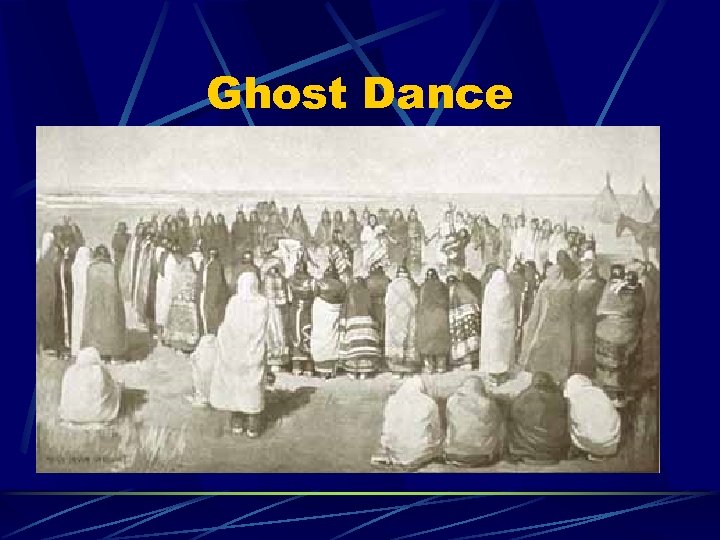 Ghost Dance
 Outlawed Dancing 1884 – federal government outlawed the Sun Dance or “Ghost Dance” appeared on Plains in the 1880 s in the Dakota Sioux. It promised of the return of the buffalo and the end of the white man US Army bloodily stamped it out at the Battle of Wounded Knee
 Battle of Wounded Knee 1890 – US Army attacks and massacres 200 men, women, and children for performing the dance This was the last major Indian battle on the Great Plains Only 29 US soldiers were killed in the massacre
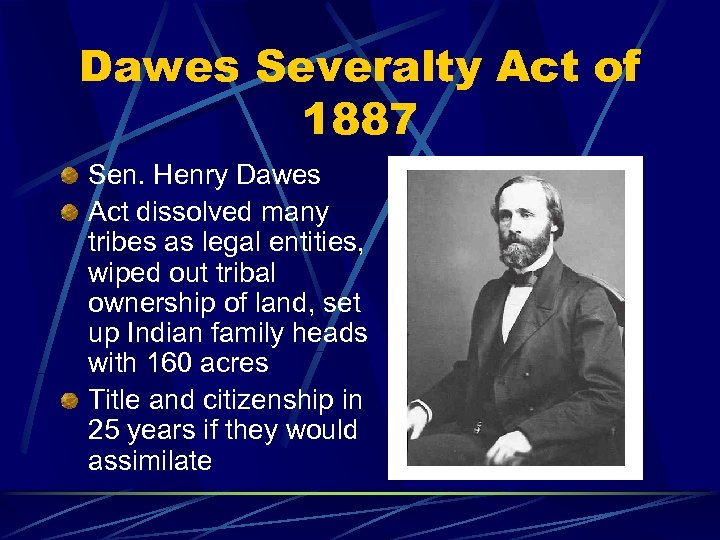 Dawes Severalty Act of 1887 Sen. Henry Dawes Act dissolved many tribes as legal entities, wiped out tribal ownership of land, set up Indian family heads with 160 acres Title and citizenship in 25 years if they would assimilate
 Indian Policy Indians not granted full citizenship until 1924 Reservation land not allotted was sold to RR and settlers
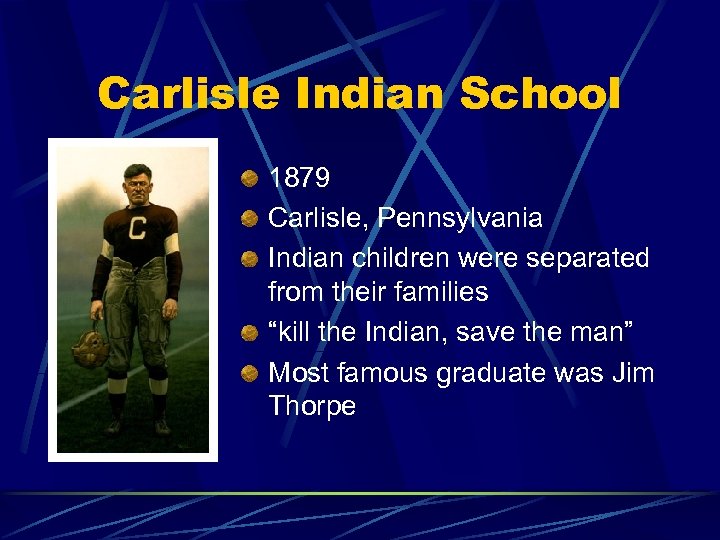 Carlisle Indian School 1879 Carlisle, Pennsylvania Indian children were separated from their families “kill the Indian, save the man” Most famous graduate was Jim Thorpe
 Indian Policy 1900 – Indians had lost 50% of the 156, 000 acres they held in 1880 Dawes Act forced assimilation and served as government policy for the next 50 years until the Indian Reorganization Act of 1934
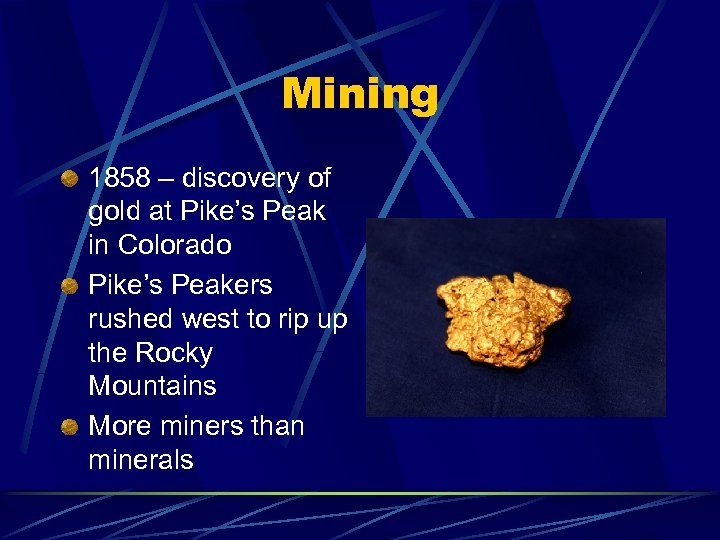 Mining 1858 – discovery of gold at Pike’s Peak in Colorado Pike’s Peakers rushed west to rip up the Rocky Mountains More miners than minerals
 Comstock Lode 1859 – Nevada’s Comstock Lode was uncovered Gold and silver worth $340 million 1860 -1890 Helped finance the US Civil War Lucky Strikes at MT, ID and other western locations
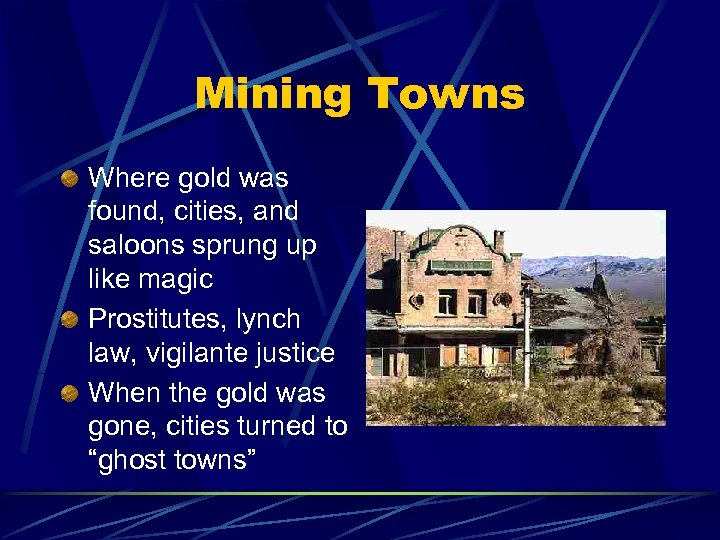 Mining Towns Where gold was found, cities, and saloons sprung up like magic Prostitutes, lynch law, vigilante justice When the gold was gone, cities turned to “ghost towns”
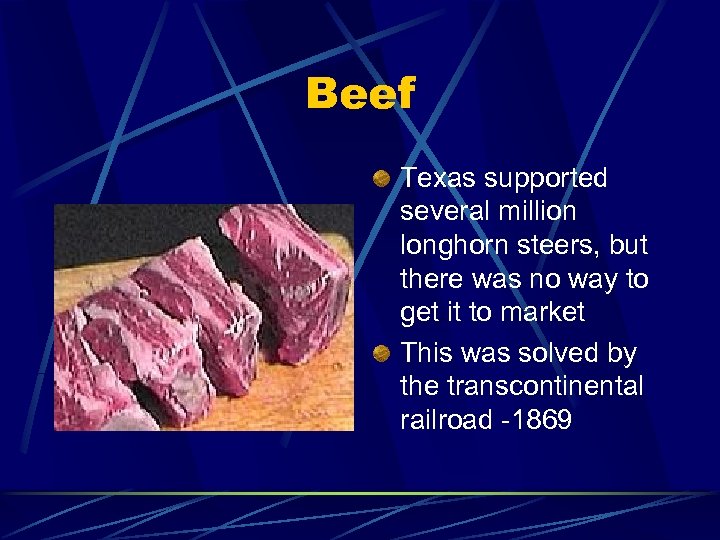 Beef Texas supported several million longhorn steers, but there was no way to get it to market This was solved by the transcontinental railroad -1869
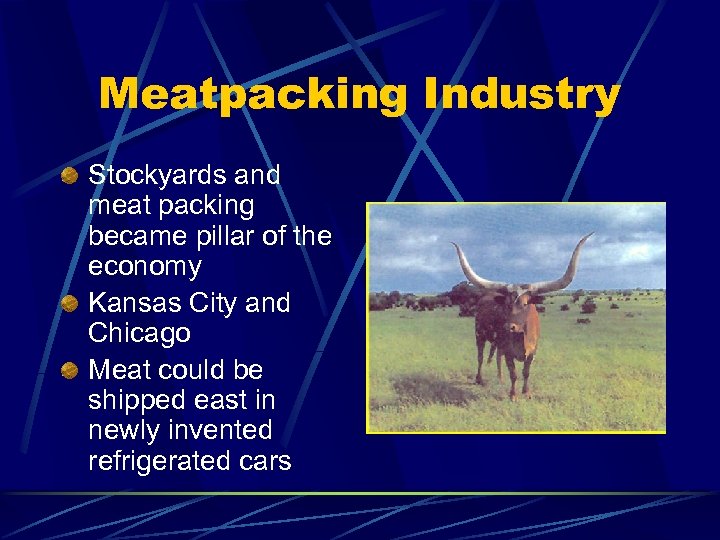 Meatpacking Industry Stockyards and meat packing became pillar of the economy Kansas City and Chicago Meat could be shipped east in newly invented refrigerated cars
 Long Drive Texas cowboys (Black, White, and Mexican) drove herds of 1, 000 -10, 000 over the Plains until they reached a RR terminal Cows grazed on free government grass Dodge City, Kan. ; Ogallala, Neb. ; Abilene, Kan. ; Cheyenne, Wyo. “heyday of the cowboy”
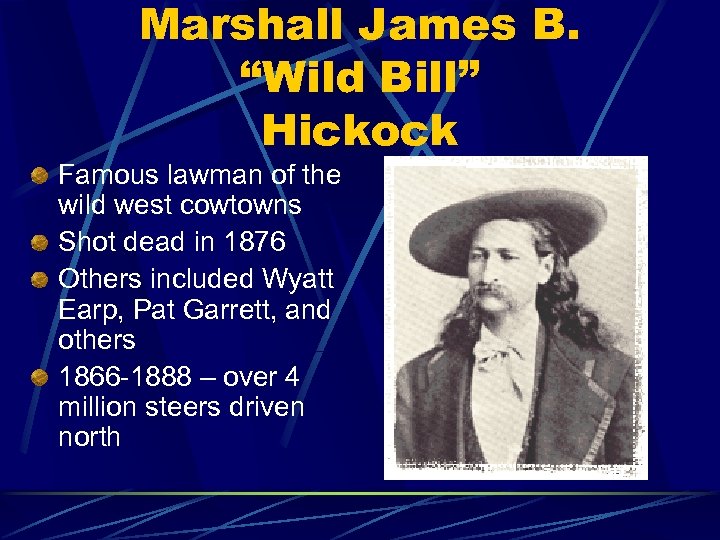 Marshall James B. “Wild Bill” Hickock Famous lawman of the wild west cowtowns Shot dead in 1876 Others included Wyatt Earp, Pat Garrett, and others 1866 -1888 – over 4 million steers driven north
 Homesteaders People moving onto the Plains got into the way of cattle drives Barbed wire fences cut off the open Plains Winter of 1886 -1887 – 68 degrees below zero
 Homestead Act (1862) Allowed a settler to acquire as much as 160 acres of land by living on it for five years, improving the land, and paying a small fee of $30 Drastic departure from previous policy Public land had been sold for revenue 500, 000 families took advantage of Homestead Act 2/3 gave up b/c of drought and lack of water
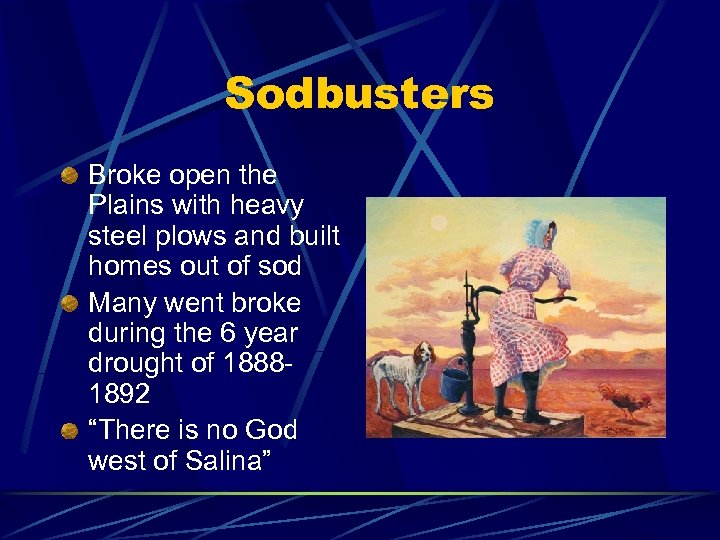 Sodbusters Broke open the Plains with heavy steel plows and built homes out of sod Many went broke during the 6 year drought of 18881892 “There is no God west of Salina”
 Dry-farming Frequent shallow cultivation adapted for arid western environment Created finely pulverized surface soil that contributed to the “Dust Bowl” of the 1930 s 45 million acres were eventually irrigated in 17 states by hydraulic engineers who dammed up the Missouri and Columbia Rivers
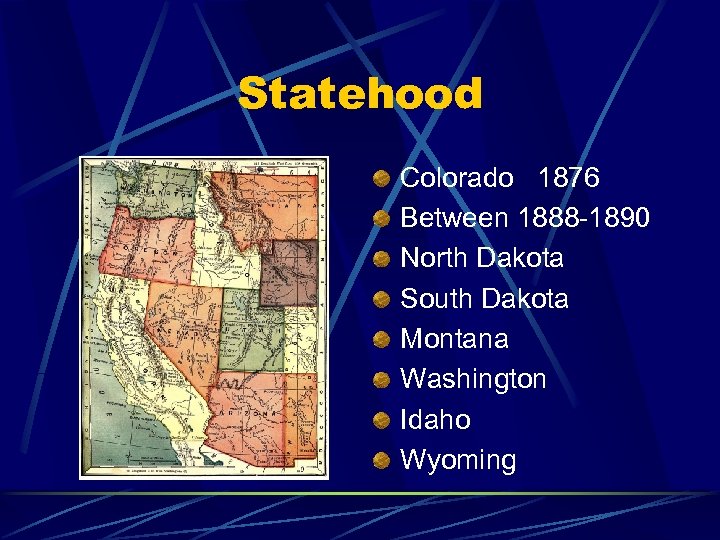 Statehood Colorado 1876 Between 1888 -1890 North Dakota South Dakota Montana Washington Idaho Wyoming
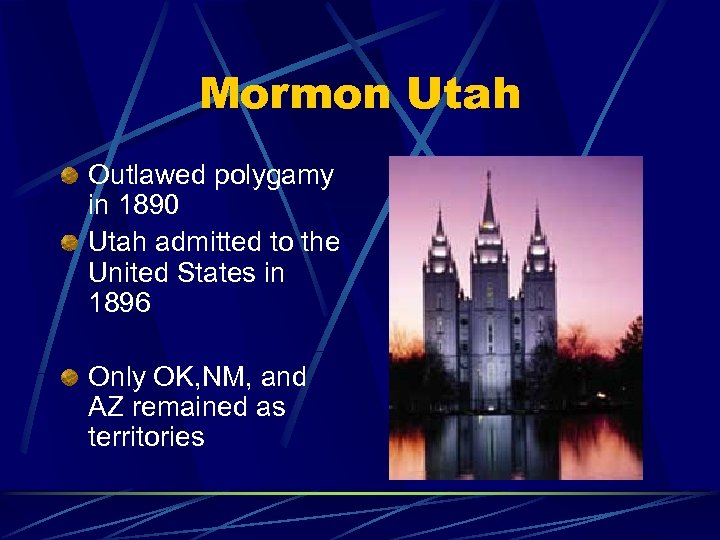 Mormon Utah Outlawed polygamy in 1890 Utah admitted to the United States in 1896 Only OK, NM, and AZ remained as territories
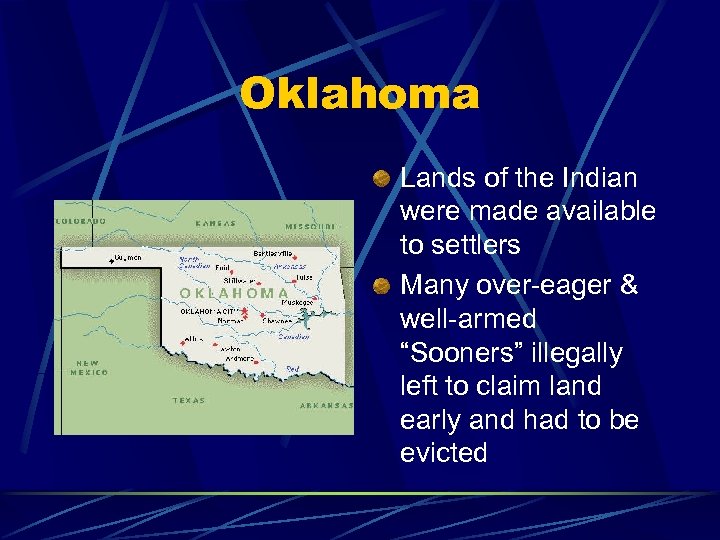 Oklahoma Lands of the Indian were made available to settlers Many over-eager & well-armed “Sooners” illegally left to claim land early and had to be evicted
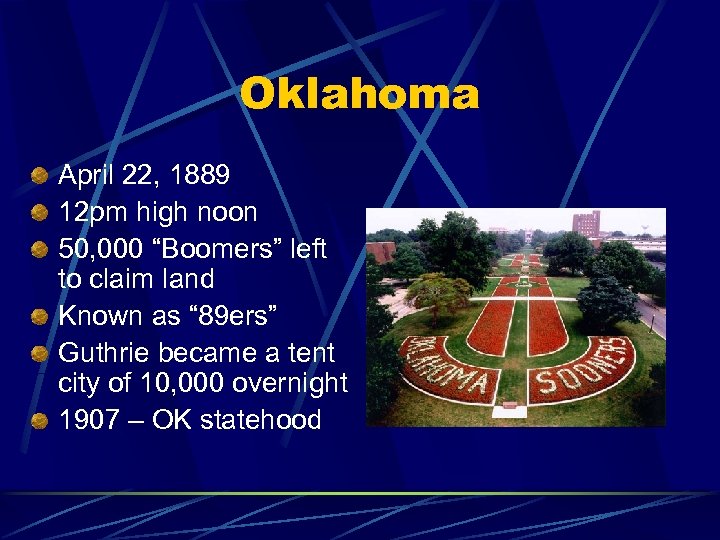 Oklahoma April 22, 1889 12 pm high noon 50, 000 “Boomers” left to claim land Known as “ 89 ers” Guthrie became a tent city of 10, 000 overnight 1907 – OK statehood
 1890 – End of the Frontier 1890 – superintendent of the census declared that the frontier line was gone and was no longer evident on mainland United States Frederick Jackson Turner – The Significance of the Frontier in American History 1893 Americans worried that no more free land existed
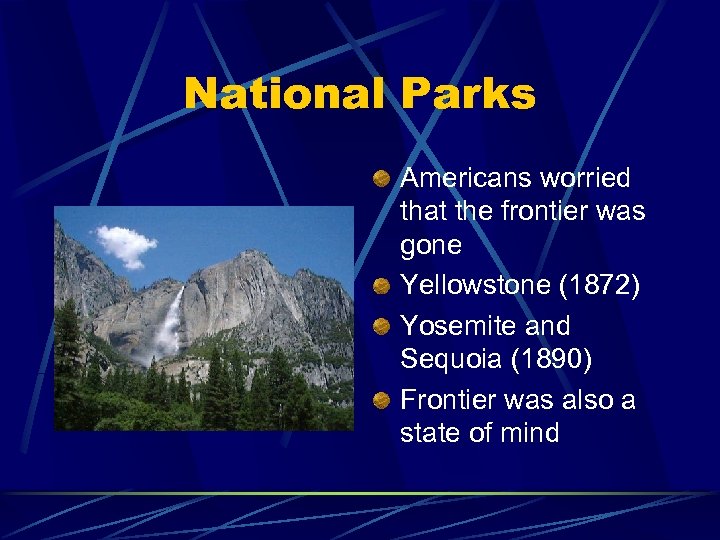 National Parks Americans worried that the frontier was gone Yellowstone (1872) Yosemite and Sequoia (1890) Frontier was also a state of mind
 S. F. and Denver Western cities like San Francisco and Denver became “safety valves” for failed western farmers 1880 – Rocky Mountains to the Pacific Coast was the most urbanized region in America by % of people in cities American Southwest collides with Hispanic influence that remains today
 Farms High prices convinced farmers to focus on one “cash” crop Would use profits to buy foodstuffs and necessities at the general store Manufactured goods bought in town or through mail order Chicago firm of Aaron Montgomery Ward made first mail order catalogue in 1872
 Bonanza Farms Enormous factory like farms with large harvest for profit 1890 – some bonanza farms were over 15, 000 acres apiece
 Money Supply Not enough money to go around 1870 - $19. 42 in money supply person 1890 - $22. 67 in money supply person Intensified scramble for available currency
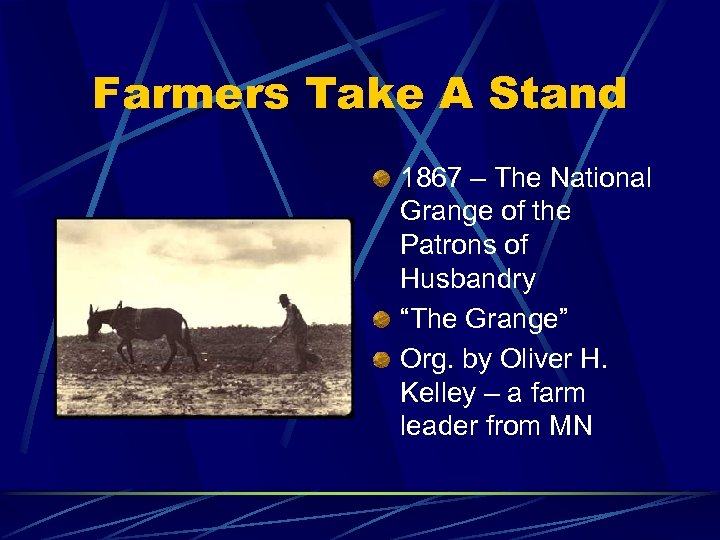 Farmers Take A Stand 1867 – The National Grange of the Patrons of Husbandry “The Grange” Org. by Oliver H. Kelley – a farm leader from MN
 The Grange 1 st obj. – enhance the lives of isolated farmers through social, educational, and fraternal activities Picnics l Concerts l Lectures l Some even joined the Masons l 1875 – 800, 000 members in South and Midwest l Est. co-op stores, and co-op grain elevators l
 The Greenback Labor Party Farmers backed their program for improving labor laws, and releasing silver to back the money Greenbacks elected 14 members to Congress
 Prelude To Populism Farmers’ Alliance – founded in Texas in late 1870 s Farmers come together to socialize and help one another out through co-op buying and selling 1890 – one million members Weakened itself by not allowing blacks and excluding all tenant farmers and farm laborers Colored Farmers National Alliance – org. 1890
 American Populism Peoples’ Party Their attack was against Wall St. Populists wanted to nationalize the RR, telephones, and telegraph Wanted a gradual income tax
 Populist Party Called for a loan institution for farmers (a sub-treasury) Wanted free and unlimited silver coinage – many Populists believed this was a cure-all By 1892, Populists had won several seats in Congress and James B. Weaver won over 1 million votes in the presidential election
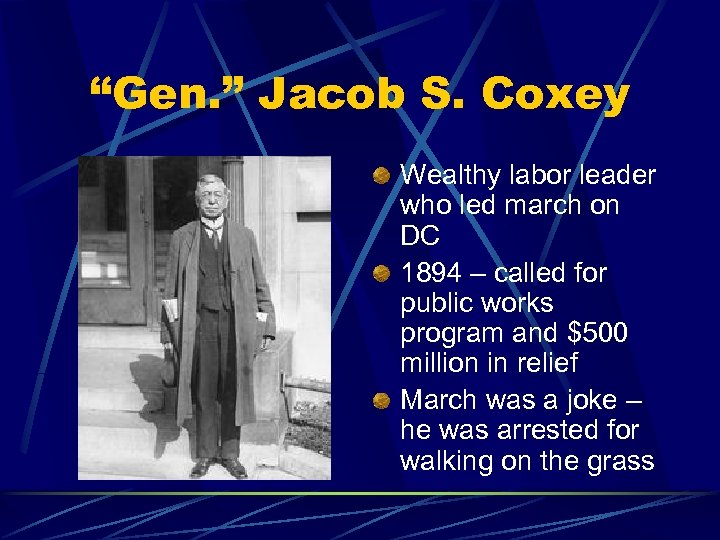 “Gen. ” Jacob S. Coxey Wealthy labor leader who led march on DC 1894 – called for public works program and $500 million in relief March was a joke – he was arrested for walking on the grass
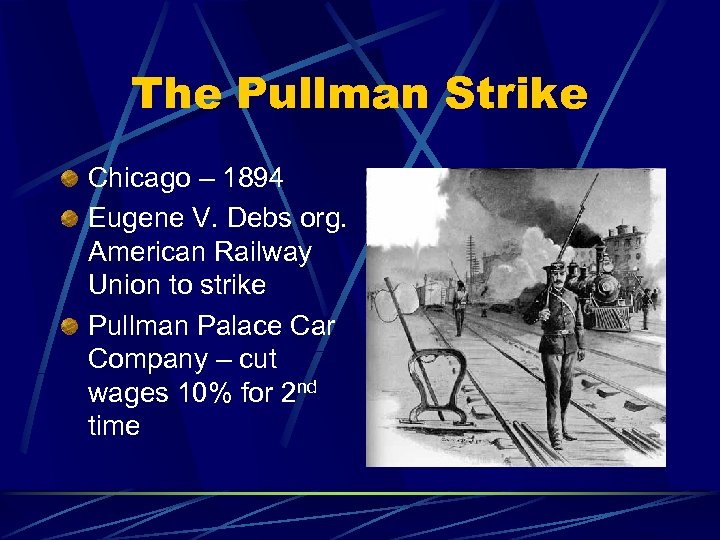 The Pullman Strike Chicago – 1894 Eugene V. Debs org. American Railway Union to strike Pullman Palace Car Company – cut wages 10% for 2 nd time
 Pullman Strike Wages cut, workers went on strike Paralyzed RR from Chicago to Pacific Coast American Federation of Labor (AF of L) did not support strike President Cleveland was advised to call in federal troops to crush the strike Debs spent 6 months in jail
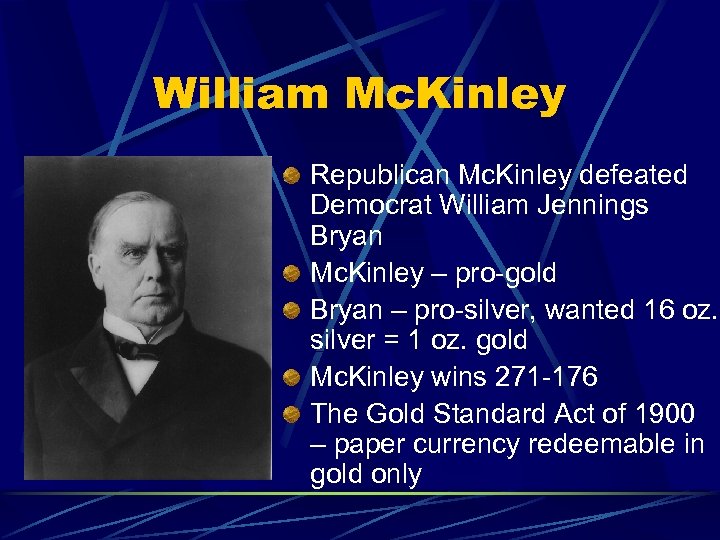 William Mc. Kinley Republican Mc. Kinley defeated Democrat William Jennings Bryan Mc. Kinley – pro-gold Bryan – pro-silver, wanted 16 oz. silver = 1 oz. gold Mc. Kinley wins 271 -176 The Gold Standard Act of 1900 – paper currency redeemable in gold only