 Скачать презентацию The Global Trade Regime Today Appellate Body of
e353ff1b8d3456587b32e061f65316c7.ppt
- Количество слайдов: 68



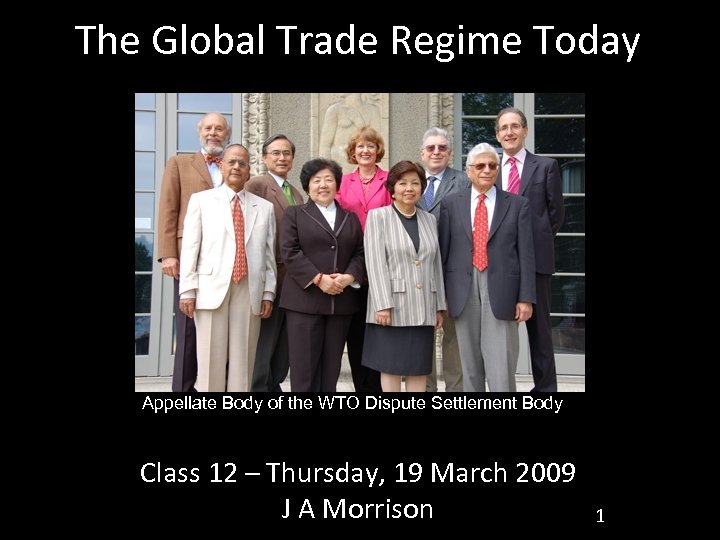
The Global Trade Regime Today Appellate Body of the WTO Dispute Settlement Body Class 12 – Thursday, 19 March 2009 J A Morrison 1

Admin – Returned Mock Exams – Website load problems? – Why does Microsoft Power. Point want to hurt me? I’m trying Keynote. 2
Last time, we discussed the GATT’s creation and its emergence as the cornerstone of the postwar trade regime. 3
Today, we’ll return to the RTAA and consider six or seven more explanations of its creation. (Just kidding. ) 4
Today, we’ll build on this foundation to explain and consider the global trade regime as it exists today. 5
Agenda: Postwar Trade Regime I. From the GATT to the WTO II. Regionalism vs Multilateralism III. Doha: The Colonies Strike Back IV. Discussion Points 6
Agenda: Postwar Trade Regime I. From the GATT to the WTO II. Regionalism vs Multilateralism III. Doha: The Colonies Strike Back IV. Discussion Points 7
I. From the GATT to the WTO 1. Why the move to the WTO? 2. Key Features of the WTO 3. Decision-making in the WTO 8
In Marrakesh Agreement (1 January 1995), the GATT was displaced by the newly created World Trade Organization (WTO). For all practical purposes, the GATT was dead. Why? 9
On Tuesday, we saw how the “Provisional” framework of the GATT successively deepened, broadened, and formalized over the last half century that followed. 10
This raises a puzzle: If the GATT proved so resilient, flexible, and durable, why was it formally replaced by the WTO? Why wasn’t the GATT just revised and expanded as it had been in the past? 11
The WTO website reports that the GATT was not really killed by the move to the WTO: “The WTO replaced GATT as an international organization, but the General Agreement still exists as the WTO’s umbrella treaty for trade in goods, updated as a result of the Uruguay Round negotiations. Trade lawyers distinguish between GATT 1994, the updated parts of GATT, and GATT 1947, the original agreement which is still the heart of GATT 1994. Confusing? For most of us, it’s enough to refer simply to ‘GATT’. ” (http: //www. wto. org/english/thewto_e/whatis_e/tif_e/fact 5_e. htm) 12
The WTO just frames itself as an expanded version of the GATT. According to the WTO, the GATT just needed further expansion which the “umbrella” of the WTO would provide. 13
It’s certainly true that the WTO expanded the trade regime well beyond the parameters of the GATT. But the transition from the GATT to the WTO was not evolutionary like the previous revisions of the GATT… 14 13
The shift to the WTO was revolutionary. Here’s the story… 15 14
Remember this slide from Tuesday? This point had significant implications It explained why the GATT was appealing. 16 15
Tokyo Troubles • Tokyo Round (1973 -1979) • Infamous “Side Agreements” – Developing countries want exceptions: MFN treatment without signing all codes – GATT becomes “plurilateral” • Brazil, India, & Egypt threaten to block consensus 17
US Response • US threatens to walk out • US will sign new agreements as part of “GATTPlus” Regime ➔ But the US eventually caved. 18
Why? 19
Barton, et al: the Cold War. (p 64 -66) 20
The situation, however, changed with the Uruguay Round (1986 -1994). The Cold War had ended, and the bargaining position of the developed countries had increased considerably. 21
The Move to the WTO • 1990: US & EC agree to “single undertaking” in creation of WTO – All agreements must be accepted as 1 package • WTO is “legally distinct from the General Agreement on Tariffs and Trade, dated 30 October 1947. " • After creating WTO, US & EC withdrew from GATT 1947 – Effect: Developing countries to sign onto the WTO to get access to the US & EC 22
WTO Website: “Trade lawyers distinguish between GATT 1994, the updated parts of GATT, and GATT 1947, the original agreement which is still the heart of GATT 1994. . . For most of us, it’s enough to refer simply to ‘GATT’. ” ➔ Not if you’re a developing country. 23
So, what set the WTO apart? 24
I. From the GATT to the WTO 1. Why the move to the WTO? 2. Key Features of the WTO 3. Decision-making in the WTO 25
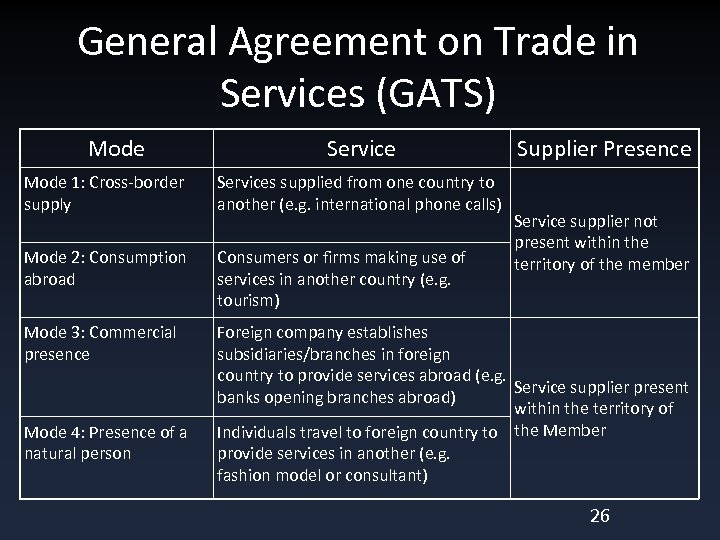
General Agreement on Trade in Services (GATS) Mode Service Supplier Presence Mode 1: Cross-border supply Services supplied from one country to another (e. g. international phone calls) Mode 2: Consumption abroad Consumers or firms making use of services in another country (e. g. tourism) Mode 3: Commercial presence Foreign company establishes subsidiaries/branches in foreign country to provide services abroad (e. g. Service supplier present banks opening branches abroad) within the territory of Individuals travel to foreign country to the Member provide services in another (e. g. fashion model or consultant) Mode 4: Presence of a natural person Service supplier not present within the territory of the member 26
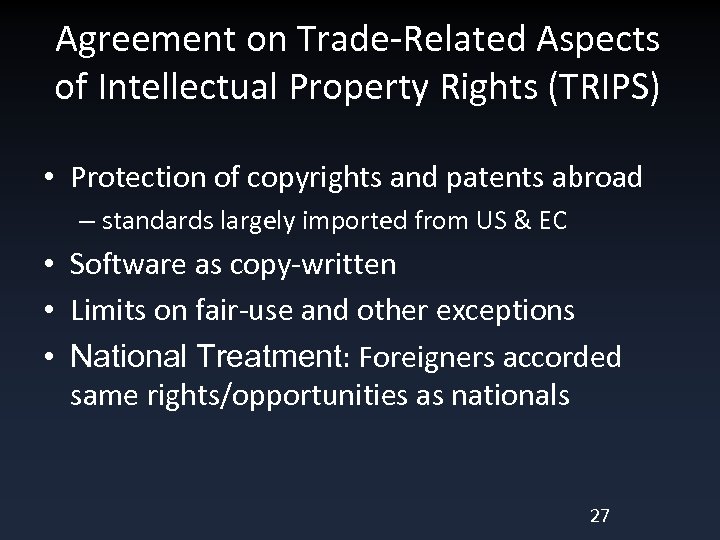
Agreement on Trade-Related Aspects of Intellectual Property Rights (TRIPS) • Protection of copyrights and patents abroad – standards largely imported from US & EC • Software as copy-written • Limits on fair-use and other exceptions • National Treatment: Foreigners accorded same rights/opportunities as nationals 27
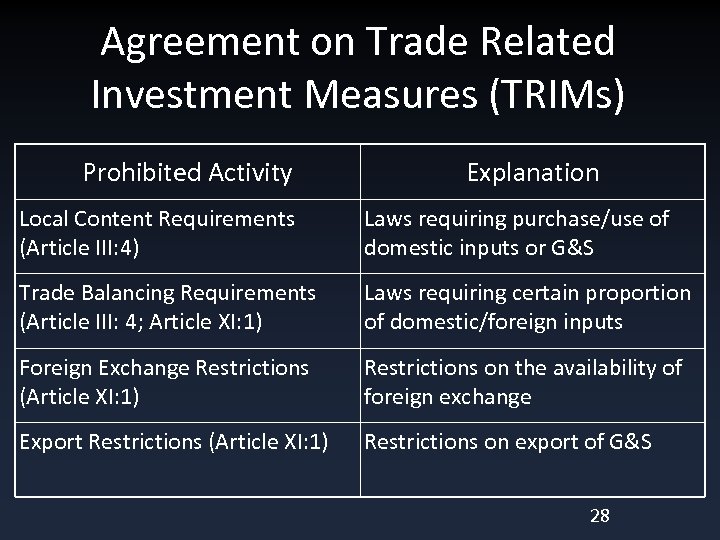
Agreement on Trade Related Investment Measures (TRIMs) Prohibited Activity Explanation Local Content Requirements (Article III: 4) Laws requiring purchase/use of domestic inputs or G&S Trade Balancing Requirements (Article III: 4; Article XI: 1) Laws requiring certain proportion of domestic/foreign inputs Foreign Exchange Restrictions (Article XI: 1) Restrictions on the availability of foreign exchange Export Restrictions (Article XI: 1) Restrictions on export of G&S 28
“Buy American. ”? 29
Limits of TRIMS • Mandates self-reporting • Exceptions for developing countries • Transition Period – Developed: 2 Years – Developing: 5 Years – Least Developed: 7 Years • “Buy American” – US: we can choose how to spend tax money – EU, Canada, Brazil: We’ll see you in court! 30
Dispute Settlement Understanding (DSU) • Dispute Settlement Body (DSB) – WTO “Court” -- Decides trade disputes – DSB = Entire body of WTO – Appellate Body: Select 7 on 4 -year Terms • Dispute Settlement Process – Consultation: states attempt to resolve dispute – Panel & Expert Reviews ➔ Panel Report: Decision – Loser has option for Appellate Review – Implementation – Retaliation for Non-implementation 31
How does the WTO make decisions? How does the WTO vote? 32
I. From the GATT to the WTO 1. Why the move to the WTO? 2. Key Features of the WTO 3. Decision-making in the WTO 33
Formally, the WTO makes all decisions by consensus (unanimous decision). (Article IX) Dispute Decisions can be overturned only by reverse-consensus--meaning all states (including the winner of the dispute) vote to overturn the decision. 34
What is the implication of this? 35
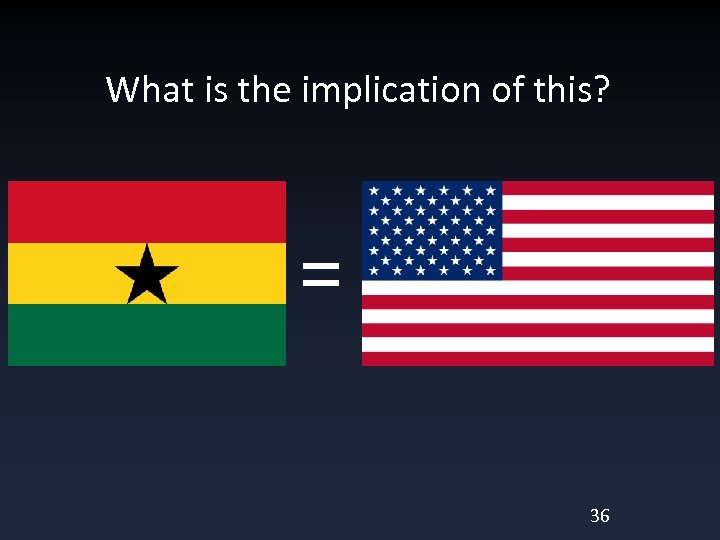
What is the implication of this? = 36
Well, actually, not so much. This is what really happens. . . 37
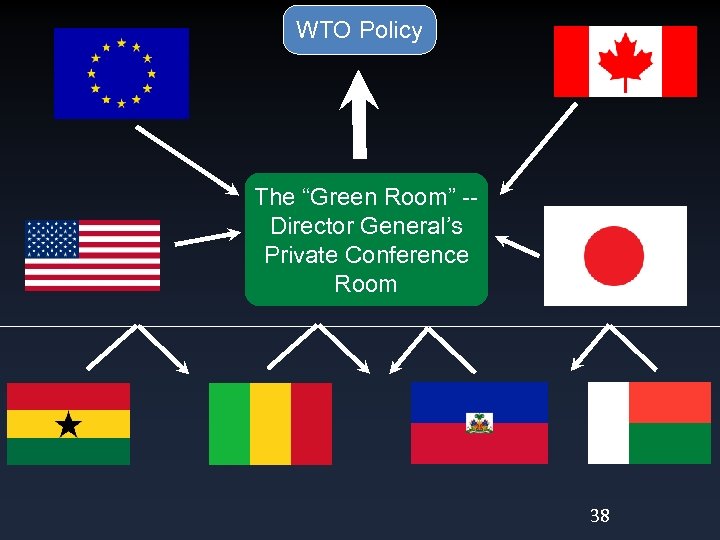
WTO Policy The “Green Room” -Director General’s Private Conference Room 38
Remember the Canadians’ two-step plan in which a “nucleus” agrees on policy and generalizes it to the other members? We’re still doing that. . . 39
Power-Based Bargaining • Quad Countries: US, EU, Japan, & Canada – Set agenda – Dominate Green Room Caucus • Unequal resources for handling disputes • Strong countries intimidate weak countries • Developed countries threaten to abandon and remake regime 40
Agenda: Postwar Trade Regime I. From the GATT to the WTO II. Regionalism vs Multilateralism III. Doha: The Colonies Strike Back IV. Discussion Points 41
On Tuesday, we discussed the essential disagreement between GB and the US over the matter of Imperial Preference. The US wanted a multilateral trade regime; and GB wanted to preserve its right to organize Preferential/Regional Trade Agreements (PTAs/RTAs). 42
GB was ultimately pressed to phase out Imperial Preference. But the pattern of allowing PTAs persisted. 43
Despite the MFN principle, Article XXIV allows for PTAs. These are sometimes called “Article XXIV exceptions. ” 44
This raises two key questions: 45
(1) Effect on Trade • Do PTAs increase or divert trade? – Increase: PTAs foster trade that would not otherwise exist – Divert: PTAs capture trade that would otherwise take place with nonmembers of the PTA 46
(2) Effect on Trade Policy • Do PTAs encourage additional liberalization? – PTAs as Stepping Stones: Once states experience the benefits of liberalization, they are more likely to liberalize multilaterally – PTAs as Alternatives: Why would Canada need to trade with the US when it has a great thing going with the British Empire? 47
Agenda: Postwar Trade Regime I. From the GATT to the WTO II. Regionalism vs Multilateralism III. Doha: The Colonies Strike Back IV. Discussion Points 48
So the WTO radically expanded liberalization to include services, investment, and intellectual property. 49
Who does that serve? Who has a comparative advantage in the production of those domains? 50
The Developed World--“The North. ” 51
November 2001 brought the start of the latest round of trade negotiation. This round was launched in Doha, Qatar at the insistence of the developing countries. 52
It brings us the Doha Development Agenda. 53
Of course, Doha has brought further expansion and deepening of the GATS, TRIPS, and TRIMS agreements. 54
But the major focus has been on agriculture. 55
Since GATT 1947, agriculture has always been the exception to the rule of trade liberalization. Agriculture has been heavily managed in both developed and developing countries. 56
Developing countries conjecture, however, that agricultural liberalization would play to their comparative advantage--particularly since they have been exposed to increased competition in other sectors as a result of the WTO. 57
But talks have stalled repeatedly. And there is talk that “Doha has failed. ” 58
What gives? 59
First, recognize that food is different. 60
Food is Different • Food is a real necessity; food is a security issue • Undifferentiated product ➔ fierce competition • Considerable health & safety concerns • Plausible cultural arguments for management • Well-entrenched interest groups 61
So, what is going to happen? Will Europe ease the Common Agricultural Policy (CAP)? Will the US stop supporting farmers? 62
Here are two alternative stories. . . 63
(1) 1846 All Over Again • Developed world will realize its comparative advantage • Developed world will seek resolution with developing world • Leaders will find creative ways to “sell” the policy to agro-business 64
(2) 1994 All Over Again • Developed world will realize its powerful advantage • Developed world will choose to dominate developing world • Leaders will find a way to conclude Doha with moderate “liberalization” on agriculture and increased liberalization on services, IP, &c. 65
Agenda: Postwar Trade Regime I. From the GATT to the WTO II. Regionalism vs Multilateralism III. Doha: The Colonies Strike Back IV. Discussion Points 66
Positive Questions • What do we expect will be the results of the Doha Round? • Does the WTO matter? Is the WTO itself trade -creating or trade-diverting? • Will PTAs undermine the Multilateral Regime? 67
Normative Questions • Should we press for liberalization at all? • What should be our preference hierarchy in the global trade regime? – – Development Equality Stability “Sustainability” -- short-term versus long-term benefits and our discount rate • Should the WTO be the cornerstone of the global trade regime? • Should we remedy the “democratic gap”? If so, how? • How else should we reform the WTO? 68
Скачать презентацию The Global Trade Regime Today Appellate Body of
e353ff1b8d3456587b32e061f65316c7.ppt