 Скачать презентацию The Global Politics of Indonesian Nuclear Power Richard
2861c2d04558eeb421c5f1f4f0bb2b7f.ppt
- Количество слайдов: 61



The Global Politics of Indonesian Nuclear Power Richard Tanter Nautilus Institute for Security and Sustainability rtanter@nautilus. org University of Melbourne 29 August 2012
Outline • • • Attitude to nuclear power - general and specific Why research Indonesian nuclear power? The Fukushima effects? The role of Islamic resistance and analysis: Rationales for PLTN proposal: climate change; energy security; cost Site and alternative sites Risks The Indonesian setting The global setting Players in political ecology of NPP proposal: nuclear pushers, nuclear resisters, & state of play • Australia and proliferation risk: De-escalating threats and fantasies 1
Specific case of current nuclear power planning in Indonesia • Suspects with a nuclear history and rising misperceptions • Requirements for democratic accountability in electricity policy • Principal risks specific to current proposal – – Risk 1. Financial Risk 2. Regulation and safety Risk 3. Seismic and tectonic risk Risk 4. Nuclear weapon proliferation 2
The Fukushima effects? 3
The role of Islamic resistance and analysis: • September 2007 Nahdlatul Ulama Jepara bahtsul masa’il • Two generations of NU resistance leadership in Jepara 4
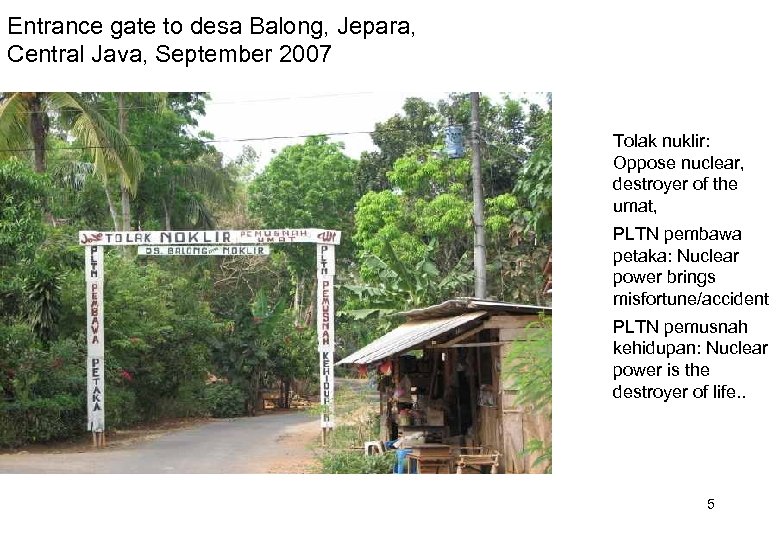
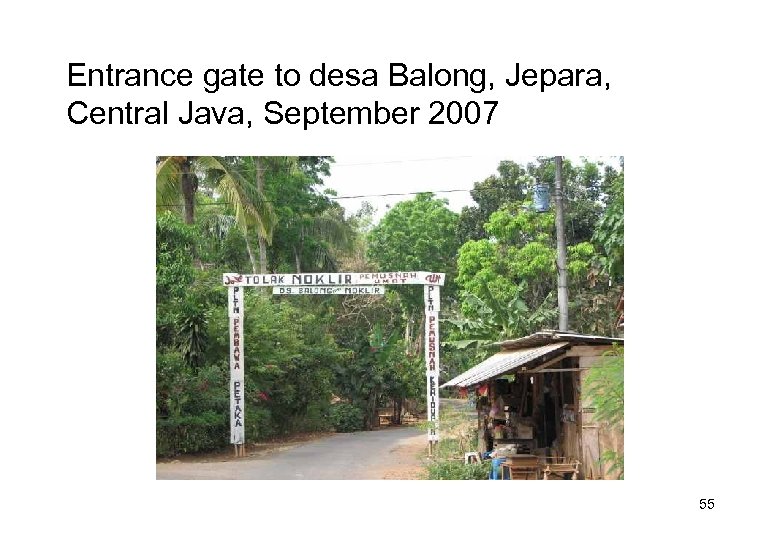
Entrance gate to desa Balong, Jepara, Central Java, September 2007 Tolak nuklir: Oppose nuclear, destroyer of the umat, PLTN pembawa petaka: Nuclear power brings misfortune/accident PLTN pemusnah kehidupan: Nuclear power is the destroyer of life. . 5
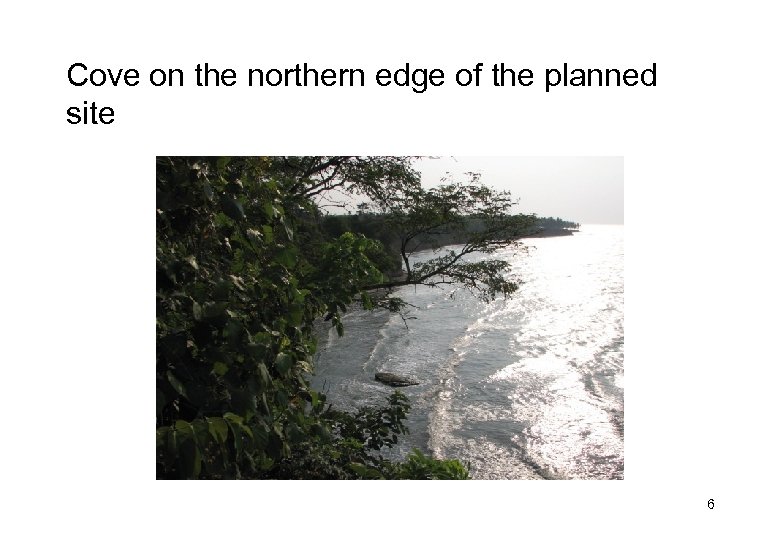
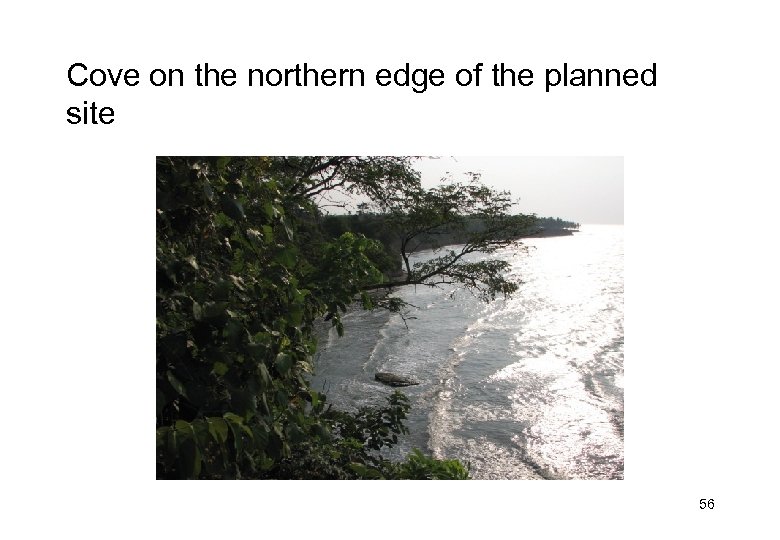
Cove on the northern edge of the planned site 6
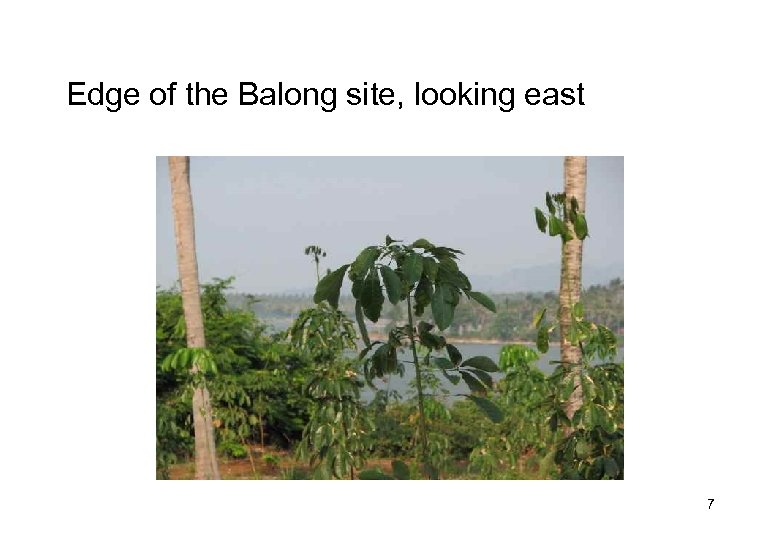
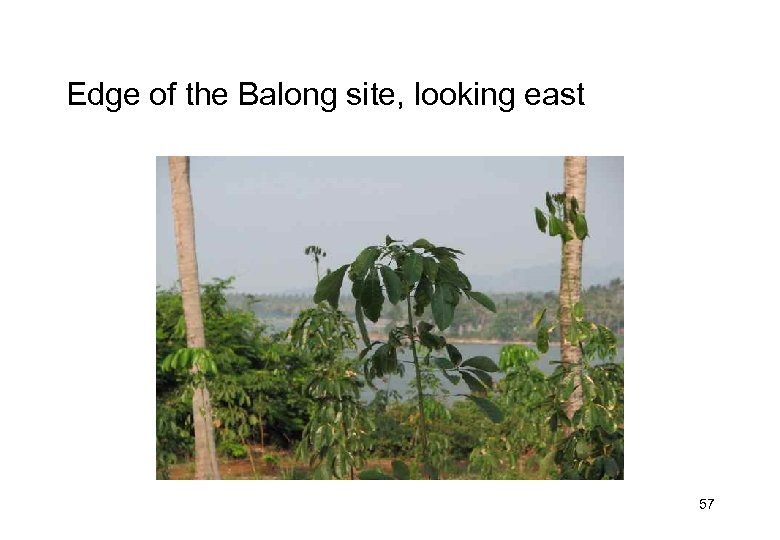
Edge of the Balong site, looking east 7
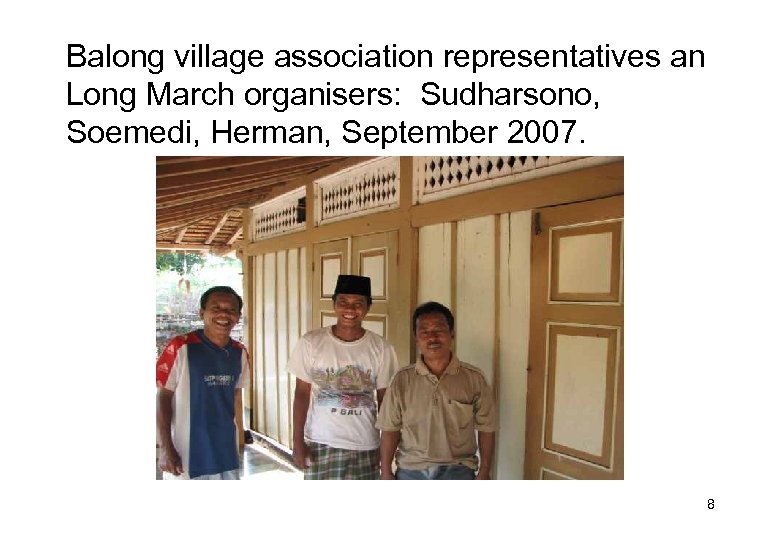
Balong village association representatives an Long March organisers: Sudharsono, Soemedi, Herman, September 2007. 8
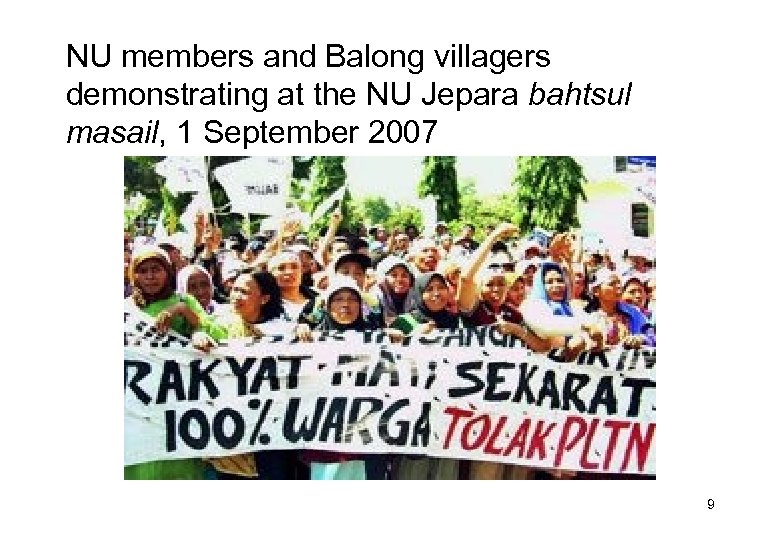
NU members and Balong villagers demonstrating at the NU Jepara bahtsul masail, 1 September 2007 9
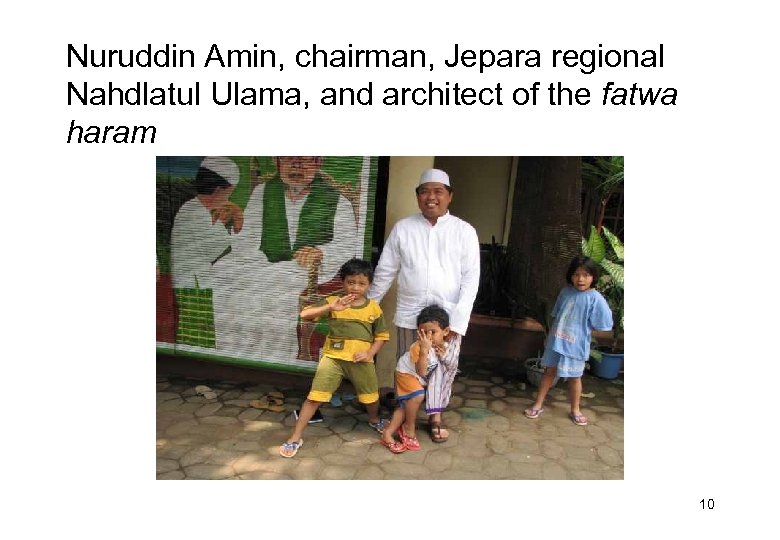
Nuruddin Amin, chairman, Jepara regional Nahdlatul Ulama, and architect of the fatwa haram 10
Reason 1 to study PLTN planning: Suspects with a nuclear history • Both Indonesia and Australia had secret nuclear weapons programs in the middle Cold War period – Indonesia: 1960 -1965 - never serious; ended with coup – Australia: 1950 s - 1972 - very serious; ended by US insistence over NPT 11
Indonesian nuclear proliferation issues • Robert M. Cornejo, ‘When Sukarno Sought the Bomb: Indonesian Nuclear Aspirations in the Mid 1960 s, ’ The Nonproliferation Review, Summer 2000 • Indonesian nuclear proliferation – contemporary, Nautilus Institute – http: //www. nautilus. org/projects/holding/reframing/austind-nuclear/ind-nw/ind-np-now 12
Australia nuclear proliferation history • Stopped by United States in early 1970 s • Many good academic studies and documentation • See: Australia nuclear proliferation history, Nautilus Institute: – http: //www. nautilus. org/projects/holding/reframing/austind-nuclear/aust-prolif-hist-list • Royal Australian Air Force institutional memory – RAAF bought F-111 s bombers in 1960 s, reflecting planning for nuclear delivery capability from 1963 decisions – For bombing of Surabaya and Jakarta • Indonesia security planners have not forgotten 13
Australia nuclear proliferation risk • Indonesia security planners have not forgotten • Not government policy; small minority of fringe analysts outside government • Current revival of Australian thinking about the nuclear weapon option in part stimulated by assumptions about Indonesian proliferation risk. • They argue: – – Northeast Asia will experience nuclear proliferation Indonesia will build nuclear power stations Risk of Indonesian nuclear weapons development Therefore Australia should prepare for worst option by developing uranium enrichment, as prerequisite for nuclear weapon 14
Transparency on Indonesian NPP programme a requirement for stable bilateral security • Problems with these assumptions: – Assumes Japan (and others) will definitely acquire nuclear weapons – Assumes Indonesia will definitely build NPP – Assumes high probability of Indonesian nuclear weapons development • If such assumptions become the basis of Australian policy, there will be a high likelihood of an Indonesian response: – In other words, a vicious cycle of misperceptions, which can only be avoided by transparency 15
Reason 2 to study PLTN planning: Requirements for democratic accountability in electricity policy • Is the proposal a good solution for Indonesia’s electricity requirements? • Is the proposal compatible with global and local sustainability requirements? • What risks are involved? • What are the probabilities these risks will be managed appropriately? • Is the proposal compatible with the requirements of accountability within Indonesian democracy, and beyond? 16
Democratic accountability • Accountability = no culture of impunity • Democratic accountability = – Responsiveness to lawfully expressed public opinion – Accountability to elected legislature and regulatory bodies – Legislature and regulatory bodies possess: • requisite knowledge base • requisite legal powers • capacity to compel enforcement 17
Democratic accountability and transparency • Transparent and rule-based decisionmaking • Transparent and appropriate assessment and allocation of risk • Regulatory competence and efficacy • Legally established and enforced public scrutiny and access to documentation 18
Rationales for the nuclear choice for Indonesia • Electricity crisis >>> “increase supply at appropriate prices” • Energy security: running out of oil >>> “long-term uranium supply assured” • Cost considerations: >>> “nuclear power is at least comparable to fossil fuels like gas” • Indonesia = No. 3 in world greenhouse gas emissions >>> “reduce with nuclear power” 19
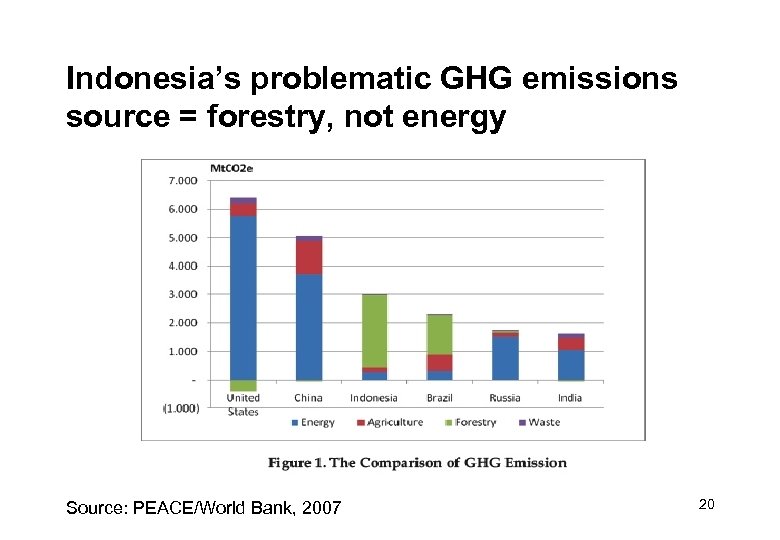
Indonesia’s problematic GHG emissions source = forestry, not energy Source: PEACE/World Bank, 2007 20

Reason 4: 21
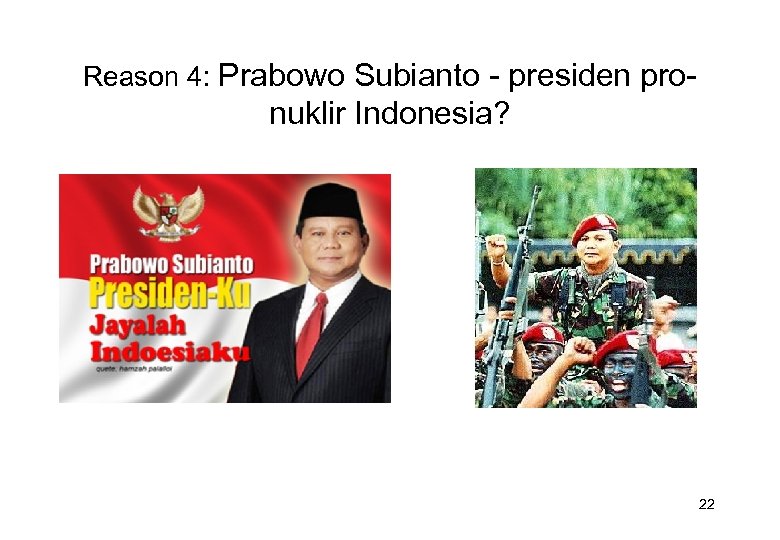
Reason 4: Prabowo Subianto - presiden pro- nuklir Indonesia? 22
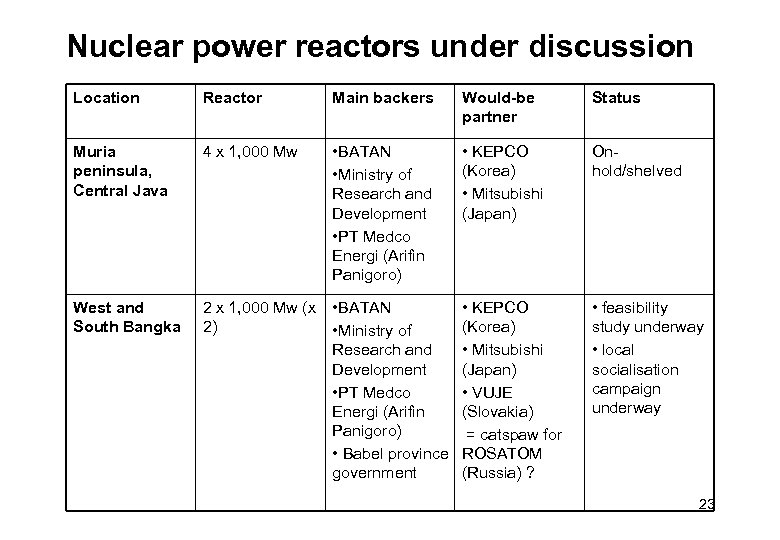
Nuclear power reactors under discussion Location Reactor Main backers Would-be partner Status Muria peninsula, Central Java 4 x 1, 000 Mw • BATAN • Ministry of Research and Development • PT Medco Energi (Arifin Panigoro) • KEPCO (Korea) • Mitsubishi (Japan) Onhold/shelved West and South Bangka 2 x 1, 000 Mw (x 2) • BATAN • Ministry of Research and Development • PT Medco Energi (Arifin Panigoro) • Babel province government • KEPCO (Korea) • Mitsubishi (Japan) • VUJE (Slovakia) = catspaw for ROSATOM (Russia) ? • feasibility study underway • local socialisation campaign underway 23
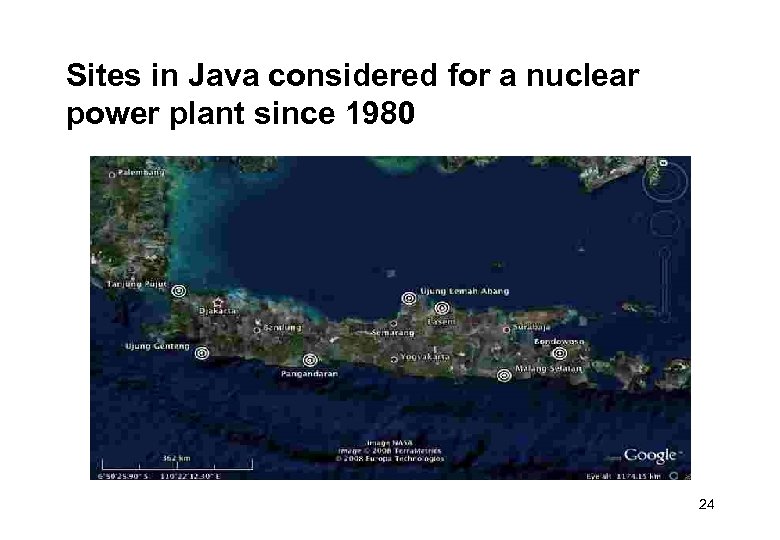
Sites in Java considered for a nuclear power plant since 1980 24
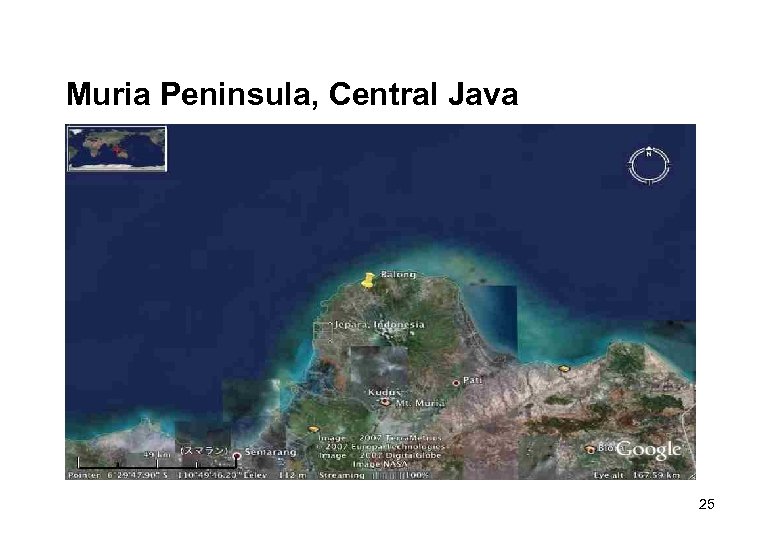
Muria Peninsula, Central Java 25
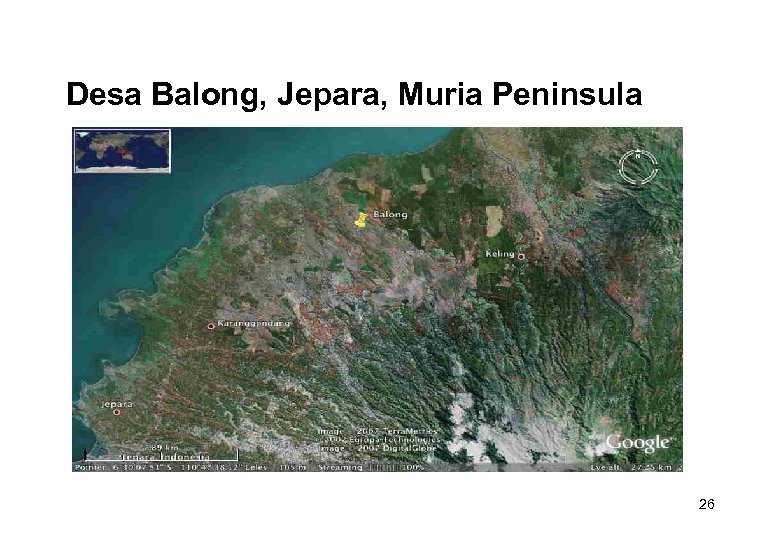
Desa Balong, Jepara, Muria Peninsula 26
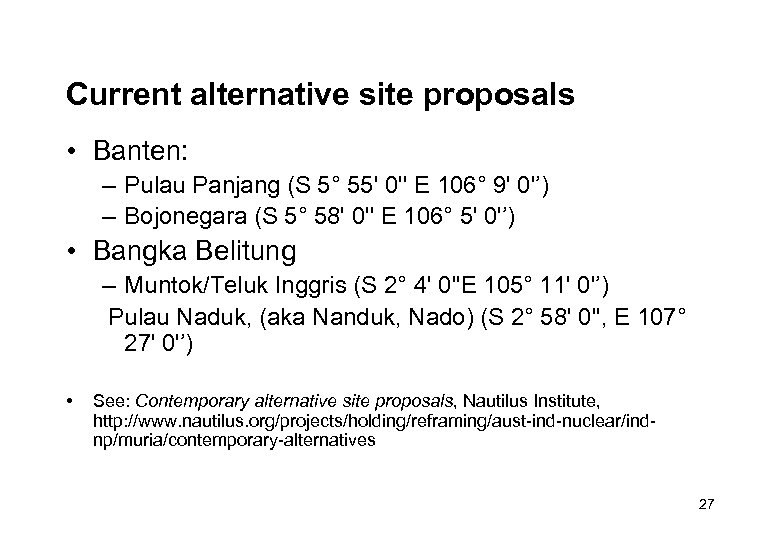
Current alternative site proposals • Banten: – Pulau Panjang (S 5° 55' 0'' E 106° 9' 0'’) – Bojonegara (S 5° 58' 0'' E 106° 5' 0'’) • Bangka Belitung – Muntok/Teluk Inggris (S 2° 4' 0''E 105° 11' 0'’) Pulau Naduk, (aka Nanduk, Nado) (S 2° 58' 0'', E 107° 27' 0'’) • See: Contemporary alternative site proposals, Nautilus Institute, http: //www. nautilus. org/projects/holding/reframing/aust-ind-nuclear/indnp/muria/contemporary-alternatives 27
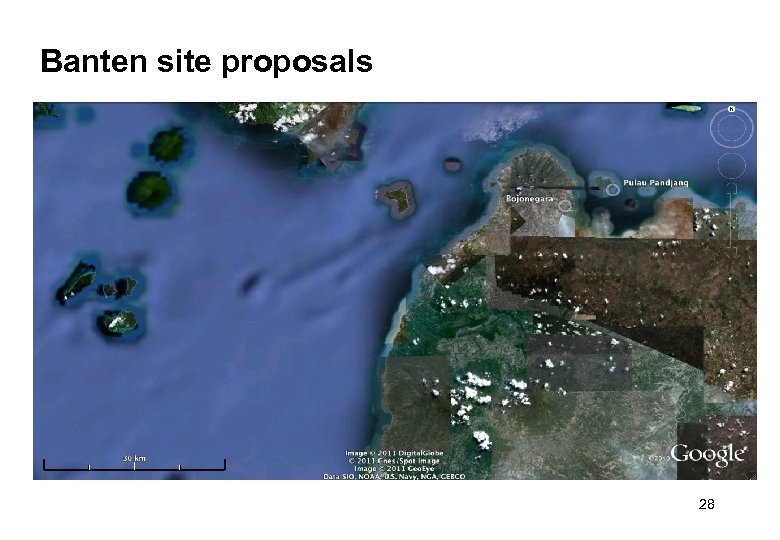
Banten site proposals 28
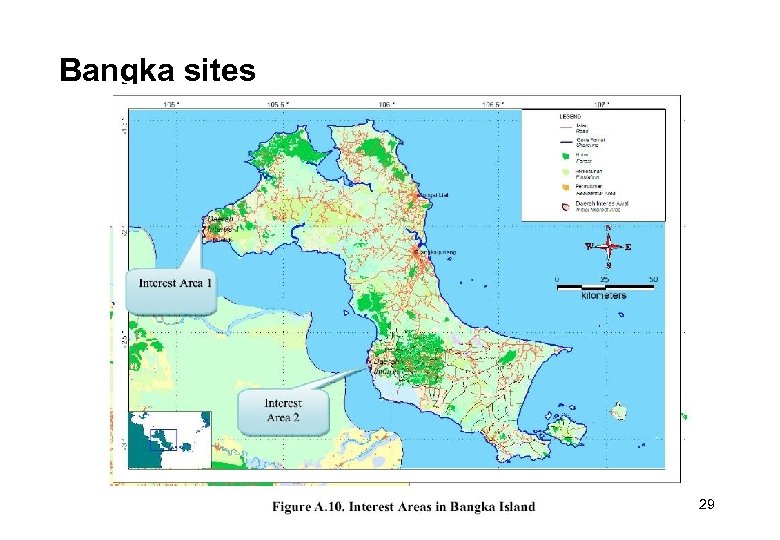
Bangka sites 29
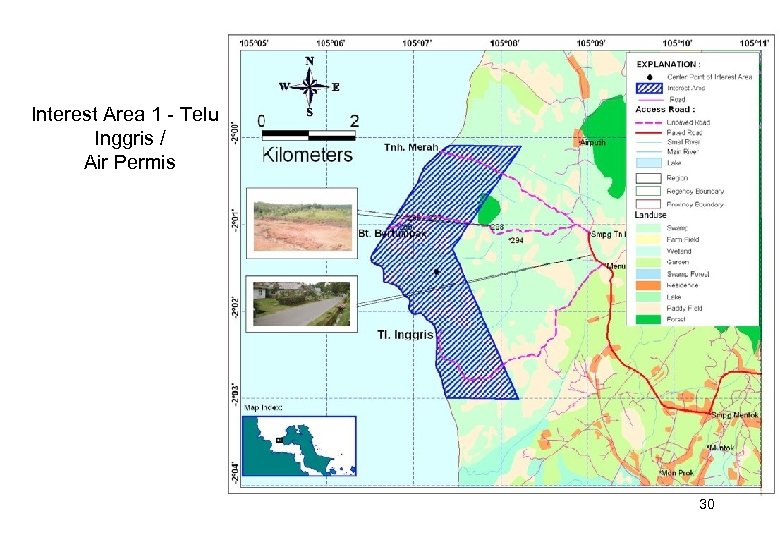
Interest Area 1 - Teluk Inggris / Air Permis 30
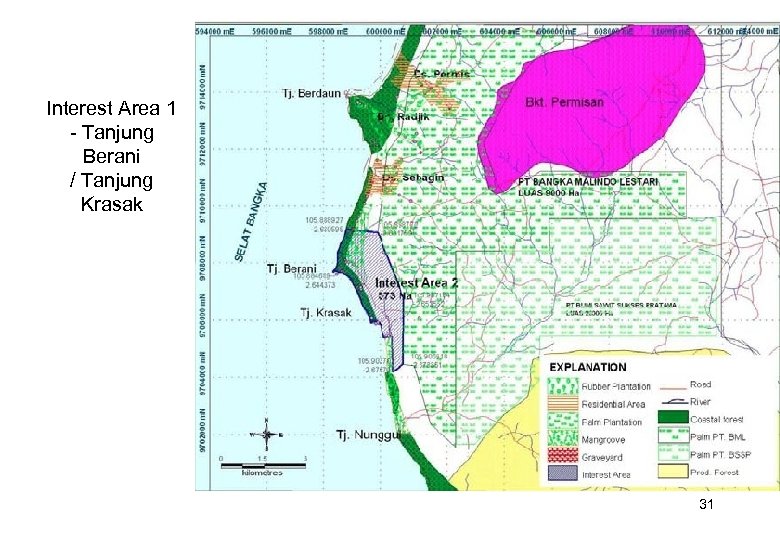
Interest Area 1 - Tanjung Berani / Tanjung Krasak 31
Terms of Reference (To. R) of Nuclear Power Plant Siting in Bangka Island of Bangka Belitung Province (2011 - 2013) Terms of Reference (To. R) of Nuclear Power Plant Siting in Bangka Island of Bangka Belitung Province (20112013), No. 66/VI/2010, Panitia Pengadaan Jasa Konsultansi, Batan, 28 June 2010 [Batan unofficial translation. No Indonesian language version appears to have been published. ], at http: //www. batan. go. id/ppen/web%202010/Main_To. R_%20 FS_Bangka_En(unofficial%20 translation). pdf 32
Offshore alluvial tin mining in Bangka 33
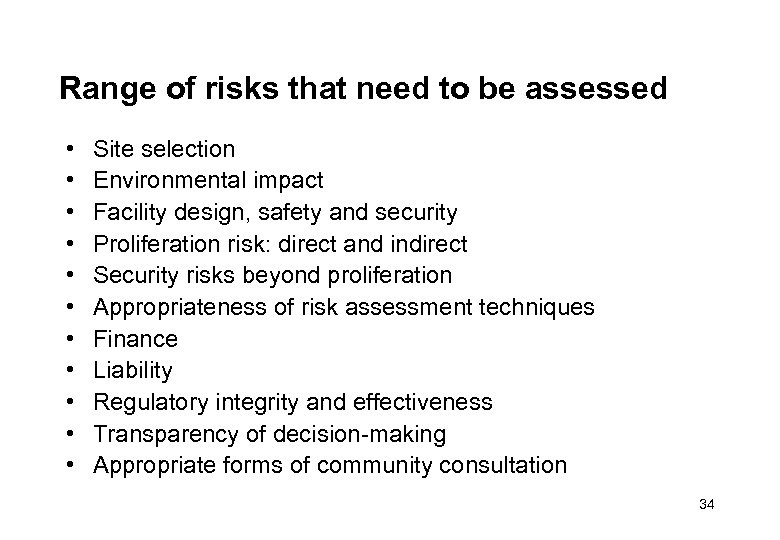
Range of risks that need to be assessed • • • Site selection Environmental impact Facility design, safety and security Proliferation risk: direct and indirect Security risks beyond proliferation Appropriateness of risk assessment techniques Finance Liability Regulatory integrity and effectiveness Transparency of decision-making Appropriate forms of community consultation 34
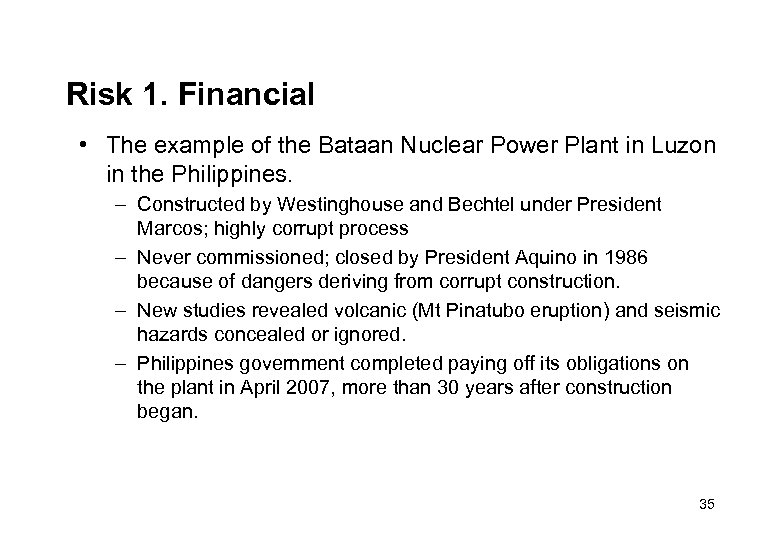
Risk 1. Financial • The example of the Bataan Nuclear Power Plant in Luzon in the Philippines. – Constructed by Westinghouse and Bechtel under President Marcos; highly corrupt process – Never commissioned; closed by President Aquino in 1986 because of dangers deriving from corrupt construction. – New studies revealed volcanic (Mt Pinatubo eruption) and seismic hazards concealed or ignored. – Philippines government completed paying off its obligations on the plant in April 2007, more than 30 years after construction began. 35
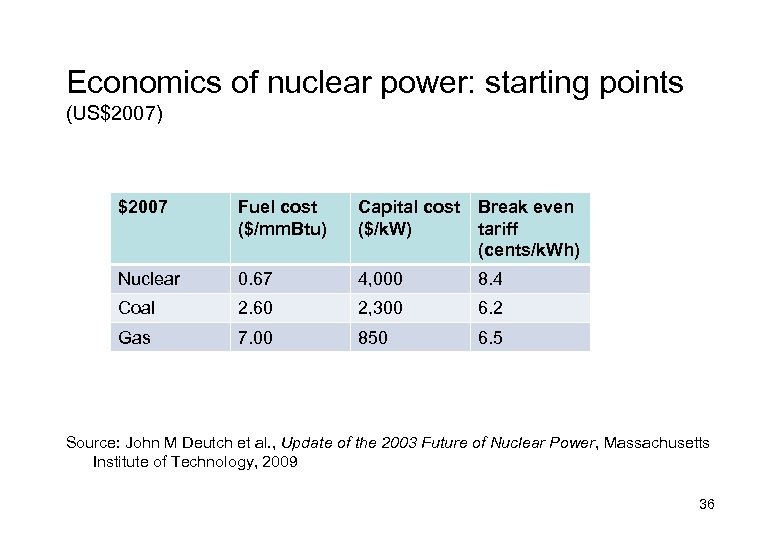
Economics of nuclear power: starting points (US$2007) $2007 Fuel cost ($/mm. Btu) Capital cost ($/k. W) Break even tariff (cents/k. Wh) Nuclear 0. 67 4, 000 8. 4 Coal 2. 60 2, 300 6. 2 Gas 7. 00 850 6. 5 Source: John M Deutch et al. , Update of the 2003 Future of Nuclear Power, Massachusetts Institute of Technology, 2009 36
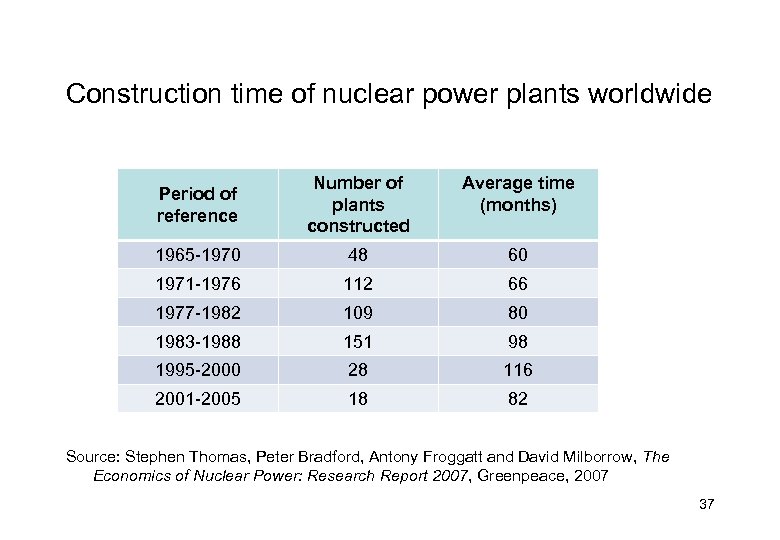
Construction time of nuclear power plants worldwide Period of reference Number of plants constructed Average time (months) 1965 -1970 48 60 1971 -1976 112 66 1977 -1982 109 80 1983 -1988 151 98 1995 -2000 28 116 2001 -2005 18 82 Source: Stephen Thomas, Peter Bradford, Antony Froggatt and David Milborrow, The Economics of Nuclear Power: Research Report 2007, Greenpeace, 2007 37
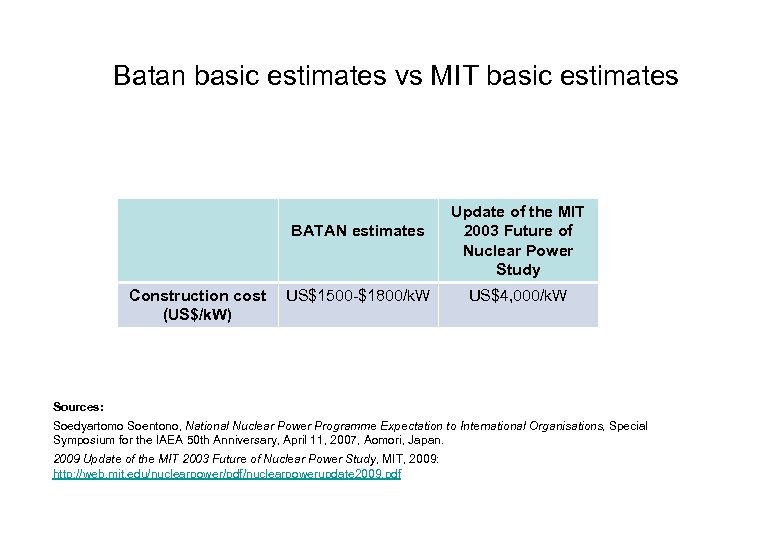
Batan basic estimates vs MIT basic estimates BATAN estimates Construction cost (US$/k. W) US$1500 -$1800/k. W Update of the MIT 2003 Future of Nuclear Power Study US$4, 000/k. W Sources: Soedyartomo Soentono, National Nuclear Power Programme Expectation to International Organisations, Special Symposium for the IAEA 50 th Anniversary, April 11, 2007, Aomori, Japan. 2009 Update of the MIT 2003 Future of Nuclear Power Study, MIT, 2009: http: //web. mit. edu/nuclearpower/pdf/nuclearpowerupdate 2009. pdf
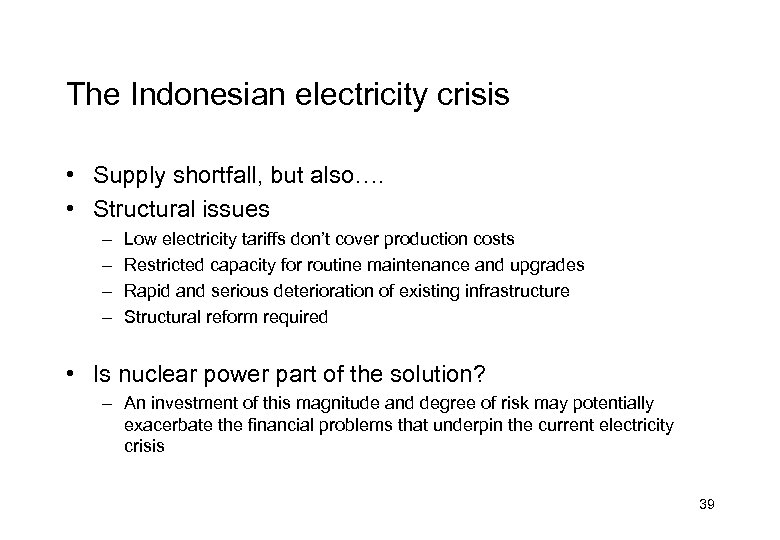
The Indonesian electricity crisis • Supply shortfall, but also…. • Structural issues – – Low electricity tariffs don’t cover production costs Restricted capacity for routine maintenance and upgrades Rapid and serious deterioration of existing infrastructure Structural reform required • Is nuclear power part of the solution? – An investment of this magnitude and degree of risk may potentially exacerbate the financial problems that underpin the current electricity crisis 39
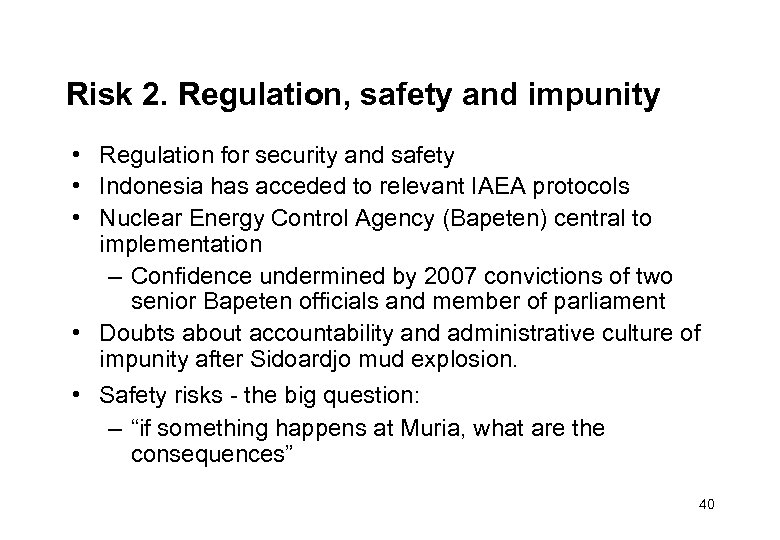
Risk 2. Regulation, safety and impunity • Regulation for security and safety • Indonesia has acceded to relevant IAEA protocols • Nuclear Energy Control Agency (Bapeten) central to implementation – Confidence undermined by 2007 convictions of two senior Bapeten officials and member of parliament • Doubts about accountability and administrative culture of impunity after Sidoardjo mud explosion. • Safety risks - the big question: – “if something happens at Muria, what are the consequences” 40
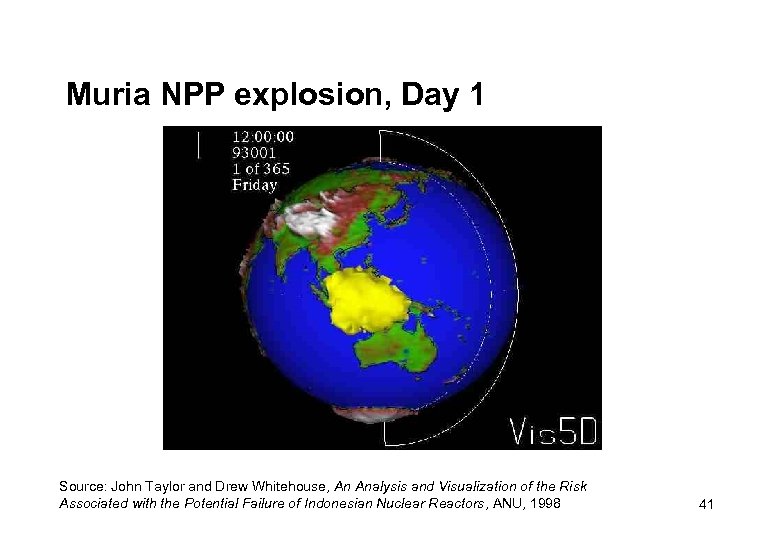
Muria NPP explosion, Day 1 Source: John Taylor and Drew Whitehouse, An Analysis and Visualization of the Risk Associated with the Potential Failure of Indonesian Nuclear Reactors, ANU, 1998 41
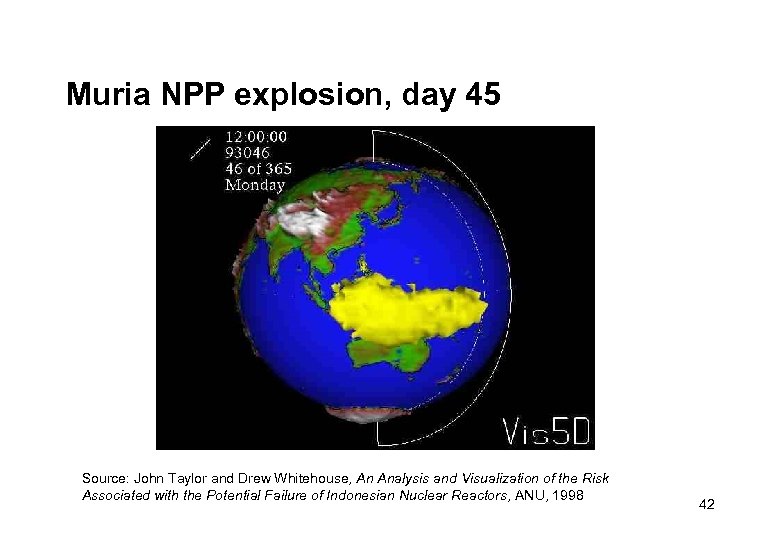
Muria NPP explosion, day 45 Source: John Taylor and Drew Whitehouse, An Analysis and Visualization of the Risk Associated with the Potential Failure of Indonesian Nuclear Reactors, ANU, 1998 42

43
Risk 3. Muria: Seismic and tectonic risks • Key study: Mc. Birney et al, “Volcanic and seismic hazards at a proposed nuclear power site in central Java”, Journal of Volcanology and Geothermal Research 126 (2003) 11 -30. • Gunung Muria: “a capable volcano”, less than 25 km from NPP site; nearest vent 4. 5 km • Site within “screening distance” for pyroclastic material and flows, debris, mud, and new vents • Gases indicative of magma found 1. 5 km from site • Close to two major north-south seismic fault lines – New offshore fault lines recently discovered, but data restricted • Site unstable due to permeable weathered upper layer of soil and proximity to faults 44
Bangka seismic status Figure: Western Indonesia Earthquakes, 1988 - February 2008 Source: Seismic Hazard of Western Indonesia, United States Geological Service, April 2008, at http: //earthquake. usgs. gov/earthquakes/eqarchives/poster_indonesia. php 45
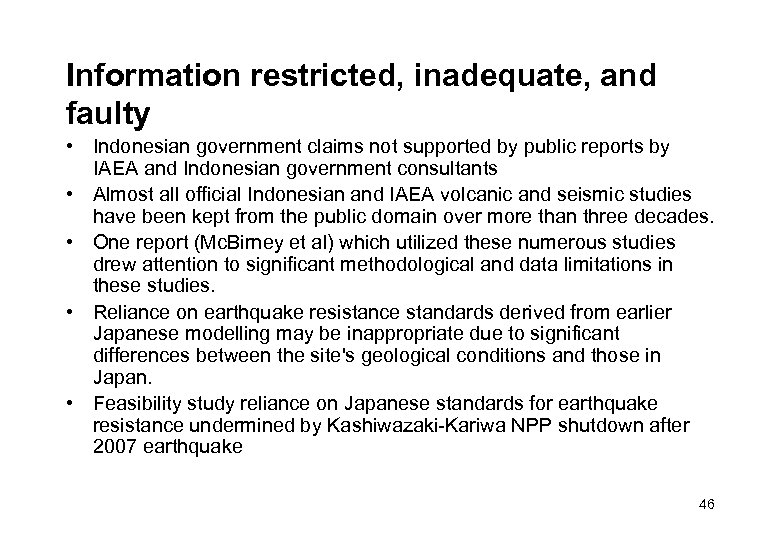
Information restricted, inadequate, and faulty • Indonesian government claims not supported by public reports by IAEA and Indonesian government consultants • Almost all official Indonesian and IAEA volcanic and seismic studies have been kept from the public domain over more than three decades. • One report (Mc. Birney et al) which utilized these numerous studies drew attention to significant methodological and data limitations in these studies. • Reliance on earthquake resistance standards derived from earlier Japanese modelling may be inappropriate due to significant differences between the site's geological conditions and those in Japan. • Feasibility study reliance on Japanese standards for earthquake resistance undermined by Kashiwazaki-Kariwa NPP shutdown after 2007 earthquake 46
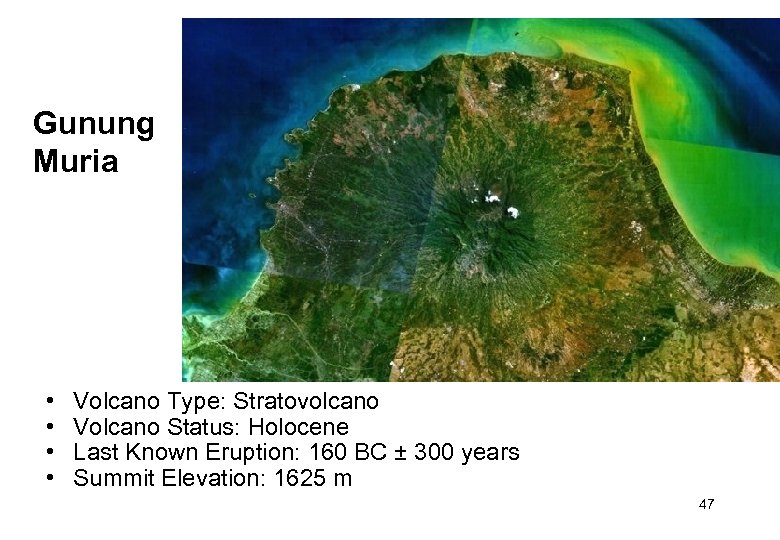
Gunung Muria • • Volcano Type: Stratovolcano Volcano Status: Holocene Last Known Eruption: 160 BC ± 300 years Summit Elevation: 1625 m 47
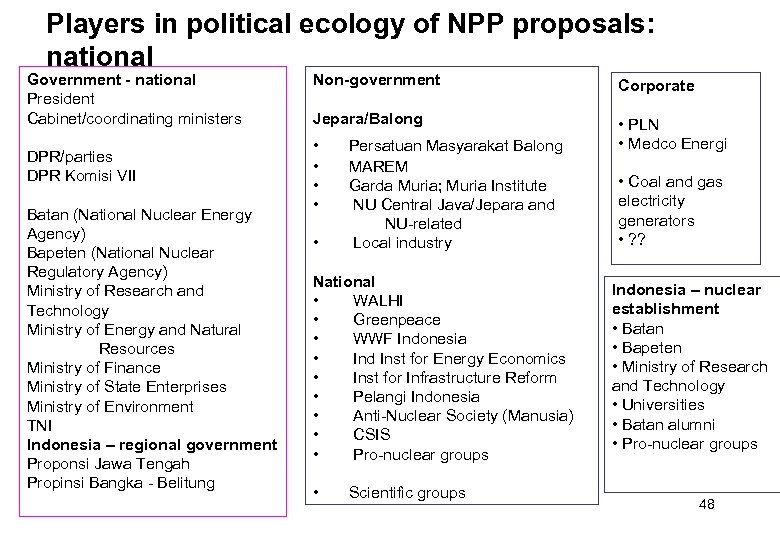
Players in political ecology of NPP proposals: national Government - national President Cabinet/coordinating ministers DPR/parties DPR Komisi VII Batan (National Nuclear Energy Agency) Bapeten (National Nuclear Regulatory Agency) Ministry of Research and Technology Ministry of Energy and Natural Resources Ministry of Finance Ministry of State Enterprises Ministry of Environment TNI Indonesia – regional government Proponsi Jawa Tengah Propinsi Bangka - Belitung Non-government Corporate Jepara/Balong • PLN • Medco Energi • • • Persatuan Masyarakat Balong MAREM Garda Muria; Muria Institute NU Central Java/Jepara and NU-related Local industry National • WALHI • Greenpeace • WWF Indonesia • Ind Inst for Energy Economics • Inst for Infrastructure Reform • Pelangi Indonesia • Anti-Nuclear Society (Manusia) • CSIS • Pro-nuclear groups • Scientific groups • Coal and gas electricity generators • ? ? Indonesia – nuclear establishment • Batan • Bapeten • Ministry of Research and Technology • Universities • Batan alumni • Pro-nuclear groups 48
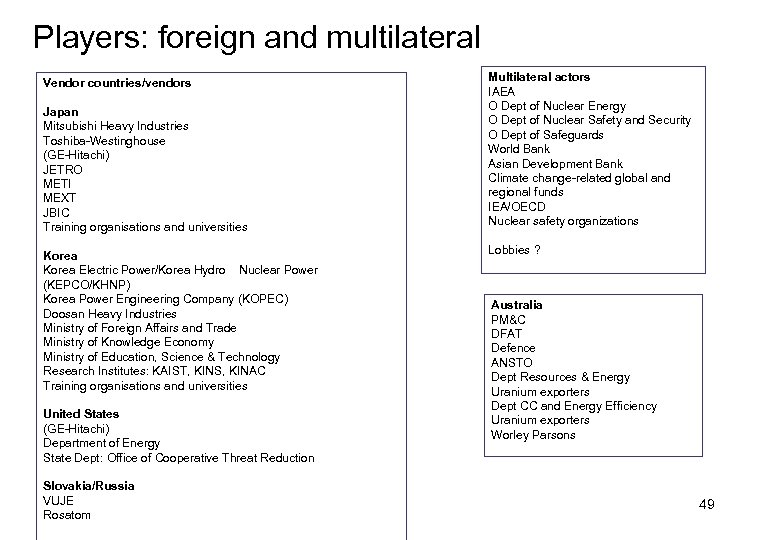
Players: foreign and multilateral Vendor countries/vendors Japan Mitsubishi Heavy Industries Toshiba-Westinghouse (GE-Hitachi) JETRO METI MEXT JBIC Training organisations and universities Korea Electric Power/Korea Hydro Nuclear Power (KEPCO/KHNP) Korea Power Engineering Company (KOPEC) Doosan Heavy Industries Ministry of Foreign Affairs and Trade Ministry of Knowledge Economy Ministry of Education, Science & Technology Research Institutes: KAIST, KINS, KINAC Training organisations and universities United States (GE-Hitachi) Department of Energy State Dept: Office of Cooperative Threat Reduction Slovakia/Russia VUJE Rosatom Multilateral actors IAEA O Dept of Nuclear Energy O Dept of Nuclear Safety and Security O Dept of Safeguards World Bank Asian Development Bank Climate change-related global and regional funds IEA/OECD Nuclear safety organizations Lobbies ? Australia PM&C DFAT Defence ANSTO Dept Resources & Energy Uranium exporters Dept CC and Energy Efficiency Uranium exporters Worley Parsons 49
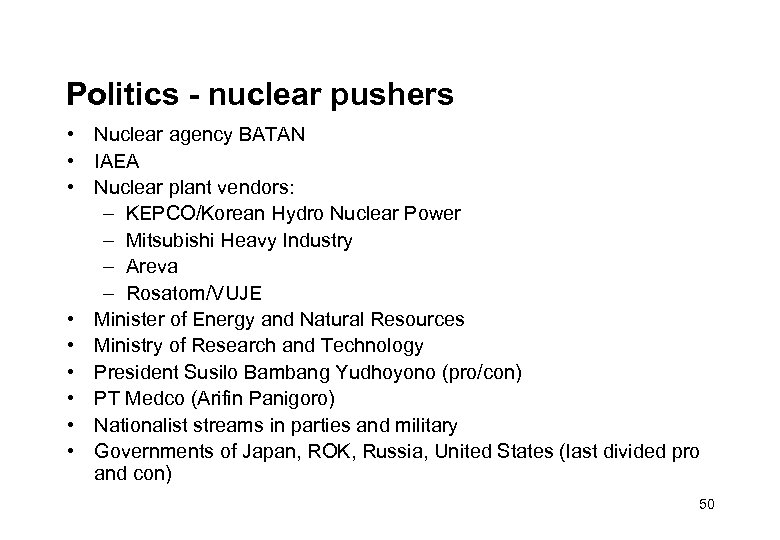
Politics - nuclear pushers • Nuclear agency BATAN • IAEA • Nuclear plant vendors: – KEPCO/Korean Hydro Nuclear Power – Mitsubishi Heavy Industry – Areva – Rosatom/VUJE • Minister of Energy and Natural Resources • Ministry of Research and Technology • President Susilo Bambang Yudhoyono (pro/con) • PT Medco (Arifin Panigoro) • Nationalist streams in parties and military • Governments of Japan, ROK, Russia, United States (last divided pro and con) 50
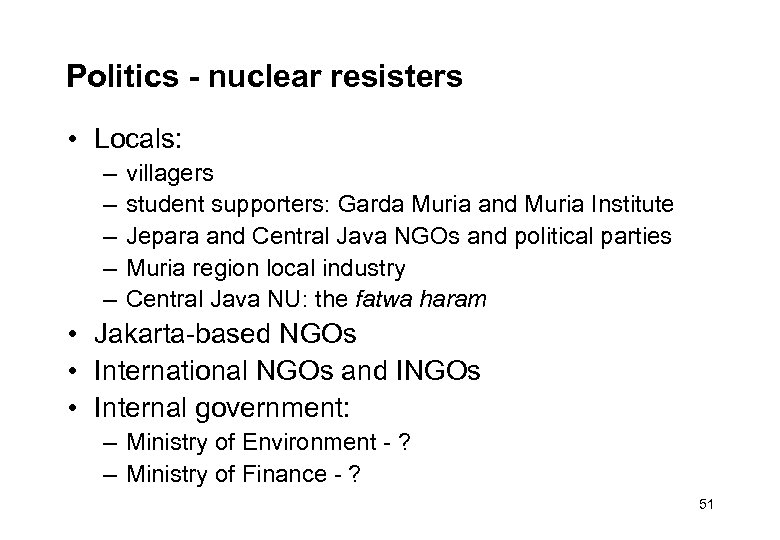
Politics - nuclear resisters • Locals: – – – villagers student supporters: Garda Muria and Muria Institute Jepara and Central Java NGOs and political parties Muria region local industry Central Java NU: the fatwa haram • Jakarta-based NGOs • International NGOs and INGOs • Internal government: – Ministry of Environment - ? – Ministry of Finance - ? 51
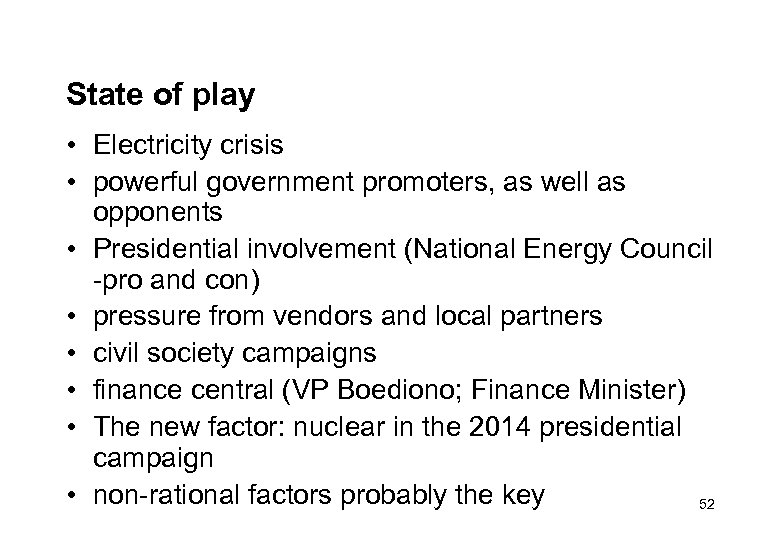
State of play • Electricity crisis • powerful government promoters, as well as opponents • Presidential involvement (National Energy Council -pro and con) • pressure from vendors and local partners • civil society campaigns • finance central (VP Boediono; Finance Minister) • The new factor: nuclear in the 2014 presidential campaign • non-rational factors probably the key 52
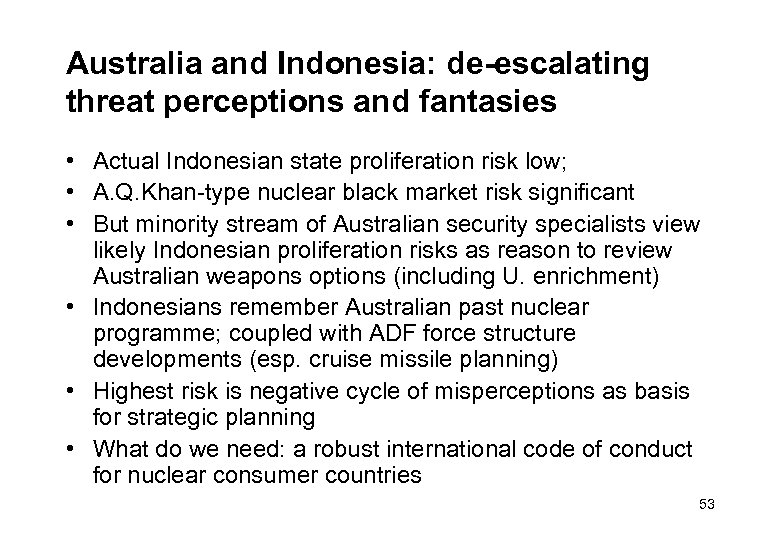
Australia and Indonesia: de-escalating threat perceptions and fantasies • Actual Indonesian state proliferation risk low; • A. Q. Khan-type nuclear black market risk significant • But minority stream of Australian security specialists view likely Indonesian proliferation risks as reason to review Australian weapons options (including U. enrichment) • Indonesians remember Australian past nuclear programme; coupled with ADF force structure developments (esp. cruise missile planning) • Highest risk is negative cycle of misperceptions as basis for strategic planning • What do we need: a robust international code of conduct for nuclear consumer countries 53
Nuclear fantasies in Central Java: the first contribution of climate change to Australia-Indonesia security dynamics Richard Tanter
Entrance gate to desa Balong, Jepara, Central Java, September 2007 55
Cove on the northern edge of the planned site 56
Edge of the Balong site, looking east 57
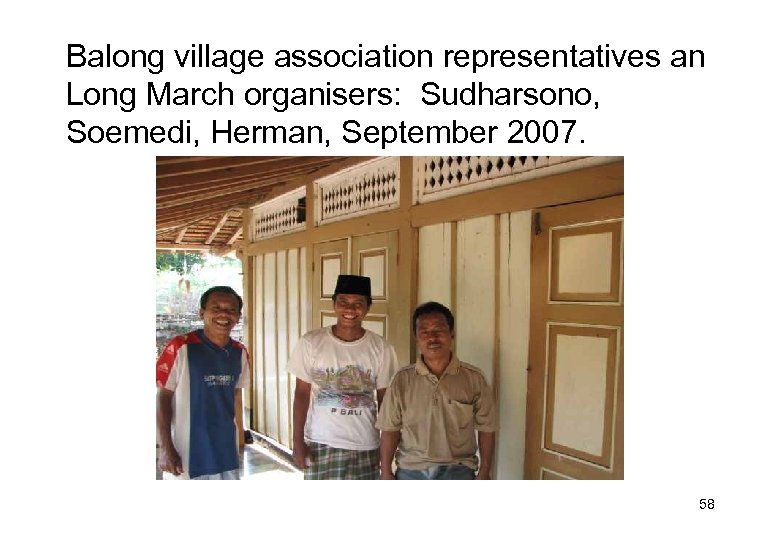
Balong village association representatives an Long March organisers: Sudharsono, Soemedi, Herman, September 2007. 58
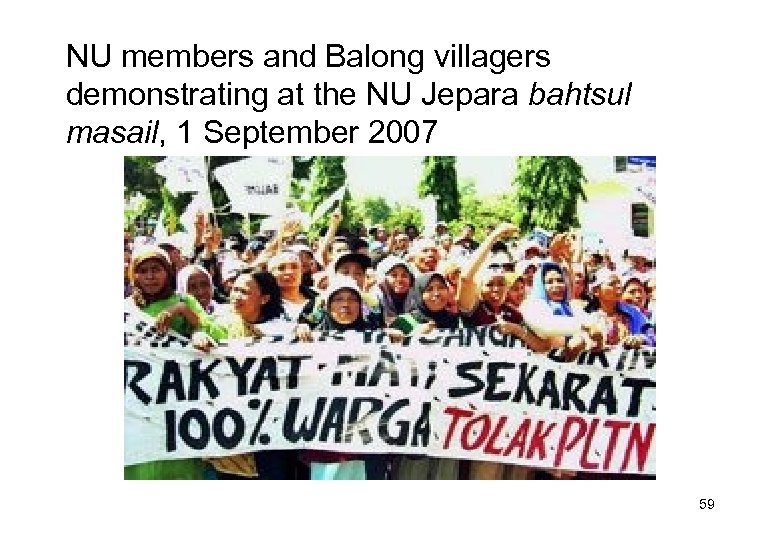
NU members and Balong villagers demonstrating at the NU Jepara bahtsul masail, 1 September 2007 59
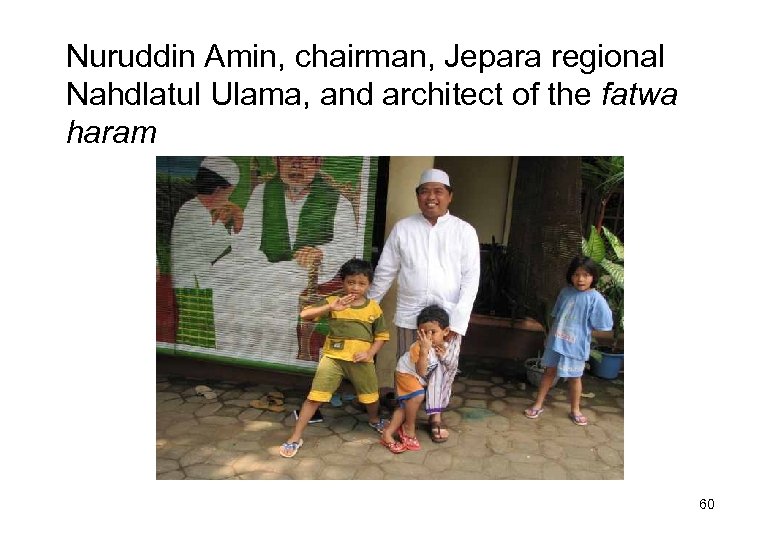
Nuruddin Amin, chairman, Jepara regional Nahdlatul Ulama, and architect of the fatwa haram 60
Скачать презентацию The Global Politics of Indonesian Nuclear Power Richard
2861c2d04558eeb421c5f1f4f0bb2b7f.ppt