 Скачать презентацию The Global Depression Chapter 15 Section 2
5e6143c4ce1fb323a4d69b90f1580b4e.ppt
- Количество слайдов: 15



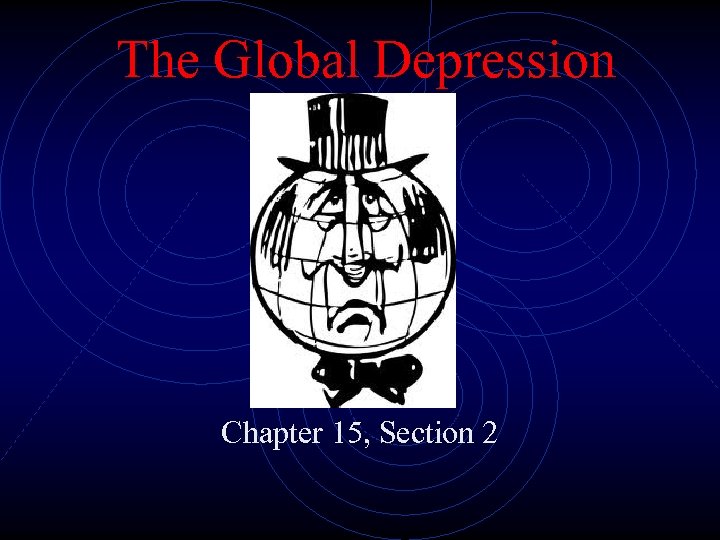
The Global Depression Chapter 15, Section 2
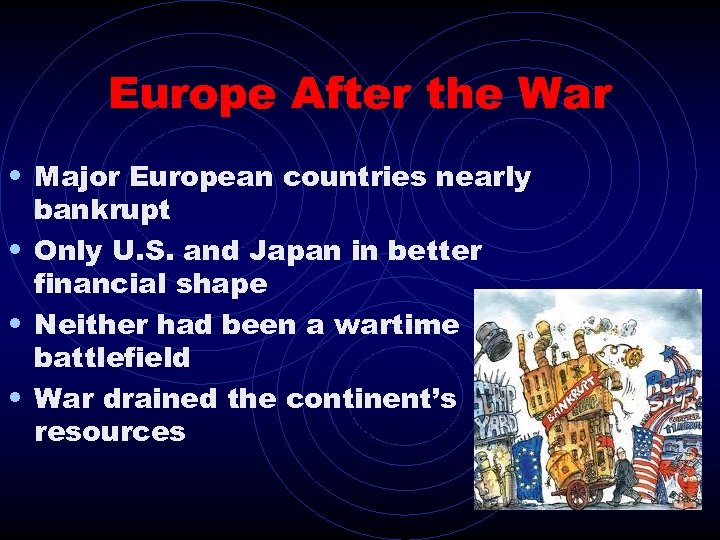
Europe After the War • Major European countries nearly bankrupt • Only U. S. and Japan in better financial shape • Neither had been a wartime battlefield • War drained the continent’s resources
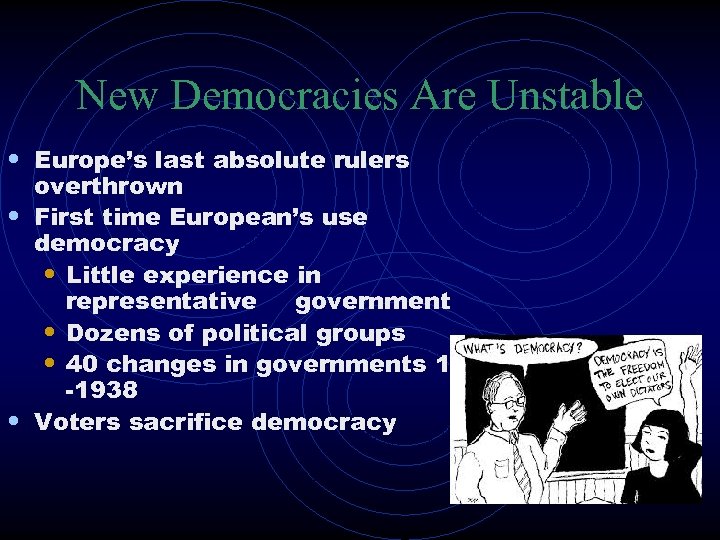
New Democracies Are Unstable • Europe’s last absolute rulers overthrown • First time European’s use democracy • Little experience in representative government • Dozens of political groups • 40 changes in governments 1919 -1938 • Voters sacrifice democracy
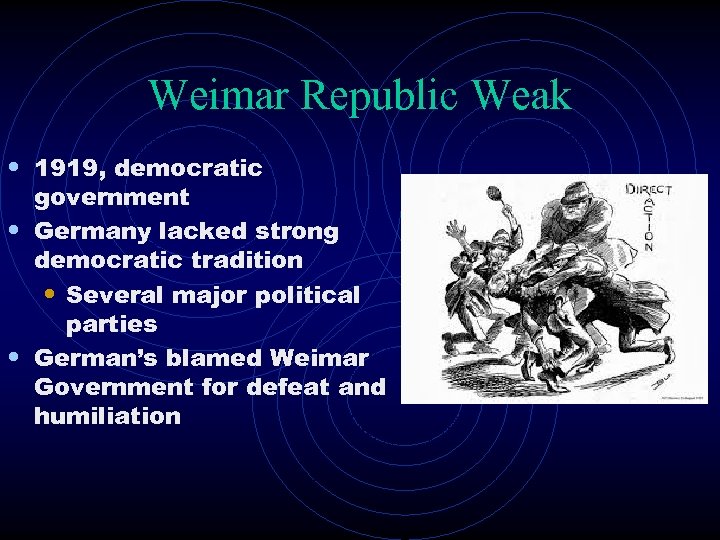
Weimar Republic Weak • 1919, democratic government • Germany lacked strong democratic tradition • Several major political parties • German’s blamed Weimar Government for defeat and humiliation
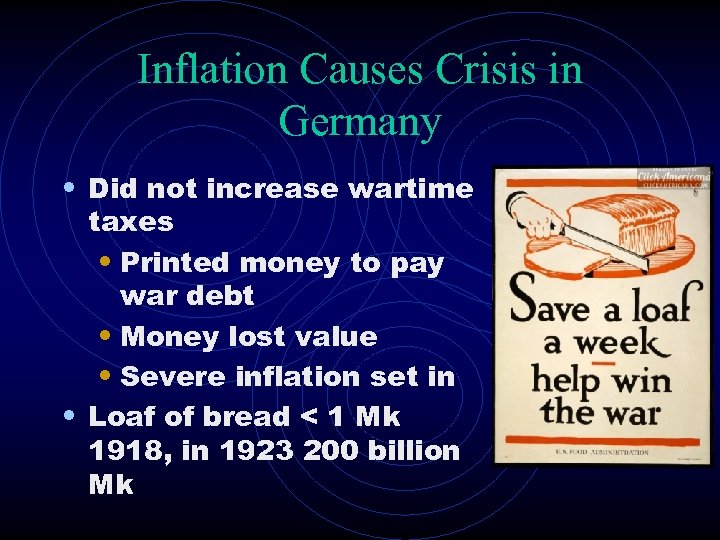
Inflation Causes Crisis in Germany • Did not increase wartime taxes • Printed money to pay war debt • Money lost value • Severe inflation set in • Loaf of bread < 1 Mk 1918, in 1923 200 billion Mk
Attempts at Economic Stability • Dawes Plan, $200 million to Germany • Stabilized German currency • Strengthened economy • Realistic schedule for reparations payments • 1929, German factories producing at prewar level
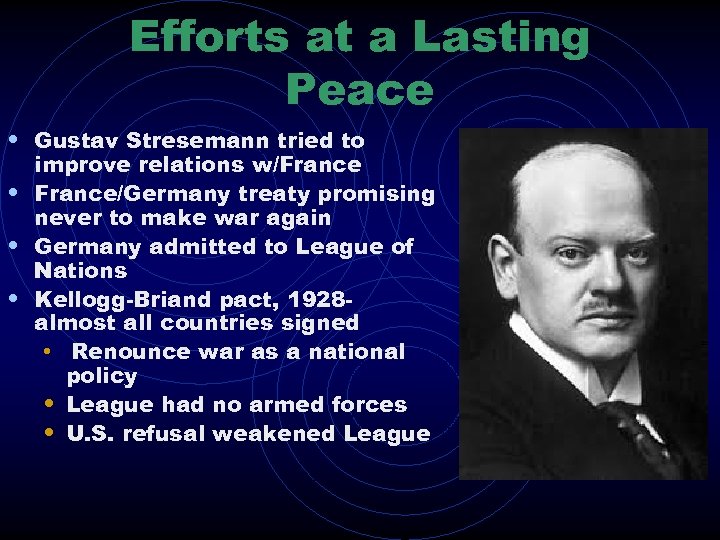
Efforts at a Lasting Peace • Gustav Stresemann tried to improve relations w/France • France/Germany treaty promising never to make war again • Germany admitted to League of Nations • Kellogg-Briand pact, 1928 almost all countries signed • Renounce war as a national policy • League had no armed forces • U. S. refusal weakened League
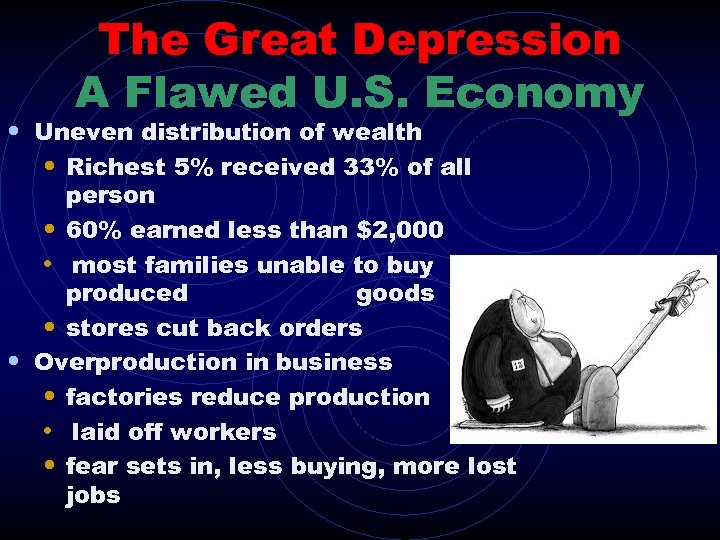
The Great Depression A Flawed U. S. Economy • Uneven distribution of wealth • Richest 5% received 33% of all person • 60% earned less than $2, 000 • most families unable to buy produced goods • stores cut back orders • Overproduction in business • factories reduce production • laid off workers • fear sets in, less buying, more lost jobs
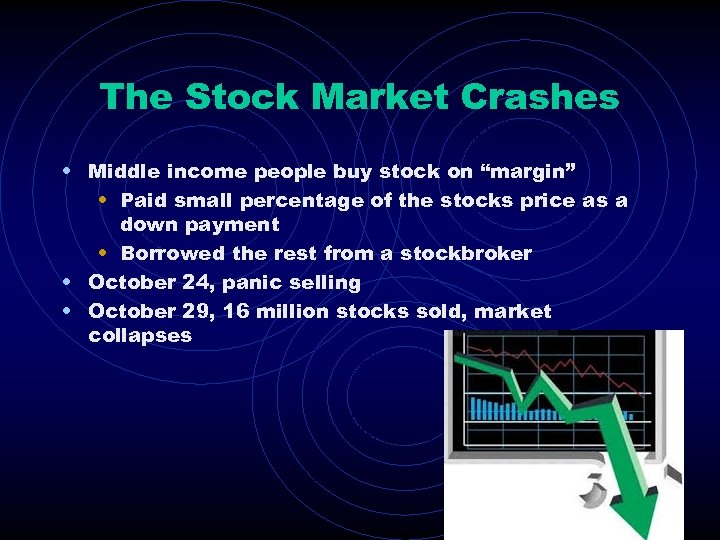
The Stock Market Crashes • Middle income people buy stock on “margin” • Paid small percentage of the stocks price as a down payment • Borrowed the rest from a stockbroker • October 24, panic selling • October 29, 16 million stocks sold, market collapses
The Stock Market Crashes • • Billions of dollars “paper wealth” vanish 1932, factory production cut in half Businesses fail and more banks close 1933, 25% of all Americans with no jobs
The Global Depression • Bankers demand repayment of overseas • • • loans Withdraw money from Europe Congress places high tariffs on imports Other nations impose their own high tariff World trade drops 65% Germany and Austria hard hit • 1931, Austria’s largest bank fails
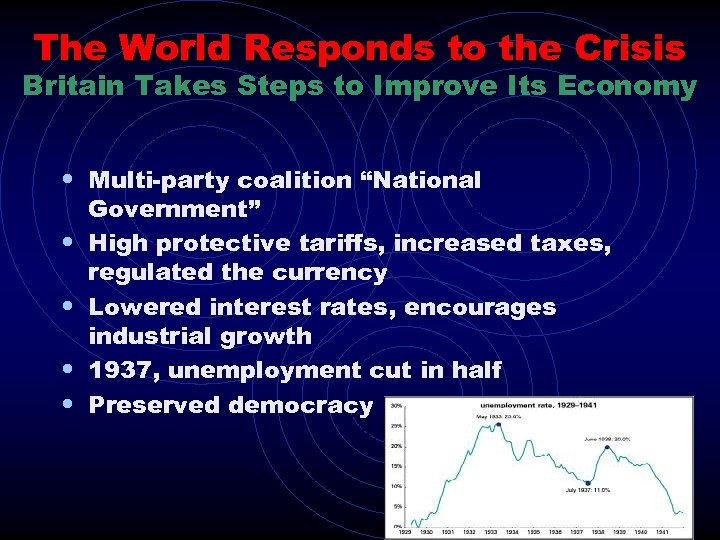
The World Responds to the Crisis Britain Takes Steps to Improve Its Economy • Multi-party coalition “National • • Government” High protective tariffs, increased taxes, regulated the currency Lowered interest rates, encourages industrial growth 1937, unemployment cut in half Preserved democracy
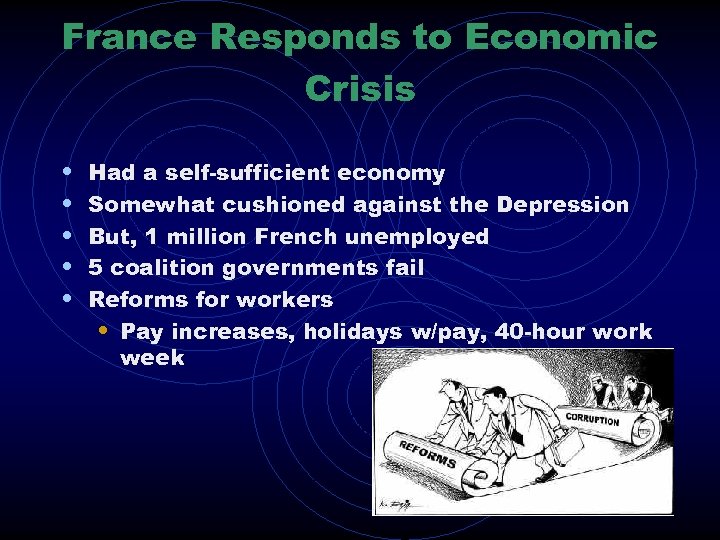
France Responds to Economic Crisis • • • Had a self-sufficient economy Somewhat cushioned against the Depression But, 1 million French unemployed 5 coalition governments fail Reforms for workers • Pay increases, holidays w/pay, 40 -hour work week
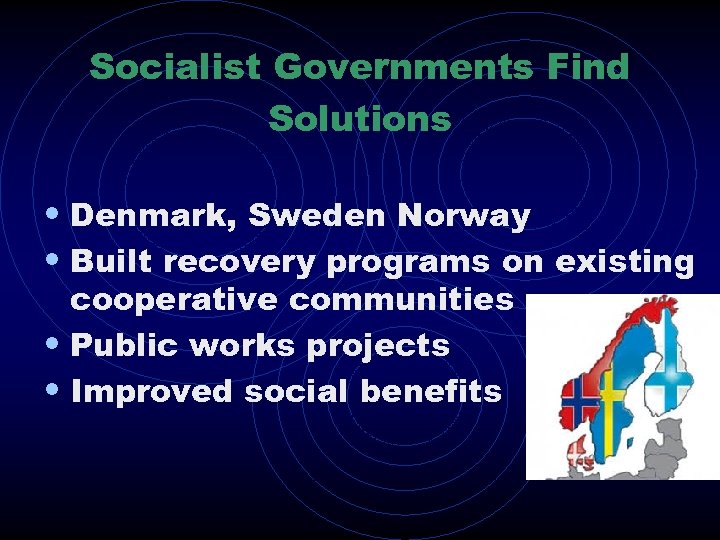
Socialist Governments Find Solutions • Denmark, Sweden Norway • Built recovery programs on existing cooperative communities • Public works projects • Improved social benefits
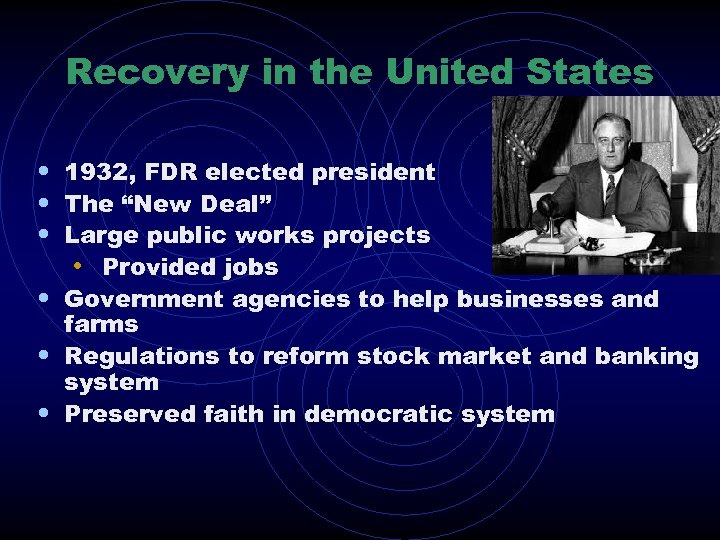
Recovery in the United States • 1932, FDR elected president • The “New Deal” • Large public works projects • Provided jobs • Government agencies to help businesses and farms • Regulations to reform stock market and banking system • Preserved faith in democratic system
Скачать презентацию The Global Depression Chapter 15 Section 2
5e6143c4ce1fb323a4d69b90f1580b4e.ppt