


 Скачать презентацию The GG Programming Language We give it to
148502e6ed605d4362fb8edb463f7c7a.ppt
- Количество слайдов: 35
 The GG Programming Language “We give it to you. ”
 The Authors u Kierstan Bell • Documentation and Front-end u Elizabeth Mutter • Front-end u Jake Porway • Testing and Front-end u Jonah Tower • Back-end
 Language Overview Jonah
 Why GG?
 …it makes things easy! Sockets u I/O u Threads u
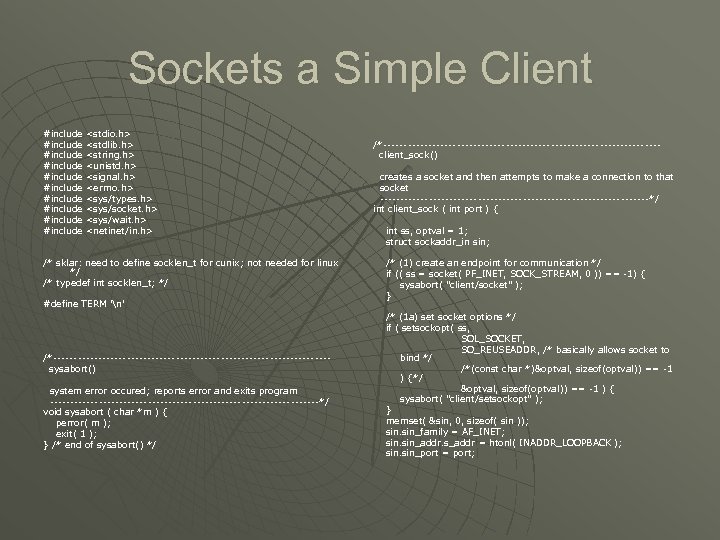 Sockets a Simple Client #include #include #include
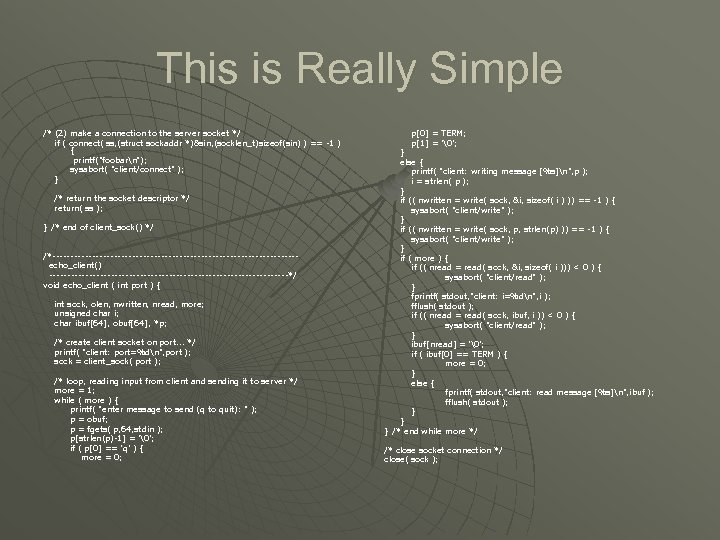 This is Really Simple /* (2) make a connection to the server socket */ if ( connect( ss, (struct sockaddr *)&sin, (socklen_t)sizeof(sin) ) == -1 ) *)&sin, (socklen_t)sizeof(sin) { printf("foobarn"); sysabort( "client/connect" ); sysabort( } /* return the socket descriptor */ return( ss ); } /* end of client_sock() */ client_sock() /*----------------------------------echo_client() ---------------------------------*/ void echo_client ( int port ) { int sock, olen, nwritten, nread, more; olen, nwritten, nread, unsigned char i; char ibuf[64], obuf[64], *p; /* create client socket on port. . . */ printf( "client: port=%dn", port ); printf( port=%dn", port sock = client_sock( port ); client_sock( /* loop, reading input from client and sending it to server */ more = 1; while ( more ) { printf( "enter message to send (q to quit): " ); printf( p = obuf; p = fgets( p, 64, stdin ); fgets( p[strlen(p)-1] = ''; if ( p[0] == 'q' ) { more = 0; p[0] = TERM; p[1] = ''; } else { printf( "client: writing message [%s]n", p ); printf( [%s]n", p i = strlen( p ); strlen( } if (( nwritten = write( sock, &i, sizeof( i ) )) == -1 ) { sizeof( sysabort( "client/write" ); sysabort( } if (( nwritten = write( sock, p, strlen(p) )) == -1 ) { strlen(p) sysabort( "client/write" ); sysabort( } if ( more ) { if (( nread = read( sock, &i, sizeof( i ))) < 0 ) { sizeof( sysabort( "client/read" ); sysabort( } fprintf( stdout, "client: i=%dn", i ); fprintf( stdout, "client: i=%dn", i fflush( stdout ); fflush( if (( nread = read( sock, ibuf, i )) < 0 ) { ibuf, sysabort( "client/read" ); sysabort( } ibuf[nread] = ''; ibuf[nread] if ( ibuf[0] == TERM ) { more = 0; } else { fprintf( stdout, "client: read message [%s]n", ibuf ); fprintf( stdout, "client: [%s]n", ibuf fflush( stdout ); fflush( } } } /* end while more */ /* close socket connection */ close( sock );
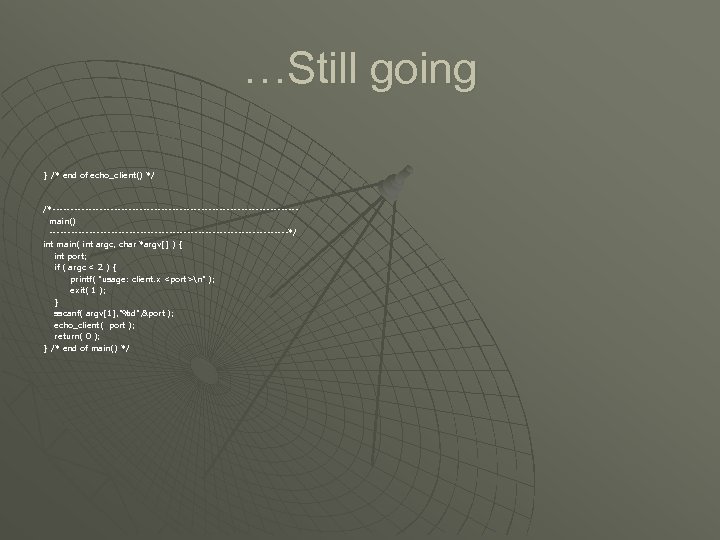 …Still going } /* end of echo_client() */ echo_client() /*----------------------------------main() ---------------------------------*/ int main( int argc, char *argv[] ) { argc, *argv[] int port; if ( argc < 2 ) { printf( "usage: client. x
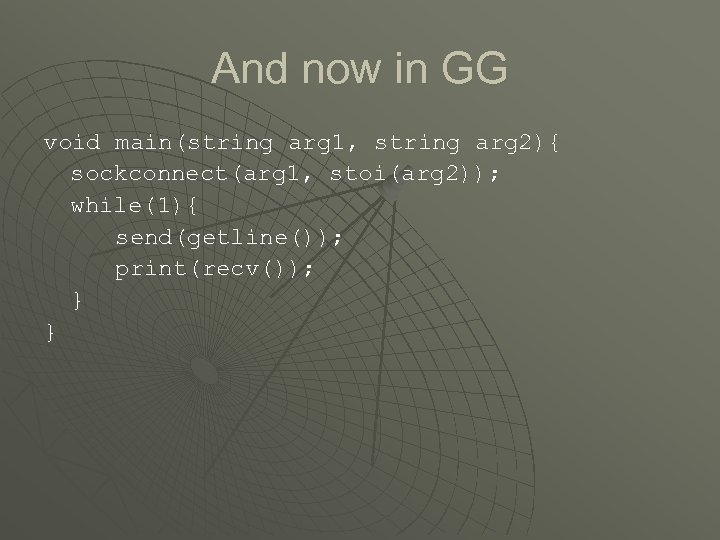 And now in GG void main(string arg 1, string arg 2){ sockconnect(arg 1, stoi(arg 2)); while(1){ send(getline()); print(recv()); } }
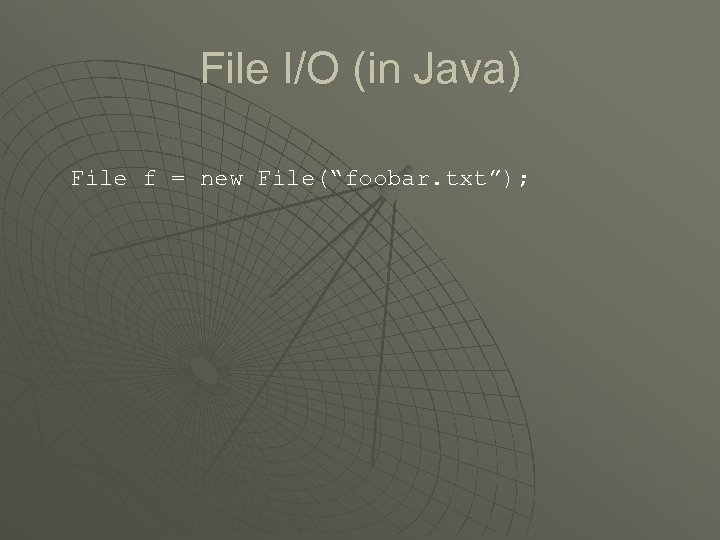 File I/O (in Java) File f = new File(“foobar. txt”);
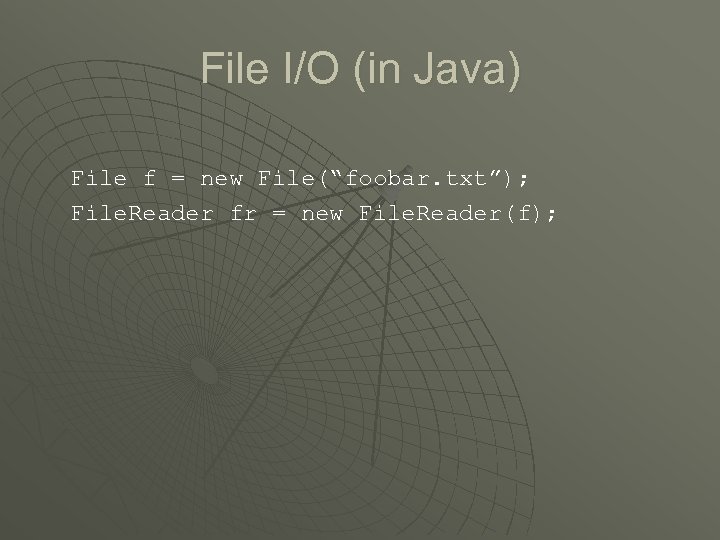 File I/O (in Java) File f = new File(“foobar. txt”); File. Reader fr = new File. Reader(f);
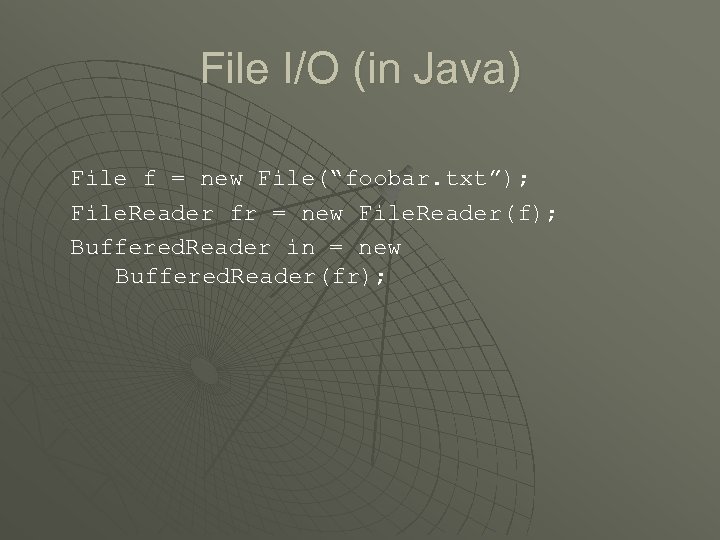 File I/O (in Java) File f = new File(“foobar. txt”); File. Reader fr = new File. Reader(f); Buffered. Reader in = new Buffered. Reader(fr);
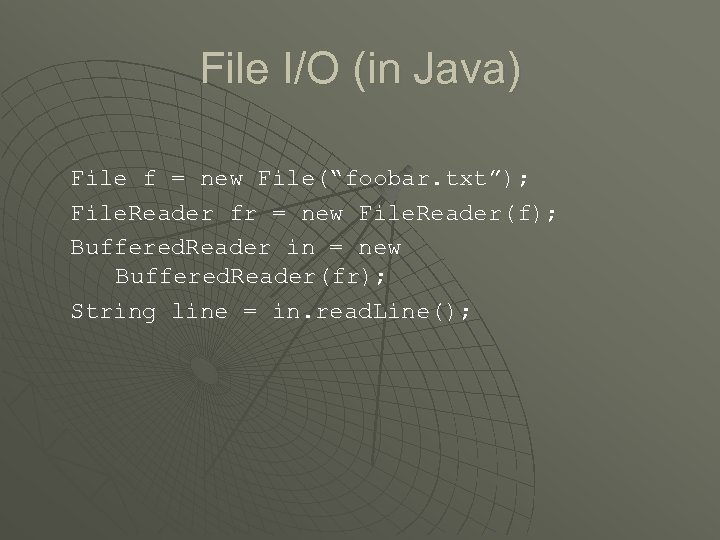 File I/O (in Java) File f = new File(“foobar. txt”); File. Reader fr = new File. Reader(f); Buffered. Reader in = new Buffered. Reader(fr); String line = in. read. Line();
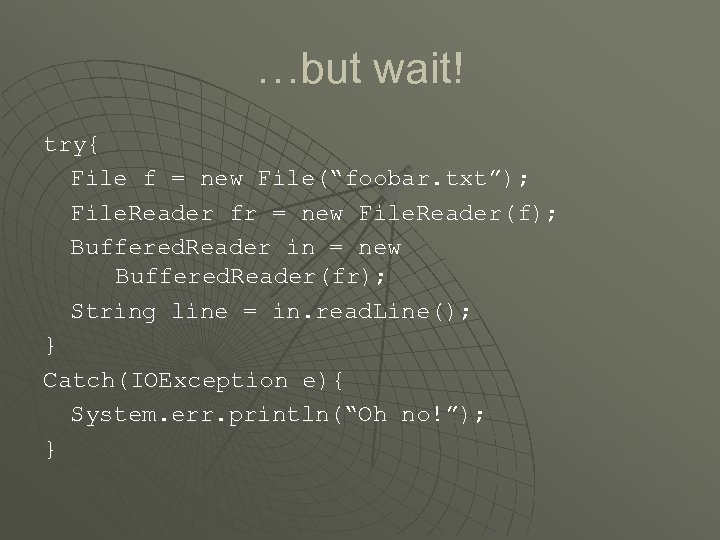 …but wait! try{ File f = new File(“foobar. txt”); File. Reader fr = new File. Reader(f); Buffered. Reader in = new Buffered. Reader(fr); String line = in. read. Line(); } Catch(IOException e){ System. err. println(“Oh no!”); }
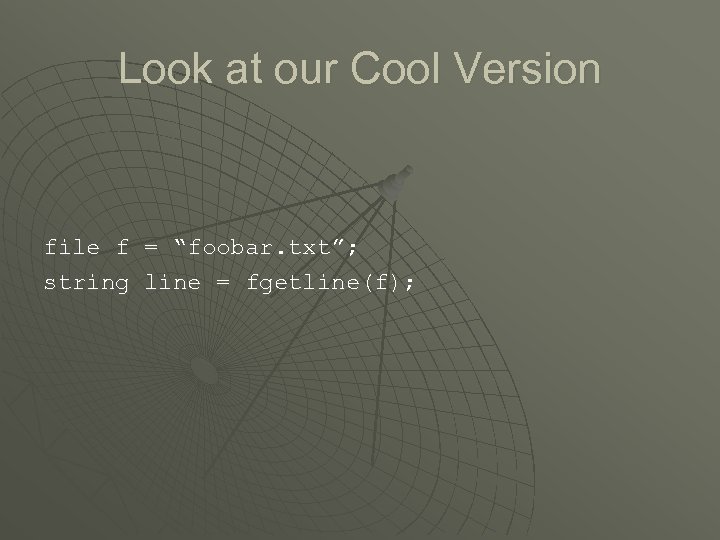 Look at our Cool Version file f = “foobar. txt”; string line = fgetline(f);
 And, GG lets you thread things WOW!
 Syntax and Semantics Kierstan
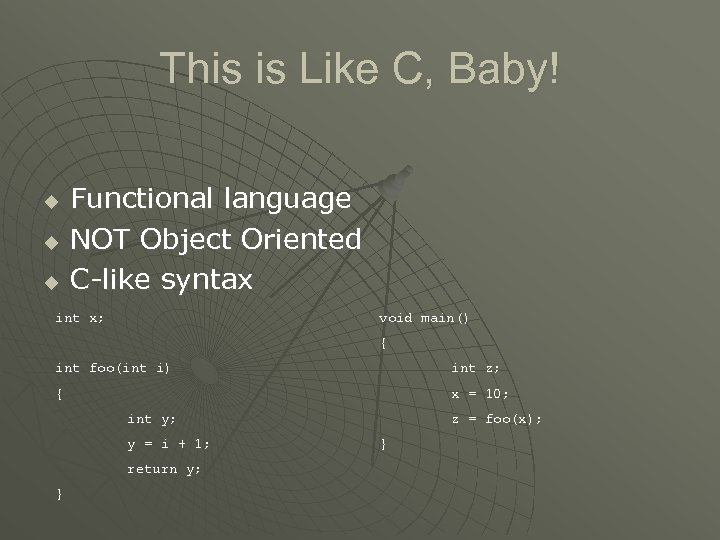 This is Like C, Baby! u u u Functional language NOT Object Oriented C-like syntax int x; void main() { int foo(int i) int z; { x = 10; int y; y = i + 1; return y; } z = foo(x); }
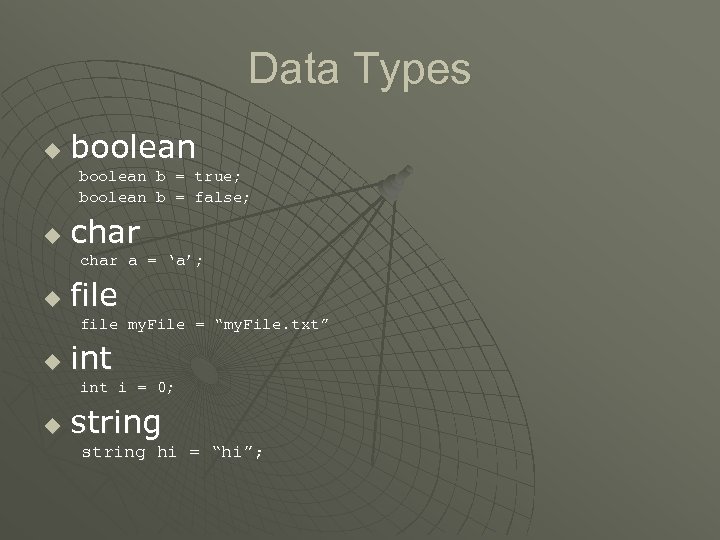 Data Types u boolean b = true; boolean b = false; u char a = ‘a’; u file my. File = “my. File. txt” u int i = 0; u string hi = “hi”;
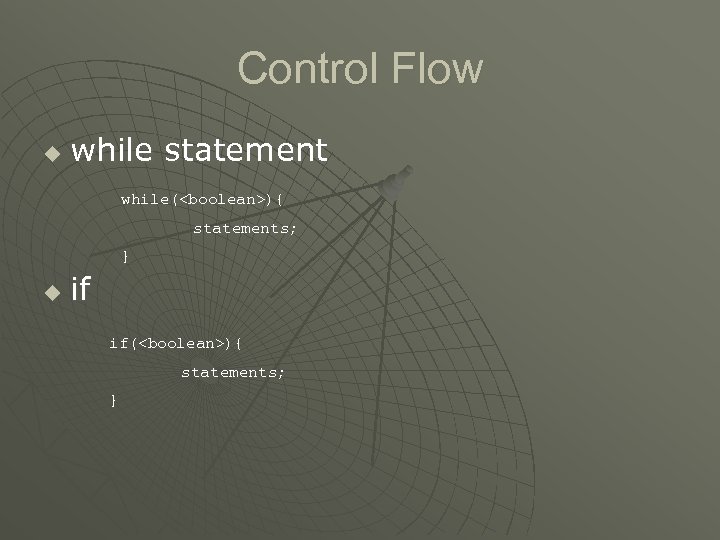 Control Flow u while statement while(
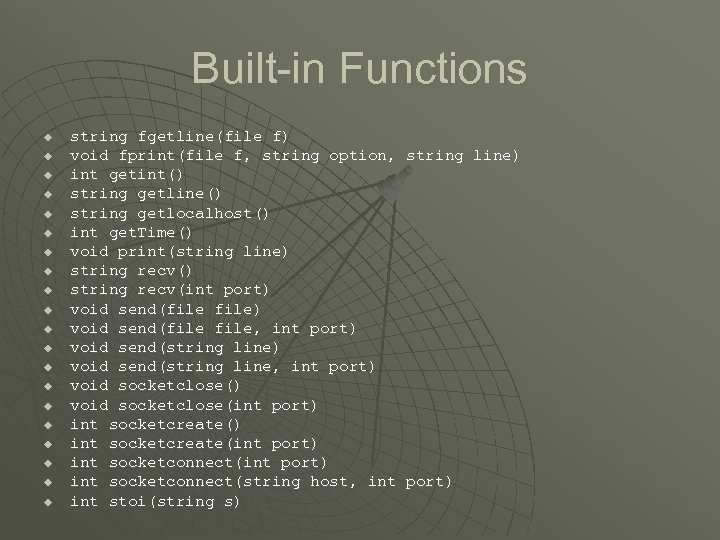 Built-in Functions u u u u u string fgetline(file f) void fprint(file f, string option, string line) int getint() string getline() string getlocalhost() int get. Time() void print(string line) string recv(int port) void send(file, int port) void send(string line, int port) void socketclose(int port) int socketcreate(int port) int socketconnect(string host, int port) int stoi(string s)
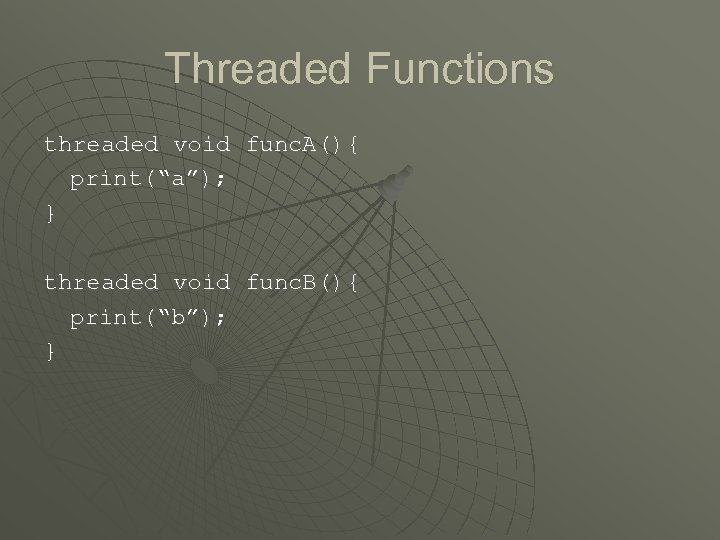 Threaded Functions threaded void func. A(){ print(“a”); } threaded void func. B(){ print(“b”); }
 The Compiler Elizabeth
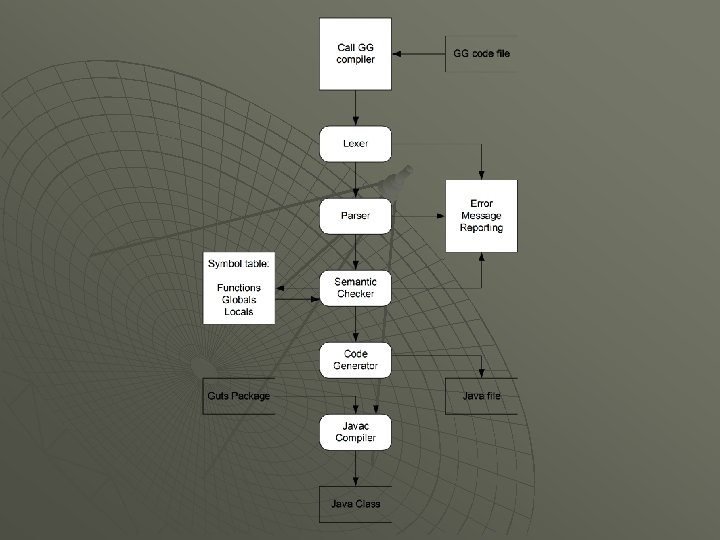
 Lexer/Parser Both written in ANTLR u Lexer u • Parses a GG file into Tokens u Parser • Takes the Lexer’s tokens as input • Checks for syntax errors • Creates a tree
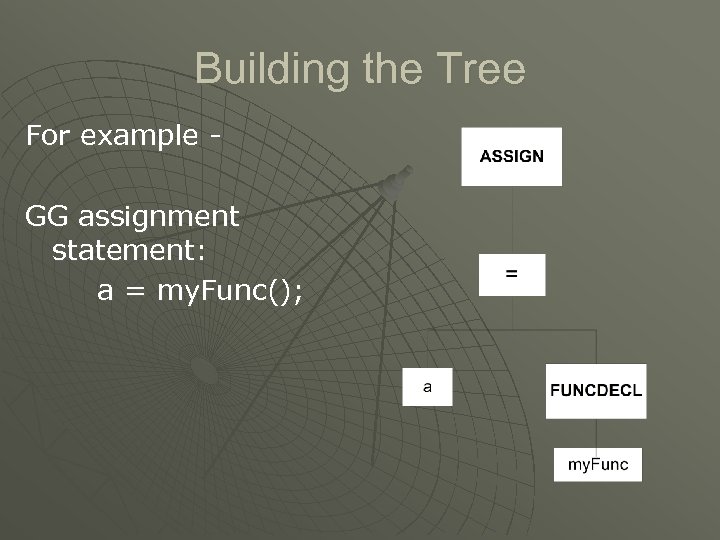 Building the Tree For example GG assignment statement: a = my. Func();
 Walking the Tree u u Semantic check AND code generation done in one pass Uses ANTLR’s tree walker • Walks the dummy nodes • … but java code does most of the work u Semantic: • Hashtables keep track of : u u u Global variables Local variables Function declarations Keywords Code: • Prints java code to. java files
![Code Generation: Java Files u [name-of-file]. java • Runnable java file u u [name-of-file]Main.](https://present5.com/presentation/148502e6ed605d4362fb8edb463f7c7a/image-28.jpg "Code Generation: Java Files u [name-of-file]. java • Runnable java file u u [name-of-file]Main.") Code Generation: Java Files u [name-of-file]. java • Runnable java file u u [name-of-file]Main. Method. java • Wrapper class that contains the translated GG code [name-of-function]Threaded. Function. java • Created for each threaded function
Code Generation: Java Files u [name-of-file]. java • Runnable java file u u [name-of-file]Main. Method. java • Wrapper class that contains the translated GG code [name-of-function]Threaded. Function. java • Created for each threaded function
 Testing and Lessons Learned Jake
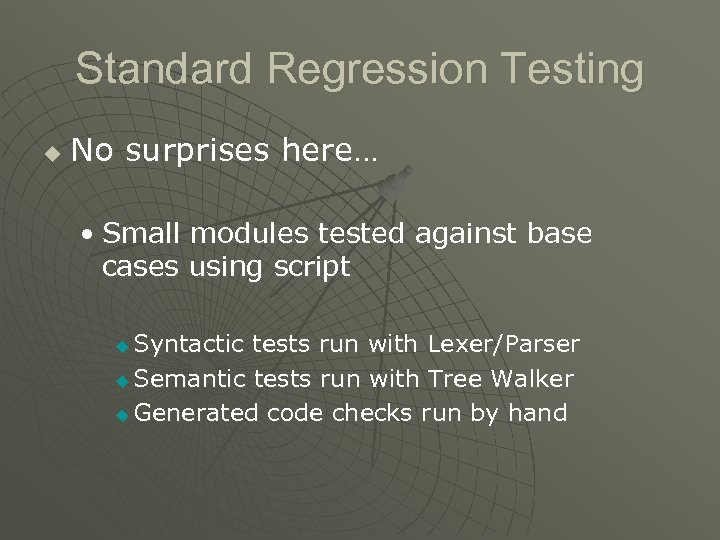 Standard Regression Testing u No surprises here… • Small modules tested against base cases using script Syntactic tests run with Lexer/Parser u Semantic tests run with Tree Walker u Generated code checks run by hand u
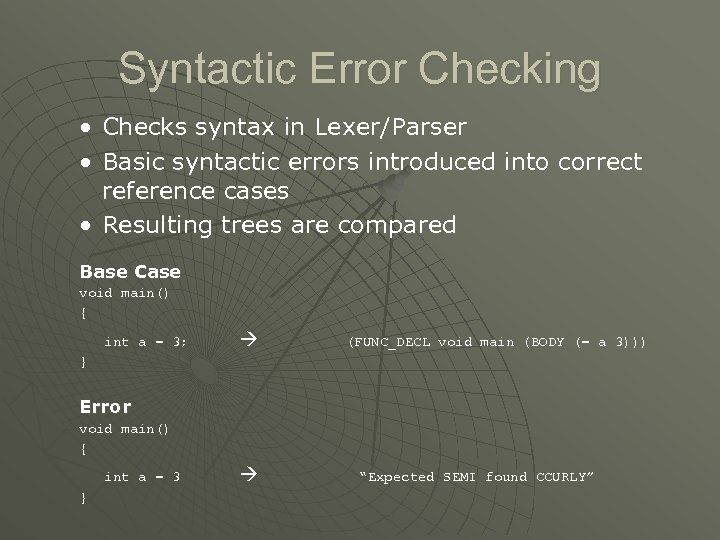 Syntactic Error Checking • Checks syntax in Lexer/Parser • Basic syntactic errors introduced into correct reference cases • Resulting trees are compared Base Case void main() { int a = 3; (FUNC_DECL void main (BODY (= a 3))) } Error void main() { int a = 3 } “Expected SEMI found CCURLY”
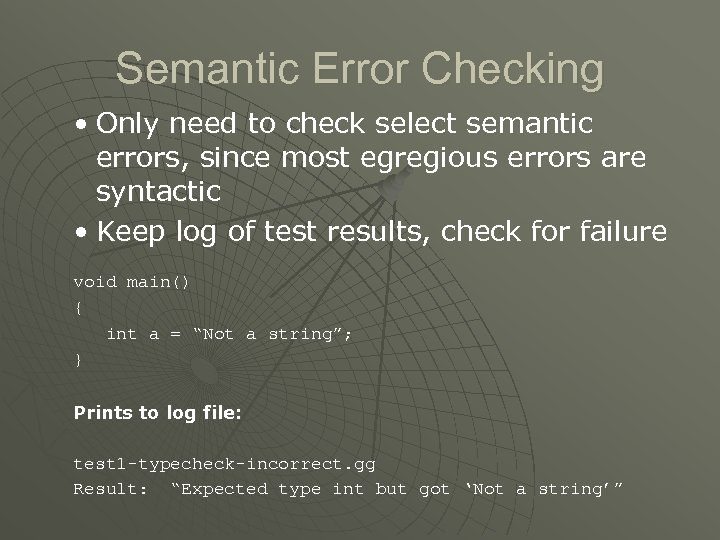 Semantic Error Checking • Only need to check select semantic errors, since most egregious errors are syntactic • Keep log of test results, check for failure void main() { int a = “Not a string”; } Prints to log file: test 1 -typecheck-incorrect. gg Result: “Expected type int but got ‘Not a string’”
 Code Correctness • Not done with automated checking • No mortal should have to hand-generate the Java base case for a client/server program • Instead, functionality is checked thoroughly, not code
 Lessons Learned! Roles are great, but don’t be afraid to “diversify” u Meetings, meetings, and more meetings! There’s comfort in consistency u Clairvoyance – Who knew ANTLR would be so hard u Ctrl-1 -0 -0 – Who put this in Emacs? u
 THE END