 Скачать презентацию The General Ledger and Business Reporting GL BR Process
a3a7b2e3161bf62e0db4ee7f72180b58.ppt
- Количество слайдов: 30



The General Ledger and Business Reporting (GL/BR) Process Accounting Information Systems 7 e Ulric J. Gelinas and Richard Dull Copyright © 2008 Thomson Southwestern, a part of The Thomson Corporation. Thomson, the Star logo, and South-Western are trademarks used herein under license. 1
Functions of GL/BR • GL – accumulating data, classifying data by GL accounts, recording data in those accounts – fueling FR, BR and other reporting subsystems Reporting Accumulating Recording Classifying 2
Functions of GL/BR, Cont’d. • BR – preparing generalpurpose, external financial statements – ensuring that F/S conform to GAAP – generating webbased forms – generating ad hoc & predetermined business reports Reporting Accumulating Recording Classifying 3
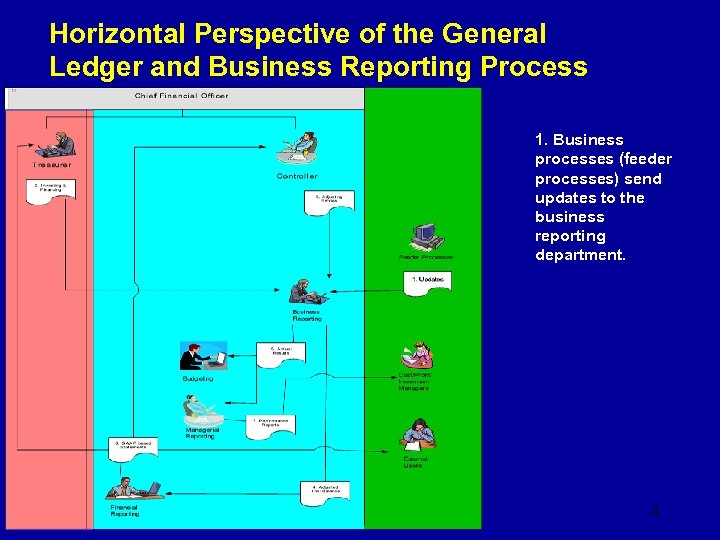
Horizontal Perspective of the General Ledger and Business Reporting Process 1. Business processes (feeder processes) send updates to the business reporting department. 4
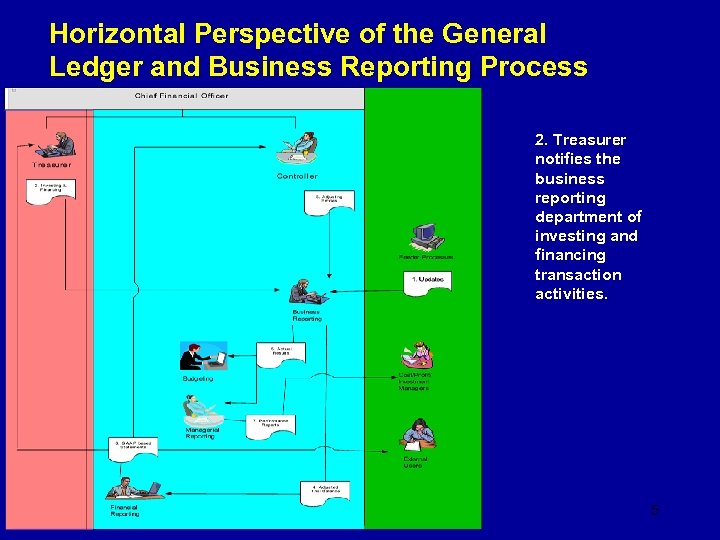
Horizontal Perspective of the General Ledger and Business Reporting Process 2. Treasurer notifies the business reporting department of investing and financing transaction activities. 5
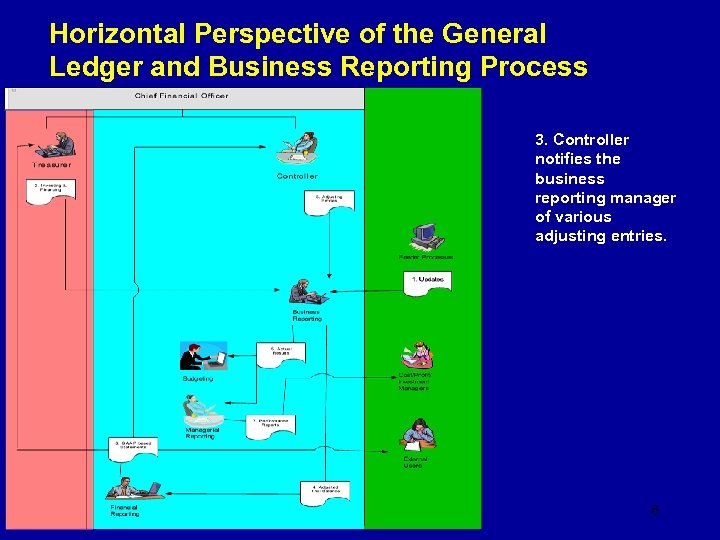
Horizontal Perspective of the General Ledger and Business Reporting Process 3. Controller notifies the business reporting manager of various adjusting entries. 6
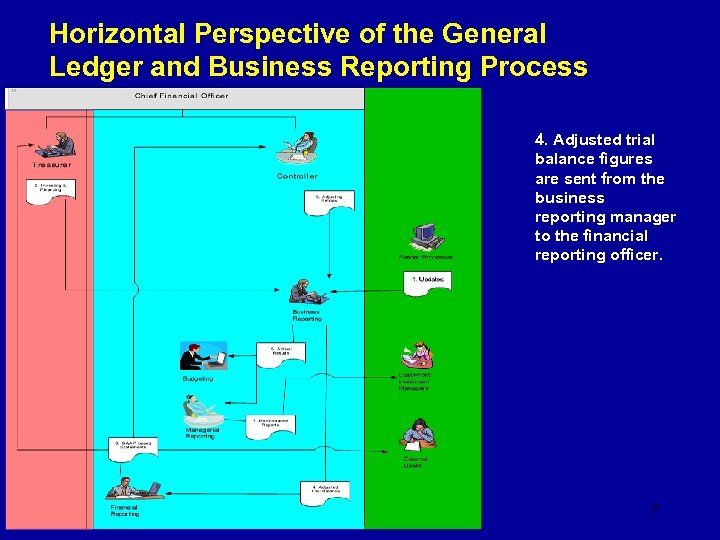
Horizontal Perspective of the General Ledger and Business Reporting Process 4. Adjusted trial balance figures are sent from the business reporting manager to the financial reporting officer. 7
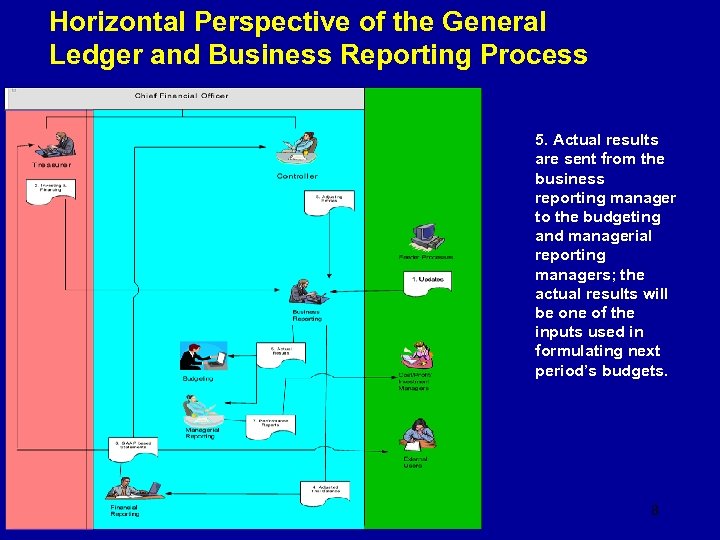
Horizontal Perspective of the General Ledger and Business Reporting Process 5. Actual results are sent from the business reporting manager to the budgeting and managerial reporting managers; the actual results will be one of the inputs used in formulating next period’s budgets. 8
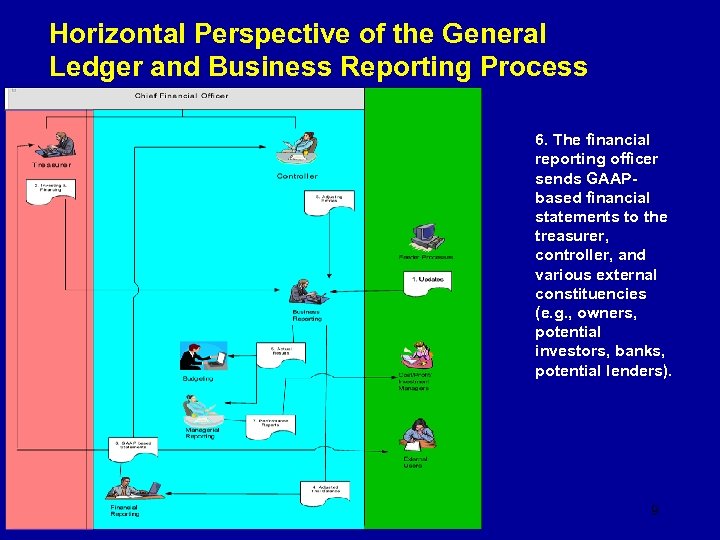
Horizontal Perspective of the General Ledger and Business Reporting Process 6. The financial reporting officer sends GAAPbased financial statements to the treasurer, controller, and various external constituencies (e. g. , owners, potential investors, banks, potential lenders). 9
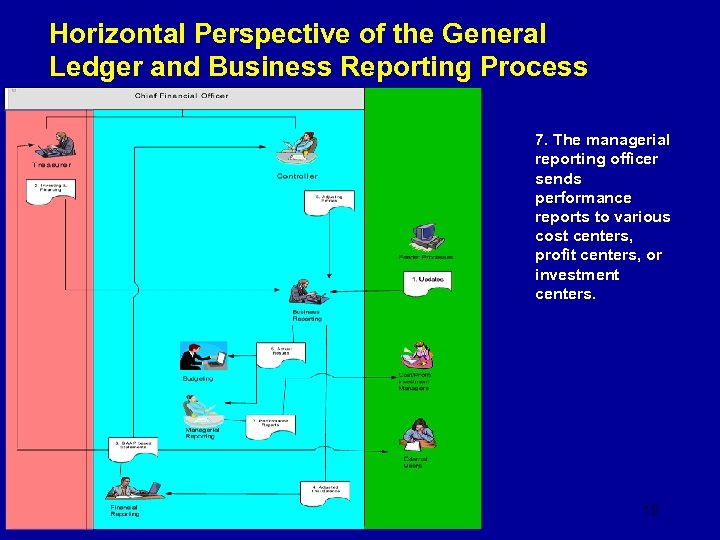
Horizontal Perspective of the General Ledger and Business Reporting Process 7. The managerial reporting officer sends performance reports to various cost centers, profit centers, or investment centers. 10
E-Business Angle Operational stores are financial information stored in databases used to create the chart of accounts, GL and financial reports • Manual Reports – The old method of manually preparing financial reports – Financial reports are comprised of text and data from the operational data stores formatted as financial statements – Often data had to be rekeyed for each different report created • XBRL Enabled Reports – Operational store data contains descriptive (semantic) tags – XBRL enabled report reads descriptive tag and merges data into report – Data from one data store can be used to generate many different reports including Web reports without re-keying 11
Integrated Systems Perspective Including ERP • Events summarized automatically by the system eliminating the need for a separate GL process – The GL is simply a report summarizing transactions by account and by date in ascending order • Treasurer still enters investment and financing transactions into treasury module • Controller still enters adjusting entries • Financial reports are generated by the system using ad hoc queries or pre-established reports 12
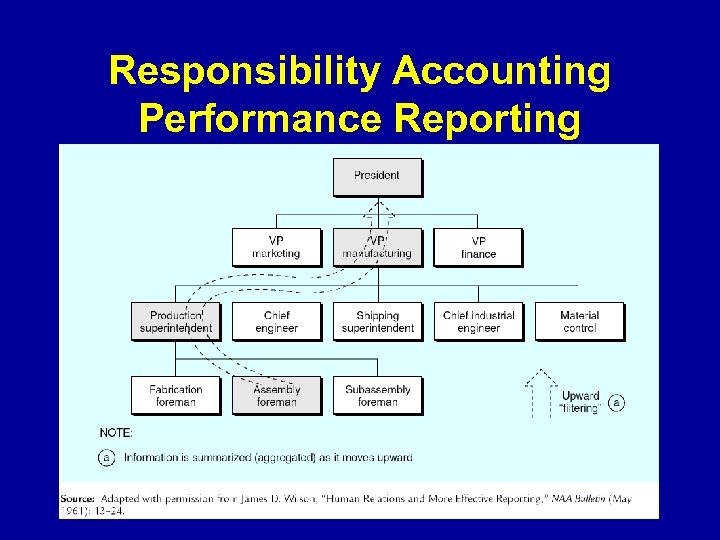
Responsibility Accounting Performance Reporting 13
Responsibility Accounting/Reporting System • Duties of managerial reporting officer – Reports to assist internal management decision making – Performance reports comparing actual performance with budgeted performance – Reports are most detailed at lowest levels of management, least detailed at highest levels of management – It ties into the concept of responsibility accounting 14
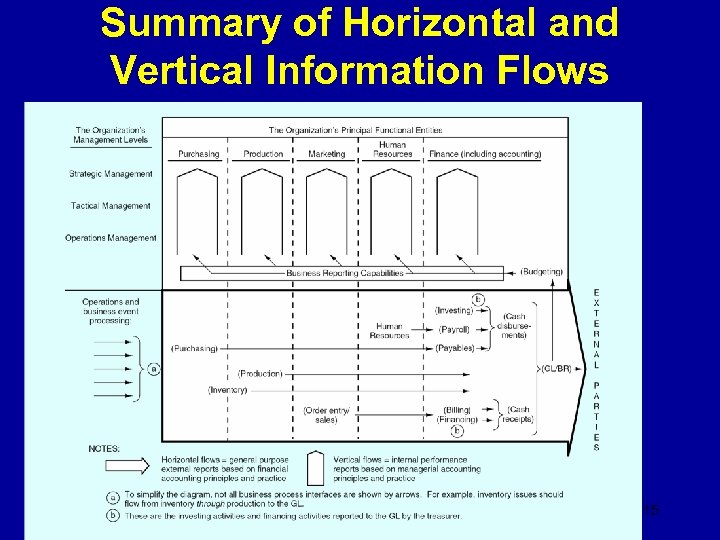
Summary of Horizontal and Vertical Information Flows 15
Summary of Horizontal and Vertical Information Flows • Horizontal flows – Events are processed in various operational systems – Culminates in GL and external business reports • Vertical Flows – GL and other event information flow upward through responsibility accounting system – Culminates in internal performance reports 16
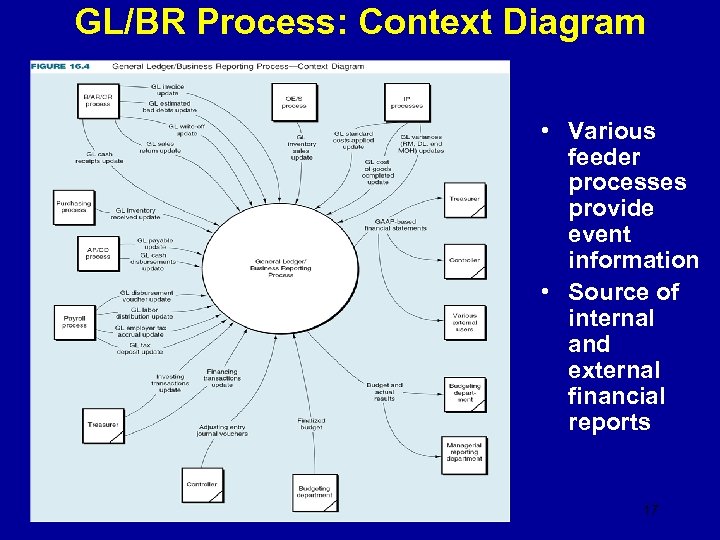
GL/BR Process: Context Diagram • Various feeder processes provide event information • Source of internal and external financial reports 17
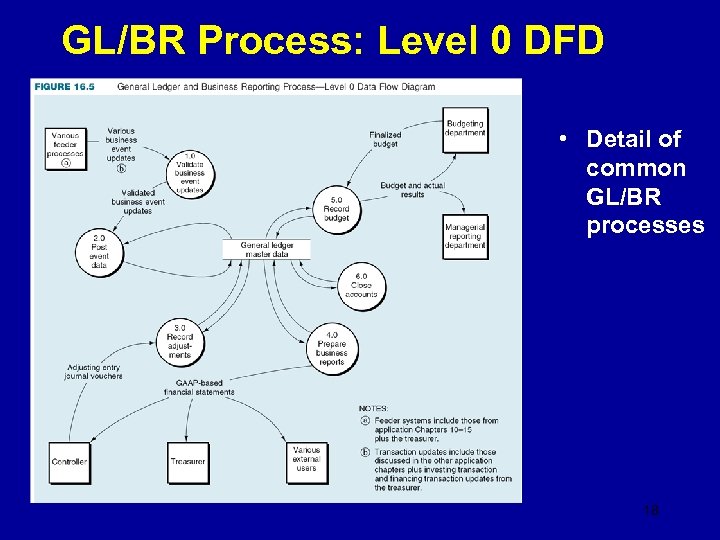
GL/BR Process: Level 0 DFD • Detail of common GL/BR processes 18
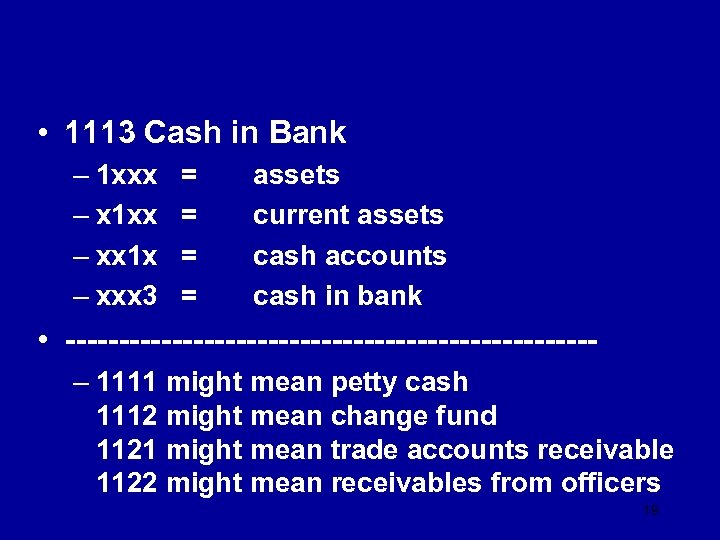
GL Hierarchical Coding • 1113 Cash in Bank – 1 xxx – x 1 xx – xx 1 x – xxx 3 = = assets current assets cash accounts cash in bank • -------------------------– 1111 might mean petty cash 1112 might mean change fund 1121 might mean trade accounts receivable 1122 might mean receivables from officers 19
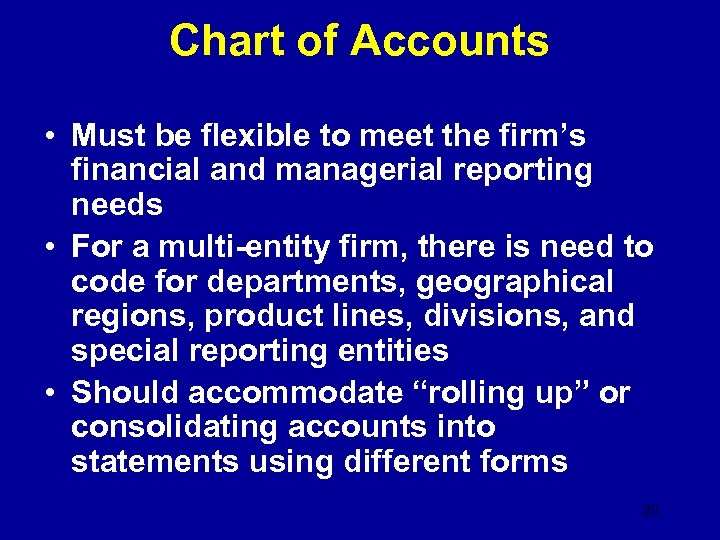
Chart of Accounts • Must be flexible to meet the firm’s financial and managerial reporting needs • For a multi-entity firm, there is need to code for departments, geographical regions, product lines, divisions, and special reporting entities • Should accommodate “rolling up” or consolidating accounts into statements using different forms 20
Technology-enabled Issues in Business Reporting • • • FR modules in ERP systems Balanced Scorecard Business Intelligence Business Reporting via the Internet Public Databases Object-oriented databases 21
ERP Financial Module • Many options available for processing business events that affect multiple processes • Not all users do not need all these options • For security reasons and for ease of use, we limit the access to menu items to only those needed a user to perform his or her responsibilities • We limit the menu options that appear • We allow a user to have different privilege levels for different information—that is, view access, write access, entry access, and/or change access • Carefully set up the system limitations for that specific user • Each user has their own ID and password 22
Balanced Scorecard • Methodology for assessing organization’s business performance via – – Financial Internal business processes Customers Innovation and improvement activities • Functionality included in applications by all major ERP vendors 23
Business Intelligence • Integration of statistical and analytical tools with decision support technologies • Facilitates complex analyses of data warehouses by managers and decision makers • Typical module in ERP systems 24
Extensible Business Reporting Language (XBRL) • XBRL is a form of XML-based language consisting of a set of tags used to unify presentation of business reporting information into a single format • Easily read by many software packages • Can be easily searched by web browsers • Enables easy uploading and downloading of information to other software packages for update, analysis, etc 25
Public Databases • Aid to financial reporting officers in determining BR treatments • National Automated Accounting Research System (NAARS) • The Internet may be viewed as one huge public database 26
IT Control Processes for Workstation-to-Workstation Networks • Typical Controls – – – – – Passwords and access controls Access logs kept and reviewed Call back procedures for remote log on Controls on database/file access Controls on level of access/privileges, e. g. , read-only file access Diskless workstations Data encryption and digital signatures Removable drives Backup facilities for extended network failures File locking/contention controls 27
Workstations Connected to Servers • Typical Controls – – Server logs kept and reviewed Standardized file transfer formats Read-only access to database Front-end workstations process data relieving server – Data entry to event data store and subsequent batch update to database 28
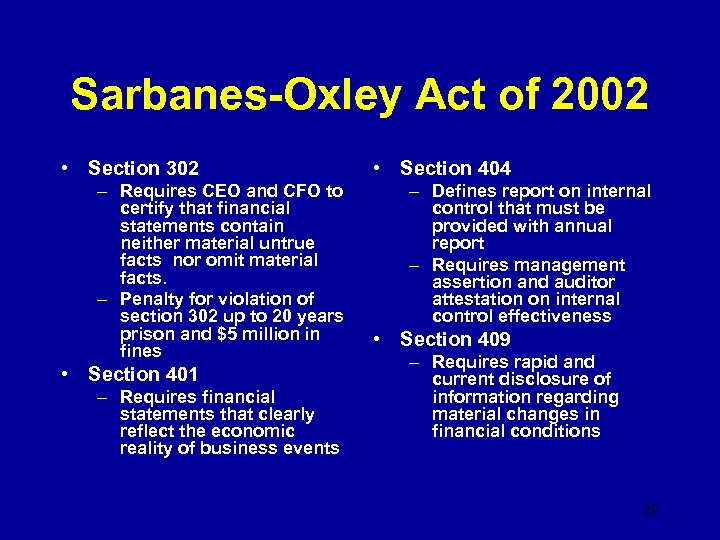
Sarbanes-Oxley Act of 2002 • Section 302 – Requires CEO and CFO to certify that financial statements contain neither material untrue facts nor omit material facts. – Penalty for violation of section 302 up to 20 years prison and $5 million in fines • Section 401 – Requires financial statements that clearly reflect the economic reality of business events • Section 404 – Defines report on internal control that must be provided with annual report – Requires management assertion and auditor attestation on internal control effectiveness • Section 409 – Requires rapid and current disclosure of information regarding material changes in financial conditions 29
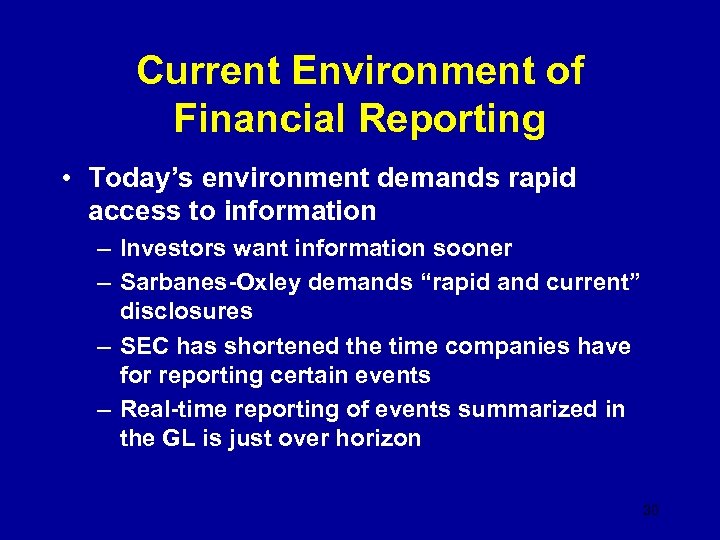
Current Environment of Financial Reporting • Today’s environment demands rapid access to information – Investors want information sooner – Sarbanes-Oxley demands “rapid and current” disclosures – SEC has shortened the time companies have for reporting certain events – Real-time reporting of events summarized in the GL is just over horizon 30
Скачать презентацию The General Ledger and Business Reporting GL BR Process
a3a7b2e3161bf62e0db4ee7f72180b58.ppt