


 Скачать презентацию THE GENERAL JONAS ZEMAITIS MILITARY ACADEMY OF LITHUANIA
553a7081ff0e0528221016cd180cc62e.ppt
- Количество слайдов: 80
 THE GENERAL JONAS ZEMAITIS MILITARY ACADEMY OF LITHUANIA CONTEMPORARY PEACEKEEPING OPERATIONS OF 1 JURGIS NORVAISA
 OF 1 JURGIS NORVAISA BACKGROUND ØLithuanian, born in 1986 – 27 years old ØIn army from 2005 ØMilitary career: • Antitank PLT LDR • ISAF mission in AFG
 “Well, who would defeat us if we are not afraid to die and we have conquered the death”
 Is this peacekeeping?
 CONTENT v. History of peacekeeping v. Current peacekeeping operations v. Quiz v. Questions
 REFERENCES http: //www. un. org/en/peacekeeping/operations/history. shtml. 2. The term ‘peacekeeping’ does not appear in the United Nations Charter and was first adopted following the deployment of a UN force to the Sinai in 1956 (UNEF) to secure a ceasefire between Egyptian and Israeli forces. 3. Joint Warfare Publication 3 -50 (JWP 3 -50), 2 nd Edition, June 2004, 1 -4. 4. http: //www. un. org/en/peacekeeping/operations/early. shtml 5. http: //www. un. org/en/peacekeeping/operations/peacekeeping. shtml 6. http: //nobelpeacekeepers. tripod. com/id 4. html 7. http: //unama. unmissions. org/Default. aspx? tabid=12255&language=en. US 8. The UN Security Council, http: //www. unfoundation. org/what-wedo/issues/united-nations/the-un-security-council. html, retrieved 15 May 2012.
 INTRODUCTION
 PEACEKEEPING PEACE SUPPORT OPERATIONS PEACE OPERATION PEACE MAKING PEACE BUILDING PEACE ENFORCEMENT TRADITIONAL PEACEKEEPING COMPLEX PEACEKEEPING MANY DEFINITIONS, COMMON IDEAS
 Peace Support Operations (NATO Definition 2010) v. An operation that impartially makes use of diplomatic, civil and military means, normally in pursuit of United Nations Charter purposes and principles, to restore or maintain peace. v. Such operations may include conflict prevention, peacemaking, peace enforcement, peacekeeping, peacebuilding and/or humanitarian operations NATO glossary of terms and definitions, AAP-6 2010
 Peacekeeping (UN Definition ) v. The deployment of international military and civilian personnel to a conflict area, with the consent of the parties to the conflict and/or national authorities in order to: Ø Stop or contain hostilities or Ø Supervise the carrying out of a peace agreement Ø Assist with humanitarian relief, human rights compliance and nation-building
 What is peacekeeping operation?
 UN Charter v. Chapter VI Ø“Pacific settlement of disputes” ØSecurity Council can investigate any dispute, or any situation which might lead to international friction or give rise to a dispute ØCouncil can recommend action but the recommendations are not binding its members v. Chapter VII ØCouncil is not limited to recommendations ØCan take action, including the use of armed force, to maintain or restore international peace and security Peacekeeping ops often are called “Chapter VI and a half”
 PK OPS NOW THE MAIN TOOL TO OPERATE ARMED CONFLICT AND TO CONSTRUCT WORLD PEACE
 PK OPS DURING THE COLD WAR “SITUATION IN THE MIDDLE”BETWEEN CONFLICTING GROUPS
 Who can implement peacekeeping ops?
 ANSWER 1: v. The United Nations Charter gives the United Nations Security Council the power and responsibility to take collective action to maintain international peace and security v. UN peacekeepers (Blue Berets) can include soldiers, police officers and civilians from member states.
 ANSWER 2: v. Most peacekeeping operations are established and implemented by UN itself, with troops under UN operational control v. In cases where direct UN involvement is not considered appropriate or feasible, the Council may consider authorizing regional organizations (NATO, EU, ECOWAS) or other coalition of willing countries to undertake PK tasks
 HISTORY OF PEACEKEEPING
 History of peacekeeping v. United Nations Peacekeeping began in 1948 v The role of the 1 st mission – to monitor the Armistice Agreement between Israel and its Arab neighbors. v. Mission named – United Nations Truce Supervision Organization (UNTSO).
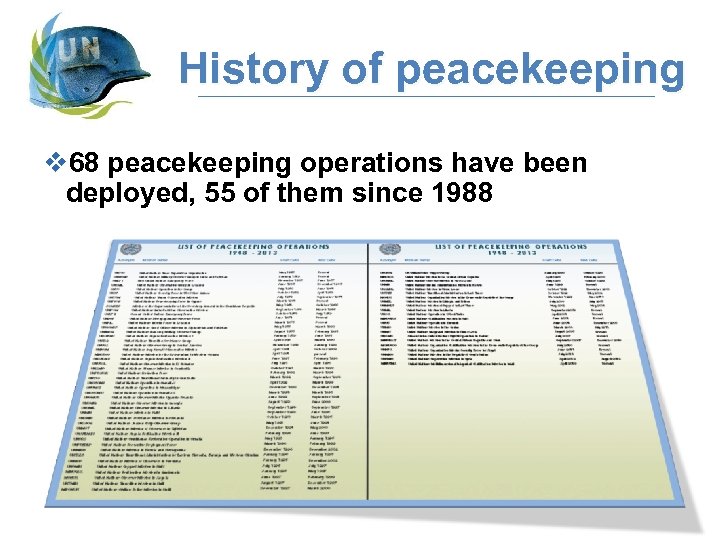 History of peacekeeping v 68 peacekeeping operations have been deployed, 55 of them since 1988
 History of peacekeeping v. UN founding purpose – the maintenance of “international peace and security” by “effective collective measures” v. Limitations throughout the Cold War mounting “Traditional” or “Nordic Peacekeeping” operations
 History of peacekeeping v. Trinity of peacekeeping principles: üConsent üLimited use of force üImpartiality + üDay to day control of UNSG
 History of peacekeeping v. Peacekeeping was limited: ØMaintain ceasefire and stabilize situation on the ground ØProvide crucial support for political efforts to resolve conflict by peaceful means
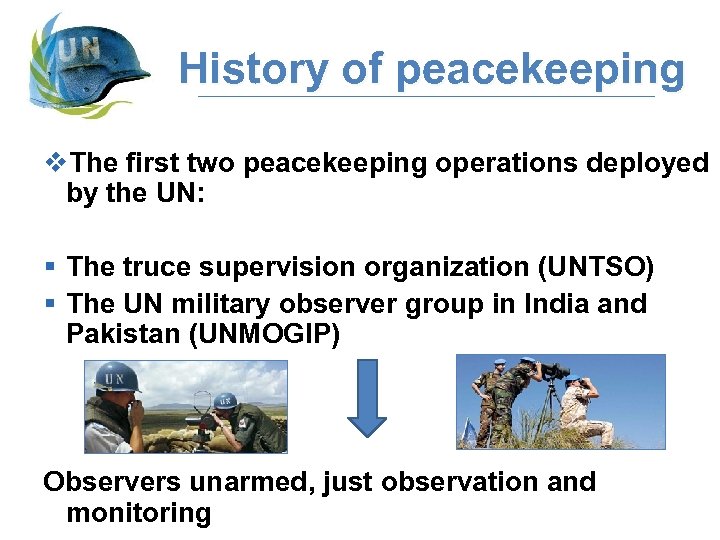 History of peacekeeping v. The first two peacekeeping operations deployed by the UN: § The truce supervision organization (UNTSO) § The UN military observer group in India and Pakistan (UNMOGIP) Observers unarmed, just observation and monitoring
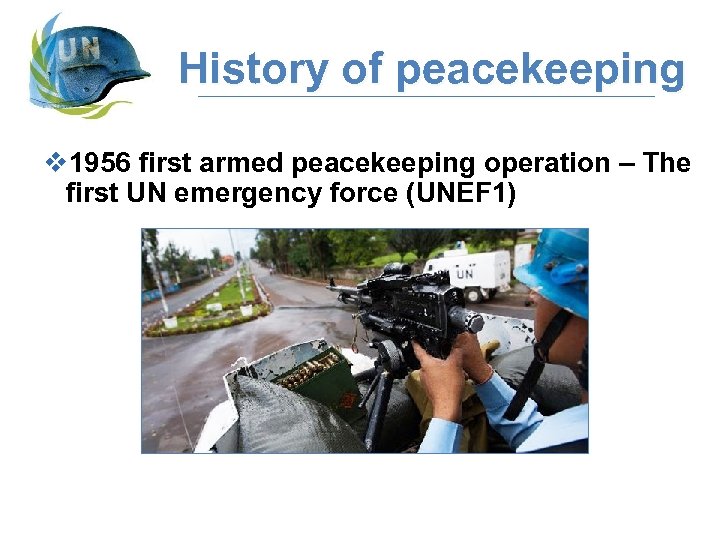 History of peacekeeping v 1956 first armed peacekeeping operation – The first UN emergency force (UNEF 1)
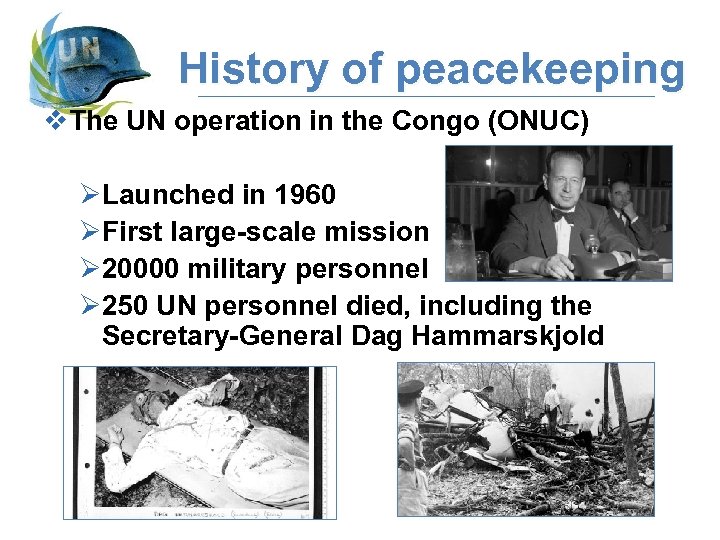 History of peacekeeping v. The UN operation in the Congo (ONUC) ØLaunched in 1960 ØFirst large-scale mission Ø 20000 military personnel Ø 250 UN personnel died, including the Secretary-General Dag Hammarskjold
 History of peacekeeping v. In the 1960 s and 1970 s, the UN established short-term missions: ØIn the Dominican Republic (DOMREP) ØWest New Guinea (UNSF) ØYemen (UNYOM) and started longer term deployments in Cyprus (UNFICYP) and the Middle East - (UNEFII), (UNDOF) and (UNIFIL).
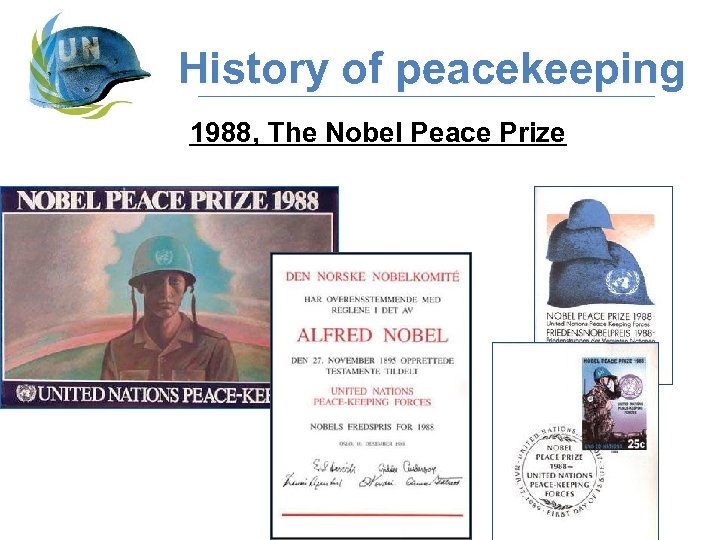 History of peacekeeping 1988, The Nobel Peace Prize
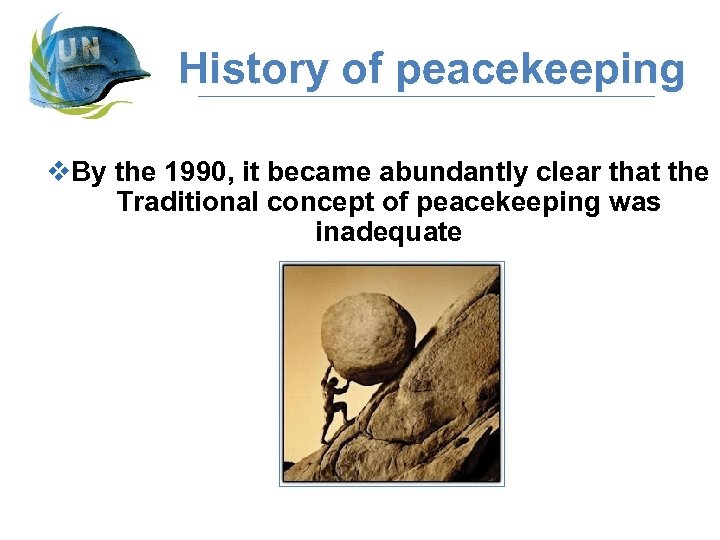 History of peacekeeping v. By the 1990, it became abundantly clear that the Traditional concept of peacekeeping was inadequate
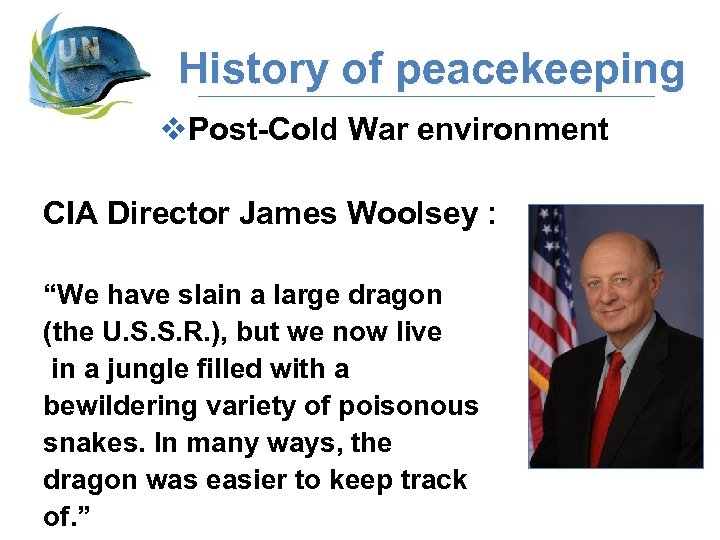 History of peacekeeping v. Post-Cold War environment CIA Director James Woolsey : “We have slain a large dragon (the U. S. S. R. ), but we now live in a jungle filled with a bewildering variety of poisonous snakes. In many ways, the dragon was easier to keep track of. ”
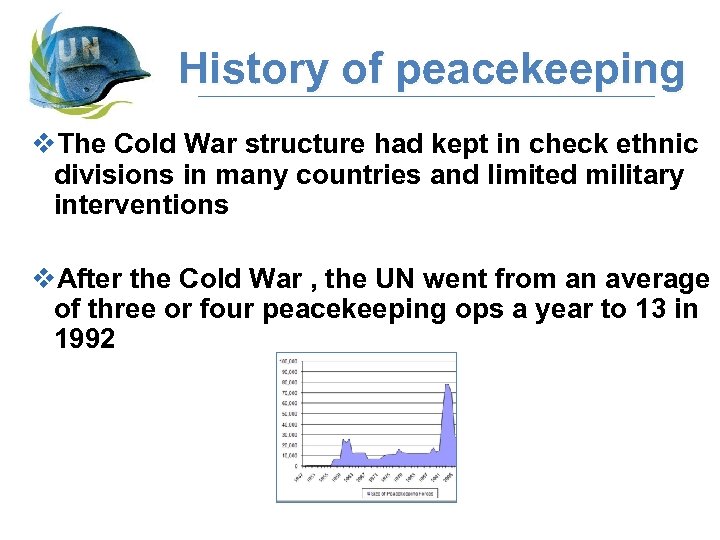 History of peacekeeping v. The Cold War structure had kept in check ethnic divisions in many countries and limited military interventions v. After the Cold War , the UN went from an average of three or four peacekeeping ops a year to 13 in 1992
 History of peacekeeping v. What is peacekeeping? ØOne of the most effective tools from conflict to peace ØUnique strength, including legitimacy, burden sharing and an ability to deploy and sustain troops and police ØPeacekeepers provide security and the political and peace building support
 History of peacekeeping v. Todays operations ØAre used to facilitate the political process, protect civilians, assist in the disarmament, demobilization and reintegration of former combatants; support the organization of elections, protect and promote human rights and assist in restoring the rule of law
 CURRENT PEACEKEEPING OPERATIONS
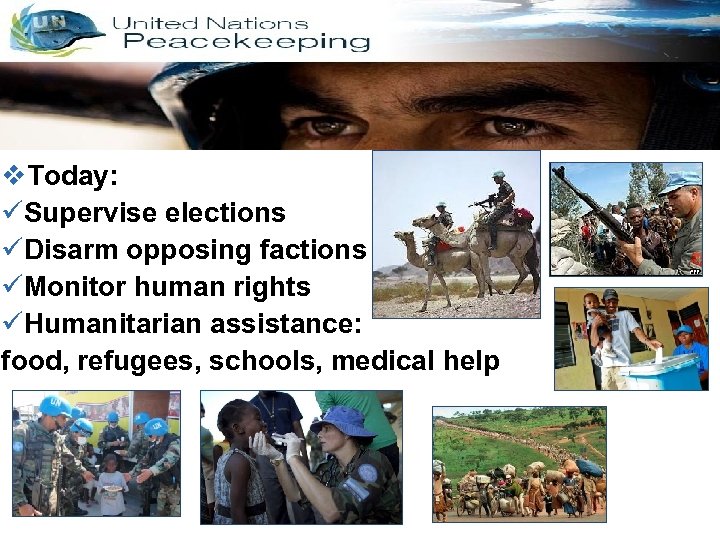 v. Today: üSupervise elections üDisarm opposing factions üMonitor human rights üHumanitarian assistance: food, refugees, schools, medical help
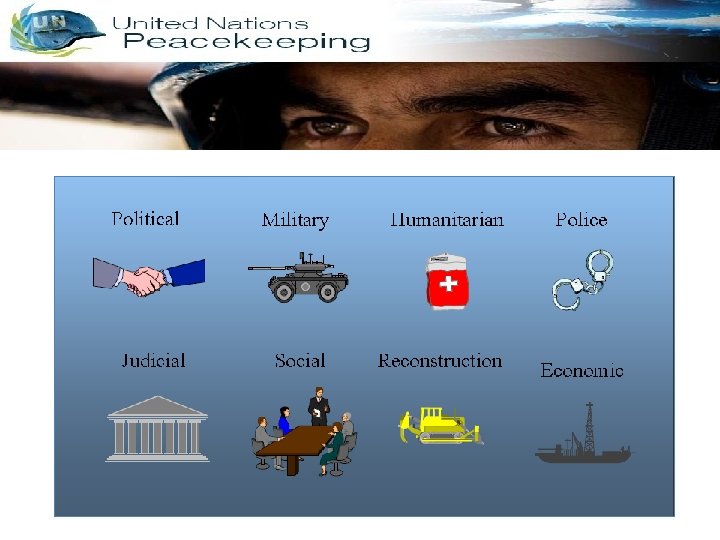
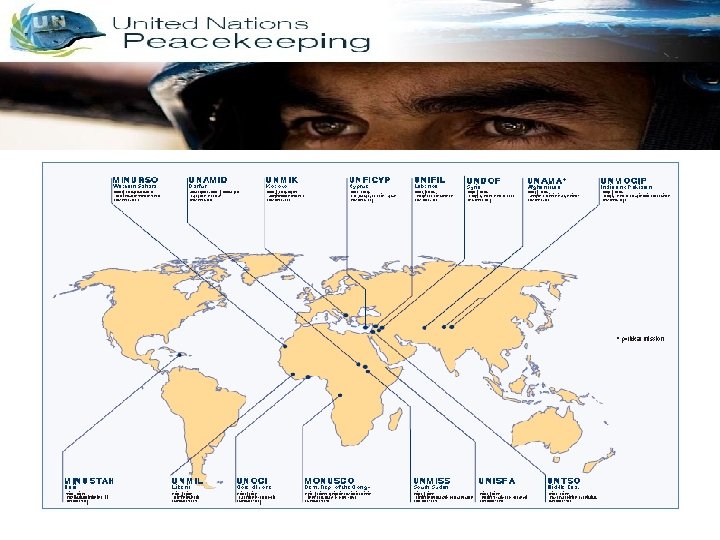 Contemporary Peacekeeping operations
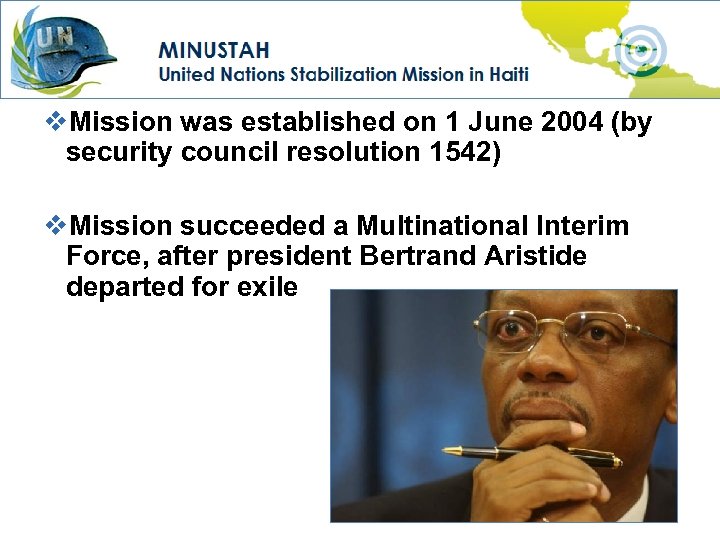 v. Mission was established on 1 June 2004 (by security council resolution 1542) v. Mission succeeded a Multinational Interim Force, after president Bertrand Aristide departed for exile
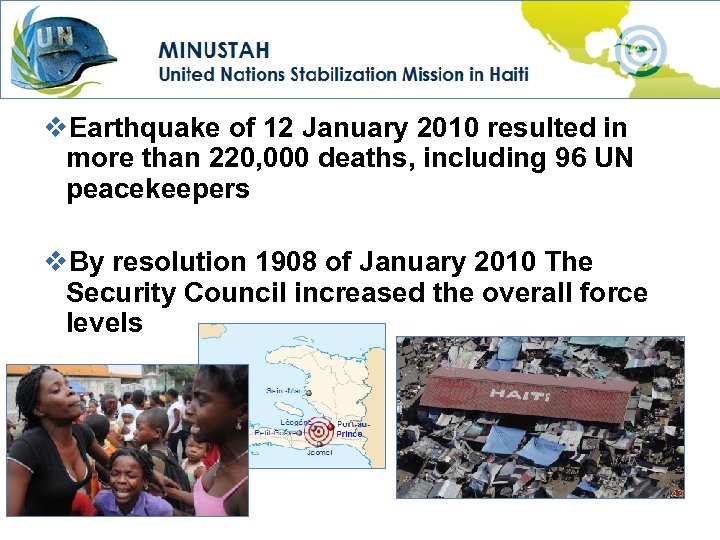 v. Earthquake of 12 January 2010 resulted in more than 220, 000 deaths, including 96 UN peacekeepers v. By resolution 1908 of January 2010 The Security Council increased the overall force levels
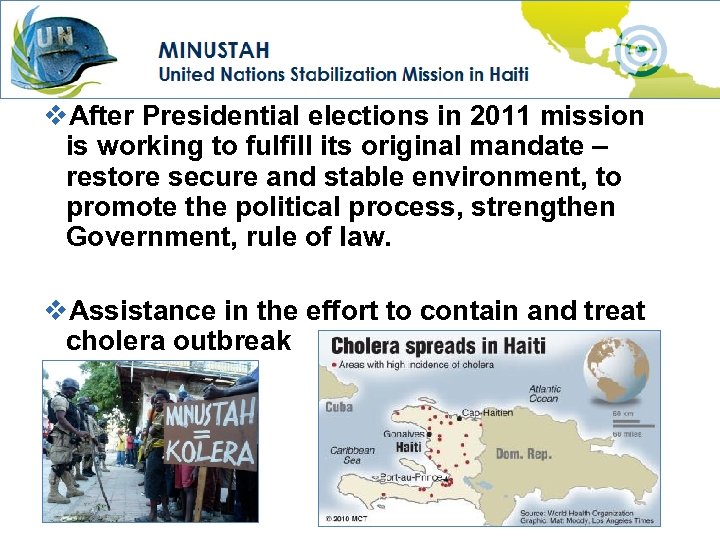 v. After Presidential elections in 2011 mission is working to fulfill its original mandate – restore secure and stable environment, to promote the political process, strengthen Government, rule of law. v. Assistance in the effort to contain and treat cholera outbreak
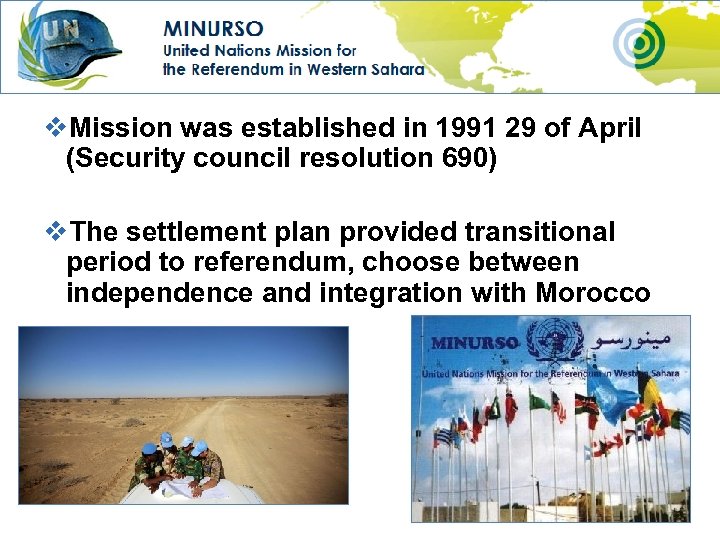 v. Mission was established in 1991 29 of April (Security council resolution 690) v. The settlement plan provided transitional period to referendum, choose between independence and integration with Morocco
 v. Mission was established in 2003 19 of September (Security council resolution 1509) v. Main goals: ØCeasefire agreement and the peace process ØProtect UN staff, facilities and civilians ØSupport humanitarian and human rights activities ØNational security reform
 v. Mission was established in 2004 4 of April (security council resolution 1528) v. Mandate – to facilitate the implementation by the Ivorian parties v. After 2010 Presidential election and political crisis UNOCI remained on the ground
 v. Mission took over from MONUC mission on 1 July 2010 v New mission has been authorized to: ØProtect civilians, humanitarian personnel and human rights defenders under threat of physical violence ØSupport the Government
 v. Mission established on 31 July 2007 (adopted Security Council resolution 1769) v. Mandate: ØProtection of civilians ØSecurity for humanitarian assistance ØMonitoring implementation of agreements ØAssisting political process ØHuman rights, rule of law ØSituation along border with Chad and CAR
 v. Mission established on 27 June 2011 (Security Council resolution 1990) v. Reason: violence, escalating tensions and population displacement v. UNISFA is monitoring the flashpoint border between north and south, is authorized to use force
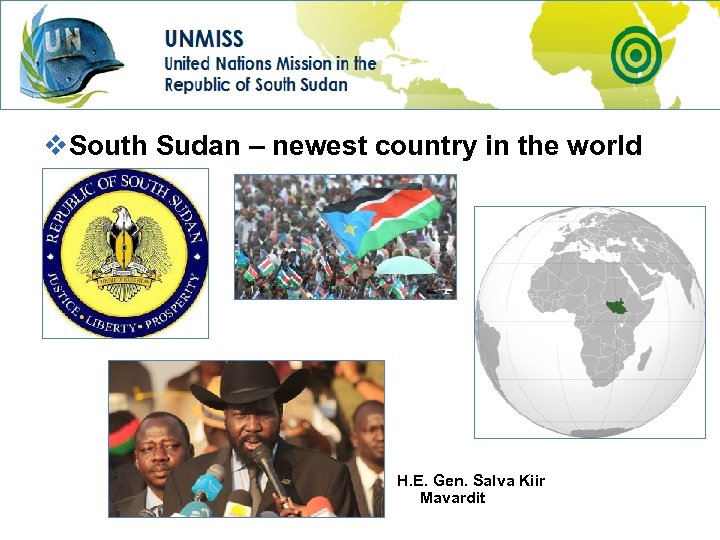 v. South Sudan – newest country in the world H. E. Gen. Salva Kiir Mavardit
 v. Mission UNMISS started on 9 July 2011 (Adopted Security Council resolution 1996) v. Main goals: ØConsolidate peace and security ØHelp establish conditions for development
 v. Mission started on 10 of June 1999(Security Council resolution 1244) v. Task unprecedented in complexity and scope v. Newer tasks: promotion of security, stability and human rights
 v. Mission was originally set up in 1964, main goal – to prevent fighting between the Greek Cypriot and Turkish Cypriot communities v Other goals – supervise ceasefire lines, maintain a buffer zone, undertake humanitarian activities, support the Secretary General mission
 v. Originally created in March 1978, to confirm Israeli withdrawal from Lebanon v. Mandate had to be adjusted in 1982 and 2000 v. After 2006 crisis mission started monitor the cessation of hostilities, accompany and support the Lebanese armed forces as they deploy throughout the south of Lebanon, humanitarian access to civilian population, safe return of displaced people
 v. Set up in May 1948, first UN peacekeeping operation v. Since then: UN military observers monitored ceasefires, supervised armistice agreements, prevented incidents from escalating and assisted other UN ops in the region
 v. Mission established on 31 May 1974 (SC resolution 350) following the agreed disengagement of the Israeli and Syrian forces v. Since then UNDOF maintained the ceasefire and supervised the implementation of the disengagement agreement
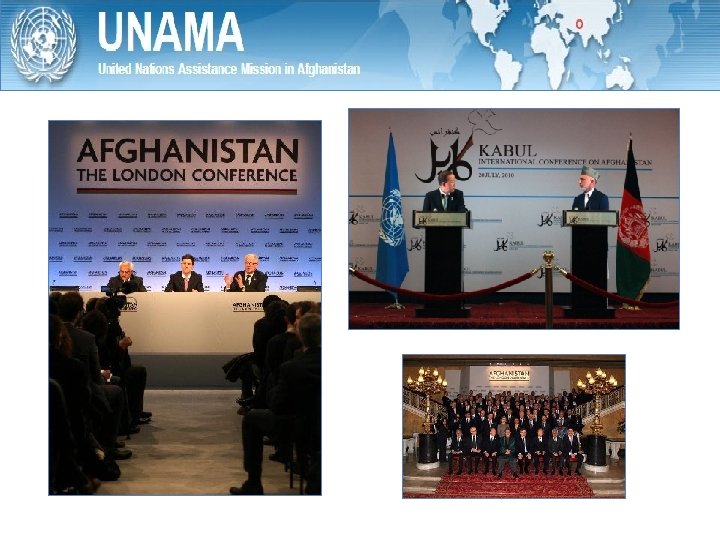
 v. UNAMA is a political mission established by the SC in 2002 at the request of the Goverment v. UNAMA is mandated to support the Afghan Government in its efforts to improve security, governance, economic development, regional cooperation üTo support the full implementation of commitments made at the London and at the Kabul Conferences
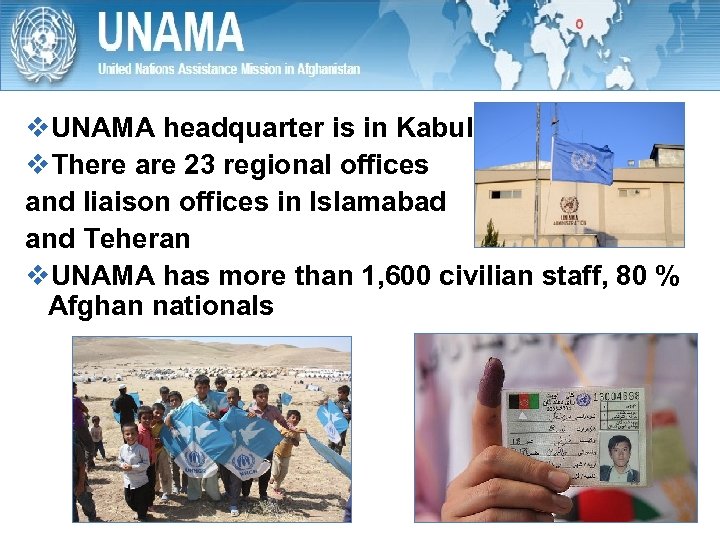 v. UNAMA headquarter is in Kabul v. There are 23 regional offices and liaison offices in Islamabad and Teheran v. UNAMA has more than 1, 600 civilian staff, 80 % Afghan nationals
 v 5 main UN priorities in AFG: ØPeace, reconciliation and reintegration ØHuman rights protection and promotion ØSub-national governance and the rule of law ØMaternal and newborn health ØSustainable livelihoods
 v. The UN country team includes the UN Food and Agriculture Organisation, the World Food Programme, the UNHCR
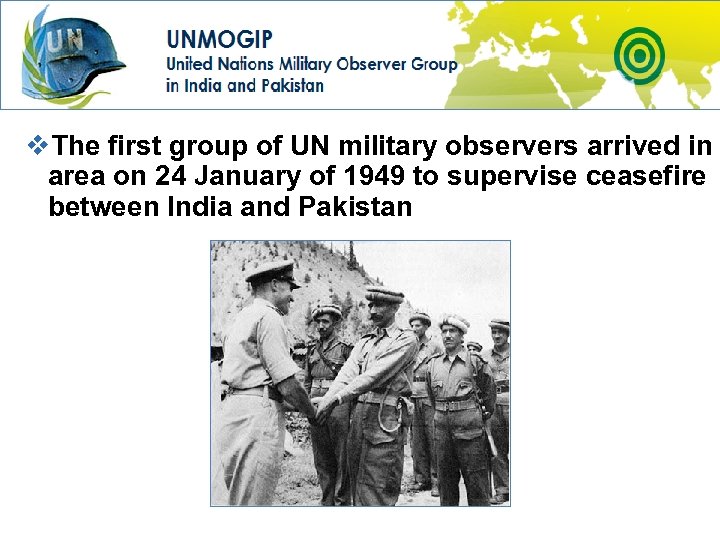 v. The first group of UN military observers arrived in area on 24 January of 1949 to supervise ceasefire between India and Pakistan
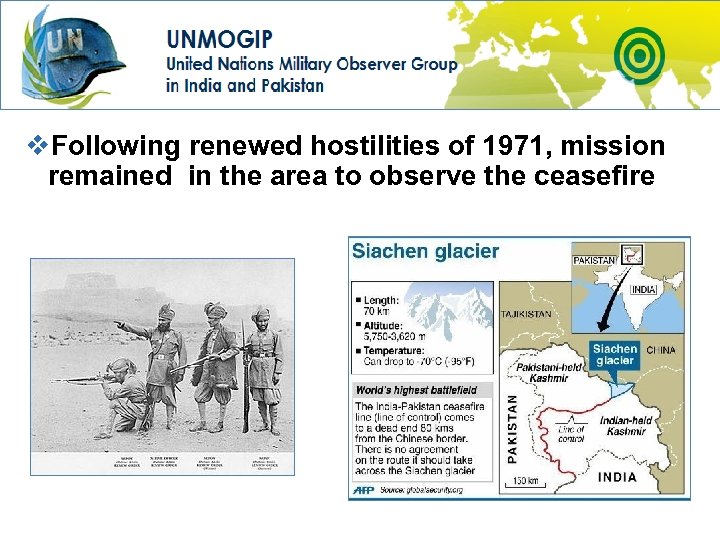 v. Following renewed hostilities of 1971, mission remained in the area to observe the ceasefire
 v. Mission was established by SC resolution 2100 of 25 April 2013 v. The mission has been asked to support the transitional authorities of Mali in the stabilization of the country and implementation of the transitional roadmap, protecting civilians, human rights monitoring, the creation of conditions for the provision of humanitarian assistance and the return of displaced persons, the extension of State authority and the preparation of free, inclusive and peaceful elections.
 ?
?