


 Скачать презентацию THE FUTURE of the FRESH FISH Market personnel
b36bc84eaea1522ef7322e0335945415.ppt
- Количество слайдов: 29
 THE FUTURE of the FRESH FISH Market personnel views to stimulate discussion & possible actions
 the Fresh Fish Market • Yesterday » When everything was better • Today » Problems, always problems • Tomorrow » Surely it cannot get worse !
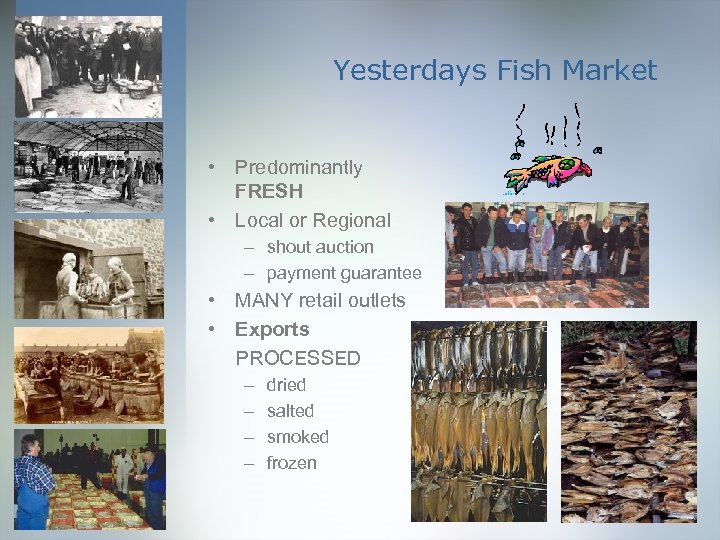 Yesterdays Fish Market • Predominantly FRESH • Local or Regional – shout auction – payment guarantee • MANY retail outlets • Exports PROCESSED – – dried salted smoked frozen
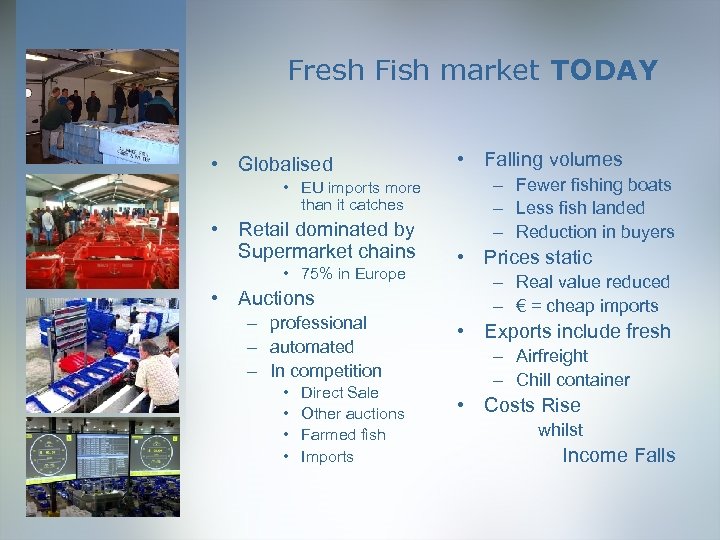 Fresh Fish market TODAY • Globalised • EU imports more than it catches • Retail dominated by Supermarket chains • 75% in Europe • Auctions – professional – automated – In competition • • Direct Sale Other auctions Farmed fish Imports • Falling volumes – Fewer fishing boats – Less fish landed – Reduction in buyers • Prices static – Real value reduced – € = cheap imports • Exports include fresh – Airfreight – Chill container • Costs Rise whilst Income Falls
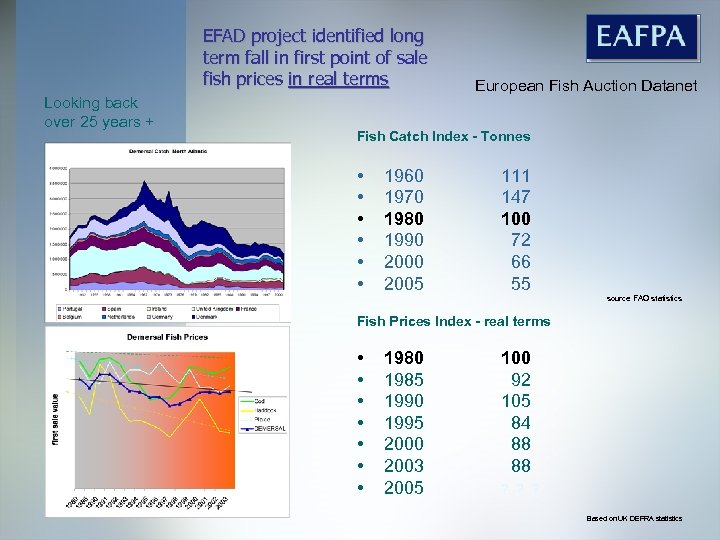 EFAD project identified long term fall in first point of sale fish prices in real terms Looking back over 25 years + European Fish Auction Datanet Fish Catch Index - Tonnes • • • 1960 1970 1980 1990 2005 111 147 100 72 66 55 source FAO statistics Fish Prices Index - real terms • • 1980 1985 1990 1995 2000 2003 2005 100 92 105 84 88 88 ? ? ? Based on UK DEFRA statistics
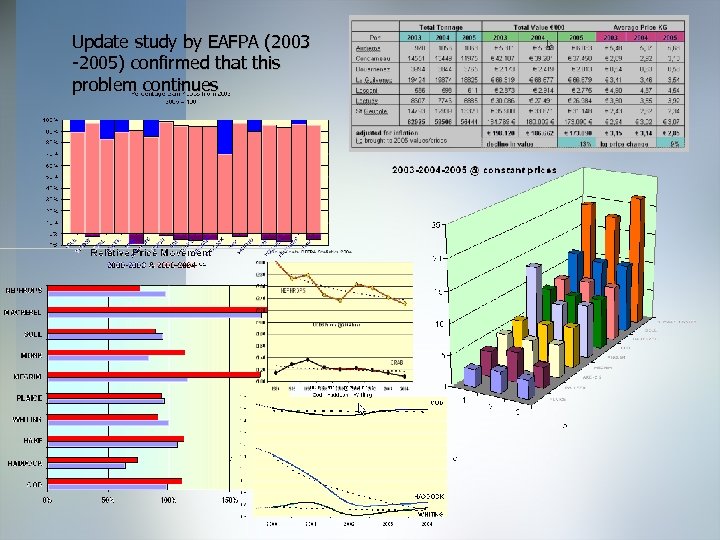 Update study by EAFPA (2003 -2005) confirmed that this problem continues
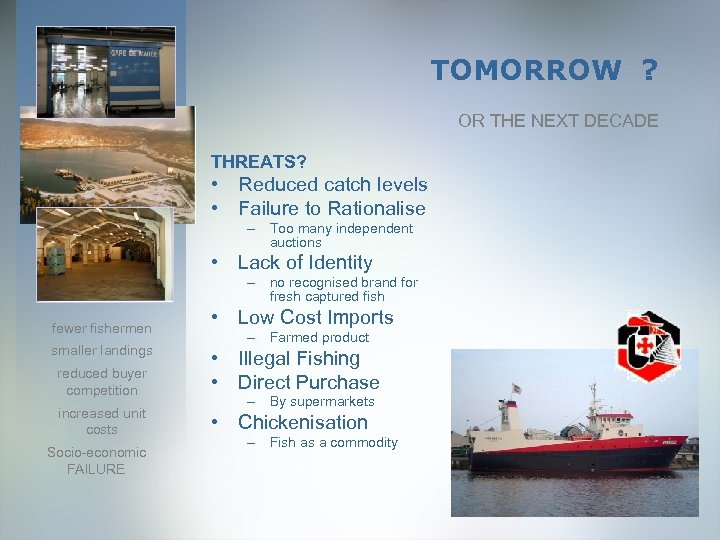 TOMORROW ? OR THE NEXT DECADE THREATS? • Reduced catch levels • Failure to Rationalise – Too many independent auctions • Lack of Identity – no recognised brand for fresh captured fish fewer fishermen smaller landings • Low Cost Imports – Farmed product reduced buyer competition • Illegal Fishing • Direct Purchase increased unit costs • Chickenisation Socio-economic FAILURE – By supermarkets – Fish as a commodity
 FUTURE of the FRESH FISH Market IS THERE ONE? I THINK THERE IS Provided WE ACT NOW To prepare for tomorrow…
 Objective: for the fish sales organisation • Maximise unit values – fish prices per kilogramme • Minimise unit marketing cost – defray fixed expenditure • Offset central purchase control – Avoid there being a dominant buyer • Establish long term markets – To complement long term investment
 HOW? • Replace Volume – With Value • New business • Change price dynamics – repackaging – distribution – vertical selling – services – products • utilising assets • Embrace Quality – BRAND it • – Farmed fish – Imported fish • SELL it – DELIVER IT own account partnering others Sales platform for • Promote WILD fish – as the new organic
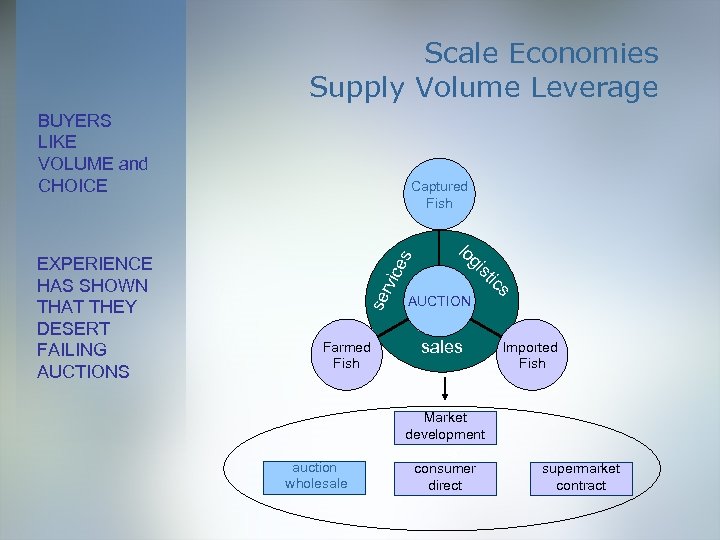 Scale Economies Supply Volume Leverage BUYERS LIKE VOLUME and CHOICE s rvi ce se AUCTION sales s ic st Imported Fish s Farmed Fish gi lo rvi ce Market development auction wholesale se EXPERIENCE HAS SHOWN THAT THEY DESERT FAILING AUCTIONS Captured Fish consumer direct supermarket contract
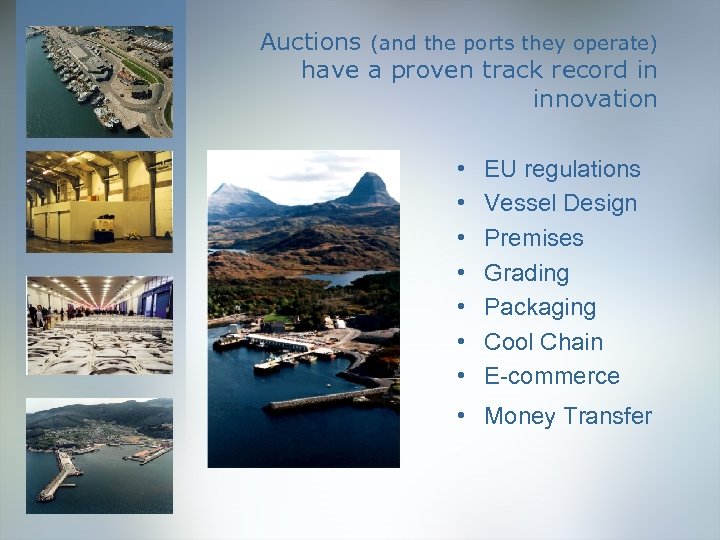 Auctions (and the ports they operate) have a proven track record in innovation • • EU regulations Vessel Design Premises Grading Packaging Cool Chain E-commerce • Money Transfer
 Quality can not be compromised TAC’s are unlikely to increase Costs continue to rise in real terms Continuous development and investment needed Maintaining a viable sector? SALES are the KEY
 Fish Prices at first sale • Lack elasticity due to alternative » species » sources of supply » food products • Do not reflect production cost • Are subject to globalisation – and the buying power of the €uro • Fish is in danger of moving to a commodity basis – through centralised buying policies – Homogenisation of products • “CHICKENISATION”
 Can we build on e-commerce Exploiting existing buyer contact While developing new Or is it an opportunity missed?
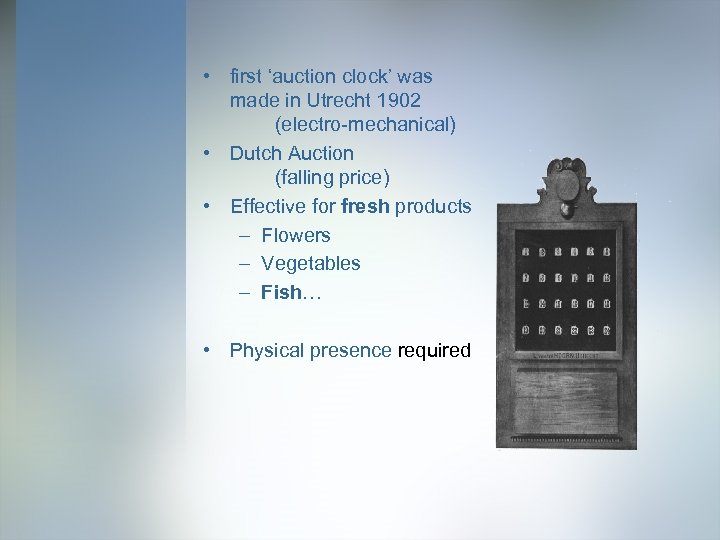 • first ‘auction clock’ was made in Utrecht 1902 (electro-mechanical) • Dutch Auction (falling price) • Effective for fresh products – Flowers – Vegetables – Fish… • Physical presence required
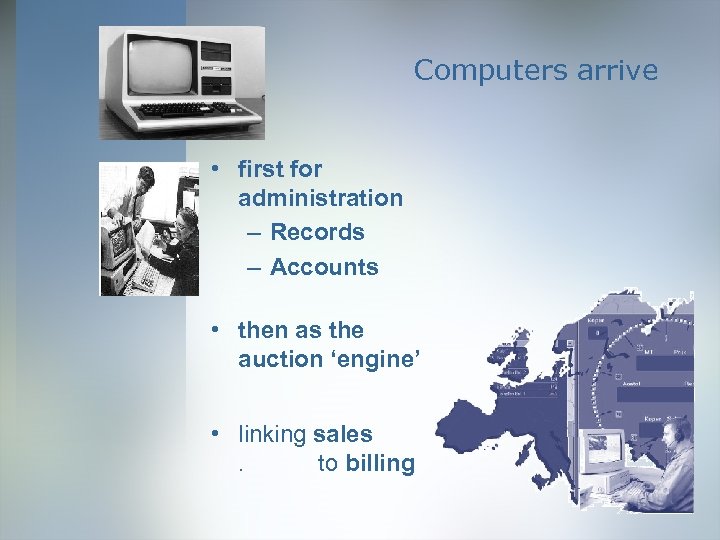 Computers arrive • first for administration – Records – Accounts • then as the auction ‘engine’ • linking sales. to billing
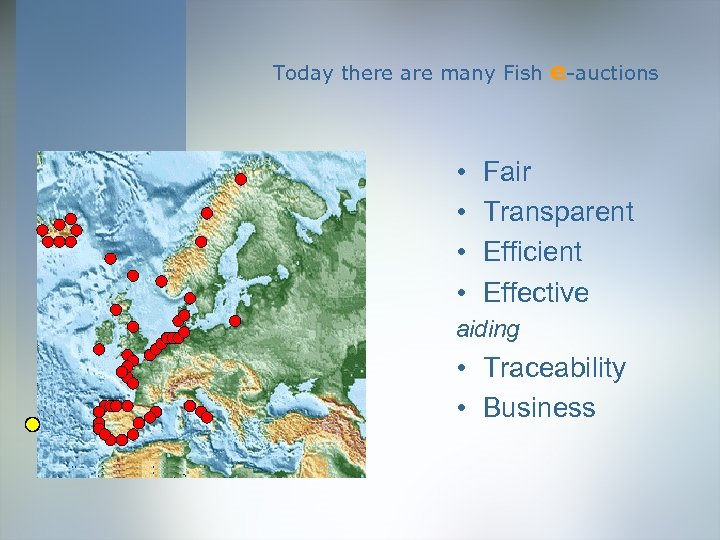 Today there are many Fish • • e-auctions Fair Transparent Efficient Effective aiding • Traceability • Business
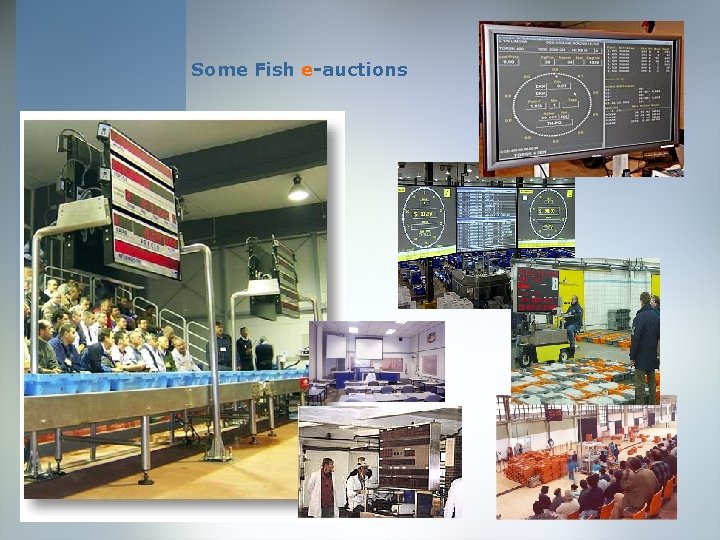 Some Fish e-auctions
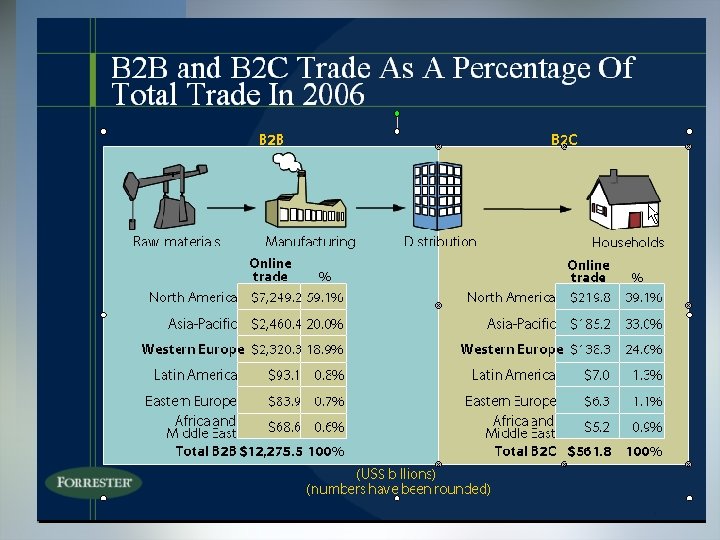
 e-auctions • • Technology has changed what we do • and how we do it Electronic Retail is now ‘normal’ • ebay has brought internet auctions into the home • Flights and Travel are booked online • In UK Tesco, supermarket chain, has 5 million internet customers – Shop Online – Store delivers • e-commerce now valued at € 7 trillion pa (Forrester Research Inc. ) • Fish Auctions have used Electronic Auction for decades – Present systems well established – Potential still to be realised…
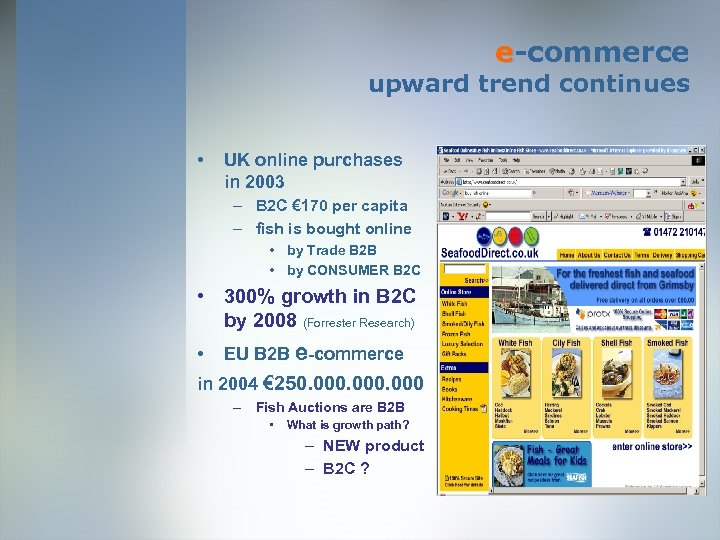 e-commerce upward trend continues • UK online purchases in 2003 – B 2 C € 170 per capita – fish is bought online • by Trade B 2 B • by CONSUMER B 2 C • 300% growth in B 2 C by 2008 (Forrester Research) • EU B 2 B e-commerce in 2004 € 250. 000 – Fish Auctions are B 2 B • What is growth path? – NEW product – B 2 C ?
 Can fresh fish Auctions and their suppliers, fishermen and fish farmers, benefit from the growth of direct consumer buying over the internet • • Consumers will not pay more – Introducing efficiencies through direct supply should increase producer income Auctions provide a secondary sale outlet – Adopting volume internet trade terms • Investing in systems, staff and service • On the back of this – Quality products could be delivered • To the ‘upper quartile’ of consumers that will pay a premium for “the best” • From a mobile phone tomorrow’s fresh fish could be ordered today – Cheap, simple to use, tomorrow is here today!
 Buying Unseen • Consumers will buy based on description – Where this is backed by a ‘standard’ • Witness ebay sales • EAFPA has considered developing an EAN code based on product not processor – This could form a common ‘standard’ – Providing: • Information on what it is and where it came from – Not a subjective ‘quality’ but just data facts • As ever funding is the prime issue – But can we wait, doing nothing • Or make a start as part of a certification scheme – Ecolabel – Traceability – Service Quality
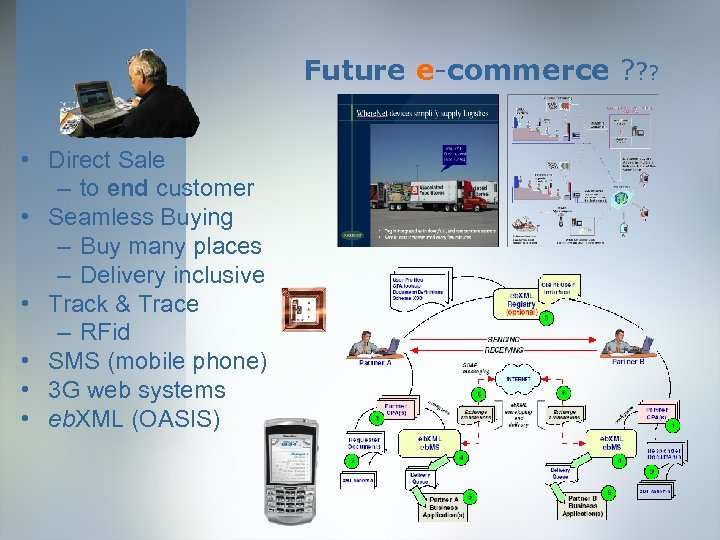 Future e-commerce ? ? ? • Direct Sale – to end customer • Seamless Buying – Buy many places – Delivery inclusive • Track & Trace – RFid • SMS (mobile phone) • 3 G web systems • eb. XML (OASIS)
 Smart Sales systems help but they are no substitute for understanding, and meeting Product Demand • Auctions may only receive information on consumer trends ‘second hand’ • Large supermarket chains are taking an ever growing share of fish retail supply • Perceived ‘wisdom’ may be false – e. g. fish is ‘price capped’ by the consumer • Unfulfilled demand may exist • The customer (consumer) » is King (and Queen) » Do they know what could be available…
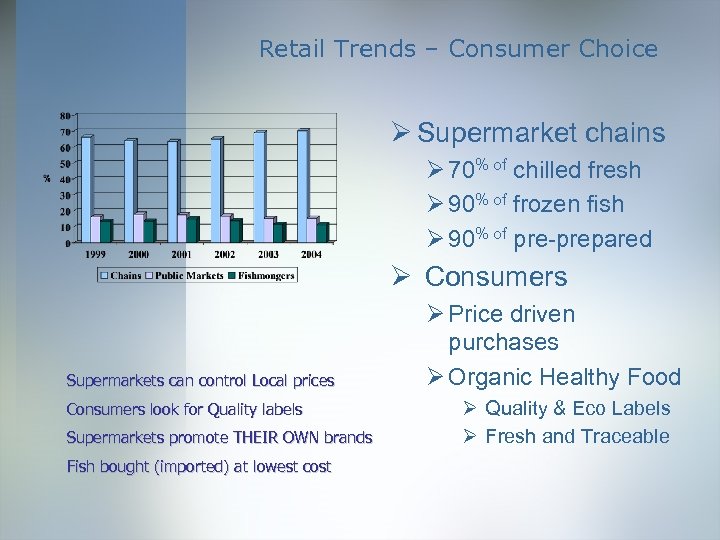 Retail Trends – Consumer Choice Ø Supermarket chains Ø 70% of chilled fresh Ø 90% of frozen fish Ø 90% of pre-prepared Ø Consumers Supermarkets can control Local prices Consumers look for Quality labels Supermarkets promote THEIR OWN brands Fish bought (imported) at lowest cost Ø Price driven purchases Ø Organic Healthy Food Ø Quality & Eco Labels Ø Fresh and Traceable
 Organic produce has captured a small, but significant, share of the fresh food market: those willing to pay a premium for quality food from an environmentally acceptable source. • • An EU directive has decreed that nothing captured or harvested from the wild can be labeled as 'organic'. Currently only farmed fish can be given the organic label – • Natural feeding being uncontrolled and unsupervised Certification bodies contend with: – – pollution levels in the sea over-fishing and depleted fish stocks environmentally aware fishing techniques pesticides treatments in conventional fish farms • Wild, captured fish, if they can not be organic (!? !) can be – – • Ecolabeling must not become the province of the retailer – • Environmentally acceptable Ecologically sound Traceable Certified as ‘free range’ They promote Own Brands • Not source products Traceability can be used as a tool to promote wild fish In combination an 'eco-friendly' labelling system that give guidance for the concerned consumer could be the NEW ORGANIC
 In an increasingly Globalised marketplace Auctions must be proactive delivering what the buyer wants Even if they do not know what this is until it is supplied Working with fishermen to maximise Quality Providing the essential link for Traceability promoting end consumer confidence ensuring that Fishermen make a reasonable Return (on their catch) and Buyers also Return