


 Скачать презентацию The French Revolution Louis XIV Ruled
382c99a092edc5ddf038b79294a6568f.ppt
- Количество слайдов: 31
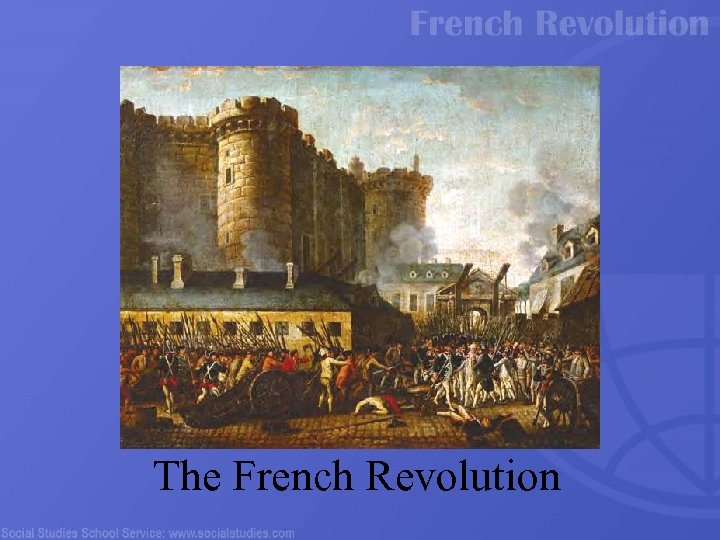 The French Revolution
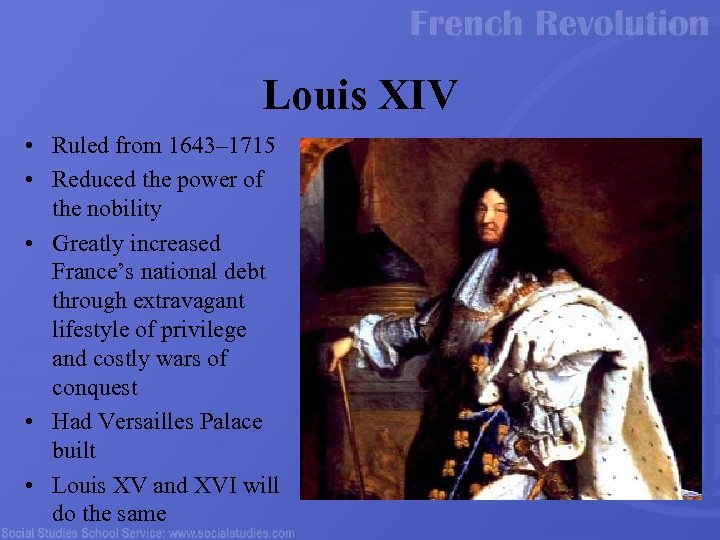 Louis XIV • Ruled from 1643– 1715 • Reduced the power of the nobility • Greatly increased France’s national debt through extravagant lifestyle of privilege and costly wars of conquest • Had Versailles Palace built • Louis XV and XVI will do the same
 The Three Estates • First Estate: clergy – church officials who lived lavishly and owned 10% of the land. PAID NO TAXES • Second Estate: nobility – owned land, but had very little money. Were feeling the pinch of trying to deal with soaring prices. Hated the Monarch for becoming absolute and loosening their feudal power. • Third Estate: the rest of society (98% of population) – mostly peasants workers resented upper classes for their privileges and took Enlightenment ideas to question their unequal standing in life.
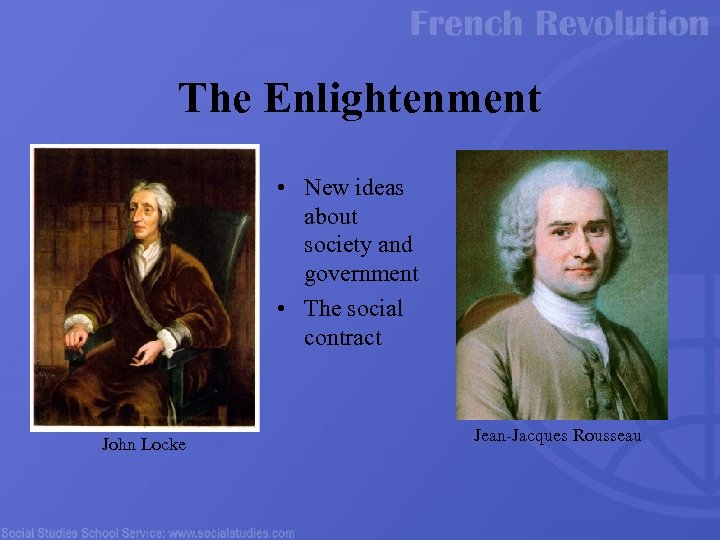 The Enlightenment • New ideas about society and government • The social contract John Locke Jean-Jacques Rousseau
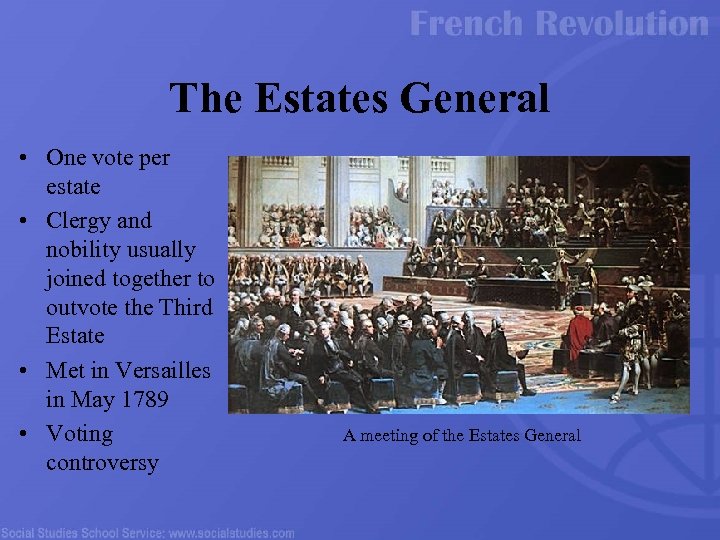 The Estates General • One vote per estate • Clergy and nobility usually joined together to outvote the Third Estate • Met in Versailles in May 1789 • Voting controversy A meeting of the Estates General
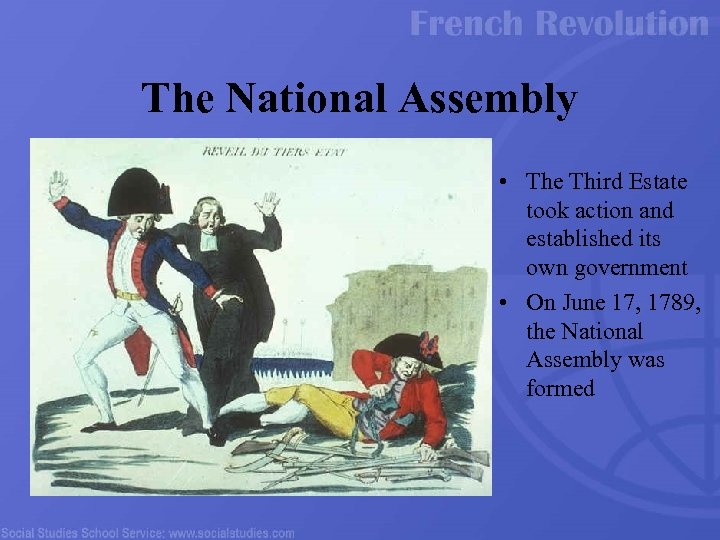 The National Assembly • The Third Estate took action and established its own government • On June 17, 1789, the National Assembly was formed
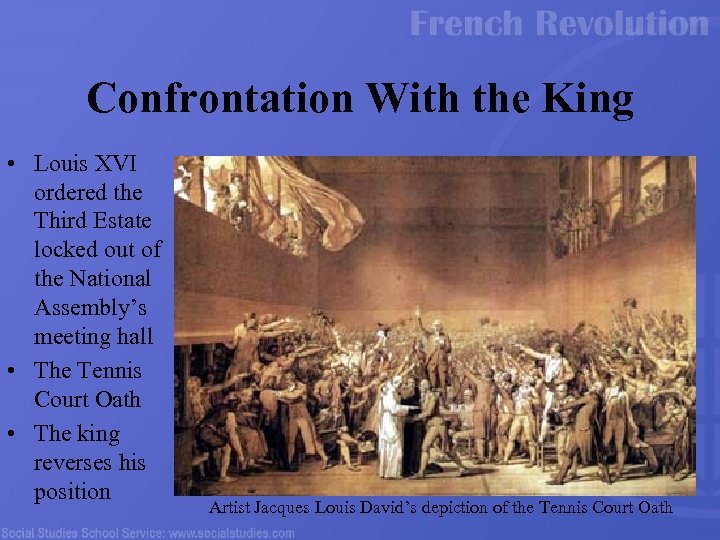 Confrontation With the King • Louis XVI ordered the Third Estate locked out of the National Assembly’s meeting hall • The Tennis Court Oath • The king reverses his position Artist Jacques Louis David’s depiction of the Tennis Court Oath
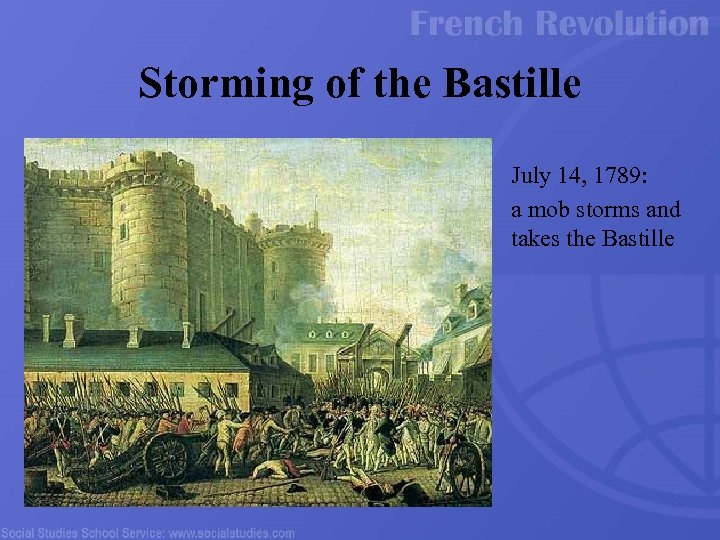 Storming of the Bastille July 14, 1789: a mob storms and takes the Bastille
 Four Phases of French Revolution Moderate Phase of the National Assembly (1789 -1791) – turned France into Constitutional Monarchy Radical Phase (1792 - 1794) - turned France into escalating violence leading to a Reign of Terror The Directory (1795 – 1799) - A period of reaction against radical extremism Age of Napoleon (1799 -1815)
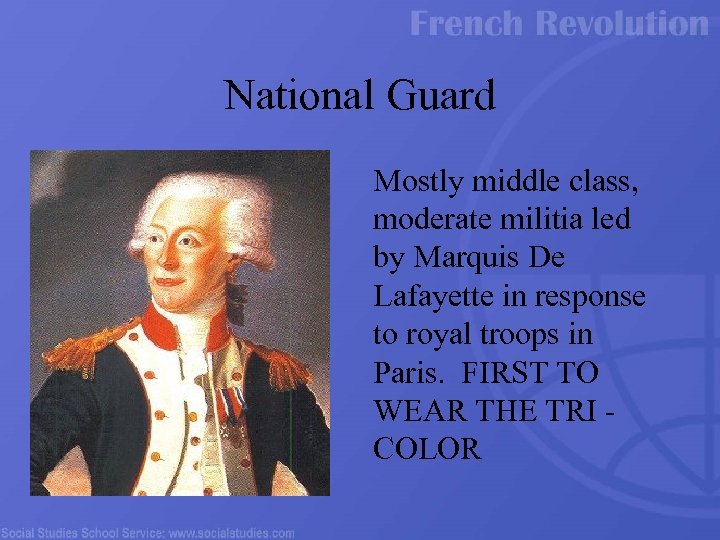 National Guard Mostly middle class, moderate militia led by Marquis De Lafayette in response to royal troops in Paris. FIRST TO WEAR THE TRI COLOR
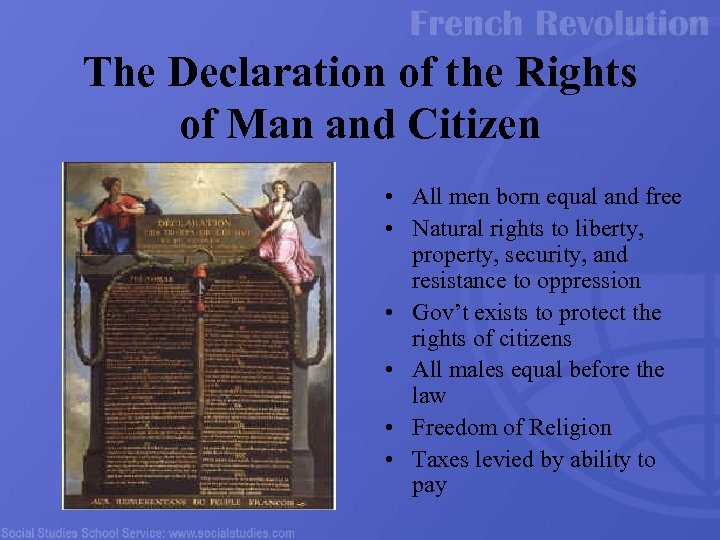 The Declaration of the Rights of Man and Citizen • All men born equal and free • Natural rights to liberty, property, security, and resistance to oppression • Gov’t exists to protect the rights of citizens • All males equal before the law • Freedom of Religion • Taxes levied by ability to pay
 Reforms of National Assembly • To pay off huge debt, Assembly voted to seize and sell Church lands • Papal authority in France is officially over • Drafted Constitution in 1791 which established a limited monarchy
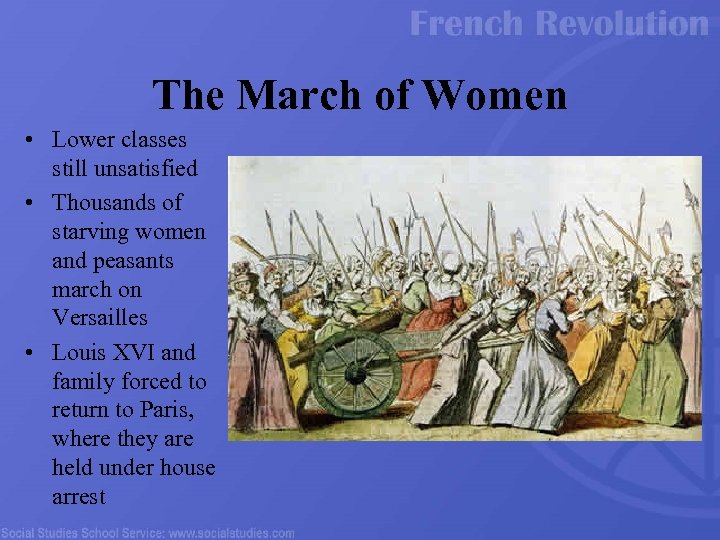 The March of Women • Lower classes still unsatisfied • Thousands of starving women and peasants march on Versailles • Louis XVI and family forced to return to Paris, where they are held under house arrest
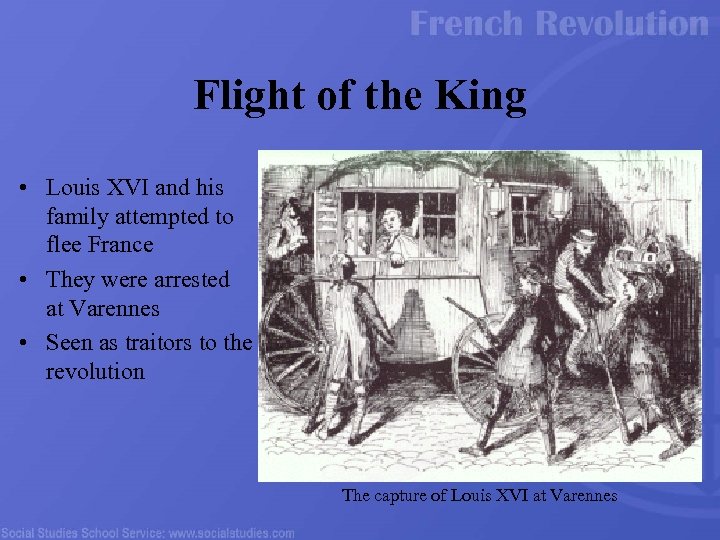 Flight of the King • Louis XVI and his family attempted to flee France • They were arrested at Varennes • Seen as traitors to the revolution The capture of Louis XVI at Varennes
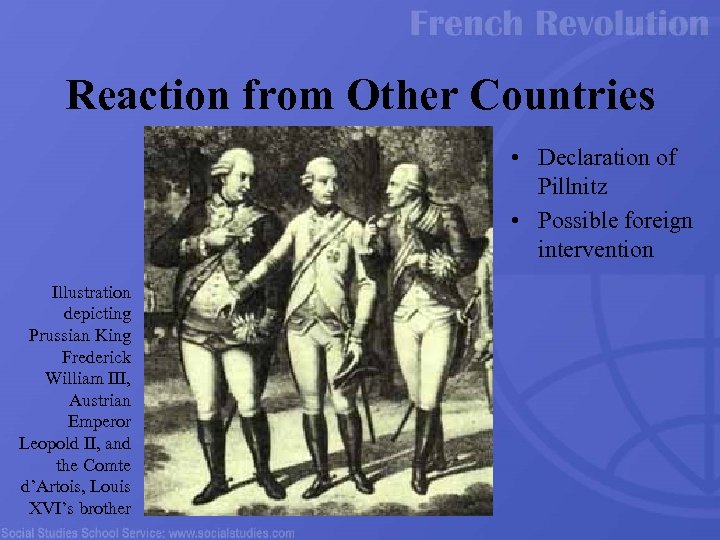 Reaction from Other Countries • Declaration of Pillnitz • Possible foreign intervention Illustration depicting Prussian King Frederick William III, Austrian Emperor Leopold II, and the Comte d’Artois, Louis XVI’s brother
 On a Side Note… Sans-Culottes push the revolution into a more Radical Phase, finding support in the National Assembly from the Jacobins – mostly middle class intellectuals who wanted to abolish the monarchy completely. War of words between neighboring monarchs and French revolutionaries turns violent as France declares war on Austria, Prussia, and Britain for fear of foreign intervention shutting down their revolution
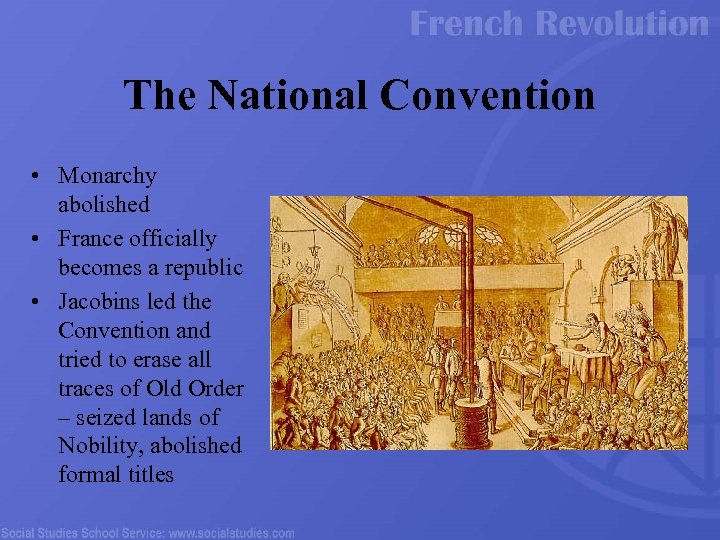 The National Convention • Monarchy abolished • France officially becomes a republic • Jacobins led the Convention and tried to erase all traces of Old Order – seized lands of Nobility, abolished formal titles
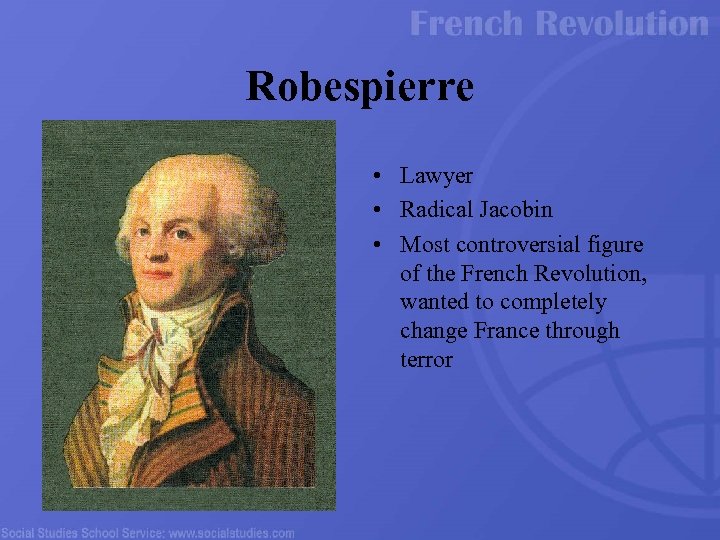 Robespierre • Lawyer • Radical Jacobin • Most controversial figure of the French Revolution, wanted to completely change France through terror
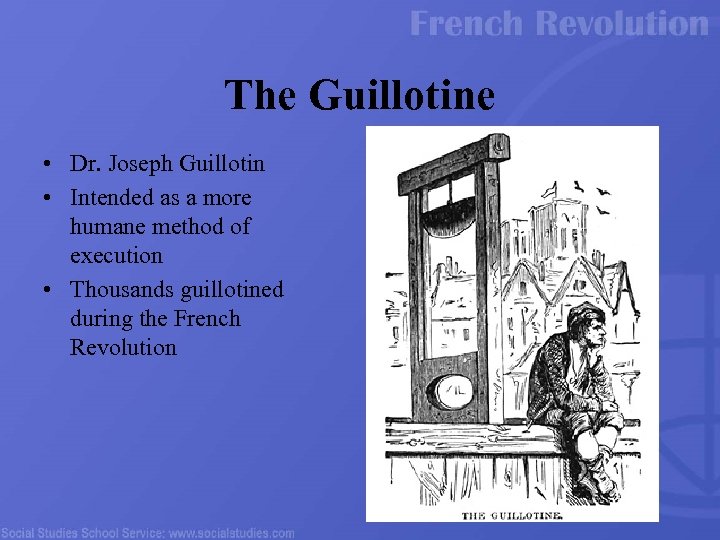 The Guillotine • Dr. Joseph Guillotin • Intended as a more humane method of execution • Thousands guillotined during the French Revolution
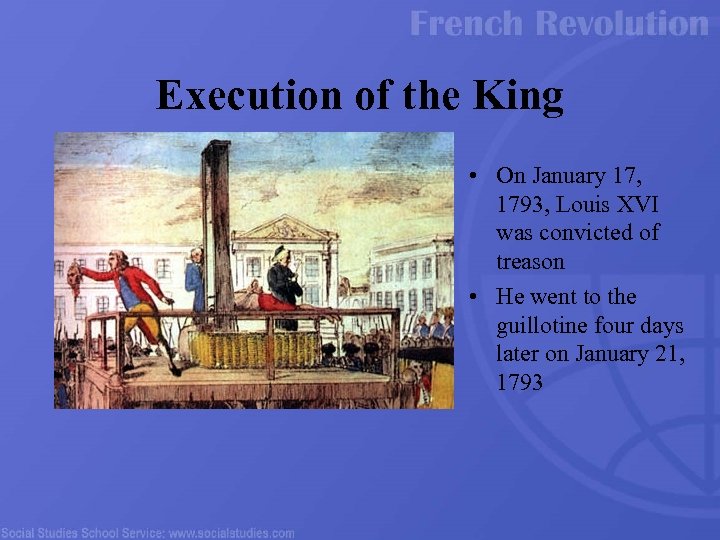 Execution of the King • On January 17, 1793, Louis XVI was convicted of treason • He went to the guillotine four days later on January 21, 1793
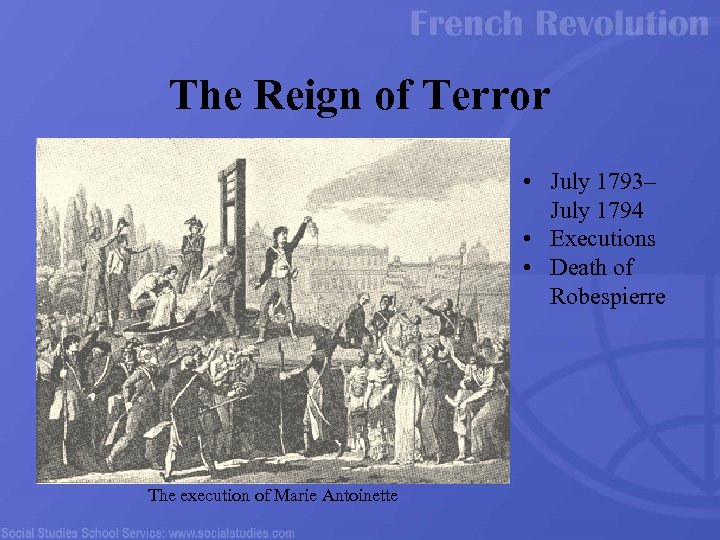 The Reign of Terror • July 1793– July 1794 • Executions • Death of Robespierre The execution of Marie Antoinette
 The Directory • In response to the Reign of Terror, moderates produced a new constitution (their THIRD since 1789) • In it: – Set up 5 man Directory and 2 House legislature – 1795 -1799: unable to solve nation’s problems, will turn to very popular military General, Napoleon Bonaparte to help them advance their goals (WRONG!)
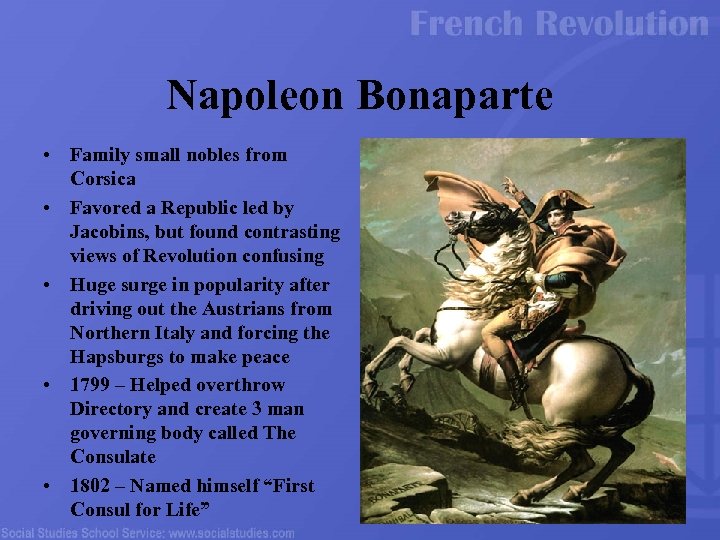 Napoleon Bonaparte • Family small nobles from Corsica • Favored a Republic led by Jacobins, but found contrasting views of Revolution confusing • Huge surge in popularity after driving out the Austrians from Northern Italy and forcing the Hapsburgs to make peace • 1799 – Helped overthrow Directory and create 3 man governing body called The Consulate • 1802 – Named himself “First Consul for Life”
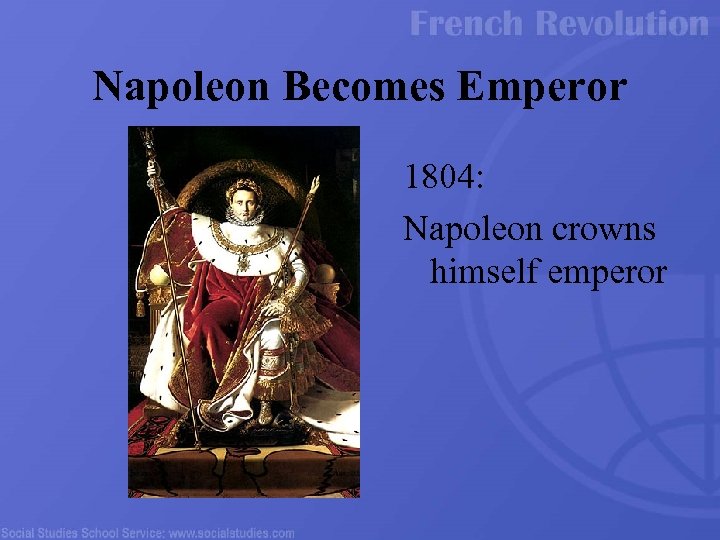 Napoleon Becomes Emperor 1804: Napoleon crowns himself emperor
 Napoleon’s Reforms • “Order, Security, Efficiency” replaced the revolutionary motto “Liberty, Equality, Fraternity” • Modernized France – regulated economy to control prices, encouraged new industry, promoted public schooling under strict government control • Social Class restructuring – Encouraged emigres to return with an oath of loyalty, recognized peasants’ right to Noble and Church lands purchased during the revolution, supported “careers open to talent” policy
 Napoleonic Code • Equality of all citizens under the law • Religious toleration • Advancement based on merit Side Effects: • Women lost rights (no citizenship), men are complete authority in households *VALUED ORDER & AUTHORITY OVER INDIVIDUAL RIGHTS
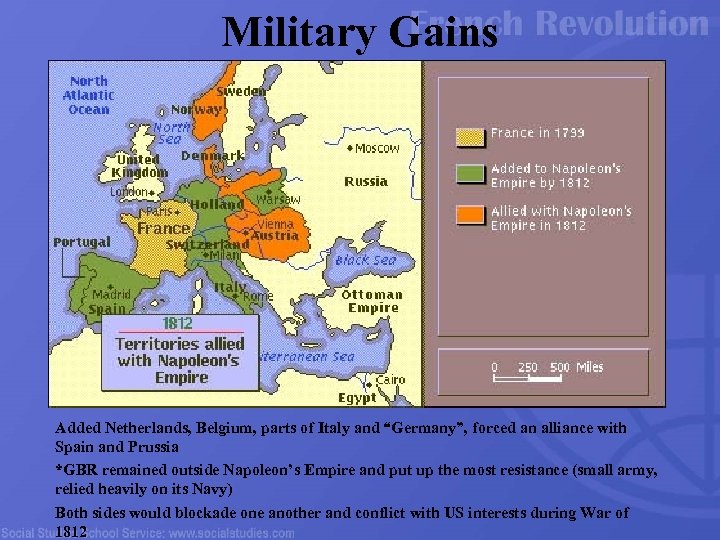 Military Gains Added Netherlands, Belgium, parts of Italy and “Germany”, forced an alliance with Spain and Prussia *GBR remained outside Napoleon’s Empire and put up the most resistance (small army, relied heavily on its Navy) Both sides would blockade one another and conflict with US interests during War of 1812
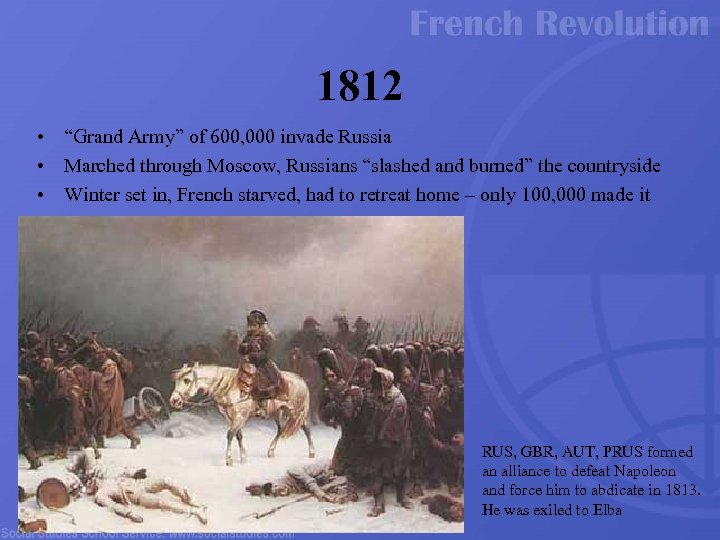 1812 • “Grand Army” of 600, 000 invade Russia • Marched through Moscow, Russians “slashed and burned” the countryside • Winter set in, French starved, had to retreat home – only 100, 000 made it RUS, GBR, AUT, PRUS formed an alliance to defeat Napoleon and force him to abdicate in 1813. He was exiled to Elba
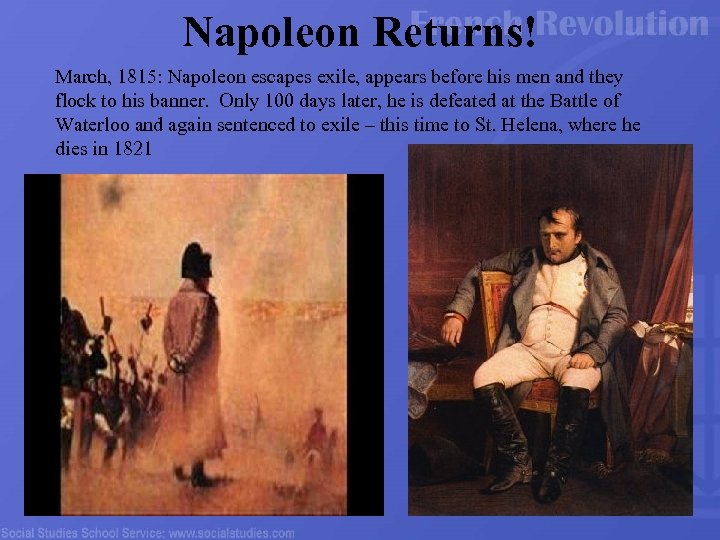 Napoleon Returns! March, 1815: Napoleon escapes exile, appears before his men and they flock to his banner. Only 100 days later, he is defeated at the Battle of Waterloo and again sentenced to exile – this time to St. Helena, where he dies in 1821
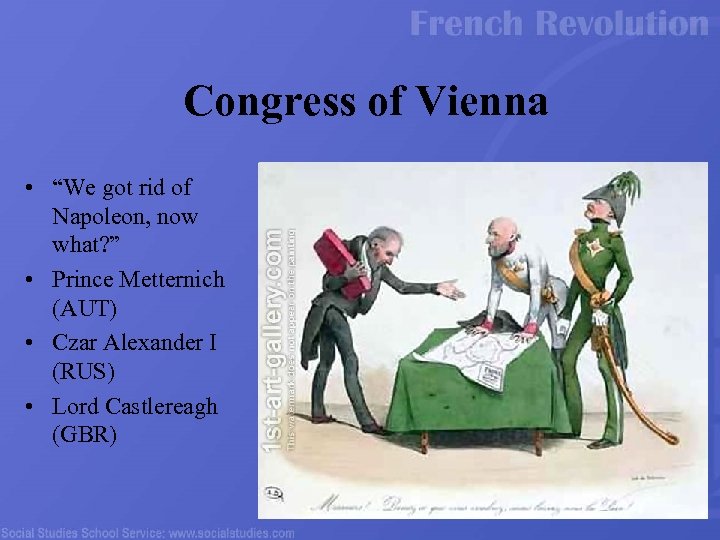 Congress of Vienna • “We got rid of Napoleon, now what? ” • Prince Metternich (AUT) • Czar Alexander I (RUS) • Lord Castlereagh (GBR)
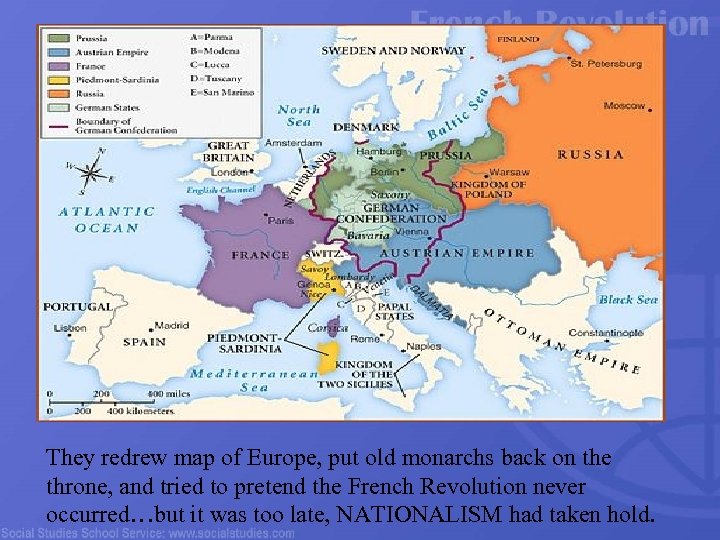 They redrew map of Europe, put old monarchs back on the throne, and tried to pretend the French Revolution never occurred…but it was too late, NATIONALISM had taken hold.