


 Скачать презентацию The Flight of the Creative Class Richard Florida
06dbbb67bfffd4f69e7881c264ce4f3b.ppt
- Количество слайдов: 19
 The Flight of the Creative Class Richard Florida, New York: Harper Business, 2005
 Agenda • Creative Class: Definition • Why the Creative Class Is Important • The Creativity Index § Talent § Technology § Tolerance • Some Comparative Figures • Building a Creative Society
 The Creative Class: Definition • Employed in specific areas: § § § § Science and engineering Architecture and design Arts, music entertainment Law, business and finance Health care Managers, professionals Related fields • Once upon a time were called “knowledge workers” • Now this group also includes interior decorators, information finders, brokers, and hairdressers.
 The Creative Class: Characteristics • • 30% of American workforce Receive 50% of all wage and salary income Mobile Educated, but not necessarily Create knowledge, ideas, jobs Are attracted to regions and cities EVERYONE is creative, but not everyone is in the creative class.
 Why the Creative Class Is Important • The creative sector generates $2, 000, 000 in wages and salary annually • Explains almost all the growth in jobs between 1969 and now. • The creative economy violates the “law of conservation of material”, which the materialistic economy obeys, by creating new material!
 When is a Job “Creative”? • When it involves expert thinking • When it involves complex communication • Not the same as university education
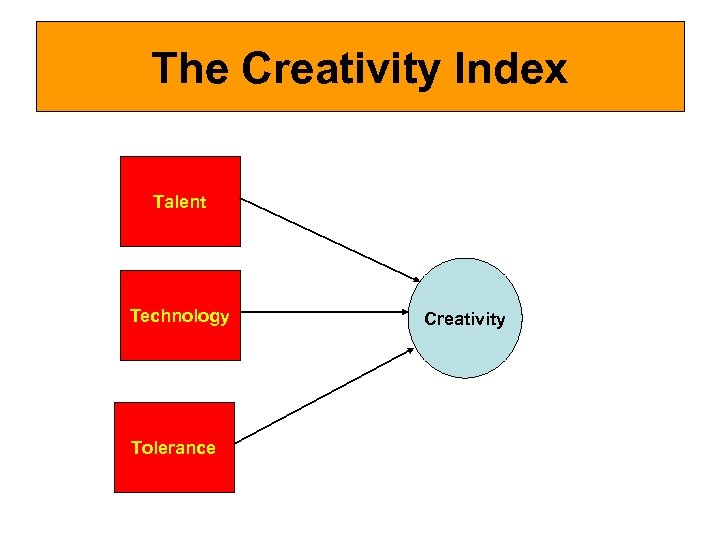 The Creativity Index Talent Technology Tolerance Creativity
 Talent • Human capital • Augmented by density (i. e. , cities, centers, regions)
 Technology • Need I say more
 Tolerance • Explains “flow” of human capital • Related to Ashby’s idea of variation (“Only variation can drive out variation) and to the idea of flexibility and agility • Proactive inclusiveness • Ottaviani and Peri: “A more multicultural urban environment makes US-born citizens more productive. ”
 Some Measures • Talent = f(creative-class, human-capitalindex, scientific-talent-index) • Technology = f(R&D-index, innovationindex) • Tolerance = f(values-index, self-expression -index)
 Talent • creative-class-index § Proportion of workforce engaged in creative work or that number plus technicians (ILO) • human-capital-index § Proportion of a country’s population with bachelor’s degree (1999 -2001 OECD) • scientific-talent-index § Number of researchers per million people (UNESCO)
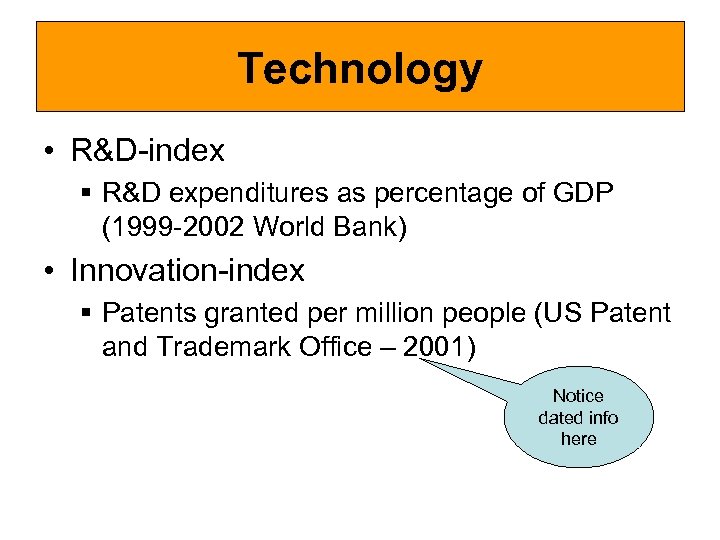 Technology • R&D-index § R&D expenditures as percentage of GDP (1999 -2002 World Bank) • Innovation-index § Patents granted per million people (US Patent and Trademark Office – 2001) Notice dated info here
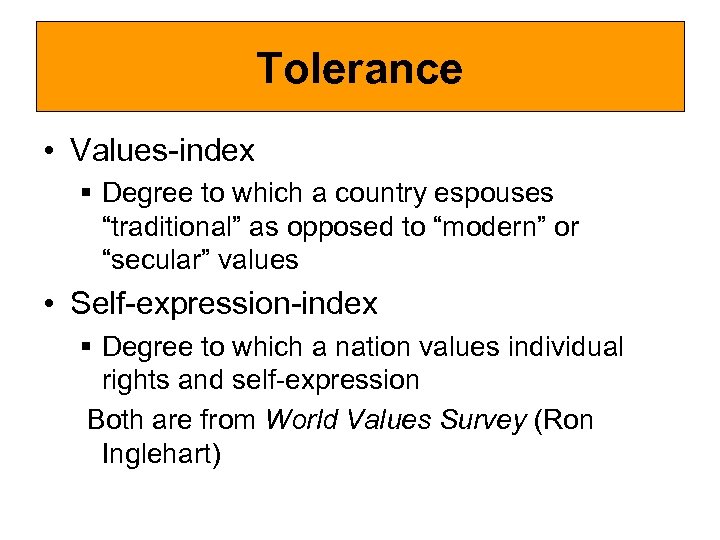 Tolerance • Values-index § Degree to which a country espouses “traditional” as opposed to “modern” or “secular” values • Self-expression-index § Degree to which a nation values individual rights and self-expression Both are from World Values Survey (Ron Inglehart)
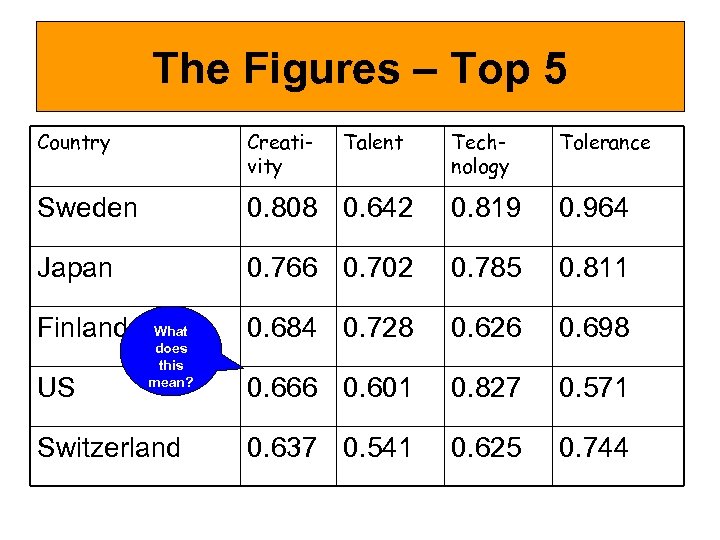 The Figures – Top 5 Country Creativity Sweden Japan Finland US Tolerance 0. 819 0. 964 0. 766 0. 702 Switzerland Technology 0. 808 0. 642 What does this mean? Talent 0. 785 0. 811 0. 684 0. 728 0. 626 0. 698 0. 666 0. 601 0. 827 0. 571 0. 637 0. 541 0. 625 0. 744
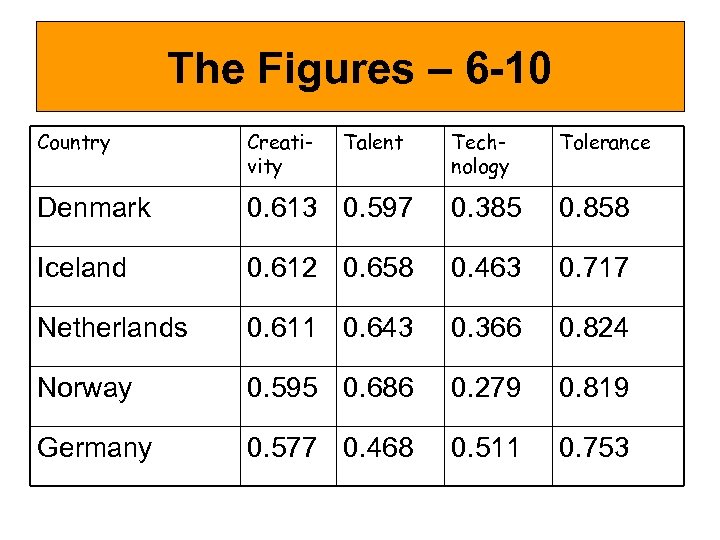 The Figures – 6 -10 Country Creativity Denmark Talent Technology Tolerance 0. 613 0. 597 0. 385 0. 858 Iceland 0. 612 0. 658 0. 463 0. 717 Netherlands 0. 611 0. 643 0. 366 0. 824 Norway 0. 595 0. 686 0. 279 0. 819 Germany 0. 577 0. 468 0. 511 0. 753
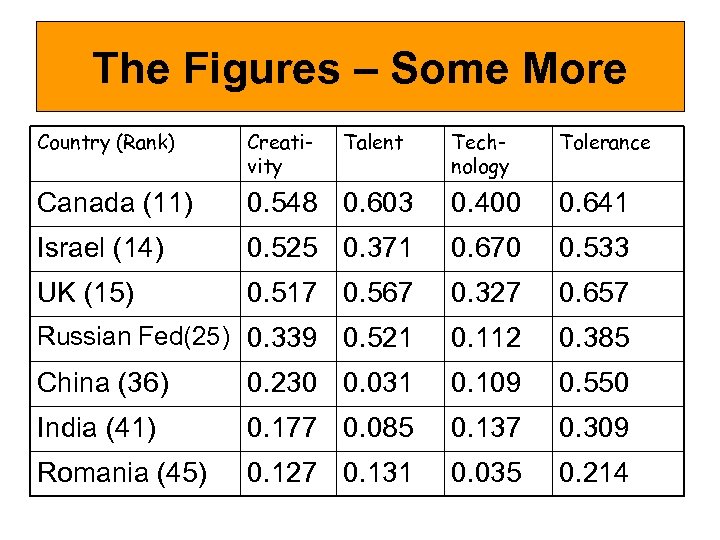 The Figures – Some More Country (Rank) Creativity Canada (11) Talent Technology Tolerance 0. 548 0. 603 0. 400 0. 641 Israel (14) 0. 525 0. 371 0. 670 0. 533 UK (15) 0. 517 0. 567 0. 327 0. 657 Russian Fed(25) 0. 339 0. 521 0. 112 0. 385 China (36) 0. 230 0. 031 0. 109 0. 550 India (41) 0. 177 0. 085 0. 137 0. 309 Romania (45) 0. 127 0. 131 0. 035 0. 214
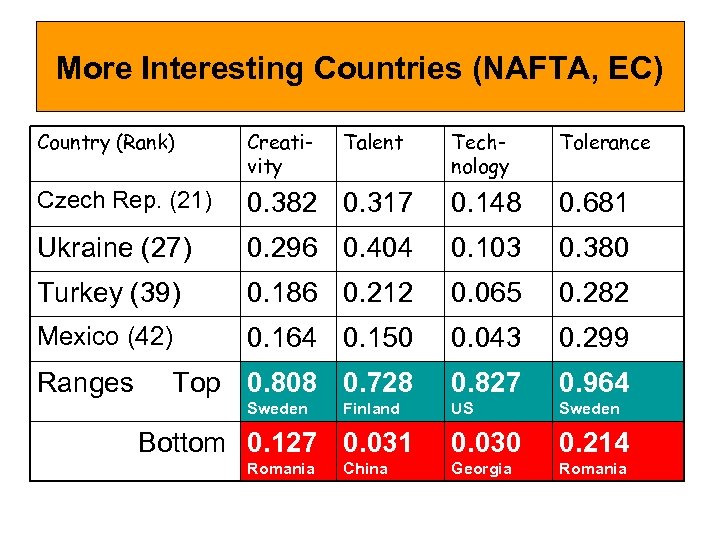 More Interesting Countries (NAFTA, EC) Country (Rank) Creativity Czech Rep. (21) Technology Tolerance 0. 382 0. 317 0. 148 0. 681 Ukraine (27) 0. 296 0. 404 0. 103 0. 380 Turkey (39) 0. 186 0. 212 0. 065 0. 282 Mexico (42) 0. 164 0. 150 0. 043 0. 299 Top 0. 808 0. 728 0. 827 0. 964 US Sweden 0. 030 0. 214 Georgia Romania Ranges Sweden Talent Finland Bottom 0. 127 0. 031 Romania China
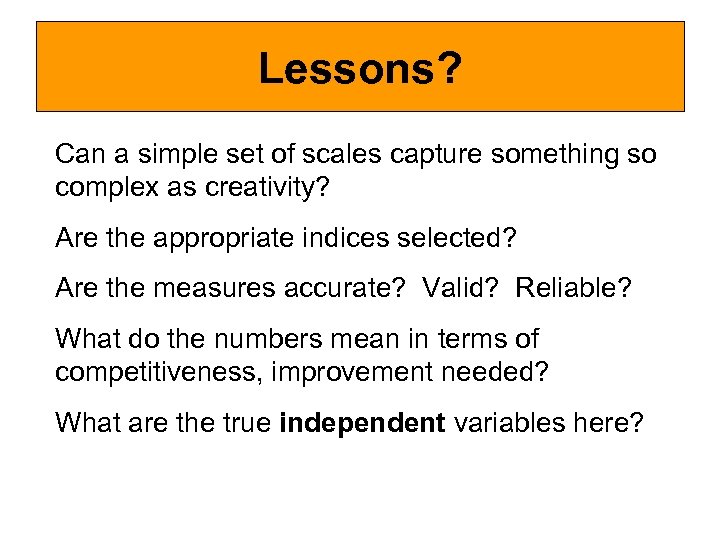 Lessons? Can a simple set of scales capture something so complex as creativity? Are the appropriate indices selected? Are the measures accurate? Valid? Reliable? What do the numbers mean in terms of competitiveness, improvement needed? What are the true independent variables here?