 Скачать презентацию The First Step to Green is Blue
46e1650ef26c3699f248b059e4a4fa57.ppt
- Количество слайдов: 74



The First Step to Green is Blue – Energy Efficiency in Practice Mike Zatz Manager, ENERGY STAR Commercial Buildings U. S. Environmental Protection Agency Green: Policy, Practice, Profit Duluth, MN October 8, 2009
3 Important Questions • Should an energy inefficient building be considered green? – NO • Are all buildings certified as green energy efficient? – NO • What are the most important drivers of energy efficiency in a building? – IT DEPENDS, BUT GOOD OPERATIONS ARE ESSENTIAL
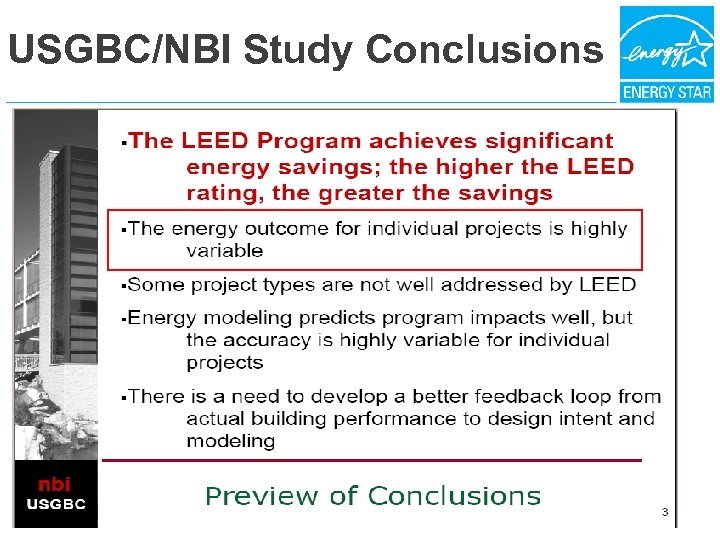
USGBC/NBI Study Conclusions
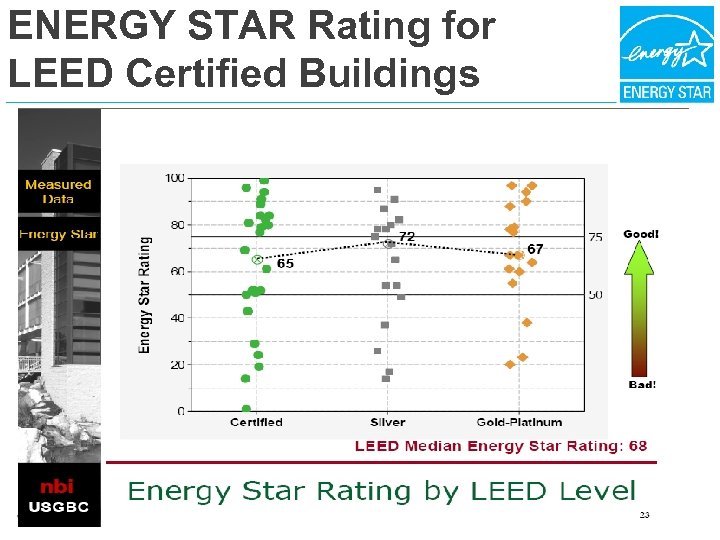
ENERGY STAR Rating for LEED Certified Buildings
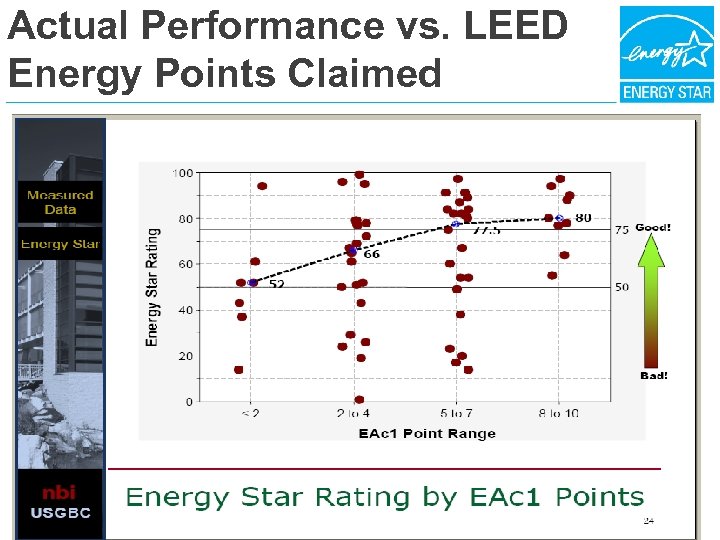
Actual Performance vs. LEED Energy Points Claimed
The First Step to Green. . .
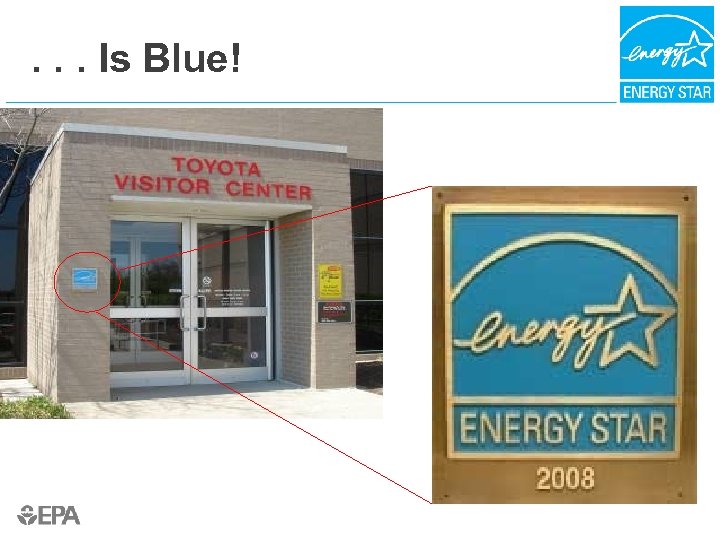
. . . Is Blue!
Ensure Energy Efficiency with ENERGY STAR • The first step to green is blue (ENERGY STAR blue that is). • Pursue (or look for) ENERGY STAR recognition along with green building recognition as an energy efficiency “insurance policy. ” • Look at the type of green certification a building has earned: – Green Globes – You’re covered – Energy points based on ENERGY STAR performance levels. – LEED EB: O&M – You’re covered – Energy points based on ENERGY STAR performance levels. – LEED NC – Beware – More energy points does not strongly correlate to better energy performance.
Why Bother with Energy Efficiency? • Energy efficiency is good business and is good FOR business. – Reduce operating costs. – Improve customer experience. – Improve overall business efficiency. – Attract new customers. – Build customer loyalty. – Attract and retain employees. • And it helps protect the environment too!
GETTING STARTED PUTTING ENERGY EFFICIENCY AND GREEN INTO PRACTICE
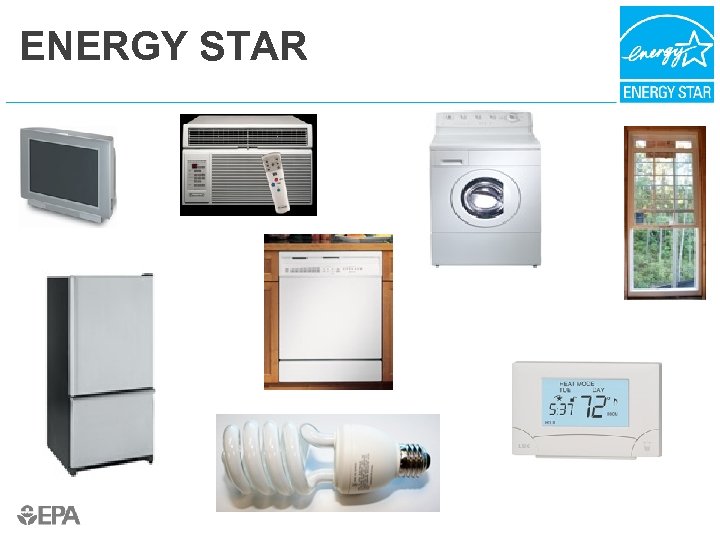
ENERGY STAR
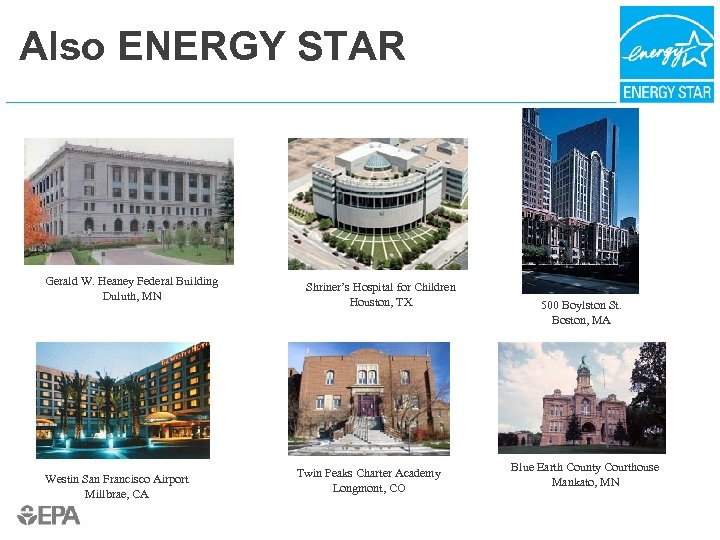
Also ENERGY STAR Gerald W. Heaney Federal Building Duluth, MN Westin San Francisco Airport Millbrae, CA Shriner’s Hospital for Children Houston, TX Twin Peaks Charter Academy Longmont, CO 500 Boylston St. Boston, MA Blue Earth County Courthouse Mankato, MN
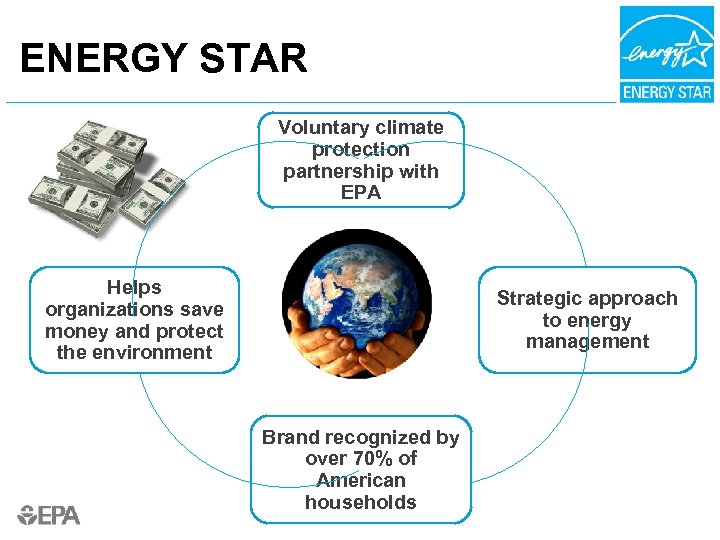
ENERGY STAR Voluntary climate protection partnership with EPA Helps organizations save money and protect the environment Strategic approach to energy management Brand recognized by over 70% of American households
ENERGY STAR for Buildings • U. S. Environmental Protection Agency energy management program. • Provides proven solutions to help public and private sector building owners and managers reduce their energy consumption. • Offerings for new construction and existing buildings. • Works in markets with a focus on: – – Commercial property (offices, retail, hotels) Public sector (government, K-12, higher ed) Healthcare Small business and congregations
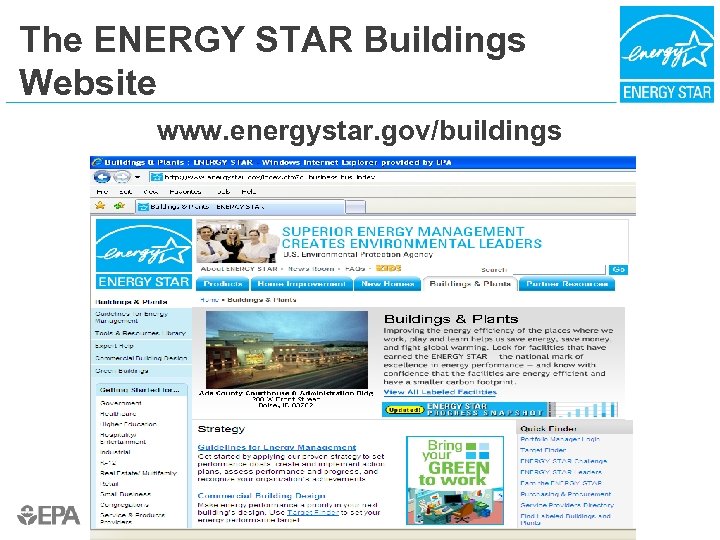
The ENERGY STAR Buildings Website www. energystar. gov/buildings
Who is ENERGY STAR for Buildings? • Over 2, 800 Partners with more than 14 billion ft 2 of space (over 20% of space in the U. S. ). • Over 5, 800 small business network participants. – But only 2 in Duluth. • Over 1, 500 congregation network participants. • Over 100 utility and energy efficiency program sponsors. • Over 2, 300 service/product providers. • Over 100, 000 buildings, representing more than 11. 5 billion square feet of space, measure and track their energy performance with ENERGY STAR.
Who’s Improving Performance with ENERGY STAR Commercial Real Estate
Who’s Improving Performance with ENERGY STAR Retail
Who’s Improving Performance with ENERGY STAR Hospitality
Who’s Improving Performance with ENERGY STAR Healthcare and Senior Care
Who’s Improving Performance with ENERGY STAR Industrial
Who’s Improving Performance with ENERGY STAR K-12 Schools New York City Public Schools San Diego Unified School District Over 100 Wisconsin School Districts …plus nearly 20, 000 other schools!
Who’s Improving Performance with ENERGY STAR State and Local Government State of California State of Pennsylvania New York City Louisville Metro Washington, DC Arlington County, VA
ENERGY STAR Association Partners • • • • Building Owners and Managers Association (BOMA) American Hotel and Lodging Association (AH&LA) National Automobile Dealers Association (NADA) National Restaurant Association (NRA) National Small Business Association (NSBA) Professional Retail Store Management Association (PRSM) American Society of Healthcare Engineers (ASHE) US Conference of Mayors National Association of Counties (NACo) International Community Bankers Association (ICBA) National Association of Evangelicals (NAE) American Bar Association (ABA). . . and many more.
Financial Benefits of ENERGY STAR • • • Energy efficiency can have a high return-on-investment and is necessary in order to remain competitive. Leaders in energy efficiency use about 30 percent less energy than their competitors. Financial benefits of energy efficiency include: – – Operating costs for ENERGY STAR buildings are more than 50 cents per square foot less than for average buildings. This means savings of $5, 000 per year for every 10, 000 square feet of typical office space. Full-service hotels that improve energy efficiency by 10 percent save the equivalent of an increased average daily rate of $1. 35. Every $1 saved on energy at a nonprofit hospital is equivalent to generating $20 in new revenue. A 10 percent reduction in energy costs for the average full-line discount retailer can boost net profit margins by as much as 1. 55 percent.
Environmental Benefits of ENERGY STAR • Commercial buildings and industrial facilities generate nearly 50% of U. S. carbon dioxide emissions. • According to the U. S. Green Building Council, GHG emissions from commercial buildings are projected to grow faster than any other sector over the next 25 years – about 1. 8 percent per year. • 30% of energy consumed in commercial buildings is used unnecessarily or inefficiently. • If the energy efficiency of commercial and industrial buildings improved by just 10 percent, Americans would save about $20 billion and reduce greenhouse gas emissions equal to the emissions from about 30 million vehicles. • IMMEDIATE, LOW-COST emission reduction opportunities.
Public Relations Benefits of ENERGY STAR • Awareness & influence surges! – Public awareness has grown to more than 70% in 2008 – 70% of households report being favorably influenced – 80% of these households reported they are likely to recommend ENERGY STAR products to their friends • According to 2003 online omnibus study – 85% of 25 - to 34 -year-olds and 76% of 35 - to 44 -year-olds; – 74% of those with HHI $50, 000+; and – 76% families with kids …. recognize the ENERGY STAR
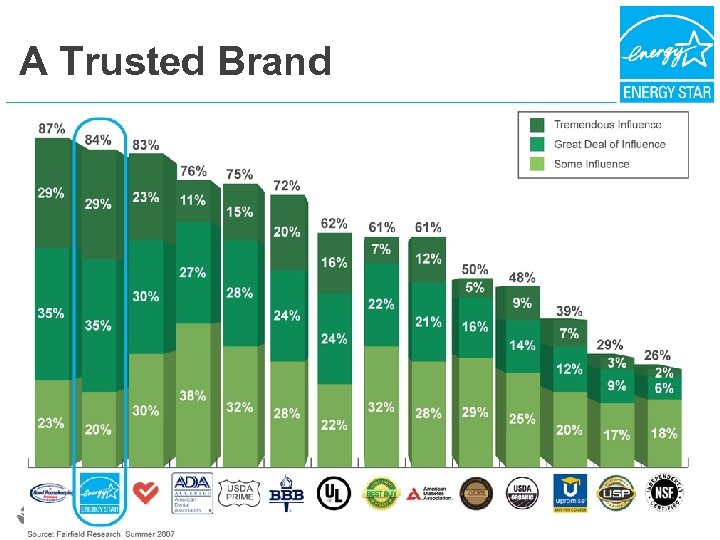
A Trusted Brand
Media Coverage of ENERGY STAR Buildings
Are small businesses interested in energy efficiency? National Small Business Association 2009 Energy Survey
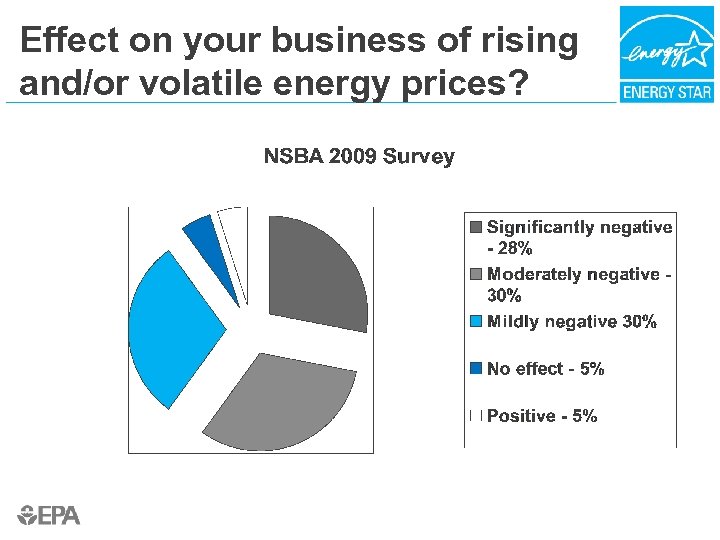
Effect on your business of rising and/or volatile energy prices?
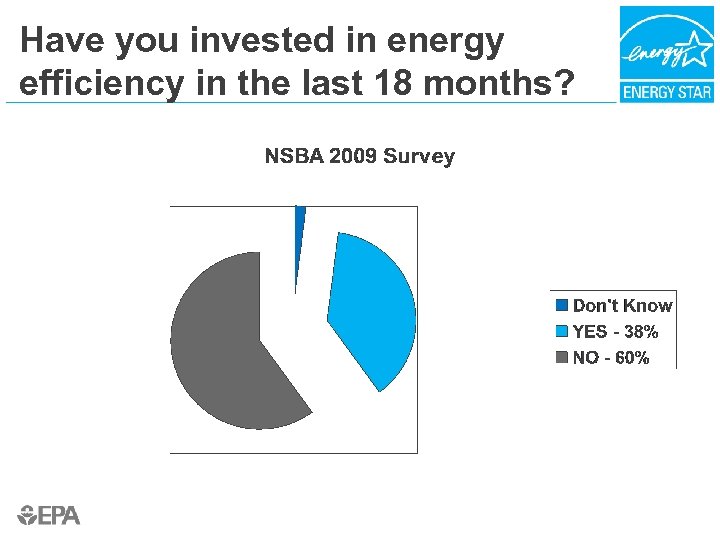
Have you invested in energy efficiency in the last 18 months?
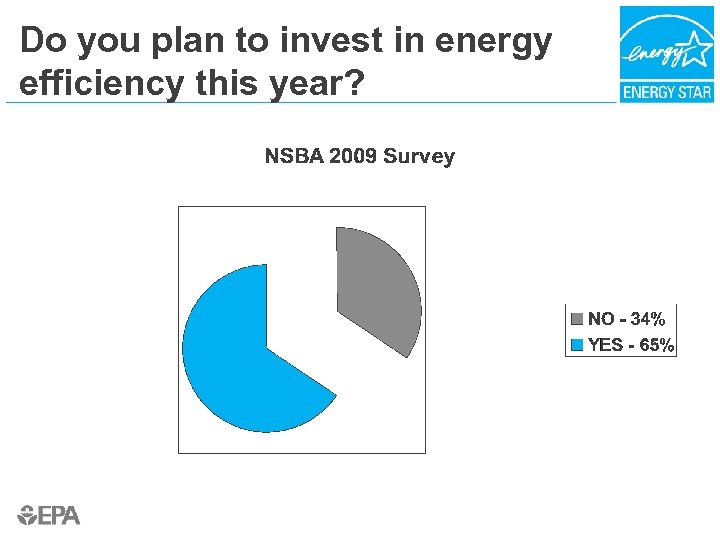
Do you plan to invest in energy efficiency this year?
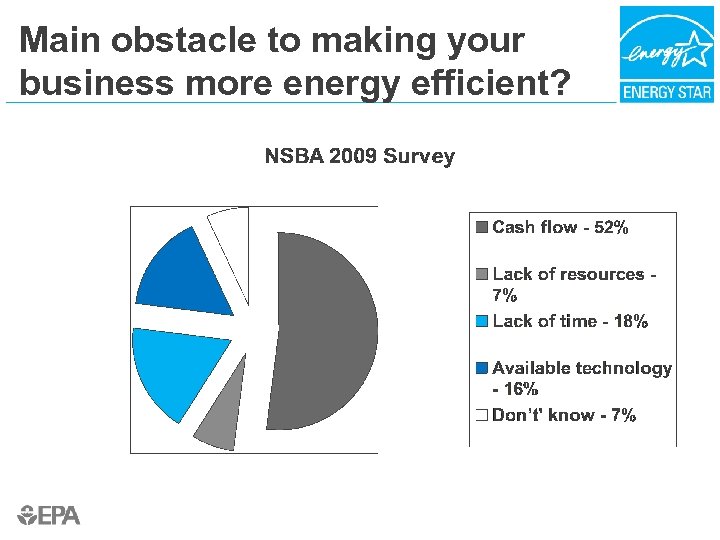
Main obstacle to making your business more energy efficient?
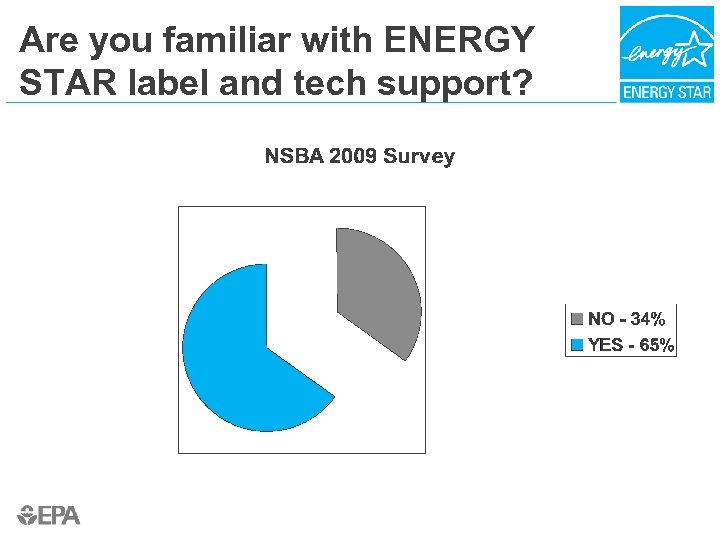
Are you familiar with ENERGY STAR label and tech support?
National Small Business Association • “Given the extremely difficult economic challenges…over the past two years…a significant number…still investing in energy efficiency is testament to the important leadership role small business can take in any green movement” – NSBA Chair Keith Ashmus, Cleveland, Ohio
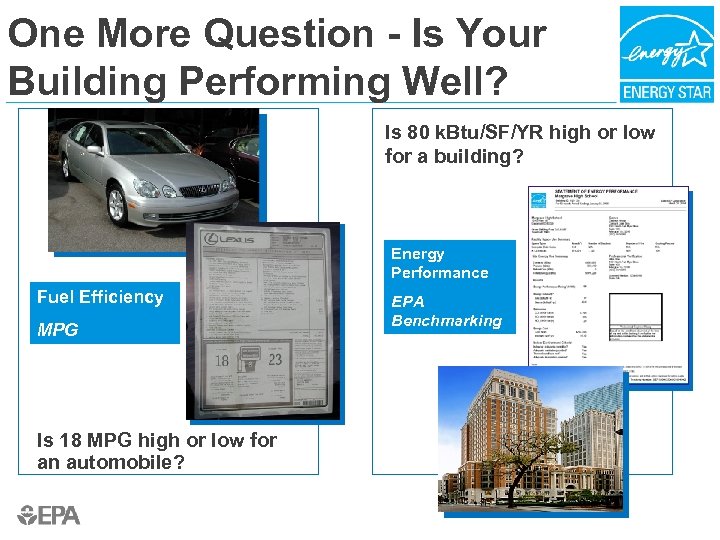
One More Question - Is Your Building Performing Well? Is 80 k. Btu/SF/YR high or low for a building? Energy Performance Fuel Efficiency MPG Is 18 MPG high or low for an automobile? EPA Benchmarking
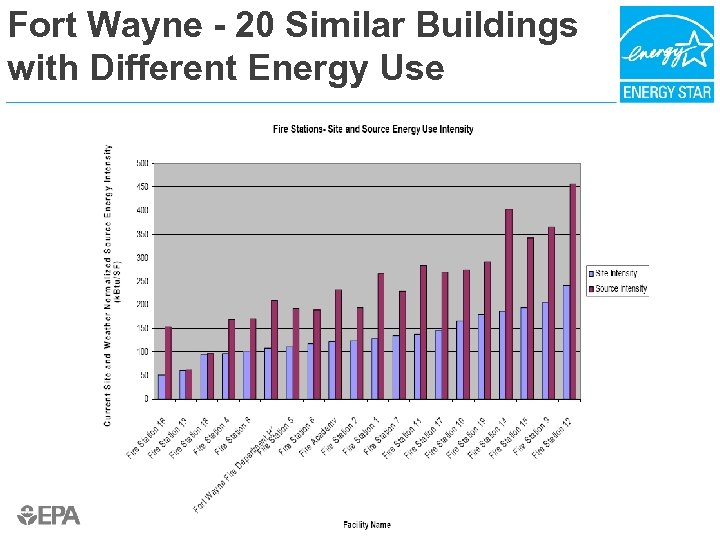
Fort Wayne - 20 Similar Buildings with Different Energy Use
Myth #1: Age Matters My building is new, so I know it’s energy efficient.
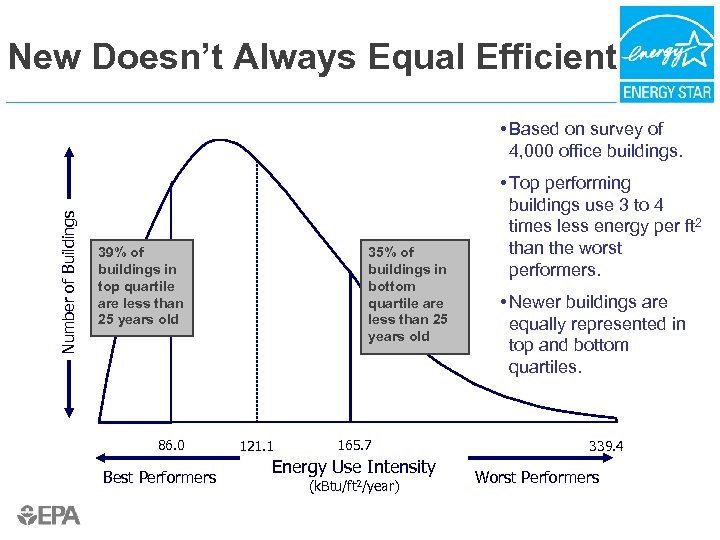
New Doesn’t Always Equal Efficient Number of Buildings • Based on survey of 4, 000 office buildings. 39% of buildings in top quartile are less than 25 years old 86. 0 Best Performers 35% of buildings in bottom quartile are less than 25 years old 121. 1 165. 7 Energy Use Intensity (k. Btu/ft 2/year) • Top performing buildings use 3 to 4 times less energy per ft 2 than the worst performers. • Newer buildings are equally represented in top and bottom quartiles. 339. 4 Worst Performers
Myth #2: It’s All About the Technology I installed energy efficient technologies, so I know my building is energy efficient.
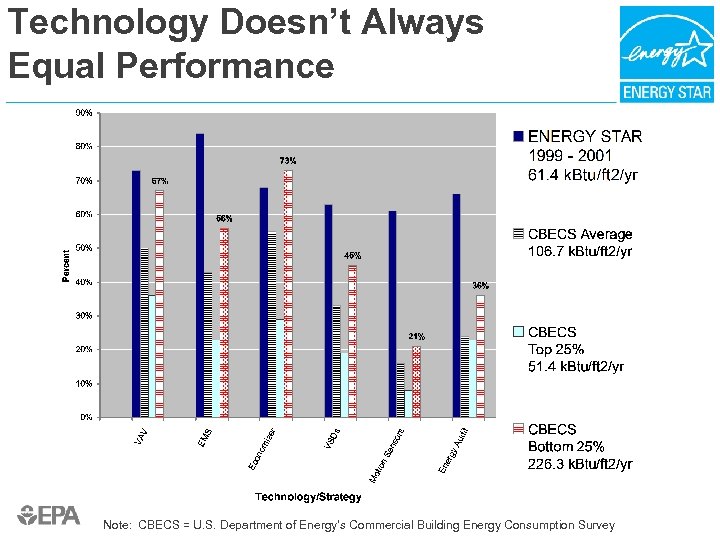
Technology Doesn’t Always Equal Performance Note: CBECS = U. S. Department of Energy’s Commercial Building Energy Consumption Survey
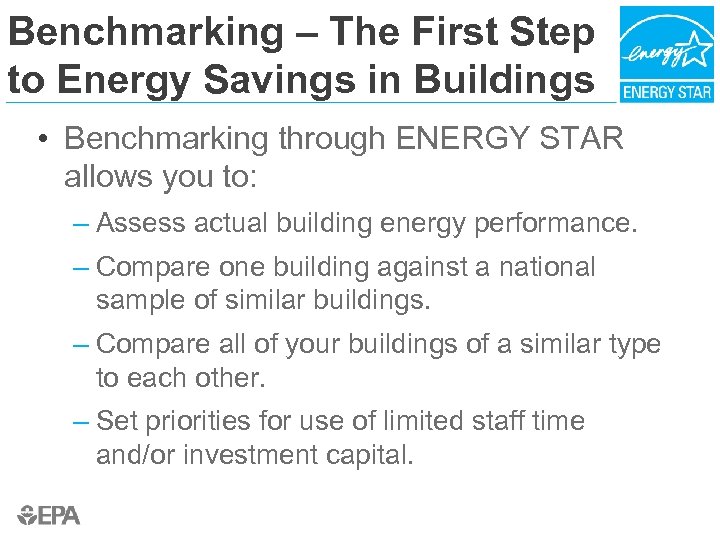
Benchmarking – The First Step to Energy Savings in Buildings • Benchmarking through ENERGY STAR allows you to: – Assess actual building energy performance. – Compare one building against a national sample of similar buildings. – Compare all of your buildings of a similar type to each other. – Set priorities for use of limited staff time and/or investment capital.
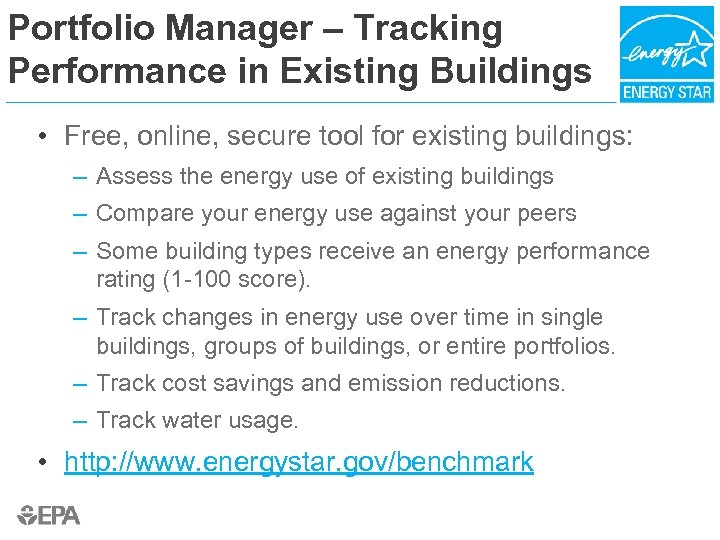
Portfolio Manager – Tracking Performance in Existing Buildings • Free, online, secure tool for existing buildings: – Assess the energy use of existing buildings – Compare your energy use against your peers – Some building types receive an energy performance rating (1 -100 score). – Track changes in energy use over time in single buildings, groups of buildings, or entire portfolios. – Track cost savings and emission reductions. – Track water usage. • http: //www. energystar. gov/benchmark
EPA’s Energy Performance Rating System • Allows for peer group comparison – Compares a building’s energy performance to its national peer group. – Allows owners with multiple facilities to compare performance across a portfolio of buildings. • Based on actual as-billed energy data. • Serves as a whole building indicator – Captures the interactions of building systems not individual equipment efficiency. – Tracks energy use accounting for weather and operational changes over time.
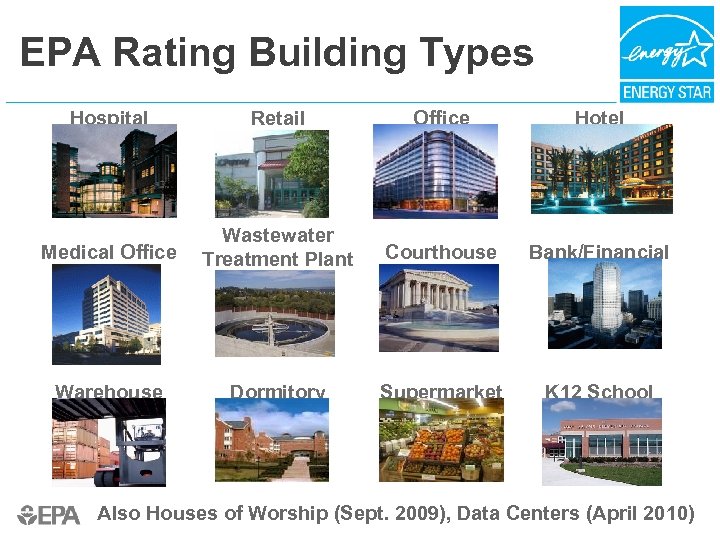
EPA Rating Building Types Hospital Retail Office Hotel Medical Office Wastewater Treatment Plant Courthouse Bank/Financial Warehouse Dormitory Supermarket K 12 School Also Houses of Worship (Sept. 2009), Data Centers (April 2010)
How to Benchmark Energy Use With Portfolio Manager • Create a secure account. • Add a facility. • Define each space type in a facility and provide characteristics of that space (e. g. , office, garage, retail, etc. ). • Enter historical billing data for electricity, natural gas, and all other fuels. At least 12 consecutive months of data is required. • Select two different dates to see a change in energy use, cost, and CO 2 emissions over time. Track impacts of energy efficiency projects.
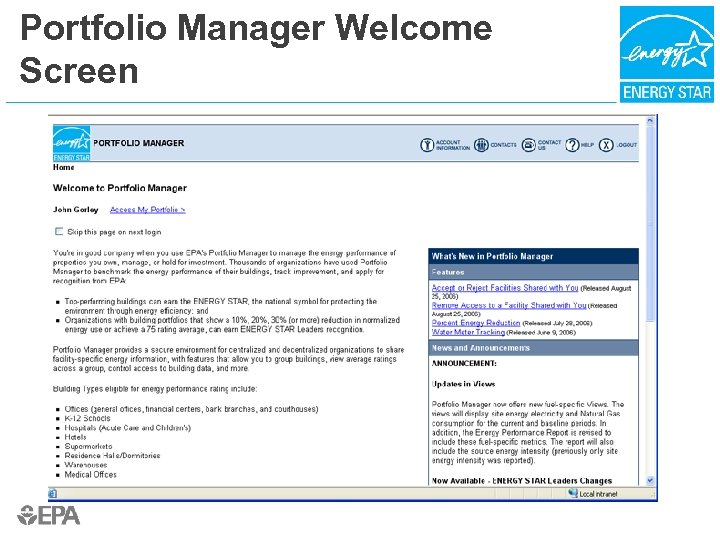
Portfolio Manager Welcome Screen
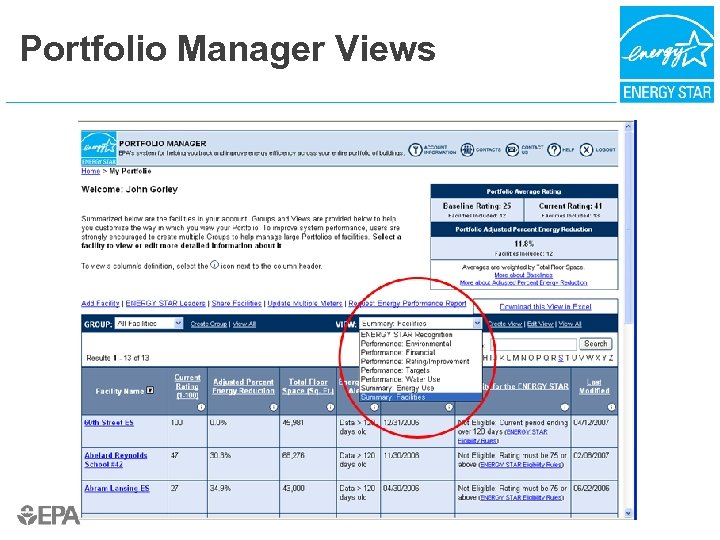
Portfolio Manager Views
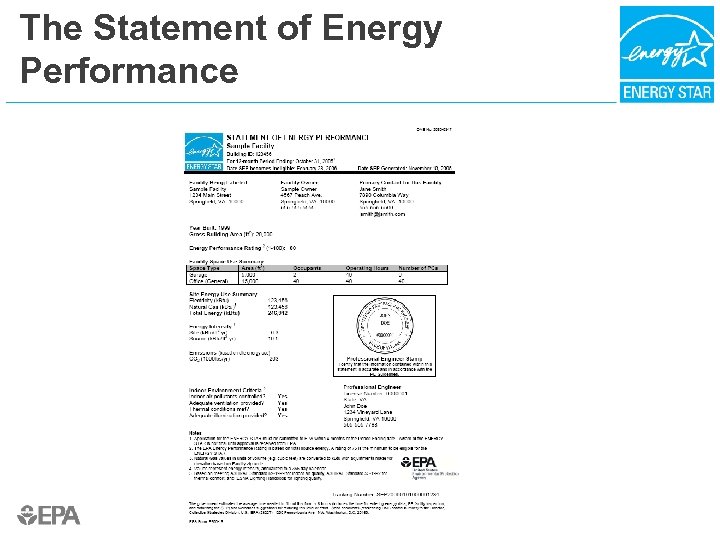
The Statement of Energy Performance
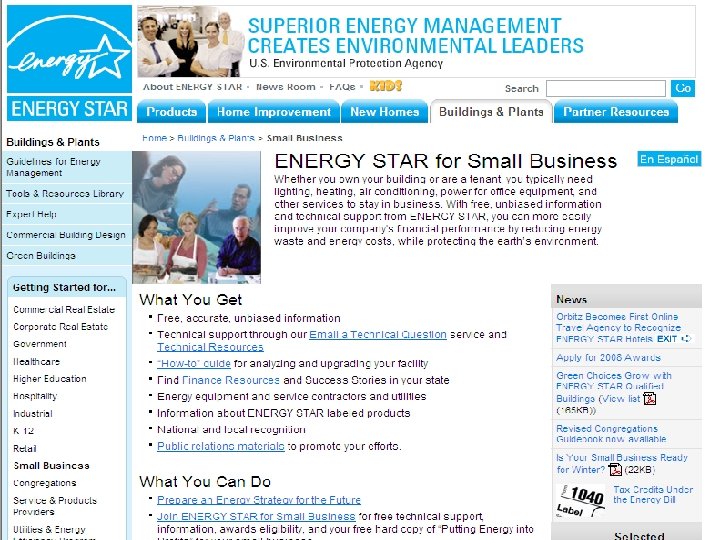
Save Money, Prevent Pollution, Earn Public Recognition Step 1: Join and Learn ENERGY STAR Small Business Network www. energystar. gov/smallbiz Step 2: Measure “Baseline” Energy Use Free Webinar training on “Portfolio Manager” Login at www. energystar. gov/benchmark
Save Money, Prevent Pollution, Earn Public Recognition Step 3: Develop and Implement Savings Plan Use ENERGY STAR resources to measure, make an action plan, implement, and track savings. www. energystar. gov/guidelines Step 4: Earn Recognition ENERGY STAR label for qualifying buildings. Annual small business awards.
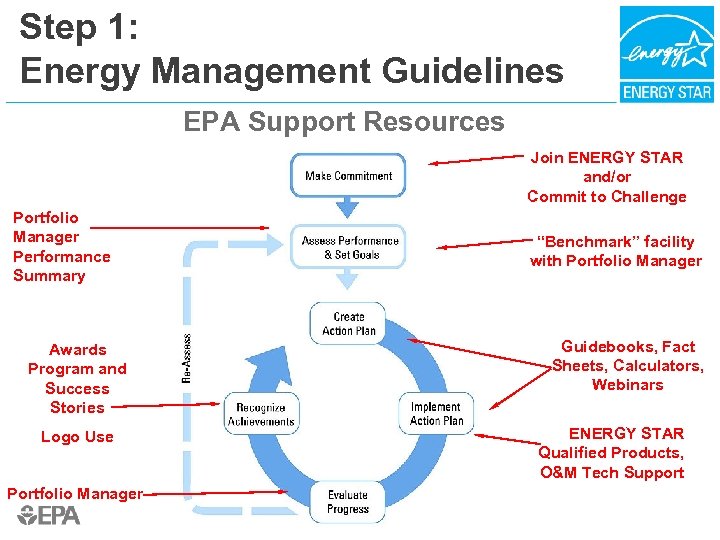
Step 1: Energy Management Guidelines EPA Support Resources Join ENERGY STAR and/or Commit to Challenge Portfolio Manager Performance Summary Awards Program and Success Stories Logo Use Portfolio Manager “Benchmark” facility with Portfolio Manager Guidebooks, Fact Sheets, Calculators, Webinars ENERGY STAR Qualified Products, O&M Tech Support
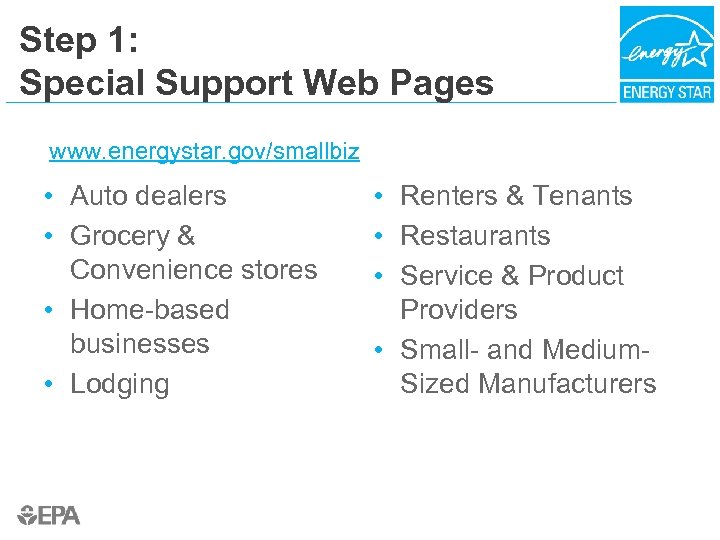
Step 1: Special Support Web Pages www. energystar. gov/smallbiz • Auto dealers • Grocery & Convenience stores • Home-based businesses • Lodging • Renters & Tenants • Restaurants • Service & Product Providers • Small- and Medium. Sized Manufacturers
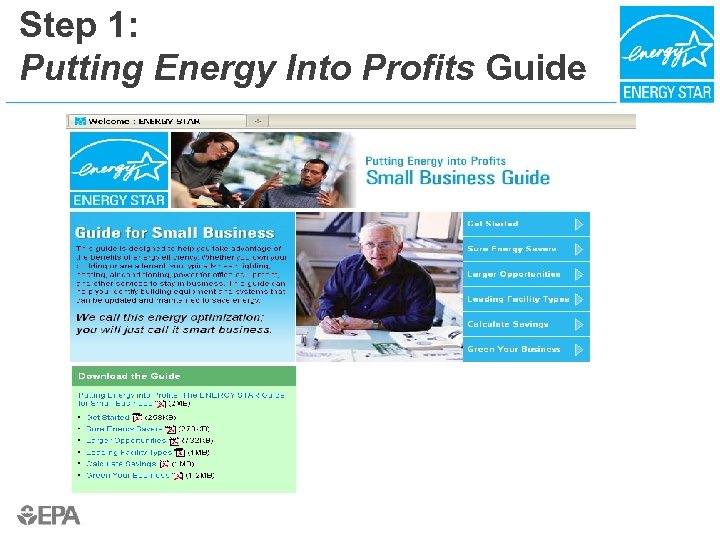
Step 1: Putting Energy Into Profits Guide
Step 1: Free Small Business Webinars • Energy Efficiency 101 • Using Portfolio Manager • Lighting 101 • Pre-register – Live 45 min. presentation – 15 min. Q &A – Up to 100 participants – Associations cosponsor • Pre-recorded option – Available 24/7
Step 2: Benchmark Energy Use • Business owners/operators need to know “baseline” energy costs: – – What are we spending on utilities? How much energy is used? How does this compare to other facilities? Up to 400% variation in similar facility energy use www. energystar. gov/benchmark
Step 2: Benchmark Energy Use • Perceived barriers – I don’t know how – Too time consuming – I can’t get the required data • Initial benchmarking – Data collection - 1 -2 hours – Data input -15 -30 minutes • Monthly updates for tracking – 5 to 15 minutes www. energystar. gov/benchmark
Step 2: Benchmark Energy Use • Portfolio Manager tracks monthly energy/water use over time in password protected account. – Track multiple utility meters/facility – Customize meter names/key information – Benchmark past performance – View % improvement over time • Weather-normalized – Report summarizes costs; emissions reductions
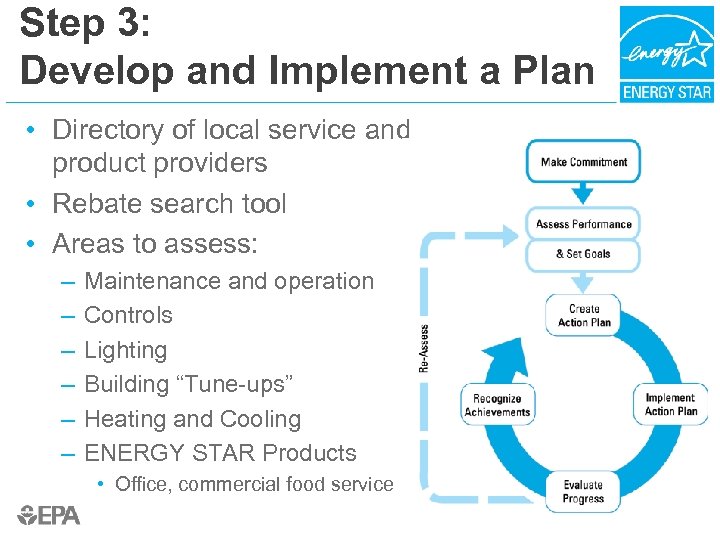
Step 3: Develop and Implement a Plan • Directory of local service and product providers • Rebate search tool • Areas to assess: – – – Maintenance and operation Controls Lighting Building “Tune-ups” Heating and Cooling ENERGY STAR Products • Office, commercial food service
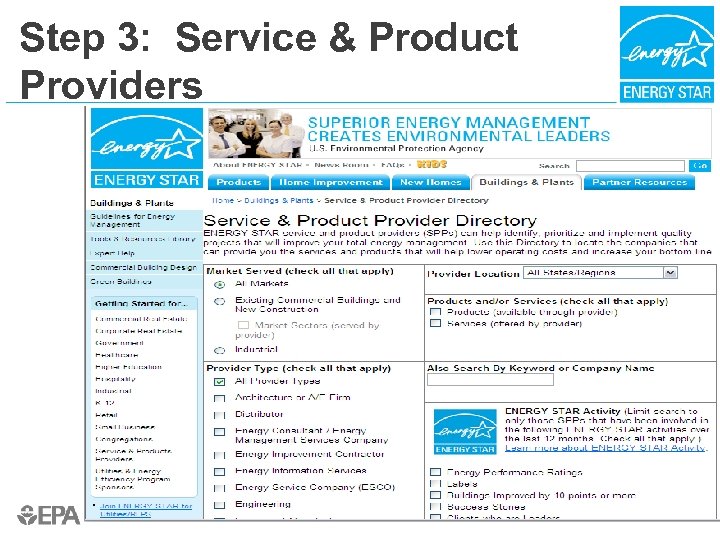
Step 3: Service & Product Providers
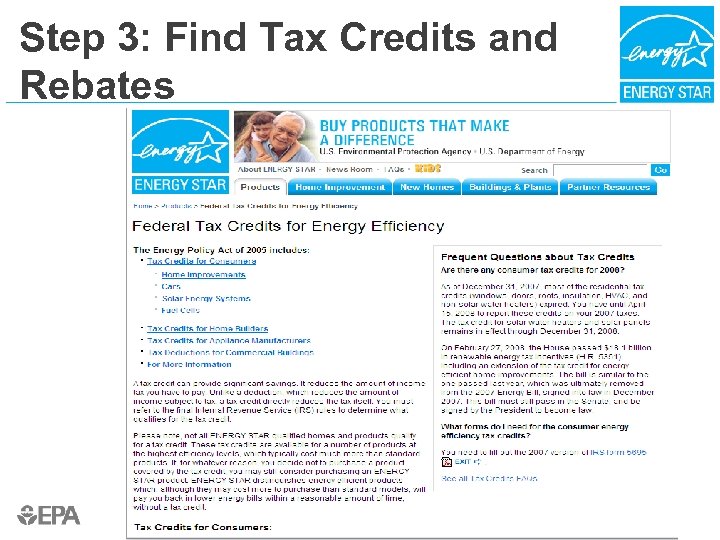
Step 3: Find Tax Credits and Rebates
Step 3: Develop / Implement Improved Operations Plan • Turn off lights and equipment when not in use. • Close doors and windows when heating or cooling the space. • Adjust space layout – may reduce heating or cooling needs. • “Centralize” energy using processes. • Train employees.
Step 3: Develop / Implement Building Maintenance Plan • “Tune-up” buildings and equipment • Significant energy savings at low cost – can extend equipment life • Examples include: – – – Adjusting timers and thermostats Replacing filters in the heating and cooling systems Coil cleaning Charging refrigerant Seal leaks in ducts, doors/windows, building shell, pipes, etc
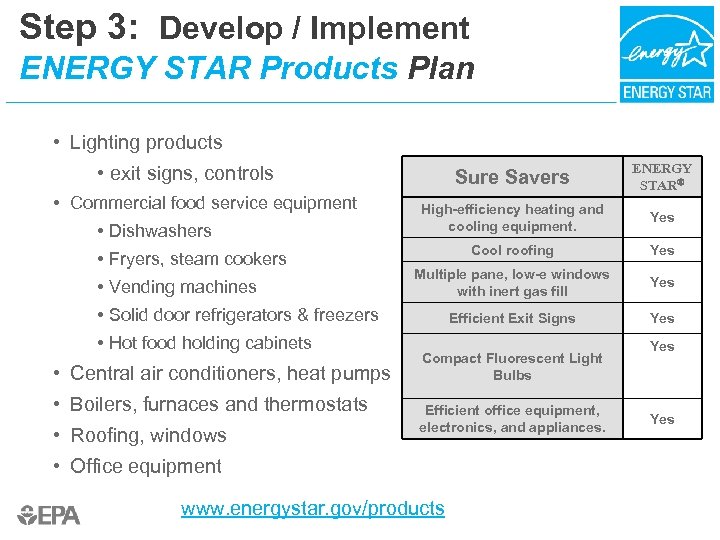
Step 3: Develop / Implement ENERGY STAR Products Plan • Lighting products Sure Savers ENERGY STAR High-efficiency heating and cooling equipment. Yes Cool roofing Yes Multiple pane, low-e windows with inert gas fill Yes Efficient Exit Signs Yes • exit signs, controls • Commercial food service equipment • Dishwashers • Fryers, steam cookers • Vending machines • Solid door refrigerators & freezers • Hot food holding cabinets • Central air conditioners, heat pumps • Boilers, furnaces and thermostats • Roofing, windows Compact Fluorescent Light Bulbs Efficient office equipment, electronics, and appliances. • Office equipment www. energystar. gov/products Yes
Step 3: Develop / Implement Lighting Plan • Measure light levels for tasks • Clean glass • Controls • Upgrades • Design opportunities • Use savings to finance other improvements • Compact florescent lights (CFLs) • T 8’s/T-5’s with electronic ballasts • Occupancy sensors and timers • LED Exit Signs • Metal Halides and HP Sodium Lamps replacing Mercury Vapor Fixtures • LED exterior lighting
Step 3: Develop / Implement Heating and Cooling Plan • Reduce heating and cooling loads before sizing • NEVER SUPERSIZE! – Over-sized HVAC increases upfront capital costs and operating costs • When buying new HVAC system – Require installer to show lifecycle cost comparison of standard-efficiency vs. high-efficiency units. – Buy ENERGY STAR qualified HVAC and be sure to get quality installation. • Consider specifying economizers • Consider heat recovery. – to capture waste heat and use it to offset space or water heating costs.
Step 4: Earn Recognition • ENERGY STAR label for qualifying buildings. • Annual ENERGY STAR Small Business Awards – September 16, 2009 press release on 10 winners – Recognition for environmental stewardship – A powerful message to environmentally-minded consumer – Genuine “green marketing” www. energystar. gov/Smallbiz. Awards
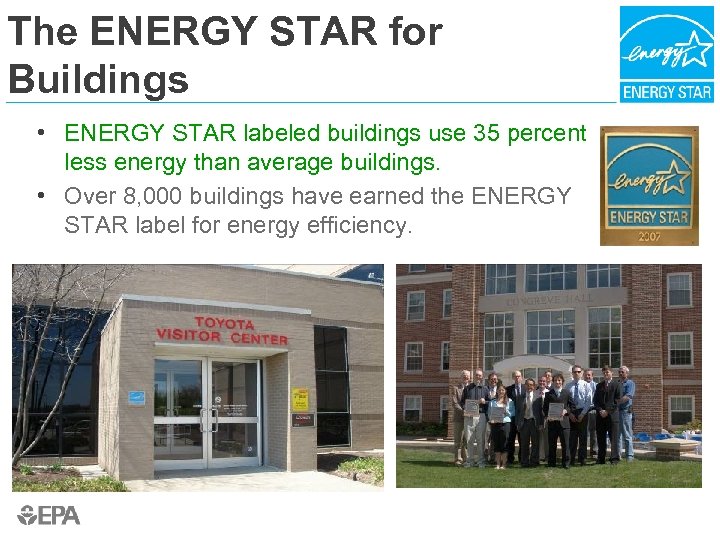
The ENERGY STAR for Buildings • ENERGY STAR labeled buildings use 35 percent less energy than average buildings. • Over 8, 000 buildings have earned the ENERGY STAR label for energy efficiency.
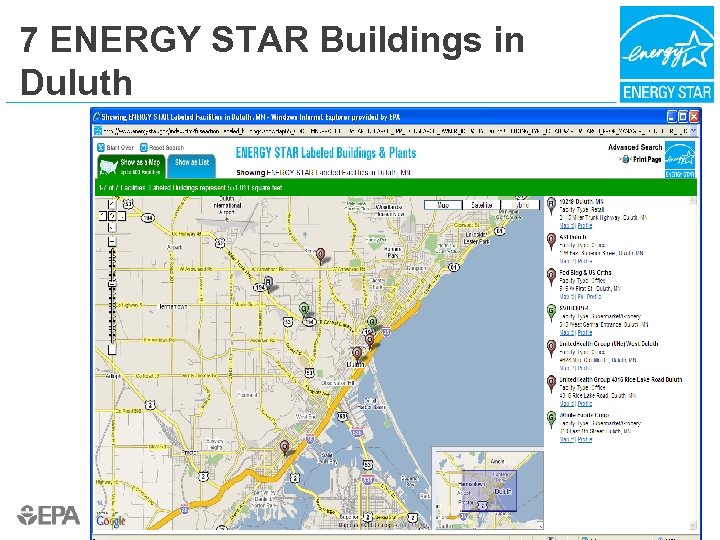
7 ENERGY STAR Buildings in Duluth
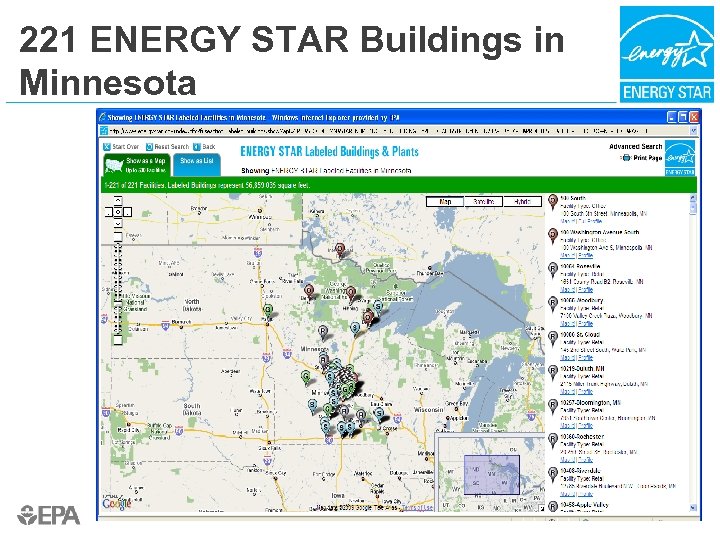
221 ENERGY STAR Buildings in Minnesota
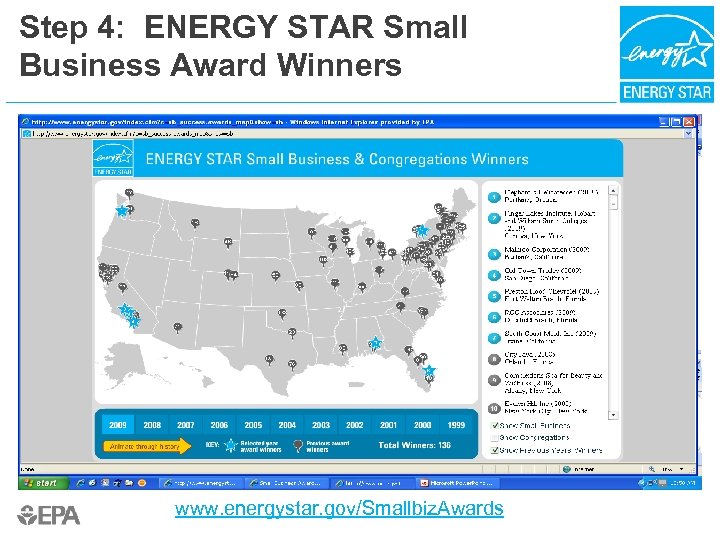
Step 4: ENERGY STAR Small Business Award Winners www. energystar. gov/Smallbiz. Awards
Let’s Get to Work… • Cut your energy costs and prevent pollution • Free tools, training, materials online • Awards and public recognition www. energystar. gov/smallbiz Email- EPAsmallbiz@energyandsecurity. com Call - 1 -888 -STAR YES
Скачать презентацию The First Step to Green is Blue
46e1650ef26c3699f248b059e4a4fa57.ppt