


 Скачать презентацию The Finnish Exploitation of Détente From the US
184f0e0be1435c430e4fee08468a49fd.ppt
- Количество слайдов: 31
 The Finnish Exploitation of Détente From the US Perspective in the Early 1970 s: The Case of the CSCE Minna Starck April 4, 2005 University of Helsinki Email: minna. starck@helsinki. fi
 The topics that this lecture will cover are: Détente in the early 1970 s American-Soviet relations during détente European détente Finland the United States Kekkonen’s visit to the White House in July 1970 Historical background to the CSCE American attitude towards the CSCE Outcomes from the CSCE 2
 History of Détente A possible end to a post-war adjustment to the division of Europe. The beginning of a new phase in the Cold War characterized by ongoing dialogue e. g. SALT and CSCE. It accelerated the process of exchanges between East and West. 3
 The Rise of Détente SALT I Nixon-Brezhnev Summits Opening to China German Question Four-Power agreement 4
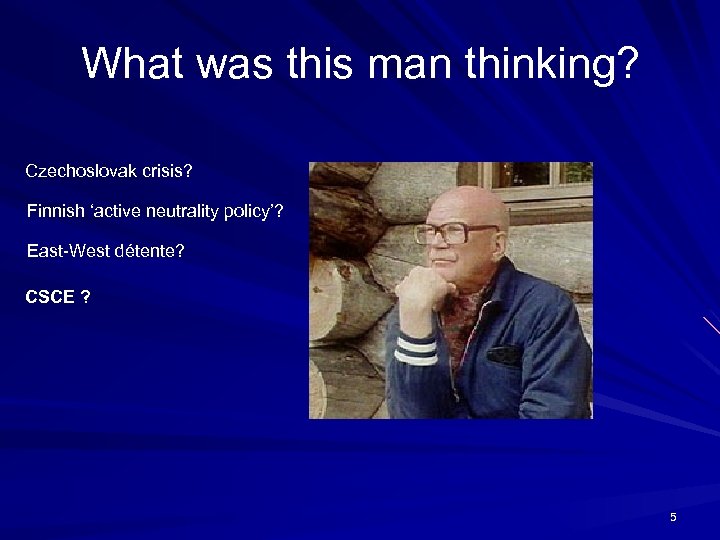 What was this man thinking? Czechoslovak crisis? Finnish ‘active neutrality policy’? East-West détente? CSCE ? 5
 Finnish Neutrality After the Warsaw Pact invasion of Czechoslovakia, the Soviet Union ceased to refer to Finland as a neutral country in its official texts. It insisted on giving the 1948 Finnish-Soviet treaty priority. What followed was a long drawn-out battle of words. Finally a compromise was reached and both the 1948 treaty and Finland’s policy of neutrality were mentioned in a single paragraph. 6
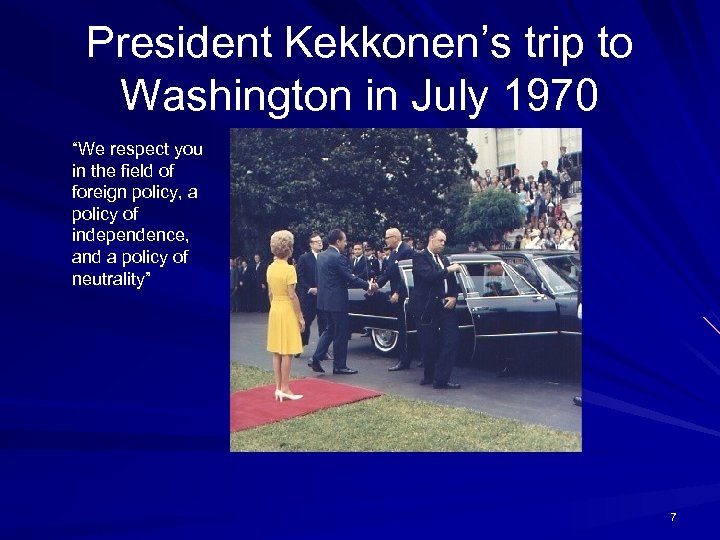 President Kekkonen’s trip to Washington in July 1970 “We respect you in the field of foreign policy, a policy of independence, and a policy of neutrality” 7
 Finland the United States Much as from the 1940 s onwards, in 1970 the U. S. policy formulation towards Finland consisted of three main elements: 1. To maintain an independent and democratic Finland with the truly neutral foreign policy 2. the strengthening of Finland’s ties with the West 3. Reduction of Finnish vulnerability to Soviet political and economic pressures 8
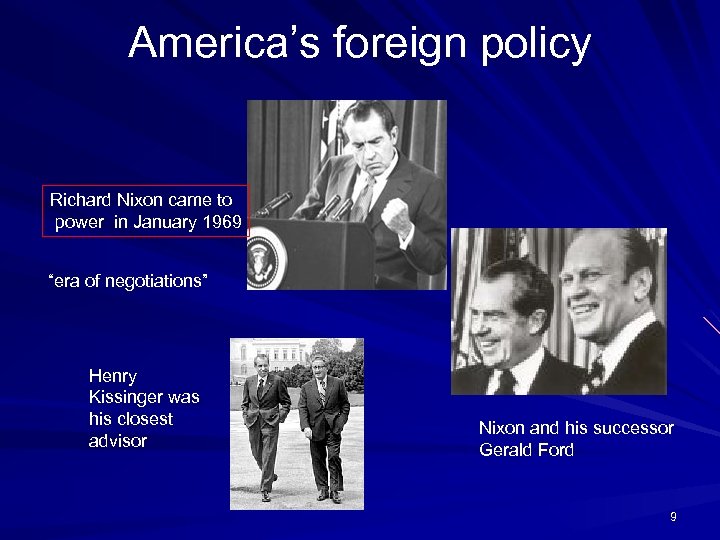 America’s foreign policy Richard Nixon came to power in January 1969 “era of negotiations” Henry Kissinger was his closest advisor Nixon and his successor Gerald Ford 9
 The American Conception of Détente Nixon in 1968: The United States “must move away from confrontations in this nuclear age into a new era – the era of negotiation” 10
 American–Soviet Relations During Détente A turning point American domestic problems – Watergate etc. . Soviet view of American recognition of parity – SALT etc… 11
 Superpower relations continued… Carrots and sticks? Unexpected outcomes? Misconceptions of strengths and weaknesses? 12
 European Détente Differences between European and superpower détente European détente – dynamic process Independent European initiatives Peoples interest – human rights agenda in the CSCE 13
 Historical Background of the CSCE Original proposals for a pan-European security conference Development of Warsaw Pact and NATO 1960 s – renewed interest in a multilateral security conference Inclusion of the North Americans Kekkonen’s invitation 14
 Facts about CSCE Ostpolitik Acceptance of the status quo Getting something back Low level of expectations 15
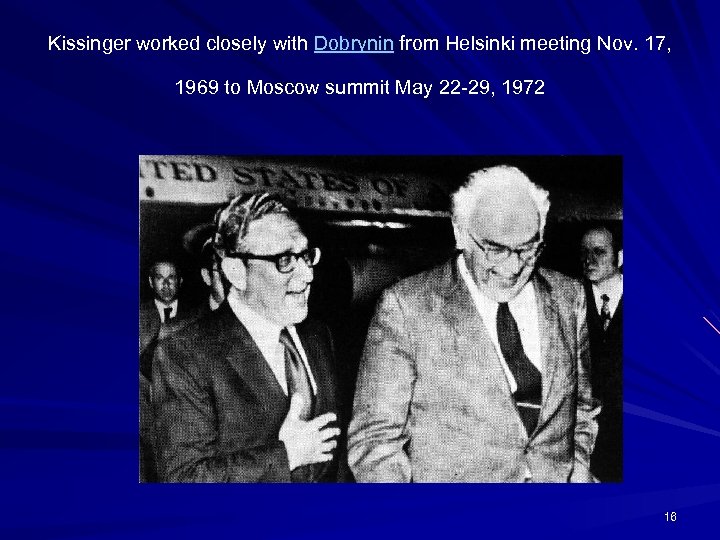 Kissinger worked closely with Dobrynin from Helsinki meeting Nov. 17, 1969 to Moscow summit May 22 -29, 1972 16
 American attitude towards the CSCE United States considers CSCE as a peripheral affair Focus of US diplomatic efforts elsewhere Mechanics of US diplomacy and CSCE A pragmatic approach 17
 Soviet interests in the CSCE To gain general acceptance of the territorial and political status quo in central and eastern Europe Enlarging on the bilateral West German agreements with the Soviet Union, Poland East Europe To support reduction of interstate barriers to increased economic relations and to further the general process of East-West detente 18
 CSCE was a part of a broader diplomatic strategy CSCE- a diplomatic strategy to be used in dealing with the USSR -and a political necessity when viewed from the perspective of transatlantic relations But still – the “real” decisions were made in bilateral context with the leaders of the Soviet Union A key point in this regard was the May 1972 Moscow summit where Nixon and Brezhnev agreed on a linkage between CSCE and the Multilateral Balanced Forces Reduction talks (MBFR) 19
 Outcome of the CSCE Lack of interest but concessions made Soviet triumph? ? Implications of the Final Act 20
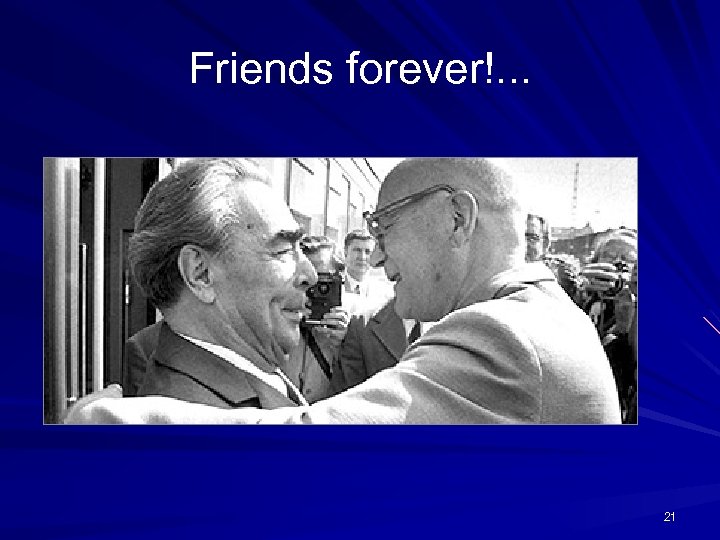 Friends forever!. . . 21
 Soviet reaction to the Final Act Great deal, major triumph Highlight of European détente The existence of the two German states had finally been recognized by the whole world The Soviet leaders clearly believed ”the correlation of forces” in the world had shifted decisively in their favour 22
 The Reaction to the Final Act in the United States Different from that in the SU and Western Europe Unknown to most Americans’ The growing disenchantment with détente and politicking in the upcoming presidential election in 1976 led to criticism of the CSCE and of President Ford’s journey to Helsinki to sign it 23
 European reaction CSCE Final Act was positive. Perception of a real relaxation of tensions Cynical commentators as well as those carried away by euphoria 24
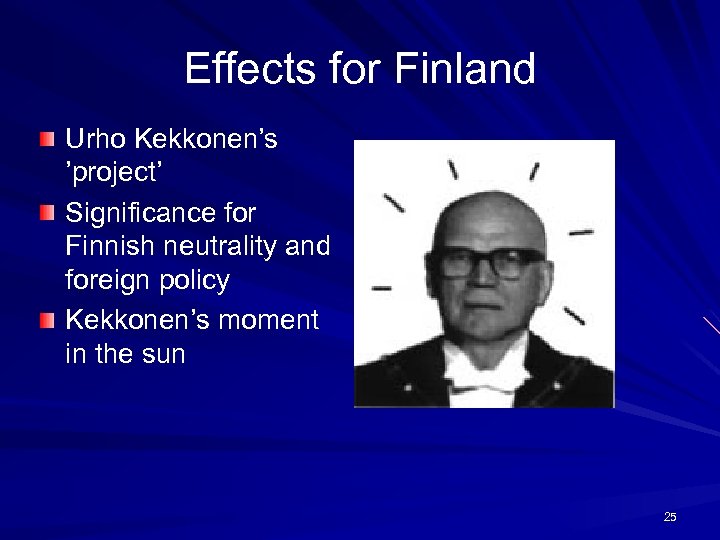 Effects for Finland Urho Kekkonen’s ’project’ Significance for Finnish neutrality and foreign policy Kekkonen’s moment in the sun 25
 Outcomes from the CSCE A shift in American attitudes – the significance of human rights in criticism of the Soviet union Post-Helsinki popular action Czechoslovakia, Poland the Soviet Union itself. Legitimacy for dissidents The Helsinki review conferences 26
 Irony of the Soviet-American detente The Nixon-Kissinger détente doctrine promoted the eventual collapse of the USSR? Soviet over-stretch in the belief that the U. S. was weaker? 27
 Conclusion “The Soviets desperately wanted the CSCE, they got it and it laid the foundations for the end of their empire. We resisted it for years, went grudgingly, Ford paid a terrible price for going – perhaps re-election itself – only to discover years later that CSCE had yielded benefits beyond our wildest imagination. Go figure. ” Robert Gates The Former Director of the CIA. In his book From the Shadows: The Ultimate insider’s Story of Five Presidents and How They Helped Win the Cold War, 1996. 28
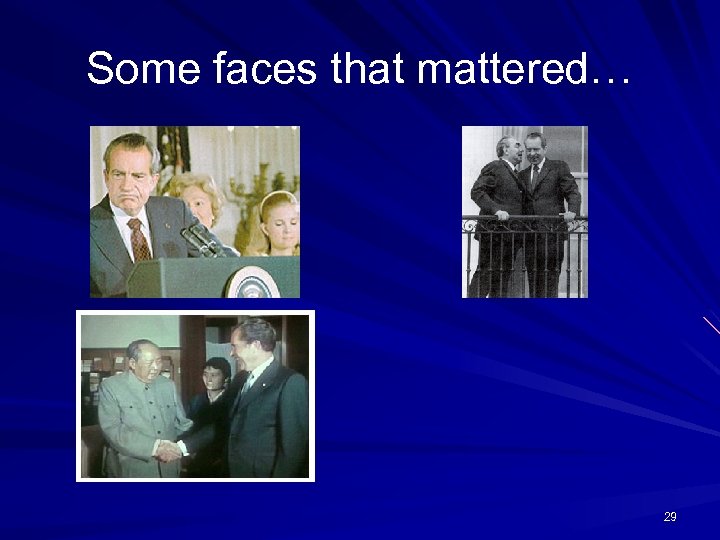 Some faces that mattered… 29
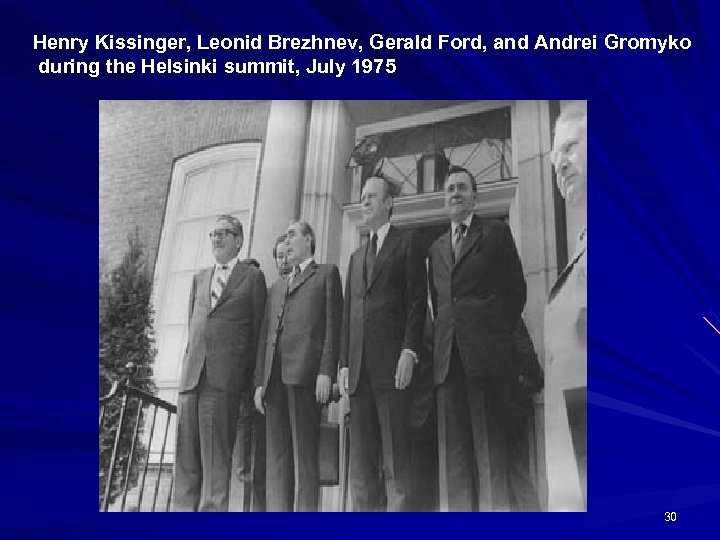 Henry Kissinger, Leonid Brezhnev, Gerald Ford, and Andrei Gromyko during the Helsinki summit, July 1975 30
 Further reading: Henry Kissinger: Diplomacy 1994. Raymond L. Garthoff: Détente and Confrontation, American-Soviet Relations from Nixon to Reagan 1985. Reviewing the Cold War. Approaches, Interpretations, Theory. Ed. Odd Arne Westad 2000. Johan Lewis Gaddis: We Know Now. Rethinking Cold War History 1997. 31