


 Скачать презентацию The Femoral Arterial Access with Ultrasound Trial FAUST
c3940451808fbeccbf97043587beea01.ppt
- Количество слайдов: 21
 The Femoral Arterial Access with Ultrasound Trial (FAUST) A prospective randomized controlled trial of ultrasound guidance versus standard fluoroscopic technique in femoral access Arnold Seto, MD, MPA University of California, Irvine TCT Late Breaking Trial Presentation September 25, 2009 Disclosures: Research materials grant, Bard Access, Inc.
 FAUST Investigators • Lead investigator • Arnold Seto, MD, MPA • Co-Principal Investigators • Mazen Abu-Fadel, MD, University of Oklahoma HSC • Morton Kern, MD, UC-Irvine Medical Center and Long Beach VA • Co-Investigators • Jeffrey Sparling, Soni Zacharias, Timothy Daly, Thomas Hennebry • Alexander Harrison, Will Suh, Jesus Vera, Pranav Patel, Rex Winters • Clinical Trials Identifier • NCT 00667381 • Supported by • General Clinical Research Center at OUHSC, Chris Aston, Ph. D • Long Beach Memorial Medical Foundation
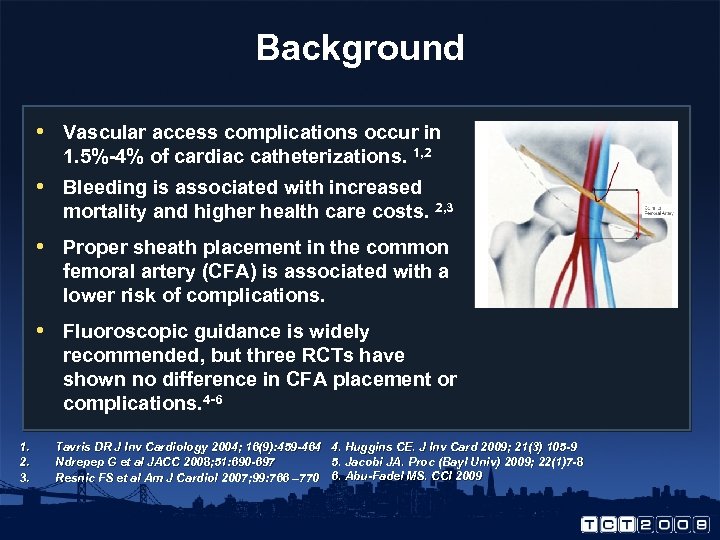 Background • Vascular access complications occur in 1. 5%-4% of cardiac catheterizations. 1, 2 • Bleeding is associated with increased mortality and higher health care costs. 2, 3 • Proper sheath placement in the common femoral artery (CFA) is associated with a lower risk of complications. • Fluoroscopic guidance is widely recommended, but three RCTs have shown no difference in CFA placement or complications. 4 -6 1. 2. 3. Tavris DR J Inv Cardiology 2004; 16(9): 459 -464 4. Huggins CE. J Inv Card 2009; 21(3) 105 -9 5. Jacobi JA. Proc (Bayl Univ) 2009; 22(1)7 -8 Ndrepep G et al JACC 2008; 51: 690 -697 Resnic FS et al Am J Cardiol 2007; 99: 766 – 770 6. Abu-Fadel MS. CCI 2009
 Ultrasound guidance in Venous Access • Real-time Ultrasound (US) guidance reduces complications and increases success rates in central venous access. 1 • Named a “Top 11 Highly Proven” practice to improve patient safety. 2 • US has not been adequately assessed in a large trial of femoral arterial access. 1. BMJ. 2003 August 16; 327(7411): 361 2. AHRQ Publication 01 -E 058 July 18, 2001
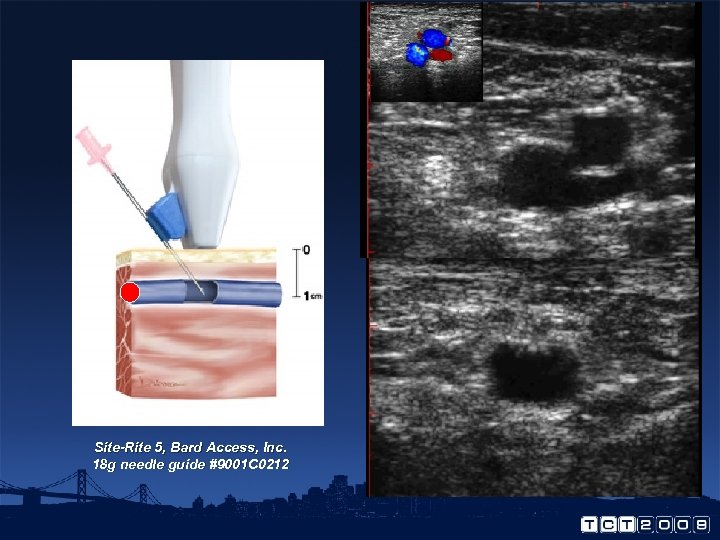 Site-Rite 5, Bard Access, Inc. 18 g needle guide #9001 C 0212
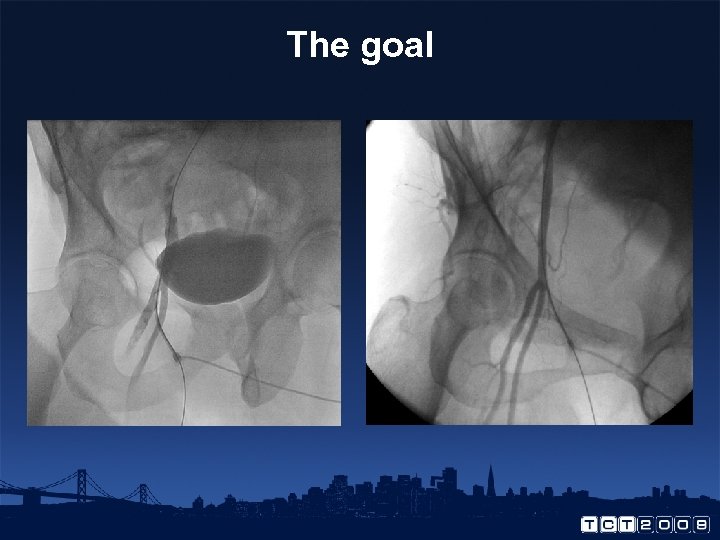 The goal
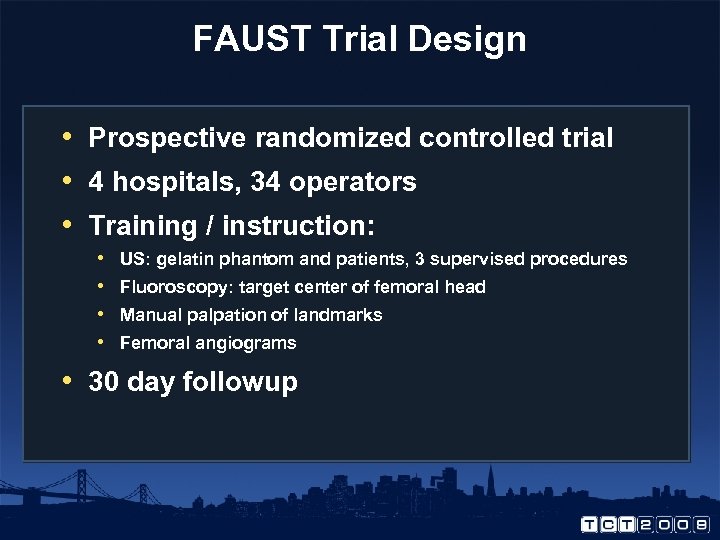 FAUST Trial Design • Prospective randomized controlled trial • 4 hospitals, 34 operators • Training / instruction: • • US: gelatin phantom and patients, 3 supervised procedures Fluoroscopy: target center of femoral head Manual palpation of landmarks Femoral angiograms • 30 day followup
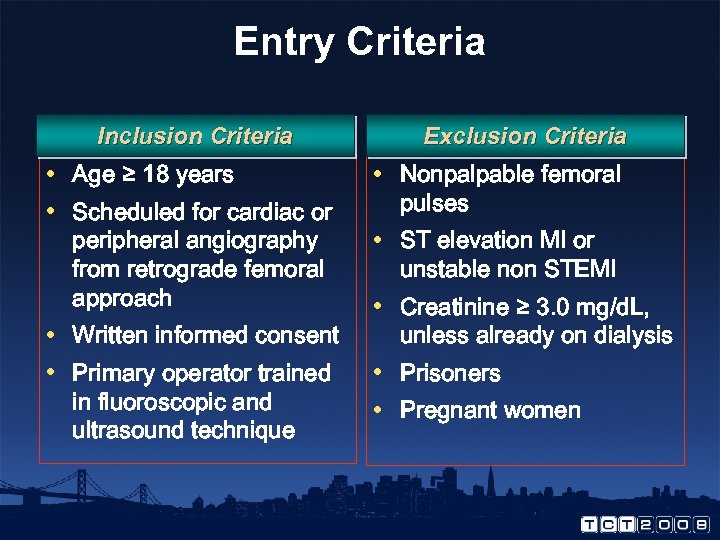 Entry Criteria Inclusion Criteria • Age ≥ 18 years • Scheduled for cardiac or peripheral angiography from retrograde femoral approach • Written informed consent • Primary operator trained in fluoroscopic and ultrasound technique Exclusion Criteria • Nonpalpable femoral pulses • ST elevation MI or unstable non STEMI • Creatinine ≥ 3. 0 mg/d. L, unless already on dialysis • Prisoners • Pregnant women
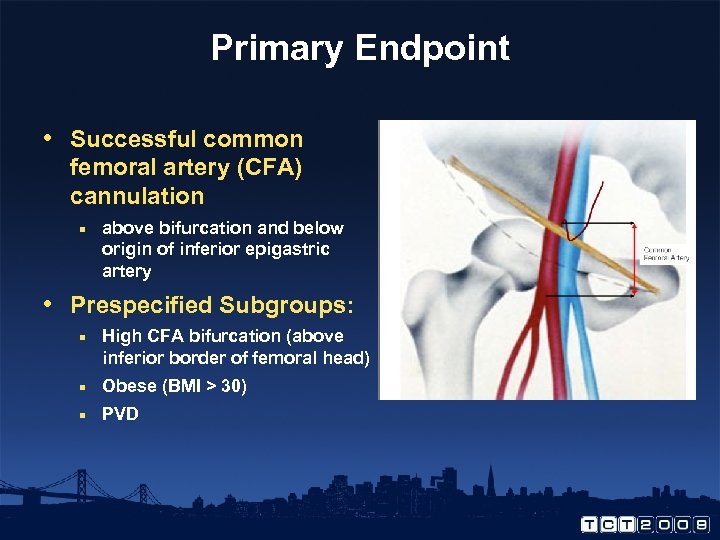 Primary Endpoint • Successful common femoral artery (CFA) cannulation ¡ above bifurcation and below origin of inferior epigastric artery • Prespecified Subgroups: ¡ High CFA bifurcation (above inferior border of femoral head) ¡ Obese (BMI > 30) ¡ PVD
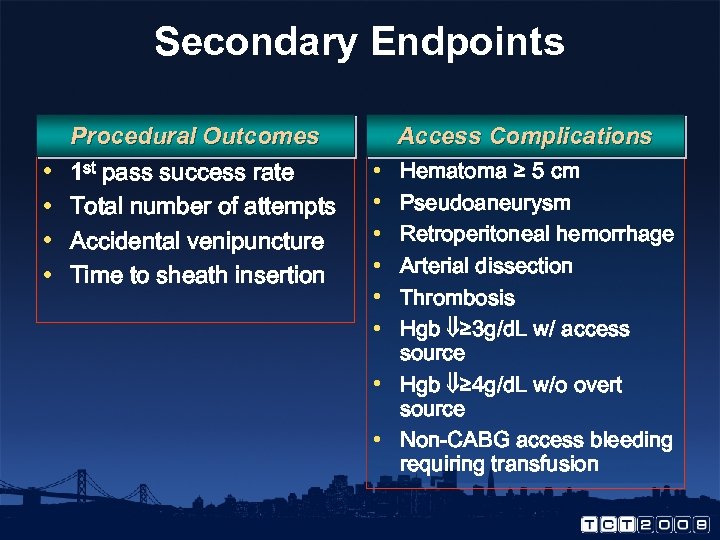 Secondary Endpoints • • Procedural Outcomes 1 st pass success rate Total number of attempts Accidental venipuncture Time to sheath insertion Access Complications • • • Hematoma ≥ 5 cm Pseudoaneurysm Retroperitoneal hemorrhage Arterial dissection Thrombosis Hgb ≥ 3 g/d. L w/ access source • Hgb ≥ 4 g/d. L w/o overt source • Non-CABG access bleeding requiring transfusion
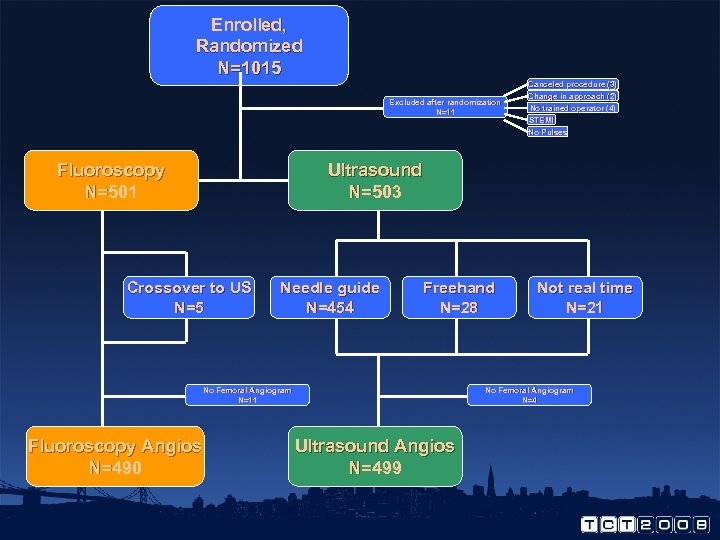 Enrolled, Randomized N=1015 Excluded after randomization N=11 Fluoroscopy N=501 STEMI No Pulses Ultrasound N=503 Crossover to US N=5 Needle guide N=454 Freehand N=28 No Femoral Angiogram N=11 Fluoroscopy Angios N=490 Canceled procedure (3) Change in approach (2) No trained operator (4) Not real time N=21 No Femoral Angiogram N=4 Ultrasound Angios N=499
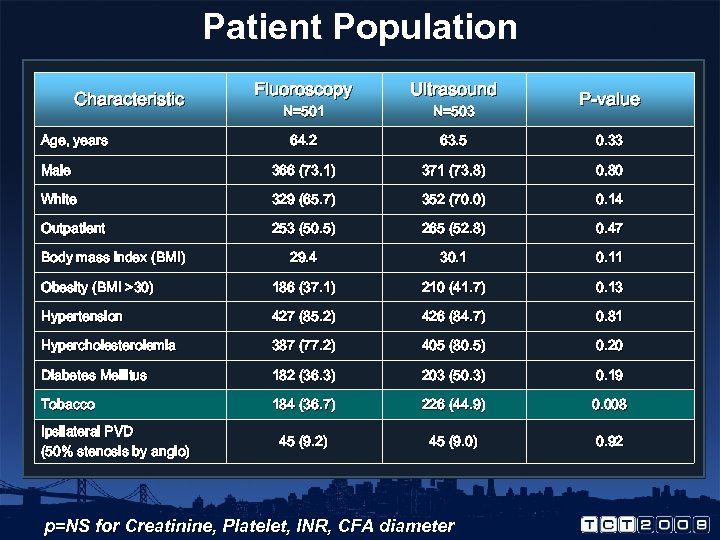 Patient Population Fluoroscopy Ultrasound N=501 N=503 64. 2 63. 5 0. 33 Male 366 (73. 1) 371 (73. 8) 0. 80 White 329 (65. 7) 352 (70. 0) 0. 14 Outpatient 253 (50. 5) 265 (52. 8) 0. 47 29. 4 30. 11 Obesity (BMI >30) 186 (37. 1) 210 (41. 7) 0. 13 Hypertension 427 (85. 2) 426 (84. 7) 0. 81 Hypercholesterolemia 387 (77. 2) 405 (80. 5) 0. 20 Diabetes Mellitus 182 (36. 3) 203 (50. 3) 0. 19 Tobacco 184 (36. 7) 226 (44. 9) 0. 008 45 (9. 2) 45 (9. 0) 0. 92 Characteristic Age, years Body mass index (BMI) Ipsilateral PVD (50% stenosis by angio) p=NS for Creatinine, Platelet, INR, CFA diameter P-value
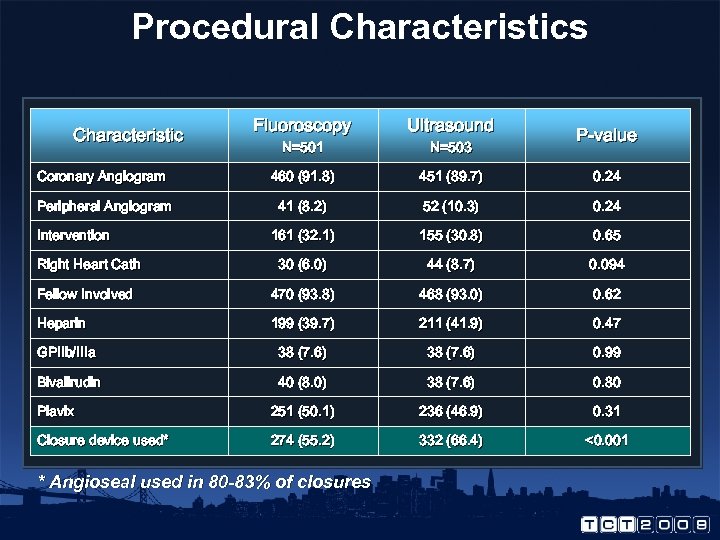 Procedural Characteristics Fluoroscopy Ultrasound N=501 N=503 Coronary Angiogram 460 (91. 8) 451 (89. 7) 0. 24 Peripheral Angiogram 41 (8. 2) 52 (10. 3) 0. 24 161 (32. 1) 155 (30. 8) 0. 65 Right Heart Cath 30 (6. 0) 44 (8. 7) 0. 094 Fellow Involved 470 (93. 8) 468 (93. 0) 0. 62 Heparin 199 (39. 7) 211 (41. 9) 0. 47 GPIIb/IIIa 38 (7. 6) 0. 99 Bivalirudin 40 (8. 0) 38 (7. 6) 0. 80 Plavix 251 (50. 1) 236 (46. 9) 0. 31 Closure device used* 274 (55. 2) 332 (66. 4) <0. 001 Characteristic Intervention * Angioseal used in 80 -83% of closures P-value
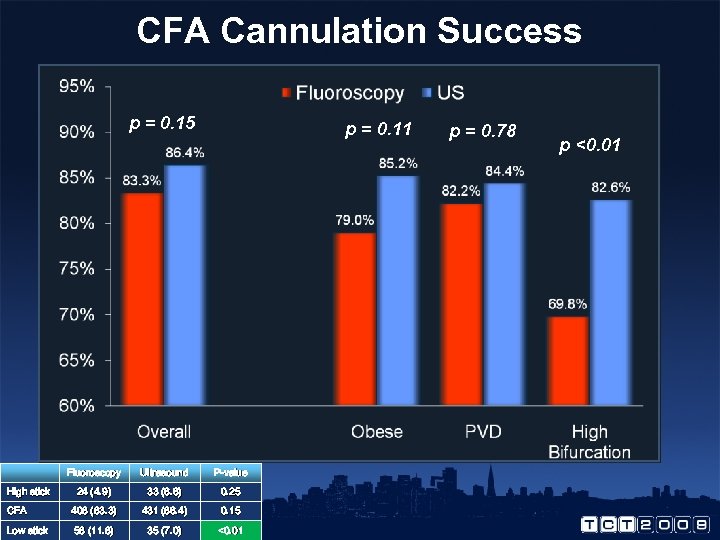 CFA Cannulation Success p = 0. 15 p = 0. 11 Fluoroscopy Ultrasound P-value 24 (4. 9) 33 (6. 6) 0. 25 CFA 408 (83. 3) 431 (86. 4) 0. 15 Low stick 58 (11. 8) 35 (7. 0) <0. 01 High stick p = 0. 78 p <0. 01
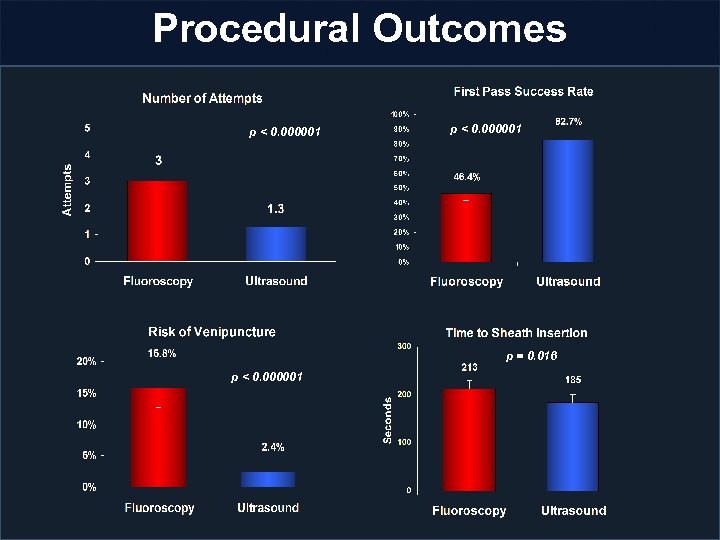 Procedural Outcomes p < 0. 000001 p = 0. 016 p < 0. 000001
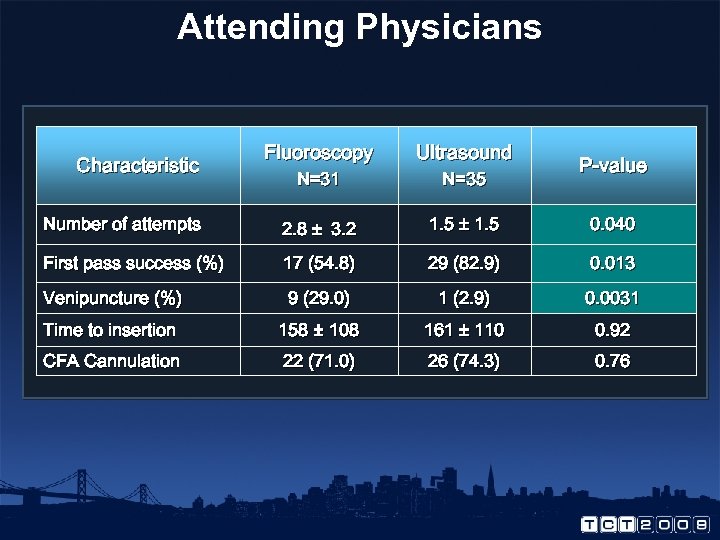 Attending Physicians Fluoroscopy Ultrasound N=31 N=35 Number of attempts 2. 8 ± 3. 2 1. 5 ± 1. 5 0. 040 First pass success (%) 17 (54. 8) 29 (82. 9) 0. 013 Venipuncture (%) 9 (29. 0) 1 (2. 9) 0. 0031 Time to insertion 158 ± 108 161 ± 110 0. 92 CFA Cannulation 22 (71. 0) 26 (74. 3) 0. 76 Characteristic P-value
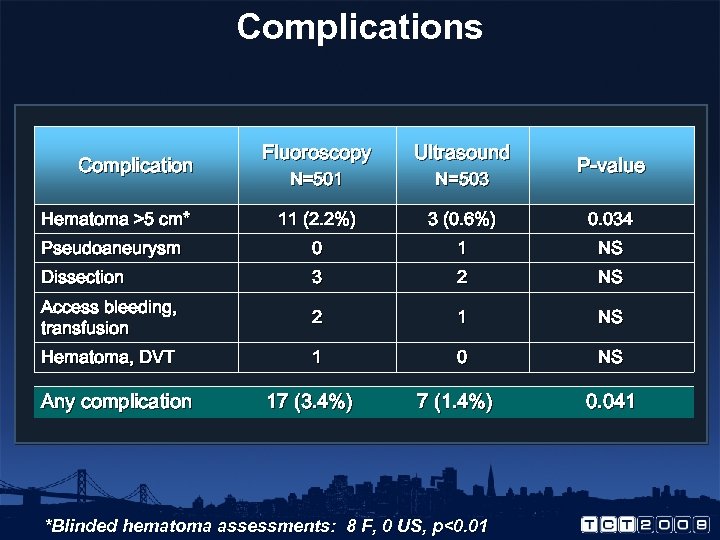 Complications Fluoroscopy Ultrasound N=501 N=503 Hematoma >5 cm* 11 (2. 2%) 3 (0. 6%) 0. 034 Pseudoaneurysm 0 1 NS Dissection 3 2 NS Access bleeding, transfusion 2 1 NS Hematoma, DVT 1 0 NS Complication Any complication 17 (3. 4%) 7 (1. 4%) *Blinded hematoma assessments: 8 F, 0 US, p<0. 01 P-value 0. 041
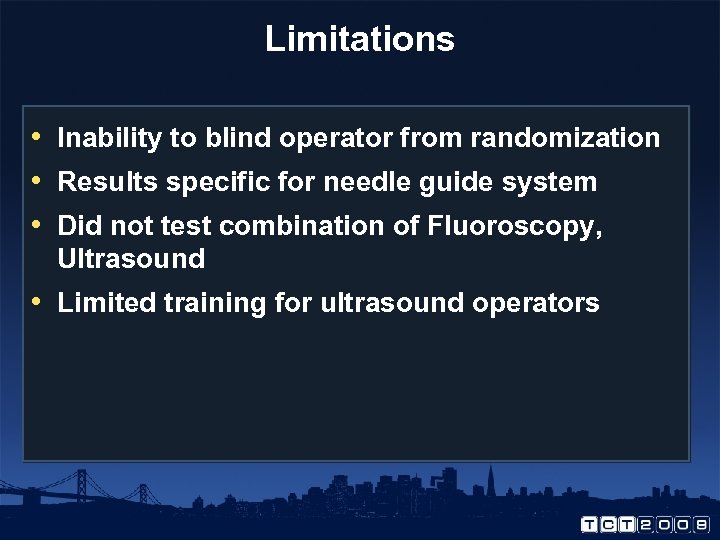 Limitations • Inability to blind operator from randomization • Results specific for needle guide system • Did not test combination of Fluoroscopy, Ultrasound • Limited training for ultrasound operators
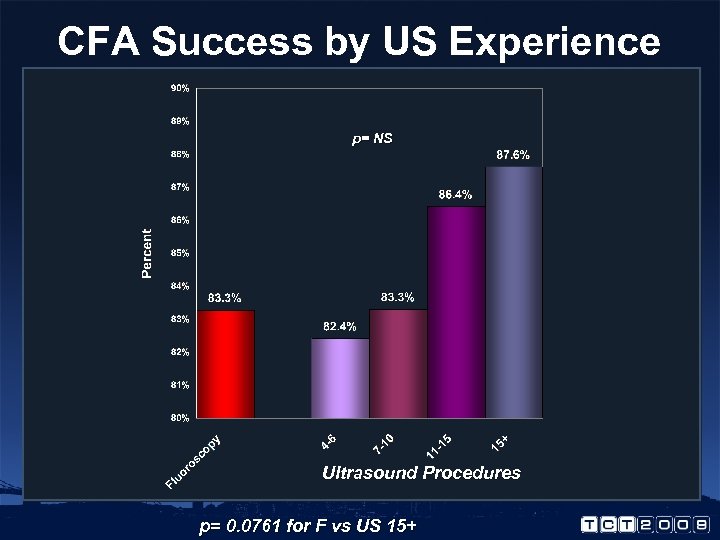 CFA Success by US Experience p= NS Ultrasound Procedures p= 0. 0761 for F vs US 15+
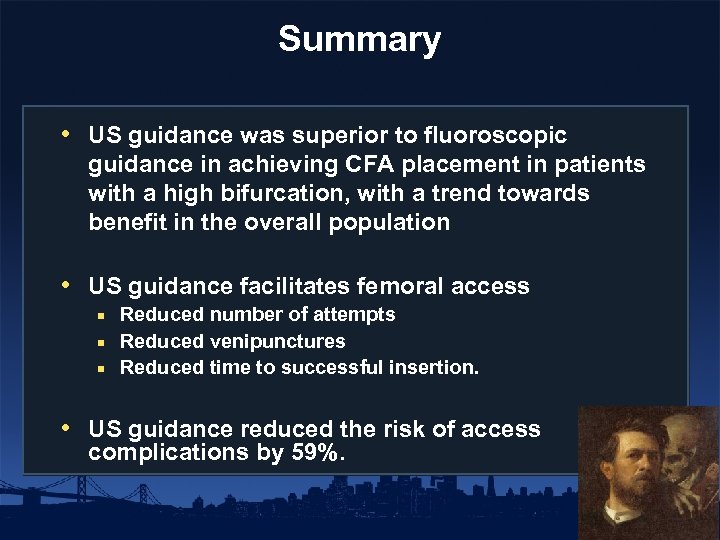 Summary • US guidance was superior to fluoroscopic guidance in achieving CFA placement in patients with a high bifurcation, with a trend towards benefit in the overall population • US guidance facilitates femoral access ¡ ¡ ¡ Reduced number of attempts Reduced venipunctures Reduced time to successful insertion. • US guidance reduced the risk of access complications by 59%.
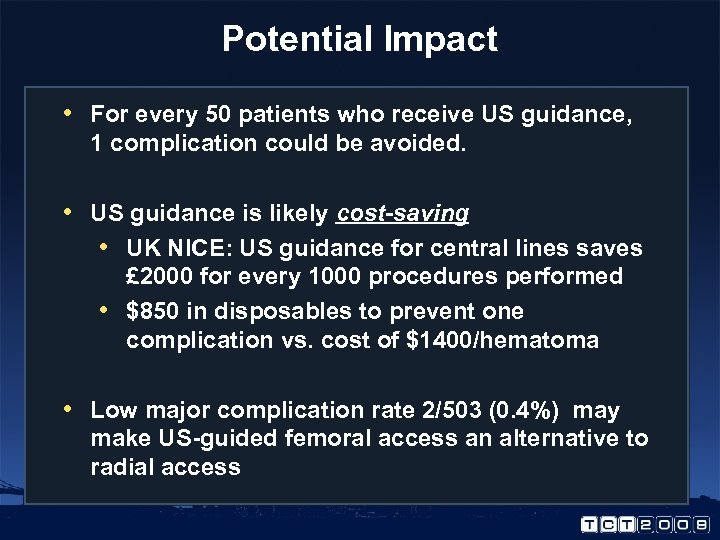 Potential Impact • For every 50 patients who receive US guidance, 1 complication could be avoided. • US guidance is likely cost-saving • UK NICE: US guidance for central lines saves £ 2000 for every 1000 procedures performed • $850 in disposables to prevent one complication vs. cost of $1400/hematoma • Low major complication rate 2/503 (0. 4%) may make US-guided femoral access an alternative to radial access