 Скачать презентацию The Extent of International Business Although the
0fc56f991ff58405067ec36beeb58b73.ppt
- Количество слайдов: 12



The Extent of International Business • Although the worldwide recessions of 1991, 2001 -2002, and 2008 slowed the rate of growth, globalization is a reality of our time • In the U. S. , international trade accounts for over ¼ of GDP • Trade barriers are decreasing, more competitors are entering the global marketplace, creating more choices for consumers and new job opportunities • International business will grow with the expansion of commercial use of the Internet Copyright © Cengage Learning. All rights reserved. 3|1
The World Economic Outlook for Trade • Economic performance among nations is not equal; growth in advanced countries has slowed, while emerging and developing economies continue to grow rapidly • At the current rate of global economic growth, world production of goods and services will double by 2025. Copyright © Cengage Learning. All rights reserved. 3|2
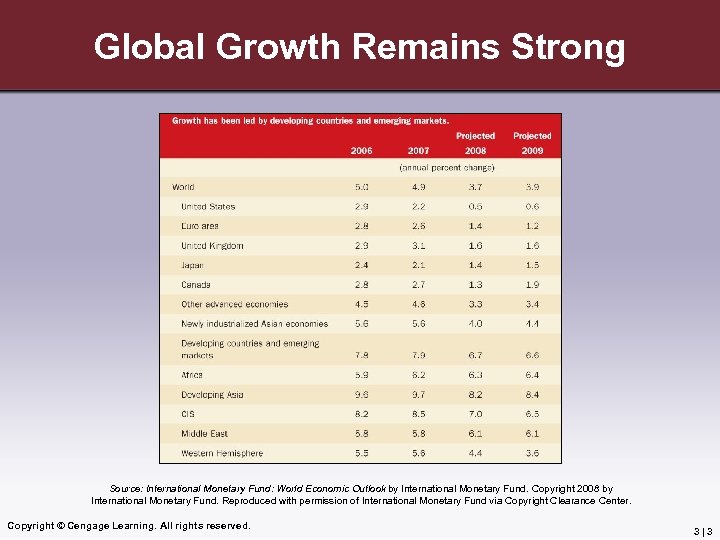
Global Growth Remains Strong Source: International Monetary Fund: World Economic Outlook by International Monetary Fund. Copyright 2008 by International Monetary Fund. Reproduced with permission of International Monetary Fund via Copyright Clearance Center. Copyright © Cengage Learning. All rights reserved. 3|3
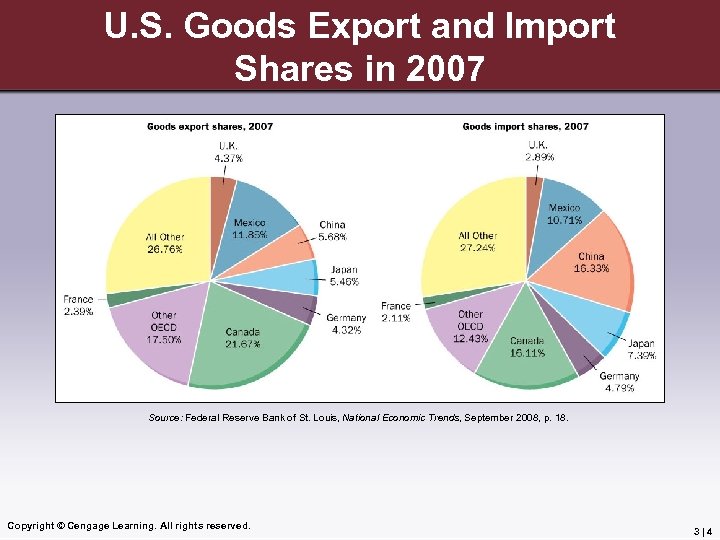
U. S. Goods Export and Import Shares in 2007 Source: Federal Reserve Bank of St. Louis, National Economic Trends, September 2008, p. 18. Copyright © Cengage Learning. All rights reserved. 3|4
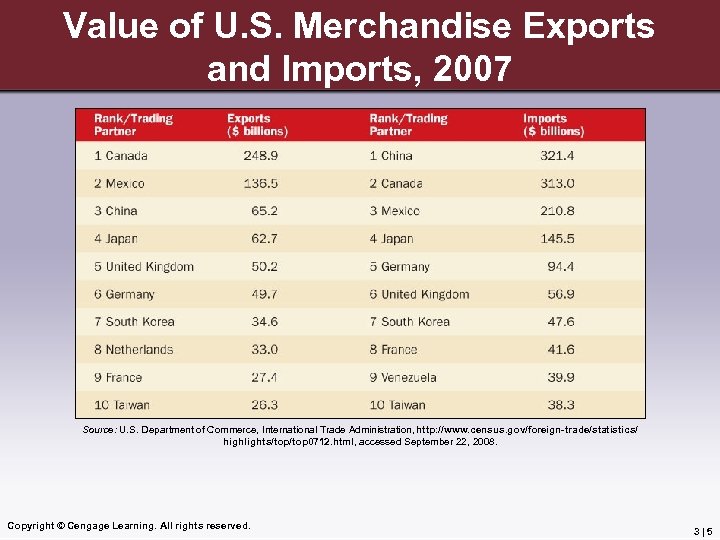
Value of U. S. Merchandise Exports and Imports, 2007 Source: U. S. Department of Commerce, International Trade Administration, http: //www. census. gov/foreign-trade/statistics/ highlights/top 0712. html, accessed September 22, 2008. Copyright © Cengage Learning. All rights reserved. 3|5
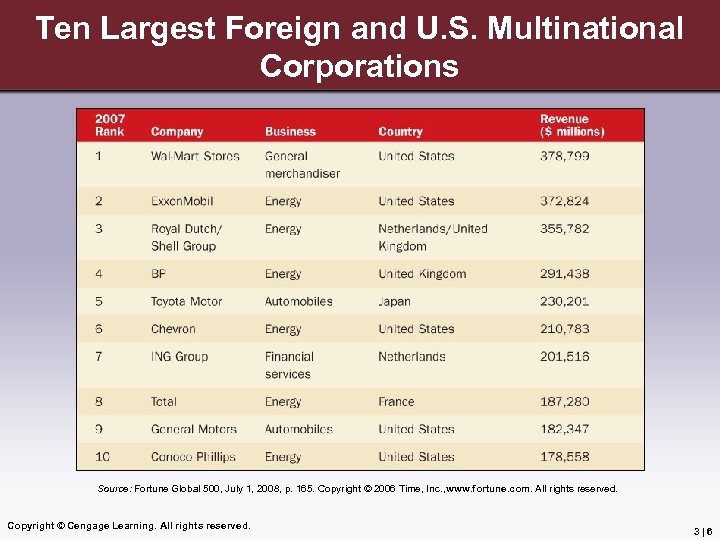
Ten Largest Foreign and U. S. Multinational Corporations Source: Fortune Global 500, July 1, 2008, p. 165. Copyright © 2006 Time, Inc. , www. fortune. com. All rights reserved. Copyright © Cengage Learning. All rights reserved. 3|6
The General Agreement on Tariffs and Trade and the World Trade Organization • General Agreement on Tariffs and Trade (GATT) – International organization of 153 nations dedicated to reducing or eliminating tariffs and other trade barriers – Most-favored-nation status (MFN)—Each member of GATT was to be treated equally by all other members – Kennedy Round, Tokyo Round, Uruguay Round, Doha Round • World Trade Organization (WTO) – Created in the Uruguay Round of GATT negotiation as a successor to GATT – WTO oversees GATT provisions, has judicial powers to meditate trade disputes arising from GATT rules and exerts more binding authority than GATT Copyright © Cengage Learning. All rights reserved. 3|7
International Economic Organizations Working to Foster Trade • Economic community – An organization of nations formed to promote the free movement of resources and products among its members and to create common economic policies Copyright © Cengage Learning. All rights reserved. 3|8
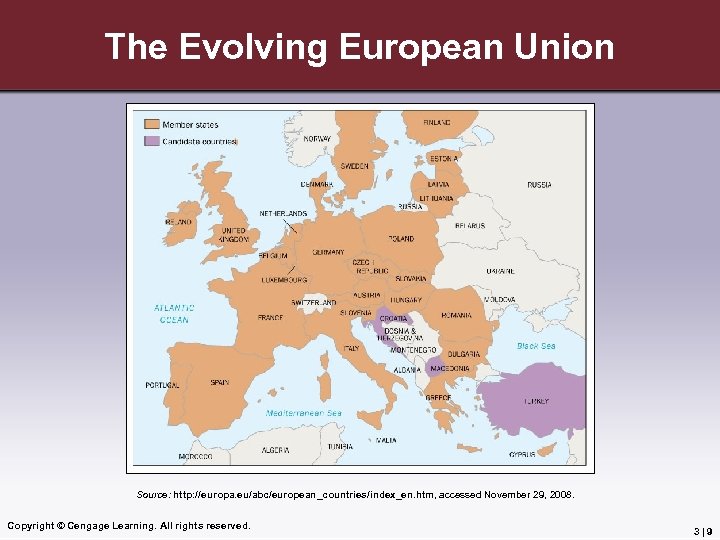
The Evolving European Union Source: http: //europa. eu/abc/european_countries/index_en. htm, accessed November 29, 2008. Copyright © Cengage Learning. All rights reserved. 3|9
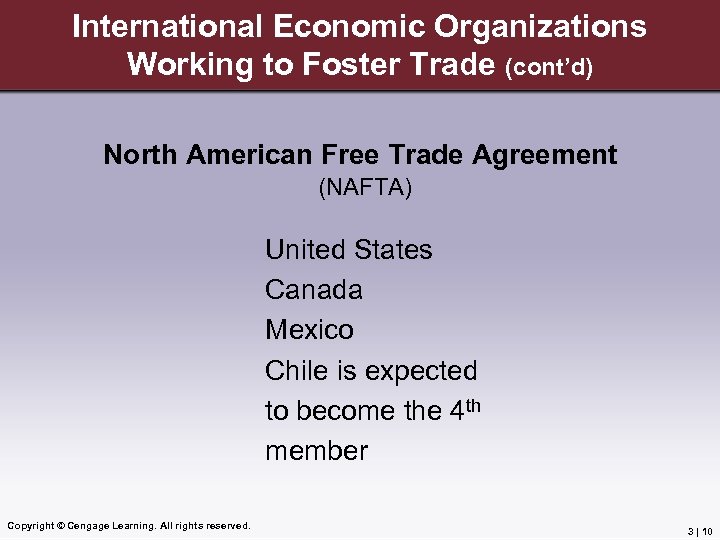
International Economic Organizations Working to Foster Trade (cont’d) North American Free Trade Agreement (NAFTA) United States Canada Mexico Chile is expected to become the 4 th member Copyright © Cengage Learning. All rights reserved. 3 | 10
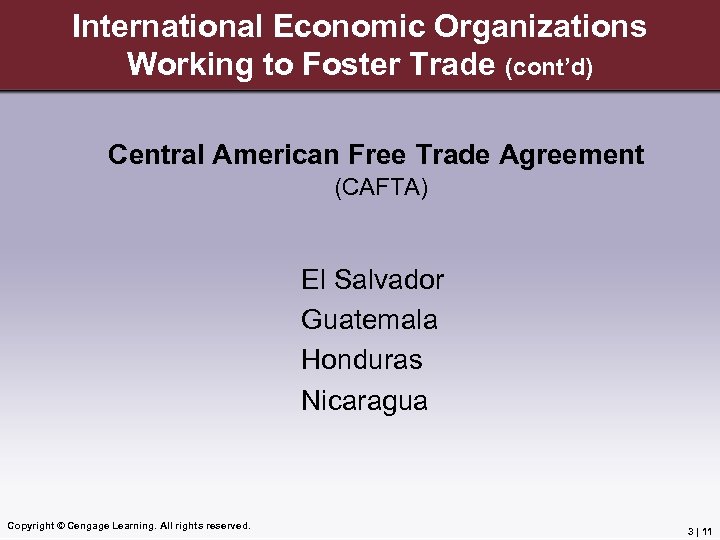
International Economic Organizations Working to Foster Trade (cont’d) Central American Free Trade Agreement (CAFTA) El Salvador Guatemala Honduras Nicaragua Copyright © Cengage Learning. All rights reserved. 3 | 11
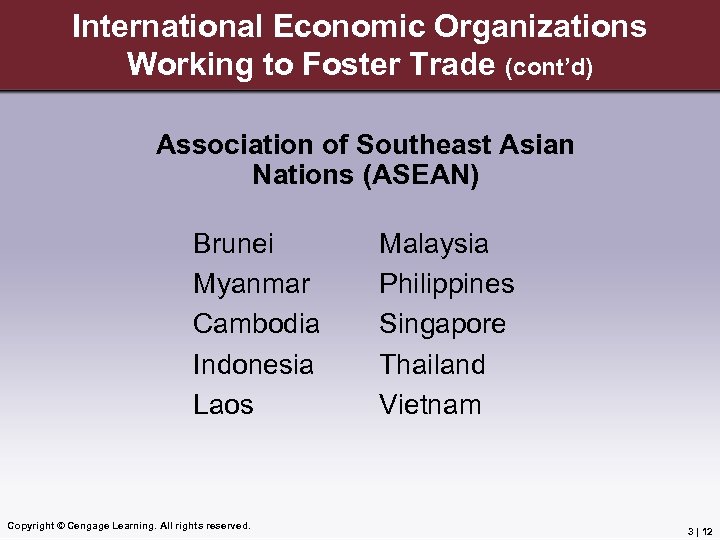
International Economic Organizations Working to Foster Trade (cont’d) Association of Southeast Asian Nations (ASEAN) Brunei Myanmar Cambodia Indonesia Laos Copyright © Cengage Learning. All rights reserved. Malaysia Philippines Singapore Thailand Vietnam 3 | 12
Скачать презентацию The Extent of International Business Although the
0fc56f991ff58405067ec36beeb58b73.ppt