


 Скачать презентацию The Expansion of American Industry Chapter 4
b8254161a52865524ba9e3eceba0a446.ppt
- Количество слайдов: 42
 The Expansion of American Industry Chapter 4
 Changes in Daily Life Section 1 • After the Civil War, the US experienced great strides in technology and industry that forever changed the life of Americans • This time period is known as the Industrial Revolution and the 2 nd Industrial Revolution – The Industrial Revolution started in Great Britain and spread to the U. S. – The “Revolution” was more clearly seen in the U. S. than in Great Britain, due to various factors • Landscape, common language, literate people, shortage of labor (had to develop machines to do the work), etc.
 • 1865 – No electricity • No lights, no refrigeration, sun dictated the day – Limited communication • Mail was slow • Telegraph communication not widespread
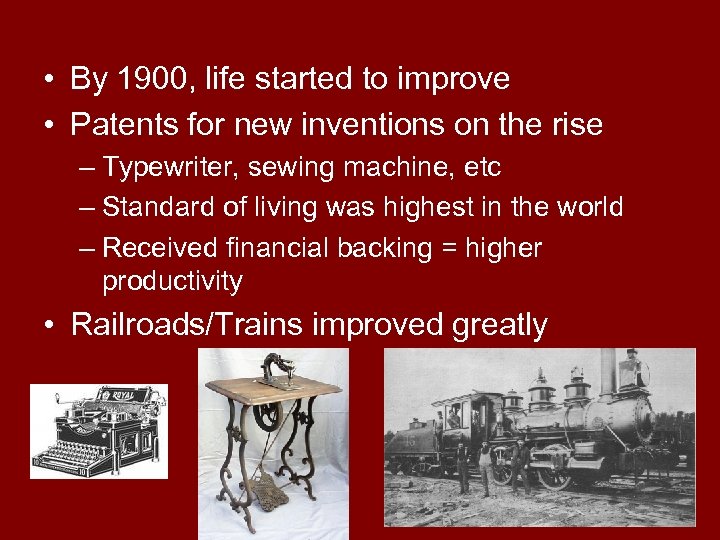 • By 1900, life started to improve • Patents for new inventions on the rise – Typewriter, sewing machine, etc – Standard of living was highest in the world – Received financial backing = higher productivity • Railroads/Trains improved greatly
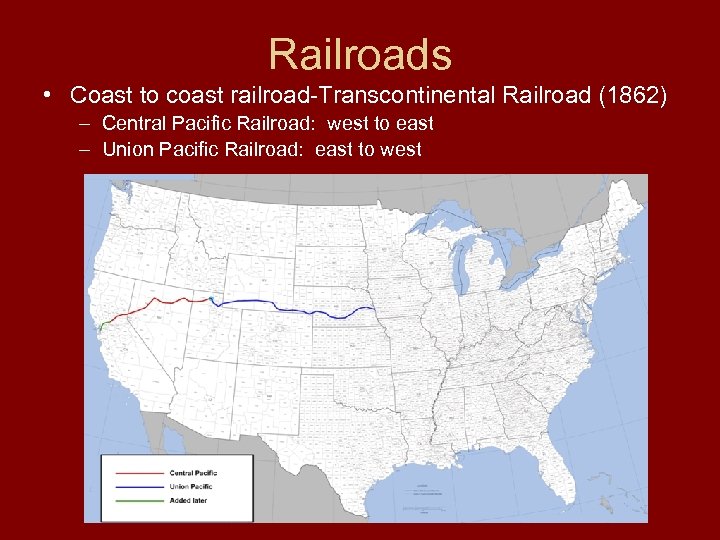 Railroads • Coast to coast railroad-Transcontinental Railroad (1862) – Central Pacific Railroad: west to east – Union Pacific Railroad: east to west
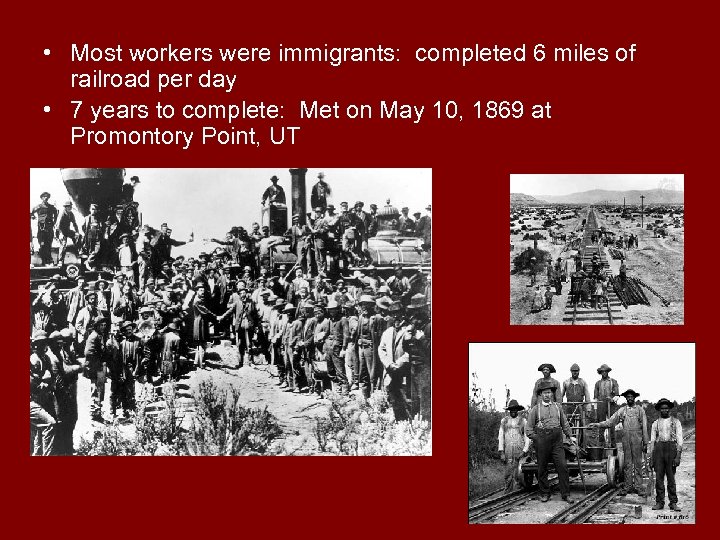 • Most workers were immigrants: completed 6 miles of railroad per day • 7 years to complete: Met on May 10, 1869 at Promontory Point, UT
 • Problems with railroads – Noisy, dirty, uncomfortable – “On time” issues • Solution: time zones created to improve scheduling • Continued improvement of railroads – Steel rails replaced iron—standardized equipment – Better air brakes – Telegraph system to help with safety-reduce collision • Railroad transportation of people and goods continued to grow and expand. See page 153
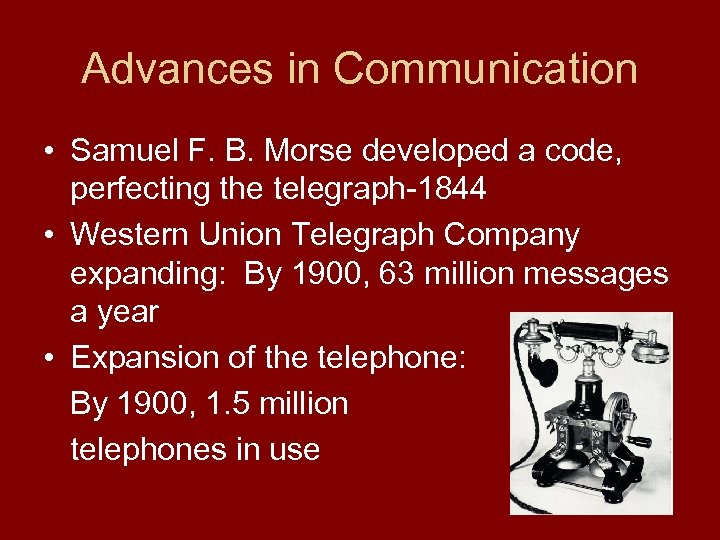 Advances in Communication • Samuel F. B. Morse developed a code, perfecting the telegraph-1844 • Western Union Telegraph Company expanding: By 1900, 63 million messages a year • Expansion of the telephone: By 1900, 1. 5 million telephones in use
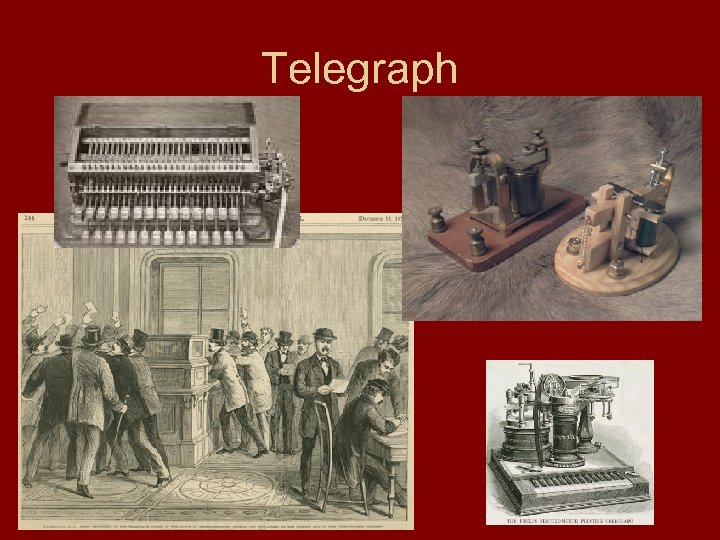 Telegraph
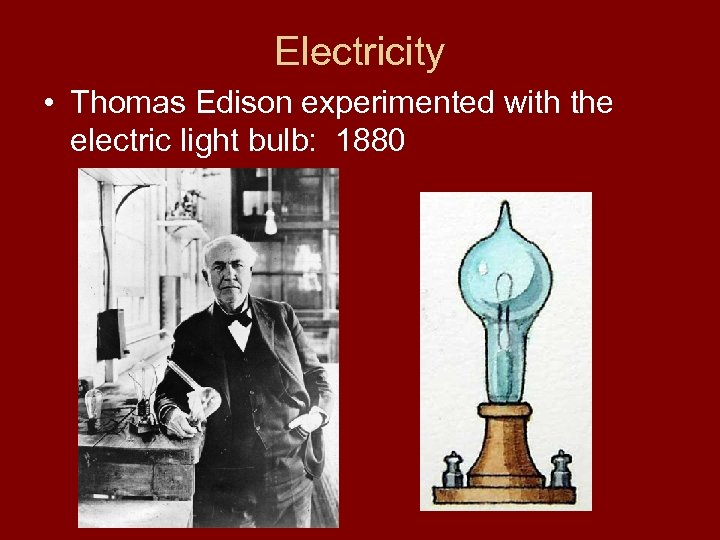 Electricity • Thomas Edison experimented with the electric light bulb: 1880
 • Other inventors improved the invention • Creation and expansion of central power station: 1882 • George Westinghouse experimented with alternating currents and transformers – Cheap electricity – Transmit electricity a long way – Made home use of electricity a reality • General Electric and Westinghouse Electric created • Impact of electricity – Households: powered new and exciting inventions – Work: created new jobs and expanded businesses – Unavailable to many rural Americans and could not afford new appliances
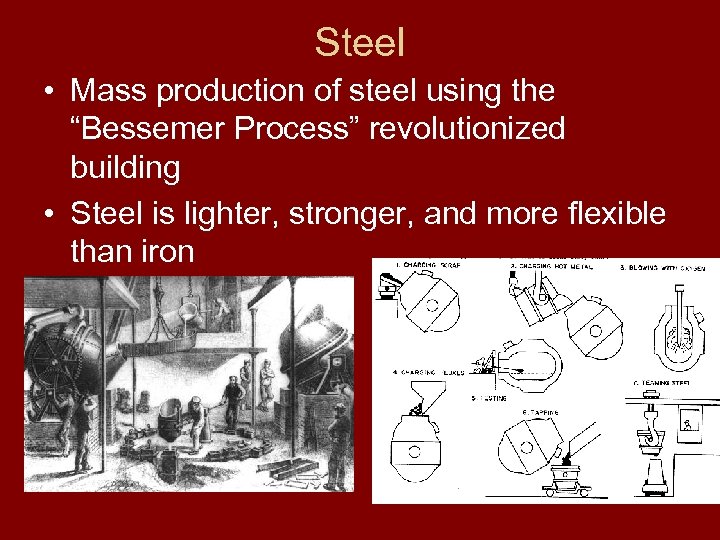 Steel • Mass production of steel using the “Bessemer Process” revolutionized building • Steel is lighter, stronger, and more flexible than iron
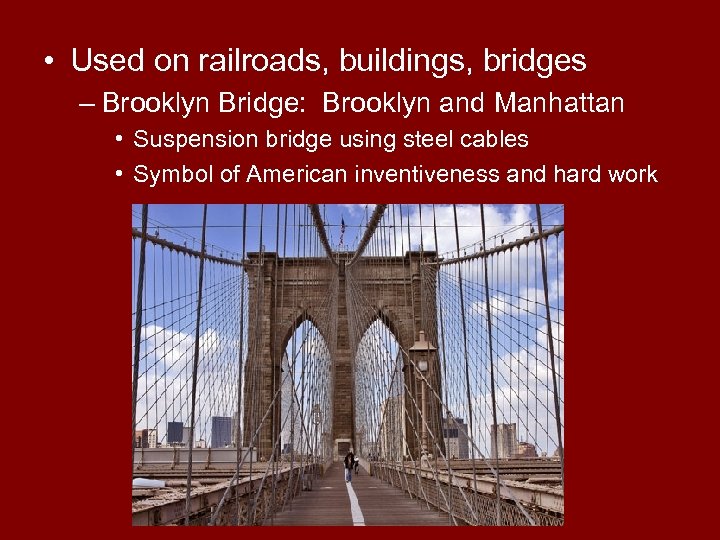 • Used on railroads, buildings, bridges – Brooklyn Bridge: Brooklyn and Manhattan • Suspension bridge using steel cables • Symbol of American inventiveness and hard work
 Big Business Section 2 • Two different viewpoints on Big Business leaders of this time period: Historians believe that both have some elements of truth • Robber Barons – Mistreated workers – Misused natural resources – “bend” laws in their favor to get rich • Captains of Industry – – Built factories Expand markets Created jobs for Americans Supported the “arts”
 Andrew Carnegie • Immigrated from Scotland in 1848 • Started working when he was 13, earning $1. 20/week • Promoted and began making $ and started to invest in the steel industry • Founded the first steel plants that used the Bessemer process and eventually turned into the Carnegie Steel Company-1889
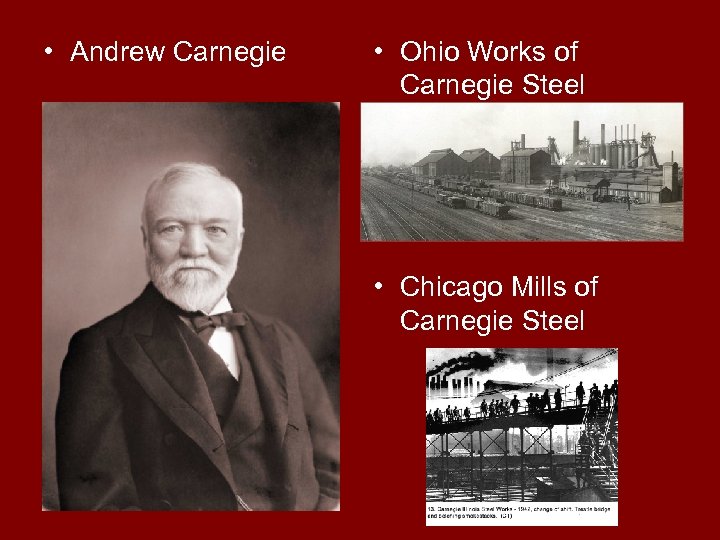 • Andrew Carnegie • Ohio Works of Carnegie Steel • Chicago Mills of Carnegie Steel
 • Due to prosperity of business he was able to…. – Cut prices and drive out competition – Control the entire process of steel • Mines • Furnaces and mills that made the steel • Shipping • Believed that people should be free to make money, but…. • When they make it, should give it away • $350 million given away by 1919 • Believed that successful men helped the nation prosper as a whole
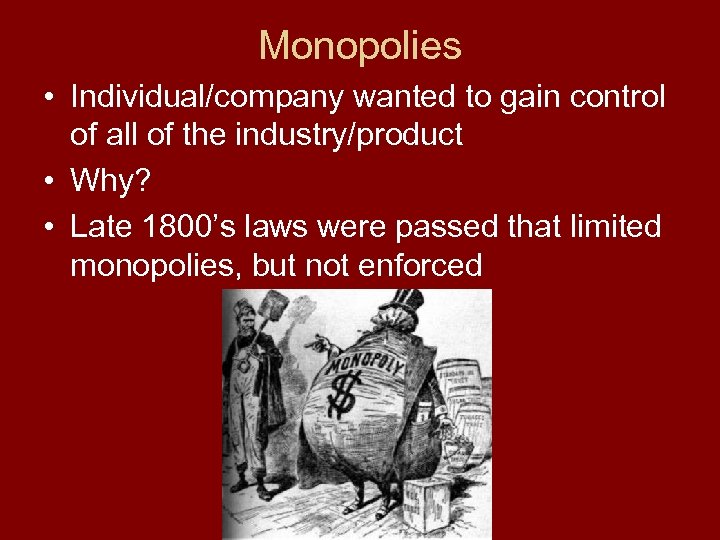 Monopolies • Individual/company wanted to gain control of all of the industry/product • Why? • Late 1800’s laws were passed that limited monopolies, but not enforced
 J. D. Rockefeller • Oil was becoming a booming industry • Rockefeller was interested in oil and formed the Standard Oil Company • Used illegal business practices to gain an upper hand in oil prices • Soon had enough money to buy out competitors, but could not due to laws prohibiting this • Developed a “trust” – Companies turn over assets to a board of trustees (Rockefeller controlled) – All would share profits – Eventually 40 companies joined trust – Allowed Rockefeller to control most of the oil refineries
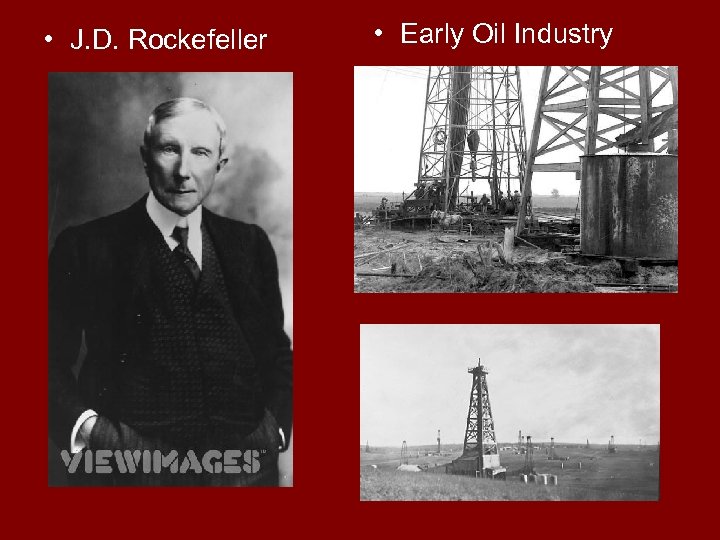 • J. D. Rockefeller • Early Oil Industry
 • Trusts limited free trade and competition • Government passed the “Sherman Anti. Trust Act”-1890 • Hard to enforce and trusts continued to develop • Two types of monopolies (page 161) • Horizontal: Rockefeller • Vertical: Carnegie • Big businesses contributed to the business cycle “boom and bust” of the economy.
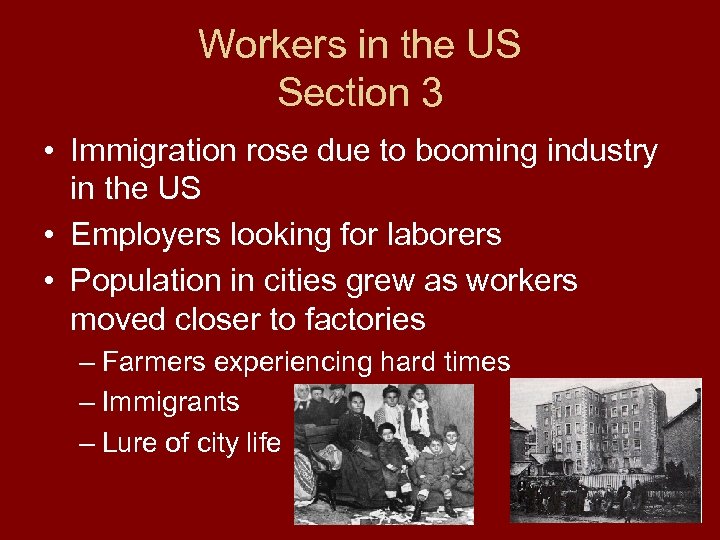 Workers in the US Section 3 • Immigration rose due to booming industry in the US • Employers looking for laborers • Population in cities grew as workers moved closer to factories – Farmers experiencing hard times – Immigrants – Lure of city life
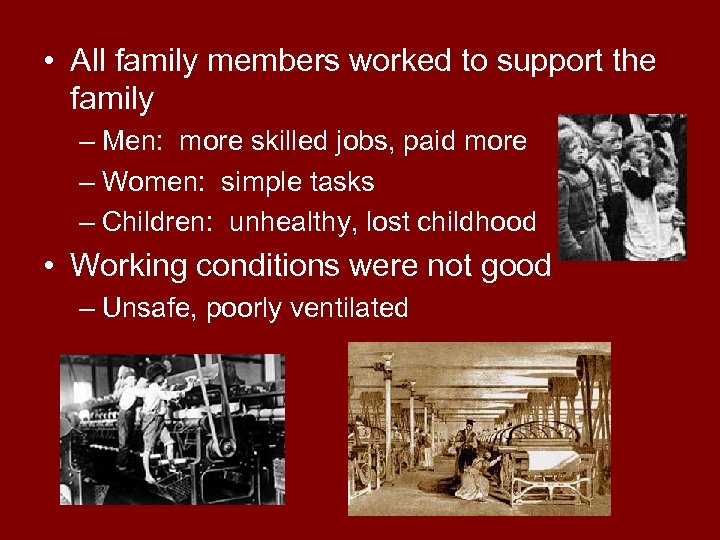 • All family members worked to support the family – Men: more skilled jobs, paid more – Women: simple tasks – Children: unhealthy, lost childhood • Working conditions were not good – Unsafe, poorly ventilated
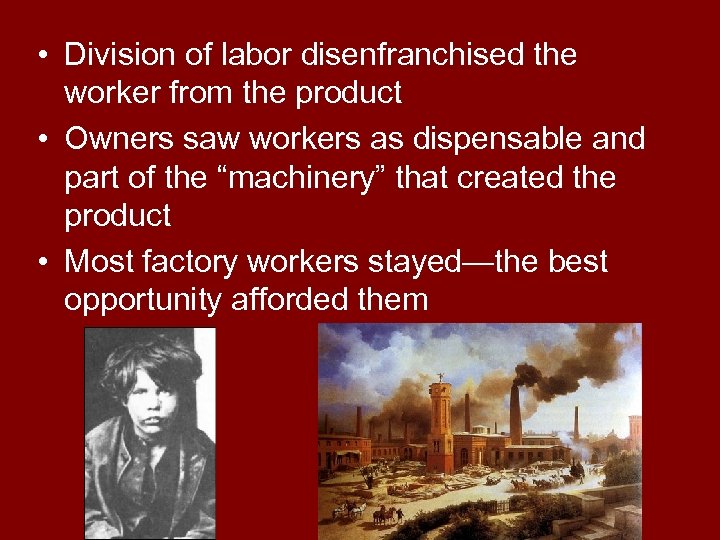 • Division of labor disenfranchised the worker from the product • Owners saw workers as dispensable and part of the “machinery” that created the product • Most factory workers stayed—the best opportunity afforded them
 Unions/Strikes Section 4 • Industrialization brought great wealth, but not for the average American • Workers dissatisfied • Some turned to socialism – Public or social control of property and income – Society shares nation’s wealth, not just a few individuals – Most people, wealthy, politicians, and workers did not support it-threat to American values • Early Labor Unions – Membership went up and down due to the fluctuating economy – Local, then national unions formed – Somewhat successful
 Knights of Labor Philadelphia-1869 • National union involving all workers (including African Americans), skilled and unskilled, into one union • Worked for broad social reforms • Membership soared to 700, 000 in 1885 due to success in railroad industry • Did not use strikes as often to achieve gains, but…leadership varied on issue • 1890’s: Violent strikes caused public support to drop off and Knights of Lobor basically disappeared
 American Federation of Labor • Samuel Gompers: Londoner • 1886 • A network of skilled workers in specific crafts • Open to minorities, but were discriminated against • Women not allowed: drive down the wages of men who were “heads of the household”
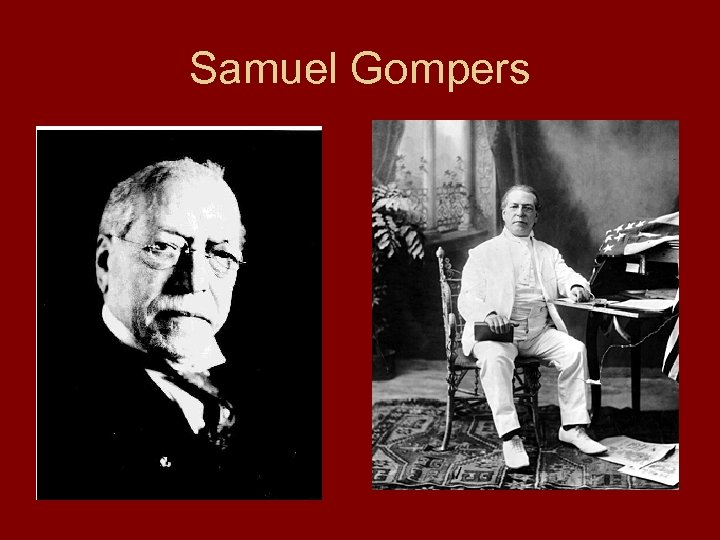 Samuel Gompers
 American Federation of Labor cont. • Relied on strikes and boycotts to get benefits/improvements • Focused on worker’s wages, hours and working conditions • Try to force collective bargaining – More influence if together, then single • Wanted “closed shop” hiring (only hire union members)
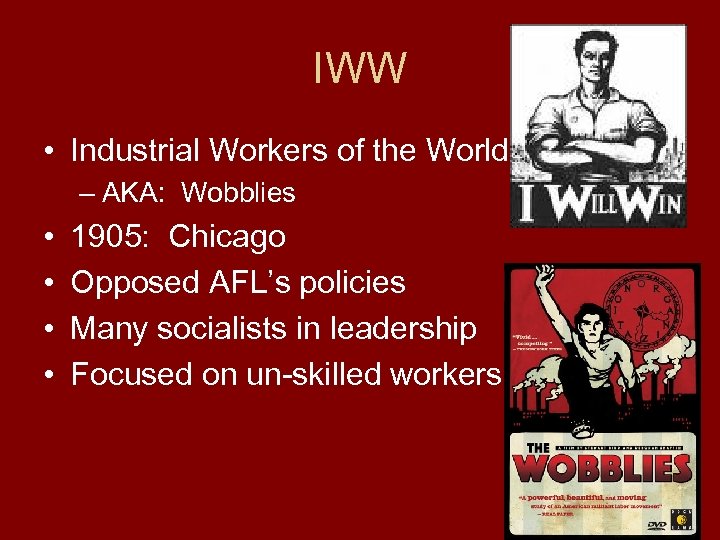 IWW • Industrial Workers of the World – AKA: Wobblies • • 1905: Chicago Opposed AFL’s policies Many socialists in leadership Focused on un-skilled workers
 Employer’s Response to Unions • Most feared and disliked unions • Tried to stop unions by…. – Forbidding meeting – Fired organizers/leaders – Forcing workers to sign “yellow dog” contracts • Promise to never join a union or strike – Refusing to bargain collectively – Refusing to recognize unions as legitimate organizations
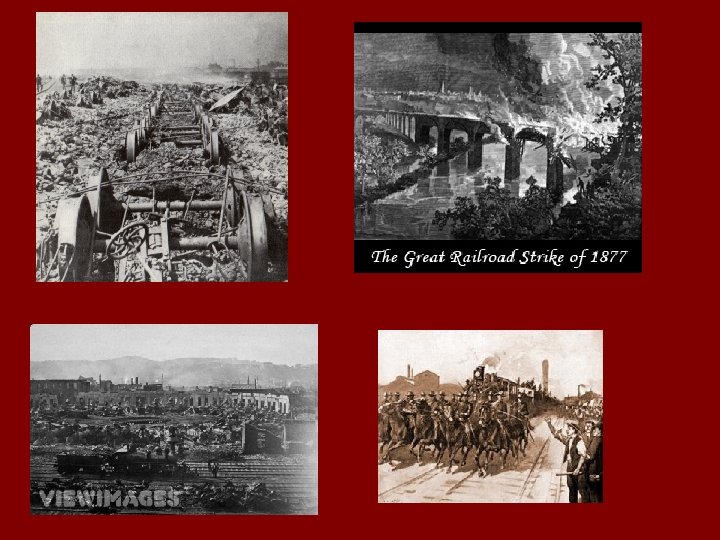
 The Railroad Strike of 1877 • First major labor unrest situation • July 14, 1877 • Baltimore and Ohio Railroad cut wages by 10% during a depression (2 nd cut in 8 months) • Resulted in violent demonstrations in several big cities • President Rutherford Hayes sent in troops to put down riots—first time done in American history • Soldiers fired upon demonstrators • From 1877: Federal and state troops used to control violent labor unrest
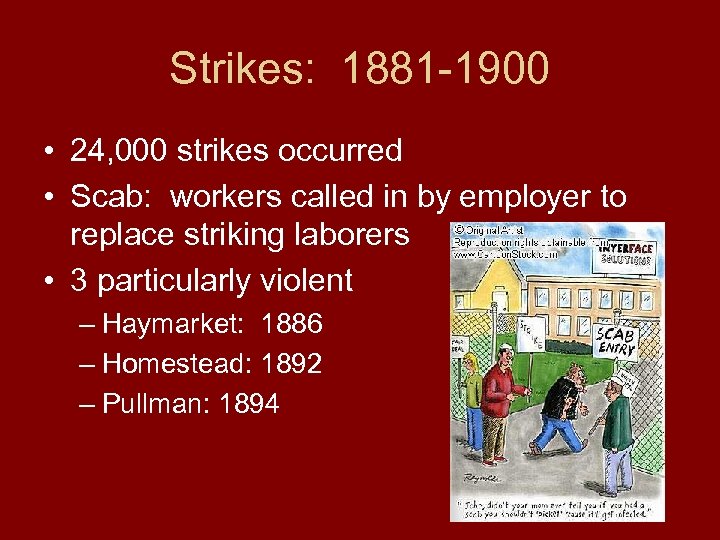 Strikes: 1881 -1900 • 24, 000 strikes occurred • Scab: workers called in by employer to replace striking laborers • 3 particularly violent – Haymarket: 1886 – Homestead: 1892 – Pullman: 1894
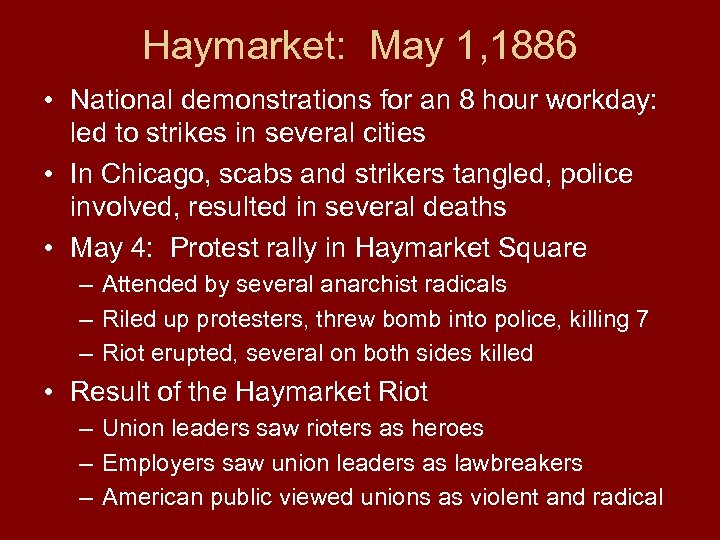 Haymarket: May 1, 1886 • National demonstrations for an 8 hour workday: led to strikes in several cities • In Chicago, scabs and strikers tangled, police involved, resulted in several deaths • May 4: Protest rally in Haymarket Square – Attended by several anarchist radicals – Riled up protesters, threw bomb into police, killing 7 – Riot erupted, several on both sides killed • Result of the Haymarket Riot – Union leaders saw rioters as heroes – Employers saw union leaders as lawbreakers – American public viewed unions as violent and radical
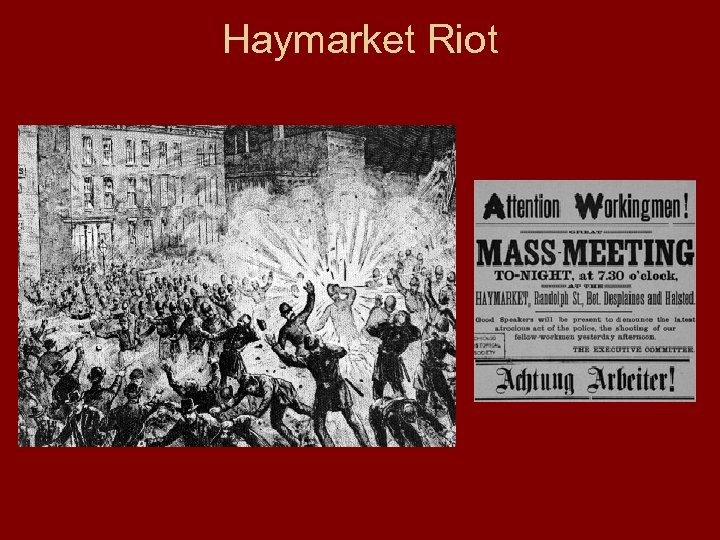 Haymarket Riot
 Homestead: Summer 1892 • Carnegie Steel’s plant in Homestead, PA called a strike due to wage cuts • Henry Frick (Carnegie’s partner) tried to put down strike by using the Pinkertons (private police force) • Pinkertons and strikers involved in a shootout, killing several • July 23, 1892: Assassination attempt on Frick (not by union member, but public associated the act with violence with unions) • Union called off strike in November, admitting defeat
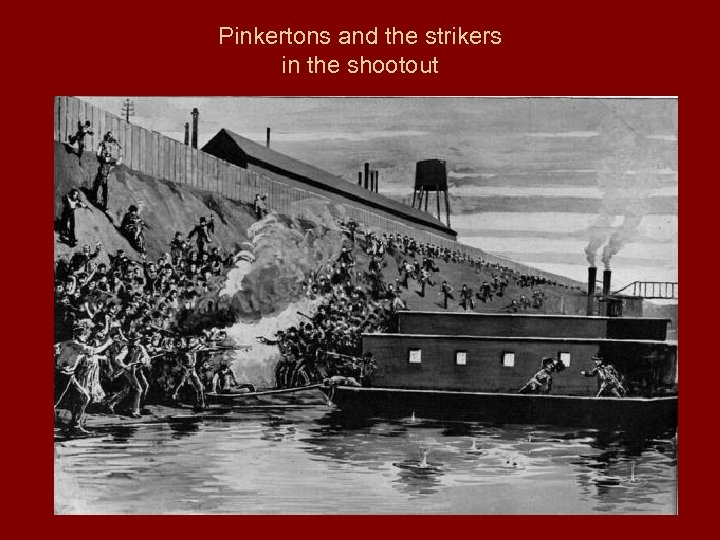 Pinkertons and the strikers in the shootout
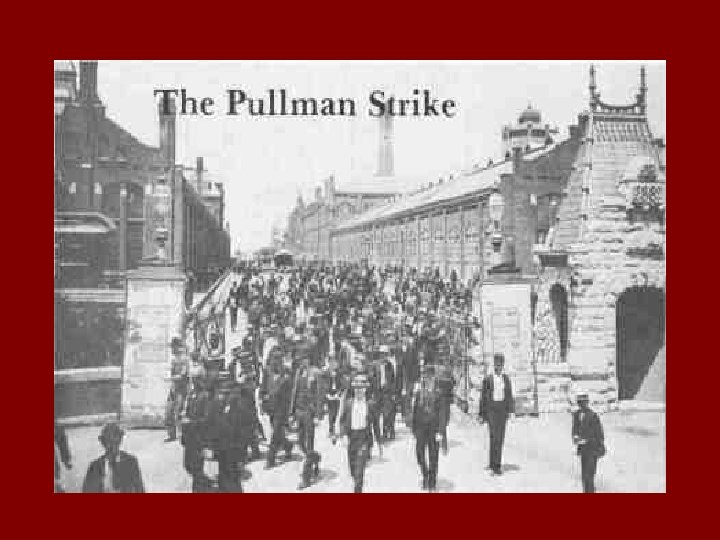
 Pullman Strike: 1894 • Railroad Industry, Chicago, IL • George Pullman: Sleeping car maker – Caring industrialist – Built a town for his workers • 1893: Great Panic – The Panic of 1893 or Depression of 1893 was a massive contraction in the American economy that began in 1893 and ended in 1897. Unemployment soared in all industrial centers; coal mining and lumbering were hard hit; farmers faced very low prices. The Panic was the worst economic crisis to hit the nation in its history to that point, and it had a far-reaching political impact, as the Democratic party took the blame and a realignment put the Republicans in power. • Cut wages, but did not cut housing or food cost, etc. • Pullman fired representatives trying to discuss situation • Resulted in strike, Pullman refused to bargain and shut down plant
 Pullman Strike: 1894 (cont) • Eugene V. Debs • June 1894: 120, 000 railroad workers had joined the “Pullman Strike” • Strike interfered with mail and caused delays in travel • Federal government intervened— forbidding union activity that halted mail— President Cleveland sent in troops • Federal government continually intervened in union activity that limited union gains for many years
 Michigan U. S. History and Geography Content Expectations • • • F 1. 2. b F 1. 2. f F 2. 1. b F 2. 1. d F 2. 1. f • • 6. 1. 1. b 6. 1. 1. d 6. 1. 1. e 6. 1. 1. f 6. 1. 3. b 6. 1. 2. a 6. 1. 5. d 6. 3. 2. d