 Скачать презентацию THE EVOLUTION OF PEACE AND STABILITY OPERATIONS Dr
69abe39c44e51298a53721bd47d3defa.ppt
- Количество слайдов: 85



THE EVOLUTION OF PEACE AND STABILITY OPERATIONS Dr. Walter Dorn Canadian Forces College Joint Command Staff Programme Elective Updated 15 October 2013 UN Photo
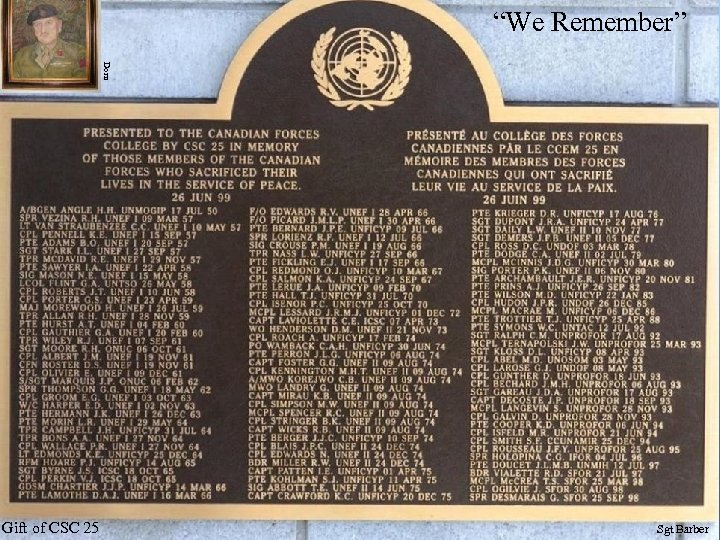
“We Remember” Dorn Gift of CSC 25 Sgt Barber
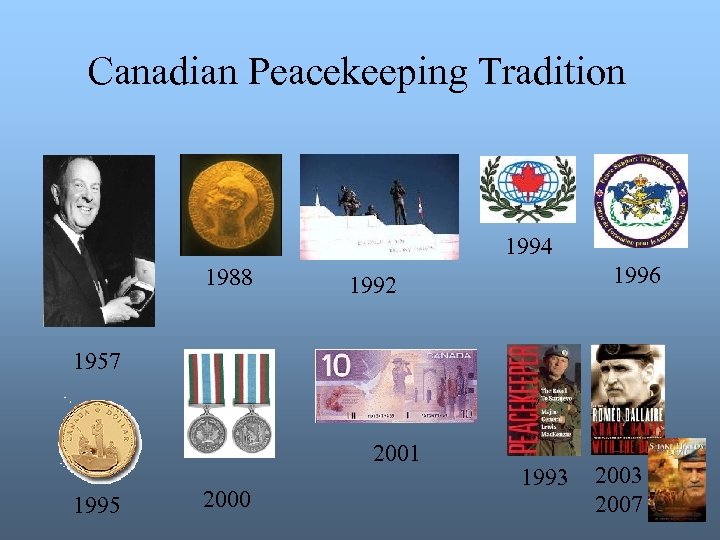
Canadian Peacekeeping Tradition 1994 1988 1996 1992 1957 2001 1995 2000 1993 2007
Peacekeeping / Peace Support / Stability Operation: Many Definitions, Common Ideas
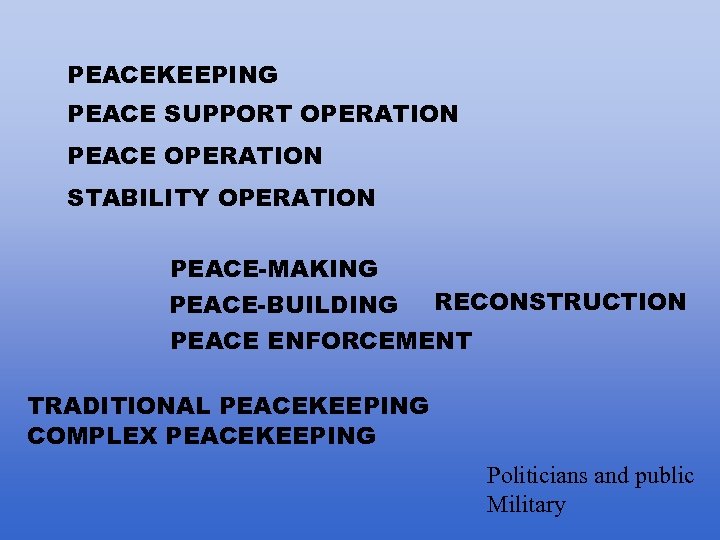
PEACEKEEPING PEACE SUPPORT OPERATION PEACE OPERATION STABILITY OPERATION PEACE-MAKING RECONSTRUCTION PEACE-BUILDING PEACE ENFORCEMENT TRADITIONAL PEACEKEEPING COMPLEX PEACEKEEPING Politicians and public Military
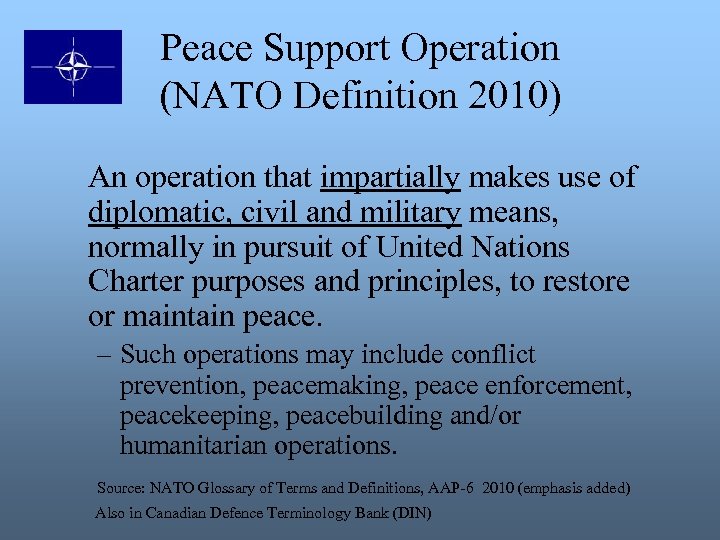
Peace Support Operation (NATO Definition 2010) An operation that impartially makes use of diplomatic, civil and military means, normally in pursuit of United Nations Charter purposes and principles, to restore or maintain peace. – Such operations may include conflict prevention, peacemaking, peace enforcement, peacekeeping, peacebuilding and/or humanitarian operations. Source: NATO Glossary of Terms and Definitions, AAP-6 2010 (emphasis added) Also in Canadian Defence Terminology Bank (DIN)
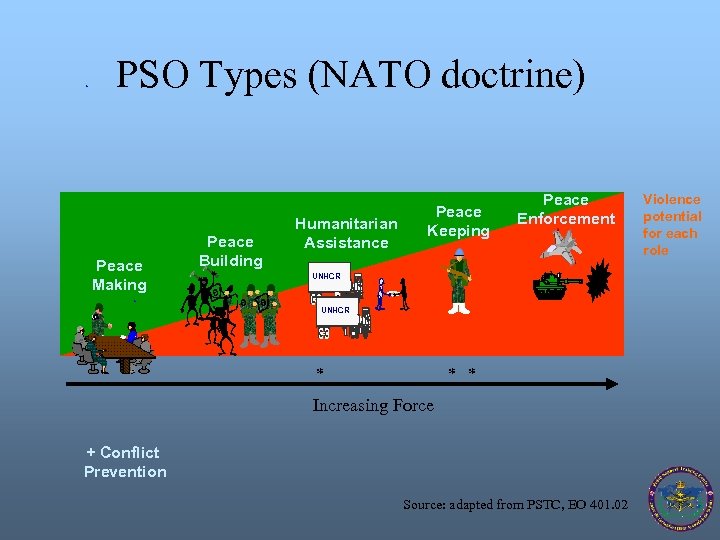
PSO Types (NATO doctrine) s Peace Making Peace Building Humanitarian Assistance Peace Keeping Peace Enforcement UNHCR s UNHCR c * * * Increasing Force + Conflict Prevention Source: adapted from PSTC, EO 401. 02 Violence potential for each role
Peacekeeping: UN Definition Source: www. un. org/Depts/dpko/DPKO 1. HTM UN the deployment of international military and civilian personnel to a conflict area, with the consent of the parties to the conflict and/or national authorities, [acting impartially] in order to: – stop or contain hostilities or – supervise the carrying out of a peace agreement – [assist with humanitarian relief, human rights compliance and nationbuilding. ]
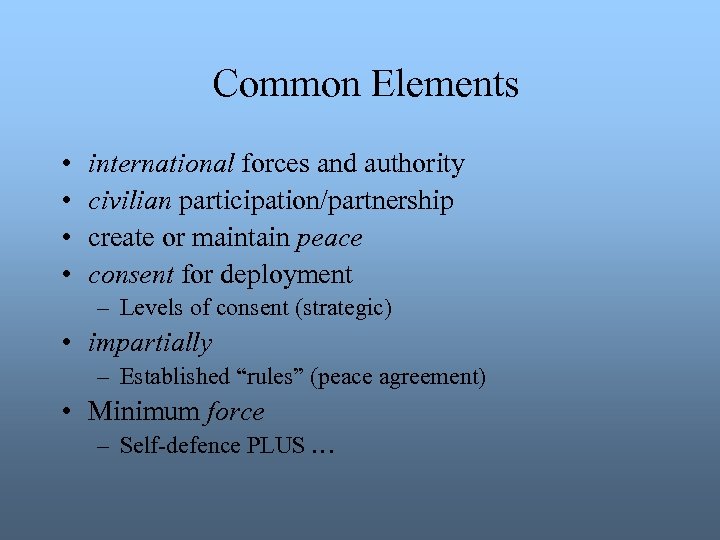
Common Elements • • international forces and authority civilian participation/partnership create or maintain peace consent for deployment – Levels of consent (strategic) • impartially – Established “rules” (peace agreement) • Minimum force – Self-defence PLUS …
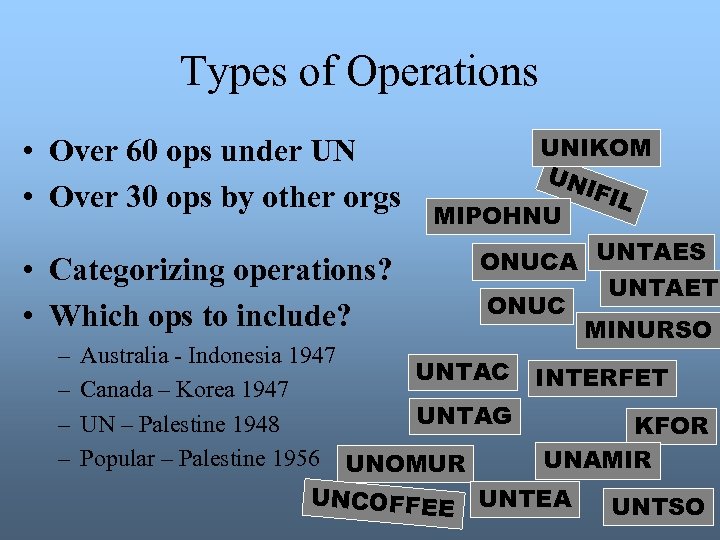
Types of Operations • Over 60 ops under UN • Over 30 ops by other orgs • Categorizing operations? • Which ops to include? – – UNIKOM UN IFIL MIPOHNU ONUCA UNTAES UNTAET ONUC MINURSO Australia - Indonesia 1947 UNTAC INTERFET Canada – Korea 1947 UNTAG UN – Palestine 1948 KFOR Popular – Palestine 1956 UNOMUR UNAMIR UNCOFFEE UNTEA UNTSO
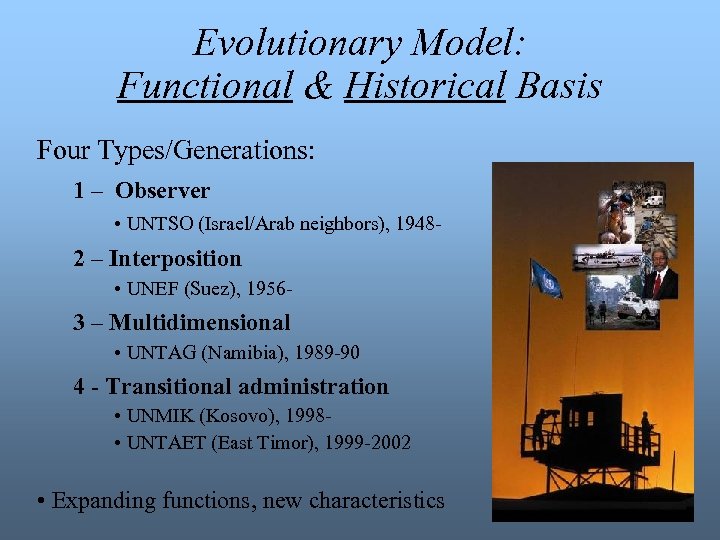
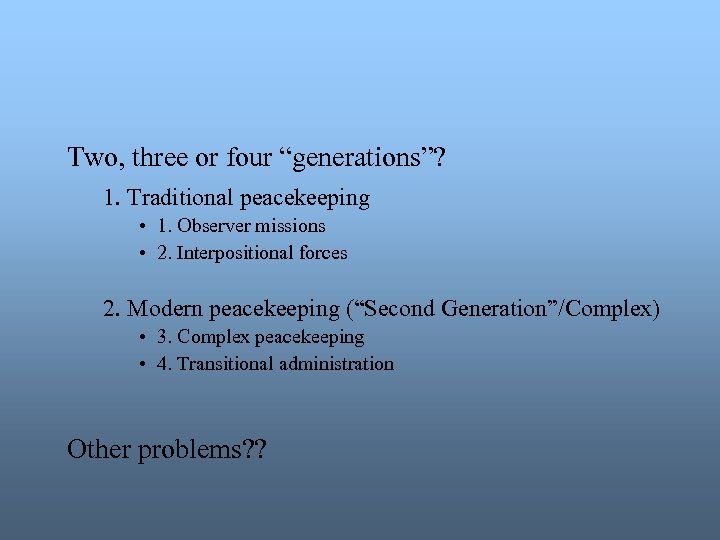
Evolutionary Model: Functional & Historical Basis Four Types/Generations: 1 – Observer • UNTSO (Israel/Arab neighbors), 1948 - 2 – Interposition • UNEF (Suez), 1956 - 3 – Multidimensional • UNTAG (Namibia), 1989 -90 4 - Transitional administration • UNMIK (Kosovo), 1998 • UNTAET (East Timor), 1999 -2002 • Expanding functions, new characteristics
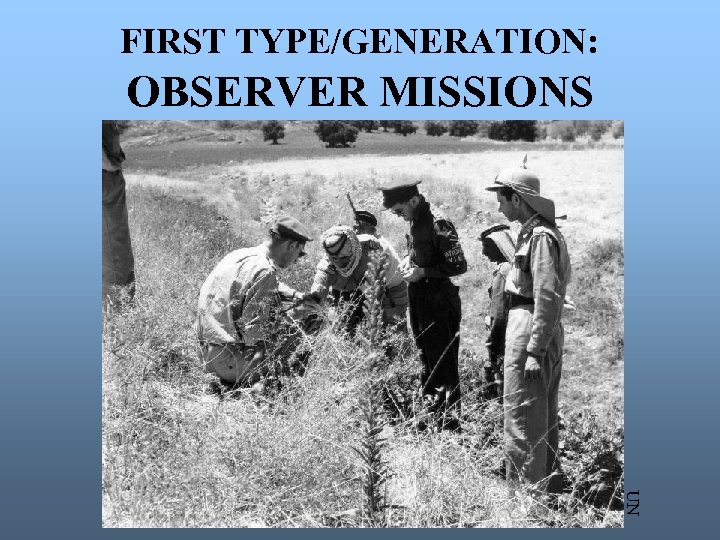
FIRST TYPE/GENERATION: OBSERVER MISSIONS UN
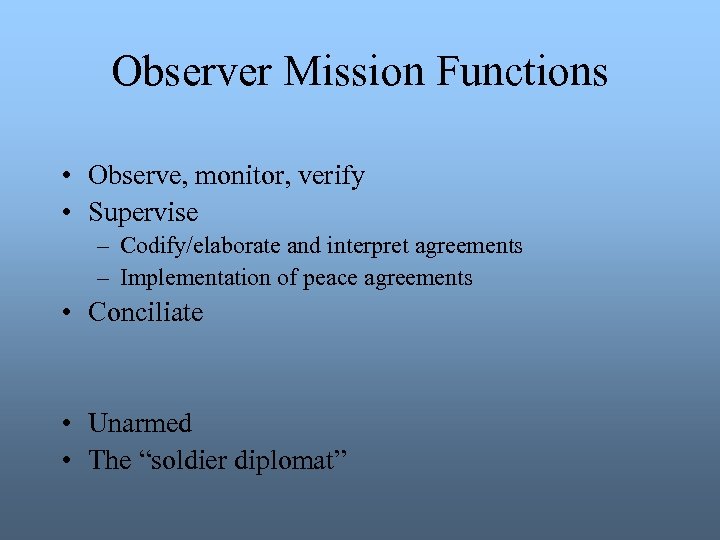
Observer Mission Functions • Observe, monitor, verify • Supervise – Codify/elaborate and interpret agreements – Implementation of peace agreements • Conciliate • Unarmed • The “soldier diplomat”
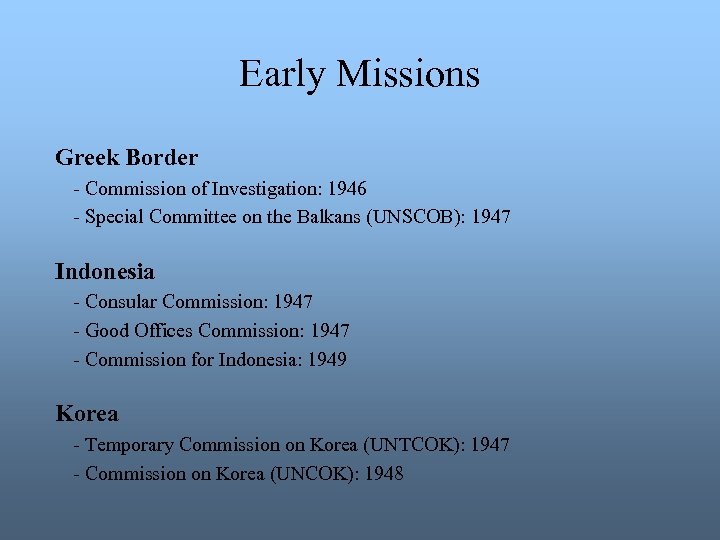
Early Missions Greek Border - Commission of Investigation: 1946 - Special Committee on the Balkans (UNSCOB): 1947 Indonesia - Consular Commission: 1947 - Good Offices Commission: 1947 - Commission for Indonesia: 1949 Korea - Temporary Commission on Korea (UNTCOK): 1947 - Commission on Korea (UNCOK): 1948
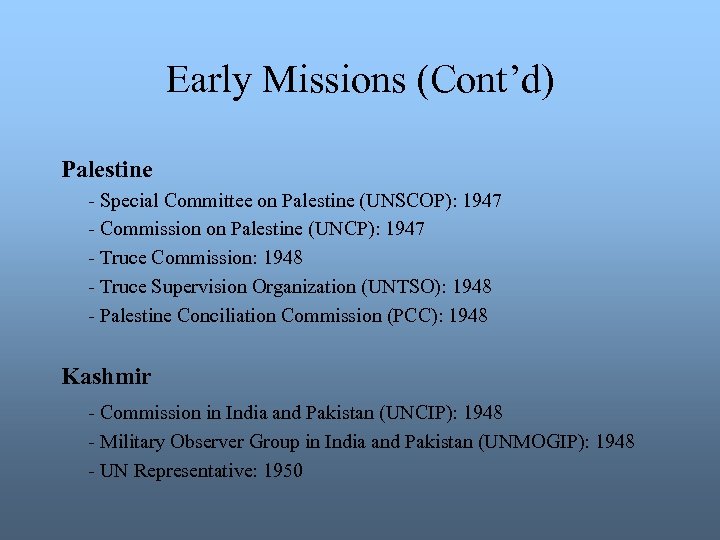
Early Missions (Cont’d) Palestine - Special Committee on Palestine (UNSCOP): 1947 - Commission on Palestine (UNCP): 1947 - Truce Commission: 1948 - Truce Supervision Organization (UNTSO): 1948 - Palestine Conciliation Commission (PCC): 1948 Kashmir - Commission in India and Pakistan (UNCIP): 1948 - Military Observer Group in India and Pakistan (UNMOGIP): 1948 - UN Representative: 1950
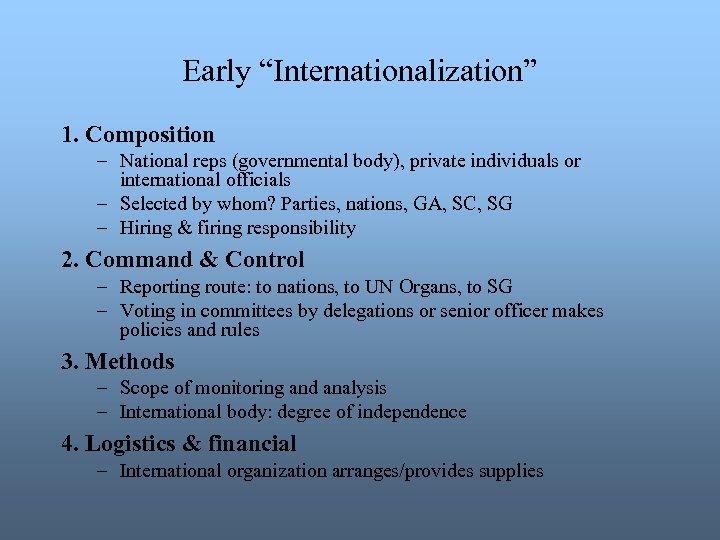
Early “Internationalization” 1. Composition – National reps (governmental body), private individuals or international officials – Selected by whom? Parties, nations, GA, SC, SG – Hiring & firing responsibility 2. Command & Control – Reporting route: to nations, to UN Organs, to SG – Voting in committees by delegations or senior officer makes policies and rules 3. Methods – Scope of monitoring and analysis – International body: degree of independence 4. Logistics & financial – International organization arranges/provides supplies
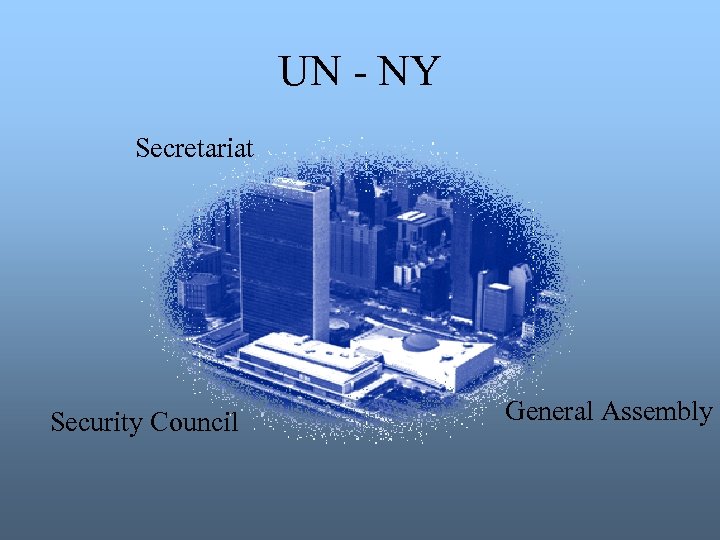
UN - NY Secretariat Security Council General Assembly
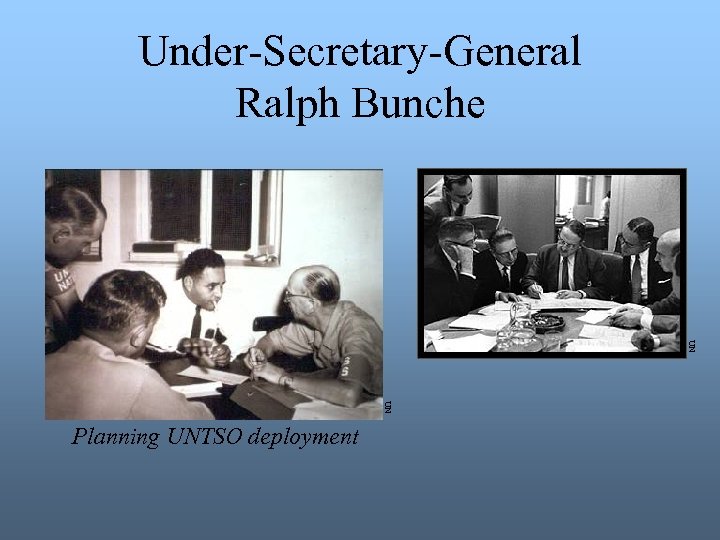
Under-Secretary-General Ralph Bunche UN UN Planning UNTSO deployment
SECOND TYPE/GENERATION: INTERPOSED FORCES - Separate combatants -Uses peacekeeping forces in pre-formed units (battalions) - Armed for self-defence
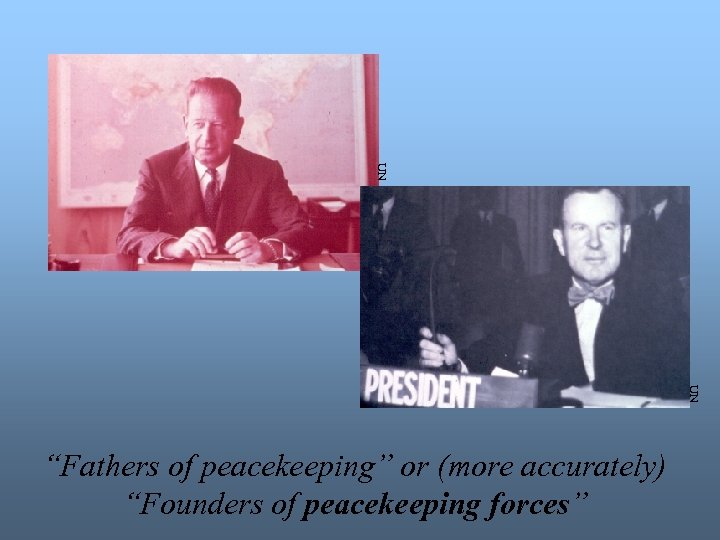
UN UN “Fathers of peacekeeping” or (more accurately) “Founders of peacekeeping forces”
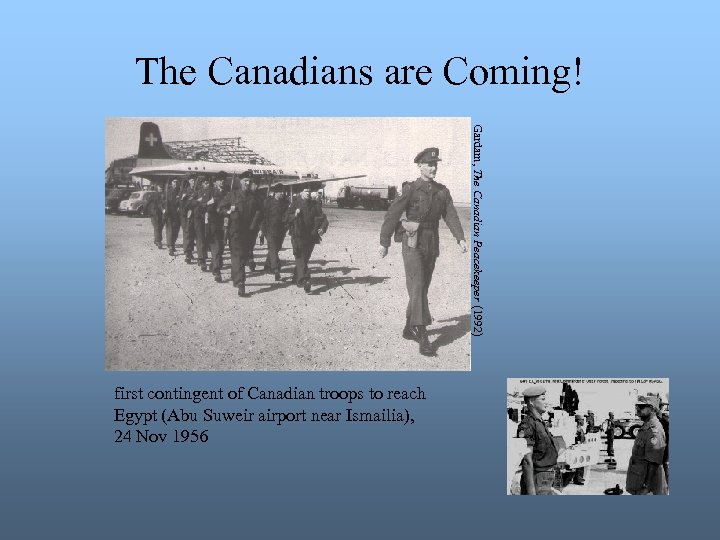
The Canadians are Coming! Gardam, The Canadian Peacekeeper (1992) first contingent of Canadian troops to reach Egypt (Abu Suweir airport near Ismailia), 24 Nov 1956
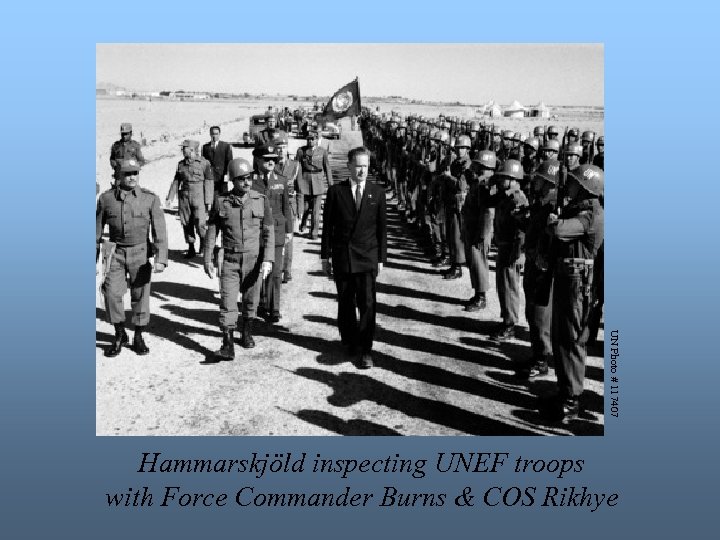
UN Photo # 117407 Hammarskjöld inspecting UNEF troops with Force Commander Burns & COS Rikhye
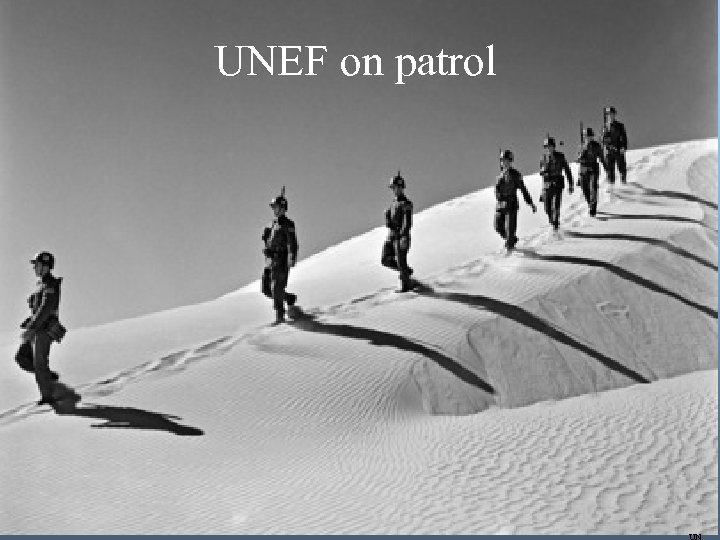
UNEF on patrol
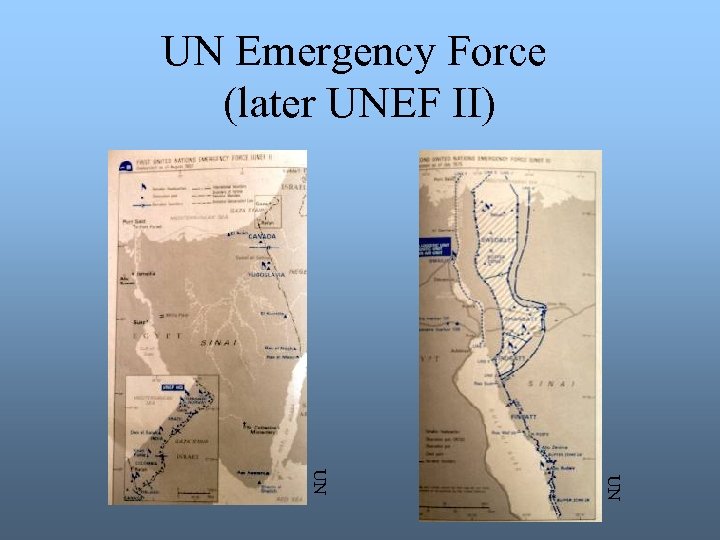
UN Emergency Force (later UNEF II) UN UN
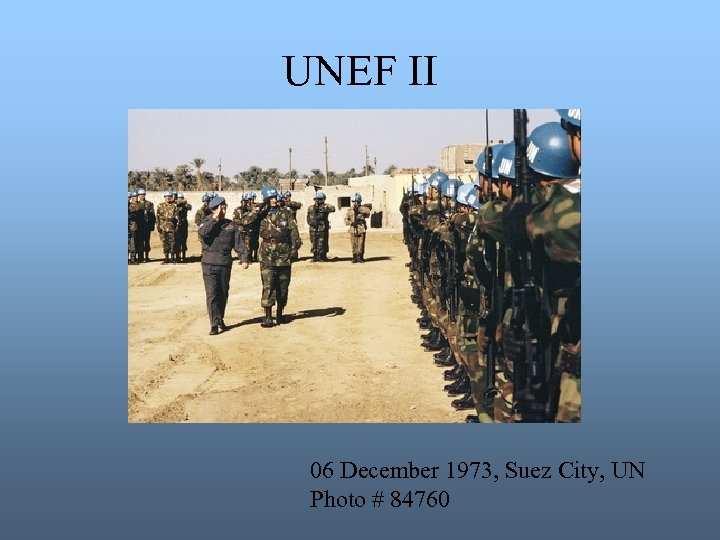
UNEF II 06 December 1973, Suez City, UN Photo # 84760
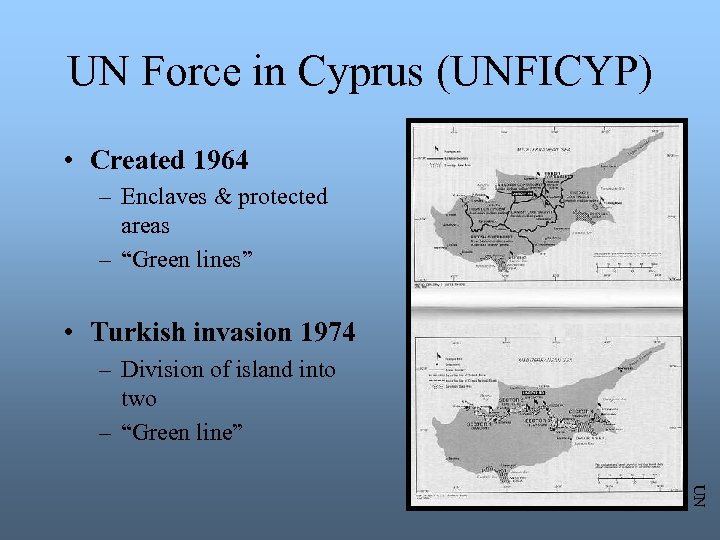
UN Force in Cyprus (UNFICYP) • Created 1964 – Enclaves & protected areas – “Green lines” • Turkish invasion 1974 – Division of island into two – “Green line” UN
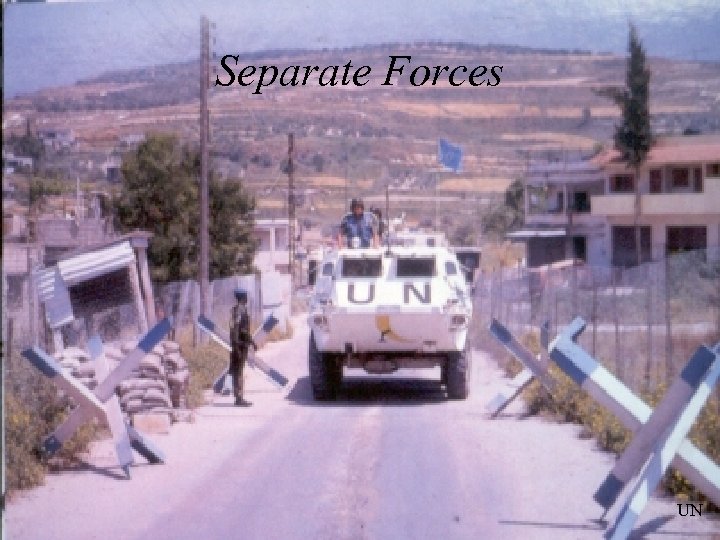
Separate Forces UN
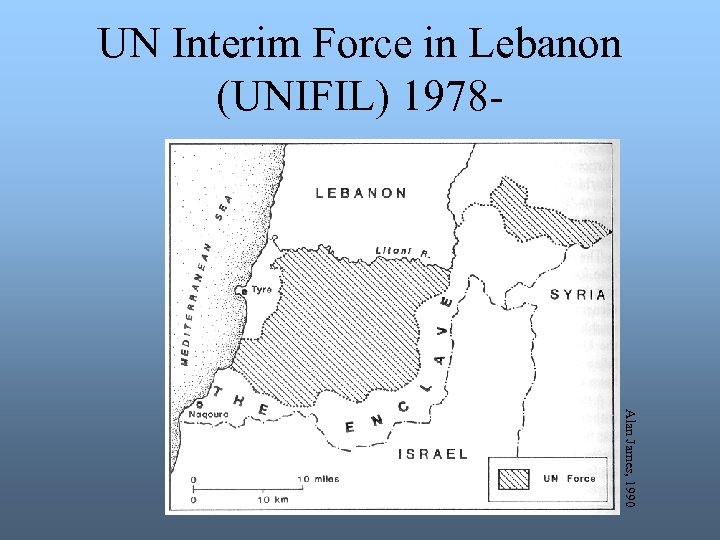
UN Interim Force in Lebanon (UNIFIL) 1978 - Alan James, 1990
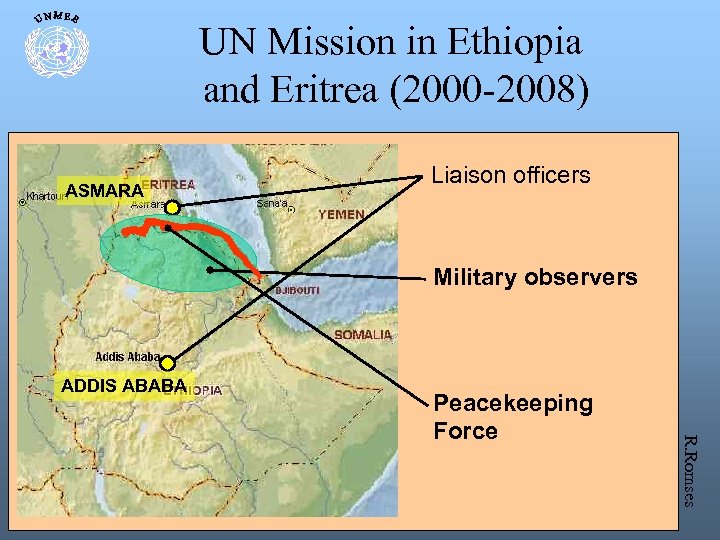
UN Mission in Ethiopia and Eritrea (2000 -2008) ASMARA Liaison officers Military observers ADDIS ABABA R. Romses Peacekeeping Force
THIRD TYPE/GENERATION: MULTIDIMENSIONAL OPERATIONS
CHANGING CONFLICT / CHANGING PEACEKEEPING
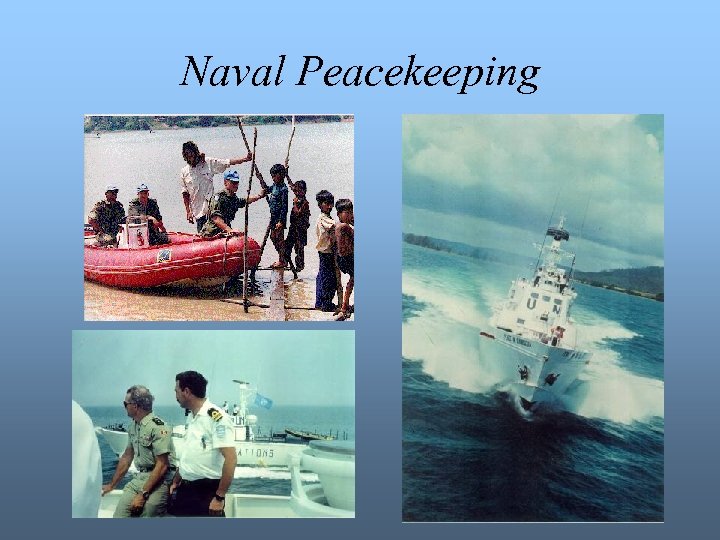
Naval Peacekeeping
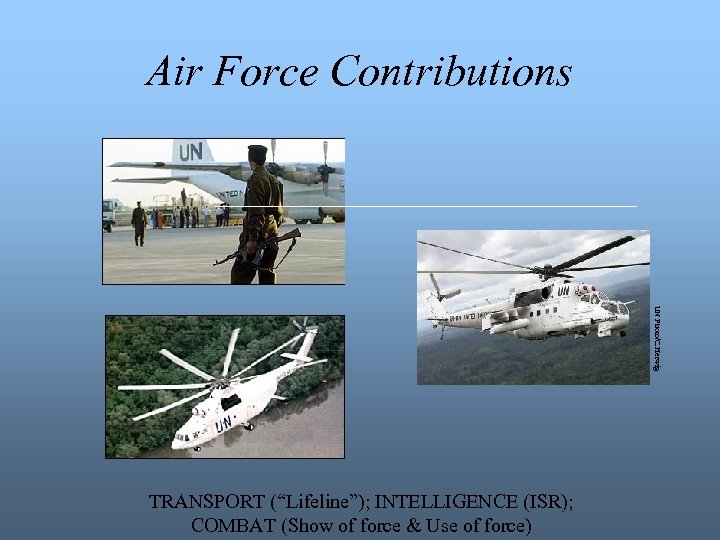
Air Force Contributions UN Photo/C. Herwig TRANSPORT (“Lifeline”); INTELLIGENCE (ISR); COMBAT (Show of force & Use of force)
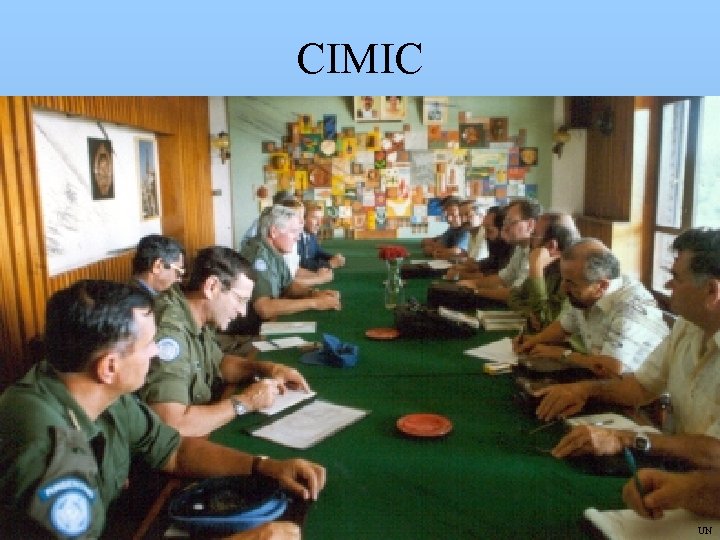
CIMIC UN
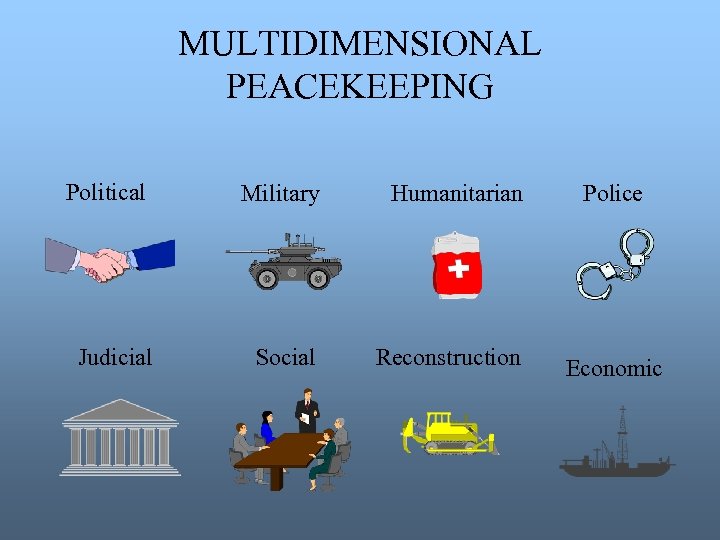
MULTIDIMENSIONAL PEACEKEEPING Political Military Humanitarian Judicial Social Reconstruction Police Economic
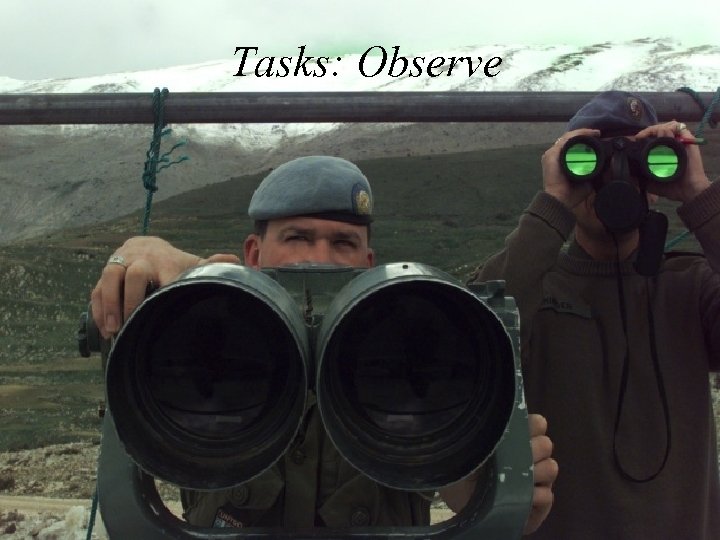
Tasks: Observe
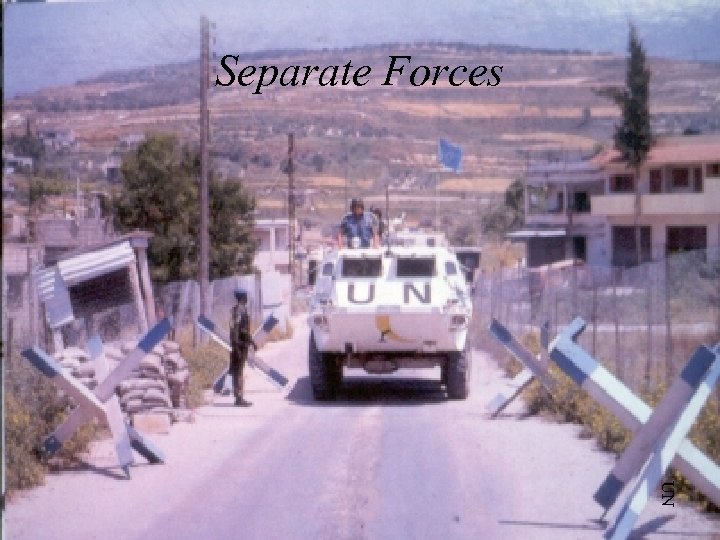
Separate Forces UN
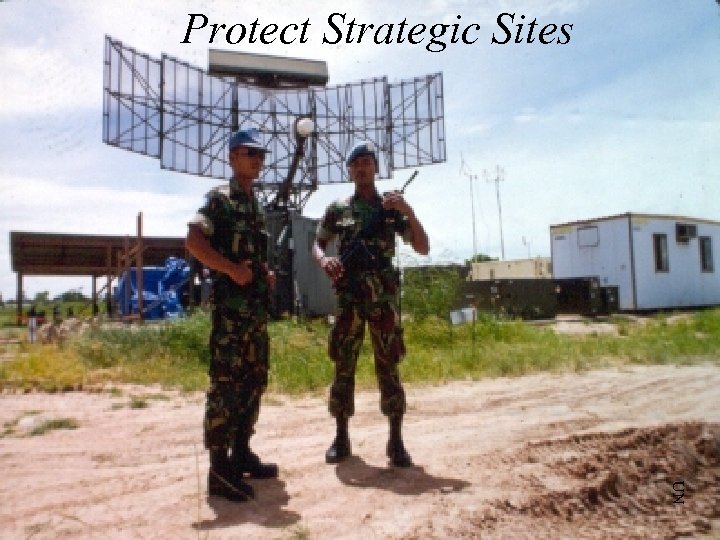
Protect Strategic Sites UN
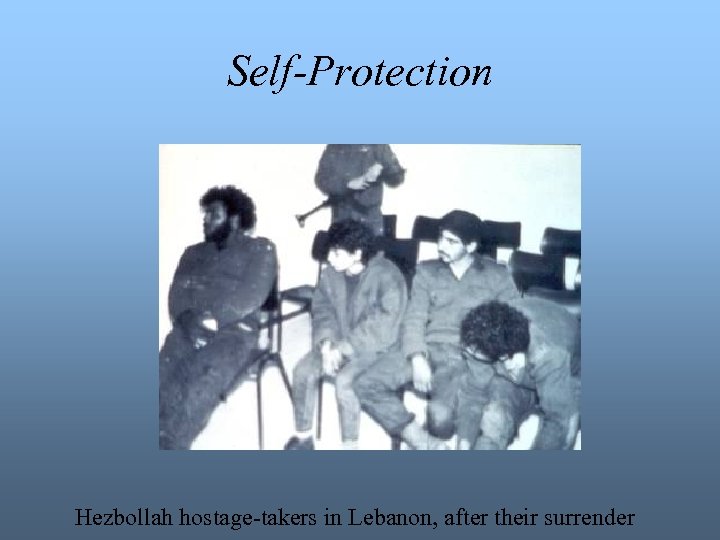
Self-Protection Hezbollah hostage-takers in Lebanon, after their surrender
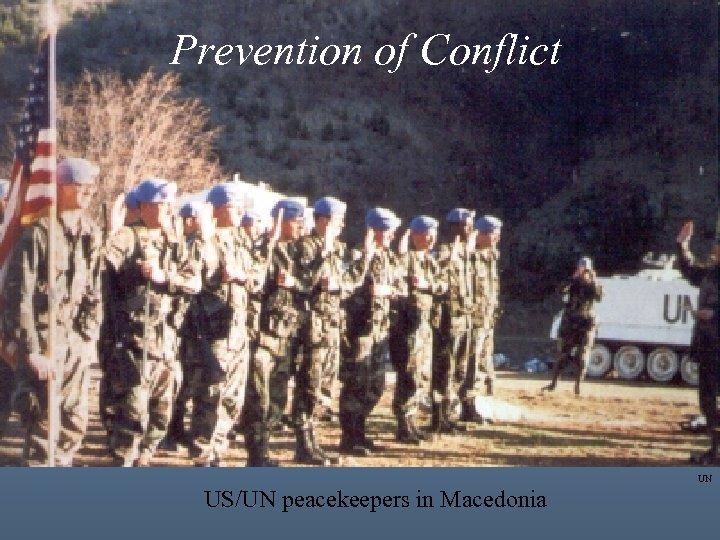
Prevention of Conflict UN US/UN peacekeepers in Macedonia
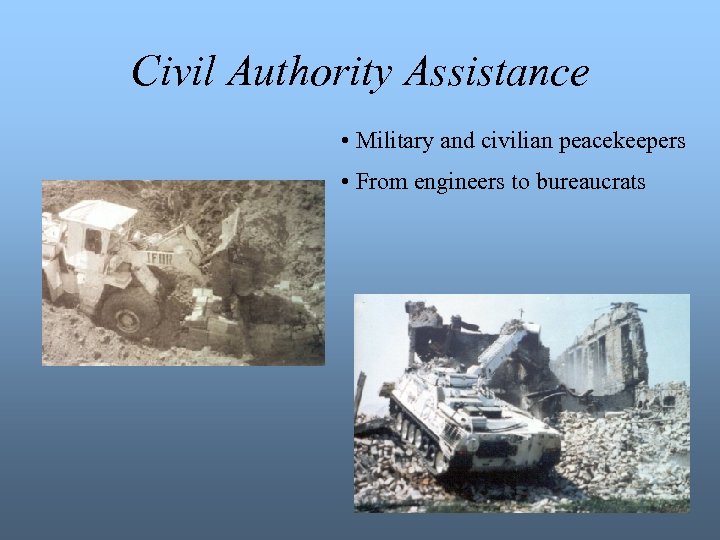
Civil Authority Assistance • Military and civilian peacekeepers • From engineers to bureaucrats
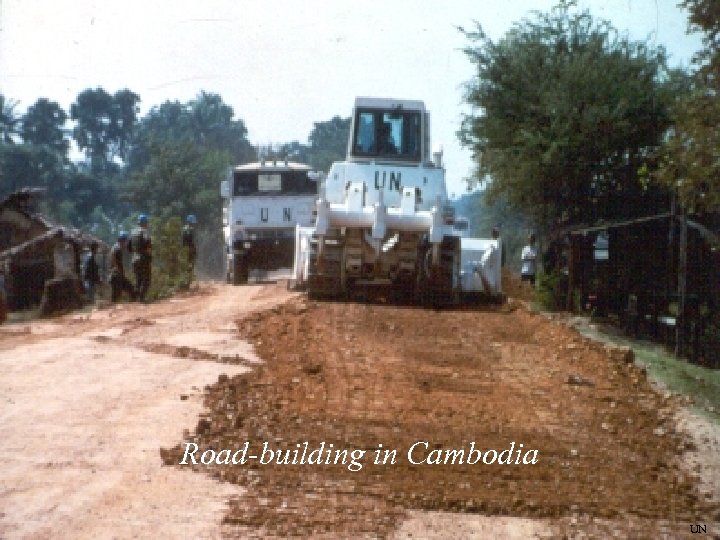
Road-building in Cambodia UN
Many other tasks … • Humanitarian Assistance • Disarmament, Demobilization, Reintegration • Police • Human Rights • Elections
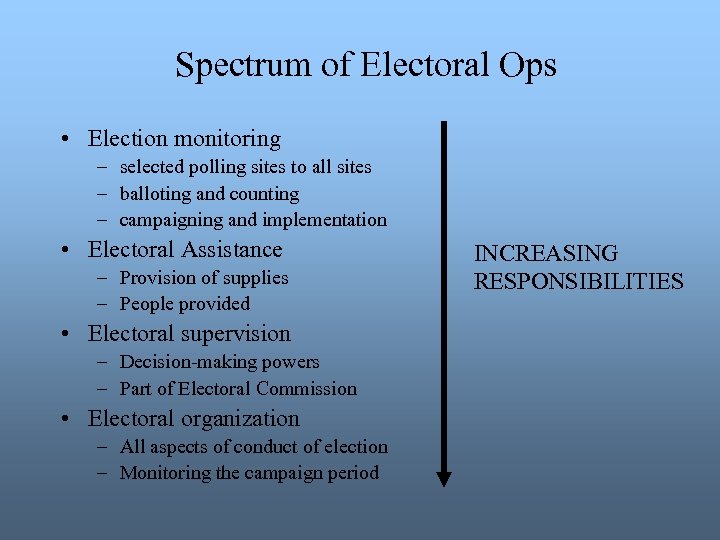
Spectrum of Electoral Ops • Election monitoring – selected polling sites to all sites – balloting and counting – campaigning and implementation • Electoral Assistance – Provision of supplies – People provided • Electoral supervision – Decision-making powers – Part of Electoral Commission • Electoral organization – All aspects of conduct of election – Monitoring the campaign period INCREASING RESPONSIBILITIES
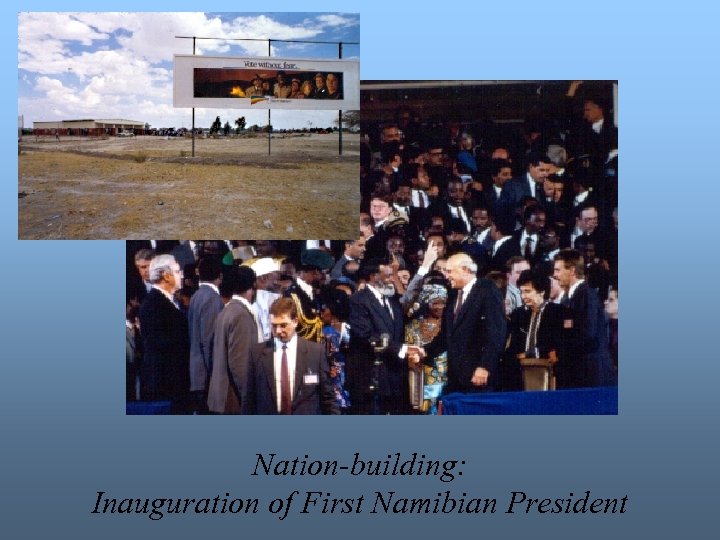
Nation-building: Inauguration of First Namibian President
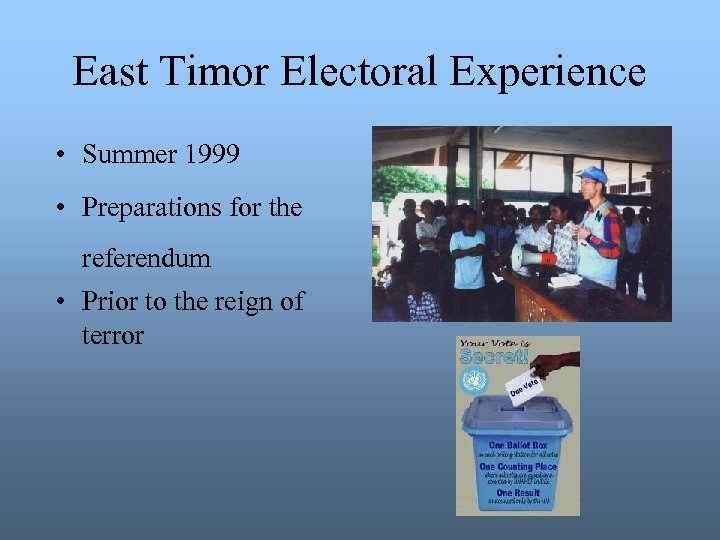
East Timor Electoral Experience • Summer 1999 • Preparations for the referendum • Prior to the reign of terror
Enforcement in Peacekeeping • Chapter VII mandates • Need for more robust peacekeeping – Aerial and naval enforcement – Protection • Snipers (e. g. , Sarajevo) – Intelligence, advanced monitoring – Engineering – Rapid reaction
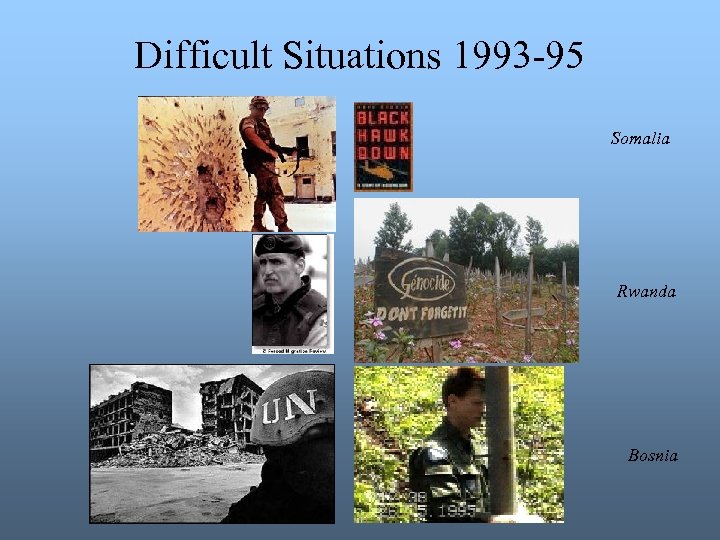
Difficult Situations 1993 -95 Somalia Rwanda Bosnia
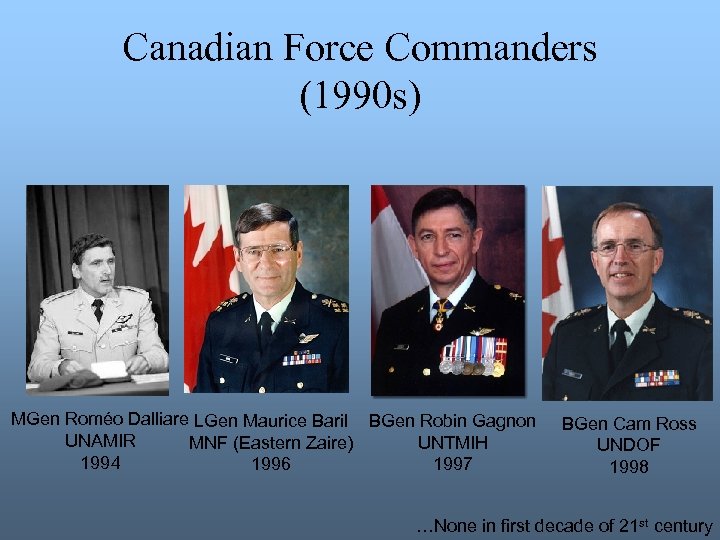
Canadian Force Commanders (1990 s) MGen Roméo Dalliare LGen Maurice Baril BGen Robin Gagnon UNAMIR MNF (Eastern Zaire) UNTMIH 1994 1996 1997 BGen Cam Ross UNDOF 1998 …None in first decade of 21 st century
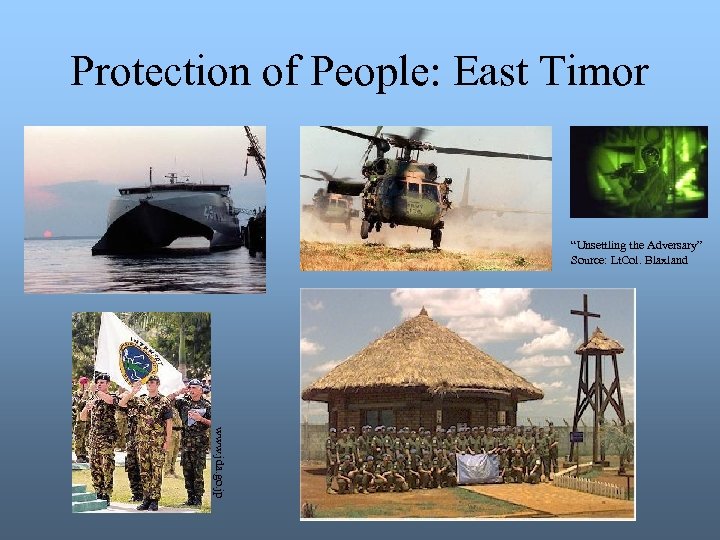
Protection of People: East Timor “Unsettling the Adversary” Source: Lt. Col. Blaxland www. jda. go. jp
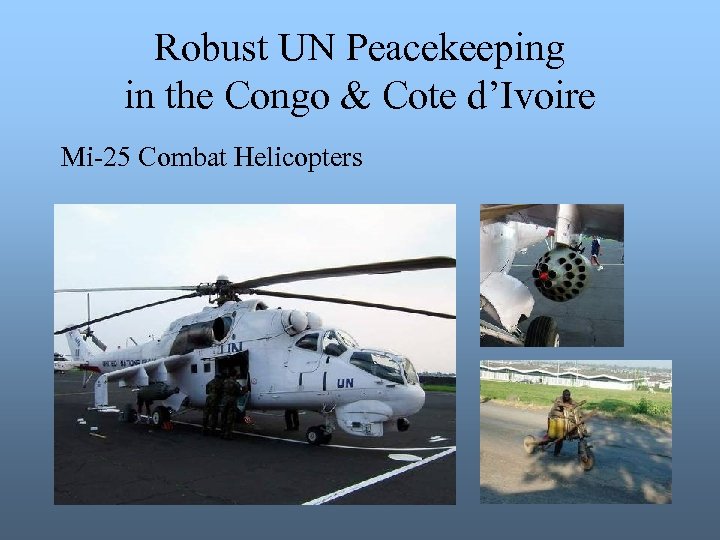
Robust UN Peacekeeping in the Congo & Cote d’Ivoire Mi-25 Combat Helicopters
FOURTH TYPE/GENERATION: TRANSITIONAL ADMINISTRATION
A BIG STEP … • Governing a territory during a transitional period • Goal: turn over power to a peaceful, stable country power governed by a local, democratically-elected leadership • The “comprehensive approach”
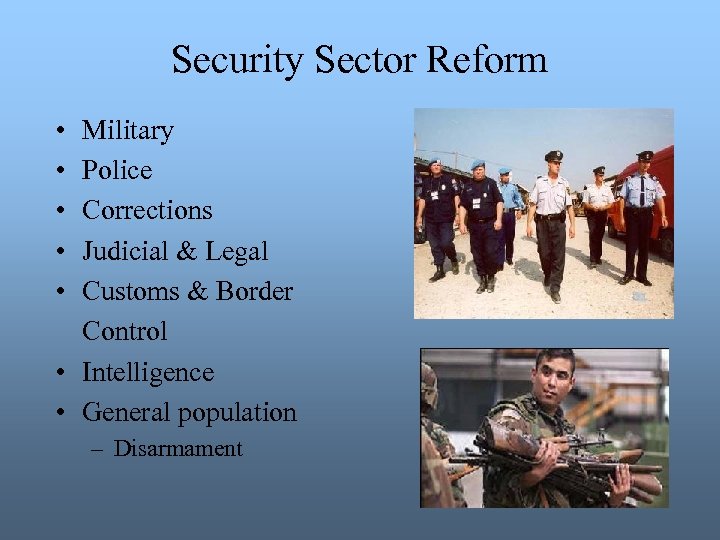
Security Sector Reform • • • Military Police Corrections Judicial & Legal Customs & Border Control • Intelligence • General population – Disarmament
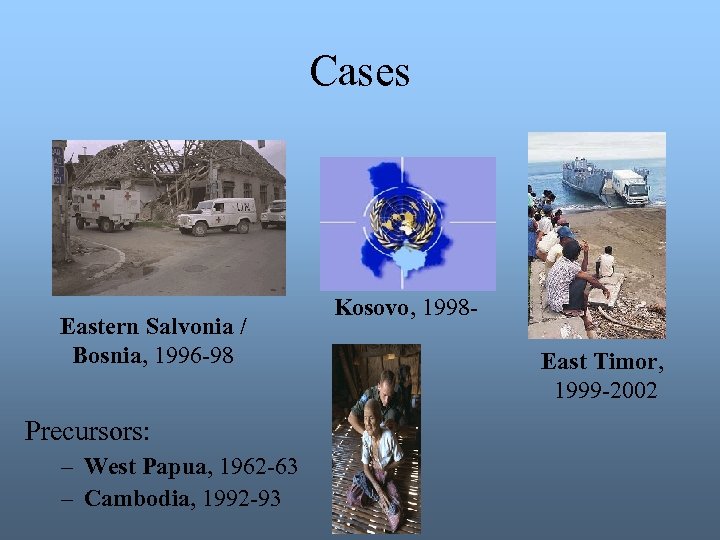
Cases Eastern Salvonia / Bosnia, 1996 -98 Precursors: – West Papua, 1962 -63 – Cambodia, 1992 -93 Kosovo, 1998 East Timor, 1999 -2002
UN Interim Administration in Kosovo (UNMIK) • Unprecedented in both scope and structural complexity • Government services, incl. – – Health and education Banking and finance Post and telecommunications Law and order • Other multilateral organizations full partners under United Nations leadership Source: www. unmikonline. org
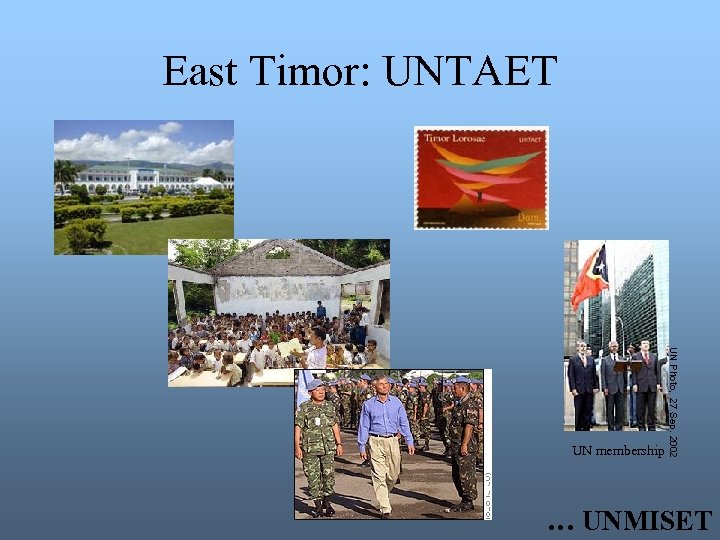
East Timor: UNTAET UN Photo, 27 Sep. 2002 UN membership … UNMISET
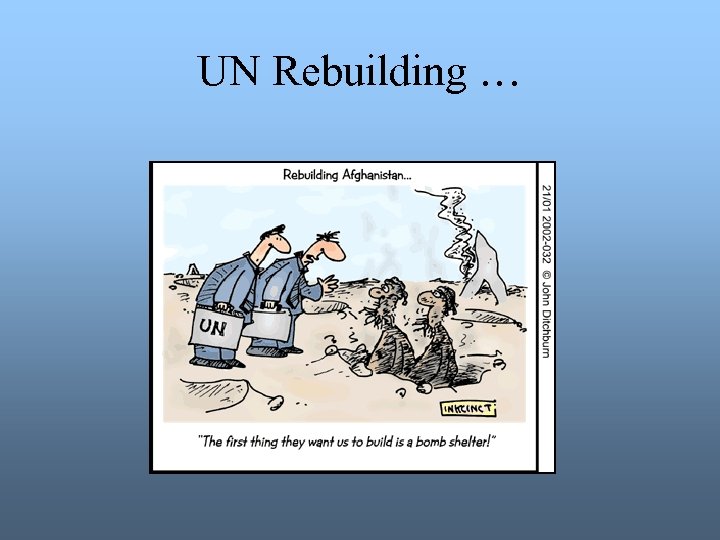
UN Rebuilding …
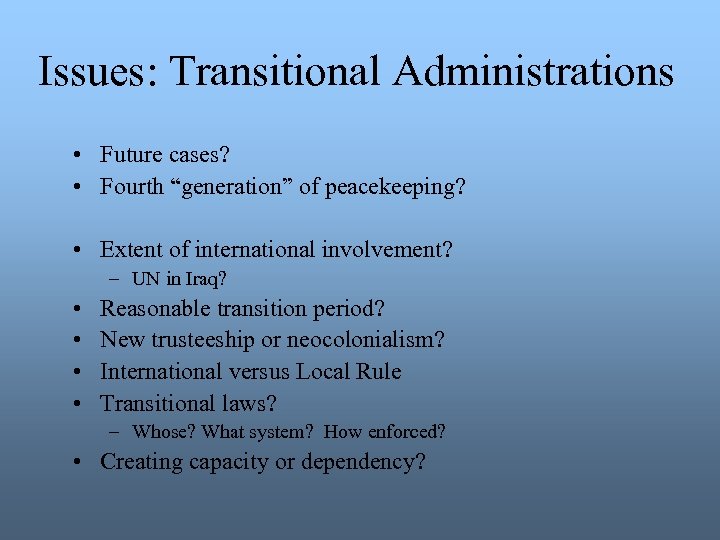
Issues: Transitional Administrations • Future cases? • Fourth “generation” of peacekeeping? • Extent of international involvement? – UN in Iraq? • • Reasonable transition period? New trusteeship or neocolonialism? International versus Local Rule Transitional laws? – Whose? What system? How enforced? • Creating capacity or dependency?
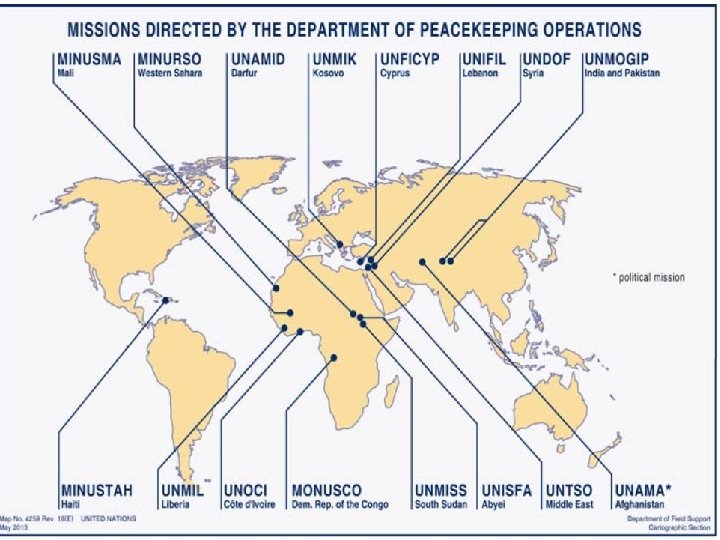
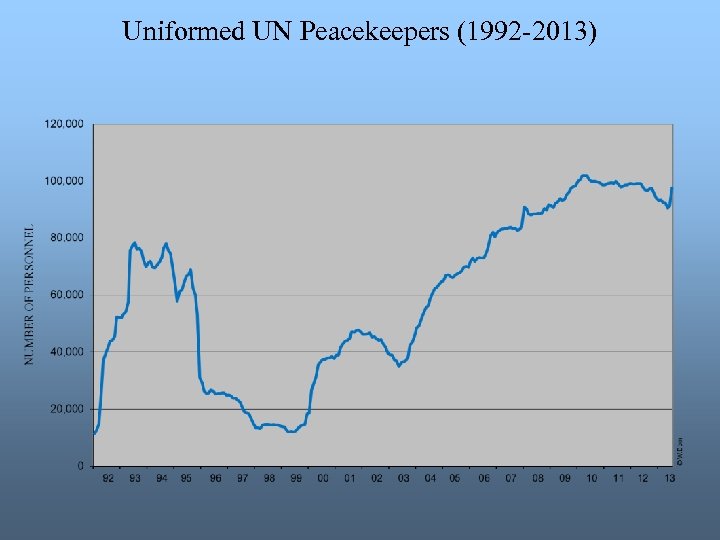
Uniformed UN Peacekeepers (1992 -2013)
Technologically equipped for peacekeeping?
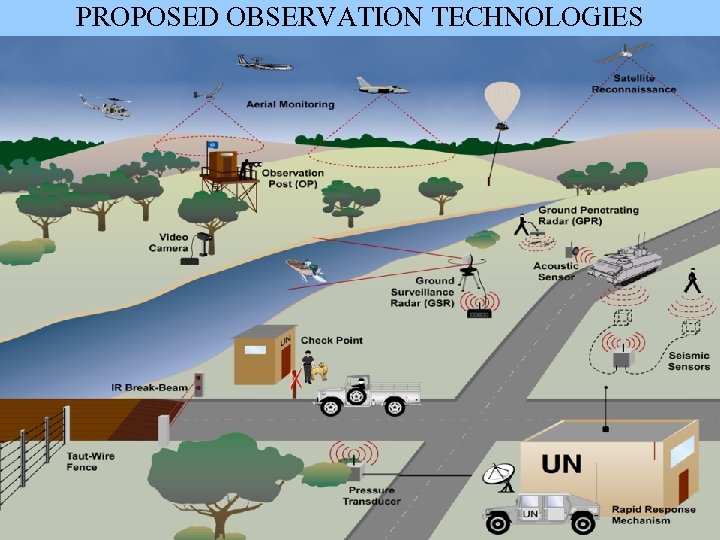
PROPOSED OBSERVATION TECHNOLOGIES
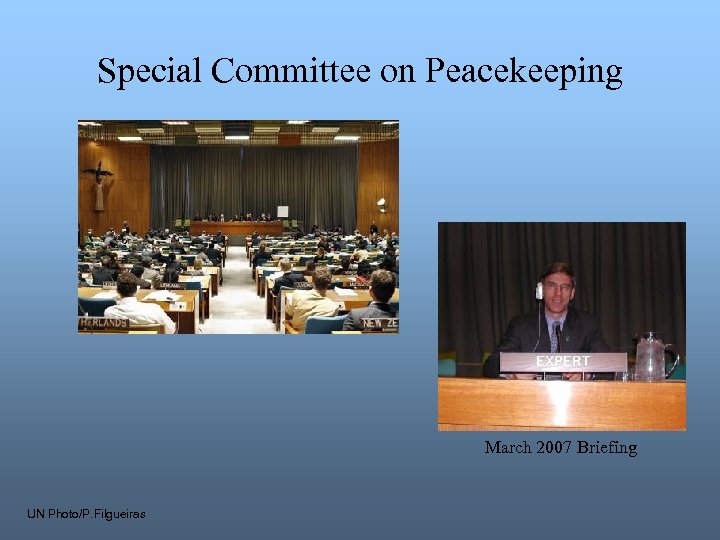
Special Committee on Peacekeeping March 2007 Briefing UN Photo/P. Filgueiras
ANALYSIS & CONCLUSIONS Evolution of Peacekeeping
Two, three or four “generations”? 1. Traditional peacekeeping • 1. Observer missions • 2. Interpositional forces 2. Modern peacekeeping (“Second Generation”/Complex) • 3. Complex peacekeeping • 4. Transitional administration Other problems? ?
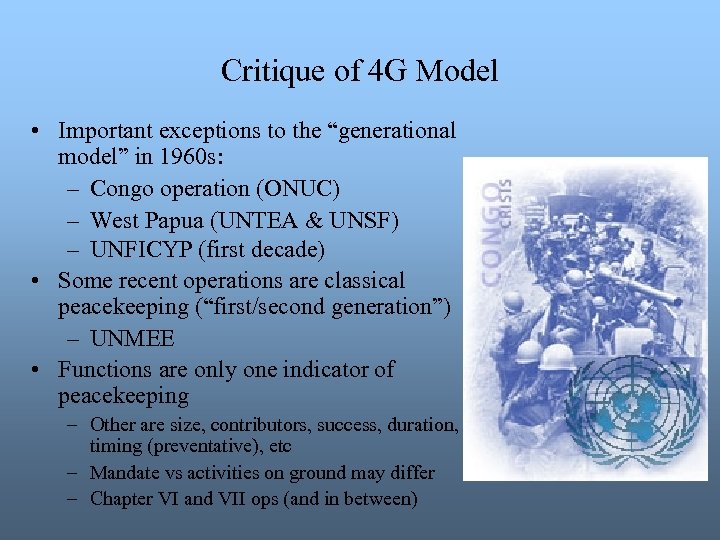
Critique of 4 G Model • Important exceptions to the “generational model” in 1960 s: – Congo operation (ONUC) – West Papua (UNTEA & UNSF) – UNFICYP (first decade) • Some recent operations are classical peacekeeping (“first/second generation”) – UNMEE • Functions are only one indicator of peacekeeping – Other are size, contributors, success, duration, timing (preventative), etc – Mandate vs activities on ground may differ – Chapter VI and VII ops (and in between)
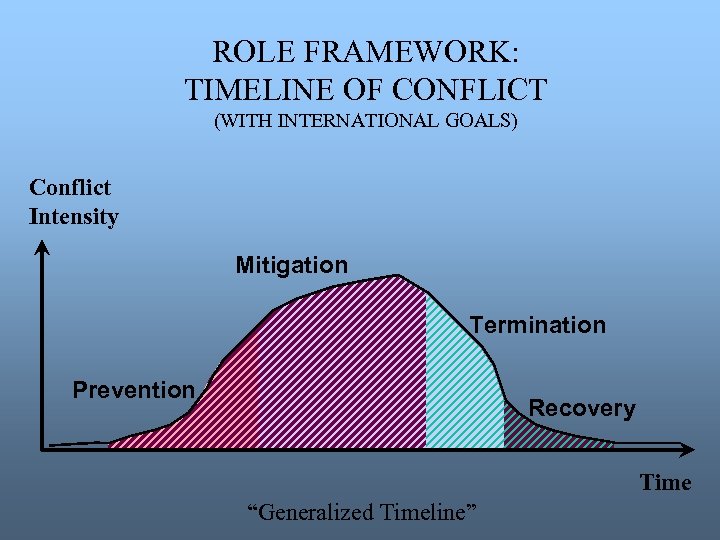
ROLE FRAMEWORK: TIMELINE OF CONFLICT (WITH INTERNATIONAL GOALS) Conflict Intensity Mitigation Termination Prevention Recovery Time “Generalized Timeline”
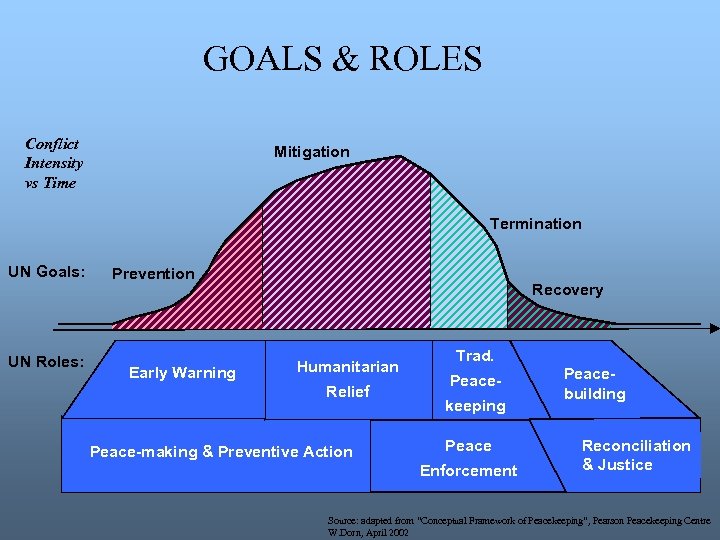
GOALS & ROLES Conflict Intensity vs Time Mitigation Termination UN Goals: UN Roles: Prevention Early Warning Recovery Humanitarian Relief Peace-making & Preventive Action Trad. Peacekeeping Peace Enforcement Peacebuilding Reconciliation & Justice Source: adapted from “Conceptual Framework of Peacekeeping”, Pearson Peacekeeping Centre W. Dorn, April 2002
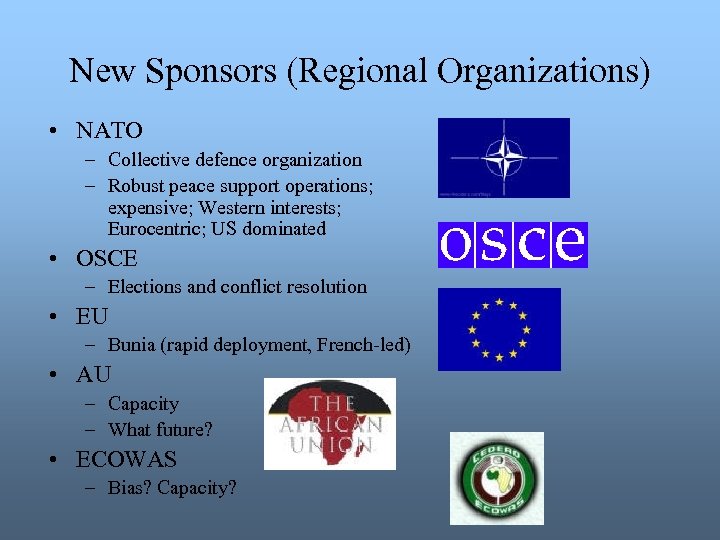
New Sponsors (Regional Organizations) • NATO – Collective defence organization – Robust peace support operations; expensive; Western interests; Eurocentric; US dominated • OSCE – Elections and conflict resolution • EU – Bunia (rapid deployment, French-led) • AU – Capacity – What future? • ECOWAS – Bias? Capacity?
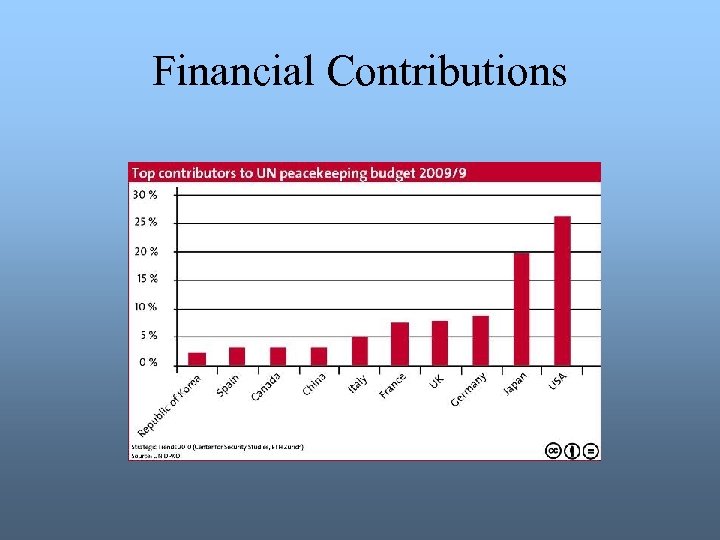
Financial Contributions
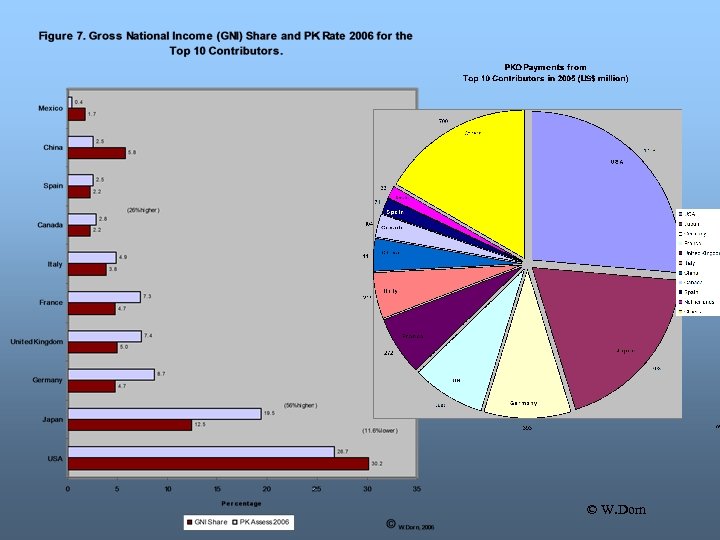
© W. Dorn
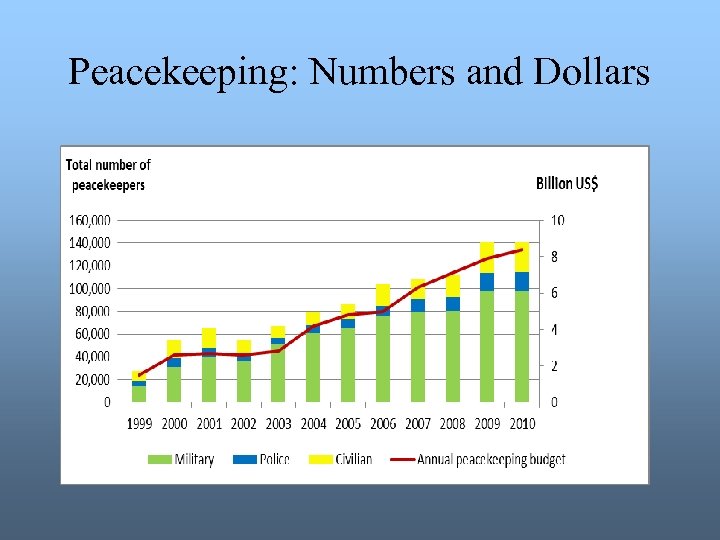
Peacekeeping: Numbers and Dollars
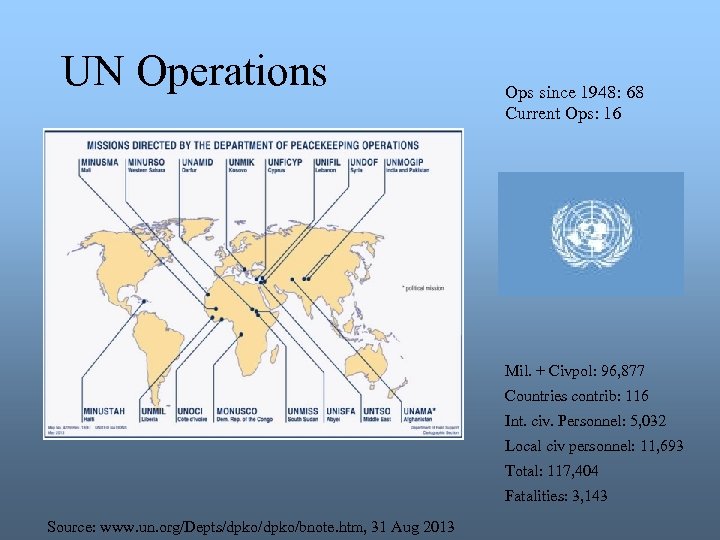
UN Operations Ops since 1948: 68 Current Ops: 16 Mil. + Civpol: 96, 877 Countries contrib: 116 Int. civ. Personnel: 5, 032 Local civ personnel: 11, 693 Total: 117, 404 Fatalities: 3, 143 Source: www. un. org/Depts/dpko/bnote. htm, 31 Aug 2013
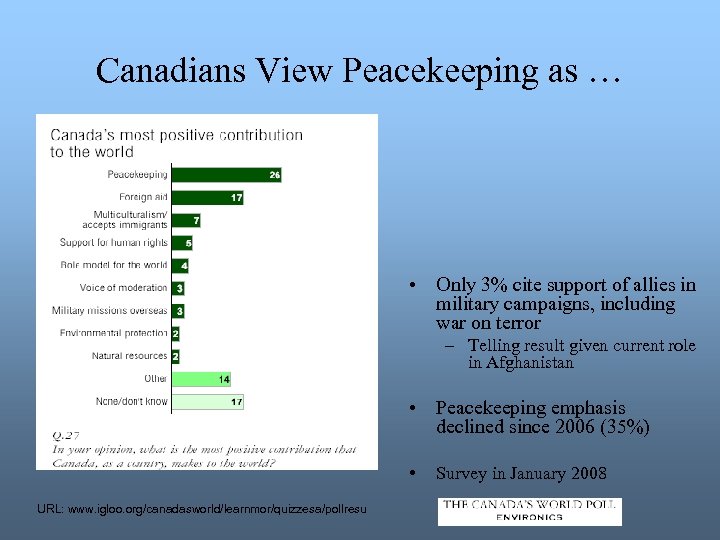
Canadians View Peacekeeping as … • Only 3% cite support of allies in military campaigns, including war on terror – Telling result given current role in Afghanistan • Peacekeeping emphasis declined since 2006 (35%) • URL: www. igloo. org/canadasworld/learnmor/quizzesa/pollresu Survey in January 2008
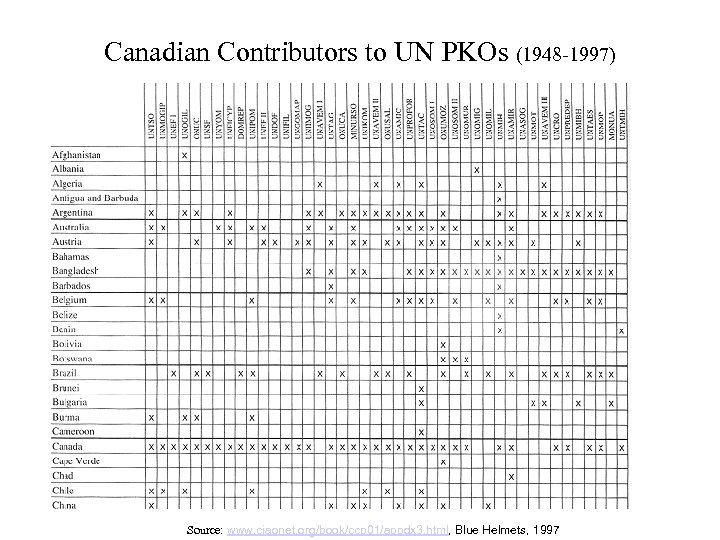
Canadian Contributors to UN PKOs (1948 -1997) Source: www. ciaonet. org/book/ccp 01/appdx 3. html, Blue Helmets, 1997
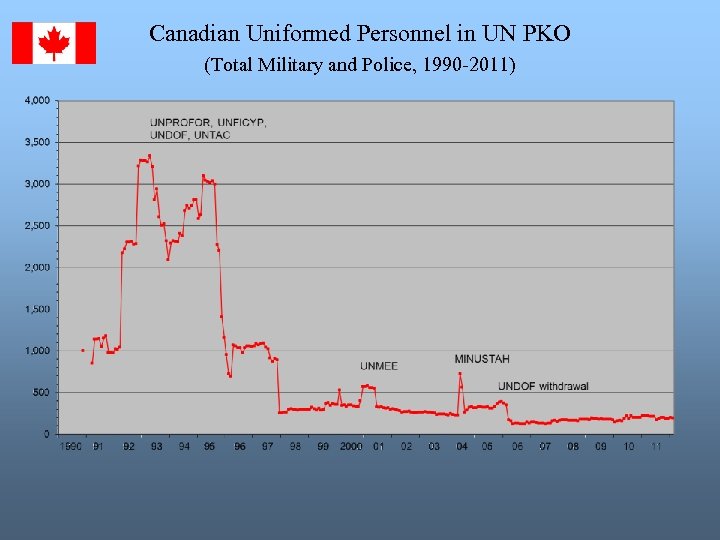
Canadian Uniformed Personnel in UN PKO (Total Military and Police, 1990 -2011)
Myths and Realities • Myth: Peacekeeping isn’t real soldiering – Majority of Cdn international operations are PSOs – Dangerous assignments – Requires skill, tact, courage – Requires combat capability – Wide range of tasks • Protection of civilians since 2000 • Negotiation/mediation (“soldier-diplomat”) – Military has a vital role
![US Do. D Directive • “Stability operations are a core military mission … [with]](https://present5.com/presentation/69abe39c44e51298a53721bd47d3defa/image-79.jpg "US Do. D Directive • “Stability operations are a core military mission … [with]")
US Do. D Directive • “Stability operations are a core military mission … [with] priority comparable to combat operations” • “Many stability operations tasks are best performed by indigenous, foreign or US civilian professionals” – NYT, 20 November 2005 – FM 3 -24 “Paradoxes of Counterinsurgency operations”
“BUILD ON THAT FOUNDATION” “We made at least a beginning then. If, on that foundation, we do not build something more permanent and stronger, we will once again have ignored realities, rejected opportunities and betrayed our trust. ” – Lester B. Pearson Nobel Prize acceptance speech Oslo, Dec. 11, 1957
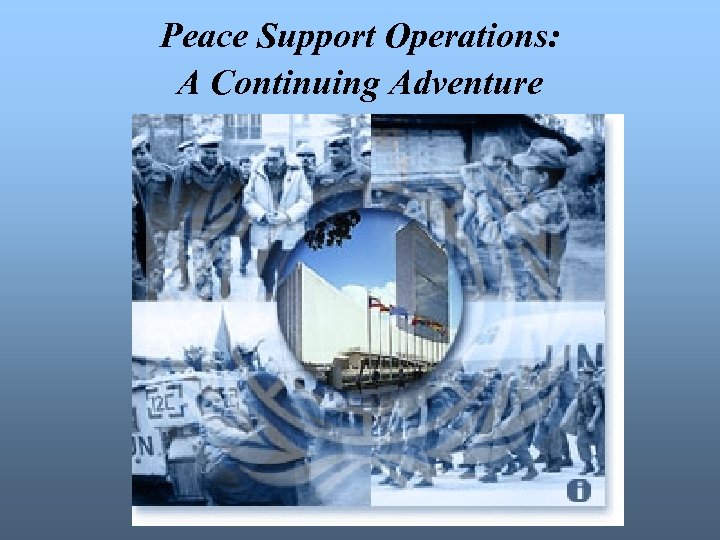
Peace Support Operations: A Continuing Adventure
THE END … of the Beginning

QUESTIONS?
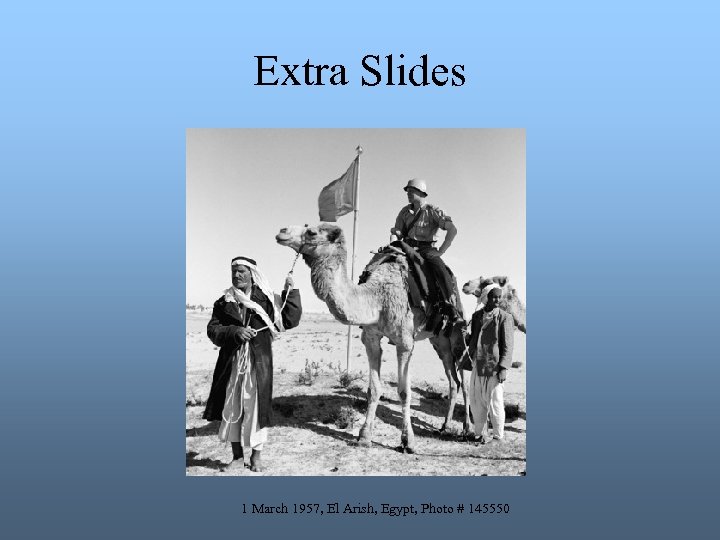
Extra Slides 1 March 1957, El Arish, Egypt, Photo # 145550
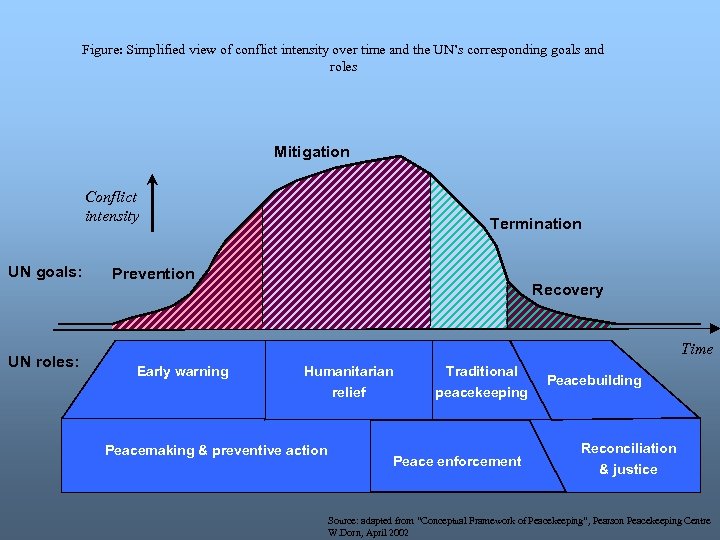
Figure: Simplified view of conflict intensity over time and the UN’s corresponding goals and roles Mitigation Conflict intensity UN goals: UN roles: Termination Prevention Recovery Time Early warning Humanitarian Traditional relief peacekeeping Peacemaking & preventive action Peace enforcement Peacebuilding Reconciliation & justice Source: adapted from “Conceptual Framework of Peacekeeping”, Pearson Peacekeeping Centre W. Dorn, April 2002
Скачать презентацию THE EVOLUTION OF PEACE AND STABILITY OPERATIONS Dr
69abe39c44e51298a53721bd47d3defa.ppt