 Скачать презентацию The European Public Procurement Market Past Present Future
64fabd196ff36a1b5504a2612d3e8615.ppt
- Количество слайдов: 39



The European Public Procurement Market: Past Present Future
László Kétszeri head of department Central Services Directorate General Department Of Public Procurement Research and Development H-1015 Budapest, Hattyú u. 14 Tel. : +3614417104 Fax. : +3614417102 www. kozbeszerzes. gov. hu ketszeri. laszlo@meh. hu Mobil. : +36309713028
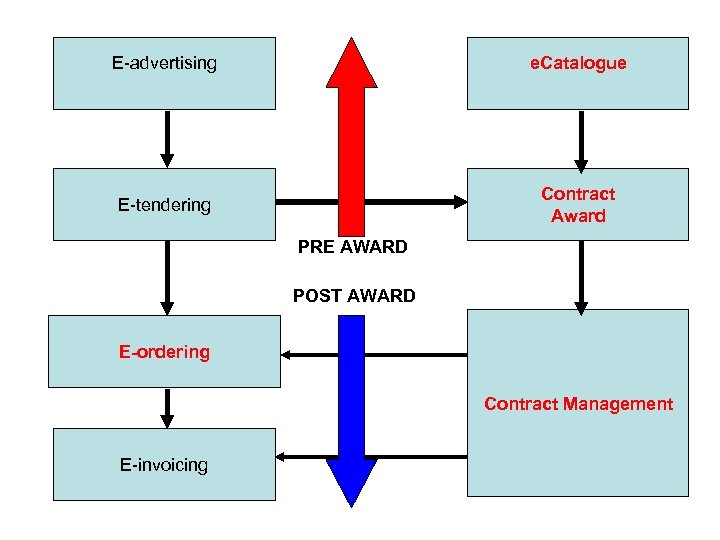
E-advertising e. Catalogue E-tendering Contract Award PRE AWARD POST AWARD E-ordering Contract Management E-invoicing
Metrics for benchmarking public procurement services: The value added and created
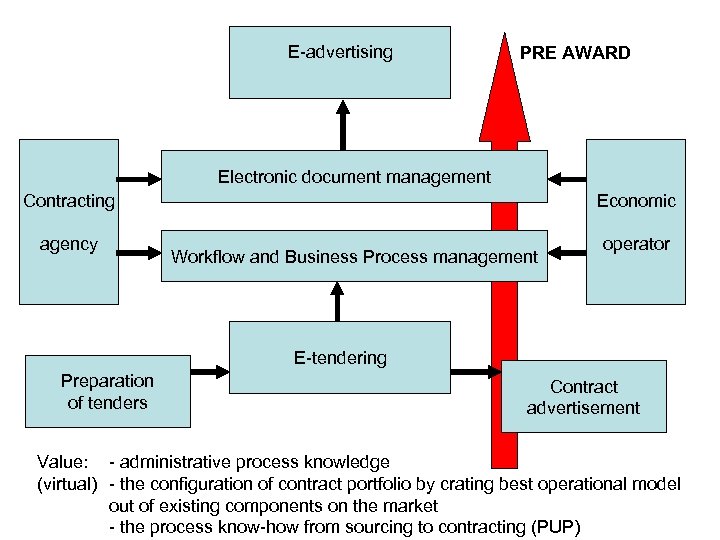
E-advertising PRE AWARD Electronic document management Contracting agency Economic Workflow and Business Process management operator E-tendering Preparation of tenders Contract advertisement Value: - administrative process knowledge (virtual) - the configuration of contract portfolio by crating best operational model out of existing components on the market - the process know-how from sourcing to contracting (PUP)
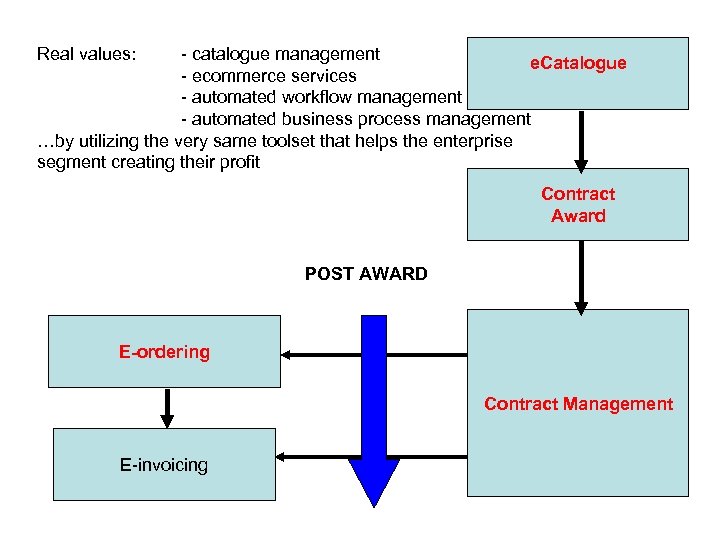
Real values: - catalogue management e. Catalogue - ecommerce services - automated workflow management - automated business process management …by utilizing the very same toolset that helps the enterprise segment creating their profit Contract Award POST AWARD E-ordering Contract Management E-invoicing
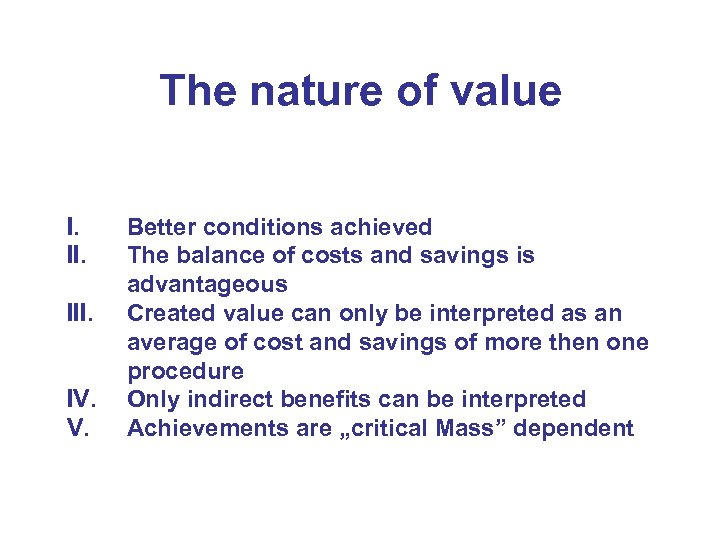
The nature of value I. III. IV. V. Better conditions achieved The balance of costs and savings is advantageous Created value can only be interpreted as an average of cost and savings of more then one procedure Only indirect benefits can be interpreted Achievements are „critical Mass” dependent
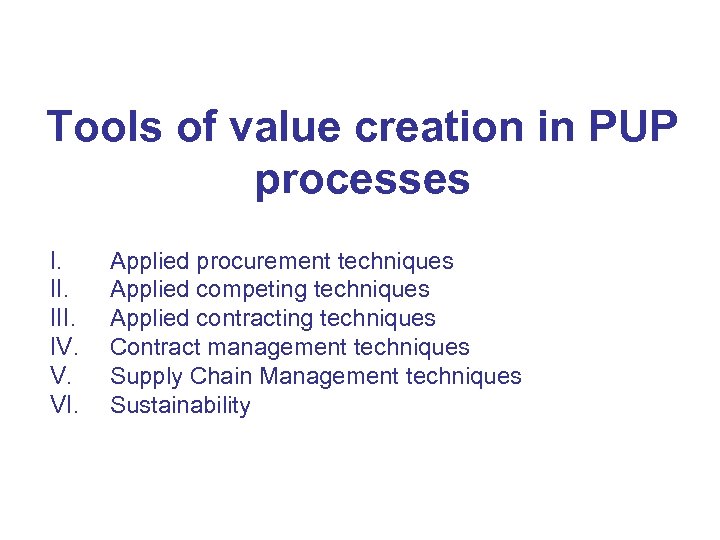
Tools of value creation in PUP processes I. III. IV. V. VI. Applied procurement techniques Applied competing techniques Applied contracting techniques Contract management techniques Supply Chain Management techniques Sustainability
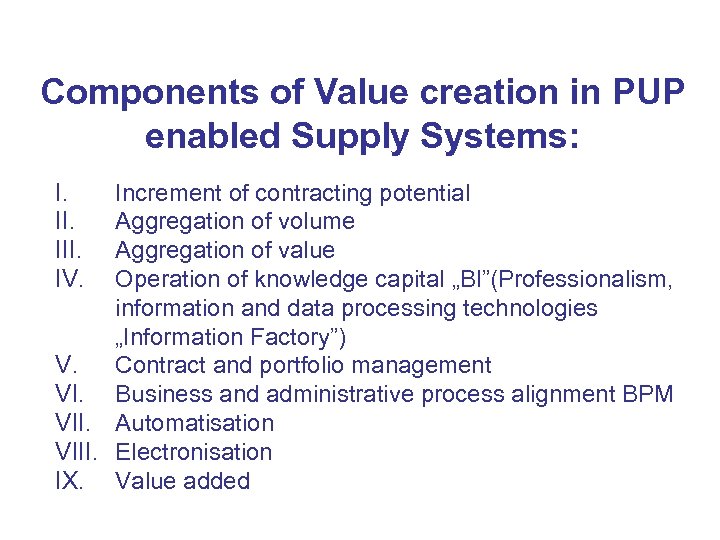
Components of Value creation in PUP enabled Supply Systems: I. III. IV. Increment of contracting potential Aggregation of volume Aggregation of value Operation of knowledge capital „BI”(Professionalism, information and data processing technologies „Information Factory”) V. Contract and portfolio management VI. Business and administrative process alignment BPM VII. Automatisation VIII. Electronisation IX. Value added

SOA (Service Oriented Architecture) For the business…. …. and for the ITC
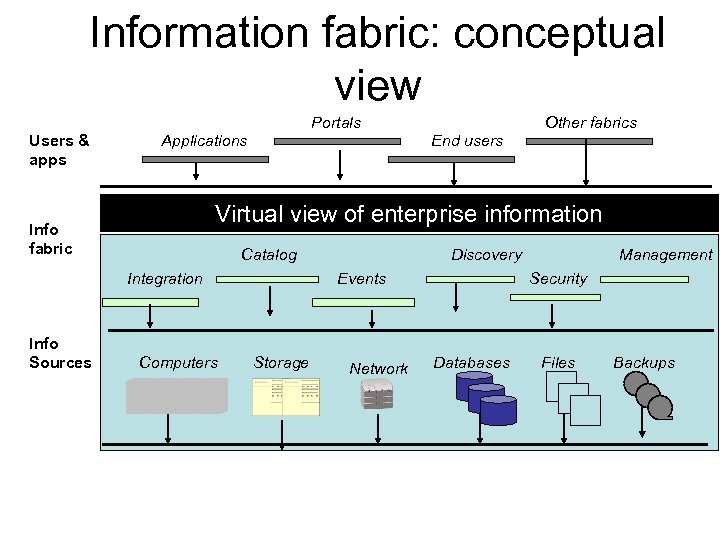
Information fabric: conceptual view Portals Users & apps Applications End users Virtual view of enterprise information Info fabric Catalog Integration Info Sources Other fabrics Computers Discovery Events Storage Network Management Security Databases Files Backups
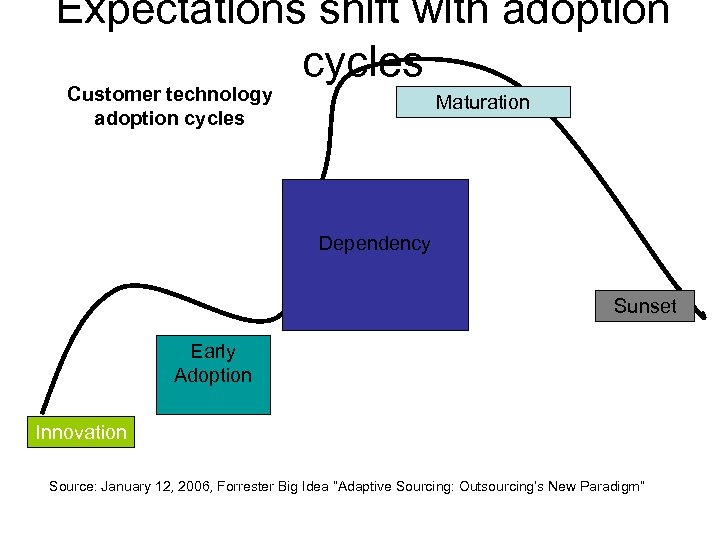
Expectations shift with adoption cycles Customer technology adoption cycles Maturation Dependency Sunset Early Adoption Innovation Source: January 12, 2006, Forrester Big Idea “Adaptive Sourcing: Outsourcing’s New Paradigm”
The European Public Procurement Market: Business and service architecture development
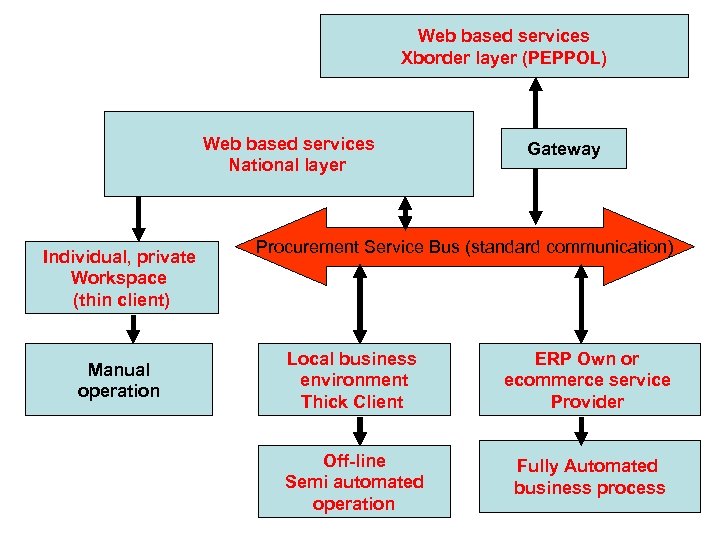
Web based services Xborder layer (PEPPOL) Web based services National layer Individual, private Workspace (thin client) Manual operation Gateway Procurement Service Bus (standard communication) Local business environment Thick Client ERP Own or ecommerce service Provider Off-line Semi automated operation Fully Automated business process
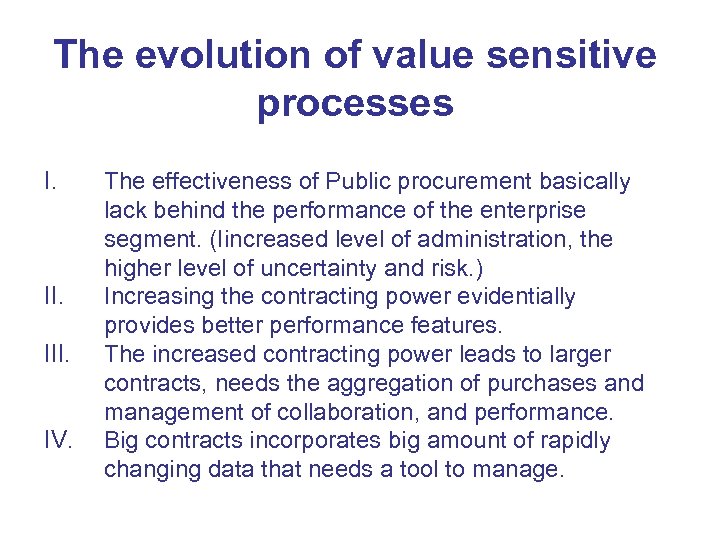
The evolution of value sensitive processes I. II. IV. The effectiveness of Public procurement basically lack behind the performance of the enterprise segment. (Iincreased level of administration, the higher level of uncertainty and risk. ) Increasing the contracting power evidentially provides better performance features. The increased contracting power leads to larger contracts, needs the aggregation of purchases and management of collaboration, and performance. Big contracts incorporates big amount of rapidly changing data that needs a tool to manage.
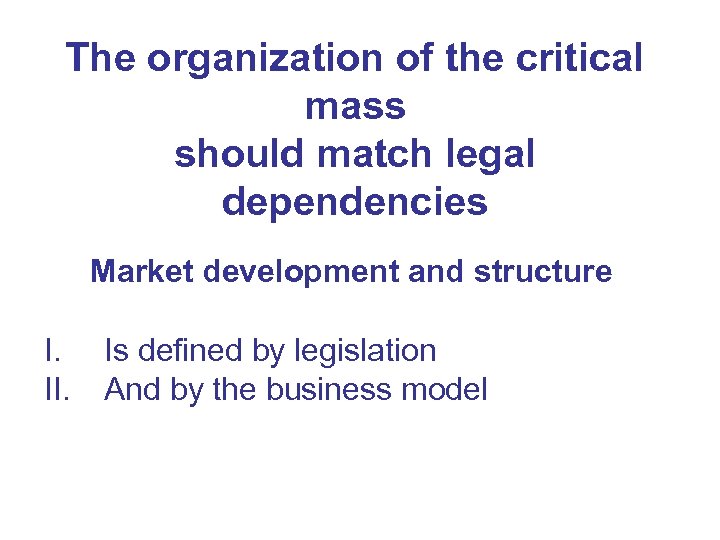
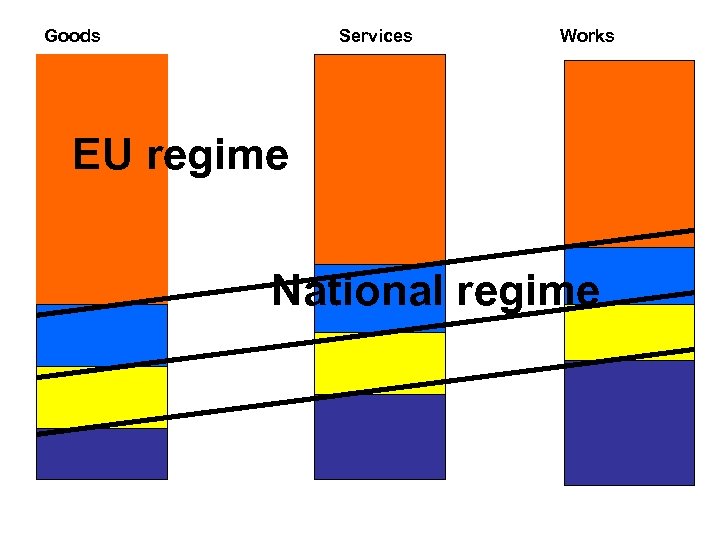
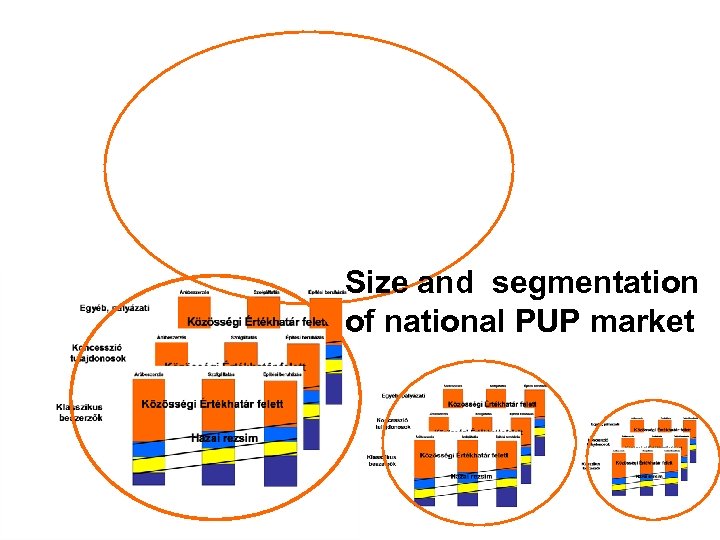
The organization of the critical mass should match legal dependencies Market development and structure I. II. Is defined by legislation And by the business model
Legislation and Market development I. III. IV. Above EU threshold Below EU threshold Administrative techniques Techniques employed on the market
Goods Services Works EU regime National regime
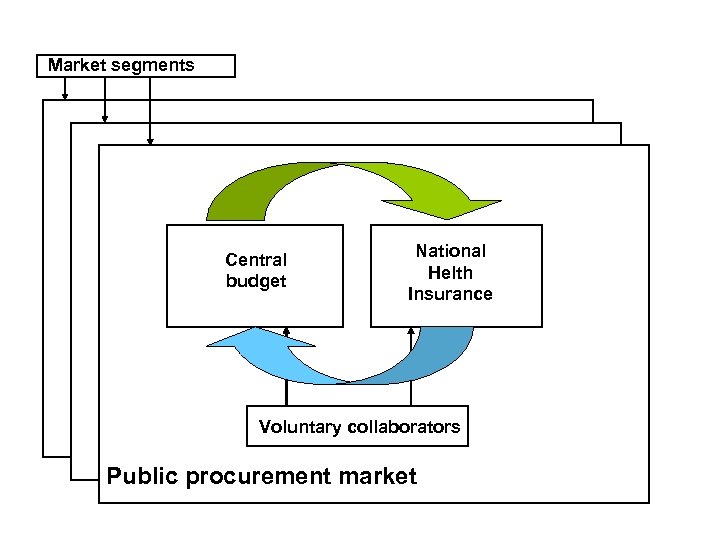
Size and segmentation of national PUP market
Market development scenarios The organization of the „Critical Mass”
Central(ized) Public Procurement
Market segments Central budget National Helth Insurance Voluntary collaborators Közbeszerzések Public procurement market
STAKEHOLDERS E-procurement Service Provider Contracting Agencies Central Procurement Agency Directorate of Central Services National Advertising Agency/ Council of PUP TED Economic Operators
Business actors and roles with presence of Central Contracting Agencies „C 2 A” I. III. IV. V. VI. Perfection in market information management both suppliers and customers Professionalism in procurement techniques Building contract portfolio as business architecture Data and information management (Information Fabric) Business triangle Supplier-C 2 A, C 2 A-Customer Sustainability and portfolio life cycle management
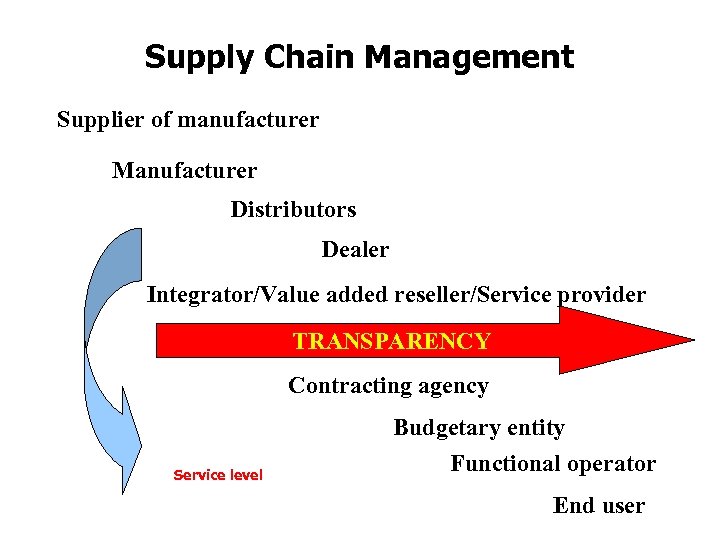
Supply Chain Management Supplier of manufacturer Manufacturer Distributors Dealer Integrator/Value added reseller/Service provider TRANSPARENCY Contracting agency Service level Budgetary entity Functional operator End user
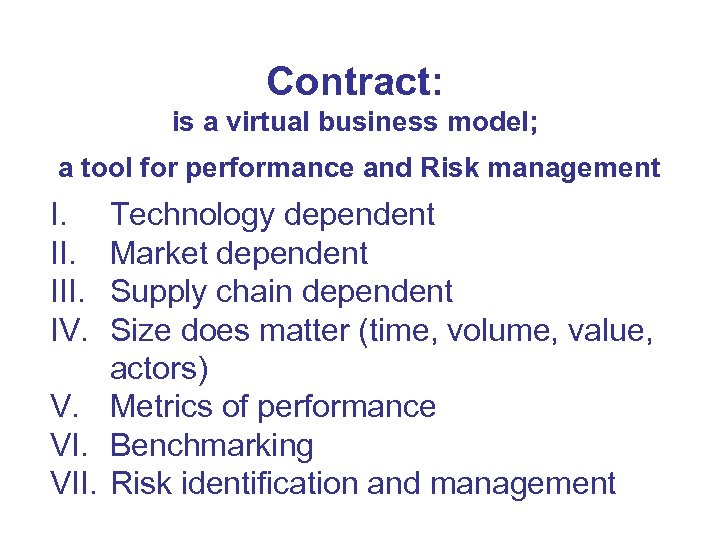
Contract: is a virtual business model; a tool for performance and Risk management I. III. IV. Technology dependent Market dependent Supply chain dependent Size does matter (time, volume, value, actors) V. Metrics of performance VI. Benchmarking VII. Risk identification and management
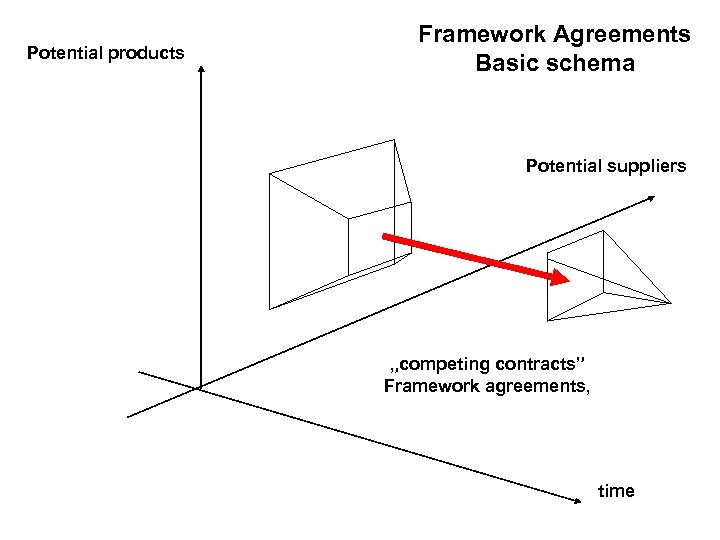
Potential products Framework Agreements Basic schema Potential suppliers „competing contracts” Framework agreements, time
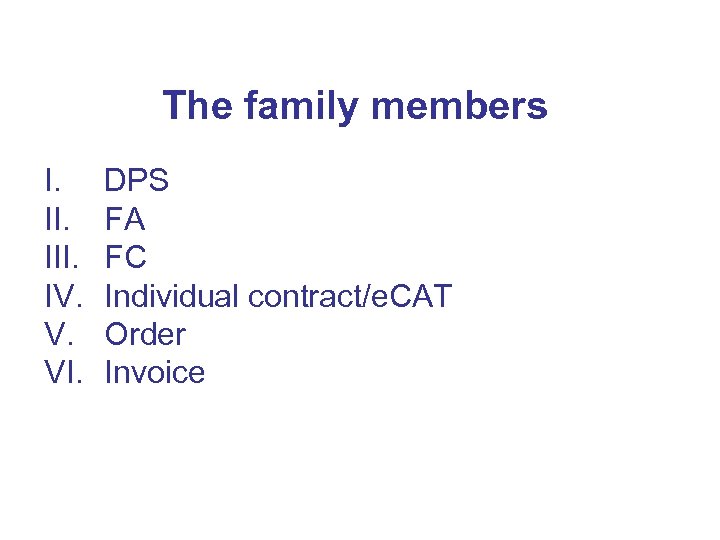
The family members I. III. IV. V. VI. DPS FA FC Individual contract/e. CAT Order Invoice
„e” Enabled Public procurement with repetitive procurement processes I. Framework agreement. II. Dynamic Procurement System.
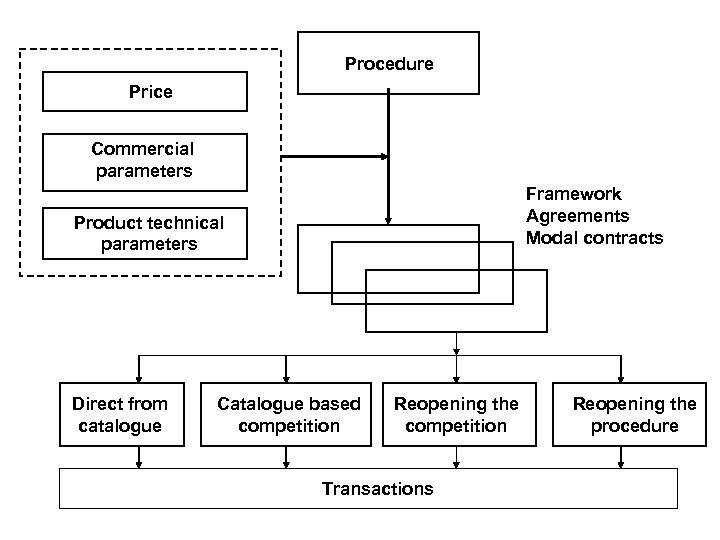
Procedure Price Commercial parameters Framework Agreements Modal contracts Product technical parameters Direct from catalogue Catalogue based competition Reopening the competition Transactions Reopening the procedure
Manageability of FA-s and procurement categories I. II. III. IV. VI. Aggregation Catalogue building Catalogue Competition building Competition Evaluation Statistics Benchmarking
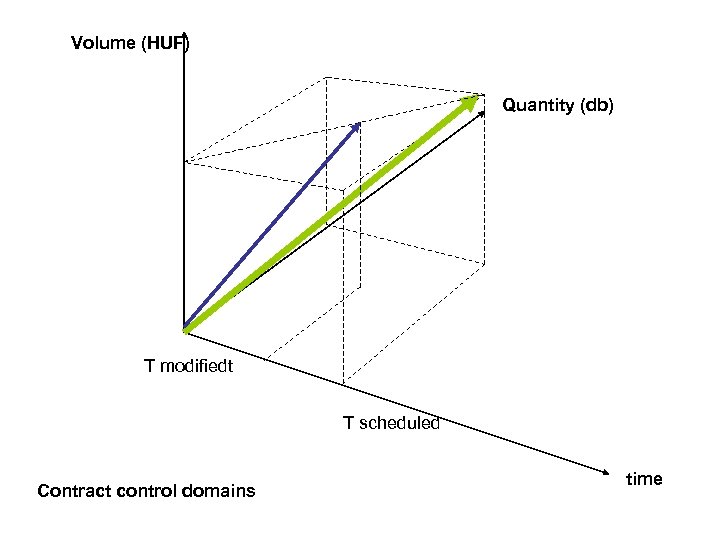
Volume (HUF) Quantity (db) T modifiedt T scheduled Contract control domains time
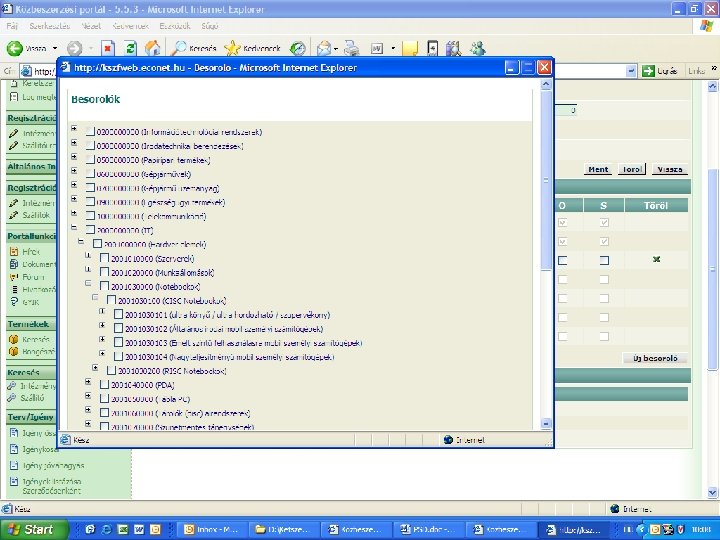
Classification and product hierarchy
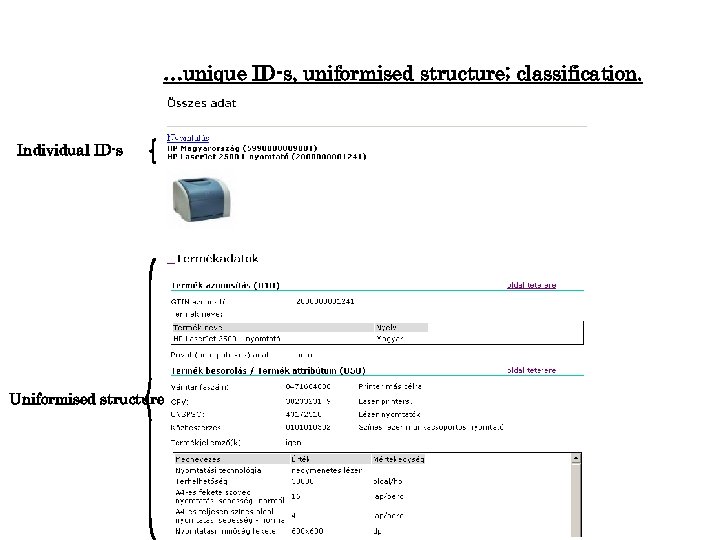
…unique ID-s, uniformised structure; classification. Individual ID-s Uniformised structure
Standards I. Electronic Commerce (UNCEFACT) II. Electronic Government (BUS 8) III. IT and IT Security (Guidelines)
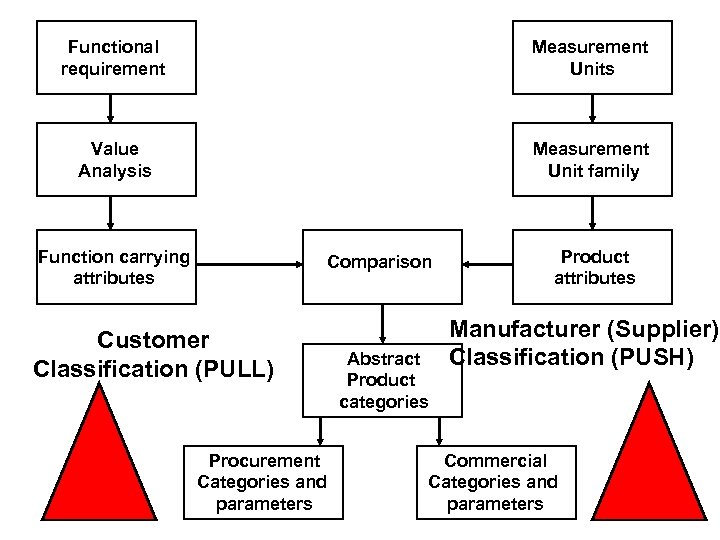
Functional requirement Measurement Units Value Analysis Measurement Unit family Function carrying attributes Comparison Customer Classification (PULL) Procurement Categories and parameters Abstract Product categories Product attributes Manufacturer (Supplier) Classification (PUSH) Commercial Categories and parameters

Q and A
Скачать презентацию The European Public Procurement Market Past Present Future
64fabd196ff36a1b5504a2612d3e8615.ppt