 Скачать презентацию The European Monetary Union Stanley W Black University
6989cd6f4a42d5092ab08ac94ced65f2.ppt
- Количество слайдов: 40



The European Monetary Union Stanley W. Black University of North Carolina References: http: //en. wikipedia. org/wiki/Eurozone http: //www. ecb. europa. eu/ http: //ec. europa. eu/economy_finance/index_en. htm
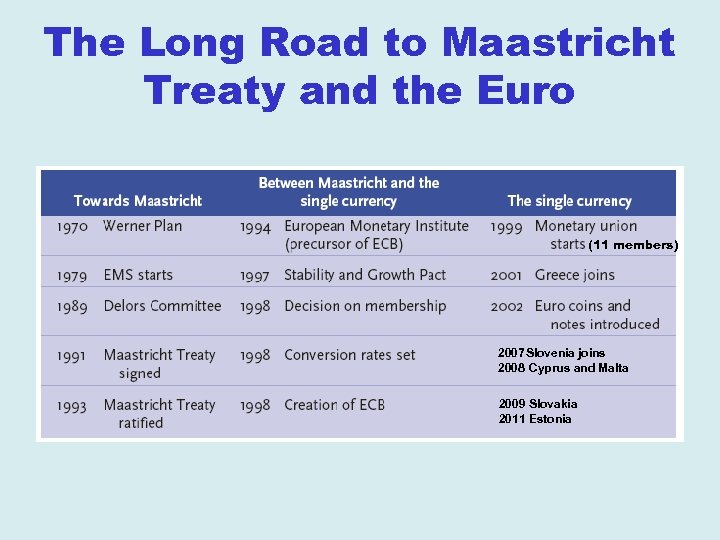
The Long Road to Maastricht Treaty and the Euro (11 members) 2007 Slovenia joins 2008 Cyprus and Malta 2009 Slovakia 2011 Estonia
The Road to the Euro • Customs Union and Common Agricultural Policy work better with a single currency • EMS kept currencies tied together, but under German leadership, 1979 -1989 • Multiple currencies of EMS pegged to D-mark inherently unstable, devaluations, speculation • With fall of Berlin Wall in 1989, Germany needed permission to reunify, France wanted seat in Monetary Policy decision-making • Compromise created the European Monetary Union under Maastricht Treaty
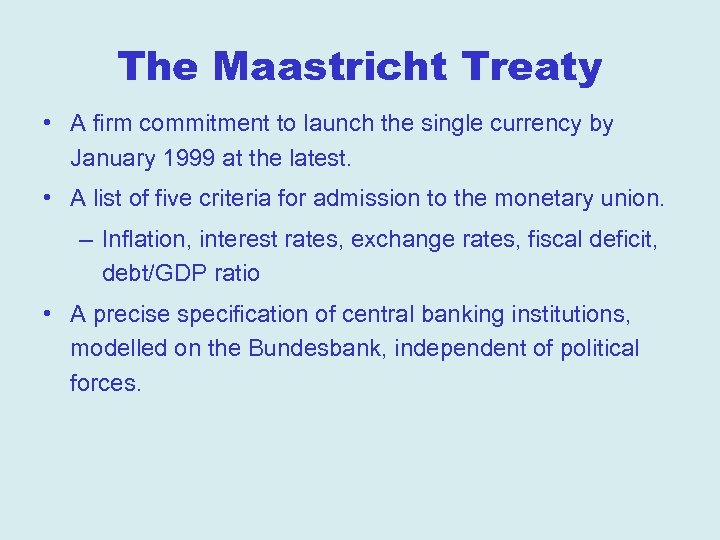
The Maastricht Treaty • A firm commitment to launch the single currency by January 1999 at the latest. • A list of five criteria for admission to the monetary union. – Inflation, interest rates, exchange rates, fiscal deficit, debt/GDP ratio • A precise specification of central banking institutions, modelled on the Bundesbank, independent of political forces.
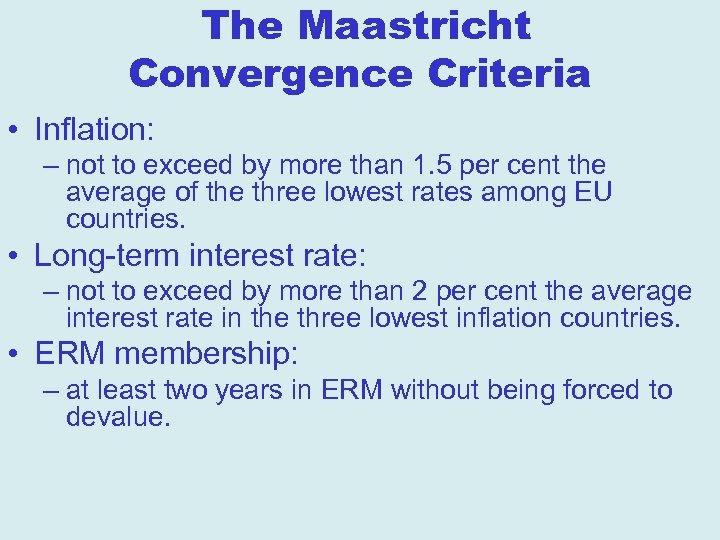
The Maastricht Convergence Criteria • Inflation: – not to exceed by more than 1. 5 per cent the average of the three lowest rates among EU countries. • Long-term interest rate: – not to exceed by more than 2 per cent the average interest rate in the three lowest inflation countries. • ERM membership: – at least two years in ERM without being forced to devalue.
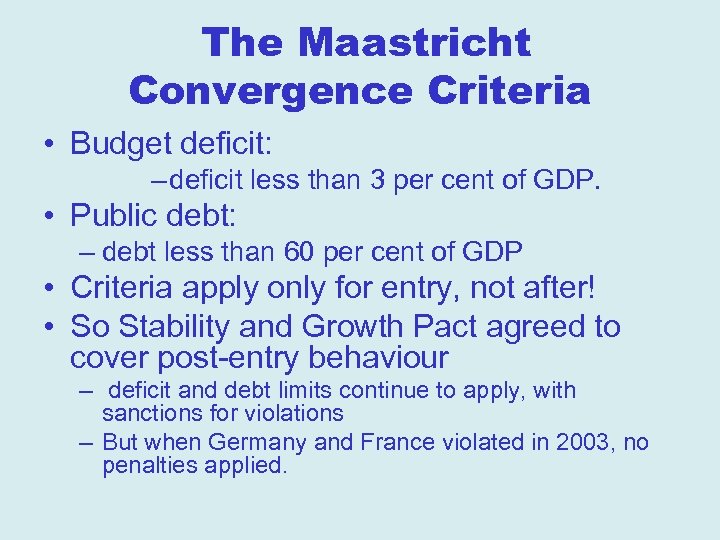
The Maastricht Convergence Criteria • Budget deficit: – deficit less than 3 per cent of GDP. • Public debt: – debt less than 60 per cent of GDP • Criteria apply only for entry, not after! • So Stability and Growth Pact agreed to cover post-entry behaviour – deficit and debt limits continue to apply, with sanctions for violations – But when Germany and France violated in 2003, no penalties applied.
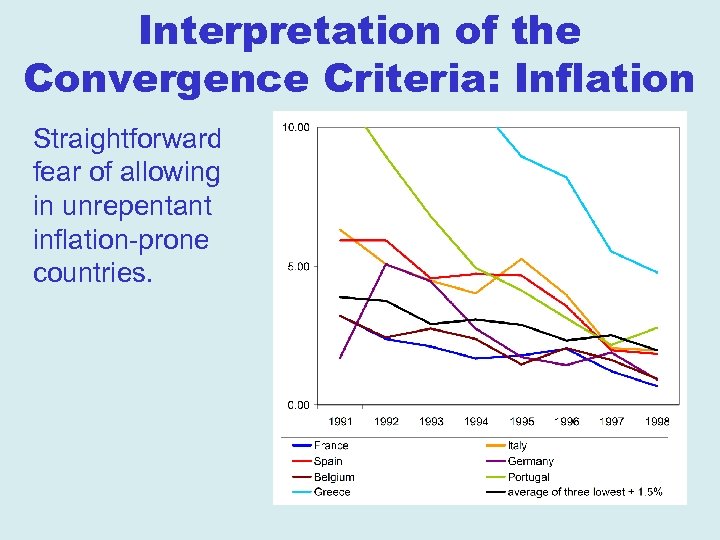
Interpretation of the Convergence Criteria: Inflation Straightforward fear of allowing in unrepentant inflation-prone countries.
Interpretation of the Budget Deficit and Debt Criteria • Historically, all big inflation episodes born out of runaway public deficits and debts. • Hence requirement that house is put in order before admission. • How are the ceilings chosen? : – deficit: the German golden rule: 3% – debt: the 1991 EU average: 60%.
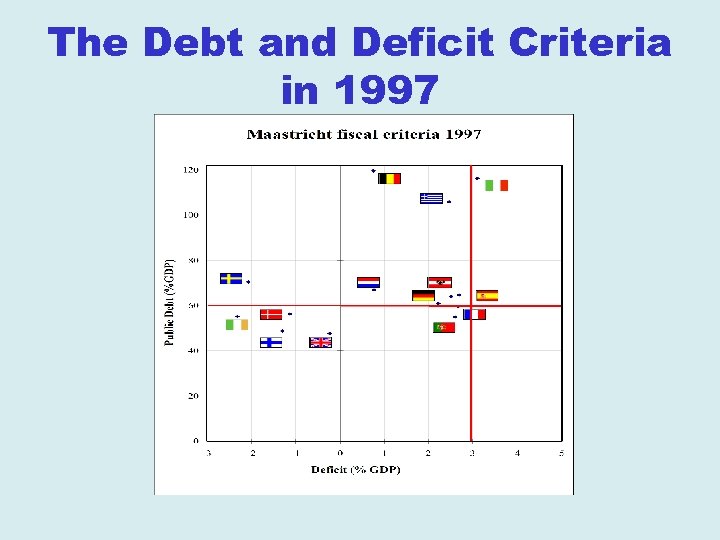
The Debt and Deficit Criteria in 1997
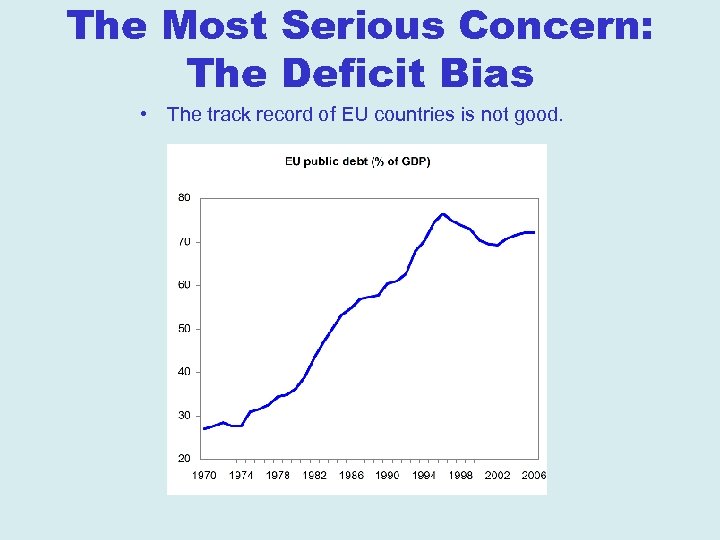
The Most Serious Concern: The Deficit Bias • The track record of EU countries is not good.
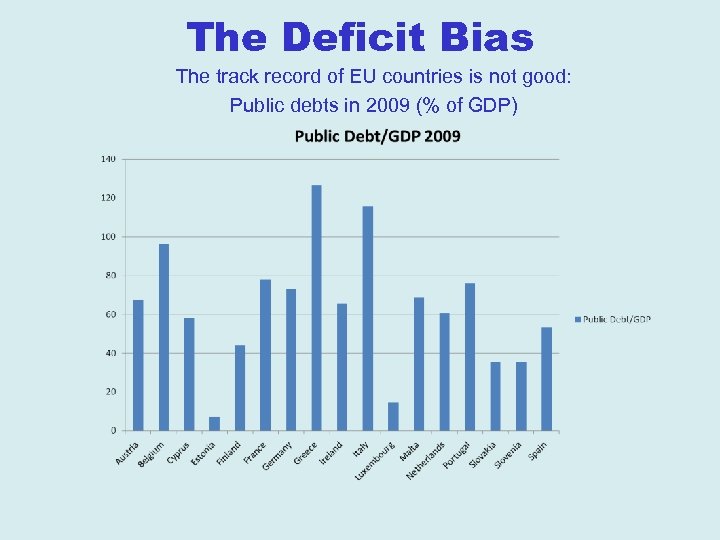
The Deficit Bias The track record of EU countries is not good: Public debts in 2009 (% of GDP)
Criteria for Entry were Fudged • Germany wanted rigid adherence to rules • But after German Unification, East Germany required huge subsidies, led to large German deficits • Thus rules were relaxed and Belgium, Italy, Spain, Portugal admitted even though debts exceeded Maastricht limits • Even Greece was admitted a year later
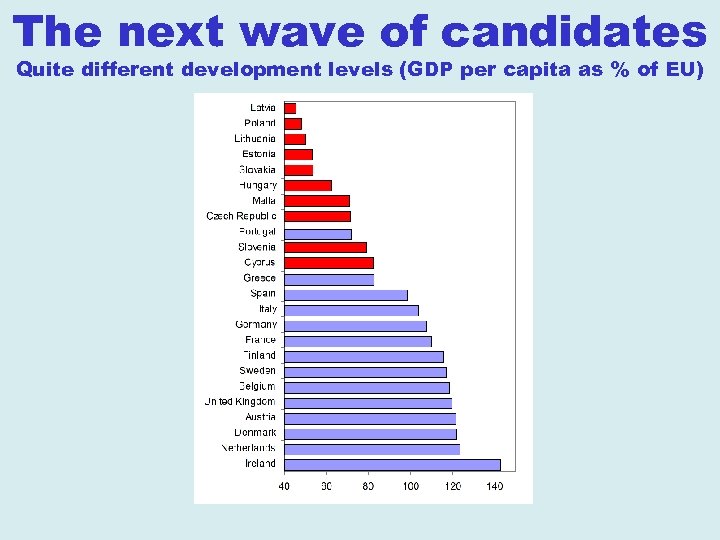
The next wave of candidates Quite different development levels (GDP per capita as % of EU)
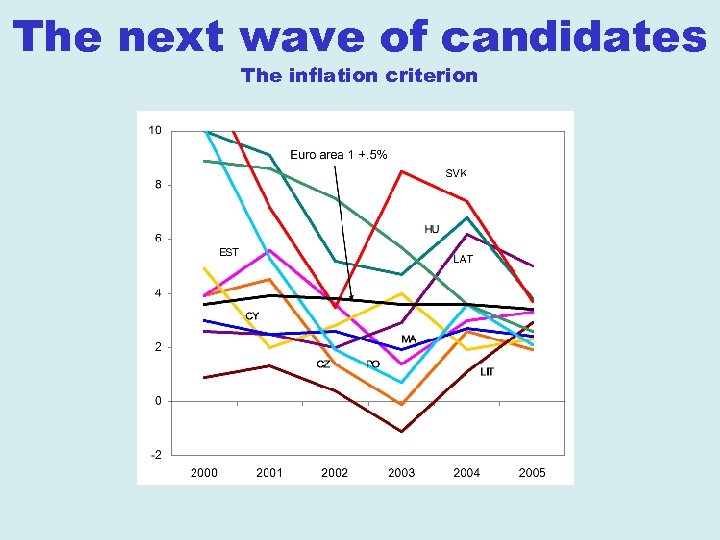
The next wave of candidates The inflation criterion
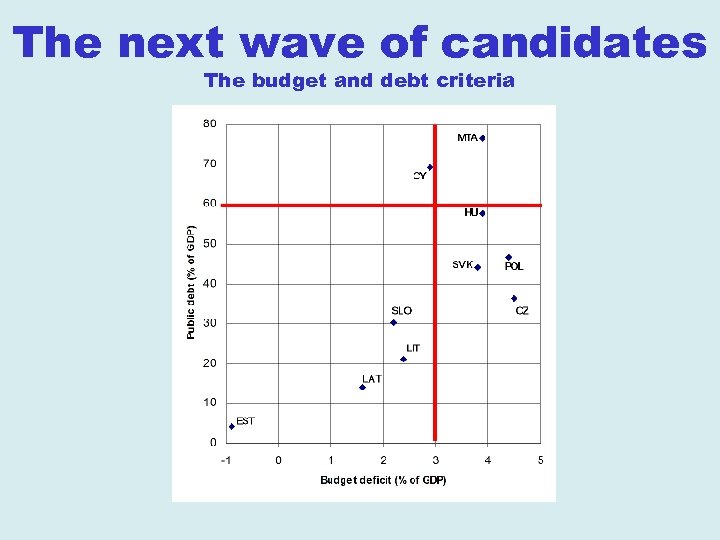
The next wave of candidates The budget and debt criteria
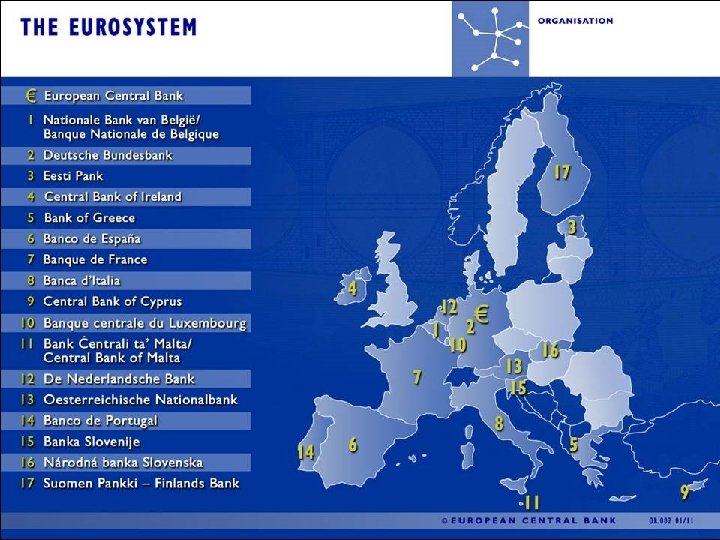
Architecture of the monetary union • N countries with N National Central Banks (NCBs) that continue operating but with no monetary policy function. • A new central bank at the centre: the European Central Bank (ECB). • The European System of Central Banks (ESCB): the ECB and all EU NCBs (N=27). • The Eurosystem: the ECB and the NCBs of euro area member countries (N=17).
How Does the Eurosystem Operate? • Objectives: – what is it trying to achieve? • Instruments: – what are the means available? • Strategy: – how is the system formulating its actions?
Objectives • The Maastricht Treaty’s Art. 105. 1: ‘The primary objective is price stability. Given price stability, the objectives are a high level of employment and sustainable and noninflationary growth. – fighting inflation is the absolute priority – supporting growth and employment comes next. • Operationally, the ECB aims at maintaining inflation rates below, but close to, 2% over the medium term.
Instruments of Monetary Policy • The channels of monetary policy: – longer run interest rates affect investment – credit availability affects lending – asset prices affect consumer behavior – exchange rate affects exports • These are all beyond central bank control. • Instead it controls the very short-term interest rate: European Over Night Index Average (EONIA). • EONIA affects the channels through market expectations.
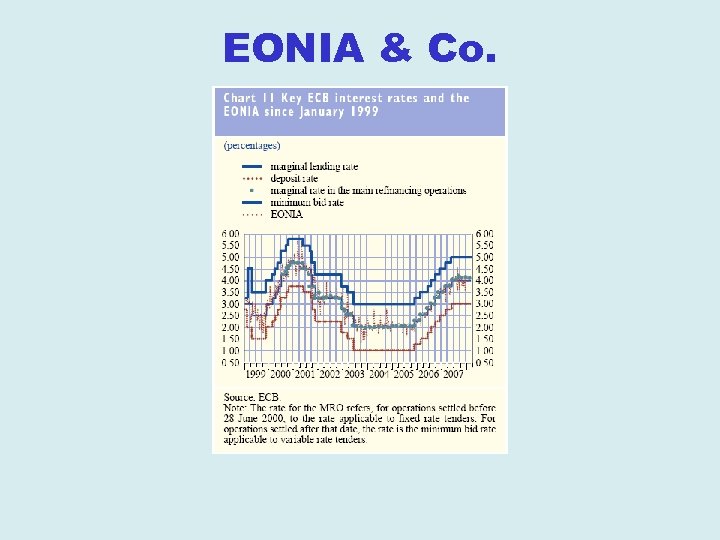
EONIA & Co.
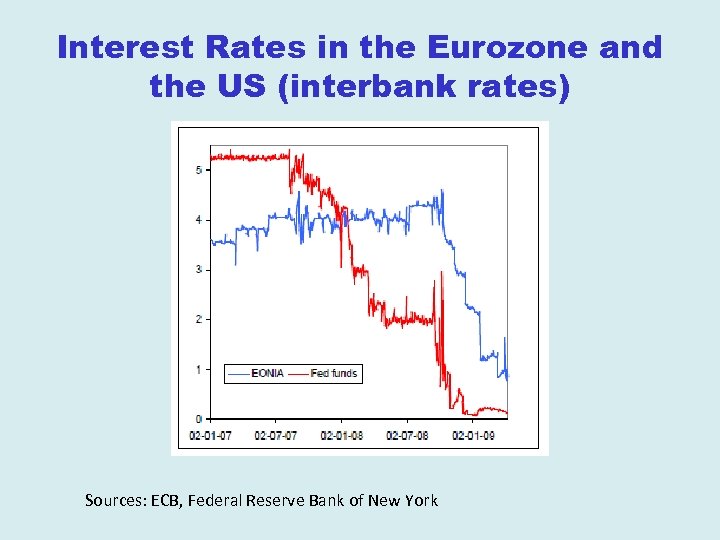
Interest Rates in the Eurozone and the US (interbank rates) Sources: ECB, Federal Reserve Bank of New York
Comparison With Other Strategies • The US Fed: – legally required to achieve both price stability and a high level of employment – does not articulate an explicit strategy. • Inflation-targeting central banks (Czech Republic, Poland, Sweden, UK, etc. ): – announce a target (e. g. 2. 5 per cent in the UK), a margin (e. g. ± 1%) and a horizon (2– 3 years) – compare inflation forecast and target, and act accordingly.
Does One Size Fit All? • With a single monetary policy, individual national economic conditions cannot be responded to. • When asymmetric shocks affect different countries, only fiscal responses can differ. • Monetary policy cannot allow for differences among member countries.
The Record So Far in a Difficult Period • • • the 9/11/2001 attack on United States oil shock in 2000 September 2002 stock market crash Afghanistan & Iraq Wars Global Financial Crisis 2008 & Recession • Bailouts of European Banks
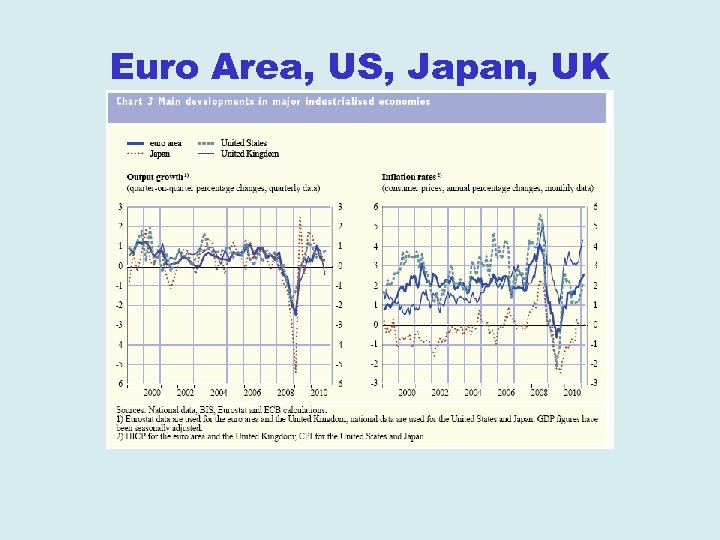
Euro Area, US, Japan, UK
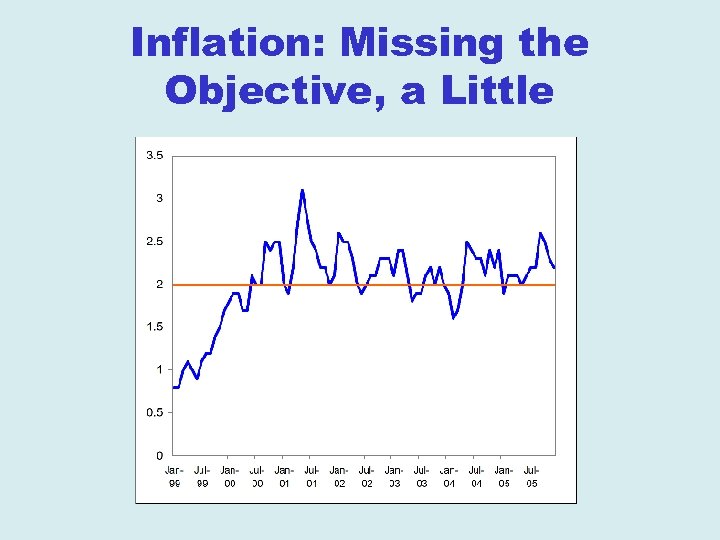
Inflation: Missing the Objective, a Little
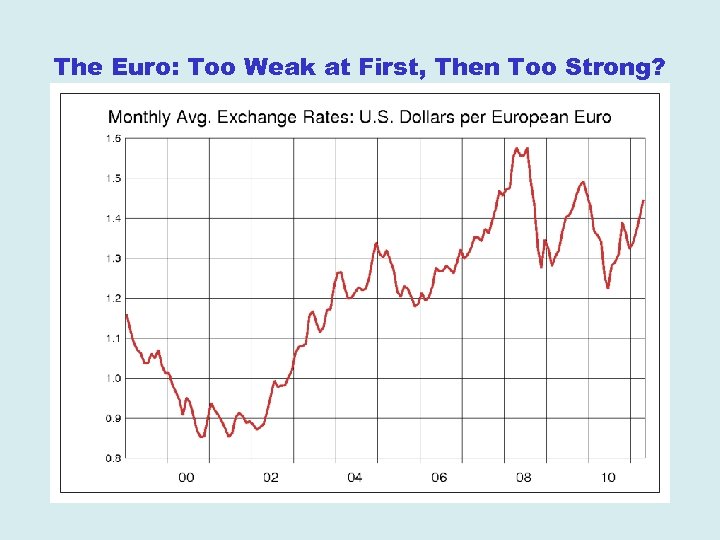
The Euro: Too Weak at First, Then Too Strong?
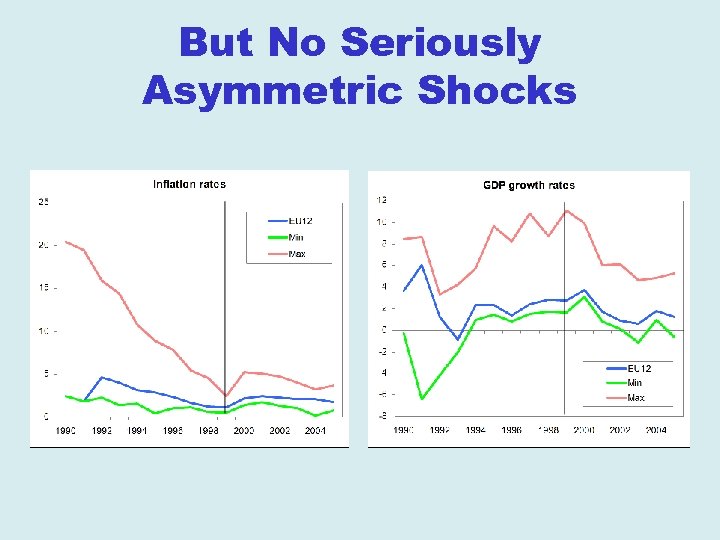
But No Seriously Asymmetric Shocks
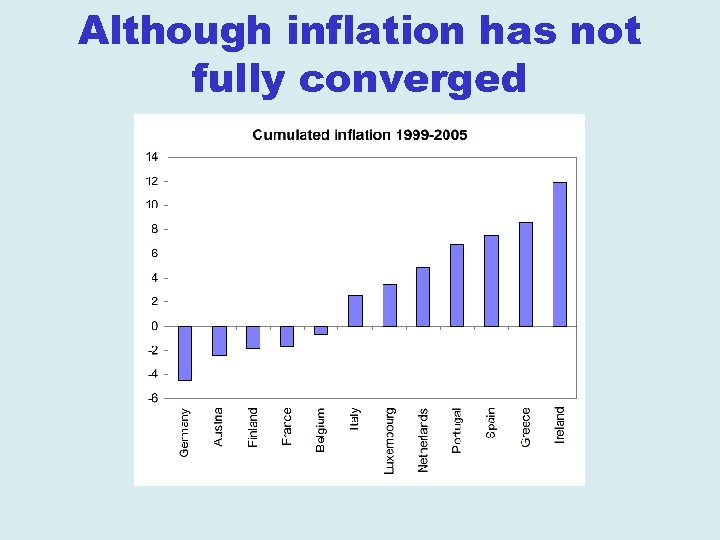
Although inflation has not fully converged
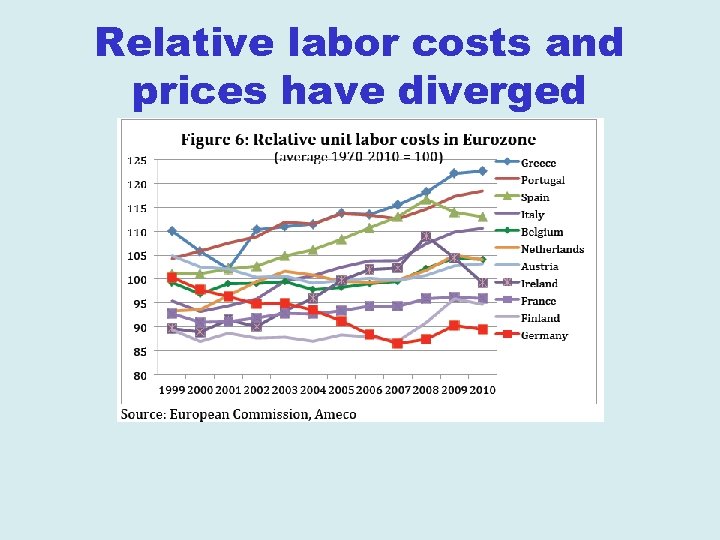
Relative labor costs and prices have diverged
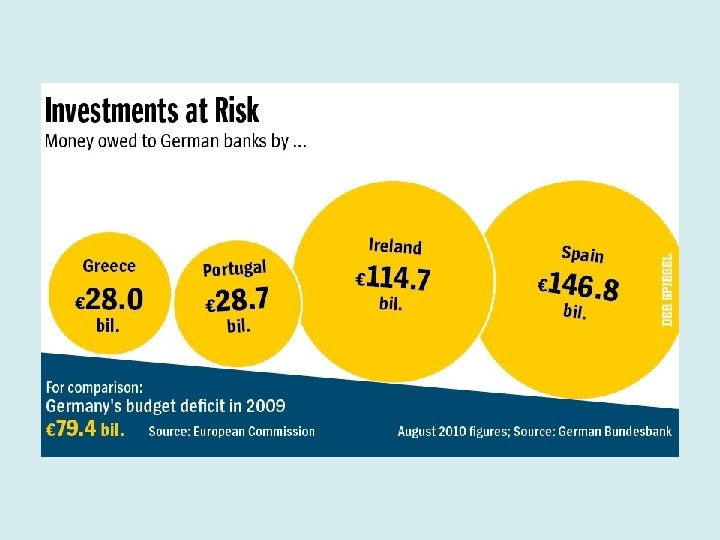
Divergent Inflation Rates • Failure to prevent divergent inflation rates leads to differing real interest rates • Cheap real interest rates in peripheral countries (Greece, Ireland, Portugal, Spain) led to real estate booms, busts • Core countries’ banks lend large sums to periphery • Financial crisis leads peripheral countries to bail out their banks, go heavily into debt
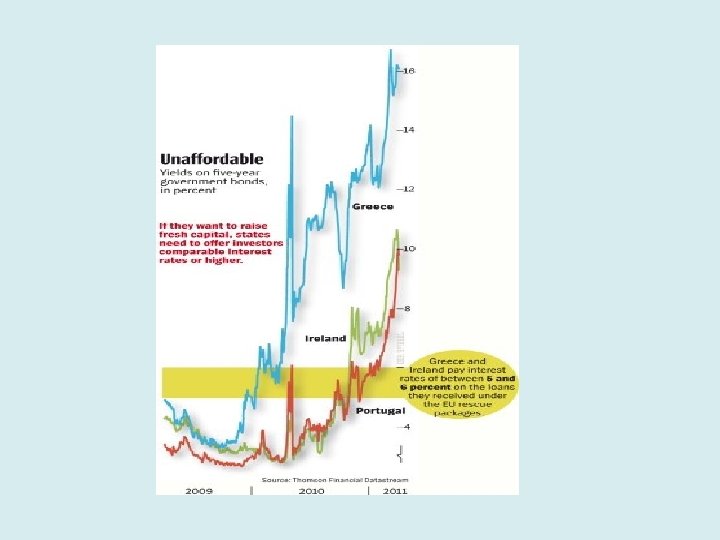
The Greek Debt Crisis • Greek debt/GDP ratio reached 113% and deficit/GDP ratio reached 12. 7% in 2009. • Foreign bondholders became doubtful that Greece could continue to roll over its increasing debt, forced interest rates higher. • EU faced choice between Greek default and bailout with tough conditions. • IMF and EU agreed to lend Greece up to $146 billion over three years. • Greece to increase sales taxes, reduce public sector salaries, pensions, eliminate bonuses.
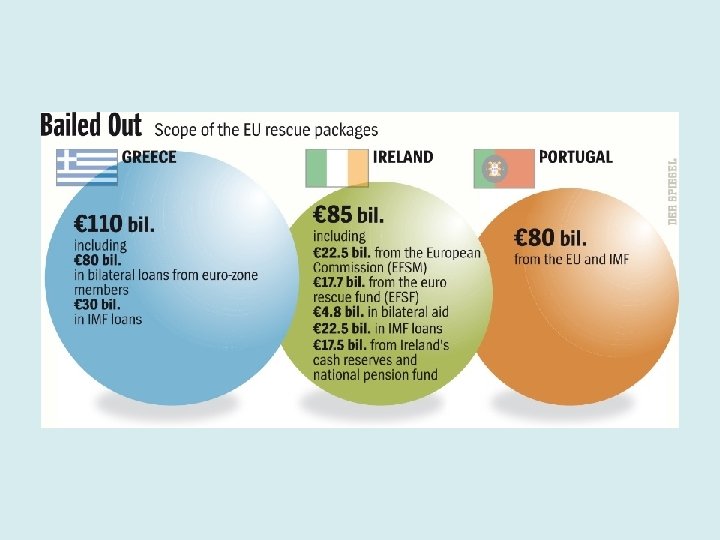
Greek Bailout by EMU & IMF • May 2010: Greece adopts € 110 bn program supported by the EU and IMF • Program aims to restore sustainable public finances and recover lost competitiveness • Far-reaching structural reforms being adopted (e. g. landmark pension reform) • Drastic cuts in public expenditure across all levels of government • Program should stabilize debt ratio (but at a high level) • Requires sharp cuts in wages, prices and costs, unpopular with strong unions • Falling GDP raises debt ratio even if debt falls
Irish Crisis • Reckless lending by banks to commercial and residential property developers based on low real interest rates • Bad debt of banks causes problems for whole economy, government bailout • Deep recession – 14% unemployment • November 2010: Ireland adopts € 85 bn program supported by the EU and IMF • Program aims to cut budget deficit and repair the damage caused by the banking crisis
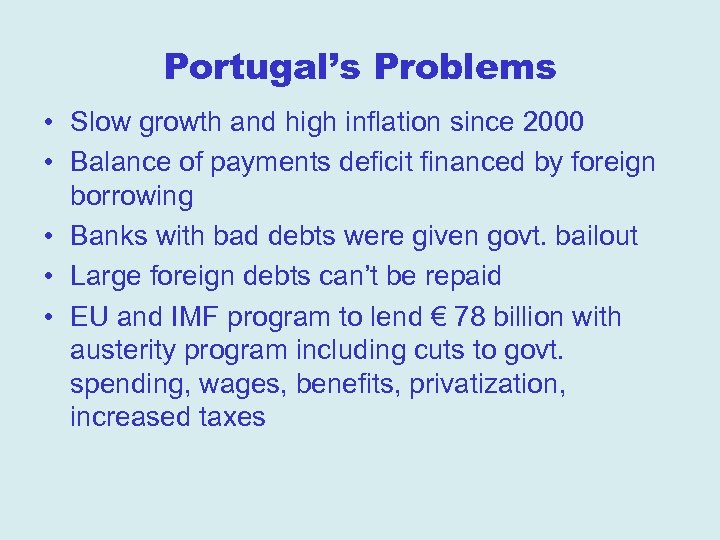
Portugal’s Problems • Slow growth and high inflation since 2000 • Balance of payments deficit financed by foreign borrowing • Banks with bad debts were given govt. bailout • Large foreign debts can’t be repaid • EU and IMF program to lend € 78 billion with austerity program including cuts to govt. spending, wages, benefits, privatization, increased taxes
 Скачать презентацию The European Monetary Union Stanley W Black University
6989cd6f4a42d5092ab08ac94ced65f2.ppt