


 Скачать презентацию The EU SHIPSAN TRAINET Project Assoc Prof Christos
73c3db65995d12872c15453028d2f519.ppt
- Количество слайдов: 31
 The EU SHIPSAN TRAINET Project Assoc. Prof. Christos Hadjichristodoulou Project Leader University of Thessaly, Greece
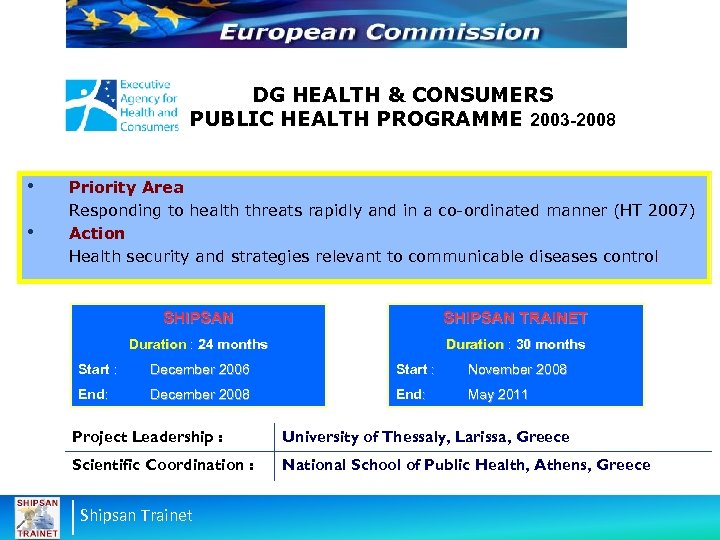 DG HEALTH & CONSUMERS PUBLIC HEALTH PROGRAMME 2003 -2008 • • Priority Area Responding to health threats rapidly and in a co-ordinated manner (HT 2007) Action Health security and strategies relevant to communicable diseases control SHIPSAN TRAINET Duration : 24 months Duration : 30 months Start : December 2006 Start : November 2008 End: December 2008 End: May 2011 Project Leadership : University of Thessaly, Larissa, Greece Scientific Coordination : National School of Public Health, Athens, Greece Shipsan Trainet
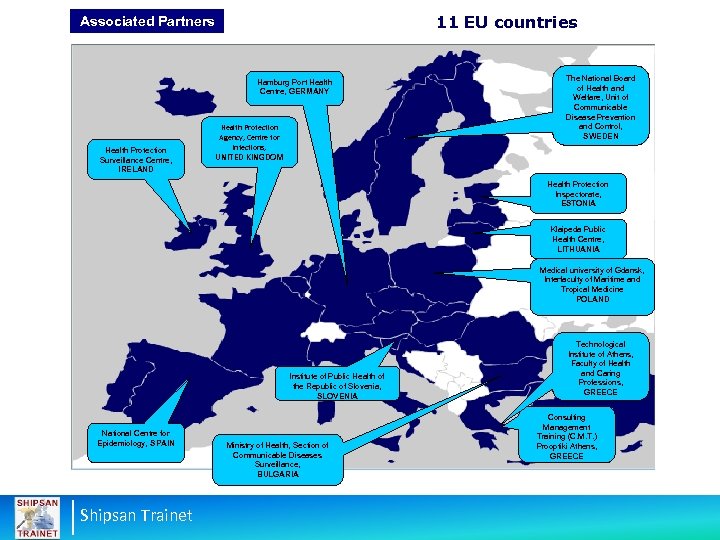 11 EU countries Associated Partners Hamburg Port Health Centre, GERMANY Health Protection Surveillance Centre, IRELAND Health Protection Agency, Centre for Infections, The National Board of Health and Welfare, Unit of Communicable Disease Prevention and Control, SWEDEN UNITED KINGDOM Health Protection Inspectorate, ESTONIA Klaipeda Public Health Centre, LITHUANIA Medical university of Gdansk, Interfaculty of Maritime and Tropical Medicine POLAND Institute of Public Health of the Republic of Slovenia, SLOVENIA National Centre for Epidemiology, SPAIN Shipsan Trainet Ministry of Health, Section of Communicable Diseases Surveillance, BULGARIA Technological Institute of Athens, Faculty of Health and Caring Professions, GREECE Consulting Management Training (C. M. T. ) Prooptiki Athens, GREECE
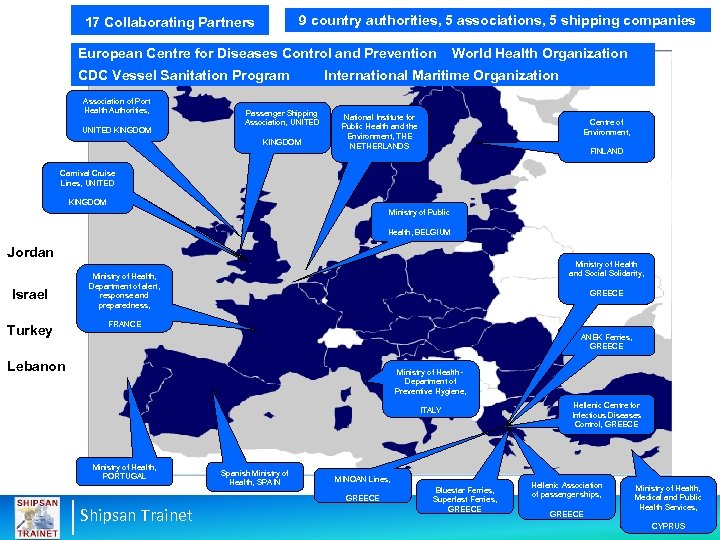 9 country authorities, 5 associations, 5 shipping companies 17 Collaborating Partners European Centre for Diseases Control and Prevention CDC Vessel Sanitation Program Association of Port Health Authorities, UNITED KINGDOM Passenger Shipping Association, UNITED KINGDOM World Health Organization International Maritime Organization National Institute for Public Health and the Environment, THE NETHERLANDS Centre of Environment, FINLAND Carnival Cruise Lines, UNITED KINGDOM Ministry of Public Health, BELGIUM Jordan Israel Turkey Ministry of Health and Social Solidarity, Ministry of Health, Department of alert, response and preparedness, GREECE FRANCE ANEK Ferries, GREECE Lebanon Ministry of Health Department of Preventive Hygiene, ITALY Ministry of Health, PORTUGAL Spanish Ministry of Health, SPAIN MINOAN Lines, GREECE Shipsan Trainet Bluestar Ferries, Superfast Ferries, GREECE Hellenic Centre for Infectious Diseases Control, GREECE Hellenic Association of passenger ships, GREECE Ministry of Health, Medical and Public Health Services, CYPRUS
 What the SHIPSAN has achieved From 2006 -2008 • The most appropriate programme for the EU (based on best practice, experience, existing programmes etc) was explored • Communicable diseases and outbreaks have been published from 1970 to 2006 on passenger ships were collated and included in the State of the Art report • The European passenger ships market was examined and EU MS were categorised in four groups • A study was conducted in the 32 countries and 176 authorities • Identified the EU, national and international legislation applied by competent authorities in the EU • Description of the current situation in the EU based on study findings (needs, gaps) • Established a partnership which consists of experts scientists and intends to expand it • Developed synergies with ECDC, authorities, the industry, key stakeholders and internationally recognised programmes Shipsan Trainet
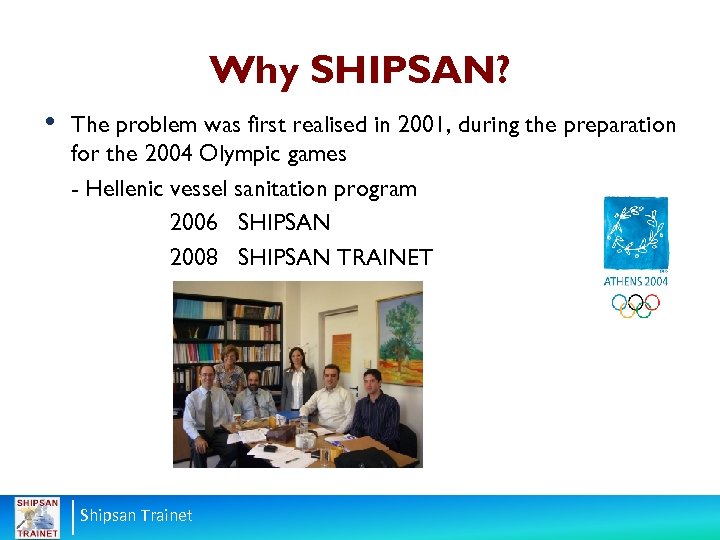 Why SHIPSAN? • The problem was first realised in 2001, during the preparation for the 2004 Olympic games - Hellenic vessel sanitation program 2006 SHIPSAN 2008 SHIPSAN TRAINET Shipsan Trainet
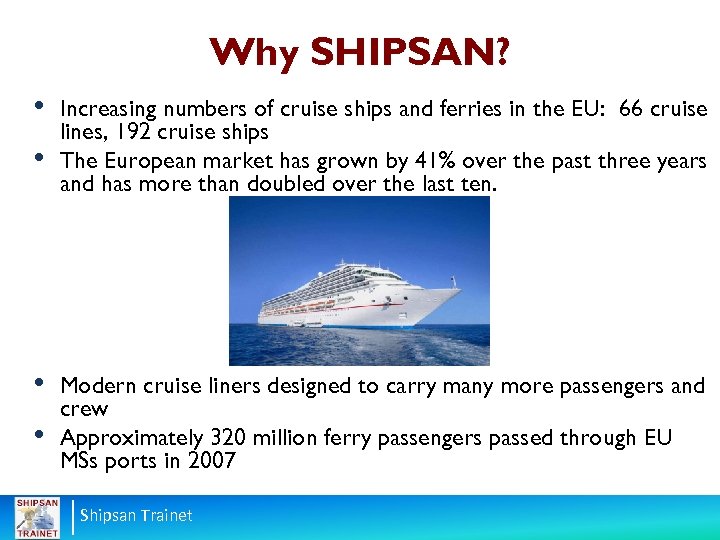 Why SHIPSAN? • • Increasing numbers of cruise ships and ferries in the EU: 66 cruise lines, 192 cruise ships The European market has grown by 41% over the past three years and has more than doubled over the last ten. Modern cruise liners designed to carry many more passengers and crew Approximately 320 million ferry passengers passed through EU MSs ports in 2007 Shipsan Trainet
 Why SHIPSAN? • In many countries different authorities (up to five) have the responsibility to enter a ship and conduct an inspection • Quality of hygiene inspections of ships varies enormously between countries in Europe, even within countries, even within the same port • Lack of knowledge, lack of training, overreaction at ports • Introduction of the SSC has been a retrograde step in Europe especially on passenger ships Shipsan Trainet
 Why SHIPSAN? • Surveillance of disease associated with ships is inadequate • Maritime Declaration of Health does not give adequate information to port health authorities for risk assessment and surveillance purposes • Outbreaks and diseases on board – reported mainly to countries with specific surveillance systems: US VSP, Sydney, EU-ELDSNet, DIVINET, Southampton UK • Lack of communication, duplication of investigations Shipsan Trainet
 Public health importance of passenger ships • Large number of passengers in a confined space • Infectious diseases may easily transmitted via person to person transmission • Trans-national transmission may occur • Passengers share food and water (foodborne and waterborne diseases) • Ashore activities include risks • The average of passengers is a risk factor Shipsan Trainet
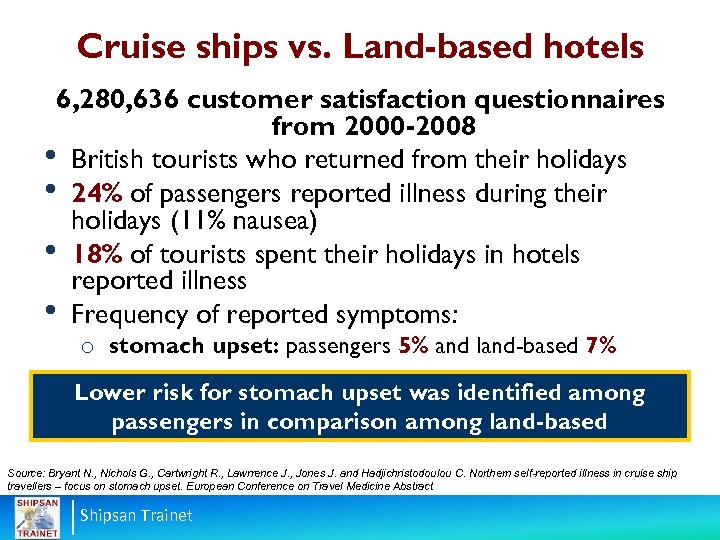 Cruise ships vs. Land-based hotels 6, 280, 636 customer satisfaction questionnaires from 2000 -2008 • British tourists who returned from their holidays • 24% of passengers reported illness during their holidays (11% nausea) • 18% of tourists spent their holidays in hotels reported illness • Frequency of reported symptoms: o stomach upset: passengers 5% and land-based 7% Lower risk for stomach upset was identified among passengers in comparison among land-based Source: Bryant N. , Nichols G. , Cartwright R. , Lawrrence J. , Jones J. and Hadjichristodoulou C. Northern self-reported illness in cruise ship travellers – focus on stomach upset. European Conference on Travel Medicine Abstract Shipsan Trainet
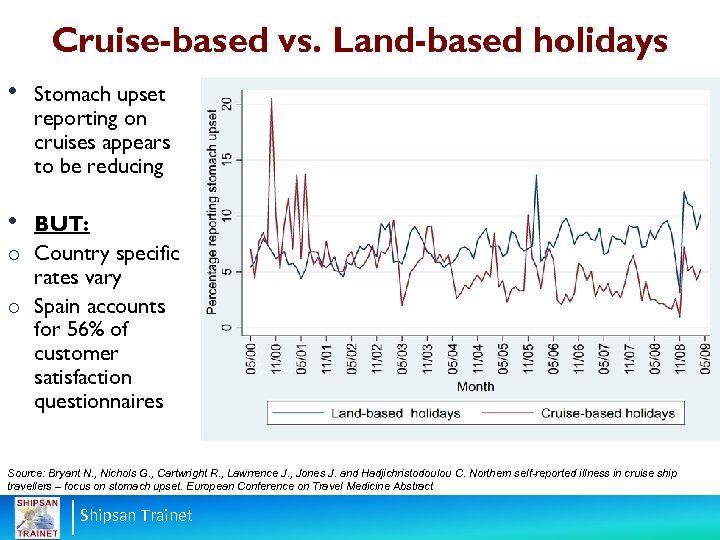 Cruise-based vs. Land-based holidays • Stomach upset reporting on cruises appears to be reducing • BUT: o Country specific rates vary o Spain accounts for 56% of customer satisfaction questionnaires Source: Bryant N. , Nichols G. , Cartwright R. , Lawrrence J. , Jones J. and Hadjichristodoulou C. Northern self-reported illness in cruise ship travellers – focus on stomach upset. European Conference on Travel Medicine Abstract Shipsan Trainet
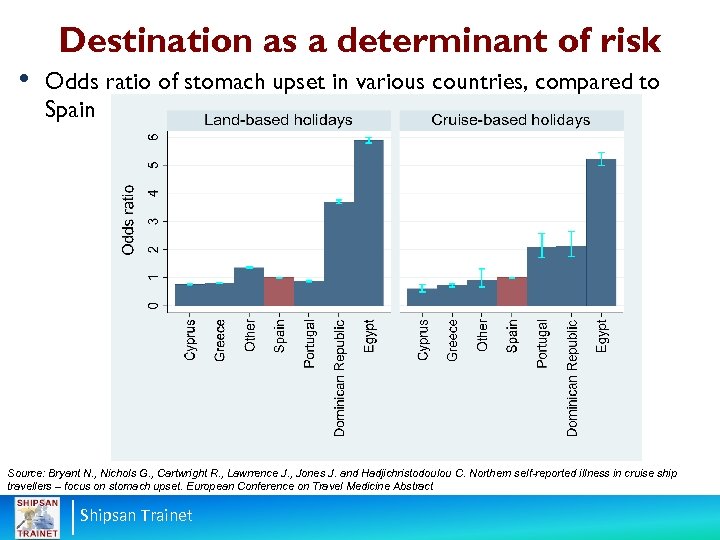 • Destination as a determinant of risk Odds ratio of stomach upset in various countries, compared to Spain Source: Bryant N. , Nichols G. , Cartwright R. , Lawrrence J. , Jones J. and Hadjichristodoulou C. Northern self-reported illness in cruise ship travellers – focus on stomach upset. European Conference on Travel Medicine Abstract Shipsan Trainet
 SHIPSAN TRAINET Networks Research Manual Training Shipsan Trainet
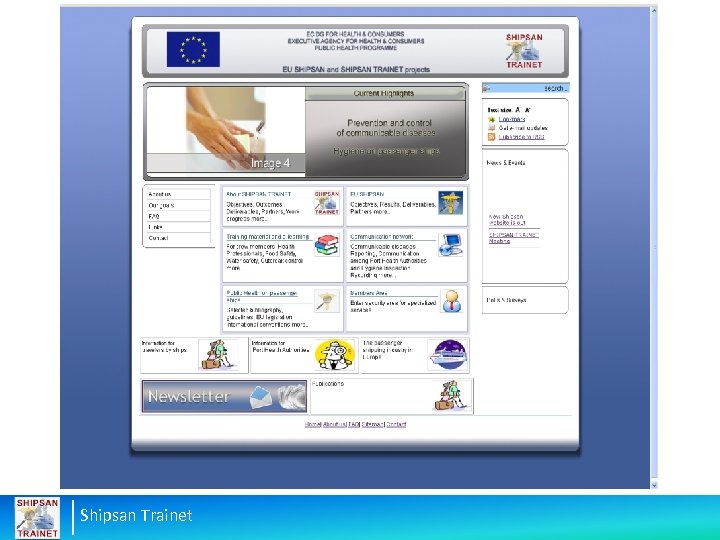
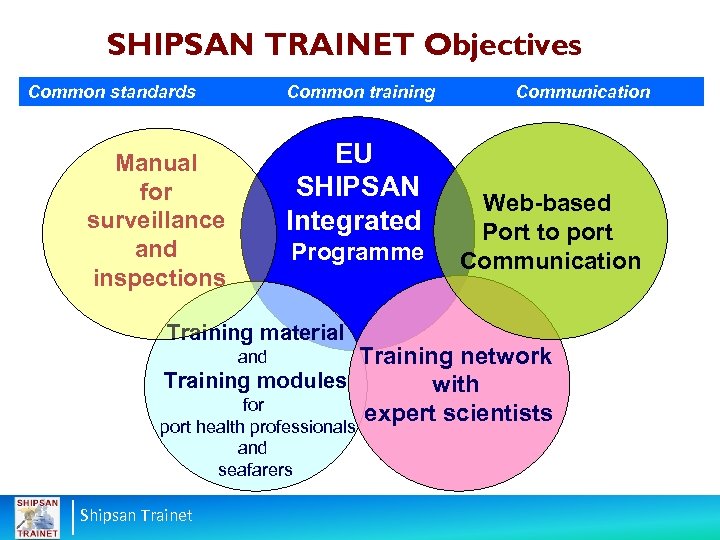 SHIPSAN TRAINET Objectives Common standards Common training EU SHIPSAN Integrated Manual for surveillance and inspections Programme Training material Communication Web-based Port to port Communication Training network Training modules with for expert scientists port health professionals and seafarers Shipsan Trainet
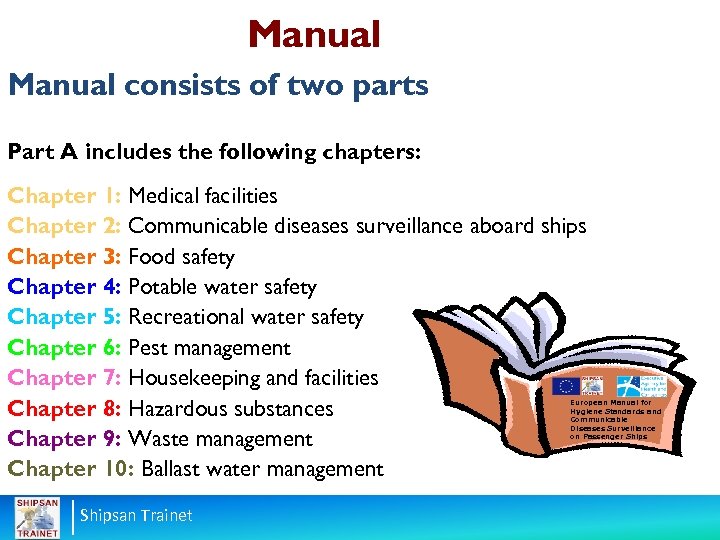 Manual consists of two parts Part A includes the following chapters: Chapter 1: Medical facilities Chapter 2: Communicable diseases surveillance aboard ships Chapter 3: Food safety Chapter 4: Potable water safety Chapter 5: Recreational water safety Chapter 6: Pest management Chapter 7: Housekeeping and facilities Chapter 8: Hazardous substances Chapter 9: Waste management Chapter 10: Ballast water management European Manual for Hygiene Standards and Communicable Diseases Surveillance on Passenger Shipsan Trainet
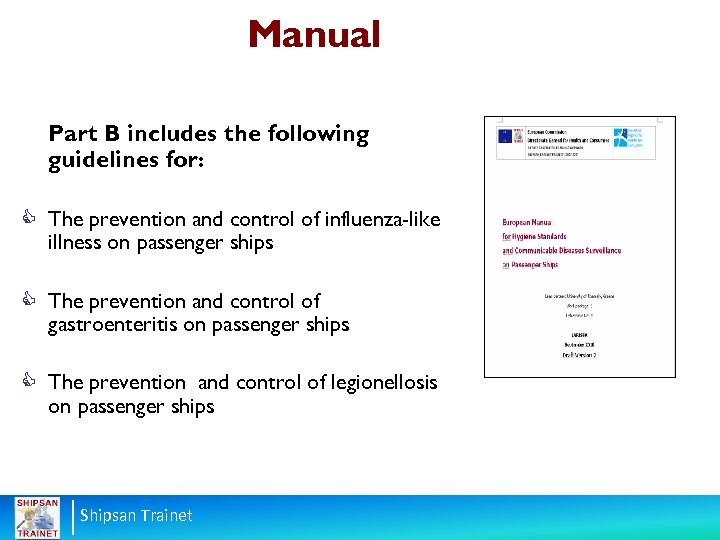 Manual Part B includes the following guidelines for: C The prevention and control of influenza-like illness on passenger ships C The prevention and control of gastroenteritis on passenger ships C The prevention and control of legionellosis on passenger ships Shipsan Trainet
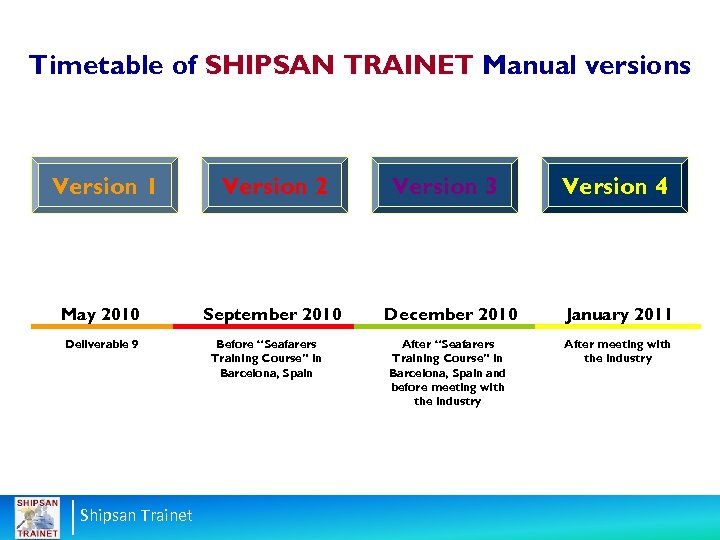 Timetable of SHIPSAN TRAINET Manual versions Version 1 Version 2 May 2010 September 2010 Deliverable 9 Shipsan Trainet Before “Seafarers Training Course” in Barcelona, Spain Version 3 Version 4 December 2010 January 2011 After “Seafarers Training Course” in Barcelona, Spain and before meeting with the industry After meeting with the industry
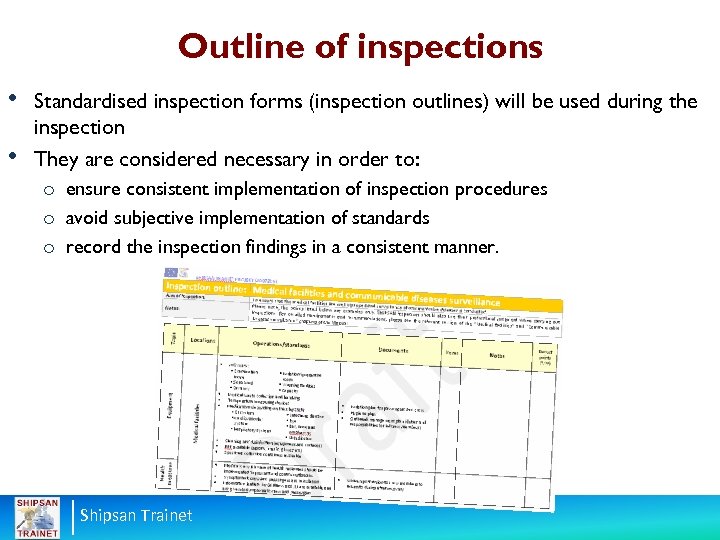 Outline of inspections • • Standardised inspection forms (inspection outlines) will be used during the inspection They are considered necessary in order to: o ensure consistent implementation of inspection procedures o avoid subjective implementation of standards o record the inspection findings in a consistent manner. Shipsan Trainet
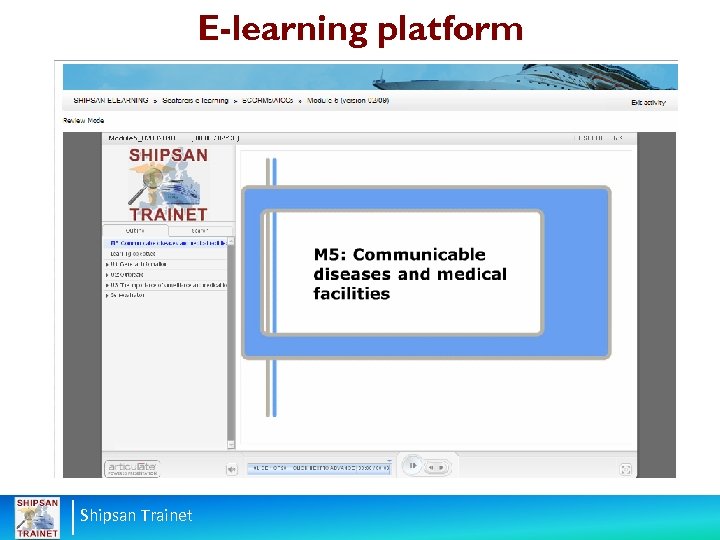
 Training • Pool of trainers (35 trainers) • 2 training courses o One 2 -day “train the trainers” course and 3 -day training course for seafarers (62 participants) in Barcelona, Spain (September 2010) o One 4 -day course including practical training for Port Health Officers (34 participants from EU and 16 from Euro. Med countries) in Athens, Greece (January 2010) • E-learning platform: pre-reading tool and distance learning Shipsan Trainet
 E-learning platform Shipsan Trainet
 Shipsan Trainet
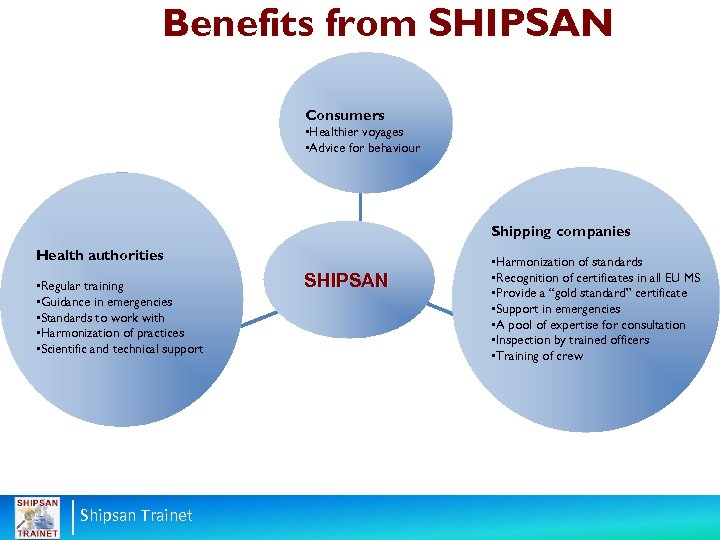 Benefits from SHIPSAN Consumers • Healthier voyages • Advice for behaviour Shipping companies Health authorities • Regular training • Guidance in emergencies • Standards to work with • Harmonization of practices • Scientific and technical support Shipsan Trainet SHIPSAN • Harmonization of standards • Recognition of certificates in all EU MS • Provide a “gold standard” certificate • Support in emergencies • A pool of expertise for consultation • Inspection by trained officers • Training of crew
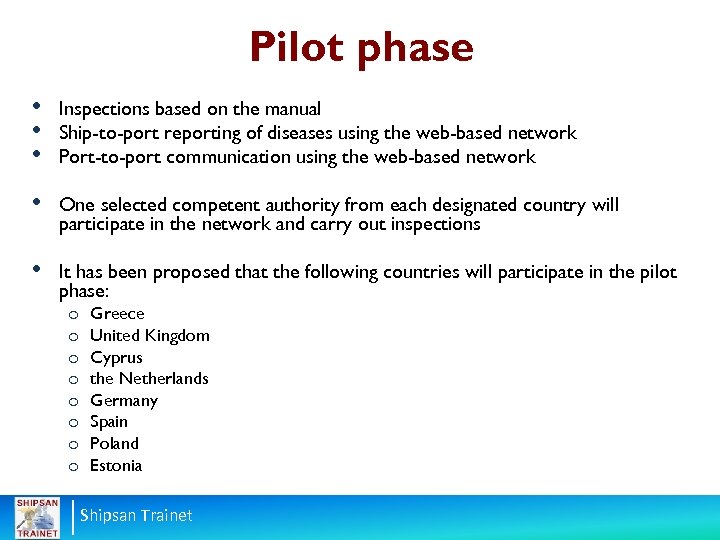 Pilot phase • • • Inspections based on the manual Ship-to-port reporting of diseases using the web-based network Port-to-port communication using the web-based network • One selected competent authority from each designated country will participate in the network and carry out inspections • It has been proposed that the following countries will participate in the pilot phase: o o o o Greece United Kingdom Cyprus the Netherlands Germany Spain Poland Estonia Shipsan Trainet
 Pilot phase • At least 2 cruise ship and 2 ferry companies • Passenger ship/ship: Any seagoing or inland passenger ship (with more than 12 passengers) sailing within the EU waters, providing accommodation and/or food to passengers, and/or potable water from the ship water distribution system to passengers, with a duration of voyage of more than 6 hours. Shipsan Trainet
 We have to acknowledge • • • The most of the cruise lines are enforcing high hygiene standards They have quality management systems in place Outbreak plans and management teams in place They use surveillance on pre-embarkation and during the voyage Many other control measures However, there is always space for improvement for both port health authorities and the industry Shipsan Trainet
 Future permanent implementation Legal frame Options • EU Directive (legislation) • Memorandum of Understanding among EU MSs • Code of practice Shipsan Trainet
 Future permanent implementation Who will operate a future programme? • Coordinating centre ? ? ? o o o o Maintenance of EU database including inspection, laboratory and surveillance data Data collection and dissemination among all parties Network update Auditing coordination Training network coordination (SHIPSAN trainet) Coordinate surveillance Coordinate outbreak investigation Evaluation and review of the network Decisions upon European Commission and EU Member States Shipsan Trainet
 Future permanent implementation Next steps o o Discussion with DG MOVE European Maritime Safety Authority (EMSA) ECDC advisory board EWRS focal points of EU MSs Shipsan Trainet
 SHIPSAN partnership commitment Collaborate with industry: ü Training ü Consultation ü Research Shipsan Trainet
 Thank you for inviting me and I wish to everybody safe trips!!! Shipsan Trainet