


 Скачать презентацию The EU Africa Introduction The ties
The EU & Africa.pptx
- Количество слайдов: 27
 The EU & Africa
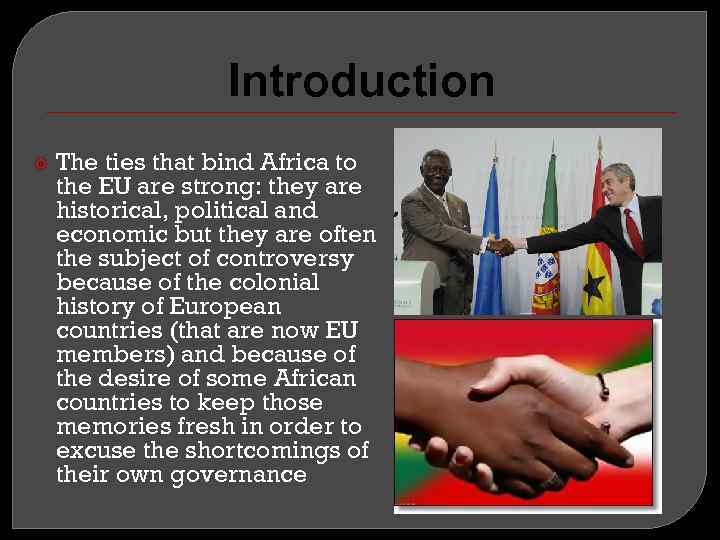 Introduction The ties that bind Africa to the EU are strong: they are historical, political and economic but they are often the subject of controversy because of the colonial history of European countries (that are now EU members) and because of the desire of some African countries to keep those memories fresh in order to excuse the shortcomings of their own governance
 Since the 1970 s the EU has built up a relationship with Africa which moves on from that era, which recognizes both Africa’s problems and its place in the world. In recent years the EU-African relationship has been characterized by a widening out the dialogue from aid and African issues to consulting on broader issues of interest to both parties. Africa is a big continent with a multiplicity of different countries, ethnic divisions and religions.
 This paper, which focuses most of its attention on sub-Saharan Africa, cannot cover the detail of all the many issues and problems that concern Africa and Africans but focuses on the key problems, the EU’s political relationship with the continent, the major policy areas of peace and security, democracy and governance, trade and infrastructure; and finally, it looks at future developments.
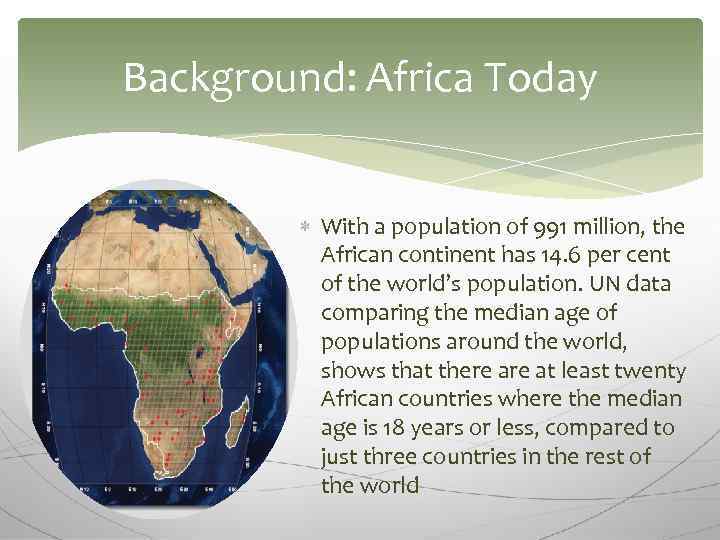 Background: Africa Today With a population of 991 million, the African continent has 14. 6 per cent of the world’s population. UN data comparing the median age of populations around the world, shows that there at least twenty African countries where the median age is 18 years or less, compared to just three countries in the rest of the world
 In terms of wealth, Africa has vast natural resources but only a tiny share of the world’s wealth. A study in 2000 found that Africa had just one per cent of the world’s household wealth, compared to over 34 per cent in North America and 29. 6 per cent in Europe. The mineral resources of Africa have often proved to be a source of conflict: diamonds fuelled internal conflict in Angola and Sierra Leone in the 1990 s, leading to UN Security Council intervention. In the conflict in the Democratic Republic of Congo, mineral resources are an important factor.
 In short, many African countries are among the world’s poorest, least developed and worst governed countries, subject to more than their fair share of natural/humanitarian disasters and savage civil and cross-border conflicts.
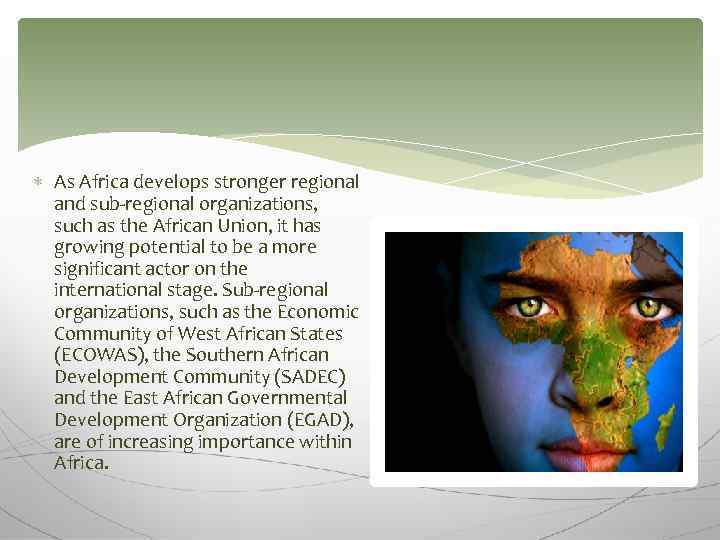 As Africa develops stronger regional and sub-regional organizations, such as the African Union, it has growing potential to be a more significant actor on the international stage. Sub-regional organizations, such as the Economic Community of West African States (ECOWAS), the Southern African Development Community (SADEC) and the East African Governmental Development Organization (EGAD), are of increasing importance within Africa.
 When the European Economic Community was created in 1957, 43 sub-Saharan African countries were still under European colonial rule. Whilst most of Africa was de-colonised in the 1960 s, the process of political change continued until the end of white minority rule in South Africa in 1994. EU-Africa Political Relations
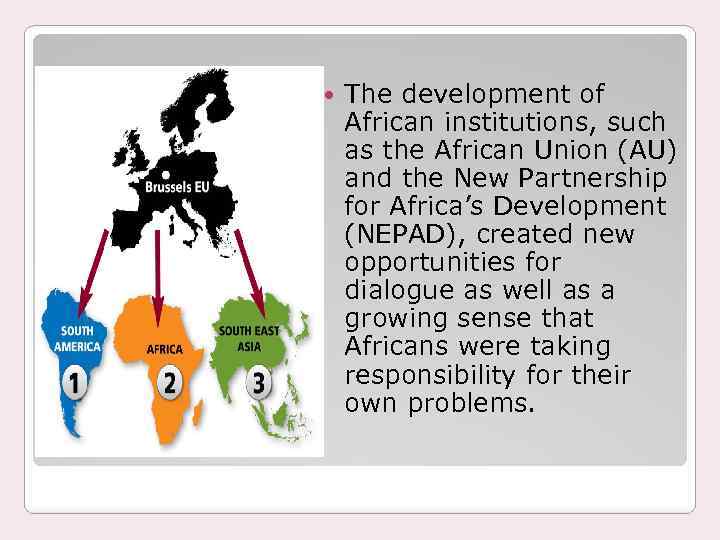 The development of African institutions, such as the African Union (AU) and the New Partnership for Africa’s Development (NEPAD), created new opportunities for dialogue as well as a growing sense that Africans were taking responsibility for their own problems.
 The EU’s response was the 2005 Strategy for Africa – a first attempt at taking a holistic view of the African continent and its relationship with the EU. The focus in 2005 was still on accelerating African development – partly reflecting the fact that EU aid to Africa had tripled over the 20 years from 1985 to 2005 and constituted 60 per cent of the overseas development aid to Africa - and the need to accelerate progress towards the UN’s Millennium Development Goals.
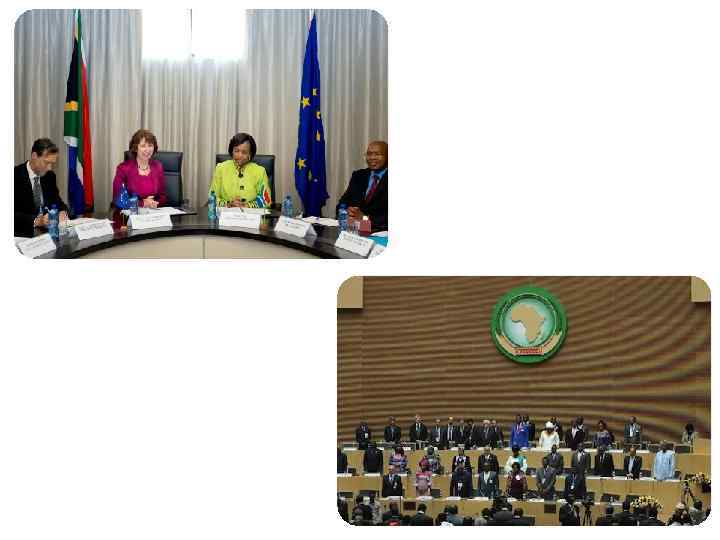
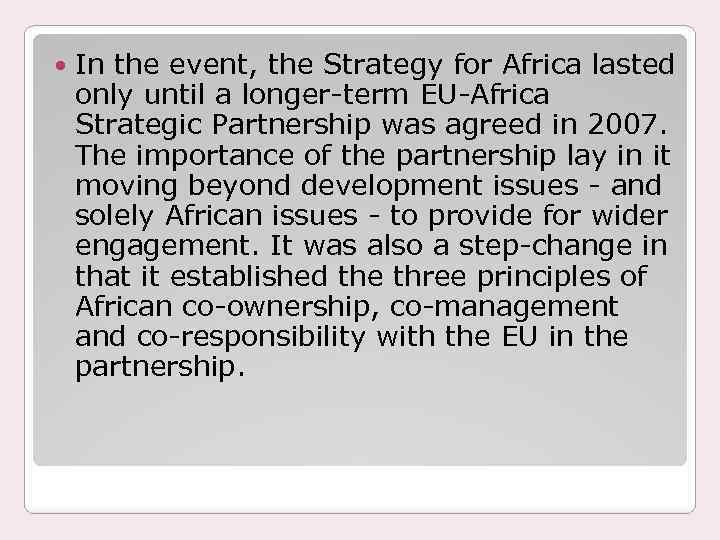 In the event, the Strategy for Africa lasted only until a longer-term EU-Africa Strategic Partnership was agreed in 2007. The importance of the partnership lay in it moving beyond development issues - and solely African issues - to provide for wider engagement. It was also a step-change in that it established the three principles of African co-ownership, co-management and co-responsibility with the EU in the partnership.
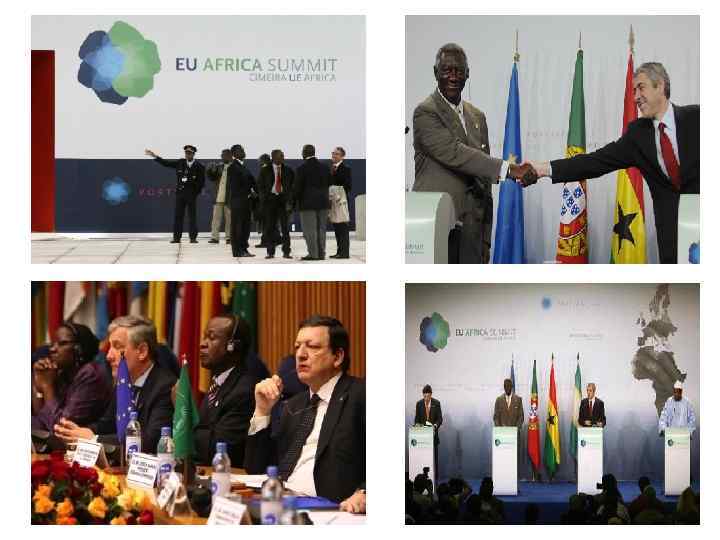
 The EU-Africa Partnership is due for review in 2010, when an EU-Africa Summit (the third such meeting) will be held. The Commission has already produced reports assessing progress on the agreed programme of work for the period 2008 -10.
 The Partnership works through eight subgroups or programs, themselves referred to as "strategic partnerships": 1 Peace and security 2 Democratic governance and human rights 3 Trade, regional integration and infrastructure 4 Millennium development goals (MDGs) 5 Energy 6 Climate change 7 Migration, mobility and employment 8 Science, information society and space.
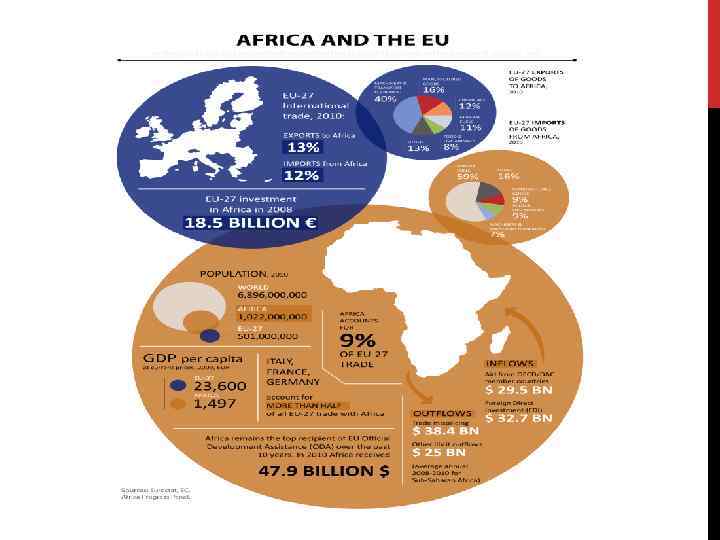
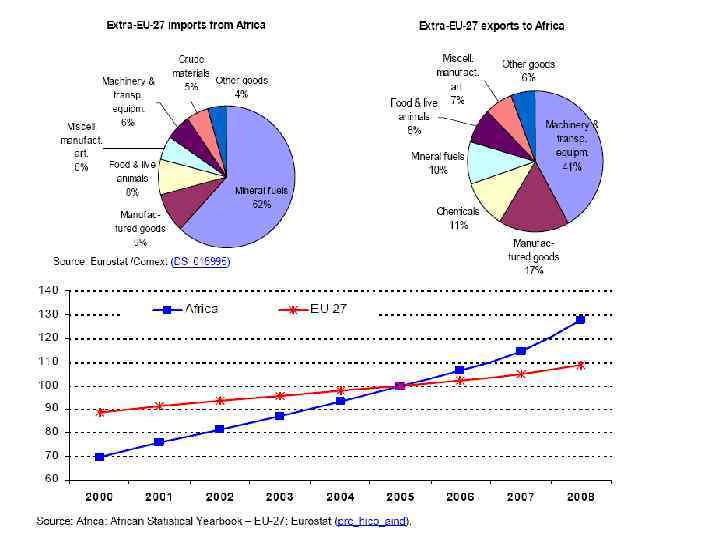
 Trade & Infrastructure O The EU, the largest trading partner for almost every country in Africa, has a trade deficit with Africa (€ 38 billion in 2008), importing energy (mostly from North Africa), agricultural products and textiles from the continent. As the economies of many African countries get stronger – GDP growth in Africa in 2007/08 was 10. 5 per cent per capita, compared to just 0. 8 per cent in the EU - the partnership seeks to support the development of African business so that it can meet international standards in terms of quality and safety.
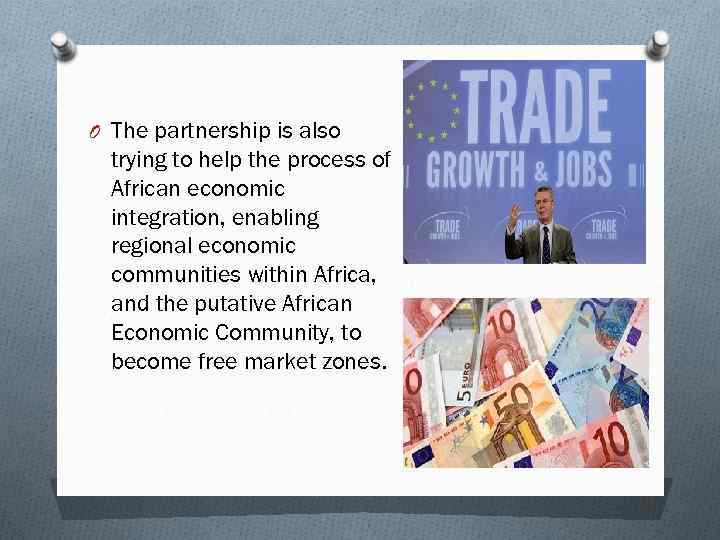 O The partnership is also trying to help the process of African economic integration, enabling regional economic communities within Africa, and the putative African Economic Community, to become free market zones.
 O Poor infrastructure is a contributory factor in Africa’s relative economic underperformance; it is estimated, for example, that half of all crops produced in landlocked Uganda’s fertile regions never reach market. The EU Infrastructure Fund for Africa has been addressing this problem – alongside other international institutions such as the World Bank – for some time.
 Future Developments The assessment of the EU-Africa Partnership published last year by the Commission identified important examples of progress in meeting its objectives. They included the significant progress in improving African capacity to deal with conflict through what is known as the African Peace & Security Architecture, with the likelihood that the African Stand-by Force will become operational in 2010. Approximately € 1 billion have been made available by the EU for the peace and security work.
 The EU’s development aid to Africa in the period 2007 -13 is very large at around € 17 billion per year (including contributions from Member States) and due to increase to € 25 billion a year from 2010, but it is hard for outsiders to judge how effectively it is spent[9]. No doubt some of it has fallen victim to corruption, but nonetheless, EU aid has been vital in strengthening the capacity of the African Union and in tackling countless development and humanitarian problems.
 Relations between the European Union (EU) and the African continent are undergoing significant transformations. Key changes in the policy context include far-reaching regional integration processes in Africa and in Europe and the rise of new international partners for Africa, in parallel with increasing recognition of partnership and ownership as important cooperation principles. These dynamics are reflected in the cooperation frameworks between the continents, and in the way these frameworks have been developing and have been used. By understanding the policy context, as well as the specific added value, funding and institutional aspects of the main frameworks for EU-Africa relations, stakeholders in Africa and Europe can seek to engage with and influence the way the EU and Africa interact CONCLUSION