 Скачать презентацию The Energy Advancement Leadership Conference Available Technologies Energy
0edc00fde1411892d06c8da69c127406.ppt
- Количество слайдов: 28



The Energy Advancement Leadership Conference Available Technologies: Energy Efficiency & Air Quality Tom Fitzpatrick Energy Systems Laboratory Texas Engineering Experiment Station Texas A&M University System November 17, 2004 © 2004, Energy Systems Laboratory, Texas A&M University System 1
Objectives • Introduce the Energy Systems Lab • Call your attention to practical potential of energy efficiency • Highlight recent work on methodology to calculate creditable emissions reductions from EE/RE in clean air plans • Highlight a low-investment, high return approach to improving building efficiency, called Continuous Commissioning. SM • Invite you to a new event. © 2004, Energy Systems Laboratory, Texas A&M University System
Energy Systems Laboratory • Division within Texas Engineering Experiment Station, Texas A&M University System • Conducts research on energy efficient design/operations for large buildings & renewable energy applications • Conducts testing of HVAC equipment, meters/sensors & photovoltaic technologies • Developed and supports market deployment of building optimization technique - Continuous Commissioning® • Provides technical support for energy efficiency initiatives in TERP © 2004, Energy Systems Laboratory, Texas A&M University System
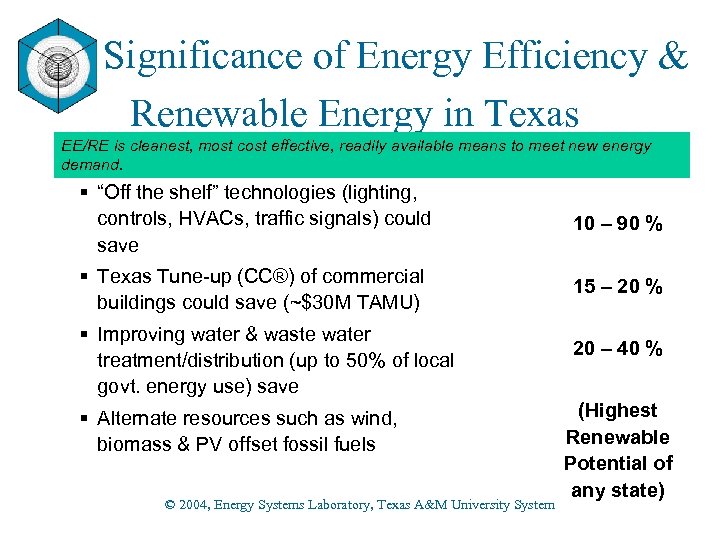
Significance of Energy Efficiency & Renewable Energy in Texas EE/RE is cleanest, most cost effective, readily available means to meet new energy demand. § “Off the shelf” technologies (lighting, controls, HVACs, traffic signals) could save 10 – 90 % § Texas Tune-up (CC®) of commercial buildings could save (~$30 M TAMU) 15 – 20 % § Improving water & waste water treatment/distribution (up to 50% of local govt. energy use) save § Alternate resources such as wind, biomass & PV offset fossil fuels © 2004, Energy Systems Laboratory, Texas A&M University System 20 – 40 % (Highest Renewable Potential of any state)
Energy Efficiency in the TERP • SB 5 (77 th) created framework for SIP credits from Energy Efficiency & Renewable Energy (EE/RE) • Authorized TCEQ to promote EE/RE as a control strategy & to create a methodology for obtaining SIP credits • Mandated statewide adoption of Energy Codes for residential/commercial construction • Mandated 5% energy savings goal annually by local government buildings in affected counties © 2004, Energy Systems Laboratory, Texas A&M University System
An Easily Accessible Web Based Emissions Reductions and Energy Savings Calculator © 2004, Energy Systems Laboratory, Texas A&M University System
General Capabilities (ECalc) • Calculates energy and emissions savings from code-compliant new construction and certain public building retrofits • Calculates savings from renewable Solar Hot Water, Solar PV, and Wind Power projects • Calculates savings for Municipal Water, Wastewater, Traffic Lights and Street Lights projects © 2004, Energy Systems Laboratory, Texas A&M University System
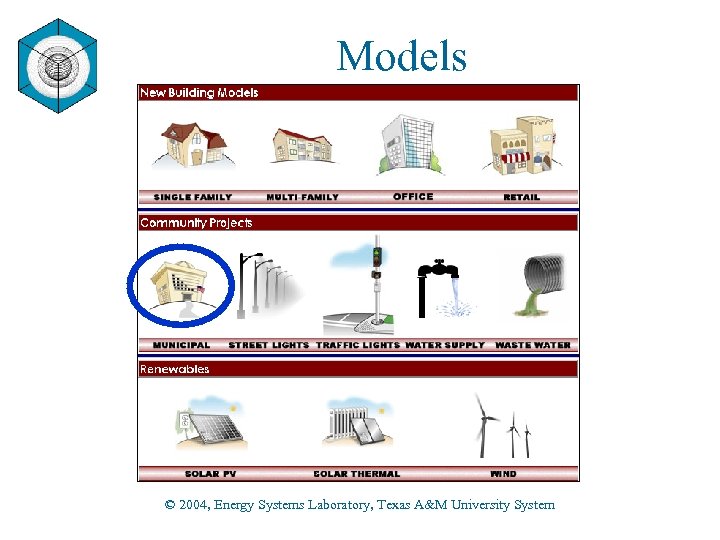
Models © 2004, Energy Systems Laboratory, Texas A&M University System
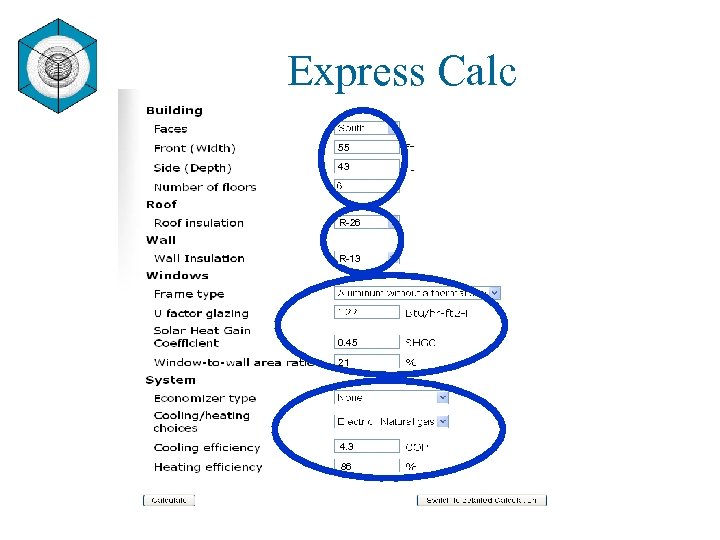
Express Calc 55 43 R-26 R-13 0. 45 21 4. 3 86 © 2004, Energy Systems Laboratory, Texas A&M University System
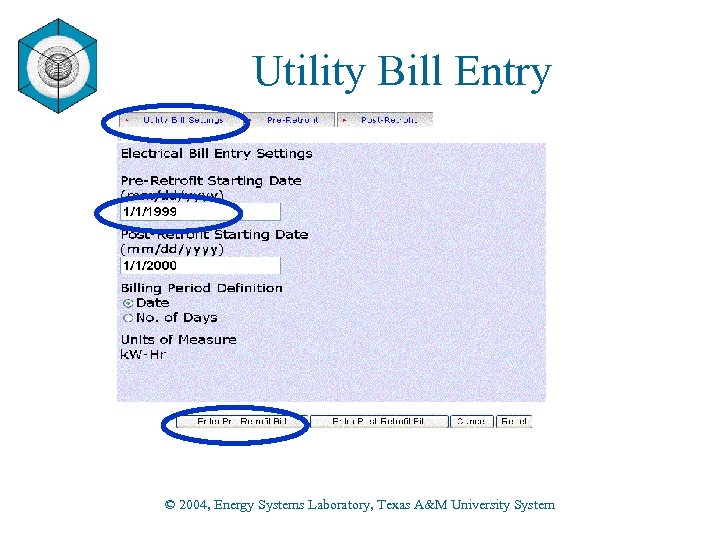
Utility Bill Entry © 2004, Energy Systems Laboratory, Texas A&M University System
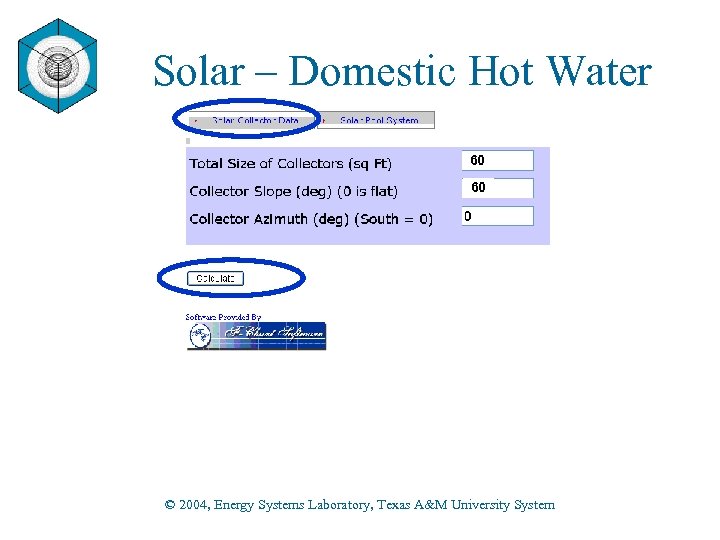
Solar – Domestic Hot Water 60 60 © 2004, Energy Systems Laboratory, Texas A&M University System
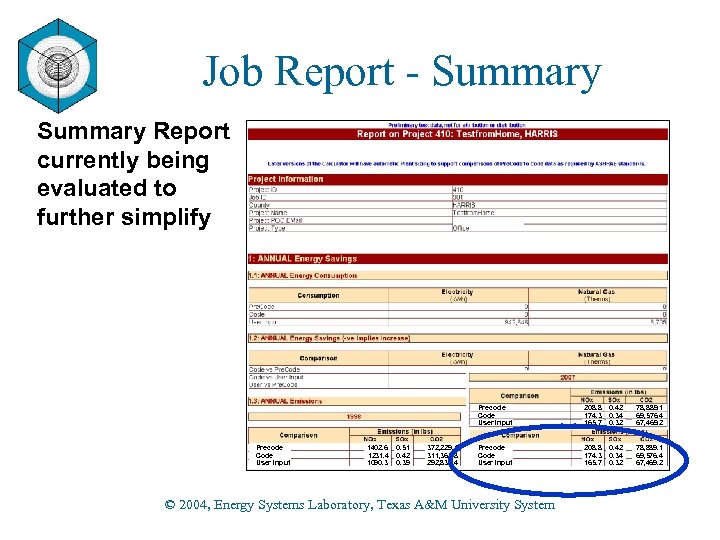
Job Report - Summary Report currently being evaluated to further simplify - Precode Code User Input 1402. 6 1231. 4 1090. 3 0. 51 0. 42 0. 39 372, 229. 1 311, 365. 8 292, 835. 4 208. 8 174. 3 165. 7 0. 42 0. 34 0. 32 78, 889. 1 69, 576. 4 67, 469. 2 Precode Code User Input 208. 8 174. 3 165. 7 0. 42 0. 34 0. 32 78, 889. 1 69, 576. 4 67, 469. 2 © 2004, Energy Systems Laboratory, Texas A&M University System
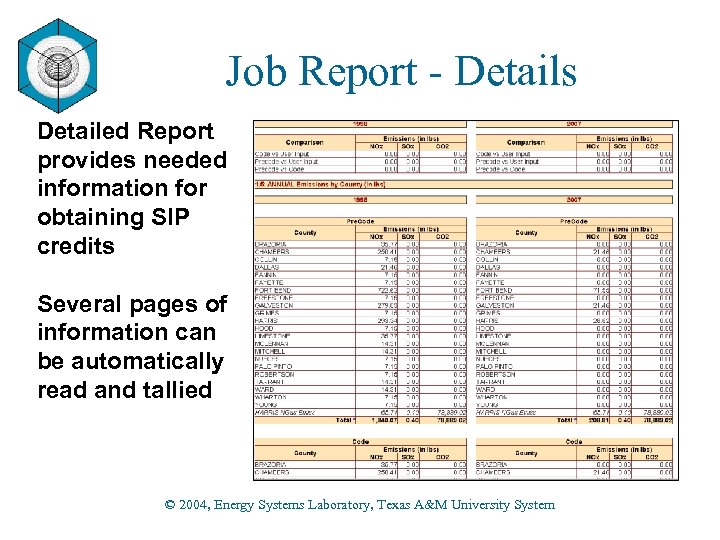
Job Report - Details Detailed Report provides needed information for obtaining SIP credits Several pages of information can be automatically read and tallied © 2004, Energy Systems Laboratory, Texas A&M University System
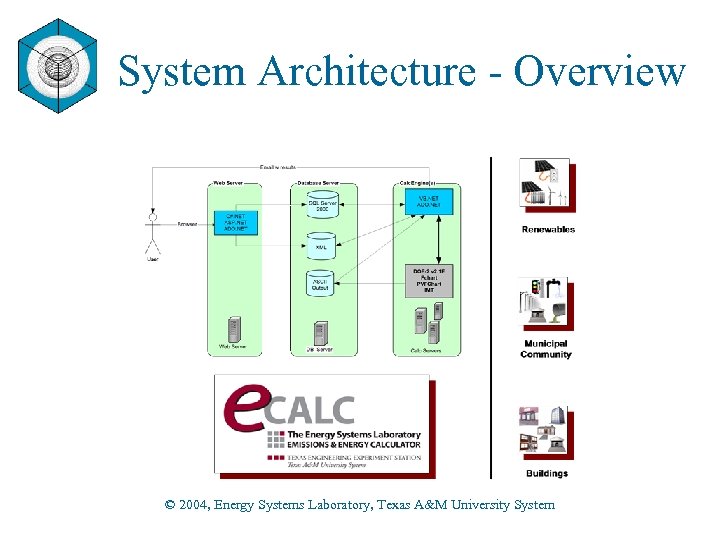
System Architecture - Overview © 2004, Energy Systems Laboratory, Texas A&M University System
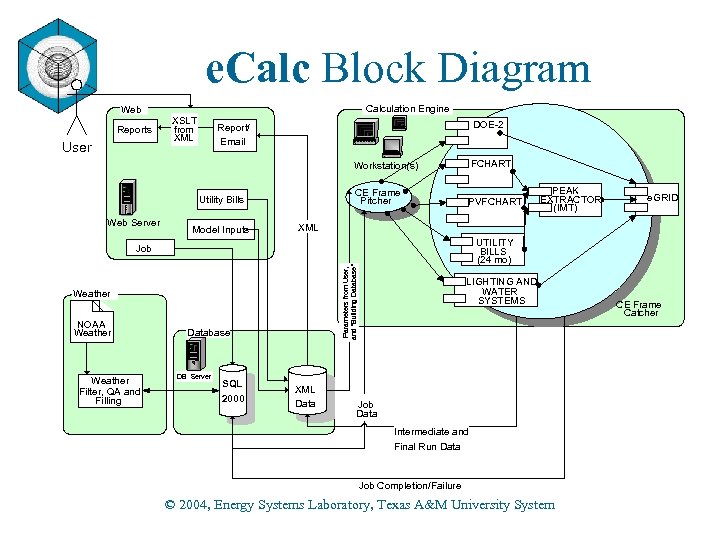
e. Calc Block Diagram Calculation Engine Web Reports User XSLT from XML DOE-2 Report/ Email Workstation(s) CE Frame Pitcher Utility Bills Web Server Model Inputs FCHART PVFCHART UTILITY BILLS (24 mo) Parameters from User, and “Building Database” Weather Filter, QA and Filling Database DB Server SQL 2000 e. GRID XML Job NOAA Weather PEAK EXTRACTOR (IMT) XML Data LIGHTING AND WATER SYSTEMS Job Data Intermediate and Final Run Data Job Completion/Failure © 2004, Energy Systems Laboratory, Texas A&M University System CE Frame Catcher
What is Continuous Commissioning®? • A team effort (facility staff and CC® engineers) which commissions mechanical and control devices to optimize overall building performance • Oriented toward total building performance with an emphasis on reducing energy costs and improving comfort • Optimizes energy consumption of the building as it is currently operated, not as designed • “Continuous” emphasizes the need for performance tracking and ongoing service to keep the commissioning “continuous” © 2004, Energy Systems Laboratory, Texas A&M University System
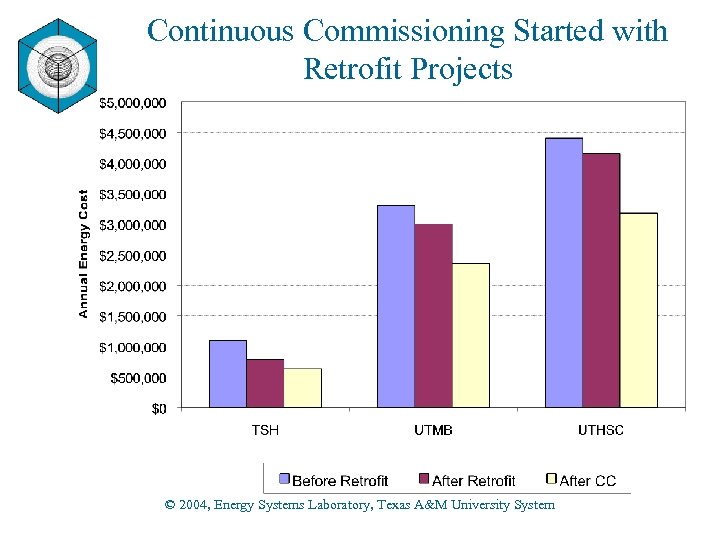
Continuous Commissioning Started with Retrofit Projects © 2004, Energy Systems Laboratory, Texas A&M University System
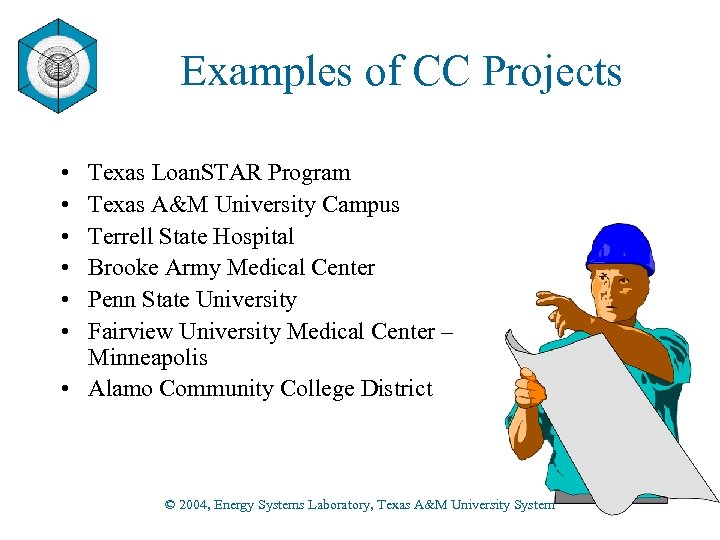
Examples of CC Projects • • • Texas Loan. STAR Program Texas A&M University Campus Terrell State Hospital Brooke Army Medical Center Penn State University Fairview University Medical Center – Minneapolis • Alamo Community College District © 2004, Energy Systems Laboratory, Texas A&M University System
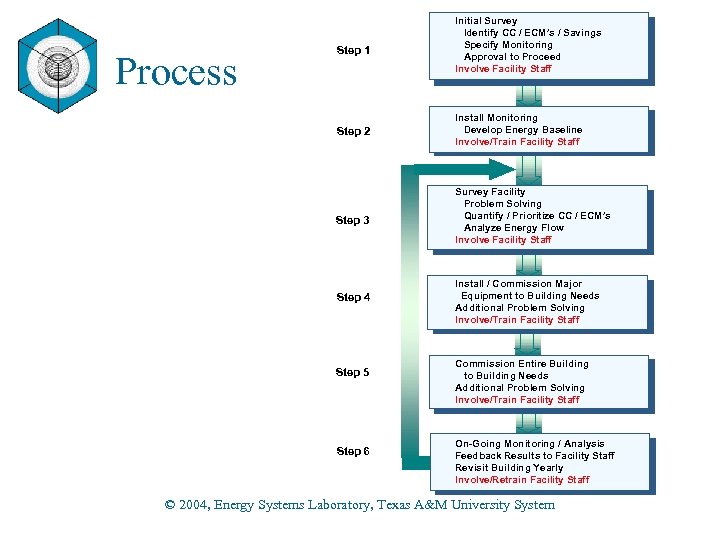
Process Step 1 Initial Survey Identify CC / ECM’s / Savings Specify Monitoring Approval to Proceed Involve Facility Staff Step 2 Install Monitoring Develop Energy Baseline Involve/Train Facility Staff Step 3 Survey Facility Problem Solving Quantify / Prioritize CC / ECM’s Analyze Energy Flow Involve Facility Staff Step 4 Step 5 Step 6 Install / Commission Major Equipment to Building Needs Additional Problem Solving Involve/Train Facility Staff Commission Entire Building to Building Needs Additional Problem Solving Involve/Train Facility Staff On-Going Monitoring / Analysis Feedback Results to Facility Staff Revisit Building Yearly Involve/Retrain Facility Staff © 2004, Energy Systems Laboratory, Texas A&M University System
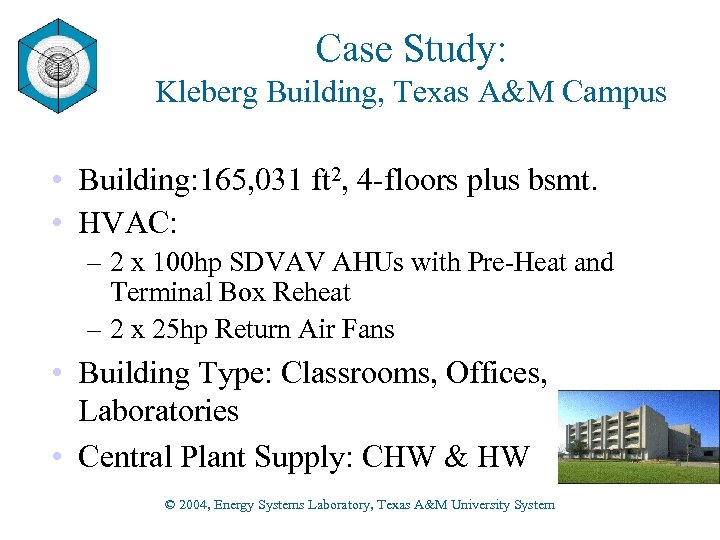
Case Study: Kleberg Building, Texas A&M Campus • Building: 165, 031 ft 2, 4 -floors plus bsmt. • HVAC: – 2 x 100 hp SDVAV AHUs with Pre-Heat and Terminal Box Reheat – 2 x 25 hp Return Air Fans • Building Type: Classrooms, Offices, Laboratories • Central Plant Supply: CHW & HW © 2004, Energy Systems Laboratory, Texas A&M University System
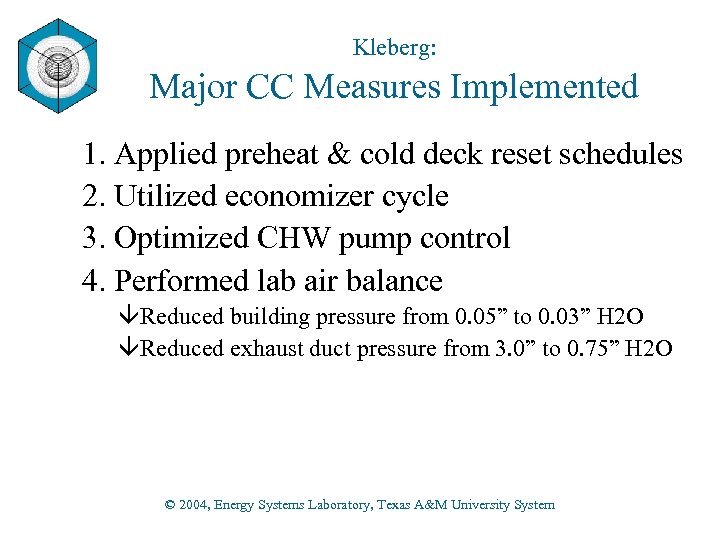
Kleberg: Major CC Measures Implemented 1. Applied preheat & cold deck reset schedules 2. Utilized economizer cycle 3. Optimized CHW pump control 4. Performed lab air balance âReduced building pressure from 0. 05” to 0. 03” H 2 O âReduced exhaust duct pressure from 3. 0” to 0. 75” H 2 O © 2004, Energy Systems Laboratory, Texas A&M University System
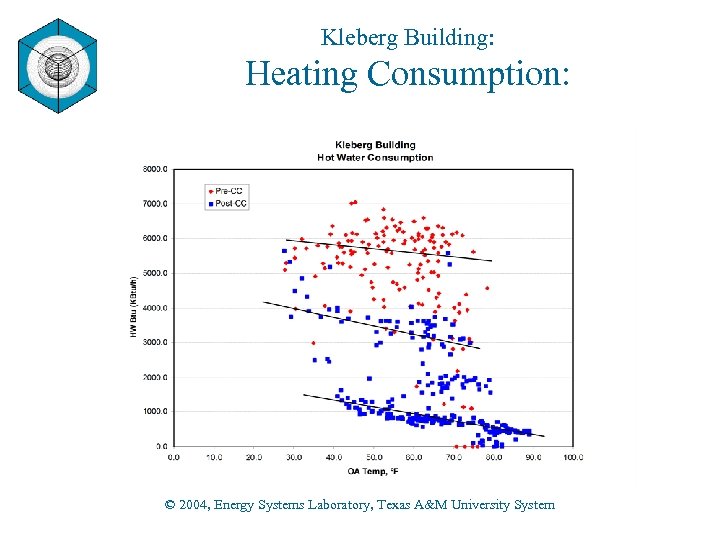
Kleberg Building: Heating Consumption: © 2004, Energy Systems Laboratory, Texas A&M University System
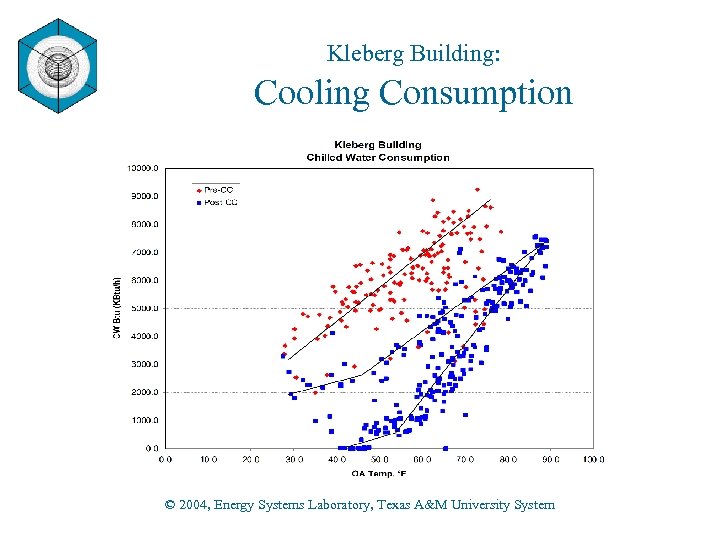
Kleberg Building: Cooling Consumption © 2004, Energy Systems Laboratory, Texas A&M University System
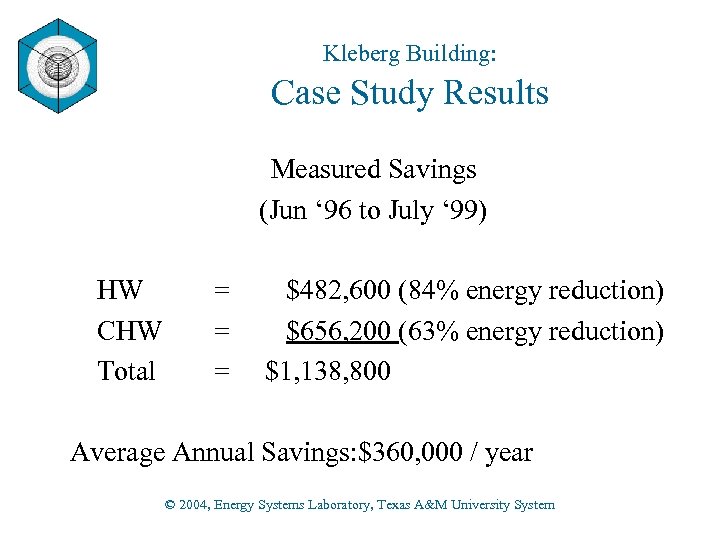
Kleberg Building: Case Study Results Measured Savings (Jun ‘ 96 to July ‘ 99) HW CHW Total = = = $482, 600 (84% energy reduction) $656, 200 (63% energy reduction) $1, 138, 800 Average Annual Savings: $360, 000 / year © 2004, Energy Systems Laboratory, Texas A&M University System
Summary of CC Benefits • Reduce energy use and related environmental impacts • Simple Pay-back: Typically less than three years • Project Duration: Typically 3 weeks to 10 weeks per building • Building Comfort: Improved • Maintenance Cost: Reduced • Potential System Upgrades: Identified • Technical knowledge of in-house operating staff: Improved © 2004, Energy Systems Laboratory, Texas A&M University System
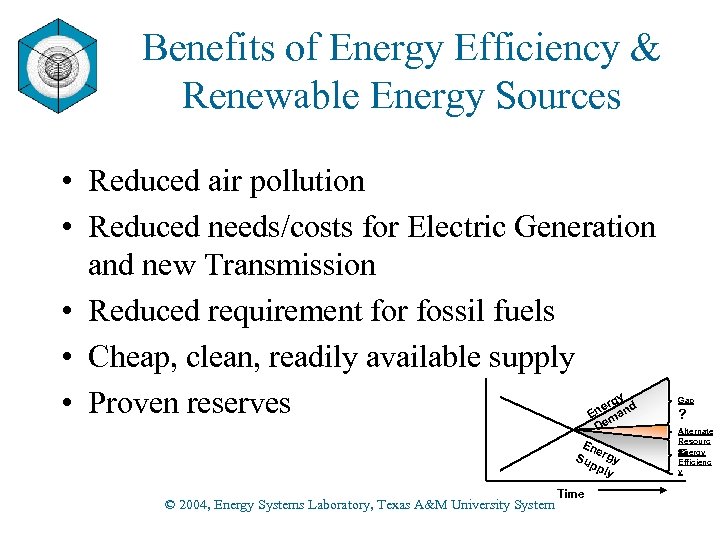
Benefits of Energy Efficiency & Renewable Energy Sources • Reduced air pollution • Reduced needs/costs for Electric Generation and new Transmission • Reduced requirement for fossil fuels • Cheap, clean, readily available supply • Proven reserves rgy ne and E m De En e Su rgy pp ly © 2004, Energy Systems Laboratory, Texas A&M University System Time Gap ? Alternate Resourc es Energy Efficienc y
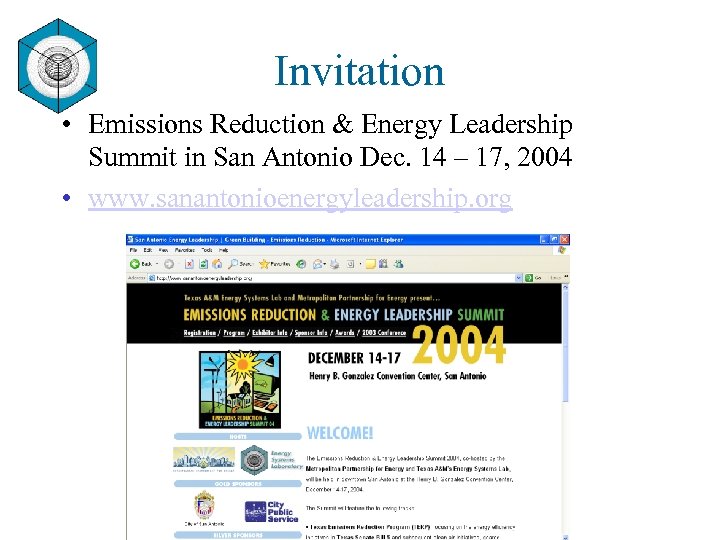
Invitation • Emissions Reduction & Energy Leadership Summit in San Antonio Dec. 14 – 17, 2004 • www. sanantonioenergyleadership. org © 2004, Energy Systems Laboratory, Texas A&M University System
Thanks! • The need and opportunity for energy efficiency is growing • e. Calc is an easy to use tool to support crediting EE/RE with emissions reductions • Continuous Commissioning® is a technique for delivering energy efficiency in existing buildings, with or without retrofit. • Come see us in San Antonio Dec. 14 -16. © 2004, Energy Systems Laboratory, Texas A&M University System
Скачать презентацию The Energy Advancement Leadership Conference Available Technologies Energy
0edc00fde1411892d06c8da69c127406.ppt