


 Скачать презентацию The Eko Skola Programme The 7 Steps
6660c2b44679eaf1298eeefc8e4328db.ppt
- Количество слайдов: 25
 The Eko. Skola Programme The 7 Steps
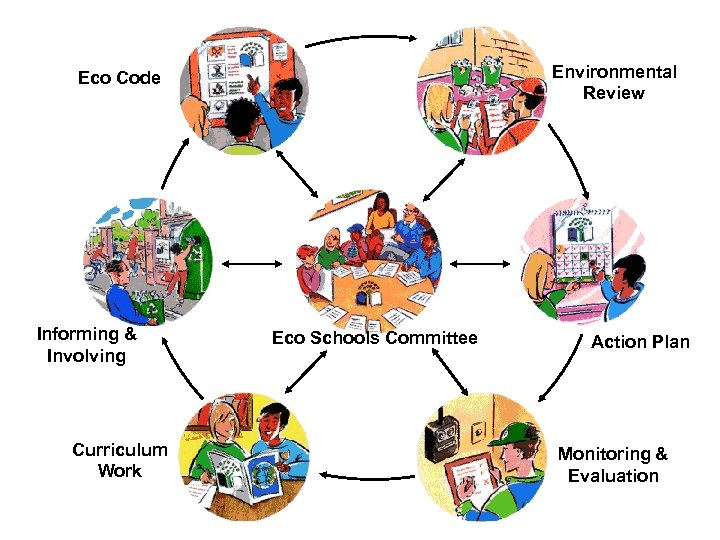 Environmental Review Eco Code Informing & Involving Curriculum Work Eco Schools Committee Action Plan Monitoring & Evaluation
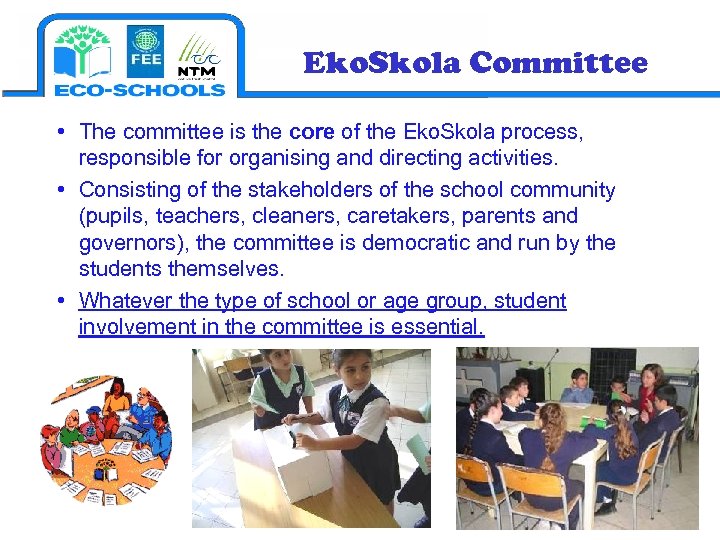 Eko. Skola Committee • The committee is the core of the Eko. Skola process, responsible for organising and directing activities. • Consisting of the stakeholders of the school community (pupils, teachers, cleaners, caretakers, parents and governors), the committee is democratic and run by the students themselves. • Whatever the type of school or age group, student involvement in the committee is essential.
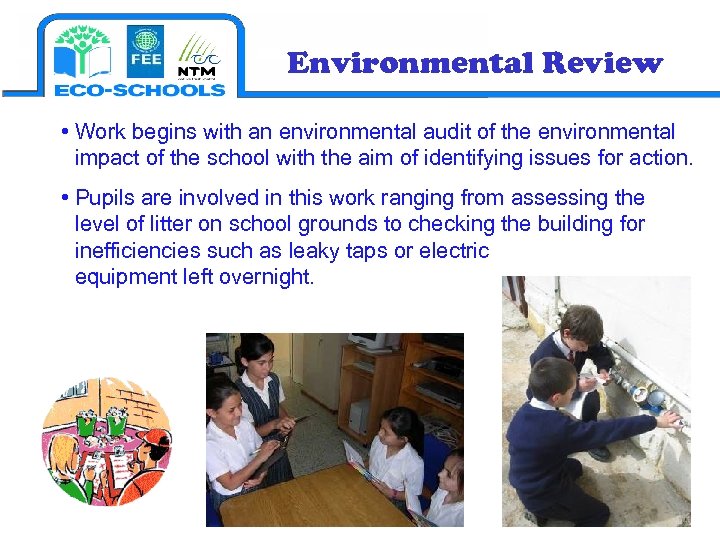 Environmental Review • Work begins with an environmental audit of the environmental impact of the school with the aim of identifying issues for action. • Pupils are involved in this work ranging from assessing the level of litter on school grounds to checking the building for inefficiencies such as leaky taps or electric equipment left overnight.
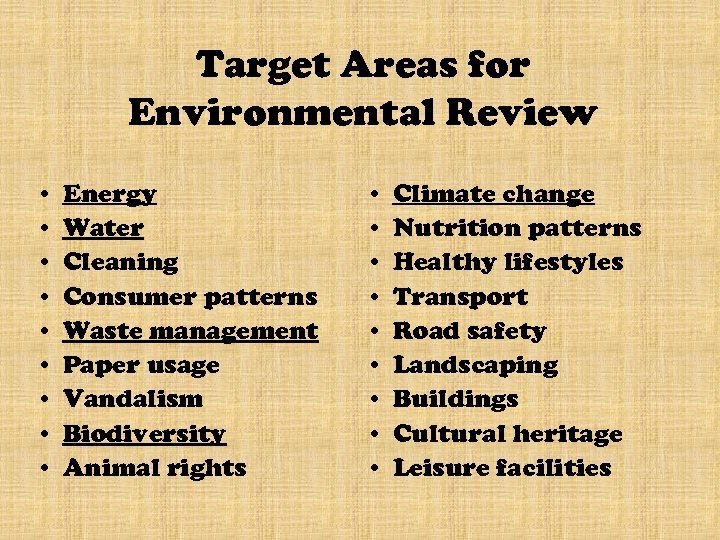 Target Areas for Environmental Review • • • Energy Water Cleaning Consumer patterns Waste management Paper usage Vandalism Biodiversity Animal rights • • • Climate change Nutrition patterns Healthy lifestyles Transport Road safety Landscaping Buildings Cultural heritage Leisure facilities
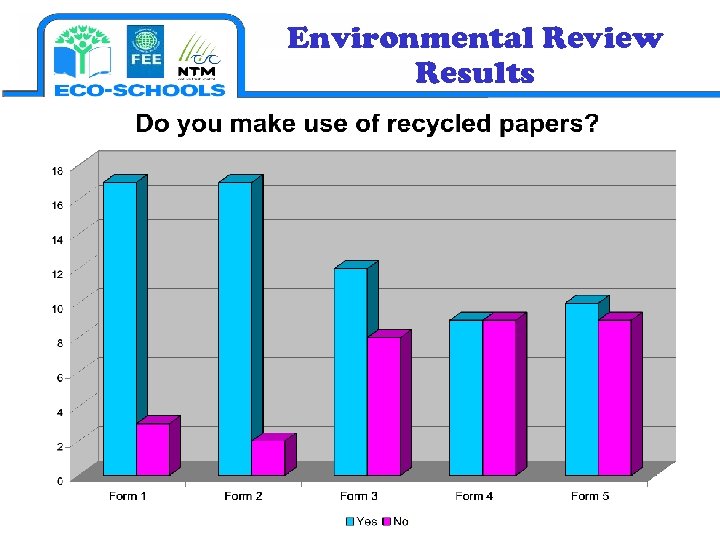 Environmental Review Results
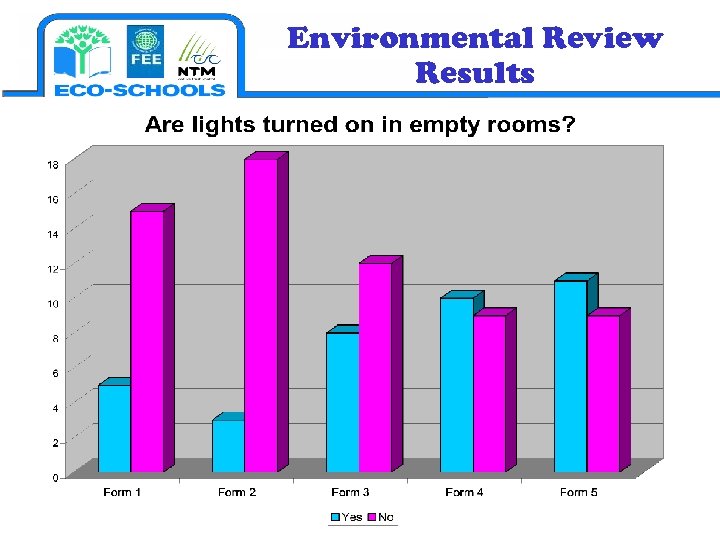 Environmental Review Results
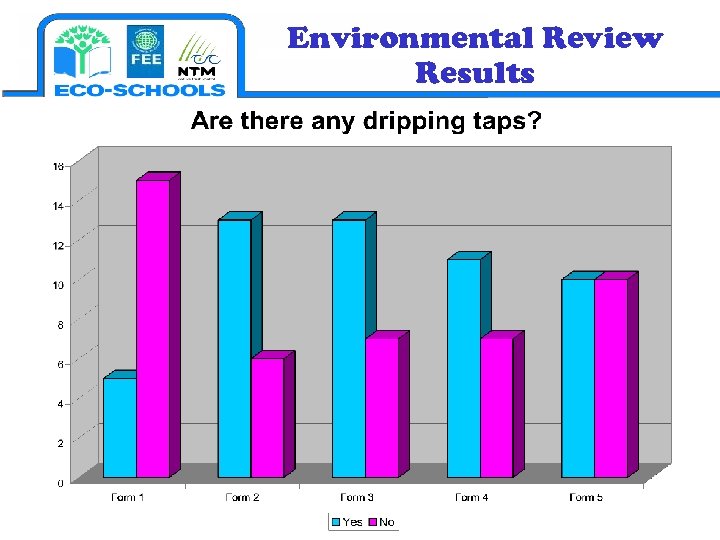 Environmental Review Results
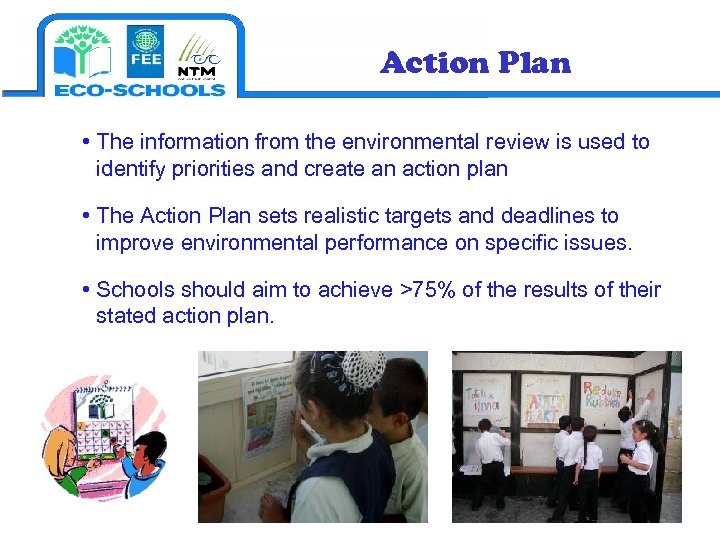 Action Plan • The information from the environmental review is used to identify priorities and create an action plan • The Action Plan sets realistic targets and deadlines to improve environmental performance on specific issues. • Schools should aim to achieve >75% of the results of their stated action plan.
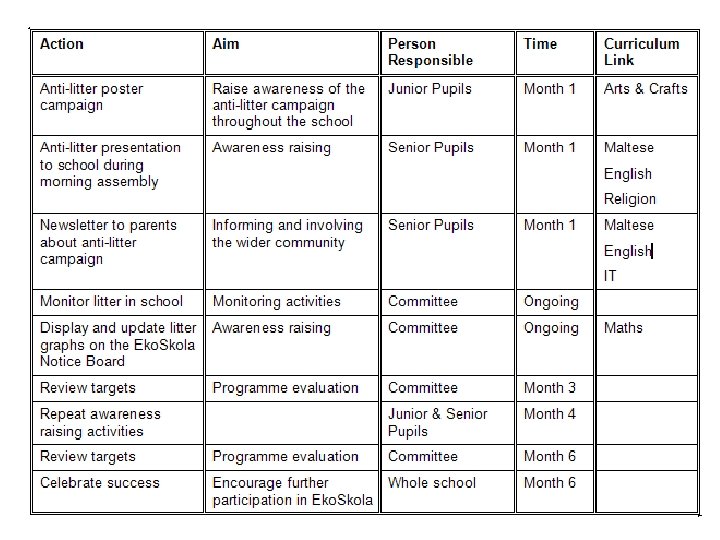 Action Plan (an example)
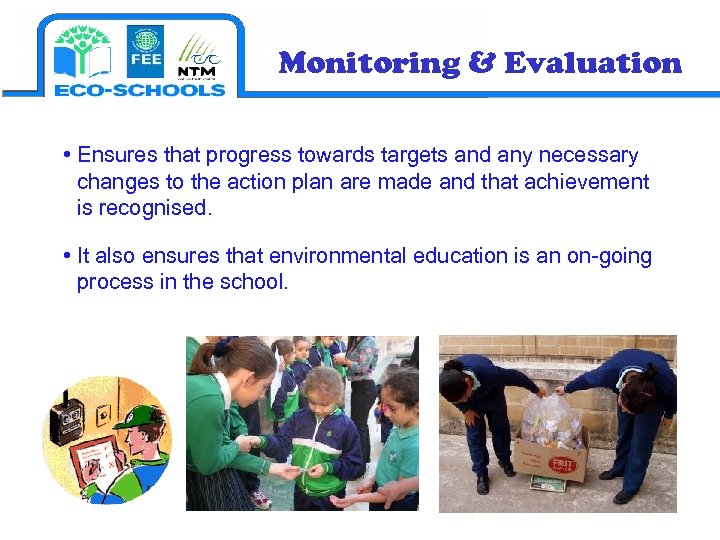 Monitoring & Evaluation • Ensures that progress towards targets and any necessary changes to the action plan are made and that achievement is recognised. • It also ensures that environmental education is an on-going process in the school.
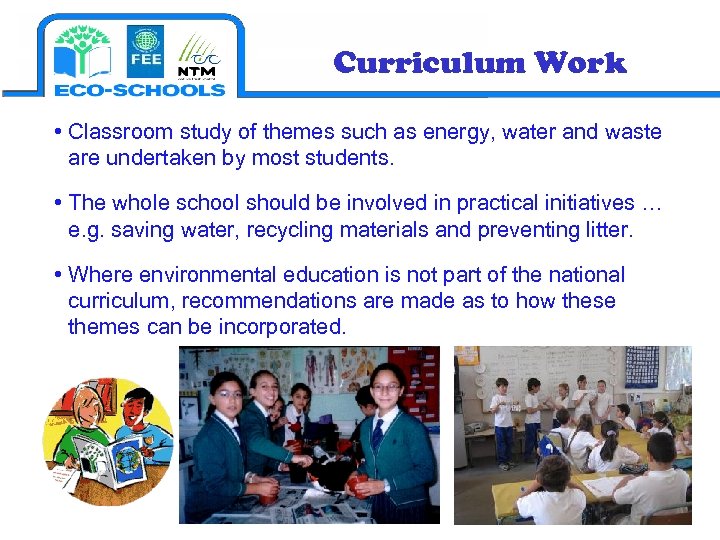 Curriculum Work • Classroom study of themes such as energy, water and waste are undertaken by most students. • The whole school should be involved in practical initiatives … e. g. saving water, recycling materials and preventing litter. • Where environmental education is not part of the national curriculum, recommendations are made as to how these themes can be incorporated.
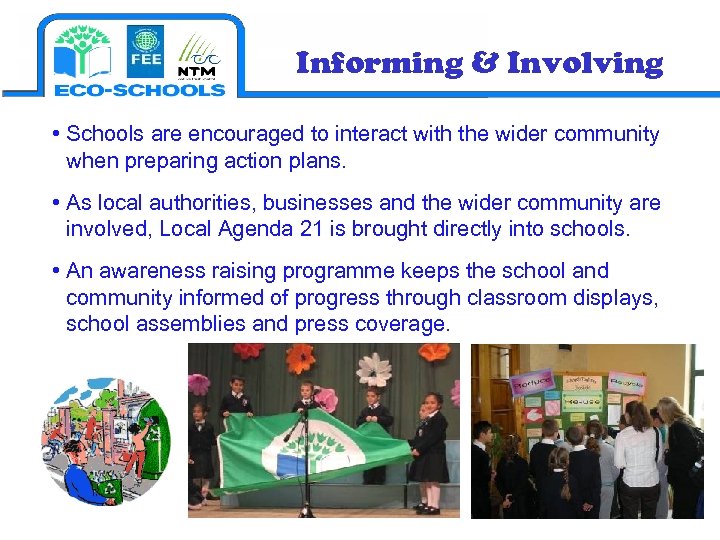 Informing & Involving • Schools are encouraged to interact with the wider community when preparing action plans. • As local authorities, businesses and the wider community are involved, Local Agenda 21 is brought directly into schools. • An awareness raising programme keeps the school and community informed of progress through classroom displays, school assemblies and press coverage.
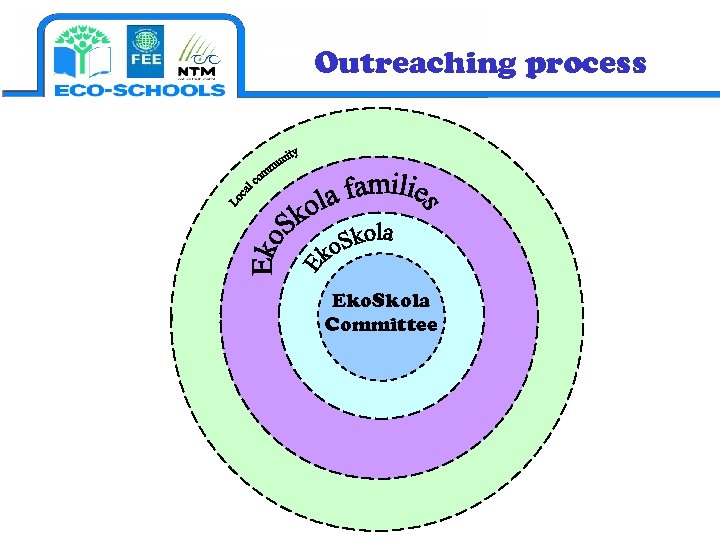 Outreaching process Eko. Skola Committee
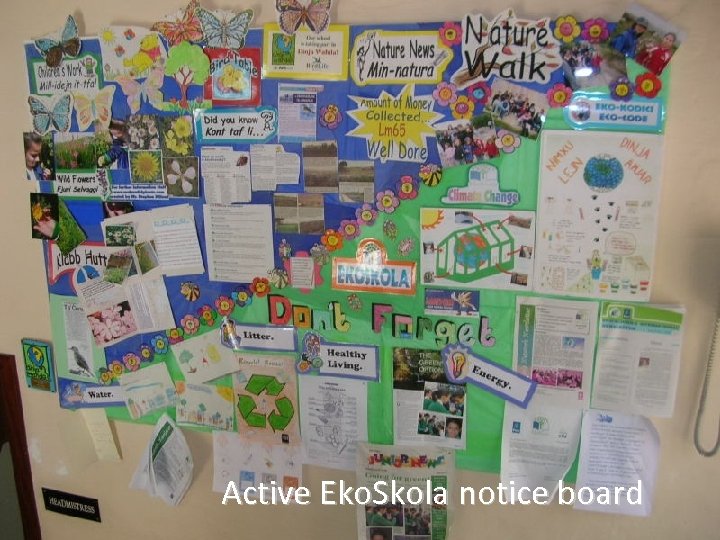 Active Eko. Skola notice board
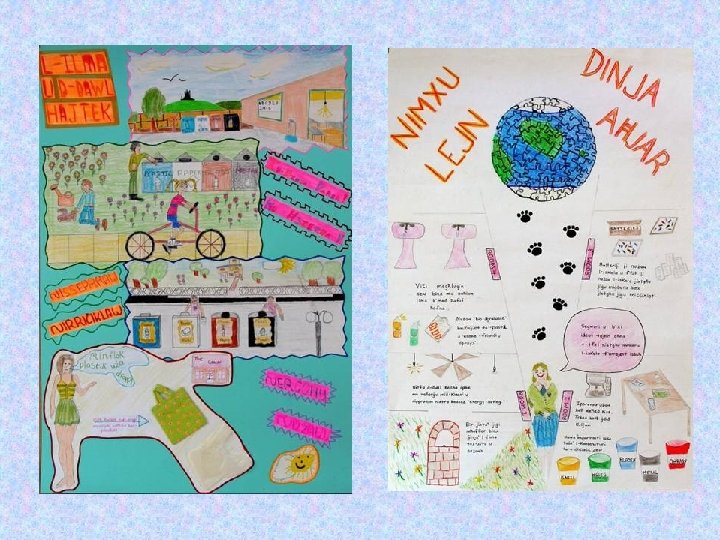
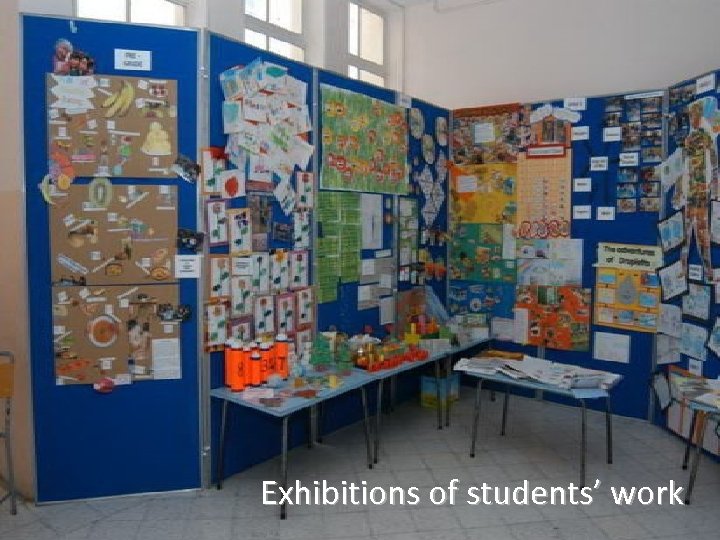 Exhibitions of students’ work
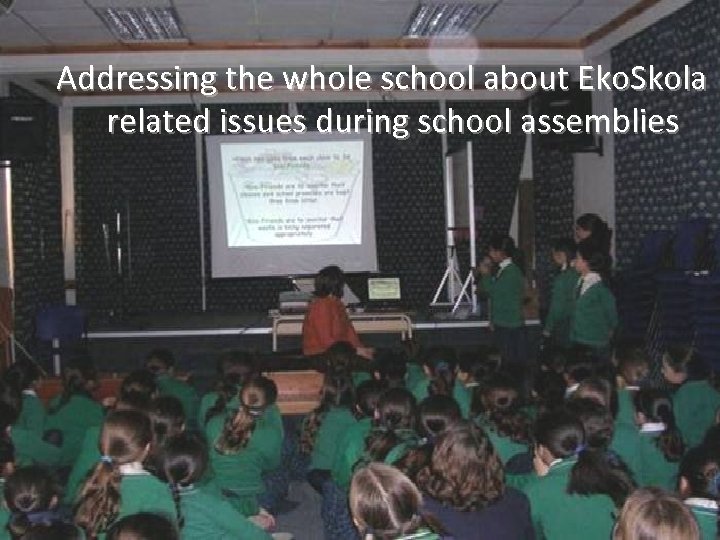 Addressing the whole school about Eko. Skola related issues during school assemblies
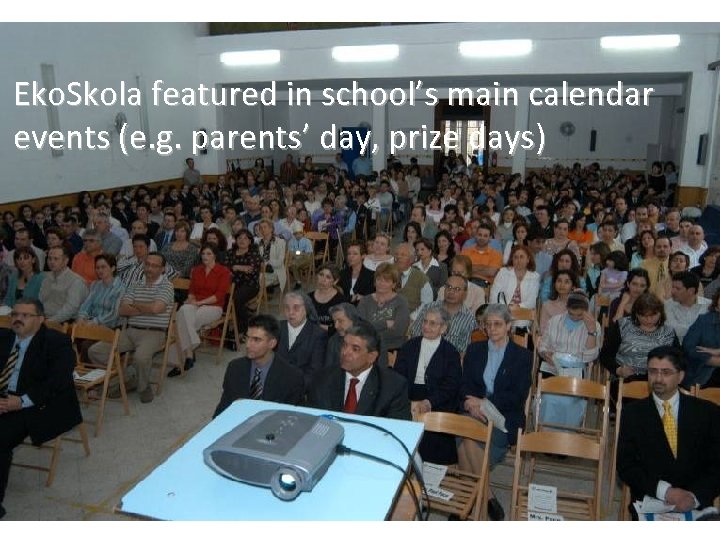 Eko. Skola featured in school’s main calendar events (e. g. parents’ day, prize days)
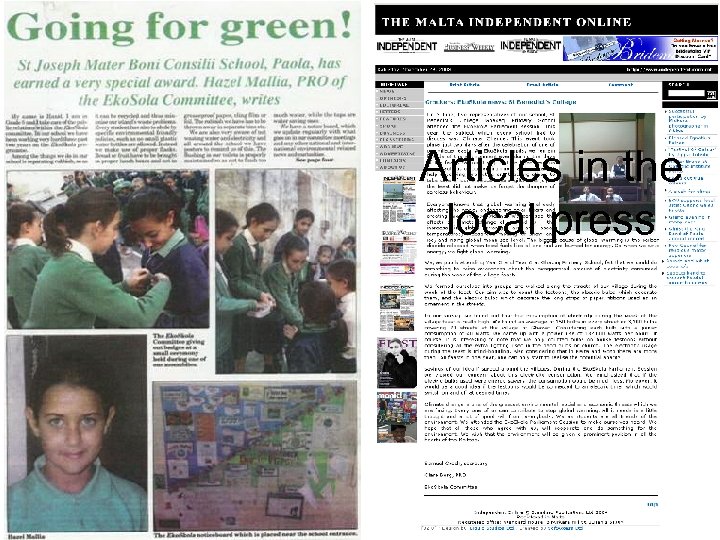 Articles in the local press
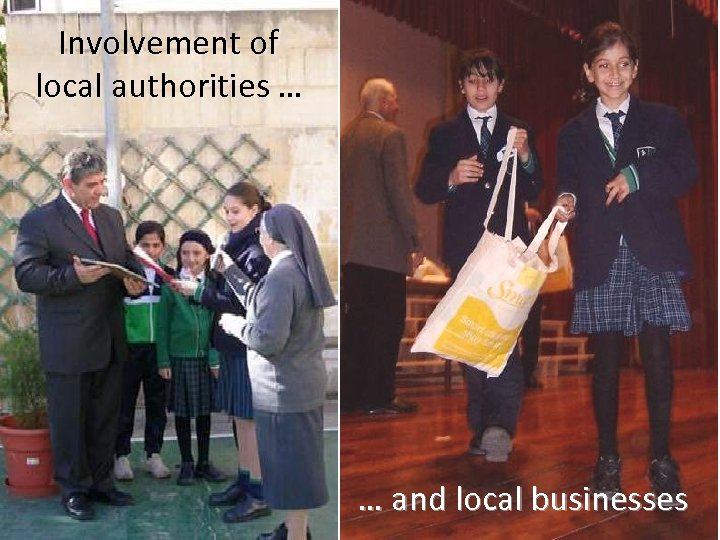 Involvement of local authorities … … and local businesses
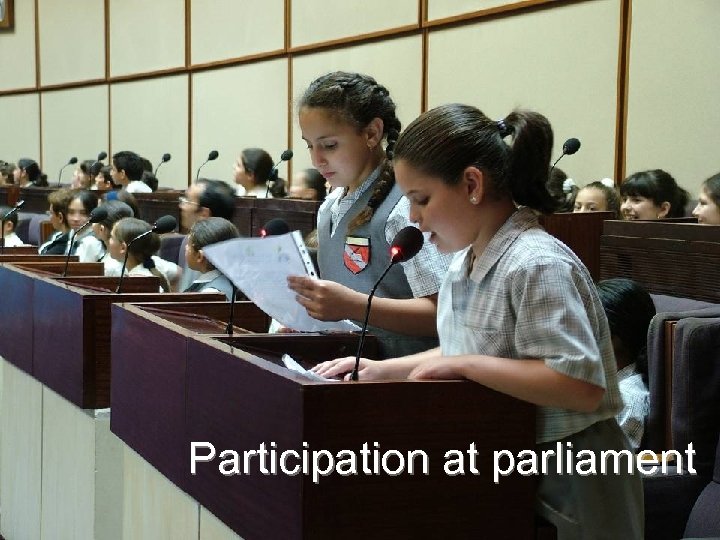 Participation at parliament
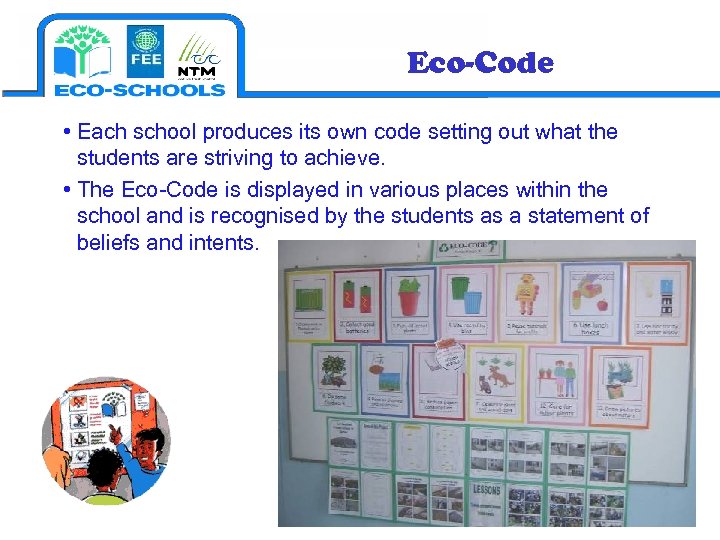 Eco-Code • Each school produces its own code setting out what the students are striving to achieve. • The Eco-Code is displayed in various places within the school and is recognised by the students as a statement of beliefs and intents.
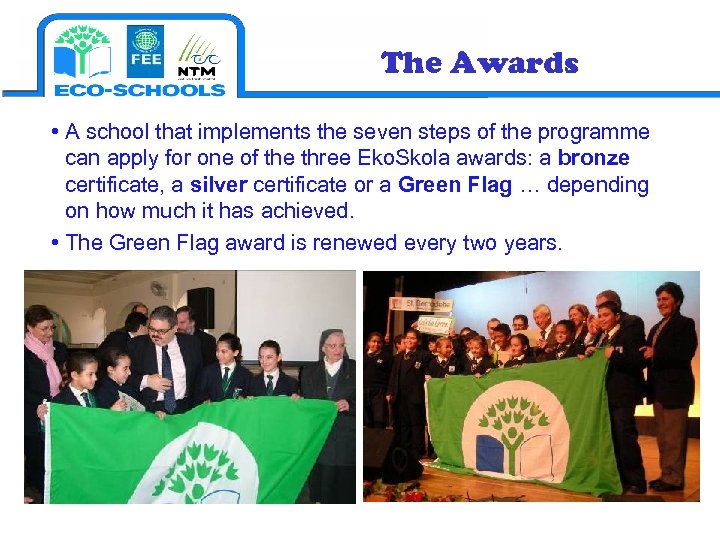 The Awards • A school that implements the seven steps of the programme can apply for one of the three Eko. Skola awards: a bronze certificate, a silver certificate or a Green Flag … depending on how much it has achieved. • The Green Flag award is renewed every two years.
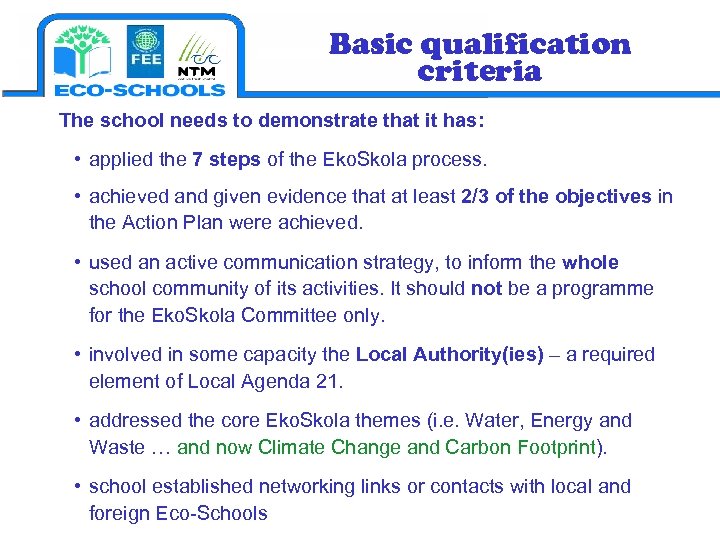 Basic qualification criteria The school needs to demonstrate that it has: • applied the 7 steps of the Eko. Skola process. • achieved and given evidence that at least 2/3 of the objectives in the Action Plan were achieved. • used an active communication strategy, to inform the whole school community of its activities. It should not be a programme for the Eko. Skola Committee only. • involved in some capacity the Local Authority(ies) – a required element of Local Agenda 21. • addressed the core Eko. Skola themes (i. e. Water, Energy and Waste … and now Climate Change and Carbon Footprint). • school established networking links or contacts with local and foreign Eco-Schools