


 Скачать презентацию The Eisenhower Years 1952 -1960 Postwar Economic
c743c41e74faa9946f521391c1cb6af1.ppt
- Количество слайдов: 29
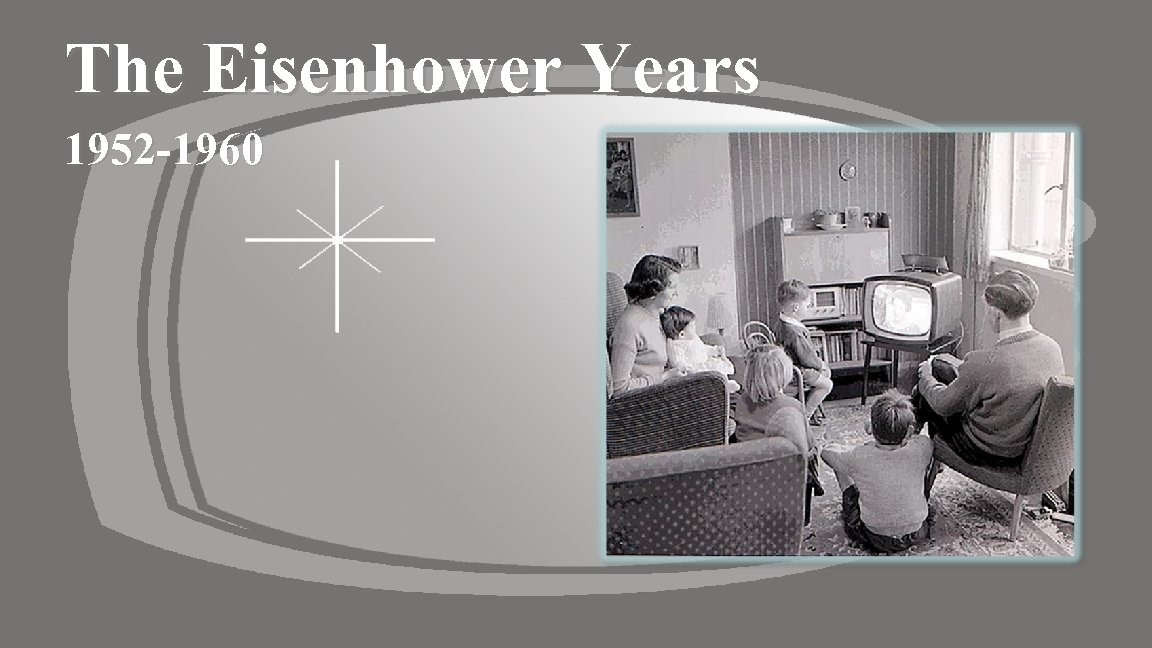 The Eisenhower Years 1952 -1960
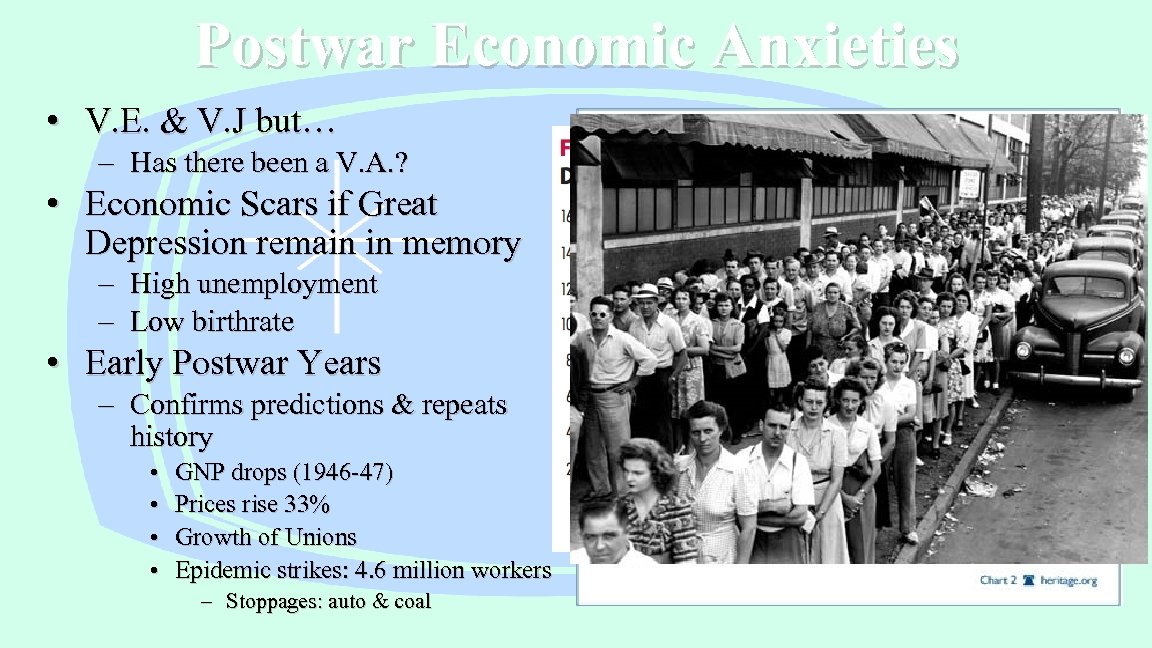 Postwar Economic Anxieties • V. E. & V. J but… – Has there been a V. A. ? • Economic Scars if Great Depression remain in memory – High unemployment – Low birthrate • Early Postwar Years – Confirms predictions & repeats history • • GNP drops (1946 -47) Prices rise 33% Growth of Unions Epidemic strikes: 4. 6 million workers – Stoppages: auto & coal
 Essential Questions • To what extent were the 1950 s a time of great peace, progress, and prosperity for Americans? • To what extent did the civil rights movement of the 1950 s expand democracy for all Americans? • Compare and contrast United States society in the 1920’s and the 1950’s with respect to the following: – race relations – role of women – consumerism
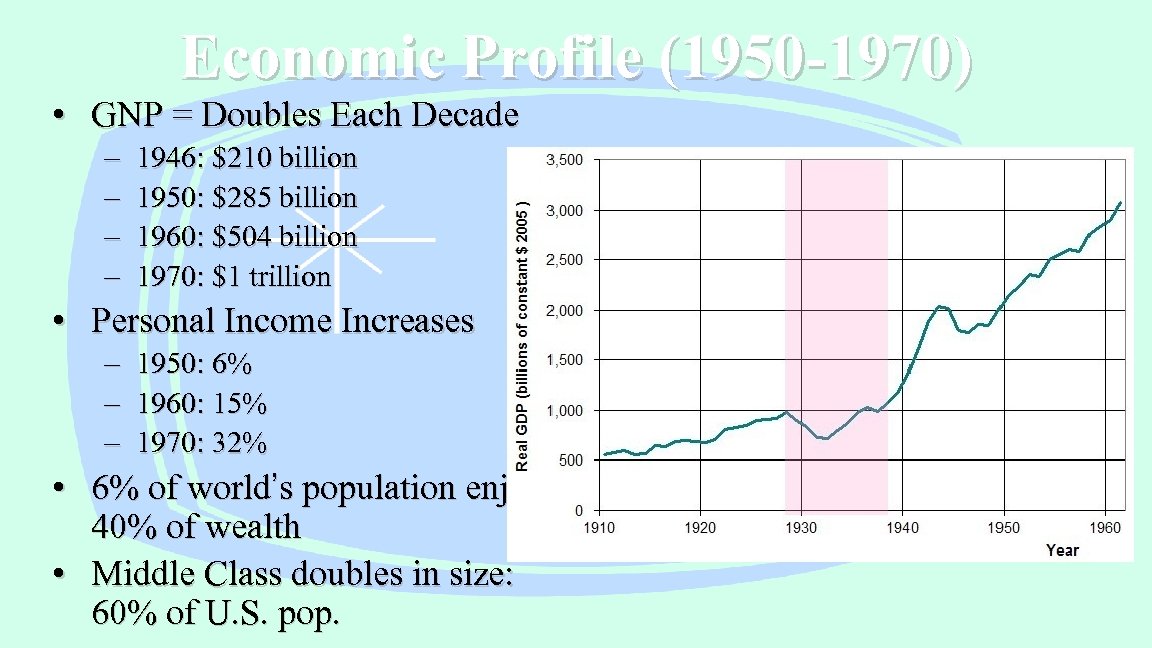 Economic Profile (1950 -1970) • GNP = Doubles Each Decade – – 1946: $210 billion 1950: $285 billion 1960: $504 billion 1970: $1 trillion • Personal Income Increases – 1950: 6% – 1960: 15% – 1970: 32% • 6% of world’s population enjoys 40% of wealth • Middle Class doubles in size: 60% of U. S. pop.
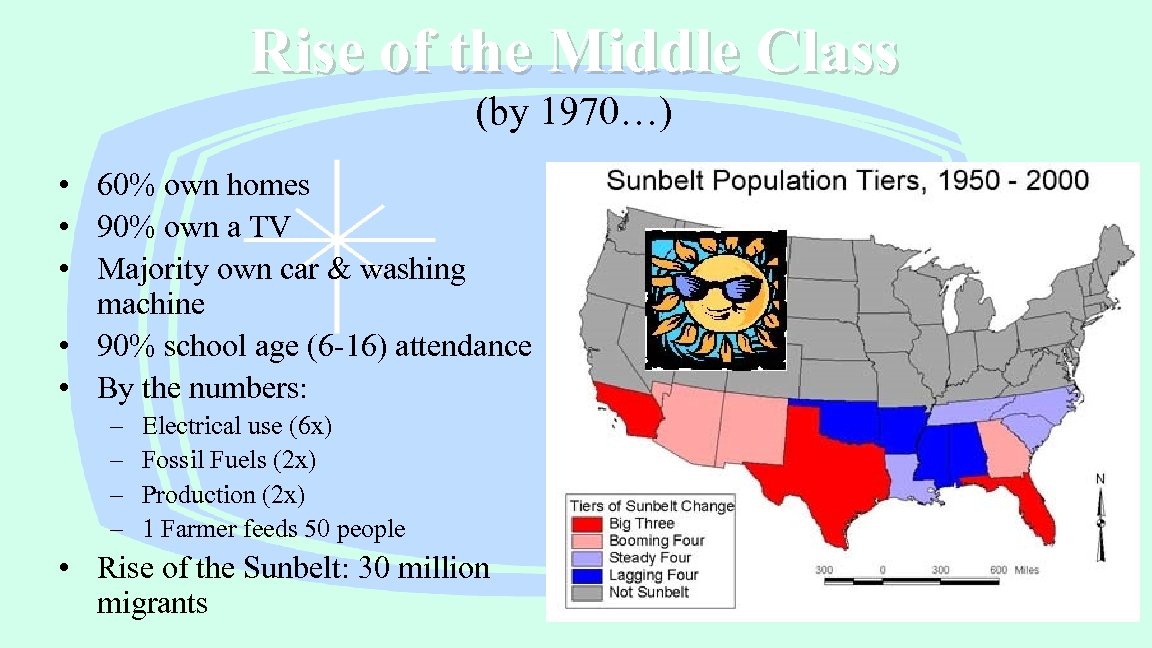 Rise of the Middle Class (by 1970…) • 60% own homes • 90% own a TV • Majority own car & washing machine • 90% school age (6 -16) attendance • By the numbers: – – Electrical use (6 x) Fossil Fuels (2 x) Production (2 x) 1 Farmer feeds 50 people • Rise of the Sunbelt: 30 million migrants
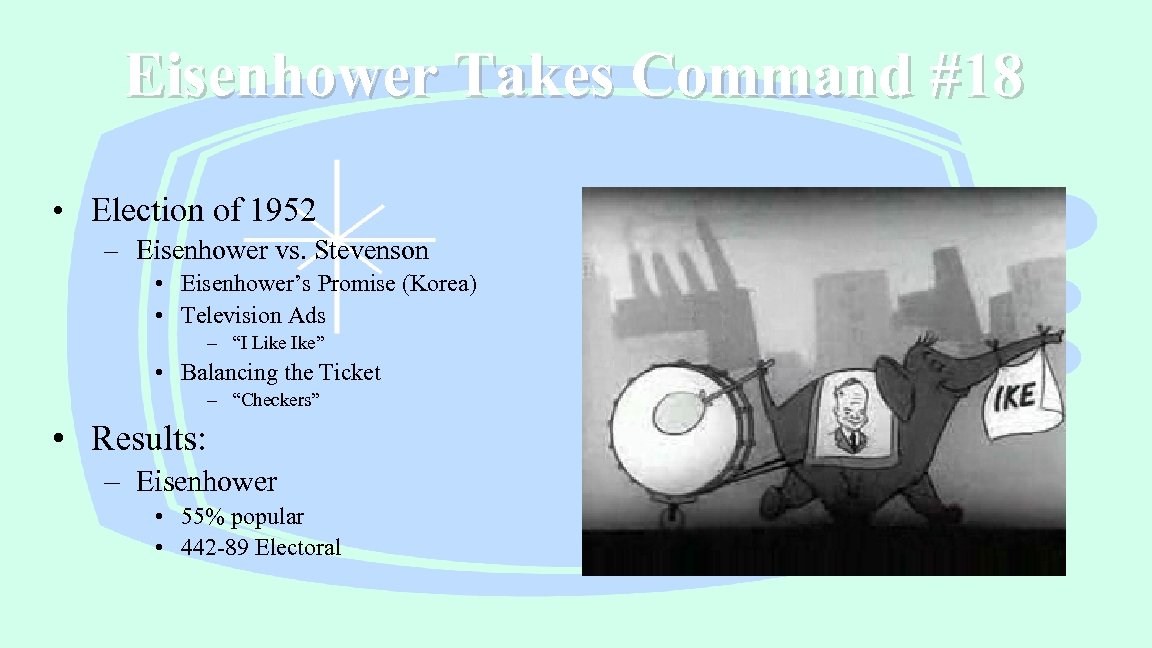 Eisenhower Takes Command #18 • Election of 1952 – Eisenhower vs. Stevenson • Eisenhower’s Promise (Korea) • Television Ads – “I Like Ike” • Balancing the Ticket – “Checkers” • Results: – Eisenhower • 55% popular • 442 -89 Electoral
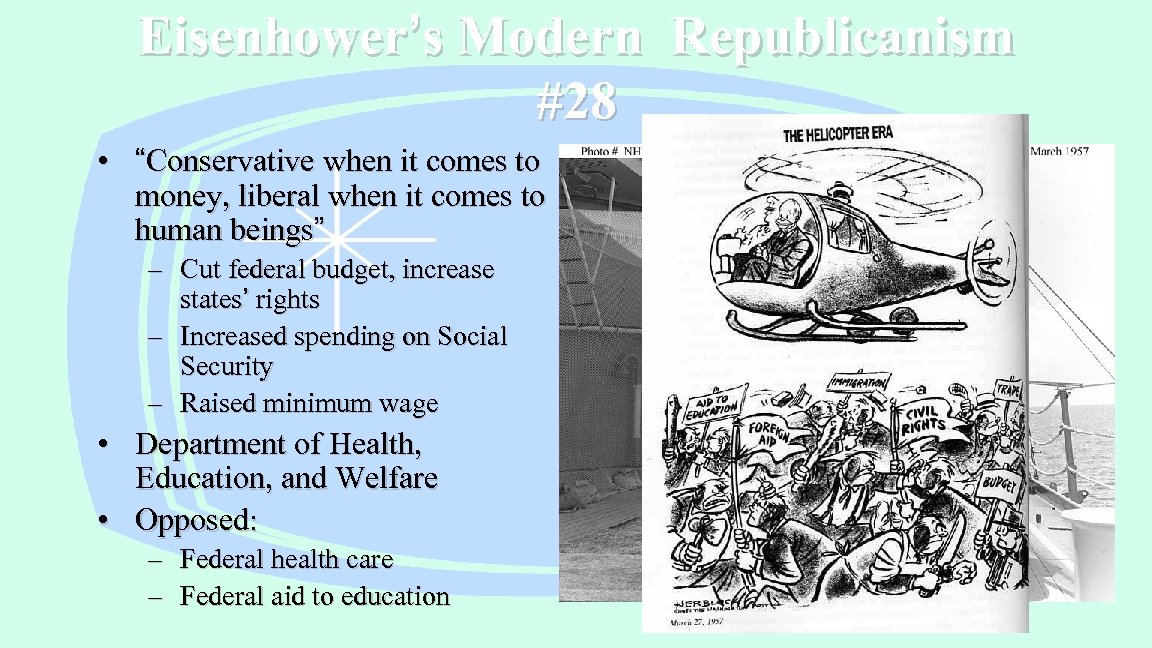 Eisenhower’s Modern Republicanism #28 • “Conservative when it comes to money, liberal when it comes to human beings” – Cut federal budget, increase states’ rights – Increased spending on Social Security – Raised minimum wage • Department of Health, Education, and Welfare • Opposed: – Federal health care – Federal aid to education
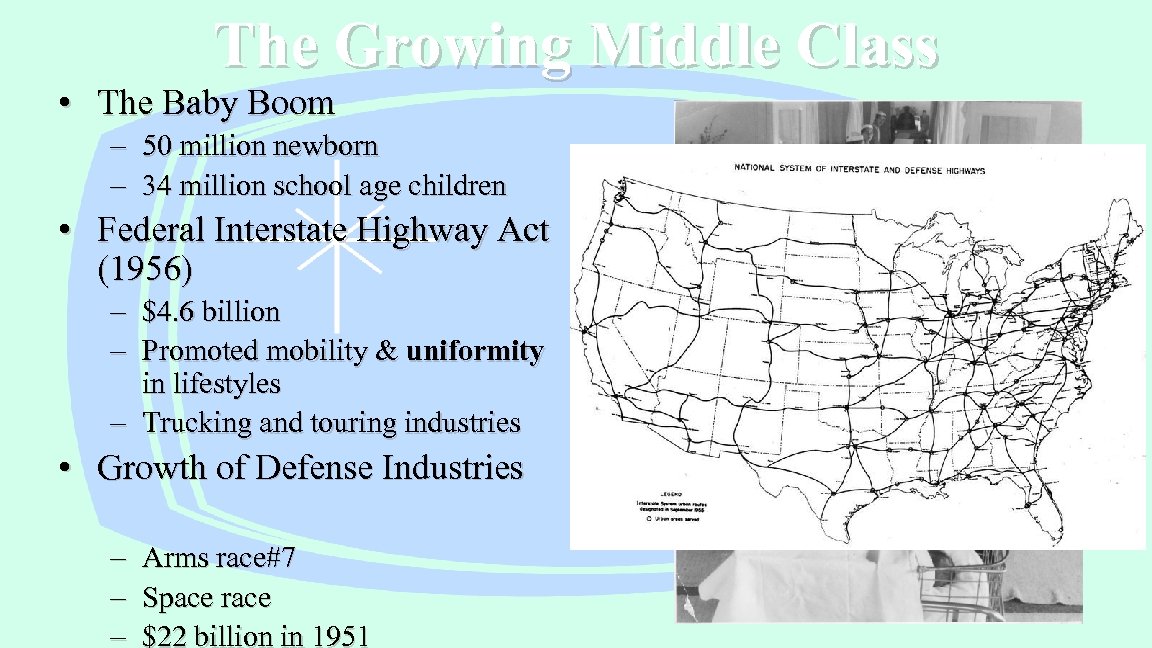 The Growing Middle Class • The Baby Boom – – 50 million newborn 34 million school age children • Federal Interstate Highway Act (1956) – $4. 6 billion – Promoted mobility & uniformity in lifestyles – Trucking and touring industries • Growth of Defense Industries – – – Arms race#7 Space race $22 billion in 1951
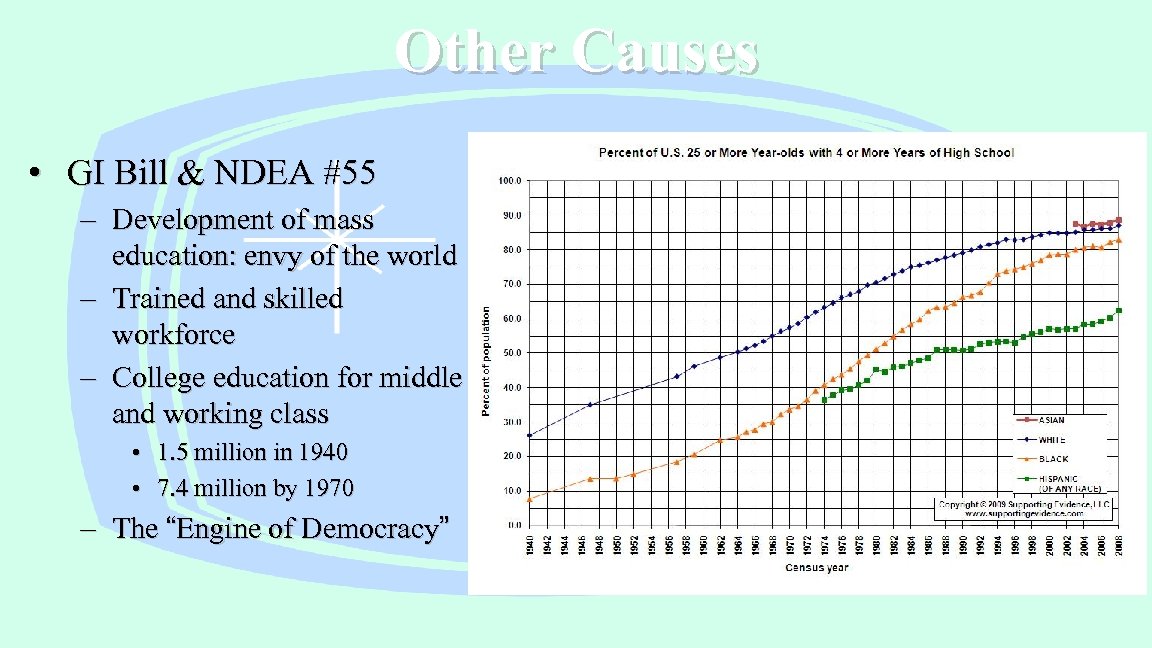 Other Causes • GI Bill & NDEA #55 – Development of mass education: envy of the world – Trained and skilled workforce – College education for middle and working class • 1. 5 million in 1940 • 7. 4 million by 1970 – The “Engine of Democracy”
 Consumerism, Conformity, and Rock ‘n Roll – The “Happy Days” POPULAR CULTURE
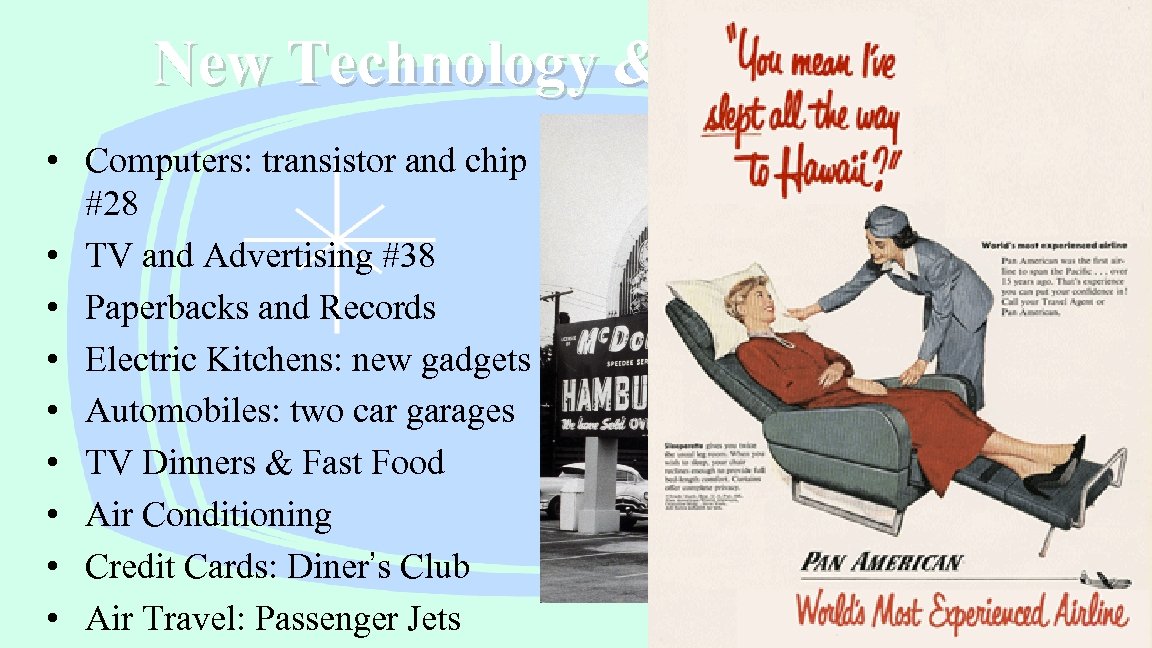 New Technology & Innovations • Computers: transistor and chip #28 • TV and Advertising #38 • Paperbacks and Records • Electric Kitchens: new gadgets • Automobiles: two car garages • TV Dinners & Fast Food • Air Conditioning • Credit Cards: Diner’s Club • Air Travel: Passenger Jets
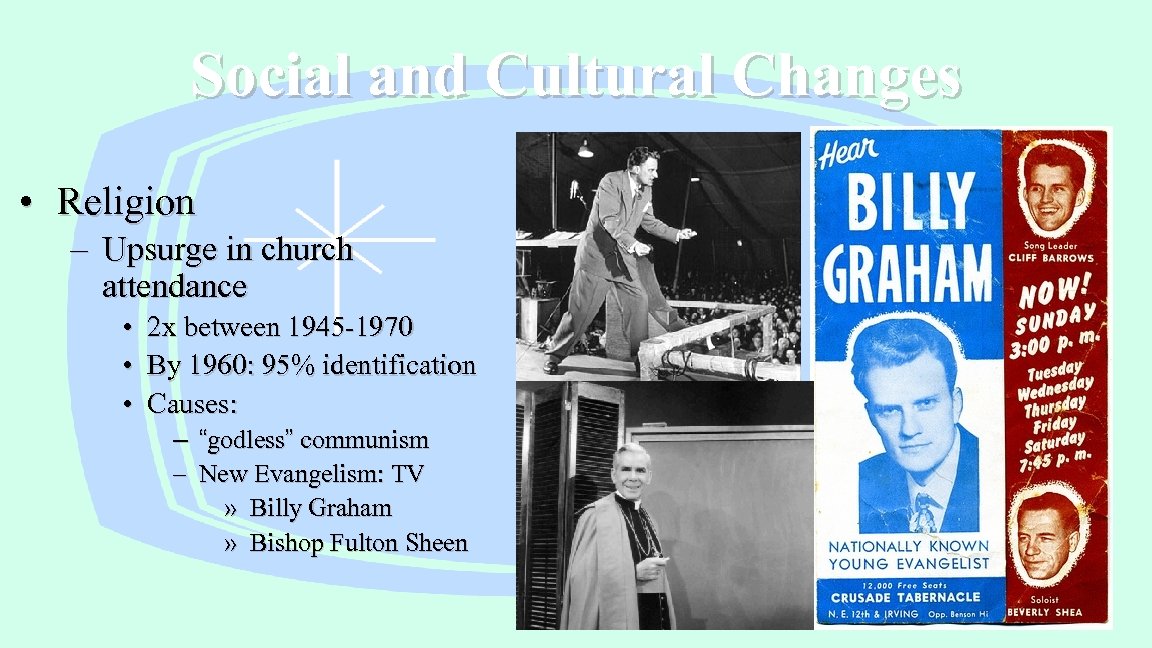 Social and Cultural Changes • Religion – Upsurge in church attendance • 2 x between 1945 -1970 • By 1960: 95% identification • Causes: – “godless” communism – New Evangelism: TV » Billy Graham » Bishop Fulton Sheen
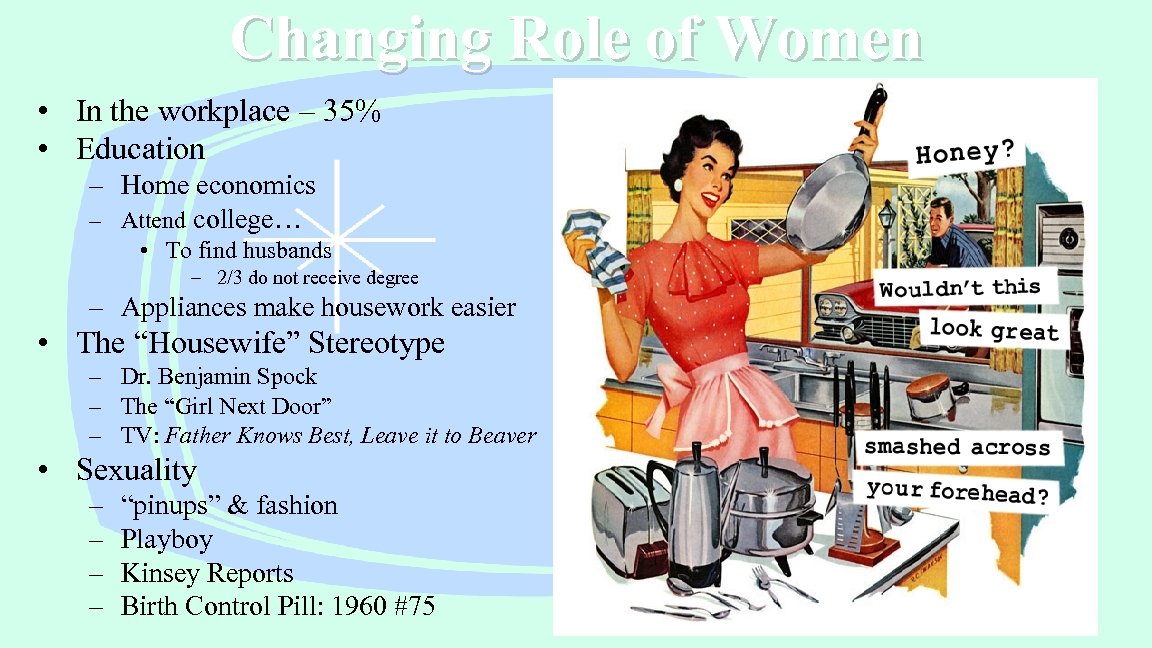 Changing Role of Women • In the workplace – 35% • Education – Home economics – Attend college… • To find husbands – 2/3 do not receive degree – Appliances make housework easier • The “Housewife” Stereotype – Dr. Benjamin Spock – The “Girl Next Door” – TV: Father Knows Best, Leave it to Beaver • Sexuality – – “pinups” & fashion Playboy Kinsey Reports Birth Control Pill: 1960 #75
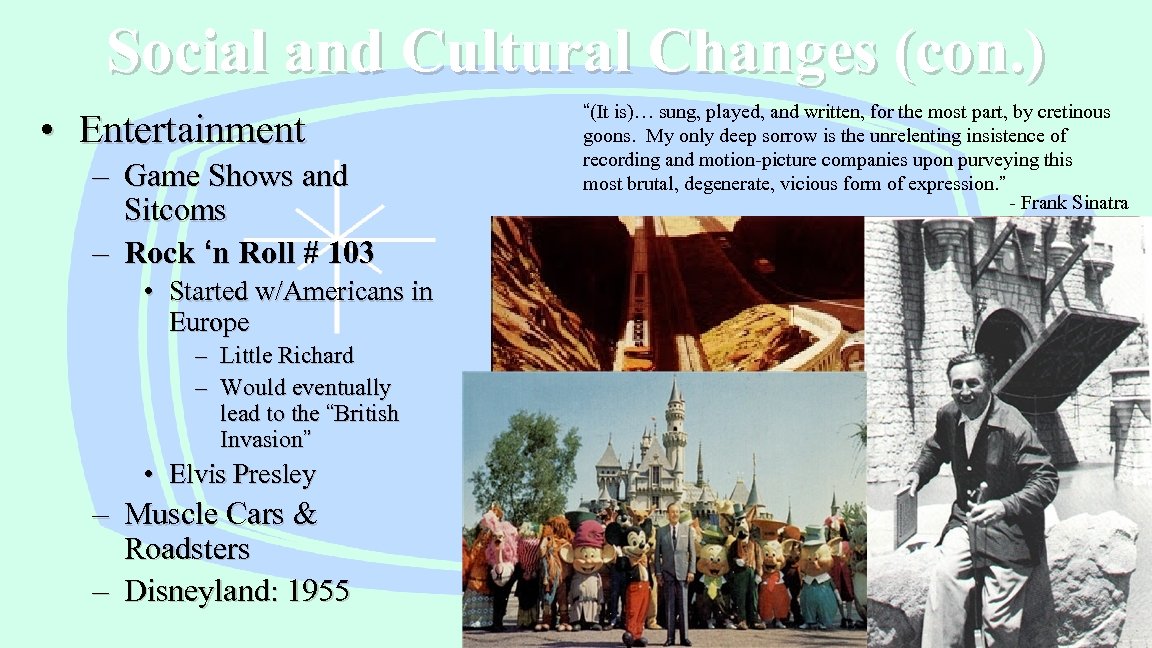 Social and Cultural Changes (con. ) • Entertainment – Game Shows and Sitcoms – Rock ‘n Roll # 103 • Started w/Americans in Europe – Little Richard – Would eventually lead to the “British Invasion” • Elvis Presley – Muscle Cars & Roadsters – Disneyland: 1955 “(It is)… sung, played, and written, for the most part, by cretinous goons. My only deep sorrow is the unrelenting insistence of recording and motion-picture companies upon purveying this most brutal, degenerate, vicious form of expression. ” - Frank Sinatra
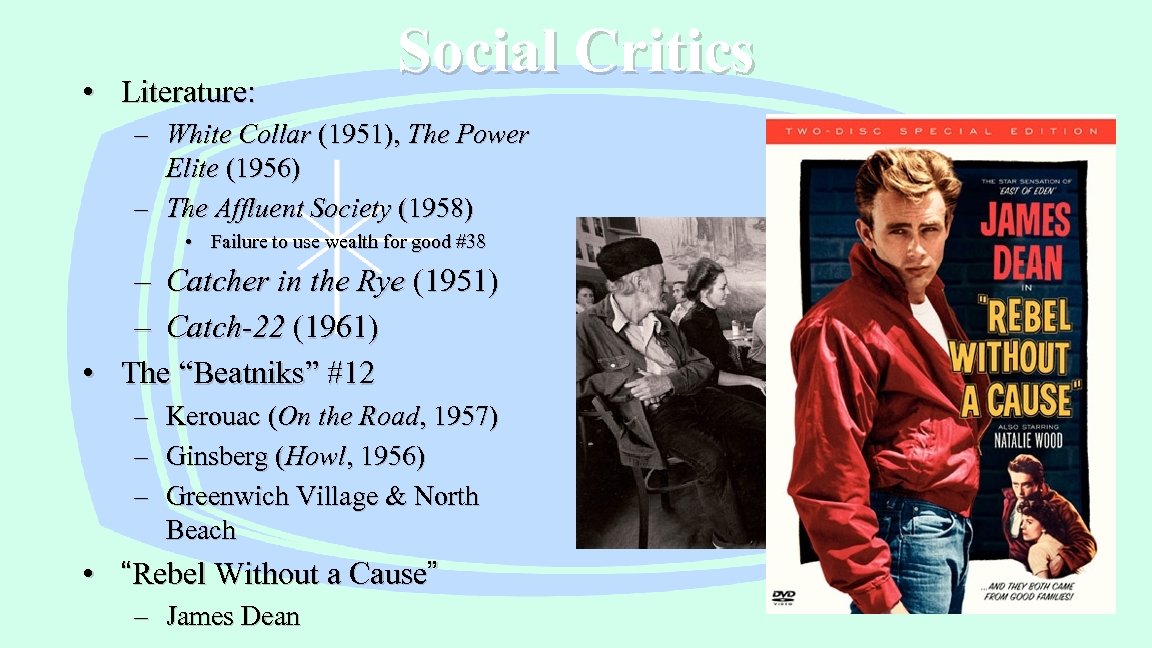 • Literature: Social Critics – White Collar (1951), The Power Elite (1956) – The Affluent Society (1958) • Failure to use wealth for good #38 – Catcher in the Rye (1951) – Catch-22 (1961) • The “Beatniks” #12 – Kerouac (On the Road, 1957) – Ginsberg (Howl, 1956) – Greenwich Village & North Beach • “Rebel Without a Cause” – James Dean
 Foreign Policy (1953 -1961) EISENHOWER & THE COLD WAR
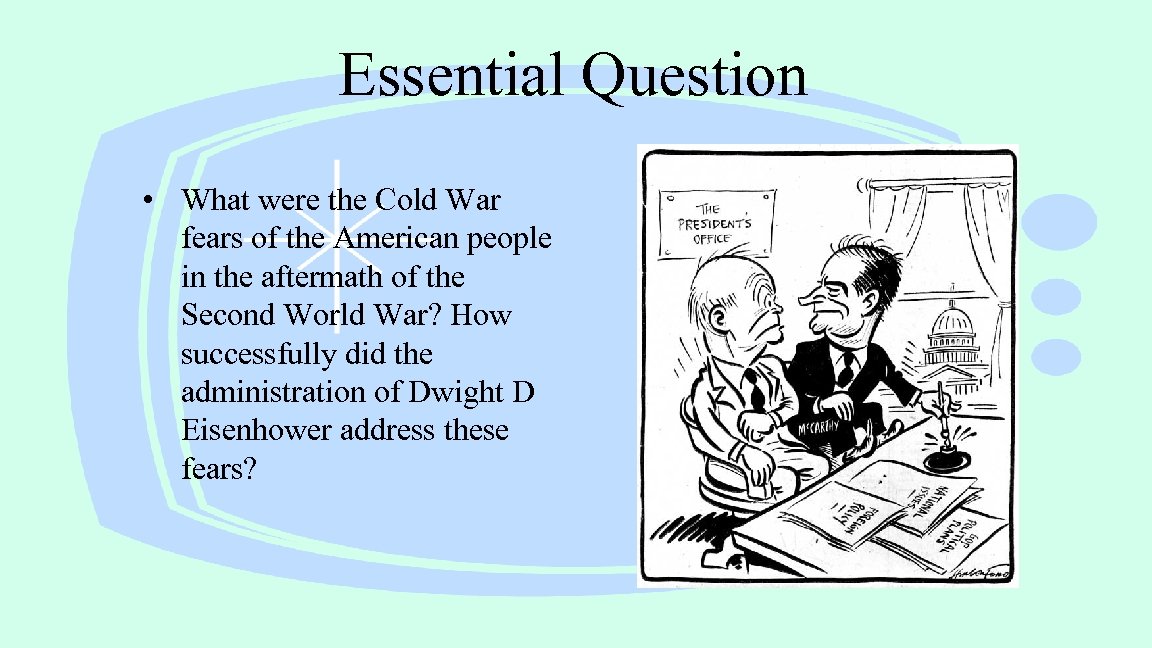 Essential Question • What were the Cold War fears of the American people in the aftermath of the Second World War? How successfully did the administration of Dwight D Eisenhower address these fears?
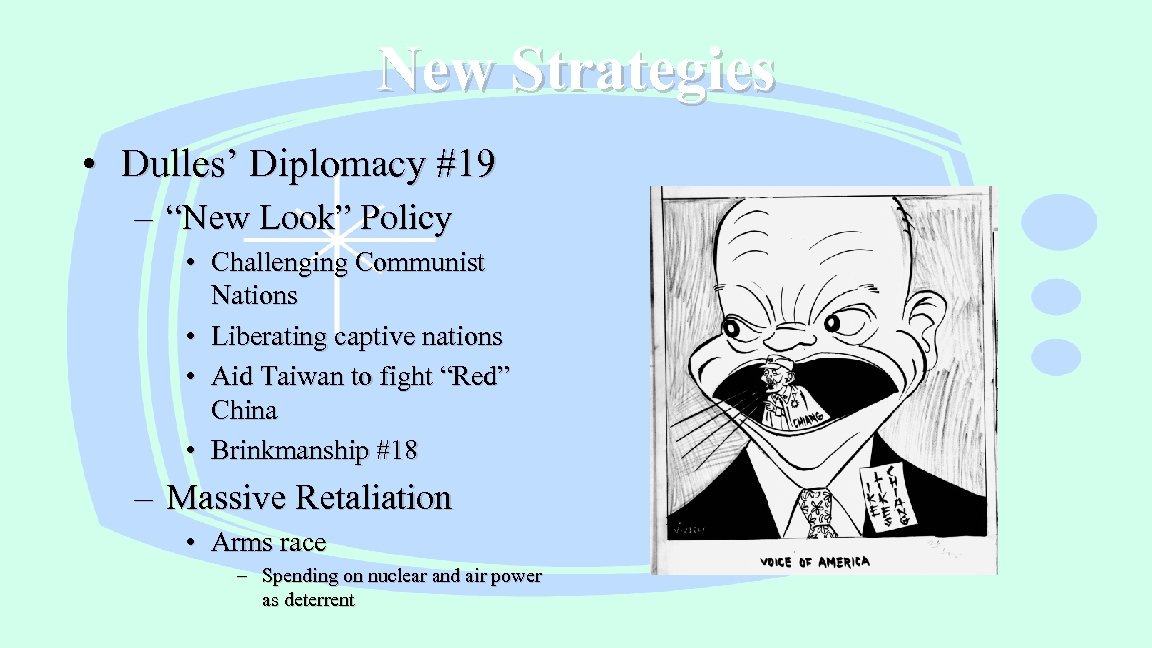 New Strategies • Dulles’ Diplomacy #19 – “New Look” Policy • Challenging Communist Nations • Liberating captive nations • Aid Taiwan to fight “Red” China • Brinkmanship #18 – Massive Retaliation • Arms race – Spending on nuclear and air power as deterrent
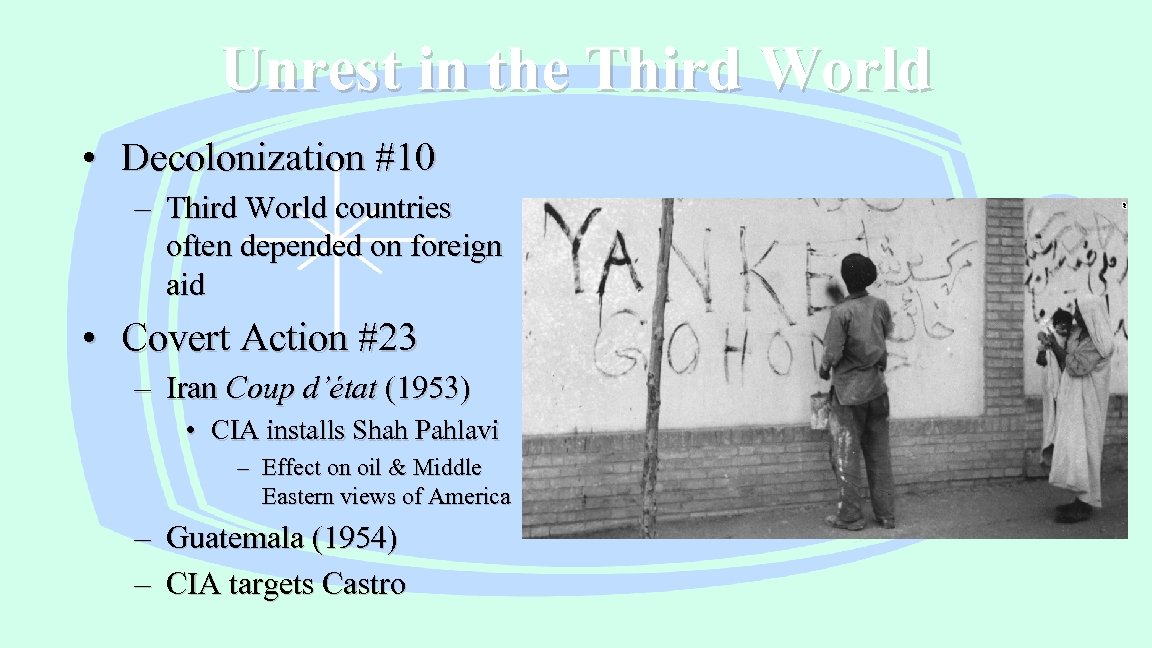 Unrest in the Third World • Decolonization #10 – Third World countries often depended on foreign aid • Covert Action #23 – Iran Coup d’état (1953) • CIA installs Shah Pahlavi – Effect on oil & Middle Eastern views of America – Guatemala (1954) – CIA targets Castro
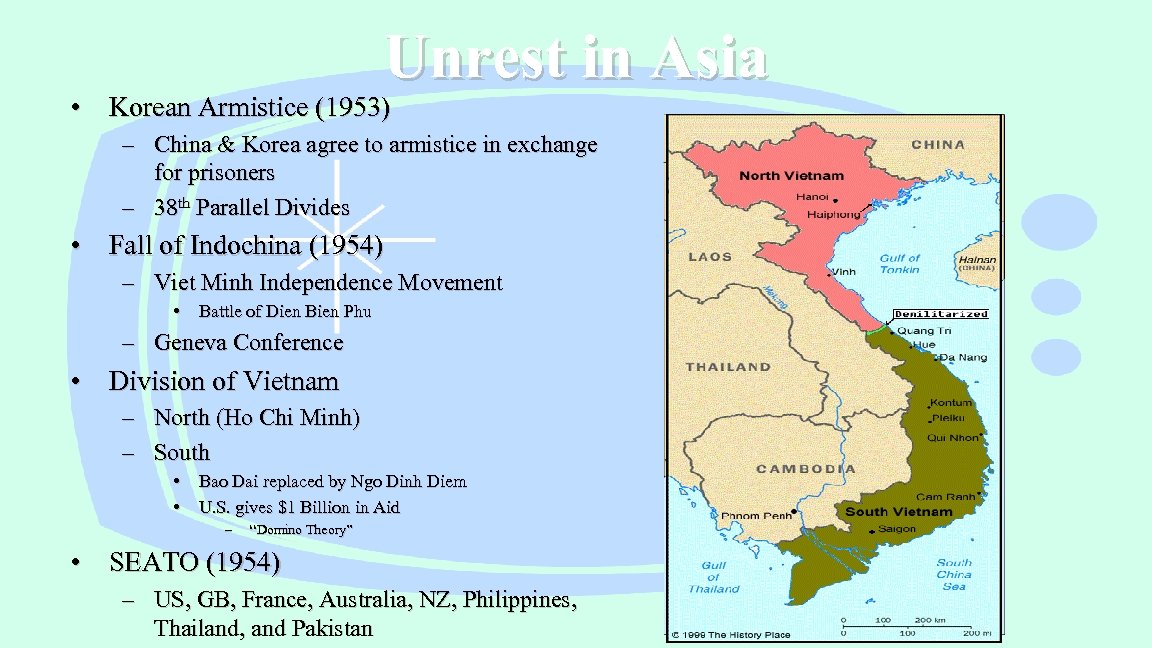 Unrest in Asia • Korean Armistice (1953) – China & Korea agree to armistice in exchange for prisoners – 38 th Parallel Divides • Fall of Indochina (1954) – Viet Minh Independence Movement • Battle of Dien Bien Phu – Geneva Conference • Division of Vietnam – North (Ho Chi Minh) – South • • Bao Dai replaced by Ngo Dinh Diem U. S. gives $1 Billion in Aid – “Domino Theory” • SEATO (1954) – US, GB, France, Australia, NZ, Philippines, Thailand, and Pakistan
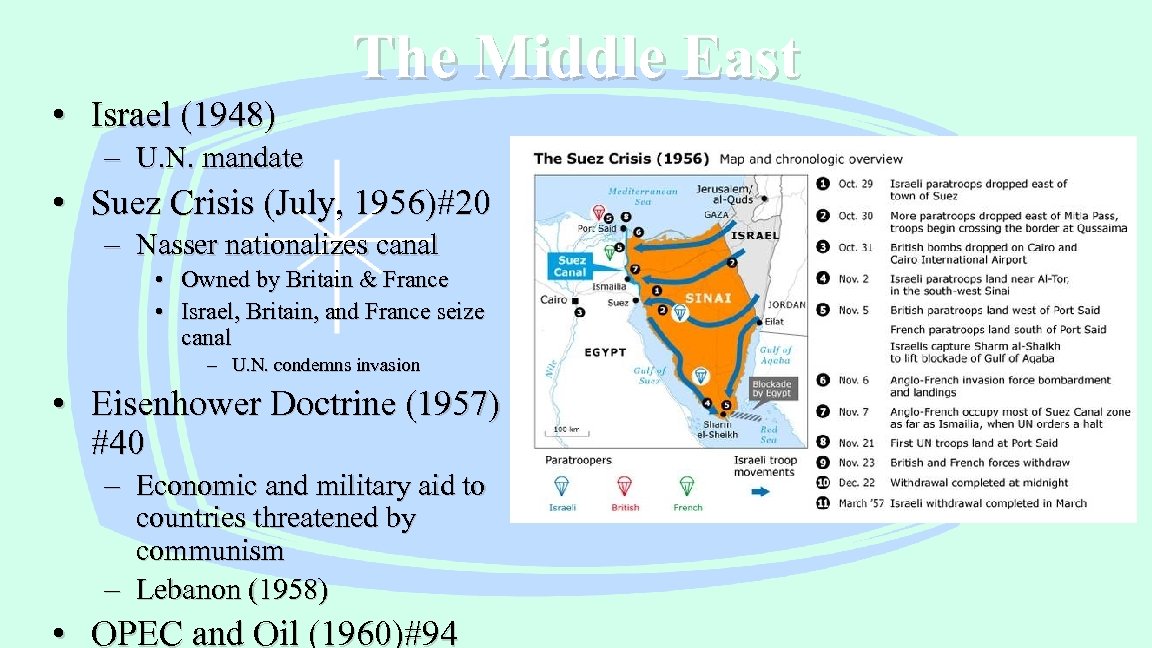 The Middle East • Israel (1948) – U. N. mandate • Suez Crisis (July, 1956)#20 – Nasser nationalizes canal • • Owned by Britain & France Israel, Britain, and France seize canal – U. N. condemns invasion • Eisenhower Doctrine (1957) #40 – Economic and military aid to countries threatened by communism – Lebanon (1958) • OPEC and Oil (1960)#94
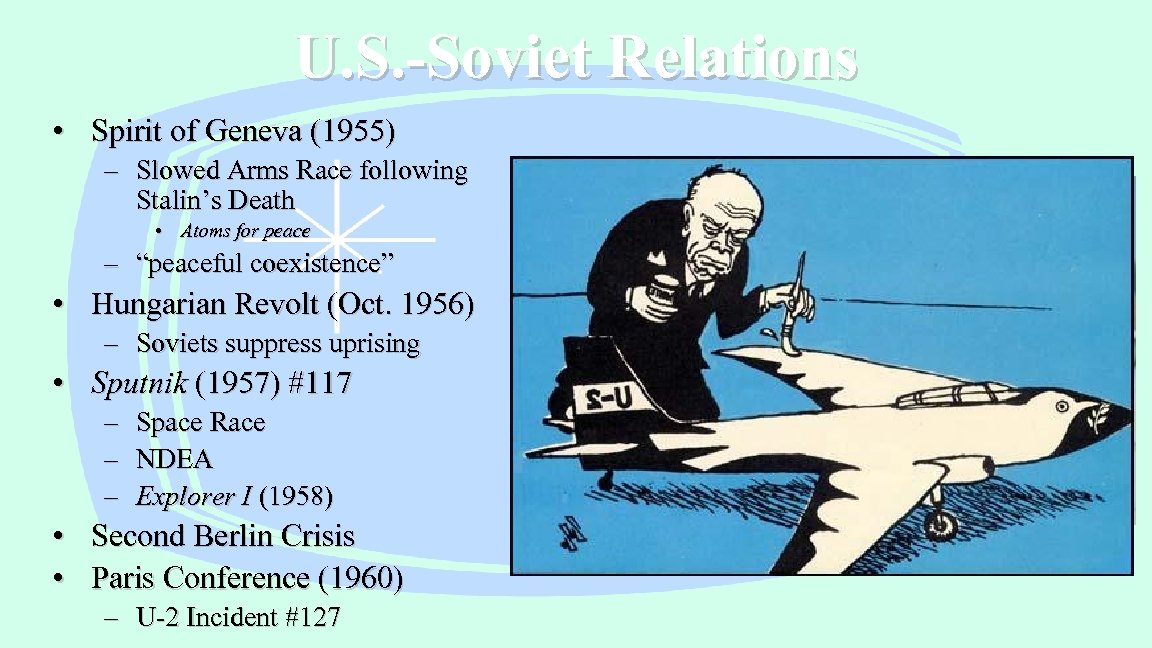 U. S. -Soviet Relations • Spirit of Geneva (1955) – Slowed Arms Race following Stalin’s Death • Atoms for peace – “peaceful coexistence” • Hungarian Revolt (Oct. 1956) – Soviets suppress uprising • Sputnik (1957) #117 – – – Space Race NDEA Explorer I (1958) • Second Berlin Crisis • Paris Conference (1960) – U-2 Incident #127
 Early Attempts to End Segregation and Gain Civil Rights for African Americans THE CIVIL RIGHTS MOVEMENT
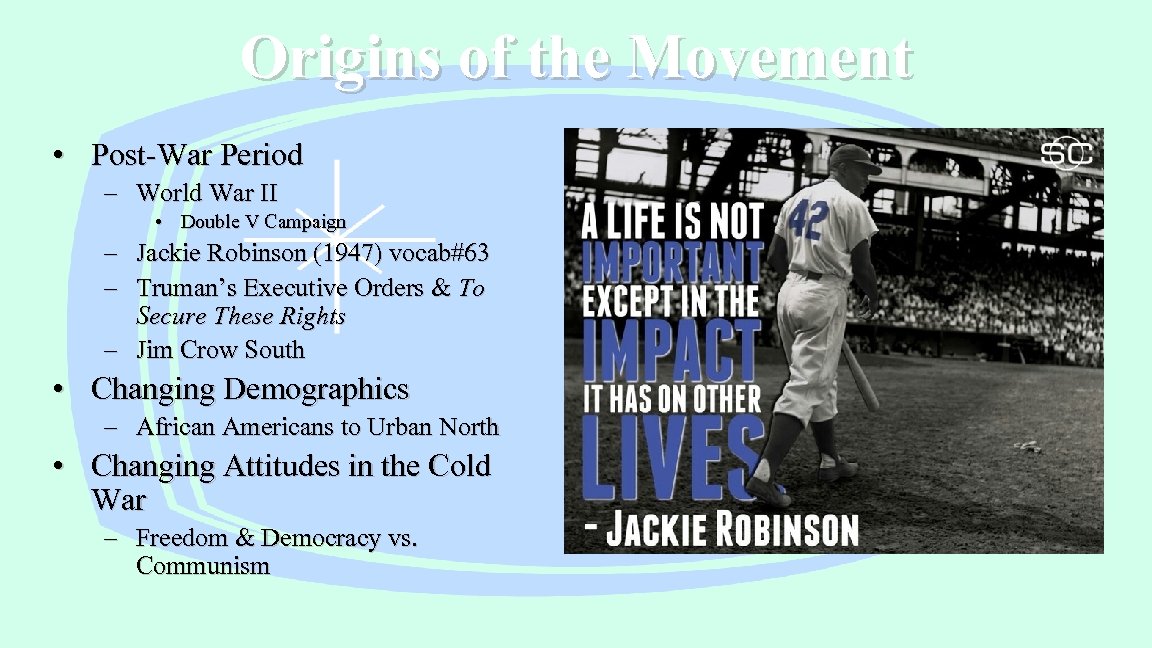 Origins of the Movement • Post-War Period – World War II • Double V Campaign – Jackie Robinson (1947) vocab#63 – Truman’s Executive Orders & To Secure These Rights – Jim Crow South • Changing Demographics – African Americans to Urban North • Changing Attitudes in the Cold War – Freedom & Democracy vs. Communism
 Essential Question • Analyze the changes that occurred in the goals, strategies, and support of the movement for African American civil rights.
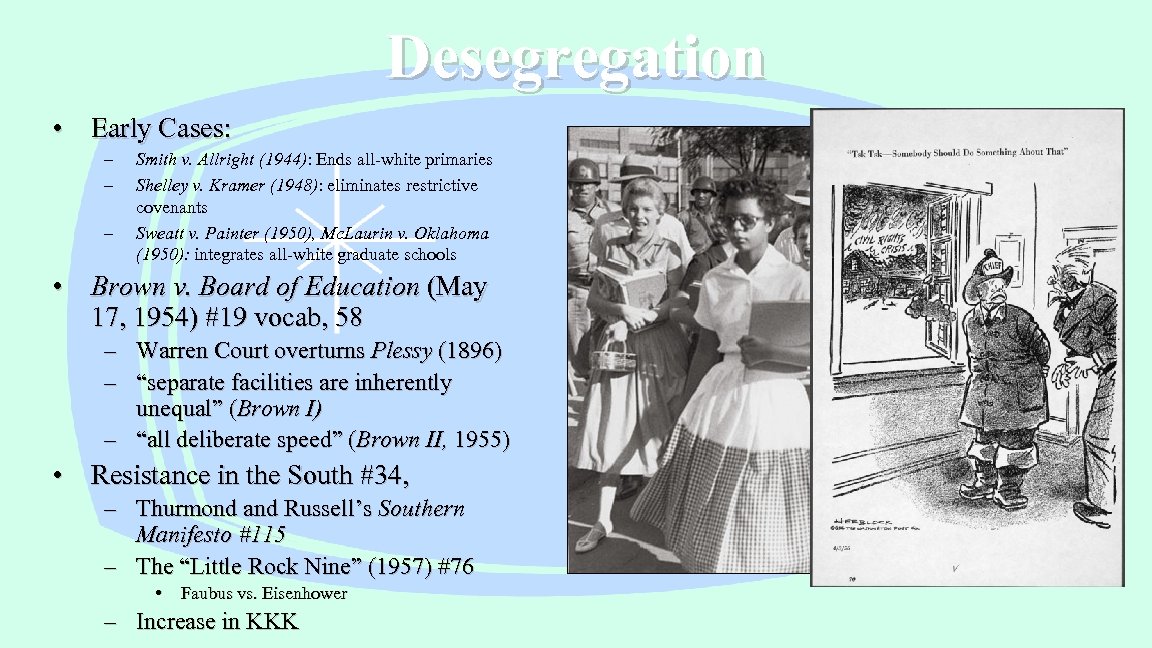 Desegregation • Early Cases: – – – Smith v. Allright (1944): Ends all-white primaries Shelley v. Kramer (1948): eliminates restrictive covenants Sweatt v. Painter (1950), Mc. Laurin v. Oklahoma (1950): integrates all-white graduate schools • Brown v. Board of Education (May 17, 1954) #19 vocab, 58 – Warren Court overturns Plessy (1896) – “separate facilities are inherently unequal” (Brown I) – “all deliberate speed” (Brown II, 1955) • Resistance in the South #34, – Thurmond and Russell’s Southern Manifesto #115 – The “Little Rock Nine” (1957) #76 • Faubus vs. Eisenhower – Increase in KKK
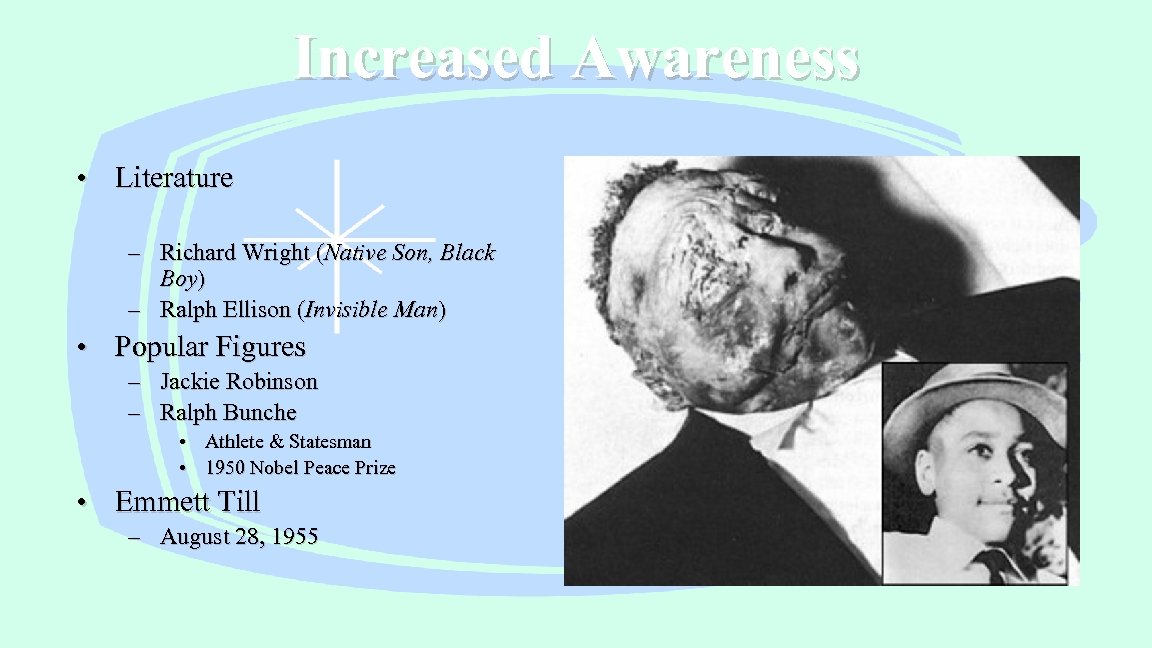 Increased Awareness • Literature – Richard Wright (Native Son, Black Boy) – Ralph Ellison (Invisible Man) • Popular Figures – Jackie Robinson – Ralph Bunche • Athlete & Statesman • 1950 Nobel Peace Prize • Emmett Till – August 28, 1955
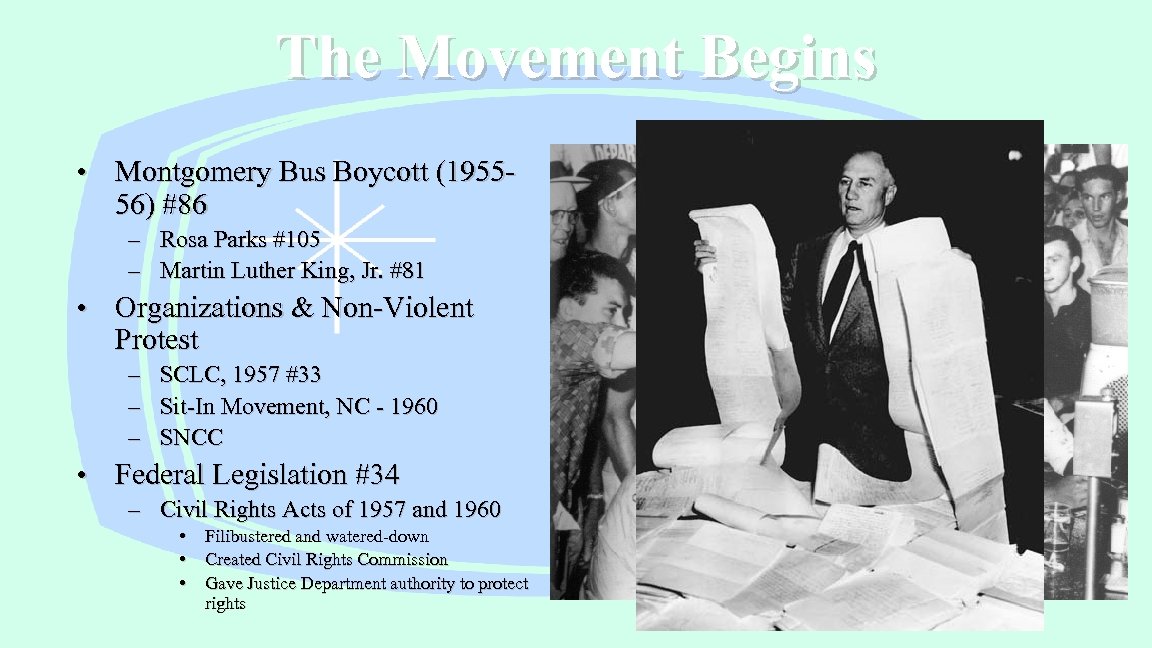 The Movement Begins • Montgomery Bus Boycott (195556) #86 – Rosa Parks #105 – Martin Luther King, Jr. #81 • Organizations & Non-Violent Protest – SCLC, 1957 #33 – Sit-In Movement, NC - 1960 – SNCC • Federal Legislation #34 – Civil Rights Acts of 1957 and 1960 • • • Filibustered and watered-down Created Civil Rights Commission Gave Justice Department authority to protect rights
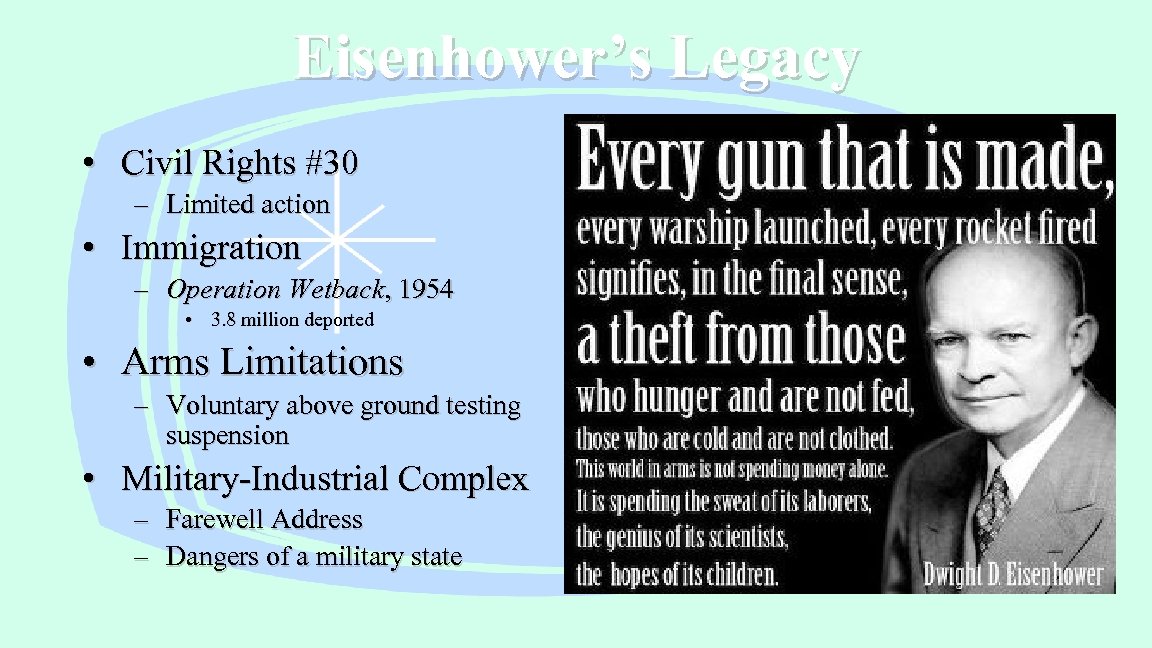 Eisenhower’s Legacy • Civil Rights #30 – Limited action • Immigration – Operation Wetback, 1954 • 3. 8 million deported • Arms Limitations – Voluntary above ground testing suspension • Military-Industrial Complex – Farewell Address – Dangers of a military state